
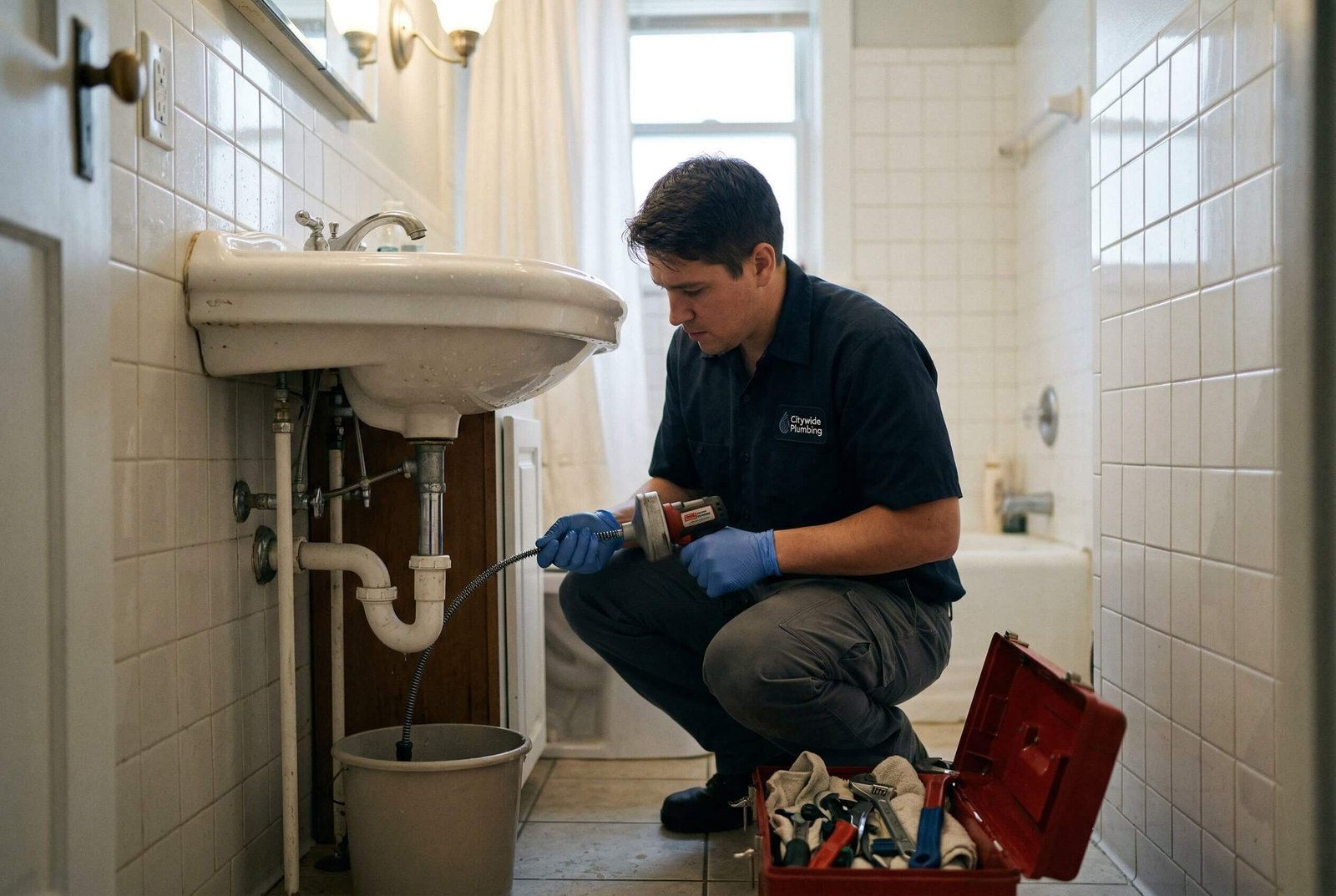
A bathroom sink that drains slowly but is not completely blocked is a very common plumbing issue in U.S. homes. Many homeowners notice that water still goes down the drain, but it takes longer than usual for the sink to empty. The water may briefly pool in the basin before slowly disappearing, especially after running the faucet for a longer period. While the sink may still function, this slow drainage is usually an early warning sign that something inside the drain system is beginning to restrict water flow.
In most cases, a slow bathroom sink drain indicates a partial blockage forming somewhere in the plumbing system. Hair, soap residue, toothpaste, shaving products, and other grooming debris gradually build up inside the pipes over time. As this buildup thickens, it narrows the interior of the pipe and reduces the speed at which water can move through the drain.
Unlike a fully clogged sink, where water cannot pass through the pipe at all, a slow drain means that water is still able to move through the system but with increasing resistance. If the underlying cause is not identified, the buildup will often continue growing until the drain eventually becomes fully blocked.
Understanding why a bathroom sink drains slowly can help homeowners recognize the early stages of a drain problem. Identifying the symptoms, causes, and typical clog locations allows plumbers to diagnose the issue more effectively before it develops into a more serious plumbing blockage.
What This Page Covers
ToggleUnderstanding How a Bathroom Sink Drain System Works
A bathroom sink drain system is designed to move wastewater quickly and safely away from the sink and into the home’s main drainage system. When everything is functioning properly, water should flow smoothly through the pipes without slowing down or backing up. However, because bathroom sinks are used frequently for grooming and hygiene, small amounts of debris enter the drain daily and can gradually affect how the system performs.
When a sink begins draining slowly but is not fully clogged, it usually means that part of the drainage pathway is becoming restricted. This restriction may occur near the sink opening, inside the pipes under the sink, or further down the drain line inside the wall. Understanding how the plumbing system works helps explain why certain areas are more prone to buildup and slow drainage.
Key Components of a Typical Bathroom Sink Drain
A standard bathroom sink drain system in U.S. homes consists of several connected plumbing components that guide water from the sink basin to the home’s main drain line.
The main parts include:
-
Drain Opening
The opening at the bottom of the sink basin where water enters the drainage system. -
Drain Flange
The metal fitting that connects the sink basin to the drain pipe below. -
Pop-Up Stopper Assembly
The movable stopper used to hold or release water in the sink. This mechanism contains several small components that can trap hair and debris. -
Tailpiece Pipe
The vertical pipe that connects the sink drain opening to the P-trap located under the sink. -
P-Trap
The curved pipe beneath the sink designed to hold a small amount of water that blocks sewer gases from entering the home. -
Trap Arm
The horizontal pipe that connects the P-trap to the drain pipe inside the wall. -
Branch Drain Line
The pipe inside the wall that carries wastewater toward the home’s larger drainage system.
Each of these components plays a role in maintaining proper drainage. Because the system includes bends, connections, and mechanical parts, these areas often become the most common locations where debris collects and slow drain problems begin.
How Water Flows Through Bathroom Sink Plumbing
When water flows down a bathroom sink, it first passes through the drain opening and into the tailpiece pipe. From there, the water moves through the P-trap, which temporarily holds a small amount of water to block sewer gases from traveling back into the home.
After passing through the P-trap, wastewater enters the trap arm and flows into the branch drain line located inside the wall. This pipe carries the water toward the main drain system, which eventually directs wastewater to the sewer or septic system.
Proper drainage depends on gravity, pipe slope, and smooth interior pipe surfaces. If debris begins accumulating along the pipe walls or inside curved sections of the plumbing, the movement of water can slow down.
Why Bathroom Sink Drains Are Prone to Slow Drainage
Bathroom sinks are especially vulnerable to slow drainage because of the types of materials that enter the drain during everyday use. Hair, soap residue, toothpaste, shaving cream, and skincare products frequently wash down the drain.
These materials tend to stick to pipe surfaces or become trapped around mechanical components such as the sink stopper. Over time, this buildup narrows the pipe and creates resistance that slows water movement.
Because bathroom sinks are used multiple times throughout the day, even small amounts of debris can gradually accumulate and lead to slow drainage problems.
Common Symptoms of a Slowly Draining Bathroom Sink
A bathroom sink that drains slowly usually shows several noticeable signs before it becomes fully clogged. These symptoms develop gradually as debris begins restricting water flow inside the drain pipes. Because the blockage is only partial, the sink may still function, but the drainage behavior will start changing.
Homeowners often ignore these early signs because the sink eventually drains. However, these symptoms typically indicate that buildup is forming somewhere in the drain system. Recognizing these patterns can help identify a developing blockage before it becomes a complete clog.
Water Takes Longer to Empty From the Sink
One of the most obvious signs of a slow drain is that water takes noticeably longer to leave the sink basin. After turning off the faucet, water may remain in the sink for several seconds before slowly draining away.
This usually indicates that debris buildup has begun narrowing the inside of the pipe. Hair, soap residue, toothpaste, and grooming products gradually accumulate and reduce the space available for water to flow through.
Water Pools Briefly Then Slowly Drains
Another common symptom is water briefly pooling in the sink before draining slowly. The basin may partially fill while the faucet runs and then gradually empty once the water is turned off.
This behavior occurs when the drain pipe can still carry water but struggles to keep up with the amount entering the sink.
Gurgling Sounds When Water Drains
Gurgling or bubbling sounds coming from the sink drain often indicate that air is being trapped inside the plumbing system. When water passes through a partially restricted pipe, it can create pockets of air that move through the drain and produce these noises.
These sounds may occur during drainage or immediately after the faucet is turned off.
Foul Odors Coming From the Sink Drain
Slow drains often produce unpleasant odors. Hair, soap scum, toothpaste residue, and organic debris trapped inside the pipe can begin breaking down over time.
As bacteria grow on this buildup, they may produce musty or sewer-like smells that rise through the drain opening.
Drain Performance Changes Throughout the Day
Some homeowners notice that their sink drains normally during light use but becomes slow after the faucet runs for longer periods. This can happen when the pipe is partially restricted by buildup.
When only a small amount of water flows through the pipe, it may drain normally. However, when a larger amount of water enters the drain, the pipe cannot carry it away quickly enough.
Most Common Causes of Slow Bathroom Sink Drains
A bathroom sink that drains slowly but is not fully blocked is usually experiencing a partial clog caused by gradual debris buildup inside the drain system. Because bathroom sinks are used frequently for grooming and hygiene routines, small amounts of material enter the drain every day. Over time, these materials accumulate inside the pipes and begin restricting water flow.
In many homes, a slow drain forms when multiple substances combine together. Hair may collect first, then soap residue and grooming products attach to it, creating a sticky mass inside the pipe. As this buildup grows, the drain pipe becomes narrower and water moves through it more slowly.
Understanding the most common causes of slow bathroom sink drains helps homeowners identify what may be happening inside the plumbing system.
Hair Buildup Inside the Drain
Hair is one of the most frequent causes of slow bathroom sink drains. During activities such as shaving, brushing hair, or washing the face, loose strands often fall into the sink and wash down the drain.
Once inside the pipe, hair can easily catch on the sink stopper mechanism or stick to rough surfaces inside the pipe. As more hair enters the drain, it forms tangled clusters that begin trapping other debris moving through the pipe.
Soap Scum Accumulation
Soap residue can gradually build up inside bathroom sink pipes. Many soaps contain fats that combine with minerals in water to create a sticky substance known as soap scum.
This residue coats the inner walls of the drain pipe and creates a surface where debris can easily stick. Over time, soap scum thickens and contributes to the formation of a slow-draining pipe.
Toothpaste and Grooming Product Residue
Toothpaste, facial cleansers, and skincare products can also contribute to slow drain problems. These substances often contain thick ingredients that do not dissolve completely in water.
When rinsed down the sink repeatedly, these products can leave behind a paste-like residue inside the pipe. This layer traps hair and other debris, gradually narrowing the pipe.
Shaving Hair and Beard Trimmings
Men who shave or trim facial hair over the bathroom sink may send small hair particles into the drain. These fine hairs can easily become trapped inside the pipe and combine with soap residue and toothpaste buildup.
Over time, the mixture forms a dense mass that restricts water movement through the drain system.
Dirt and Skin Debris
Everyday washing sends small amounts of dirt, oil, and dead skin cells down the bathroom sink drain. While these particles are usually too small to cause a blockage by themselves, they can accumulate when mixed with soap residue and grooming debris.
This mixture gradually sticks to pipe surfaces and contributes to slow drainage.
Hidden Causes That Lead to Slow Drainage
While many slow bathroom sink drains are caused by visible debris such as hair or soap residue, some drainage problems develop deeper inside the plumbing system where homeowners cannot easily see them. In these situations, the sink may appear clean at the surface, yet water continues draining slowly because something inside the pipes is restricting the flow.
Professional plumbers often encounter slow drain problems that are not caused by debris near the sink opening but by hidden issues within the plumbing system. These problems may involve buildup further inside the pipes, mineral deposits from hard water, or structural issues with the drain system itself.
Understanding these hidden causes can help explain why some sinks continue draining slowly even after visible debris has been removed.
Partial Blockage in the P-Trap
The P-trap is the curved pipe located beneath the sink. Its purpose is to hold a small amount of water that prevents sewer gases from entering the home. However, the curved shape of this pipe also makes it one of the most common locations for debris buildup.
Hair, soap residue, toothpaste, and grooming products often collect in the bottom of the P-trap. Over time, this buildup narrows the passage inside the pipe and slows water movement through the drain.
Mineral Deposits From Hard Water
Many areas of the United States have hard water that contains high levels of minerals such as calcium and magnesium. When hard water flows through plumbing pipes, it can gradually leave mineral deposits along the interior surfaces of the pipes.
These deposits create a rough layer inside the pipe that traps debris more easily. As the mineral buildup grows thicker, the interior diameter of the pipe becomes smaller, which slows down the flow of water.
Drain Pipe Scale Buildup
In older plumbing systems, the interior of drain pipes may develop scale or corrosion. Metal pipes, particularly in older homes, can gradually deteriorate over time and create rough surfaces inside the plumbing.
These rough surfaces catch hair, soap residue, and other debris more easily. As debris accumulates on the pipe walls, the pipe slowly becomes more restricted.
Improper Drain Pipe Slope
Drain pipes rely on gravity to move wastewater away from the sink. For this reason, plumbing pipes must be installed with a slight downward slope so that water flows smoothly toward the main drain line.
If a section of pipe is installed incorrectly or shifts over time, water may move more slowly through the system. When water flow slows, debris is more likely to settle inside the pipe and create buildup.
Plumbing Vent Problems
Every drainage system in a home includes vent pipes that allow air to enter the plumbing system. These vents help maintain proper pressure so that water can move freely through the pipes.
If a vent pipe becomes blocked by debris, leaves, or animal nests, it can disrupt the airflow within the drainage system. When this happens, water may drain slowly and produce gurgling sounds in the sink.
Where Slow Drain Blockages Usually Form
When a bathroom sink drains slowly but is not fully blocked, the restriction inside the plumbing system usually develops in specific locations. These areas tend to trap debris because of pipe bends, mechanical components, or sections where water flow slows naturally. Professional plumbers often inspect these locations first when diagnosing a slow bathroom sink drain.
Over time, hair, soap residue, toothpaste buildup, and grooming products can collect in these parts of the drain system. As the debris gradually accumulates, it narrows the interior of the pipe and slows the movement of water. Understanding where slow drain blockages typically form can help explain why certain drainage problems occur.
Sink Stopper Mechanism
The sink stopper assembly is one of the most common locations where slow drain problems begin. Most bathroom sinks in U.S. homes use a pop-up stopper that allows users to plug or release water in the sink basin.
This mechanism includes small moving parts located inside the drain opening. Hair can easily wrap around these parts and begin collecting additional debris such as soap residue and toothpaste buildup. Over time, this accumulation restricts water flow into the drain pipe.
Tailpiece Pipe
The tailpiece is the straight pipe that connects the sink drain opening to the P-trap under the sink. Although this pipe is usually smooth and vertical, debris buildup near the stopper assembly can extend into this section.
Hair and grooming debris that pass through the stopper mechanism may begin sticking to the inner walls of the tailpiece pipe, gradually reducing the available space for water to flow.
P-Trap Curve
The P-trap is the curved pipe located directly beneath the sink. Its design holds a small amount of water to block sewer gases from entering the home.
However, the curved shape of this pipe naturally slows water movement slightly. This makes it one of the most common places for debris to settle and accumulate. Hair, soap residue, and grooming products frequently collect in the bottom of the P-trap.
Horizontal Branch Drain
After water leaves the P-trap, it flows into a horizontal pipe known as the branch drain. This pipe is usually located inside the wall and carries wastewater toward the home’s main drainage system.
Because the branch drain runs horizontally, debris that passes through the P-trap may settle inside this section if water flow is not strong enough to carry it away.
Main Drain Connection
In some cases, slow drainage may develop where the bathroom sink’s branch drain connects to the home’s main drain line. This type of restriction may occur if debris from multiple fixtures accumulates in the same section of plumbing.
When buildup forms at this location, homeowners may begin noticing slow drainage in nearby sinks, showers, or bathtubs as well.
How Plumbers Diagnose a Slow Bathroom Sink Drain
When a bathroom sink drains slowly but is not completely blocked, professional plumbers focus on identifying where the restriction is forming inside the plumbing system. Instead of immediately attempting to clear the drain, plumbers usually begin by diagnosing the cause of the slow drainage. This step is important because a slow drain may be caused by debris near the sink, buildup deeper in the pipes, or even a problem within the larger plumbing system.
Experienced plumbers follow a systematic inspection process to determine the location and severity of the restriction. By observing how the drain behaves and examining the plumbing components, they can narrow down the source of the problem.
Visual Inspection of the Sink Drain
The first step in diagnosing a slow bathroom sink drain usually involves inspecting the visible components of the drain system. Plumbers often check the sink stopper assembly and the drain opening for signs of debris buildup.
Hair wrapped around the stopper mechanism is a very common cause of slow drainage. Soap residue and toothpaste buildup may also accumulate near the drain opening and restrict water flow.
Drain Flow Testing
Plumbers frequently run water through the sink while observing how quickly it drains. This test helps determine whether the drain is experiencing a partial blockage or a more serious obstruction.
For example:
-
Water that drains slowly but steadily usually indicates partial buildup.
-
Water that briefly pools in the sink before draining may suggest a restriction deeper in the pipe.
-
Water that drains normally for a short time and then slows may indicate debris shifting inside the pipe.
These observations help plumbers estimate where the blockage may be located.
P-Trap Inspection
Because the P-trap is one of the most common locations for bathroom sink clogs, plumbers often inspect this pipe when diagnosing slow drainage.
Hair, soap residue, toothpaste buildup, and grooming debris frequently collect inside the curved section of the trap. If buildup is present in this area, removing the trap may reveal the source of the restriction.
Drain Snake Testing
If the slow drainage appears to be caused by buildup further inside the pipe, plumbers may insert a plumbing snake into the drain. A drain snake is a flexible cable designed to move through the pipe and detect resistance caused by debris.
When the snake encounters resistance, plumbers can determine approximately where the blockage is located.
Camera Inspection for Deeper Problems
For more complex situations, plumbers may use a small waterproof camera designed for plumbing inspection. The camera is inserted into the drain pipe and allows the plumber to visually examine the interior of the plumbing system.
This method helps identify deeper blockages, pipe damage, mineral buildup, or debris accumulation inside the branch drain or main drain line.
When a Slow Drain Indicates a Bigger Plumbing Issue
A bathroom sink that drains slowly is often caused by a small buildup near the sink or inside the P-trap. However, in some situations, slow drainage may be a warning sign of a larger plumbing issue deeper in the home’s drainage system. When certain symptoms appear along with slow drainage, plumbers begin considering whether the problem extends beyond the sink itself.
Recognizing these warning signs can help homeowners understand when a slow drain might indicate a more serious blockage or plumbing system issue.
Multiple Fixtures Draining Slowly
If more than one plumbing fixture in the home begins draining slowly at the same time, the problem may not be limited to the bathroom sink. When sinks, showers, bathtubs, or floor drains all show similar drainage problems, the blockage may exist deeper in the shared drain line.
In many homes, several fixtures connect to the same branch drain or main drain pipe. If debris accumulates in that shared section, it can slow drainage throughout the system.
Recurring Slow Drain Problems
A slow drain that repeatedly returns after temporary improvement often suggests that buildup remains somewhere inside the pipe. Even if surface debris is removed from the sink opening, deeper buildup may continue restricting water flow.
Over time, additional debris attaches to the existing buildup, causing the slow drainage to return.
Water Backing Up Into Nearby Fixtures
One of the stronger warning signs of a deeper plumbing issue is water backing up into nearby fixtures. For example, running the bathroom sink might cause water to appear in the bathtub or shower drain.
This behavior usually indicates that the blockage is located in a section of pipe shared by multiple fixtures.
Sewer Odors From the Drain
Persistent sewer smells coming from the sink drain may indicate problems with the plumbing vent system or a disruption in the P-trap water seal. If sewer gases begin entering the bathroom, it can signal that the drainage system is not functioning properly.
When slow drainage occurs together with sewer odors, the problem may involve deeper plumbing components.
Real Plumbing Scenarios in U.S. Homes
Bathroom sinks that drain slowly but are not completely blocked often behave differently depending on the type of home, plumbing materials, and daily usage patterns. Professional plumbers across the United States commonly encounter similar situations when diagnosing slow bathroom sink drains. These real-world scenarios help explain why slow drainage occurs more frequently in certain homes.
Understanding these typical situations can give homeowners a clearer picture of how everyday conditions inside a home influence the performance of the drain system.
Slow Bathroom Sink in Older Homes
Older homes in the United States often have drain pipes made from materials such as galvanized steel or cast iron. Over time, these pipes can develop corrosion and internal scale buildup.
As corrosion forms inside the pipe, the interior surface becomes rough and uneven. This rough texture allows hair, soap residue, and grooming debris to stick more easily. Even small amounts of debris can gradually accumulate and restrict water flow, leading to slow drainage.
Hard Water Areas With Mineral Buildup
Many regions in the United States have hard water that contains dissolved minerals such as calcium and magnesium. When hard water flows through plumbing pipes, these minerals can leave deposits along the interior surfaces of the pipes.
These deposits gradually narrow the inside of the pipe and create rough surfaces that trap debris. Hair and soap residue can attach to these mineral deposits, contributing to slow drain problems.
Multi-Bathroom Homes With Shared Drain Lines
Modern homes often contain multiple bathrooms connected to the same branch drain line. When several sinks, showers, and bathtubs share the same plumbing pipe, debris from multiple fixtures may accumulate in the same section of pipe.
Over time, this shared buildup can slow water flow for several fixtures, causing slow drainage in bathroom sinks.
Homes With Heavy Grooming Product Use
Homes where residents frequently use grooming products such as shaving cream, hair styling products, facial cleansers, and skincare treatments may experience slow drain issues more often.
These products often contain oils, waxes, or thickening agents that do not fully dissolve in water. When repeatedly rinsed down the sink, they can leave residue inside the drain pipes that traps hair and other debris.
Early Warning Signs the Drain May Soon Fully Clog
A bathroom sink that drains slowly is often an early stage of a developing clog. In many cases, the drain system gives several warning signs before the pipe becomes completely blocked. These symptoms usually appear gradually as debris continues building up inside the plumbing.
Recognizing these early warning signs can help homeowners understand that the drain problem may worsen if the underlying cause is not addressed. When buildup continues to grow inside the pipes, a slow drain can eventually turn into a fully clogged sink.
Slow Drain That Continues Getting Worse
One of the most common warning signs is a sink that drains slower over time. At first, the change may be minor and only noticeable after running the faucet for a longer period.
However, as hair, soap residue, toothpaste, and grooming products continue accumulating inside the pipe, the drainage speed may decline further. This gradual change often indicates that buildup inside the pipe is increasing.
Gurgling Sounds From Pipes
Gurgling or bubbling sounds coming from the sink drain can indicate that air is being trapped inside the plumbing system. When water passes through a partially restricted pipe, it may push air through the drain line and create these noises.
These sounds may occur when the sink drains or when nearby plumbing fixtures are used.
Drain Odors That Persist
Unpleasant odors coming from the sink drain can signal that organic debris has accumulated inside the pipe. Hair, soap residue, and other materials trapped inside the drain may begin breaking down over time.
As bacteria grow on this buildup, they can produce foul odors that rise through the drain opening.
Water Backing Up After Running Faucet
Another warning sign is water briefly backing up in the sink before draining. When the faucet runs for a longer period, the basin may partially fill because the pipe cannot carry water away fast enough.
This behavior often indicates that the drain pipe is becoming increasingly restricted.
Basic Prevention Tips for Slow Bathroom Sink Drains
Preventing a bathroom sink from draining slowly often comes down to reducing the amount of debris that enters the plumbing system during daily use. Because bathroom sinks are used multiple times throughout the day, even small amounts of hair, soap residue, and grooming products can gradually accumulate inside the pipes. Over time, this buildup restricts water flow and leads to slow drainage.
By adopting simple habits and performing occasional maintenance, homeowners can significantly reduce the chances of buildup forming inside the drain system. Professional plumbers often recommend a few basic preventive measures that help keep bathroom sink drains functioning properly.
Everyday Habits That Cause Slow Drains
Many slow drain problems develop because of everyday grooming routines. Materials that appear harmless when rinsed down the sink can gradually accumulate inside the pipes.
Common habits that contribute to slow drains include:
-
Allowing loose hair to wash directly into the drain
-
Rinsing thick toothpaste residue into the sink
-
Washing shaving cream or beard trimmings down the drain
-
Pouring skincare or cosmetic products into the sink
-
Dropping cotton swabs, dental floss, or small objects into the drain opening
Over time, these materials combine and create buildup inside the pipes.
Hair Guards and Drain Screens
Hair guards and drain screens are simple devices that sit over the drain opening and catch debris before it enters the plumbing system. These devices are commonly used in showers but can also be useful for bathroom sink drains.
By trapping hair at the surface, homeowners can remove it easily rather than allowing it to travel deeper into the pipes where it can contribute to a clog.
Regular Drain Maintenance Habits
Occasional maintenance can help reduce debris buildup inside bathroom sink drains. Running warm water through the sink after grooming activities can help carry small particles further down the drain system.
Homeowners can also periodically check the sink stopper assembly for trapped hair and debris. Removing buildup from this area prevents it from being pulled deeper into the plumbing.
Why Chemical Drain Cleaners Are Risky
Many homeowners attempt to fix slow drains using chemical drain cleaners. While these products may temporarily dissolve some debris, they often do not remove the entire buildup causing the slow drainage.
In some cases, chemical cleaners can push debris further into the pipes or damage plumbing materials, especially in older homes with metal pipes. Repeated use of these products may weaken pipe walls and create additional plumbing problems.
When to Call a Professional Plumber
A bathroom sink that drains slowly can sometimes be caused by minor debris near the drain opening or inside the P-trap. However, there are situations where slow drainage indicates a deeper plumbing issue that cannot be easily resolved without professional tools and expertise. When the symptoms persist or begin affecting other parts of the plumbing system, it may be time to contact a licensed plumber.
Professional plumbers are trained to identify the exact location and cause of a drainage problem. Instead of simply removing surface debris, they diagnose the underlying issue inside the plumbing system to prevent the problem from returning.
Signs the Blockage Is Deeper in the Pipes
In some cases, slow drainage may be caused by buildup located deeper inside the branch drain or main drain line. When the blockage forms further inside the plumbing system, homeowners may notice additional symptoms that indicate a larger issue.
Signs that the blockage may be deeper in the pipes include:
-
The sink continues draining slowly after removing visible debris
-
The drain repeatedly becomes slow after temporarily improving
-
Gurgling sounds occur when water flows down the sink
-
Nearby fixtures such as showers or bathtubs also drain slowly
-
Unpleasant sewer odors come from the sink drain
These signs often suggest that debris buildup is located further inside the plumbing system.
When DIY Attempts Fail
Many homeowners attempt to fix slow drains using plungers, wire tools, or chemical cleaners. While these methods may temporarily improve drainage, they often fail to remove the underlying buildup inside the pipes.
Improper use of drain tools can also push debris deeper into the plumbing system, making the blockage harder to remove. When repeated attempts fail to improve drainage, professional inspection may be required to locate the source of the restriction.
Professional Tools Used for Drain Diagnosis
Professional plumbers use specialized equipment designed to diagnose and locate drain problems safely. These tools allow them to inspect the interior of the plumbing system and identify hidden buildup or pipe damage.
Some commonly used tools include:
-
Drain Augers (Plumbing Snakes) – Flexible cables used to break through debris buildup inside pipes
-
Drain Inspection Cameras – Small waterproof cameras used to visually inspect the inside of drain lines
-
Hydro Jetting Equipment – High-pressure water systems used to remove heavy buildup inside pipes
-
Pipe Inspection Tools – Equipment used to identify pipe corrosion, mineral deposits, or structural damage
Using these tools allows plumbers to determine the exact cause of the slow drain and recommend the most effective solution.
Final Thoughts
A bathroom sink that drains slowly but is not fully blocked is often an early sign that debris is beginning to accumulate inside the plumbing system. Hair, soap residue, toothpaste, grooming products, and everyday debris can gradually build up within the drain pipes, reducing the space available for water to flow. While the sink may still function, slow drainage usually indicates that the pipe is becoming partially restricted.
Understanding the common causes, symptoms, and typical blockage locations can help homeowners recognize when a slow drain is developing. In many cases, addressing the issue early can prevent the buildup from growing into a complete clog. If slow drainage continues, worsens over time, or begins affecting other fixtures in the home, it may indicate a deeper plumbing issue that requires professional diagnosis.