
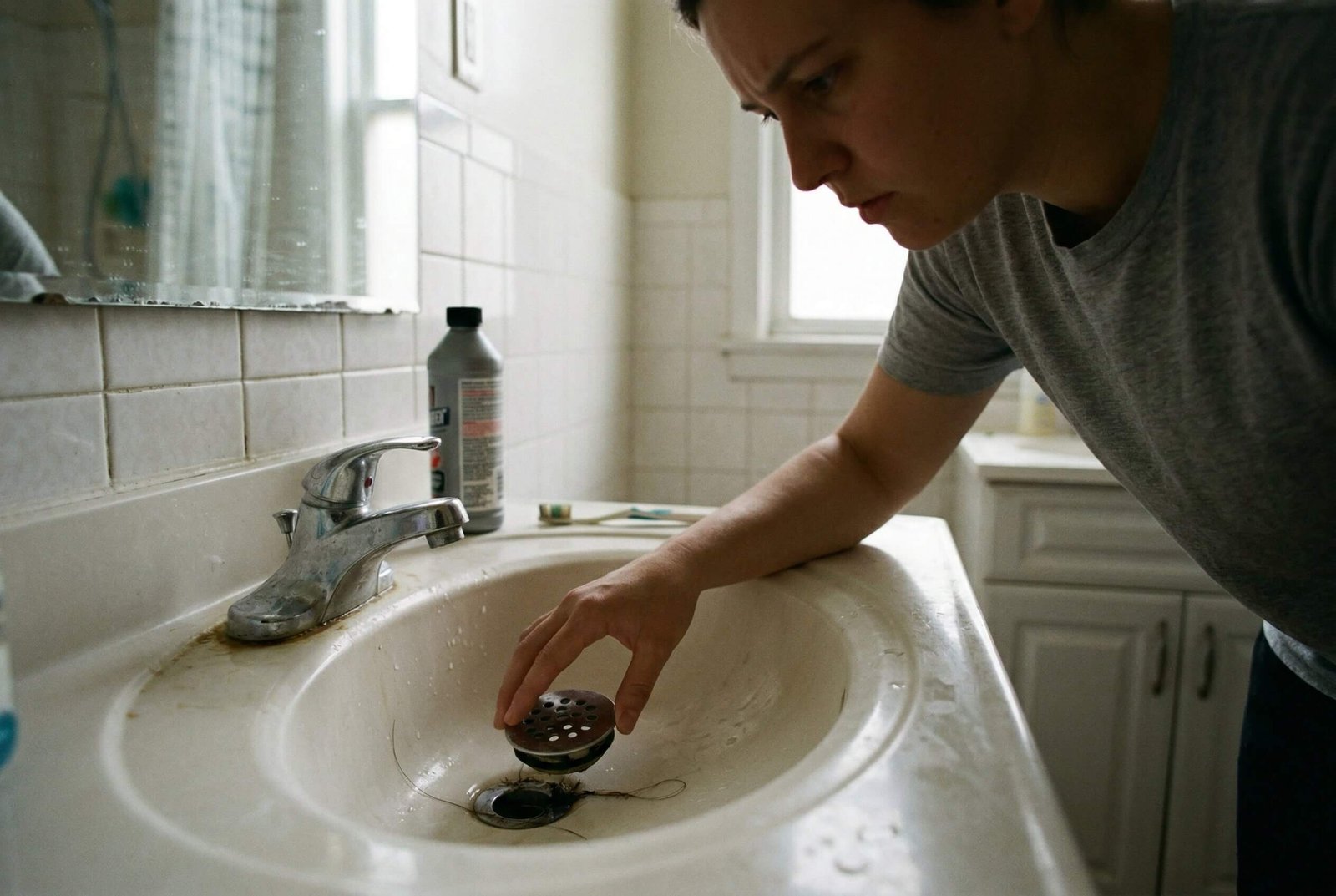
A bad smell coming from a bathroom sink drain is a common problem in many U.S. homes. Homeowners may notice a musty odor, a rotten smell, or even a sewer-like smell rising from the sink. In some cases, the odor becomes noticeable when standing near the sink, while in other situations the smell can spread throughout the bathroom. These unpleasant odors often appear gradually and may become stronger over time if the underlying cause is not addressed.
Most bathroom sink drain odors develop because organic debris begins accumulating inside the drain system. Hair, soap residue, toothpaste, grooming products, and small particles of dirt can collect inside the pipes and create a sticky layer along the pipe walls. Over time, bacteria begin breaking down this organic material, producing odors that travel back up through the drain opening.
In other situations, the smell may be caused by issues within the plumbing system itself. Problems such as a dry P-trap, blocked plumbing vents, or buildup deeper in the drain line can allow sewer gases or trapped odors to escape through the sink drain.
Understanding why bathroom sink drains develop odors is important because the smell is often a sign that something inside the plumbing system is not functioning properly. Identifying the source of the odor can help determine whether the problem is caused by surface buildup, bacterial growth inside the pipes, or a deeper plumbing issue that may require professional attention.
What This Page Covers
ToggleUnderstanding How a Bathroom Sink Drain System Works
A bathroom sink drain system is designed to move wastewater away from the sink and safely into the home’s main drainage system. When functioning correctly, the system prevents odors from escaping into the bathroom while allowing water to flow freely through the pipes. However, when debris builds up inside the plumbing or certain components stop working properly, unpleasant smells can begin rising from the drain.
Most bathroom sink drain odors develop when organic materials accumulate inside the pipes or when the plumbing system fails to block sewer gases effectively. Understanding how the drain system works helps explain why these smells occur and where the problem is most likely located.
Key Components of a Typical Bathroom Sink Drain
A standard bathroom sink drain system in U.S. homes includes several plumbing components that work together to move wastewater away from the fixture.
The main parts of the system include:
-
Drain Opening
The opening at the bottom of the sink where water enters the drainage system. -
Drain Flange
The metal fitting installed at the sink opening that connects the sink basin to the drain pipe. -
Pop-Up Stopper Assembly
The movable stopper used to plug or release water in the sink. Hair and debris often collect around this mechanism. -
Tailpiece Pipe
The vertical pipe that carries water from the sink drain opening to the P-trap. -
P-Trap
The curved pipe beneath the sink that holds a small amount of water to prevent sewer gases from entering the home. -
Trap Arm
The horizontal pipe that connects the P-trap to the drain pipe inside the wall. -
Branch Drain Line
The pipe located inside the wall that carries wastewater toward the home’s main drain system.
Because this plumbing system contains bends, mechanical components, and connection points, these areas often become places where debris accumulates and odors begin forming.
How the P-Trap Prevents Sewer Gas From Entering the Home
One of the most important parts of the bathroom sink drain system is the P-trap. This curved pipe holds a small amount of water after each use of the sink. The water acts as a barrier that prevents sewer gases from traveling back up through the drain.
When the P-trap functions properly, it blocks unpleasant odors from the sewer system. However, if the trap dries out or becomes disrupted, sewer gases may escape into the bathroom through the sink drain.
How Drain Venting Supports Proper Drain Operation
Every plumbing system includes vent pipes that allow air to enter the drainage system. These vents help maintain balanced air pressure inside the pipes so that water can flow smoothly through the plumbing.
If a plumbing vent becomes blocked by debris, leaves, or animal nests, airflow in the drainage system may become restricted. When this happens, water may drain slowly and odors can begin escaping through the sink drain.
Common Signs of a Bathroom Sink Drain Odor Problem
A bad smell coming from a bathroom sink drain often develops gradually. At first, the odor may appear occasionally or only when standing close to the sink. Over time, the smell may become stronger and more noticeable throughout the bathroom. These odors usually indicate that something inside the drain system is allowing organic debris, bacteria, or sewer gases to produce unpleasant smells.
Recognizing the early signs of a drain odor problem can help homeowners identify the issue before it becomes more severe. In many cases, the way the smell appears or changes can provide clues about what is happening inside the plumbing system.
Musty or Rotten Smell From the Drain
One of the most common signs of a drain odor problem is a musty or rotten smell coming from the sink. This odor often develops when organic debris such as hair, soap residue, toothpaste, and grooming products accumulate inside the drain pipes.
As bacteria begin breaking down this material, they produce gases that create unpleasant smells. These odors can rise through the drain opening and spread into the bathroom.
Sewer-Like Smell Coming From the Sink
A stronger smell that resembles sewer gas may indicate that gases from the plumbing system are entering the bathroom. This can happen if the water seal inside the P-trap is disrupted or if there is a venting problem in the plumbing system.
Sewer-like odors should not be ignored, as they may indicate a deeper issue within the drainage system.
Smell That Gets Worse After Running Water
Some homeowners notice that the smell becomes stronger after running the sink faucet. This often occurs when water movement disturbs debris buildup inside the pipes.
As water flows through the drain, it may release trapped gases produced by bacteria growing on organic material inside the pipe.
Odor Appearing at Certain Times of Day
In some homes, sink drain odors may appear at specific times of day. For example, the smell may become noticeable in the morning after the sink has not been used overnight.
This can occur when bacteria continue breaking down debris inside the pipes while the drain remains unused.
Persistent Smell Even After Cleaning the Sink
Many homeowners attempt to remove sink odors by cleaning the sink basin or wiping the drain opening. If the smell continues even after the sink has been cleaned, the odor is likely coming from inside the drain system rather than from the sink surface.
Persistent odors often indicate that buildup exists somewhere inside the pipes where bacteria can grow.
Most Common Causes of Bathroom Sink Drain Odors
A bad smell coming from a bathroom sink drain is usually caused by organic buildup and bacterial growth inside the drain system. Because bathroom sinks are used daily for brushing teeth, washing hands, shaving, and grooming, small amounts of debris regularly enter the drain. Over time, these materials accumulate inside the pipes and create an environment where bacteria can grow.
As bacteria break down this trapped debris, they produce gases that travel back up through the drain opening. These gases are responsible for the unpleasant smells that homeowners notice near the sink. In most homes, several different materials combine to create the buildup that leads to drain odors.
Understanding the most common causes of bathroom sink drain smells helps homeowners identify what may be happening inside the plumbing system.
Hair and Organic Debris Buildup
Hair is one of the most common materials that collects inside bathroom sink drains. During grooming activities such as shaving, brushing hair, or washing the face, small strands of hair often wash into the drain.
Once inside the pipe, hair can become tangled around the sink stopper assembly or stick to rough surfaces inside the drain. Over time, this hair begins trapping other organic debris such as skin cells and dirt. As bacteria break down this material, unpleasant odors can develop.
Soap Scum and Toothpaste Residue
Soap and toothpaste frequently contribute to buildup inside bathroom sink drains. Many soaps contain fats that combine with minerals in water to form soap scum, a sticky substance that coats the interior walls of pipes.
Toothpaste can also leave behind a thick residue inside the drain system. This residue traps hair and other debris, creating a layer where bacteria can grow and produce foul smells.
Bacteria Growth Inside the Drain
When organic materials collect inside drain pipes, bacteria naturally begin breaking down the debris. This biological process produces gases that often smell musty, rotten, or similar to sewage.
Because the inside of a drain pipe is dark and moist, it provides an ideal environment for bacterial growth. As bacteria multiply, the odor produced by the decomposing material can become stronger.
Grooming Products and Cosmetic Residue
Many grooming products used in bathrooms contain oils, waxes, and thick ingredients that do not fully dissolve in water. Products such as shaving cream, facial cleansers, hair styling products, and cosmetics may leave residue inside the pipes.
This residue can trap debris and create surfaces where bacteria grow more easily, contributing to unpleasant drain odors.
Dirty Sink Stopper Assembly
The pop-up stopper assembly inside the sink drain is a common place where debris collects. Hair, soap residue, toothpaste buildup, and organic material often gather around this mechanism.
Because this area stays damp and is exposed to organic debris, bacteria can grow quickly on the buildup. This is one of the most common locations where bathroom sink odors originate.
Hidden Causes of Drain Odors Homeowners Often Miss
While many bathroom sink odors come from visible debris near the drain opening, some smells originate from deeper parts of the plumbing system. In these situations, homeowners may clean the sink and remove visible buildup, yet the odor continues returning. This usually happens because the real source of the smell exists further inside the pipes or within the plumbing system itself.
Professional plumbers often investigate hidden causes when sink odors persist despite basic cleaning. These issues can involve problems with the P-trap, bacterial buildup inside the pipes, plumbing vent blockages, or even problems within the home’s main sewer line.
Understanding these hidden causes helps explain why some bathroom sink odors remain even after the drain opening appears clean.
Dry P-Trap
The P-trap is the curved pipe located beneath the sink. Its purpose is to hold a small amount of water that blocks sewer gases from traveling back up through the drain. This water seal acts as a barrier between the home and the sewer system.
If the sink is not used for a long period, the water inside the P-trap can evaporate. When this happens, sewer gases may pass through the drain and create a strong odor in the bathroom.
Biofilm Buildup Inside Pipes
Over time, bacteria can form a thin layer known as biofilm along the interior walls of drain pipes. This slimy layer develops when organic debris such as hair, soap residue, toothpaste, and skin particles accumulate inside the plumbing.
Biofilm traps moisture and nutrients, creating an ideal environment for bacteria to multiply. As the bacteria break down organic material, they produce unpleasant smells that travel up through the drain.
Vent Pipe Blockage
Plumbing systems rely on vent pipes to allow air into the drainage system. These vents help maintain proper air pressure so that water flows smoothly through the pipes.
If a vent pipe becomes blocked by leaves, debris, or animal nests, airflow within the plumbing system may become disrupted. This can cause sewer gases to escape through the sink drain instead of venting safely outside the home.
Drain Line Buildup Deeper in the Plumbing
Sometimes the odor originates from buildup located deeper inside the drain system. Debris from multiple plumbing fixtures can accumulate inside branch drain lines located behind walls.
When organic material collects in these hidden sections of pipe, bacteria begin breaking it down, producing gases that eventually travel back toward the sink drain.
Sewer Line Issues
In rare cases, persistent sink odors may indicate a problem with the home’s main sewer line. If sewer gases begin escaping due to pipe damage, blockages, or venting issues, the smell may appear in one or more drains inside the home.
When this occurs, the odor may be stronger and more noticeable throughout the bathroom or nearby plumbing fixtures.
Where Bathroom Sink Drain Odors Usually Originate
When a bathroom sink produces a bad smell, the odor usually comes from specific locations inside the drain system where debris accumulates and bacteria grow. These areas tend to trap organic material such as hair, soap residue, toothpaste, and grooming products. Over time, this trapped material begins breaking down and produces unpleasant odors that travel back up through the drain.
Professional plumbers often inspect these locations first when diagnosing sink drain odor problems. Because these parts of the plumbing system contain bends, mechanical components, or slower water flow, they naturally become places where buildup forms.
Understanding where these odors typically originate can help homeowners identify the likely source of the smell.
Sink Stopper Assembly
The sink stopper assembly is one of the most common sources of bathroom sink drain odors. The pop-up stopper contains several small mechanical parts that sit inside the drain opening.
Hair, soap residue, toothpaste buildup, and grooming debris frequently collect around these components. Because the stopper remains damp and exposed to organic material, bacteria can grow easily in this area and produce unpleasant smells.
Drain Flange Area
The drain flange is the metal fitting that connects the sink basin to the drain pipe. Debris can accumulate around the edges of the flange where water enters the drain.
When hair, soap scum, and grooming products collect in this area, bacteria may begin breaking down the material and releasing odors through the drain opening.
P-Trap Pipe
The P-trap located beneath the sink is another common place where odors originate. This curved pipe holds water to prevent sewer gases from entering the home, but it can also collect debris.
Hair, soap residue, and organic particles often settle inside the curved section of the trap. If buildup remains inside the trap for long periods, bacteria can grow and produce unpleasant smells.
Horizontal Branch Drain
After water leaves the P-trap, it flows into a horizontal pipe known as the branch drain. This pipe runs inside the wall and carries wastewater toward the home’s main drainage system.
If debris passes through the P-trap but does not fully wash away, it may accumulate in this horizontal section of pipe. Bacterial growth on this buildup can produce odors that travel back toward the sink.
Main Drain Connection
In some situations, the smell may originate where the sink’s branch drain connects to the home’s main drain line. If organic debris from multiple fixtures accumulates in this section of pipe, bacteria can produce strong odors.
When buildup occurs in the main drain connection, homeowners may notice smells coming from more than one drain in the home.
How Professional Plumbers Diagnose Sink Drain Odors
When a bathroom sink produces a bad smell, professional plumbers focus on identifying the exact source of the odor inside the plumbing system. Instead of simply cleaning the visible drain opening, plumbers examine multiple parts of the drain system to determine whether the smell is caused by debris buildup, bacterial growth, sewer gas, or a deeper plumbing issue.
Because drain odors can originate from several different locations, plumbers typically follow a step-by-step diagnostic process. This allows them to narrow down the possible causes and identify the specific area where the odor is developing.
Visual Inspection of the Drain System
The first step usually involves inspecting the visible components of the bathroom sink drain system. Plumbers often examine the sink stopper assembly, drain opening, and surrounding areas for signs of debris buildup.
Hair, soap residue, toothpaste, and grooming products commonly accumulate around the stopper mechanism. If organic material is present in this area, it may indicate that bacteria growth is causing the odor.
Checking the P-Trap Water Seal
Because the P-trap prevents sewer gases from entering the home, plumbers often check whether the trap is holding water properly. If the trap is dry or partially empty, sewer gases may travel up through the drain and produce strong odors.
A plumber may run water through the sink to refill the trap and determine whether the smell disappears.
Drain Cleaning Inspection
If debris buildup is suspected deeper in the pipe, plumbers may inspect the interior of the drain using specialized tools. Flexible drain augers or plumbing snakes can be inserted into the pipe to check for buildup or blockages.
These tools help plumbers identify whether organic debris has accumulated further inside the drain system.
Camera Inspection for Deep Drain Issues
For persistent drain odors, plumbers may use a small waterproof inspection camera to examine the inside of the pipes. This camera is inserted into the drain line and provides a clear view of the interior surfaces of the plumbing.
A camera inspection can reveal biofilm buildup, pipe damage, debris accumulation, or other issues that may be producing odors deeper inside the system.
Identifying Venting Problems
Plumbers also consider whether the home’s plumbing vent system may be contributing to the odor problem. If vent pipes become blocked or restricted, sewer gases may escape through sink drains instead of venting safely outside the home.
Inspecting the vent system helps determine whether airflow issues within the plumbing system are causing the smell.
When Drain Odors Indicate a Larger Plumbing Issue
In many cases, a bad smell coming from a bathroom sink drain is caused by organic buildup near the drain opening or inside the P-trap. However, certain situations may indicate that the odor is related to a deeper plumbing problem within the home’s drainage system. When specific warning signs appear along with the smell, plumbers begin investigating whether the issue extends beyond the sink itself.
Recognizing these signs can help homeowners determine when a drain odor may require professional inspection. Some plumbing issues can allow sewer gases or trapped odors to move through the drainage system and appear in one or more drains throughout the home.
Sewer Gas Smell Inside the Bathroom
A strong smell that resembles sewage may indicate that sewer gases are entering the bathroom through the sink drain. This type of odor is often stronger and more noticeable than typical musty drain smells.
Sewer gas smells may occur if the P-trap is dry, if the plumbing vent system is blocked, or if there is a problem within the home’s sewer line. Because sewer gases can contain harmful compounds, this type of odor should not be ignored.
Multiple Drains Smelling Bad
If more than one drain in the home begins producing unpleasant odors, the problem may not be limited to the bathroom sink. When multiple sinks, showers, or floor drains produce similar smells, the issue may exist deeper in the shared drain system.
This can occur when debris accumulates in a branch drain line or when a plumbing vent problem affects several fixtures.
Odors Appearing After Plumbing Use
Some homeowners notice that the smell becomes stronger after running water in the sink or using other plumbing fixtures in the home. This can happen when water movement pushes trapped gases through the drain system.
If the odor appears after plumbing use, it may indicate buildup inside the pipes or airflow issues within the venting system.
Drain Smell Combined With Slow Drainage
When a sink produces a bad smell and drains slowly at the same time, the two problems are often connected. Buildup inside the pipes may be restricting water flow while also providing organic material that bacteria break down.
This combination of slow drainage and unpleasant odor usually indicates that debris buildup exists somewhere inside the drain system.
Real Plumbing Scenarios in U.S. Homes
Bathroom sink drain odors often develop differently depending on the type of home, the plumbing materials used, and the daily habits of the household. Professional plumbers across the United States frequently encounter similar situations when diagnosing sink odor problems. These real-world scenarios help explain why some homes experience persistent drain smells while others rarely have this issue.
Understanding these common situations can help homeowners recognize how everyday conditions inside a home can influence the formation of odors inside the plumbing system.
Bathroom Sink Odors in Older Homes
Older homes in the United States often contain plumbing systems made from materials such as galvanized steel or cast iron. Over time, these pipes can corrode and develop rough interior surfaces.
These rough surfaces allow organic debris such as hair, soap residue, and grooming products to stick more easily inside the pipe. As bacteria begin breaking down this material, unpleasant odors can develop and travel back up through the sink drain.
Homes With Hard Water Buildup
In many regions of the United States, hard water contains minerals such as calcium and magnesium. When hard water flows through plumbing pipes, these minerals can gradually form deposits along the interior surfaces of the pipes.
This mineral buildup creates rough surfaces that trap debris more easily. When hair, soap residue, and grooming products collect on these surfaces, bacteria can grow and produce persistent drain odors.
Homes With Heavy Grooming Product Use
Homes where residents frequently use grooming products may experience drain odor problems more often. Products such as shaving cream, facial cleansers, hair styling products, and cosmetics often contain oils, waxes, or thick ingredients.
These substances may not fully dissolve in water and can leave residue inside the drain pipes. This residue can trap debris and create an environment where bacteria produce unpleasant smells.
Multi-Bathroom Homes With Shared Drain Lines
Many modern homes have multiple bathrooms connected to the same branch drain line. When several sinks, showers, and bathtubs share the same plumbing pipe, debris from different fixtures may accumulate in the same section of the drain system.
As organic material builds up in these shared pipes, bacteria may begin producing odors that travel through multiple drains in the home.
Warning Signs That Drain Odors May Get Worse
Bathroom sink drain odors often begin as mild smells that appear occasionally. Over time, however, the odor may become stronger and more persistent as debris continues accumulating inside the plumbing system. In many cases, the drain will show several warning signs before the smell becomes severe.
Recognizing these early warning signs can help homeowners understand that the problem may worsen if the underlying cause is not addressed. As organic material continues building up inside the pipes, bacteria growth increases and the odors produced by decomposition can become stronger.
Smell Increasing Over Time
One of the clearest warning signs is an odor that gradually becomes stronger. At first, the smell may only be noticeable when standing close to the sink or after using the faucet.
However, as more organic debris accumulates inside the pipes, bacteria continue breaking down the material and producing gases. Over time, the smell may become strong enough to spread throughout the bathroom.
Smell Spreading Through the Bathroom
In more advanced cases, the odor may begin spreading beyond the sink area and become noticeable in other parts of the bathroom. This can occur when the amount of odor-producing gases inside the drain system increases.
Once the smell spreads into the surrounding space, it often indicates that significant buildup has developed somewhere inside the plumbing.
Odors Returning Quickly After Cleaning
Some homeowners attempt to eliminate sink odors by cleaning the drain opening or using household cleaners. If the smell returns shortly after cleaning, the source of the odor likely exists deeper inside the drain system.
Surface cleaning may temporarily mask the smell, but bacteria and debris inside the pipes will continue producing odors if the buildup remains.
Odor Appearing With Drain Gurgling
Another warning sign is when unpleasant odors appear along with gurgling sounds in the drain. Gurgling may indicate trapped air inside the plumbing system or restricted water flow caused by buildup.
When these two symptoms occur together, the drain system may already be experiencing internal buildup that is affecting both airflow and water movement.
Basic Prevention Tips for Sink Drain Odors
Preventing unpleasant smells from developing in a bathroom sink drain often comes down to reducing the buildup of organic material inside the plumbing system. Because bathroom sinks are used frequently for grooming and hygiene routines, small amounts of debris enter the drain throughout the day. Over time, this material can accumulate and create an environment where bacteria grow and produce odors.
By adopting a few simple habits and maintaining the drain regularly, homeowners can significantly reduce the chances of bad smells forming inside the pipes. Professional plumbers often recommend a combination of cleaning practices and preventive measures to keep bathroom sink drains functioning properly.
Everyday Habits That Cause Drain Odors
Many drain odor problems develop because of everyday grooming routines that allow organic debris to enter the plumbing system.
Common habits that contribute to drain odors include:
-
Allowing loose hair to wash into the drain
-
Rinsing toothpaste residue directly into the sink
-
Washing shaving cream or beard trimmings down the drain
-
Pouring cosmetic products or facial cleansers into the sink
-
Dropping cotton swabs, dental floss, or small debris into the drain opening
When these materials accumulate inside the pipes, bacteria begin breaking them down and producing unpleasant smells.
Cleaning the Sink Stopper Regularly
The sink stopper assembly is one of the most common locations where debris collects. Hair, soap scum, toothpaste, and organic residue often become trapped around the stopper mechanism.
Regularly removing the stopper and cleaning it can help prevent buildup from developing in this area. Removing trapped debris before it enters the pipes can reduce bacterial growth inside the drain system.
Flushing the Drain With Hot Water
Running hot water through the sink periodically can help move small amounts of debris further down the drain system before they accumulate in one place.
Warm water can also help loosen soap residue and grooming product buildup along the interior surfaces of the pipes.
Avoiding Product Buildup in the Drain
Some grooming products contain oils, waxes, or thick ingredients that do not dissolve easily in water. When these substances are repeatedly washed down the sink, they can leave residue inside the pipes.
Reducing the amount of these products entering the drain can help prevent buildup and limit bacterial growth that produces unpleasant odors.
When to Call a Professional Plumber
A mild odor coming from a bathroom sink drain can sometimes be caused by simple debris buildup near the drain opening or around the sink stopper assembly. In many cases, cleaning the stopper and flushing the drain may reduce the smell temporarily. However, when the odor continues returning or becomes stronger over time, the problem may exist deeper inside the plumbing system.
Professional plumbers are trained to locate the exact source of drain odors and determine whether the smell is caused by organic buildup, bacteria growth, sewer gas, or a plumbing system issue. Instead of treating only the surface symptoms, they inspect the entire drain system to identify the underlying cause.
Persistent Odors That Do Not Go Away
If a bathroom sink continues producing unpleasant smells even after cleaning the drain opening and stopper assembly, the odor may be coming from deeper inside the pipes. Bacteria buildup, biofilm inside the drain line, or debris accumulation further down the plumbing system can continue producing odors that rise through the sink drain.
Persistent odors often indicate that a deeper inspection of the plumbing system may be necessary.
Signs of Sewer Gas Problems
A strong smell resembling sewage may indicate that sewer gases are entering the bathroom through the drain. This can occur if the P-trap loses its water seal or if there is a problem with the plumbing vent system.
Because sewer gases can contain harmful compounds, this type of odor should be investigated promptly by a professional plumber.
Drain Odors With Multiple Plumbing Issues
If the sink odor appears together with other plumbing symptoms such as slow drainage, gurgling sounds, or odors from multiple drains, the issue may involve a larger portion of the plumbing system.
These signs may indicate buildup inside shared drain pipes or problems with the home’s main drain line.
Professional Tools Used for Diagnosis
Professional plumbers use specialized tools designed to identify the exact source of drain odors without damaging the plumbing system.
Common diagnostic tools include:
-
Drain inspection cameras used to view the interior of pipes
-
Drain augers (plumbing snakes) used to detect and remove debris buildup
-
Hydro jetting equipment used to clear heavy buildup inside pipes
-
Vent inspection tools used to check for airflow problems in plumbing vents
These tools allow plumbers to accurately diagnose the cause of drain odors and recommend the most effective solution.
Final Thoughts
A bad smell coming from a bathroom sink drain is usually a sign that something inside the plumbing system is not functioning properly. In many cases, the odor develops when hair, soap residue, toothpaste, grooming products, and other organic debris accumulate inside the drain pipes. As bacteria begin breaking down this material, unpleasant gases can travel back up through the drain and create noticeable smells in the bathroom.
While some odors may originate from simple buildup near the sink stopper or P-trap, persistent or stronger smells can indicate deeper issues within the drain system. Problems such as biofilm buildup, venting issues, or debris accumulation further inside the pipes may allow odors to continue returning even after surface cleaning.
Understanding how bathroom sink drain systems work and recognizing the common causes of drain odors can help homeowners identify the problem earlier. Addressing the underlying cause not only removes the unpleasant smell but also helps prevent more serious plumbing issues from developing in the future.