
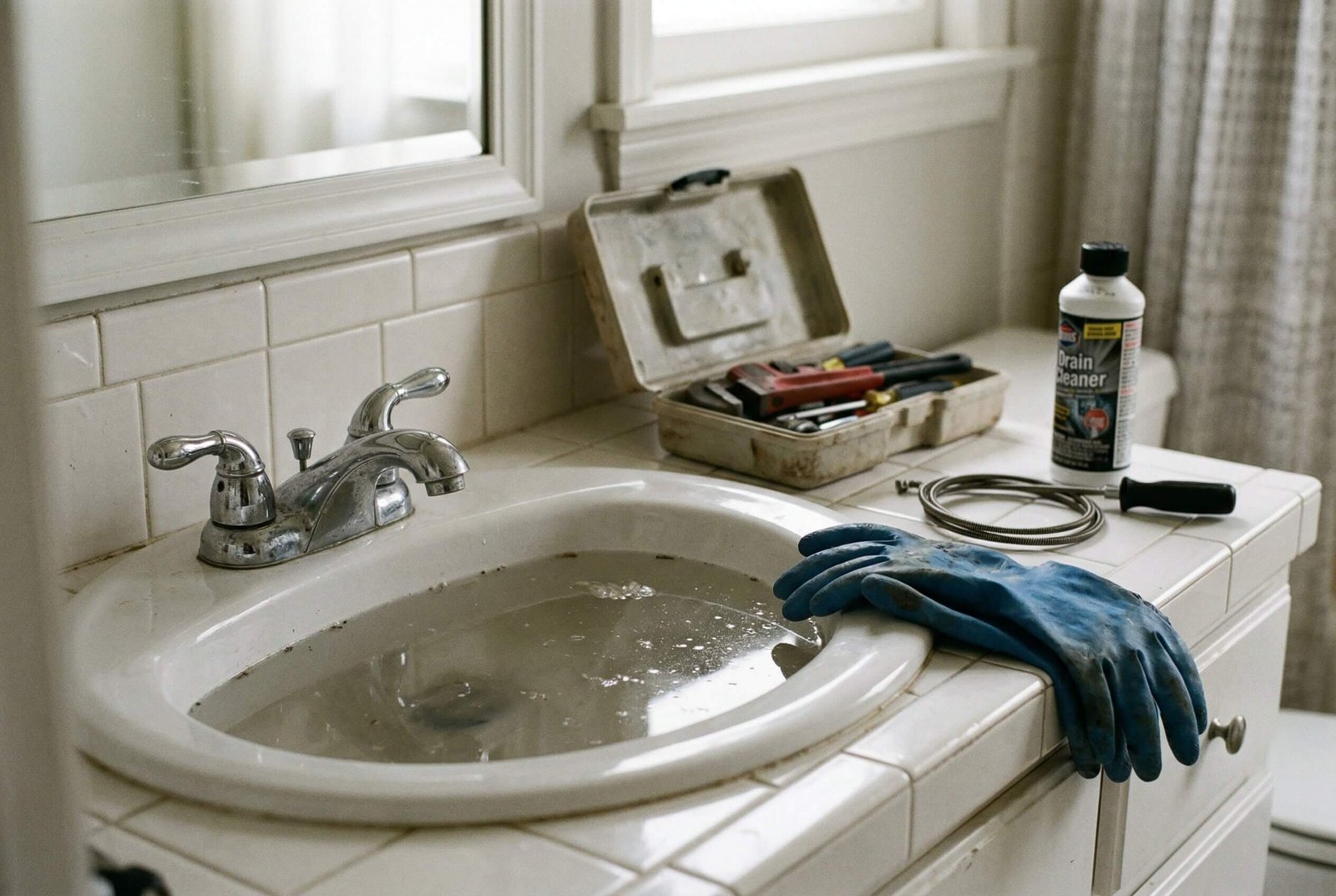
When water begins backing up in a bathroom sink instead of draining normally, it is usually a sign that something inside the plumbing system is restricting the flow of water. In a properly functioning drain system, wastewater should move smoothly from the sink basin through the drain pipe and into the home’s main drainage system. When a blockage or airflow issue develops somewhere in this path, the water may slow down, rise in the basin, or even return back into the sink.
Many homeowners first notice this problem when the sink begins filling with water while it is supposed to be draining. In some situations, the water may drain slowly and then suddenly rise back into the basin. In other cases, the sink may appear normal until another plumbing fixture—such as a shower, bathtub, or washing machine—is used, causing water to push back up through the sink drain.
Bathroom sink water backup typically occurs when debris buildup or a blockage prevents wastewater from moving freely through the pipes. Hair, soap residue, toothpaste, grooming products, and other materials can gradually accumulate inside the drain system. As this buildup grows, it narrows the pipe and restricts water flow, eventually causing water to collect and back up in the sink.
In some situations, the problem may occur deeper inside the plumbing system, such as in the branch drain line or the home’s main drain connection. Airflow issues caused by blocked vent pipes can also affect how water drains from the sink. Understanding the causes and warning signs of sink backup can help homeowners recognize when the drain system may require further inspection.
What This Page Covers
ToggleUnderstanding How a Bathroom Sink Drain System Works
To understand why water backs up in a bathroom sink, it helps to understand how the drain system normally works. In most U.S. homes, bathroom sinks rely on a gravity-based drainage system designed to move wastewater away from the fixture and into the home’s main sewer or septic line. For this process to work properly, water must be able to flow freely through the pipes while air moves through the plumbing vent system to maintain balanced pressure.
When the drain pipes are clear and airflow is unrestricted, water should move smoothly from the sink basin through several plumbing components and into the larger drainage network of the home. However, if debris accumulates in the pipes or airflow inside the system becomes restricted, water movement may slow down or stop completely. When this happens, the water has nowhere to go and may begin rising back into the sink basin.
Understanding the basic structure of the sink drain system can help homeowners identify where blockages may occur and why water sometimes backs up into the sink.
Key Components of a Typical Bathroom Sink Drain
A standard bathroom sink drain system contains several plumbing parts that work together to carry water away from the sink.
Important components include:
-
Drain Opening
The opening at the bottom of the sink basin where water enters the drainage system. -
Stopper Assembly
The mechanical device that allows the sink drain to be opened or closed. Hair and debris often collect around this component. -
Tailpiece Pipe
The vertical pipe located directly below the drain opening that carries water downward toward the P-trap. -
P-Trap
The curved pipe beneath the sink that holds water to block sewer gases from entering the home. -
Trap Arm
The horizontal pipe that connects the P-trap to the drain pipe located inside the wall. -
Branch Drain Line
The pipe inside the wall that carries wastewater from the sink toward the home’s main drain line.
Because these parts include bends, joints, and mechanical components, they are common locations where debris buildup may develop.
How Water Moves Through the Sink Drain System
Bathroom sinks rely on gravity to move wastewater through the plumbing system. When water flows into the drain opening, gravity pulls the water downward through the tailpiece and into the P-trap.
From there, the water continues through the trap arm and into the branch drain line inside the wall. Once inside the branch drain, the water travels through the plumbing system until it reaches the main drain line that leads to the sewer or septic system.
If any part of this path becomes partially blocked, water movement can slow down or stop completely, causing water to collect in the sink basin.
The Role of Airflow and Vent Pipes
Proper drainage also requires air to move through the plumbing system. Vent pipes allow air to enter the drain lines so that water can flow smoothly through the pipes without creating suction or pressure imbalances.
These vent pipes usually extend through the roof of the home and connect to the drain system. If a vent pipe becomes blocked by debris, leaves, or animal nests, the airflow inside the pipes may become restricted. When this happens, the drainage system may struggle to move water efficiently, sometimes contributing to sink backup problems.
Common Signs of Bathroom Sink Water Backing Up
Bathroom sink water backup usually develops gradually before becoming a noticeable plumbing problem. In many homes, the drain may show early warning signs before water begins fully backing up into the sink basin. These symptoms often indicate that a blockage is forming somewhere inside the drain system or that airflow inside the plumbing pipes is becoming restricted.
Recognizing these early signs can help homeowners understand that the drain system is starting to struggle with moving water efficiently. If the underlying issue continues developing, the sink may eventually experience full water backup.
Water Rising When the Sink Drains
One of the most common signs of a developing drain blockage is when water begins rising in the sink basin while it is draining. Instead of moving smoothly down the drain, the water may temporarily collect around the drain opening before slowly disappearing.
This usually indicates that water is having difficulty passing through a partially blocked section of pipe.
Water Returning Into the Sink Basin
In some cases, homeowners notice that the water appears to drain normally at first but then rises back into the sink basin. This can occur when the water briefly moves past a blockage and then flows back toward the sink because the pipe cannot carry the water away fast enough.
When this happens, the sink may fill slightly before slowly draining again.
Water Backing Up When Another Fixture Is Used
Sometimes water may back up into the bathroom sink when another plumbing fixture in the home is used. For example, running water in a nearby shower, bathtub, or washing machine may push water back into the sink drain.
This situation often indicates that multiple fixtures are connected to the same drain line and that a restriction exists somewhere in that shared pipe.
Slow Drainage Before Backup Happens
Slow drainage is often one of the earliest warning signs of a developing sink backup problem. If the sink begins draining more slowly than usual, it may indicate that debris buildup inside the pipes is narrowing the flow path.
As the buildup grows, the drain may eventually become restricted enough to cause water backup.
Gurgling Sounds in the Drain
Unusual sounds coming from the sink drain can also indicate that a backup problem is developing. Gurgling or bubbling noises often occur when air becomes trapped inside partially blocked pipes.
As water moves past the restriction, air bubbles may escape through the water and create these sounds.
Most Common Causes of Bathroom Sink Water Backup
When water backs up in a bathroom sink, it usually means that something inside the drain system is restricting the normal flow of wastewater. In most U.S. homes, bathroom sinks are used multiple times every day for activities such as brushing teeth, washing hands, shaving, and grooming. During these daily routines, small amounts of debris enter the drain and can gradually accumulate inside the pipes.
Over time, materials such as hair, soap residue, toothpaste, and grooming products begin forming buildup along the interior walls of the drain pipes. As this buildup thickens, it narrows the pipe and slows down water movement. Eventually, the drain system may become restricted enough that water can no longer pass through easily, causing it to rise back into the sink.
Understanding the most common causes of bathroom sink water backup can help homeowners identify where the blockage may be located.
Hair and Soap Scum Drain Buildup
Hair is one of the most common materials responsible for bathroom sink blockages. During grooming activities such as shaving or brushing hair, loose strands can easily wash into the drain.
Once inside the pipe, hair often becomes tangled around the sink stopper assembly or sticks to rough surfaces inside the drain. Soap residue can combine with the hair and form a sticky mass known as soap scum. Over time, this mixture can grow large enough to restrict water flow through the pipe.
Toothpaste and Grooming Product Residue
Toothpaste and grooming products frequently contribute to drain buildup. Toothpaste contains ingredients that can leave behind a thick paste-like residue inside the pipes.
Other products such as shaving cream, facial cleansers, and cosmetic products may contain oils and waxes that do not dissolve easily in water. These substances can coat the interior of the pipes and trap additional debris, eventually leading to a blockage.
Sink Stopper Assembly Obstruction
The sink stopper assembly is another common location where debris accumulates. This mechanism sits inside the drain opening and is designed to block or release water when the sink is used.
Hair, soap residue, and other debris can collect around the moving parts of the stopper assembly. As this buildup grows, it may partially block the drain opening and slow the movement of water into the pipes.
P-Trap Debris Accumulation
The P-trap located beneath the sink is designed to hold a small amount of water that prevents sewer gases from entering the home. Because of its curved shape, the P-trap can also collect debris that passes through the drain.
Hair, soap scum, and organic particles may settle in the bottom of the trap over time. If enough debris accumulates, it can restrict water flow and contribute to sink backup.
Branch Drain Line Blockage
In some situations, the blockage causing water backup may exist deeper inside the plumbing system. The branch drain line inside the wall carries wastewater from the sink to the home’s main drain system.
If debris accumulates in this section of pipe, the restriction may prevent water from leaving the sink drain efficiently. When this happens, water may begin backing up into the sink basin.
Hidden Plumbing Causes Homeowners Often Miss
While many bathroom sink backup problems are caused by visible debris near the drain opening or inside the P-trap, some issues originate deeper inside the plumbing system. In these situations, homeowners may clean the sink drain or remove visible debris but still experience water backing up into the basin. This usually indicates that the restriction is located further along the drain path or that airflow inside the plumbing system is being disrupted.
Professional plumbers often investigate these hidden causes when a sink backup continues after basic cleaning. These problems may involve blocked vent pipes, deeper drain line restrictions, shared plumbing pressure issues, or improper pipe installation. Because these parts of the plumbing system are located inside walls or above the roof, they are not always easy for homeowners to inspect.
Understanding these less obvious causes helps explain why sink backup problems sometimes persist even when the visible parts of the drain appear clean.
Partial Blockage Deeper in the Drain Line
A blockage located deeper inside the drain line can prevent wastewater from leaving the sink even when the upper portion of the drain appears clear. Materials such as hair, soap residue, toothpaste buildup, and organic debris may travel past the P-trap and accumulate in the horizontal drain pipe inside the wall.
As this buildup grows, it can gradually narrow the pipe and restrict the flow of water. When the pipe becomes too narrow for water to pass through easily, the water may rise back into the sink basin.
Vent Pipe Blockage
The plumbing vent system plays an important role in how water drains from the sink. Vent pipes allow air to enter the drain system so that water can move smoothly through the pipes.
If a vent pipe becomes blocked by leaves, dirt, or animal nests, airflow inside the plumbing system may become restricted. When the drain cannot pull in enough air, the movement of water through the pipes can slow down or stop, sometimes contributing to sink backup.
Main Drain Line Restriction
In some homes, the blockage causing the sink backup may not be located near the sink at all. The main drain line that carries wastewater from multiple fixtures may develop a partial restriction.
When this occurs, water draining from sinks, showers, or other fixtures may have difficulty moving through the main pipe. As a result, water may back up through the lowest available fixture, which can sometimes be the bathroom sink.
Shared Drain Line Pressure Problems
Many homes have several fixtures connected to the same branch drain line. Bathroom sinks, bathtubs, showers, and sometimes washing machines may share a section of pipe.
If water from one fixture enters the pipe while a blockage exists further down the line, pressure inside the pipe may push water back toward another fixture. This can cause water to rise in the sink even though the sink itself is not being used.
Pipe Misalignment or Slope Issues
Drain pipes must be installed with a slight downward slope so that gravity can move wastewater through the system. If a section of pipe becomes misaligned or installed at an incorrect angle, water may not flow smoothly through that area.
When water slows down in these sections of pipe, debris may begin accumulating more easily, eventually creating a blockage that leads to sink backup.
Where Bathroom Sink Backup Blockages Usually Occur
When bathroom sink water backs up, the blockage responsible for the problem can exist in several different locations within the drain system. In most cases, the restriction develops in areas where debris naturally collects as water moves through the plumbing. These locations often include narrow pipes, curved sections, or mechanical components inside the drain assembly.
Because bathroom sinks are used daily for grooming activities, small particles of hair, soap residue, toothpaste, and other debris frequently enter the drain. As these materials travel through the plumbing system, they may begin sticking to pipe surfaces or gathering in areas where water flow slows down.
Professional plumbers often inspect several key locations when diagnosing a sink backup problem. Understanding these common blockage points can help homeowners recognize where the issue may be developing.
Sink Drain Opening
The drain opening at the bottom of the sink basin is one of the first places where debris may accumulate. Hair strands, soap residue, toothpaste particles, and grooming debris can gather around the metal drain flange or drain guard.
Over time, these materials may partially block the opening and reduce the amount of water entering the drain pipe. When enough debris accumulates, the drain may begin slowing down and eventually cause water to collect in the sink basin.
Stopper Assembly Area
The sink stopper assembly is another common location where debris buildup occurs. The stopper mechanism is designed to allow homeowners to close the drain when filling the sink with water.
Hair and soap residue frequently become tangled around the moving parts of the stopper assembly. Because the stopper sits inside the drain opening, it often catches debris before it moves further down the pipe. As this buildup grows, it may restrict the amount of water that can pass through the drain.
P-Trap Under the Sink
The P-trap is the curved section of pipe located beneath the sink. Its main function is to hold water that blocks sewer gases from entering the home. However, the curved shape of the trap also makes it a place where debris can settle.
Materials such as hair, soap scum, and organic particles may collect inside the bottom portion of the P-trap. When enough debris accumulates in this area, it can restrict water flow and contribute to sink backup.
Horizontal Drain Pipe Inside the Wall
Beyond the P-trap, wastewater flows into a horizontal pipe inside the wall called the trap arm or branch drain. This section of pipe carries water from the sink to the home’s main drain system.
If debris passes through the P-trap and begins collecting in this horizontal pipe, it may gradually narrow the pipe and restrict water movement. Because this section of pipe is hidden inside the wall, blockages in this area are not always easy to identify without professional inspection.
Branch Drain Connection
The branch drain line connects the sink drain system to the larger plumbing network of the home. In some situations, debris may accumulate at the connection point where several pipes meet.
When this area becomes partially blocked, water draining from the sink may struggle to enter the larger pipe system. As a result, water may begin backing up into the sink basin.
Warning Signs the Drain Backup May Become a Serious Problem
A bathroom sink that occasionally drains slowly may not always indicate a major plumbing issue. However, when water begins backing up regularly, it can signal that the drain system is developing a more serious blockage. In many cases, the plumbing system will show warning signs before a complete drain backup occurs.
These early indicators often appear as changes in how the sink drains, unusual sounds from the pipes, or drainage problems affecting other fixtures in the home. Recognizing these warning signs can help homeowners understand when a minor drain restriction may be developing into a larger plumbing problem.
If these symptoms continue or become more frequent, it may indicate that the blockage inside the drain system is growing and may eventually require professional inspection.
Backup Occurring More Frequently
One of the clearest warning signs of a developing plumbing issue is when sink backups begin occurring more often. At first, the sink may only drain slowly or occasionally hold water for a short time before clearing.
As debris buildup inside the pipes increases, the restriction becomes more severe. The sink may begin filling with water more quickly during normal use, and the drain may take longer to clear.
Water Appearing in Multiple Fixtures
If water begins backing up in the bathroom sink when another fixture is used—such as a bathtub, shower, or washing machine—it may indicate a blockage in a shared drain line. Multiple plumbing fixtures often connect to the same branch drain pipe.
When water from one fixture enters the pipe and encounters a restriction further down the line, the pressure can push water back toward another fixture, sometimes causing it to appear in the sink.
Sewer Odors With Drain Backup
Unpleasant sewer-like odors coming from the sink drain may indicate that organic debris has accumulated inside the pipes and begun decomposing. This buildup can trap bacteria and produce strong odors.
In some cases, these smells may also signal that the P-trap is not functioning properly or that the blockage inside the drain is preventing wastewater from moving through the system.
Water Backing Up Quickly After Drain Use
When a sink drain becomes severely restricted, water may begin backing up almost immediately after the faucet is turned on. Instead of draining slowly over time, the water may collect in the basin within seconds.
This behavior often indicates that the blockage inside the drain system has become large enough to prevent normal water movement through the pipes.
How Professional Plumbers Diagnose Sink Backup Problems
When bathroom sink water repeatedly backs up, professional plumbers follow a systematic process to identify where the blockage or restriction exists. Because the plumbing system contains several connected components—from the sink drain to pipes inside the wall and the home’s main drainage line—finding the exact cause requires careful inspection.
Plumbers typically begin by examining the visible parts of the sink drain assembly before moving deeper into the plumbing system if necessary. Their goal is to determine whether the problem is caused by a local blockage near the sink or by a restriction further along the drain line.
Using specialized tools and diagnostic techniques, plumbers can locate hidden debris buildup, airflow problems, or pipe restrictions that may not be visible to homeowners.
Visual Inspection of Drain Components
The first step often involves inspecting the visible parts of the sink drain system. Plumbers examine the drain opening, stopper assembly, tailpiece pipe, and P-trap located beneath the sink.
During this inspection, they look for signs of hair accumulation, soap residue, or debris that may be blocking the drain opening. They may also check whether the stopper assembly is functioning properly and whether debris has become tangled around its moving parts.
Testing Drain Flow
Plumbers may run water through the sink while observing how quickly the water drains. This helps them determine whether the restriction is partial or severe.
If the water drains slowly but eventually clears, the blockage may be forming near the drain opening or inside the P-trap. If the water quickly rises in the sink basin, it may indicate that the restriction exists deeper in the plumbing system.
Drain Auger Inspection
A drain auger, commonly known as a plumbing snake, is a flexible tool used to locate and break apart debris inside drain pipes. Plumbers can insert this tool into the drain opening and feed it through the pipes to identify where the blockage is located.
As the auger moves through the pipe, it can catch hair, soap buildup, or other debris that may be restricting water flow.
Plumbing Camera Inspection
In more complex cases, plumbers may use a small waterproof inspection camera attached to a flexible cable. This camera can travel through the drain pipes and transmit real-time images of the interior of the plumbing system.
Camera inspections help plumbers identify hidden blockages, pipe damage, or buildup located deeper inside the drain system.
Vent System Inspection
If the drain system appears clear but water still backs up, plumbers may investigate the plumbing vent system. Vent pipes allow air to enter the drain lines so that water can move smoothly through the pipes.
A blocked vent pipe can interfere with airflow inside the plumbing system and affect how the sink drains. Plumbers may inspect roof vents or test the airflow within the drain system to determine whether venting problems are contributing to the backup.
Real Plumbing Scenarios in U.S. Homes
Bathroom sink water backup problems often develop in ways that reflect how sinks are used in everyday households. Professional plumbers across the United States frequently encounter similar situations when homeowners report that water is rising in the sink basin instead of draining normally. These real-life scenarios help explain why drain blockages form and why some homes experience backup problems more frequently than others.
Factors such as the age of the home, daily sink usage habits, water quality, and plumbing layout can all influence how quickly debris builds up inside the drain system. In many cases, sink backups are not caused by a single event but by gradual accumulation of materials inside the pipes over time.
Older Homes With Narrow Pipes
Many older homes in the United States were built with narrower drain pipes compared to modern plumbing systems. Over time, mineral deposits, soap residue, and organic debris can slowly accumulate along the interior surfaces of these pipes.
As the pipe diameter becomes smaller due to buildup, the amount of water that can pass through the pipe decreases. This makes older plumbing systems more vulnerable to sink backup problems, especially when additional debris enters the drain.
Homes With Heavy Grooming Product Use
Bathroom sinks are commonly used for grooming activities such as brushing teeth, shaving, applying makeup, and washing hair. These activities often introduce materials like toothpaste, shaving cream, cosmetic residue, and hair particles into the drain system.
Many grooming products contain oils, waxes, or thick ingredients that do not dissolve easily in water. When these substances enter the drain pipes, they can stick to the interior surfaces and trap additional debris, gradually forming a blockage.
Multi-Bathroom Homes With Shared Drain Lines
In homes with multiple bathrooms, several fixtures may share the same branch drain line. This means that sinks, showers, and bathtubs in nearby rooms may all send wastewater into the same pipe before it reaches the main drain system.
If a blockage develops somewhere in this shared pipe, water from one fixture may affect another. For example, running water in a shower or washing machine may push water back toward the bathroom sink if the pipe is partially blocked.
Homes With Hard Water Buildup
In areas with hard water, minerals such as calcium and magnesium can accumulate inside plumbing pipes. These mineral deposits gradually form a rough layer along the interior walls of the pipes.
As the mineral buildup thickens, it reduces the effective diameter of the pipe and creates surfaces where debris can more easily attach. Over time, this combination of mineral deposits and organic debris can contribute to drain restrictions that lead to sink backup problems.
Basic Prevention Tips for Sink Drain Backup
While bathroom sink water backup is often caused by debris buildup inside the drain system, simple daily habits can help reduce the amount of material entering the pipes. Because bathroom sinks are used frequently for grooming activities, small particles such as hair, soap residue, and toothpaste can easily accumulate inside the plumbing over time. Preventing excessive debris from entering the drain system can significantly reduce the likelihood of blockages forming.
Although these prevention tips cannot eliminate all plumbing issues, they can help homeowners maintain smoother drain flow and detect potential problems before they become serious. Regular attention to sink usage and basic maintenance can also help extend the lifespan of the drain components.
Preventing Hair and Debris From Entering the Drain
Hair is one of the most common causes of bathroom sink blockages. During shaving, brushing, or grooming, loose hair strands can easily fall into the sink and enter the drain opening.
To reduce buildup, homeowners can:
-
Remove visible hair from the sink basin before rinsing it down the drain
-
Avoid rinsing large clumps of hair into the sink
-
Periodically inspect the drain opening for trapped debris
These small habits can help prevent hair from accumulating inside the drain system.
Keeping Sink Stopper Assemblies Clean
The sink stopper assembly sits inside the drain opening and is one of the first places where debris collects. Hair, soap residue, and grooming product buildup often accumulate around this mechanism.
Occasionally inspecting and cleaning the stopper area can help prevent debris from building up and blocking water flow through the drain opening.
Monitoring Drain Speed
Changes in how quickly the sink drains can provide early warning signs of developing blockages. If the sink begins draining more slowly than usual, it may indicate that debris is starting to accumulate somewhere inside the pipes.
Paying attention to these early changes can help homeowners recognize potential drain issues before they develop into full backup problems.
Regular Drain Maintenance Habits
Maintaining a clean sink environment can also help reduce the amount of debris entering the plumbing system. Simple cleaning habits such as wiping away soap residue and removing grooming debris from the sink surface can prevent materials from washing into the drain.
These preventative measures can help keep the sink drain system functioning more efficiently over time.
When to Call a Professional Plumber
A bathroom sink that occasionally drains slowly may not always require professional service. However, when water begins backing up regularly or the sink fails to drain properly, it can indicate that the blockage is located deeper within the plumbing system. In these situations, professional inspection is often necessary to identify the source of the problem and prevent further damage to the drain system.
Plumbers have specialized tools and experience that allow them to diagnose drain problems that cannot easily be seen from the sink itself. Because many parts of the plumbing system are hidden inside walls or beneath floors, locating the exact location of a blockage often requires professional equipment.
Homeowners should consider contacting a plumber if the sink backup continues after basic cleaning or if other plumbing fixtures begin showing similar drainage problems.
Persistent Water Backup
If water consistently rises in the sink basin when the faucet is running, it usually indicates that the drain system is experiencing a significant restriction. When this happens repeatedly, the blockage may be located deeper in the drain line where homeowners cannot easily access it.
Professional plumbers can inspect the drain system and determine whether the restriction is located in the P-trap, branch drain pipe, or further along the plumbing system.
Multiple Fixtures Showing Drain Problems
If water backs up in the sink when other fixtures are used—such as a bathtub, shower, or washing machine—it may indicate a blockage in a shared drain line. Many plumbing systems connect several fixtures to the same branch drain pipe.
When this pipe becomes restricted, water from one fixture can push back toward another fixture. This situation often requires professional inspection to locate the blockage inside the shared drain line.
Strong Odors From the Drain
Persistent unpleasant odors coming from the sink drain can indicate that organic debris is accumulating inside the plumbing system. As this material breaks down, bacteria may produce strong sewer-like smells.
A plumber can inspect the drain pipes and determine whether the odor is caused by debris buildup, a blocked drain line, or another plumbing issue affecting the system.
Water Draining Extremely Slowly
If the sink drains extremely slowly even after visible debris has been removed from the drain opening, the blockage may exist deeper inside the plumbing pipes. In these cases, specialized tools such as drain augers or inspection cameras may be required to locate the restriction.
Professional plumbers can use these tools to identify the exact location of the blockage and determine the best way to restore normal drainage.
Final Thoughts
Bathroom sink water backing up is one of the most common plumbing issues homeowners experience, and it almost always indicates that something inside the drain system is restricting the normal flow of water. In many cases, the problem develops gradually as everyday materials such as hair, soap residue, toothpaste, and grooming products accumulate inside the pipes. Over time, this buildup can narrow the drain pathway and slow the movement of wastewater, eventually causing water to rise back into the sink basin.
While minor buildup near the drain opening or inside the P-trap may be responsible in some situations, the blockage can also occur deeper within the plumbing system. Restrictions inside branch drain lines, airflow problems caused by blocked vent pipes, or debris accumulation further down the drainage network can all contribute to sink backup issues. Because several plumbing components work together to move water away from the sink, identifying the exact cause often requires understanding how the entire drain system functions.
Paying attention to early warning signs—such as slow drainage, gurgling sounds, or occasional water backup—can help homeowners recognize when a drain problem is beginning to develop. Addressing these signs early can prevent the blockage from becoming severe enough to cause complete sink backup or affect other plumbing fixtures in the home.
In cases where sink backups occur frequently or begin affecting multiple fixtures, professional inspection may be necessary to locate the source of the restriction and restore normal drainage within the plumbing system.