
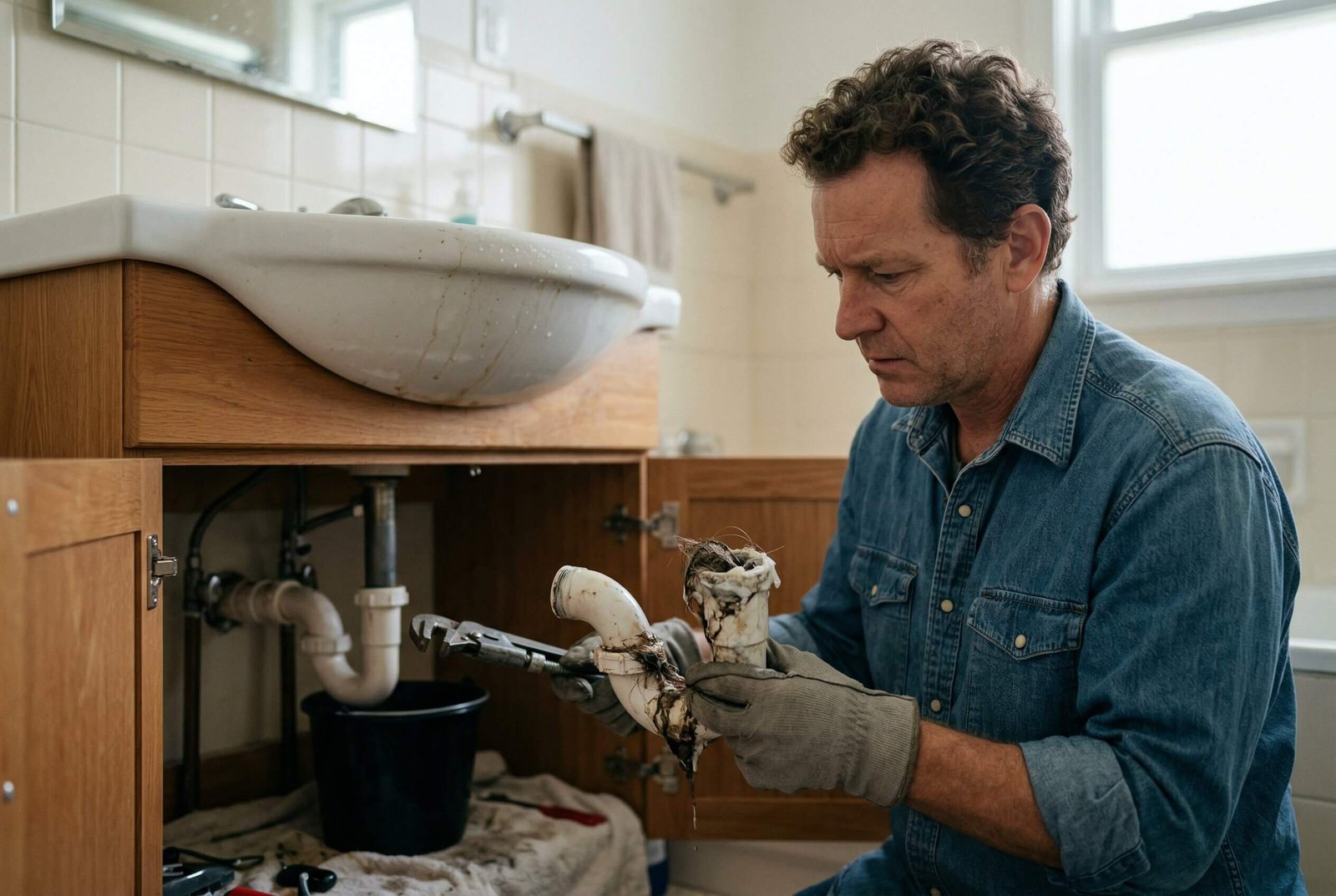
A bathroom sink that keeps clogging repeatedly can be frustrating for homeowners. The drain may appear to be fixed after clearing a blockage, only to clog again within a few days or weeks. In many cases, the sink may drain normally for a short period before water begins slowing down, pooling around the drain opening, or stopping completely.
This situation often indicates that the underlying cause of the clog has not been fully resolved. While removing visible debris near the drain opening may temporarily improve drainage, recurring clogs usually suggest that buildup exists deeper within the drain system. Materials such as hair, soap scum, toothpaste residue, shaving debris, and grooming products can accumulate inside the pipes over time. As this buildup thickens, it gradually narrows the drain pathway and restricts water flow.
Another reason bathroom sinks clog repeatedly is that some debris becomes trapped around mechanical components such as the sink stopper assembly. Hair and soap residue frequently gather around this mechanism, creating a partial blockage that continues catching additional debris each time the sink is used.
In other situations, recurring clogs may be caused by problems further inside the plumbing system. Partial blockages in the drain line, venting issues, or pipe alignment problems can all contribute to repeated sink clogs. Understanding why these clogs keep returning helps homeowners identify when a simple cleaning may not fully resolve the issue.
What This Page Covers
ToggleUnderstanding How Bathroom Sink Drain Systems Work
Bathroom sink drains are designed to carry wastewater away from the sink basin and into the home’s plumbing system using gravity and proper airflow. When the system is functioning correctly, water flows smoothly through several connected pipes and eventually reaches the main drain line that leads to the sewer or septic system. However, if debris accumulates or airflow becomes restricted, the drain may struggle to move water efficiently.
Repeated sink clogs often occur because the drainage system contains several areas where debris can collect over time. Hair, soap residue, toothpaste, and grooming products can become trapped inside these components, gradually forming a blockage. Understanding the structure of the sink drain system helps explain why clogs develop and why some sinks experience recurring blockage problems.
Key Components of a Typical Bathroom Sink Drain
A standard bathroom sink drain system in U.S. homes contains several parts that guide wastewater through the plumbing network.
Important components include:
-
Drain Opening
The opening at the bottom of the sink basin where water first enters the drain system. -
Pop-Up Stopper Assembly
The mechanical device that allows the sink to hold water or release it. This component commonly traps hair and debris. -
Tailpiece Pipe
The vertical pipe directly below the drain opening that carries water toward the P-trap. -
P-Trap
The curved pipe beneath the sink that holds water to prevent sewer gases from entering the home. -
Trap Arm
The horizontal pipe that connects the P-trap to the plumbing system inside the wall. -
Branch Drain Line
The pipe located inside the wall that transports wastewater from the sink to the main drain line.
Each of these components can become a location where debris accumulates and contributes to recurring sink clogs.
How Wastewater Moves Through the Sink Drain
Bathroom sink drainage relies primarily on gravity. When water enters the drain opening, gravity pulls it downward through the tailpiece and into the P-trap. From there, the water flows through the trap arm and into the branch drain pipe located inside the wall.
As long as the pipes remain clear and properly aligned, water should move smoothly through the system. However, if debris begins to accumulate along the interior walls of the pipes, the flow of water may slow down. When the restriction becomes large enough, the sink may begin clogging repeatedly.
The Importance of Airflow in Plumbing
Airflow is an essential part of any plumbing system. Vent pipes allow air to enter the drain system so that water can move freely through the pipes without creating pressure imbalances.
If the vent pipe becomes blocked by debris, leaves, or animal nests, airflow inside the plumbing system may become restricted. This can affect how water moves through the drain lines and sometimes contribute to recurring sink clog problems.
Common Signs of a Recurring Sink Clog
When a bathroom sink keeps clogging repeatedly, the plumbing system often shows warning signs before the drain becomes completely blocked again. Many homeowners notice that the sink briefly drains normally after clearing a clog, but within a short time the same symptoms begin returning. These repeated signs usually indicate that debris remains somewhere in the drain system and continues restricting water flow.
Recurring clogs typically develop gradually. Small amounts of hair, soap residue, toothpaste, and grooming products collect inside the pipes, slowly narrowing the path where water flows. As this buildup grows, the drain may struggle to keep up with normal sink use, leading to frequent blockages.
Recognizing the early symptoms of recurring clogs can help homeowners understand that the problem may not be fully resolved.
Sink Drains Slowly After Being Cleared
One of the most common signs of a recurring clog is when the sink begins draining slowly again shortly after the blockage has been removed. The drain may initially appear to work properly, but within a few days the water begins taking longer to leave the basin.
This often happens when only part of the debris was removed during the initial cleaning, allowing the remaining buildup to continue restricting the pipe.
Frequent Hair or Debris Near the Drain Opening
If hair and debris frequently appear around the drain opening, it may indicate that buildup is forming just below the surface of the drain. Hair can easily become tangled around the sink stopper assembly or the edges of the drain opening.
Once trapped in this area, the hair can catch soap residue and other materials, creating a blockage that continues growing each time the sink is used.
Sink Clog Returns After Using Chemical Cleaners
Many homeowners attempt to clear clogs using chemical drain cleaners. While these products may temporarily dissolve some types of debris, they do not always remove the entire blockage.
If the clog returns shortly after using chemical cleaners, it may indicate that a large amount of buildup remains inside the pipes or that the blockage is located deeper in the plumbing system.
Water Pooling Around the Drain Opening
When water begins collecting around the drain opening instead of flowing smoothly into the pipes, it often signals that the drain pathway is partially blocked. This pooling effect can appear even when the faucet is running at a low flow.
As the restriction grows larger, the water may remain in the basin for longer periods before draining.
Gurgling or Bubbling Sounds in the Drain
Unusual noises from the sink drain can also indicate a developing blockage. Gurgling or bubbling sounds occur when trapped air moves through water in partially blocked pipes.
These sounds may appear when water is draining from the sink or when nearby fixtures are used.
Most Common Causes of Repeated Bathroom Sink Clogs
When a bathroom sink keeps clogging repeatedly, the underlying cause is usually ongoing debris buildup inside the drain system. Bathroom sinks are used daily for grooming tasks such as brushing teeth, shaving, washing hands, and applying personal care products. During these activities, small amounts of debris enter the drain and can gradually accumulate inside the pipes.
Unlike sudden blockages caused by a single object, recurring sink clogs usually develop slowly over time. Hair, soap residue, toothpaste, cosmetic products, and organic particles can stick to the interior surfaces of the pipes. As this material builds up, it narrows the drain pathway and creates areas where additional debris becomes trapped. Eventually, the drain system may clog repeatedly because the original buildup remains inside the pipes.
Understanding the most common causes of repeated clogs can help homeowners recognize why the blockage continues returning.
Hair Buildup Around the Stopper Assembly
Hair is one of the leading causes of bathroom sink clogs. During shaving, grooming, or brushing hair, loose strands can easily fall into the sink and enter the drain opening.
The sink stopper assembly often traps these hair strands. Because the stopper mechanism contains small moving parts and narrow openings, hair can become tangled around it. Once trapped, the hair can collect soap residue and other debris, gradually forming a blockage that returns even after partial cleaning.
Soap Scum and Toothpaste Residue
Soap and toothpaste frequently contribute to recurring sink clogs. Soap residue can combine with minerals in the water to create a sticky substance known as soap scum.
Toothpaste also contains ingredients that leave behind a thick residue inside the pipes. When these materials coat the interior surfaces of the drain, they create rough areas where hair and other debris can easily attach. Over time, this buildup can slowly reduce the diameter of the pipe.
Shaving Debris and Grooming Waste
Bathroom sinks are commonly used for shaving facial hair or trimming small amounts of hair. These hair particles can easily enter the drain system and become trapped inside the pipes.
Because hair tends to tangle together, it can form clusters that catch other debris moving through the drain. As these clusters grow larger, they can contribute to recurring clogs.
Cosmetic and Skincare Product Residue
Many skincare and cosmetic products contain oils, waxes, or thick ingredients that do not dissolve easily in water. When these products are rinsed into the sink, they may coat the interior of the pipes.
Over time, these substances create a sticky layer that traps hair, soap residue, and other debris. This combination can gradually develop into a blockage that repeatedly affects the sink drain.
Small Objects Accidentally Entering the Drain
In some cases, small objects may accidentally fall into the sink drain. Items such as dental floss, cotton swabs, small plastic packaging, or pieces of paper can become lodged inside the pipes.
Even if these objects do not fully block the drain immediately, they can create an obstruction that catches additional debris. This can lead to recurring clogs as materials continue accumulating around the object.
Hidden Plumbing Causes of Recurring Sink Clogs
When a bathroom sink continues clogging repeatedly even after visible debris has been removed, the cause may be located deeper within the plumbing system. Many homeowners clear hair or buildup near the drain opening, only to find that the sink clogs again shortly afterward. This often happens when the underlying restriction is located further along the drain line or when structural issues within the plumbing system make it easier for debris to accumulate.
Professional plumbers frequently investigate these hidden causes when recurring clogs cannot be resolved through basic cleaning. Because parts of the drain system run inside walls or beneath floors, the source of the blockage may not be visible from the sink itself.
Understanding these less obvious causes helps explain why some sinks continue clogging even after multiple attempts to clear the drain.
Partial Blockage Deep in the Drain Line
One common cause of recurring sink clogs is a partial blockage located deeper inside the drain pipe. Hair, soap residue, toothpaste, and grooming products may pass through the P-trap and accumulate inside the horizontal pipe located within the wall.
As this buildup grows, it narrows the pipe and slows the movement of water. Even if the upper portion of the drain is cleared, the remaining buildup deeper in the pipe may continue trapping debris, causing the sink to clog again.
Rough Interior Pipe Surfaces Catching Debris
Over time, the interior surfaces of drain pipes can become rough due to mineral deposits, corrosion, or soap scum buildup. These rough areas create surfaces where hair and organic debris can easily attach.
Once debris begins sticking to the pipe walls, additional material moving through the drain may collect in the same location. This process gradually forms a blockage that repeatedly affects the sink drain.
Improper Pipe Slope Inside the Wall
Drain pipes must be installed with a slight downward slope so gravity can move wastewater through the system efficiently. If the pipe inside the wall is not angled correctly, water may slow down or pool in certain sections of the pipe.
When water movement slows in these areas, debris can settle more easily and begin accumulating. Over time, this buildup may contribute to recurring sink clogs.
Vent Pipe Restrictions
The plumbing vent system allows air to enter the drain pipes so water can flow smoothly through the plumbing network. If the vent pipe becomes partially blocked by debris, leaves, or animal nests, airflow inside the drain system may become restricted.
When proper airflow is disrupted, water may move more slowly through the pipes, making it easier for debris to settle and form blockages.
Shared Drain Line Problems
Many bathroom fixtures share a common drain pipe. Sinks, showers, and bathtubs located near each other often send wastewater into the same branch drain line before reaching the main drainage system.
If a partial blockage develops in this shared pipe, debris from multiple fixtures may accumulate in the same location. This buildup can repeatedly affect the sink drain even after the visible portion of the pipe has been cleared.
Where Recurring Sink Clogs Usually Form
When a bathroom sink keeps clogging repeatedly, the blockage usually forms in areas of the drain system where water flow slows down or where debris naturally collects. Because bathroom sinks handle materials like hair, soap residue, toothpaste, and grooming products every day, these substances often accumulate in specific sections of the plumbing.
These areas typically include narrow openings, curved pipes, and mechanical components inside the sink drain assembly. Over time, debris can attach to pipe surfaces in these locations and begin forming a blockage that continues growing with each use of the sink.
Professional plumbers often inspect several common clog points when diagnosing recurring sink drainage problems.
Drain Opening and Flange Area
The drain opening at the bottom of the sink basin is often the first place where debris begins accumulating. Hair strands, toothpaste residue, soap particles, and grooming debris may collect around the metal drain flange.
Because the opening is narrow, even a small amount of debris can reduce the flow of water entering the drain pipe. If this buildup continues collecting, it may begin catching additional material and gradually contribute to a clog.
Sink Stopper Mechanism
The sink stopper assembly is one of the most common locations where recurring clogs develop. This component sits inside the drain opening and includes moving parts designed to block or release water when the sink is used.
Hair frequently becomes tangled around the stopper mechanism. As soap residue and toothpaste particles combine with the hair, they form a sticky mass that restricts water flow. Even if some debris is removed, remaining buildup around the stopper can quickly trap more debris and recreate the clog.
Tailpiece Pipe Under the Sink
The tailpiece pipe is the vertical pipe located directly beneath the sink drain opening. It carries water from the sink into the P-trap.
Because debris from the drain opening passes through this pipe first, it can accumulate along the interior walls if buildup is already present. Over time, the narrowing of the pipe can slow water movement and contribute to repeated clogs.
P-Trap Buildup Zone
The P-trap is a curved section of pipe located beneath the sink. Its primary purpose is to hold a small amount of water that blocks sewer gases from entering the home. However, the curved shape of the trap also makes it a natural location where debris may settle.
Hair clusters, soap scum, and organic debris can collect inside the lowest part of the P-trap. As this buildup grows, it can restrict water flow and cause the sink to clog repeatedly.
Horizontal Pipe Inside the Wall
After leaving the P-trap, wastewater travels through a horizontal pipe inside the wall known as the trap arm or branch drain line. Because this section of pipe is hidden behind the wall, buildup inside it may go unnoticed.
If debris begins accumulating in this area, the restriction can cause recurring clogs even when the visible parts of the sink drain appear clean.
Warning Signs the Problem May Become More Serious
A bathroom sink that clogs occasionally may simply have a small buildup near the drain opening. However, when clogs begin occurring frequently or the symptoms start affecting other plumbing fixtures, the issue may indicate a more serious restriction within the plumbing system. Repeated clogs often develop gradually, and the plumbing system may show warning signs before the problem becomes severe.
Recognizing these warning signs can help homeowners understand when a simple drain cleaning may no longer be enough to resolve the issue. If these symptoms continue appearing, the blockage may be located deeper inside the drain line or involve multiple parts of the plumbing system.
Sink Clogging More Frequently
One of the clearest warning signs is when the sink begins clogging more often. At first, the sink may only clog once every few weeks or months. Over time, the interval between clogs may become shorter.
This usually indicates that debris buildup inside the pipes is continuing to grow. As the restriction becomes larger, the drain system may struggle to move water efficiently, causing the sink to clog more frequently.
Drain Problems Appearing in Other Fixtures
If other plumbing fixtures in the home begin showing drainage problems, the issue may involve a shared drain line. Sinks, bathtubs, and showers located near each other often connect to the same branch drain pipe.
When a blockage develops in this shared pipe, wastewater from one fixture may affect another. For example, water draining from a shower or washing machine may cause the bathroom sink to slow down or clog again.
Water Backing Up Into the Sink
Another warning sign of a serious plumbing restriction is water backing up into the sink basin instead of draining normally. This may occur when the faucet is running or when nearby fixtures are used.
When the plumbing system cannot move water through the pipes quickly enough, the excess water may return toward the sink and collect in the basin.
Persistent Sewer Odors From the Drain
Strong or persistent sewer odors coming from the sink drain can also signal a developing plumbing issue. Organic debris trapped inside the pipes may begin decomposing and producing unpleasant smells.
In some cases, these odors may also indicate that wastewater is not moving through the pipes efficiently due to a blockage deeper in the drain system.
How Professional Plumbers Diagnose Recurring Sink Clogs
When a bathroom sink keeps clogging repeatedly, professional plumbers follow a structured diagnostic process to locate the root cause. Because the clog can form anywhere from the drain opening to pipes hidden inside the wall, plumbers typically inspect the plumbing system step by step. Their goal is to determine whether the blockage is located near the sink, deeper in the drain line, or caused by a broader plumbing system issue.
Recurring clogs are often different from one-time blockages. In many cases, the pipe already contains buildup that continues catching debris each time the sink is used. Professional plumbers use specialized tools and inspection techniques to identify the exact location of the buildup and understand why the clog keeps returning.
Visual Inspection of Sink Drain Components
The first step usually involves examining the visible parts of the sink drain assembly. Plumbers inspect the drain opening, stopper mechanism, tailpiece pipe, and P-trap located beneath the sink.
During this inspection, they look for hair buildup, soap residue, toothpaste accumulation, or debris wrapped around the stopper assembly. These areas often reveal early signs of recurring clog formation.
Removing and Inspecting the Stopper Assembly
Because the sink stopper commonly traps hair and debris, plumbers often remove the stopper assembly to inspect it closely. Hair can easily become tangled around the stopper rod or collect along the sides of the stopper.
If buildup is present, this area may be the primary reason the sink continues clogging repeatedly.
Drain Auger Testing
If the clog appears deeper in the pipe, plumbers may use a drain auger (plumbing snake) to explore the drain system. This flexible tool can travel through the pipes and help identify where debris has accumulated.
As the auger moves through the pipe, it may pull out hair clusters, soap scum, or organic buildup that has been restricting water flow.
Plumbing Camera Inspection
For persistent or difficult cases, plumbers may use a small waterproof camera attached to a flexible cable. This camera travels through the drain pipes and allows plumbers to view the interior of the plumbing system in real time.
Camera inspections help identify deeper blockages, mineral buildup, pipe misalignment, or other structural issues affecting drainage.
Vent System Evaluation
If the drain pipes appear clear but clogs continue forming, plumbers may inspect the plumbing vent system. Vent pipes allow air to enter the drainage system so water can move smoothly through the pipes.
A blocked vent pipe can interfere with proper drainage and contribute to recurring clogs. Plumbers may inspect the roof vent or evaluate airflow within the drain system to determine whether venting problems are affecting the sink.
Real Plumbing Scenarios in U.S. Homes
Recurring bathroom sink clogs are a common issue plumbers encounter in homes across the United States. While the underlying cause is usually debris buildup inside the drain system, the specific circumstances that lead to repeated clogs often depend on how the sink is used, the age of the plumbing system, and the type of water supply in the area.
Understanding these real-world scenarios helps explain why some sinks clog repeatedly while others rarely experience drainage problems. Many of these situations involve daily household habits that gradually contribute to drain buildup over time.
Homes With Heavy Grooming Product Use
In many households, bathroom sinks are used for a wide range of grooming activities, including brushing teeth, shaving, applying makeup, washing hair, and using skincare products. These activities introduce various substances into the drain system.
Products such as shaving cream, facial cleansers, cosmetic residue, and oils from skincare products can coat the interior surfaces of the pipes. Once these substances build up inside the drain, they create sticky areas that trap hair and other debris. Over time, this combination can lead to recurring sink clogs.
Older Homes With Narrow Drain Pipes
Older homes often have plumbing systems that were installed decades ago. These pipes may have a smaller internal diameter compared to modern plumbing installations. Over time, mineral deposits, corrosion, and soap residue can accumulate along the pipe walls.
As the interior space inside the pipe becomes smaller, it becomes easier for debris such as hair and soap scum to become trapped. This can lead to recurring clogs even when only small amounts of debris enter the drain.
Hard Water Buildup in Drain Pipes
In many regions of the United States, water supplies contain high levels of minerals such as calcium and magnesium. These minerals can accumulate inside plumbing pipes over time and form hard deposits along the pipe walls.
Mineral buildup creates rough surfaces inside the pipes that make it easier for hair and debris to attach. Once debris begins collecting in these areas, the buildup can grow gradually and lead to repeated clogging.
Shared Drain Systems in Multi-Bathroom Homes
In homes with multiple bathrooms, several fixtures often share the same branch drain line. Sinks, bathtubs, and showers located near each other may all connect to a single pipe before reaching the main drain line.
If debris from different fixtures accumulates in this shared pipe, it can create a restriction that affects multiple fixtures. In these situations, the bathroom sink may clog repeatedly even though the main buildup is located further down the shared drain line.
Basic Prevention Tips to Reduce Recurring Clogs
While bathroom sink clogs are common, simple maintenance habits can help reduce how often they occur. Because sinks are used daily for grooming activities, small amounts of debris enter the drain system regularly. Over time, these materials can accumulate inside the pipes and form blockages that cause repeated clogs.
Preventive care focuses on reducing the amount of debris entering the drain and keeping key components of the sink clean. These habits can help slow the buildup inside the plumbing system and allow water to move through the pipes more efficiently.
Preventing Hair From Entering the Drain
Hair is one of the most common causes of recurring bathroom sink clogs. Loose hair strands from shaving, grooming, or brushing can easily wash into the drain opening.
Homeowners can reduce this buildup by:
-
Removing visible hair from the sink basin before rinsing it down the drain
-
Avoiding rinsing clumps of hair into the sink
-
Periodically checking the drain opening for trapped hair
Limiting the amount of hair entering the drain can significantly reduce clog formation.
Cleaning the Stopper Assembly Regularly
The sink stopper assembly is a common location where hair and soap residue accumulate. Because the stopper sits inside the drain opening, it often traps debris before it can move further into the pipes.
Occasionally removing and cleaning the stopper assembly can help prevent debris buildup that contributes to recurring clogs.
Monitoring Sink Drain Performance
Paying attention to how quickly the sink drains can provide early warning signs of developing clogs. If the water begins draining more slowly than usual, it may indicate that debris is starting to accumulate inside the pipes.
Addressing slow drainage early can help prevent the blockage from growing large enough to cause repeated clogs.
Maintaining a Clean Sink Environment
Keeping the sink basin clean and free of debris can also help reduce the materials entering the plumbing system. Wiping away soap residue, toothpaste splashes, and grooming debris before rinsing the sink can limit the buildup inside the drain pipes.
These simple habits can help maintain smoother drainage and reduce the likelihood of recurring sink clogs.
When to Call a Professional Plumber
A bathroom sink that clogs occasionally may not always require professional plumbing service. However, when the sink continues clogging repeatedly despite basic cleaning or maintenance, it may indicate that the underlying problem exists deeper within the plumbing system. In these situations, professional inspection can help locate the source of the restriction and prevent the issue from continuing.
Plumbers have specialized tools and diagnostic methods that allow them to investigate hidden parts of the drain system that homeowners cannot easily access. Because many drain pipes run inside walls or beneath floors, identifying the exact location of recurring buildup often requires professional equipment.
Homeowners should consider contacting a plumber when recurring clogs begin affecting normal sink usage or when other plumbing fixtures start showing similar symptoms.
Recurring Clogs After Cleaning the Drain
If the sink continues clogging shortly after removing visible debris from the drain opening or stopper assembly, the blockage may be located deeper inside the drain line. In these cases, clearing the upper portion of the drain may only provide temporary relief.
A plumber can inspect the drain pipes and determine whether debris buildup exists further along the plumbing system.
Drain Problems Affecting Multiple Fixtures
When multiple fixtures in the home begin experiencing drainage problems, the issue may involve a shared drain pipe. Bathroom sinks, showers, bathtubs, and washing machines often connect to the same branch drain line.
If a blockage develops in this shared pipe, it can affect several fixtures at once. Professional inspection can help locate the restriction and restore proper drainage.
Persistent Slow Drainage
If the sink drains extremely slowly even after removing debris near the drain opening, the restriction may be located inside pipes that cannot easily be reached without specialized tools.
Plumbers can use drain augers or inspection cameras to explore the pipes and identify the buildup causing the repeated clogs.
Unusual Odors or Sounds From the Drain
Strong odors or gurgling sounds coming from the sink drain may indicate that debris has accumulated deeper in the plumbing system. These symptoms often suggest that wastewater is not moving smoothly through the pipes.
A professional plumber can inspect the drain system and determine whether the issue involves debris buildup, venting problems, or other plumbing concerns.
Final Thoughts
A bathroom sink that keeps clogging repeatedly is usually a sign that debris has been accumulating somewhere inside the drain system. While hair, soap scum, toothpaste residue, and grooming products commonly contribute to these blockages, the recurring nature of the clog often means that buildup remains deeper inside the pipes even after the visible portion of the drain has been cleared.
In many homes, recurring clogs develop gradually as everyday materials attach to the interior surfaces of the plumbing system. Over time, this buildup narrows the pipe and creates areas where additional debris becomes trapped. As the blockage grows larger, the sink may begin clogging more frequently and may eventually stop draining altogether.
Understanding how bathroom sink drain systems work and recognizing the common causes of recurring clogs can help homeowners identify when a small issue is developing. Addressing early signs—such as slow drainage, frequent debris near the drain opening, or unusual sounds from the pipes—can help prevent the problem from becoming more severe.
In situations where clogs continue returning despite routine cleaning, professional inspection may be necessary to locate the restriction and restore normal water flow through the plumbing system.