
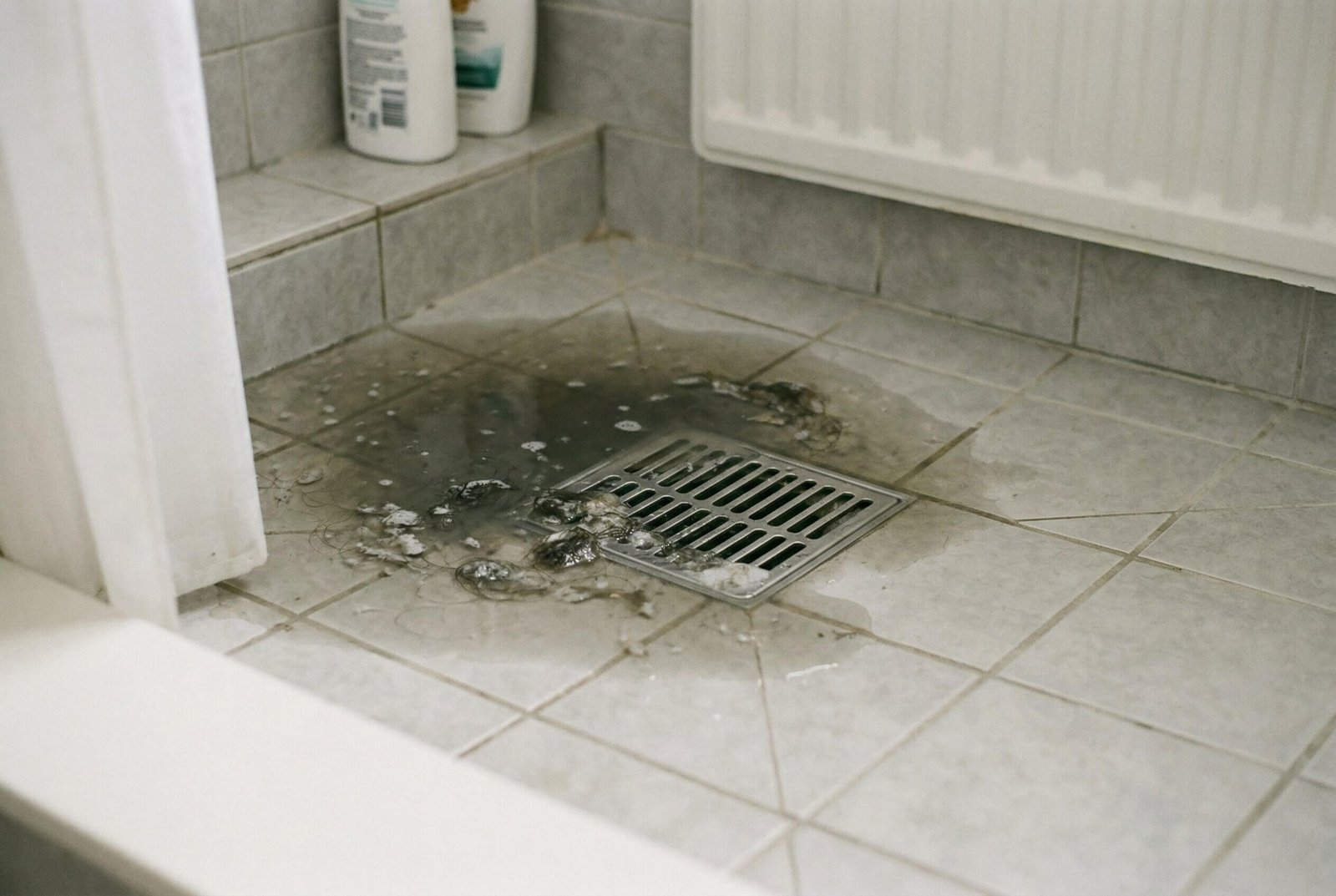
A shower drain backing up with dirty water is a plumbing problem that many homeowners find alarming. Instead of water flowing smoothly down the drain, contaminated or murky water may begin rising back into the shower base. In some cases, the dirty water appears suddenly, while in other situations it happens when another fixture in the home—such as a toilet, sink, or washing machine—is being used. When this occurs, it usually indicates that wastewater is unable to move properly through the home’s drainage system.
In residential plumbing systems, all wastewater from bathrooms, kitchens, and laundry areas travels through a network of connected drain pipes before exiting the home through the main sewer line. When a blockage forms somewhere in this system, water cannot flow freely through the pipes. Instead, it may begin backing up through the lowest drain opening in the house, which is often the shower or bathtub drain. Because showers are typically located lower than sinks, backed-up water frequently appears there first.
Dirty water backups are usually caused by buildup inside the plumbing system. Hair, soap residue, grease from other fixtures, mineral deposits, and debris can gradually collect inside pipes over time. As these materials accumulate, they restrict water flow and increase pressure inside the drain line. When the pipe becomes partially blocked, wastewater may be forced back toward the shower drain instead of continuing through the plumbing system.
Understanding why a shower drain backs up with dirty water is important for identifying where the problem may be occurring within the drain system. In this article, we will explain how shower drain systems work, the most common causes of dirty water backups, the warning signs homeowners should watch for, and how professional plumbers diagnose these types of drainage problems in real residential plumbing systems.
What This Page Covers
ToggleUnderstanding How Shower Drain Systems Work
To understand why dirty water backs up into a shower drain, it is important to first understand how a typical residential shower drainage system works. In most U.S. homes, the shower is connected to a network of drain pipes that carry wastewater away from the bathroom and toward the home’s main sewer line. Under normal conditions, water flows downward through the drain system using gravity and exits the home through either a municipal sewer connection or a private septic system.
However, shower drains do not handle only clean water. Every time someone showers, the drain system receives a mixture of water, hair, soap residue, shampoo, conditioner, dirt, body oils, and small debris. These materials travel through the pipes along with the water. When the plumbing system is functioning properly, the wastewater moves smoothly through the pipes and out of the house without any backup.
If something blocks or restricts the flow inside the drainage system, wastewater may begin slowing down or reversing direction. Because showers are often located at one of the lowest drain points in a bathroom, backed-up water frequently appears in the shower base first when a blockage occurs somewhere in the drain system.
The Basic Structure of a Shower Drain System
A standard shower drain system contains several components that work together to remove wastewater safely from the home. Each part of the system plays a specific role in maintaining proper drainage and preventing sewer gases from entering the living space.
The main components include:
-
Drain cover or strainer – The visible grate on the shower floor that allows water to enter the drain while blocking larger debris.
-
Drain body – The fitting installed beneath the shower base that connects the drain opening to the plumbing pipes.
-
P-trap – A curved section of pipe located beneath the drain that holds water to prevent sewer gases from entering the home.
-
Branch drain line – The horizontal pipe that carries wastewater from the shower to the main household drain line.
-
Main sewer line – The larger pipe that transports wastewater from the house to the municipal sewer system or septic tank.
When all of these components are clear and functioning properly, water should flow quickly and smoothly through the system.
How Wastewater Flows Through the Drain System
The movement of wastewater through a drain system depends largely on gravity. When water enters the shower drain, gravity pulls it downward through the pipes and toward the home’s main drain line. The pipes are installed with a slight downward slope that helps wastewater move efficiently through the system.
As water flows through the pipes, it carries debris along with it. In a properly functioning system, hair, soap residue, and small particles are pushed through the drain line and eventually leave the home through the sewer connection.
However, when debris begins accumulating inside the pipes, the space available for water to flow becomes smaller. As the pipe becomes more restricted, water begins draining more slowly and may eventually start backing up toward the shower drain.
The Role of the P-Trap in Preventing Sewer Gas
The P-trap is a critical part of the shower drain system. Located directly beneath the drain opening, this curved section of pipe holds a small amount of standing water at all times. This water creates a barrier that prevents sewer gases from traveling back into the home through the drain.
While the P-trap is essential for protecting indoor air quality, its curved design also creates a location where debris can accumulate. Hair, soap residue, and small particles can settle inside the trap as water slows down while passing through the bend.
If enough debris collects in this area, it can partially block the pipe and restrict water flow, contributing to drainage problems.
How Plumbing Vent Pipes Help Drains Flow
In addition to gravity, plumbing systems rely on vent pipes to maintain proper air pressure within the drain network. Vent pipes extend upward through the roof of the home and allow air to enter the plumbing system.
This airflow prevents vacuum pressure from forming inside the pipes as water flows through them. Without proper ventilation, water may struggle to move through the drain system and may create gurgling sounds or slow drainage.
If a vent pipe becomes blocked by debris, leaves, or animal nests, it can interfere with the normal movement of wastewater through the plumbing system. In some cases, poor ventilation can contribute to water backing up into lower drains such as showers.
Understanding how these components work together helps explain why a blockage in any part of the drain system can cause dirty water to back up into the shower.
Common Symptoms of a Shower Drain Backing Up With Dirty Water
When a shower drain begins backing up with dirty water, the plumbing system often shows warning signs before the situation becomes severe. In many cases, homeowners notice gradual changes in how the shower drains before the first visible backup occurs. These symptoms indicate that wastewater is struggling to move through the plumbing system due to a blockage somewhere in the drain line.
Recognizing these early signs is important because they often reveal that debris has already begun accumulating inside the pipes. Professional plumbers frequently rely on these symptoms to determine where the blockage may be located and how serious the drainage problem has become.
Below are the most common symptoms associated with a shower drain backing up with dirty water.
Dirty Water Appearing in the Shower Base
One of the most obvious signs of a drainage problem is dirty or murky water appearing in the shower base. Instead of clean water draining away after a shower, contaminated water may rise from the drain opening.
This water may contain debris or discoloration because it is coming from the drain pipes rather than directly from the shower.
Homeowners may notice:
-
Brown or cloudy water rising from the drain
-
Small particles or debris in the water
-
Water pooling in the shower floor without running the shower
-
Dirty water appearing suddenly from the drain
When wastewater begins returning through the shower drain, it usually indicates a blockage deeper in the plumbing system.
Water Rising When Other Fixtures Are Used
Another common symptom occurs when water rises in the shower while another plumbing fixture is being used. Because bathroom fixtures often share the same drain line, a blockage in that line can cause wastewater to flow back toward the shower.
For example, homeowners may see dirty water appear in the shower when:
-
A toilet is flushed
-
A bathroom sink is drained
-
A bathtub is emptied
-
A washing machine releases water
This happens because the blocked pipe cannot handle the incoming water flow, forcing wastewater to move toward the lowest drain opening in the system.
Gurgling Sounds Coming From the Drain
Gurgling or bubbling sounds coming from the shower drain can also indicate a developing blockage. These noises occur when trapped air inside the plumbing system is forced through the drain as water tries to pass around a restriction.
Homeowners may hear:
-
Bubbling sounds after water drains
-
Gurgling noises while the shower is draining
-
Air releasing from the drain opening
-
Occasional suction sounds in the pipe
These sounds suggest that water and air are struggling to move through a partially blocked pipe.
Unpleasant Sewer Odors in the Bathroom
When dirty water backs up into a shower drain, unpleasant odors may also develop. These smells are often caused by wastewater sitting inside the pipes or organic debris breaking down within the blockage.
Common odor-related signs include:
-
Strong sewer-like smells near the shower drain
-
Musty or sour odors in the bathroom
-
Odors becoming stronger after water backs up
-
Lingering smells even when the shower is not in use
These odors can indicate that wastewater is not flowing properly through the plumbing system.
Slow Drainage Before the Backup Happens
In many cases, a dirty water backup is preceded by slow drainage. The drain may begin draining more slowly than usual as debris gradually accumulates inside the pipe.
Homeowners may notice:
-
Water taking longer to drain after showers
-
Standing water around the drain
-
The shower draining normally at first but slowing over time
-
Occasional pooling before the drain clears
Slow drainage often indicates that a partial blockage is already forming inside the drain system.
These symptoms provide important clues that help plumbers determine whether the problem is caused by a localized blockage near the shower or a deeper obstruction within the household drainage system. Recognizing these warning signs early can help prevent a more serious plumbing backup from occurring.
Most Common Causes of Dirty Water Backing Up in a Shower
When dirty water backs up into a shower drain, the most common reason is a blockage somewhere in the home’s drainage system. Wastewater from showers, sinks, toilets, and other fixtures flows through connected pipes before exiting the house through the main sewer line. If debris restricts the flow in any section of this system, water may begin reversing direction and appearing in the shower drain.
In many homes, the backup does not happen instantly. Instead, the problem usually develops gradually as debris accumulates inside the pipes. Hair, soap residue, grease from other fixtures, and mineral deposits can slowly narrow the interior of the drain pipe until wastewater can no longer move through it efficiently.
Professional plumbers commonly encounter several specific causes when diagnosing dirty water backups in showers.
Hair and Soap Buildup Inside the Drain
Hair and soap residue are among the most common causes of blockages in bathroom drains. During showers, loose hair naturally washes down the drain along with soap, shampoo, and conditioner.
Hair does not dissolve in water, and it can easily tangle inside the plumbing pipes. Once a few strands become trapped, they begin collecting additional debris.
Hair and soap buildup can occur when:
-
Long hair frequently enters the drain
-
Soap scum sticks to pipe surfaces
-
Hair tangles inside the P-trap
-
Shampoo and conditioner residue binds debris together
Over time, this buildup can partially block the pipe and slow the movement of wastewater through the system.
Blocked P-Trap
The P-trap is a curved pipe located directly beneath the shower drain. Its main function is to hold a small amount of water that prevents sewer gases from entering the home.
However, because of its curved design, the P-trap is also one of the first places where debris may collect.
Common materials that accumulate inside the P-trap include:
-
Hair strands
-
Soap residue
-
Dirt and body oils
-
Small debris entering the drain
When enough material collects in the trap, it can restrict the pipe and contribute to water backing up into the shower.
Clogged Branch Drain Line
After leaving the P-trap, wastewater flows into the branch drain line that connects the shower to other fixtures in the bathroom. This pipe often carries water from sinks, bathtubs, and other nearby drains.
If debris collects in this shared drain line, it can restrict water flow for multiple fixtures.
Clogs in the branch drain line may occur when:
-
Hair and soap buildup travel deeper into the pipe
-
Debris from multiple fixtures combines inside the line
-
Pipe joints or bends trap debris
-
The pipe slope slows the movement of wastewater
When this happens, wastewater from nearby fixtures may begin backing up into the shower drain.
Main Sewer Line Partial Blockage
In some situations, the blockage may occur in the main sewer line that carries wastewater from the entire house. When this pipe becomes partially blocked, wastewater from all fixtures struggles to exit the home.
Because showers are often one of the lowest drains in the house, backed-up water frequently appears there first.
Main sewer line blockages may result from:
-
Accumulated debris inside the pipe
-
Grease buildup from kitchen drains
-
Tree root intrusion in outdoor sewer lines
-
Collapsed or damaged sewer pipes
A blockage in the main sewer line can cause dirty water backups in multiple areas of the home.
Grease or Debris From Other Fixtures
Although showers typically carry hair and soap residue, the plumbing system is shared with other fixtures that may introduce additional materials into the drain line.
For example, grease from kitchen sinks or debris from other drains can travel through the same plumbing network.
These materials can contribute to drain blockages by:
-
Mixing with hair and soap buildup
-
Hardening along pipe walls
-
Creating thick sludge inside the drain line
-
Restricting the movement of wastewater
When this occurs, the shower drain may begin backing up even though the problem originated in another part of the plumbing system.
Mineral Buildup From Hard Water
Hard water contains minerals such as calcium and magnesium that can accumulate inside plumbing pipes over time. These minerals form scale deposits along the interior walls of the pipes.
As the mineral scale grows thicker, it reduces the interior diameter of the pipe and creates rough surfaces where debris can catch.
Hard water buildup can lead to:
-
Narrowed pipe openings
-
Increased soap scum formation
-
Hair becoming trapped more easily
-
Slower water movement through the drain system
When mineral deposits combine with hair and debris, they can significantly restrict water flow and contribute to drain backups.
Understanding these common causes helps explain why dirty water may begin backing up into a shower drain. In many cases, the problem develops gradually as debris accumulates inside the plumbing system and eventually blocks the normal flow of wastewater.
Where the Blockage Is Usually Located
When dirty water backs up into a shower drain, the blockage responsible for the problem can occur in several different areas of the plumbing system. Identifying where the obstruction is located is one of the most important steps plumbers take when diagnosing a drainage issue. The location of the blockage often determines why the backup is happening and how widespread the problem may be within the home’s plumbing network.
In many cases, the blockage begins near the shower drain itself, but it can also form deeper inside the branch drain line or even in the main sewer pipe. Because all plumbing fixtures are connected through a shared drain system, a restriction in one section of the pipe can affect multiple fixtures and cause wastewater to flow backward toward the shower.
Professional plumbers typically inspect several possible locations where blockages commonly develop.
At the Shower Drain Opening
The first and most accessible location for a blockage is directly at the shower drain opening. Hair, soap residue, and small debris often accumulate just beneath the drain cover where water first enters the plumbing system.
Over time, these materials can form a dense mass that restricts water flow into the pipe.
Common signs that the blockage is near the drain opening include:
-
Hair visible around the drain cover
-
Slow drainage immediately after water enters the drain
-
Water pooling around the drain area during showers
-
Debris visible when the drain cover is removed
When the blockage forms near the drain opening, it typically affects only the shower rather than other fixtures in the home.
Inside the P-Trap
The P-trap, located beneath the shower drain, is another common location for debris accumulation. Because of its curved shape, the trap slows the movement of water as it passes through the bend, allowing heavier debris to settle inside the pipe.
Hair strands can easily tangle within the trap and begin collecting soap residue and other materials.
Blockages in the P-trap may produce symptoms such as:
-
Persistent slow drainage in the shower
-
Occasional standing water during showers
-
Debris buildup within the curved section of pipe
-
Odors developing from trapped organic material
Since the P-trap sits directly beneath the drain opening, debris trapped here can significantly restrict the flow of wastewater.
In the Bathroom Branch Drain Pipe
Beyond the P-trap, wastewater flows into the bathroom’s branch drain line. This pipe connects several fixtures in the bathroom, such as the shower, bathtub, and sink, before directing water toward the main drain line.
If debris accumulates within this branch drain pipe, multiple fixtures may begin showing drainage problems.
Symptoms of a blockage in the branch drain pipe may include:
-
The shower and sink draining slowly at the same time
-
Gurgling sounds from nearby drains
-
Water backing up in the shower when the sink is used
-
Drain problems affecting several fixtures in the same bathroom
Because this section of pipe handles wastewater from multiple fixtures, blockages here can cause more noticeable drainage issues.
In the Main Household Drain Line
If the obstruction forms in the main drain line of the house, the plumbing problem may affect several rooms or fixtures at once. The main drain line collects wastewater from multiple branch lines throughout the home before sending it to the sewer system.
When this pipe becomes partially blocked, wastewater may struggle to move out of the house.
Common signs of a main drain line blockage include:
-
Multiple drains in the home backing up
-
Dirty water appearing in the shower or bathtub
-
Gurgling sounds from several fixtures
-
Water backing up when large amounts of water are used
Because the main drain line carries wastewater from many parts of the home, a blockage here can cause widespread drainage issues.
In the Building Sewer Line
In some cases, the problem may originate in the sewer line located outside the home. This underground pipe connects the house’s plumbing system to the municipal sewer system or septic tank.
Blockages in the sewer line can occur due to a variety of conditions.
Common causes of sewer line blockages include:
-
Tree roots growing into the pipe
-
Collapsed or damaged sewer pipes
-
Grease and debris buildup in the sewer line
-
Foreign objects entering the sewer system
When the sewer line becomes blocked, wastewater cannot exit the property properly. As a result, water may begin backing up into the lowest drains inside the home, which are often the shower or bathtub drains.
Understanding where a blockage may be located helps plumbers determine the severity of the drainage problem and identify the best approach for diagnosing the issue.
Hidden Plumbing Problems That Can Cause Drain Backups
While many shower drain backups are caused by common debris such as hair and soap buildup, some drainage issues develop due to hidden plumbing problems deeper within the system. These problems are not always visible from the drain opening and may involve structural issues within the pipes, ventilation problems, or conditions affecting the main sewer line.
Professional plumbers often investigate these hidden factors when diagnosing recurring drain backups. If the underlying plumbing system has a structural or mechanical problem, the drain may continue backing up even after visible debris is removed.
Understanding these hidden plumbing causes helps homeowners recognize when a simple drain issue may actually indicate a larger plumbing concern.
Plumbing Vent Blockages
Plumbing systems rely on vent pipes to regulate air pressure within the drain lines. Vent pipes typically extend through the roof and allow fresh air to enter the plumbing system. This airflow helps wastewater move smoothly through the pipes by preventing negative pressure from forming.
If a vent pipe becomes blocked, the drainage system may struggle to move water properly.
Common causes of vent blockages include:
-
Leaves or outdoor debris entering the vent pipe
-
Bird nests or small animal nests inside the vent opening
-
Ice buildup in colder climates
-
Structural damage to the vent pipe
When airflow is restricted, wastewater may move slowly through the pipes, increasing the risk of drain backups.
Poor Pipe Slope
Drain pipes are designed to be installed with a slight downward slope that allows gravity to carry wastewater through the plumbing system. If the slope of the pipe is incorrect, water may not move efficiently through the drain line.
In some cases, pipes that are too flat or improperly installed can allow debris to settle inside the pipe rather than being carried away by flowing water.
Poor pipe slope can lead to:
-
Slower water movement through the drain system
-
Debris settling inside horizontal pipes
-
Repeated buildup inside the same section of pipe
-
Increased risk of partial blockages forming
Over time, these conditions can contribute to recurring drain backups.
Aging Cast Iron Drain Pipes
Many older homes in the United States still contain cast iron drain pipes that were installed decades ago. While cast iron plumbing can last a long time, it gradually deteriorates as it ages.
Corrosion inside these pipes can create rough interior surfaces that trap debris more easily.
Common issues associated with aging cast iron pipes include:
-
Internal rust buildup narrowing the pipe
-
Rough pipe surfaces catching hair and debris
-
Flaking metal particles entering the drain system
-
Reduced pipe diameter due to corrosion
These conditions can significantly restrict water flow and increase the chances of dirty water backing up into lower drains.
Tree Root Intrusion in Sewer Lines
Tree root intrusion is a common problem in underground sewer lines. Tree roots naturally grow toward sources of moisture, and small cracks in sewer pipes can allow roots to enter the line.
Once inside the pipe, roots continue growing and form dense networks that trap debris flowing through the sewer line.
Signs of root intrusion may include:
-
Frequent drain backups throughout the house
-
Slow drainage in multiple fixtures
-
Gurgling sounds in the plumbing system
-
Recurring sewer line blockages
Root intrusion can significantly reduce the capacity of the sewer pipe and prevent wastewater from leaving the home properly.
Shared Drain Lines in Multi-Bathroom Homes
In many homes, several bathrooms share the same drain lines before connecting to the main sewer pipe. When multiple fixtures use the same branch drain line, debris from different drains may accumulate in the same section of pipe.
For example, hair from showers, soap residue from sinks, and debris from other fixtures may combine within a shared drain line.
Shared drain line problems may occur when:
-
Several bathrooms connect to the same drain pipe
-
Large amounts of debris accumulate in one section of pipe
-
Heavy plumbing usage increases the amount of material entering the drain system
-
Drainage demand exceeds the pipe’s ability to carry wastewater away
In these situations, a blockage affecting the shared pipe may cause water to back up into the shower drain.
Understanding these hidden plumbing problems is important because they often explain why some drain backups occur repeatedly or affect multiple fixtures in the home.
Warning Signs of a Serious Drain or Sewer Problem
A shower drain backing up with dirty water can sometimes indicate a deeper problem within the home’s plumbing system. While small clogs near the drain opening may cause minor slow drainage, certain warning signs suggest that the blockage may be located further down the drain line or even in the main sewer pipe.
Recognizing these warning signs is important because serious drainage problems can affect multiple fixtures and may lead to wastewater entering the home. Professional plumbers often evaluate these symptoms to determine whether the issue involves a simple drain obstruction or a more significant sewer line problem.
Below are several warning signs that may indicate a more serious plumbing issue.
Multiple Fixtures Backing Up
One of the most important warning signs of a larger drainage problem is when multiple fixtures in the home begin experiencing drainage issues at the same time. Because household plumbing systems connect many fixtures to shared drain lines, a blockage in the main drain pipe can affect several areas of the house simultaneously.
Homeowners may notice symptoms such as:
-
Shower drains backing up while sinks drain slowly
-
Bathtubs and showers filling with dirty water
-
Toilets draining sluggishly or bubbling
-
Drain problems occurring in multiple bathrooms
When several fixtures are affected at once, it often indicates that the blockage is located deeper in the plumbing system.
Water Backing Up Frequently
Occasional slow drainage may occur when minor debris builds up inside the pipes. However, repeated water backups are usually a sign that the obstruction is growing larger or that the plumbing system cannot move wastewater effectively.
Frequent backups may appear as:
-
Dirty water returning to the shower drain regularly
-
Backups occurring after every shower
-
Water pooling in the shower without using the fixture
-
Drain problems becoming more frequent over time
Recurring backups often indicate that the drain system requires professional inspection.
Sewer Odors Coming From Drains
Strong sewer odors in the bathroom can also signal a serious drainage issue. When wastewater becomes trapped inside the pipes due to a blockage, organic materials may begin breaking down and producing unpleasant smells.
Common odor-related warning signs include:
-
Persistent sewer smells near the shower drain
-
Odors becoming stronger when water backs up
-
Musty or foul smells in the bathroom
-
Smells spreading to nearby rooms
These odors may indicate that wastewater is not flowing properly through the drain system.
Slow Drains Throughout the House
If several drains throughout the home begin draining slowly at the same time, the problem may involve the main drain line rather than a single fixture. Slow drainage across multiple fixtures often occurs when the main sewer pipe becomes partially blocked.
Homeowners may notice:
-
Sinks draining slowly in different bathrooms
-
Bathtubs taking longer to empty
-
The shower draining poorly along with other fixtures
-
Kitchen sink drainage becoming sluggish
These symptoms suggest that wastewater is struggling to move through the central drainage system.
Water Coming Back Into the Shower When Laundry Runs
Another common sign of a main drain line problem occurs when the washing machine releases a large amount of water. Because washing machines discharge water quickly, a blocked drain line may not be able to handle the sudden flow.
In these cases, homeowners may observe:
-
Dirty water rising in the shower when the washing machine drains
-
Water appearing in the bathtub during laundry cycles
-
Gurgling sounds in bathroom drains during washing machine operation
-
Temporary backups during heavy water usage
When large volumes of water cannot move through the drain line efficiently, the wastewater may flow backward toward lower drains in the home.
Recognizing these warning signs can help homeowners determine when a simple drain problem may actually indicate a more serious plumbing issue involving the household drain system or sewer line.
Real-World Plumbing Scenarios That Cause Shower Drain Backups
In many homes, a shower drain backing up with dirty water does not occur suddenly without warning. Instead, the problem often develops gradually due to everyday plumbing usage patterns and conditions within the household drainage system. Professional plumbers frequently encounter similar situations across different homes where certain behaviors, plumbing layouts, or pipe conditions contribute to recurring drain backups.
Understanding these real-world scenarios can help homeowners recognize why shower backups occur and how different parts of the plumbing system interact. Many of these situations involve a combination of heavy drain usage, debris buildup, and shared drain lines within the home.
Below are several common plumbing scenarios that plumbers regularly observe when investigating shower drain backups.
Family Bathroom Drain Overload
Bathrooms used by multiple family members often experience heavier drain usage compared to guest bathrooms or rarely used fixtures. When several people use the same shower daily, the drain system receives a larger amount of hair, soap residue, shampoo, conditioner, and body oils.
Over time, these materials can accumulate inside the plumbing pipes.
Common conditions in heavily used bathrooms include:
-
Large amounts of hair entering the drain daily
-
Soap and shampoo residue building up inside pipes
-
Debris collecting in the P-trap and branch drain line
-
Gradual restriction of water flow
As this buildup grows, it may eventually cause wastewater to move more slowly through the pipes and begin backing up into the shower.
Hair and Soap Sludge in Older Plumbing
Older plumbing systems can be more susceptible to debris buildup due to aging pipes. In many older homes, drain pipes may have rough interior surfaces caused by corrosion, mineral scale, or long-term residue accumulation.
These rough surfaces make it easier for hair and debris to stick inside the pipe.
Over time, this can lead to the formation of thick sludge made up of:
-
Hair strands tangled together
-
Soap scum deposits
-
Mineral buildup from hard water
-
Dirt and organic material
This sludge can gradually narrow the pipe and slow the movement of wastewater through the plumbing system.
Sewer Line Blockages in Older Neighborhoods
Homes located in older neighborhoods may experience sewer line problems due to aging underground infrastructure. Sewer pipes installed decades ago may develop cracks, pipe misalignment, or structural deterioration.
These conditions can allow debris or tree roots to enter the sewer line.
Common causes of sewer line blockages in older areas include:
-
Tree roots growing into underground pipes
-
Cracked or collapsed sewer lines
-
Long-term buildup of grease and debris
-
Misaligned pipe joints underground
When the main sewer line becomes partially blocked, wastewater may struggle to leave the house and begin backing up through lower drains such as showers and bathtubs.
Shared Drain Lines in Apartment Buildings
In apartment buildings or multi-unit housing, plumbing systems often contain shared drain stacks that connect several units to the same vertical drain line. If debris accumulates within these shared pipes, multiple apartments may experience drainage issues simultaneously.
Plumbers often encounter situations where:
-
Several units experience slow shower drains at the same time
-
Dirty water appears in showers on lower floors
-
Drain backups occur when neighboring units use their plumbing
-
Shared drain lines become partially blocked
In these cases, the issue may not be limited to a single apartment’s shower drain but may involve the building’s larger drainage system.
Heavy Bathroom Use in Large Households
Homes with many occupants often place greater demand on their plumbing systems. When several people use showers, sinks, and toilets within a short period of time, the drain system must handle large volumes of wastewater.
Heavy usage can increase the likelihood of debris accumulating inside the pipes.
Common conditions in large households include:
-
Frequent showers producing high amounts of hair and soap residue
-
Multiple fixtures draining simultaneously
-
Increased debris entering the shared drain lines
-
Gradual formation of blockages deeper in the system
Over time, this heavy usage can contribute to the formation of clogs that eventually cause dirty water to back up into the shower.
Real-world plumbing scenarios show that drain backups often develop as a result of everyday household habits combined with the condition of the plumbing system. Understanding these patterns helps homeowners recognize why the problem occurs and how different factors within the home can contribute to shower drain backups.
Minor Prevention Habits That Reduce Drain Backup Risk
Although some debris will always enter shower drains during normal use, certain habits can help reduce how quickly blockages develop inside the plumbing system. Preventive practices focus on limiting the amount of material that reaches the drain pipes and monitoring the early signs of buildup before it grows into a larger obstruction.
Professional plumbers often recommend simple maintenance habits that homeowners can follow to reduce the risk of shower drain backups. These practices do not involve repairing the plumbing system but instead help minimize the accumulation of hair, soap residue, and other materials that commonly contribute to drain problems.
Adopting these habits can help maintain better water flow through the shower drain and reduce the chances of dirty water backing up into the shower base.
Using Shower Drain Strainers
A shower drain strainer is one of the simplest tools for preventing hair and debris from entering the plumbing system. These small devices sit over the drain opening and allow water to pass through while trapping larger particles on the surface.
By capturing debris before it enters the drain pipe, strainers help reduce the buildup that often forms inside the plumbing system.
Shower drain strainers help by:
-
Catching loose hair before it enters the drain
-
Preventing larger debris from moving into the pipe
-
Making it easier to remove trapped materials
-
Reducing the likelihood of clogs forming in the P-trap
Regularly cleaning the strainer after showers helps ensure that trapped debris does not eventually wash into the drain.
Removing Hair From the Drain Area
Hair is one of the most common materials responsible for bathroom drain blockages. Loose hair can quickly accumulate around the drain opening during showers, especially in households with long hair.
Removing hair before it enters the drain pipe can significantly reduce the amount of debris reaching the plumbing system.
Helpful habits include:
-
Checking the drain after each shower
-
Removing visible hair from the drain cover
-
Disposing of collected hair in the trash rather than rinsing it away
-
Keeping the drain area clear of debris
These small steps can slow the buildup of hair inside the pipes.
Avoiding Debris Entering the Bathroom Drain
Although showers mainly carry water, soap, and hair, other small materials can sometimes enter the drain during normal bathroom use. Dirt, cosmetic residue, and small particles from grooming activities may be washed into the plumbing system.
Over time, these materials can mix with hair and soap residue to form thicker deposits inside the pipes.
Homeowners can reduce debris entering the drain by:
-
Rinsing dirt and particles away from the drain opening
-
Avoiding disposal of small objects into bathroom drains
-
Keeping the shower floor clean
-
Preventing foreign materials from entering the drain
Reducing the amount of debris entering the plumbing system helps slow the development of drain blockages.
Monitoring Early Drain Warning Signs
Paying attention to how the shower drain behaves can help homeowners identify early signs of a developing blockage. Small changes in drainage performance often indicate that debris is already accumulating somewhere inside the pipes.
Early warning signs to watch for include:
-
Water draining more slowly than usual
-
Small pools of water forming around the drain
-
Occasional gurgling sounds from the drain
-
Minor odors coming from the drain opening
Recognizing these symptoms early allows homeowners to address potential drainage issues before they become more serious.
While these preventive habits cannot completely eliminate the possibility of drain backups, they can significantly reduce the rate at which debris accumulates inside the plumbing system. Maintaining awareness of drain behavior and keeping debris out of the pipes helps support smoother water flow through the shower drain.
When Homeowners Should Call a Professional Plumber
While some shower drain issues may begin as minor slow drainage, dirty water backing up into the shower is often a sign of a deeper blockage within the plumbing system. In many situations, the problem cannot be fully understood by simply looking at the drain opening because the obstruction may exist further inside the pipes.
Professional plumbers have the tools and experience needed to inspect drain systems and locate blockages that are not visible from the surface. Knowing when to contact a plumber can help prevent more serious plumbing problems and reduce the risk of wastewater entering living areas of the home.
Below are several situations where homeowners should consider seeking professional plumbing assistance.
Dirty Water Repeatedly Backing Up
If dirty water continues backing up into the shower drain, it often indicates that the underlying blockage has not been fully cleared or that the obstruction exists deeper within the drain system. Repeated backups may suggest that debris is accumulating inside the pipes faster than water can carry it away.
Signs that the issue may require professional inspection include:
-
Dirty water appearing in the shower multiple times
-
Backups occurring after showers or other plumbing use
-
Water draining slowly even after debris near the drain is removed
-
The problem gradually becoming worse over time
Recurring backups often require professional diagnosis to locate the source of the blockage.
Backups Affecting Multiple Fixtures
When several plumbing fixtures in the home begin showing drainage problems at the same time, the issue may involve a shared drain line or the main sewer pipe. Bathroom sinks, bathtubs, showers, and toilets often connect to the same drainage system before wastewater exits the house.
Homeowners may notice:
-
The shower backing up while the sink drains slowly
-
Gurgling sounds from multiple drains
-
Toilets draining sluggishly
-
Water appearing in the shower when another fixture is used
These symptoms usually indicate that the blockage is located deeper within the plumbing system.
Signs of Sewer Line Blockage
In some cases, dirty water backing up into the shower may be linked to a blockage in the home’s main sewer line. This pipe carries wastewater from the entire house to the municipal sewer system or septic tank.
Possible signs of a sewer line blockage include:
-
Water backing up into lower drains such as showers or bathtubs
-
Slow drainage throughout the home
-
Frequent backups after heavy water use
-
Wastewater appearing in multiple areas of the house
Sewer line issues often require specialized inspection tools to identify the exact location and severity of the obstruction.
Persistent Drain Odors or Gurgling
Unusual sounds or odors coming from the drain system can also indicate underlying plumbing issues. When wastewater cannot move freely through the pipes, air and gases may become trapped inside the drainage system.
Common warning signs include:
-
Gurgling sounds coming from the shower drain
-
Bubbling noises when water drains
-
Sewer-like odors in the bathroom
-
Persistent smells near drain openings
These symptoms may suggest that airflow within the plumbing system is restricted or that wastewater is not flowing properly through the pipes.
When these conditions occur, professional plumbers may inspect the plumbing system using specialized equipment such as drain cameras or diagnostic tools to locate the blockage and determine the condition of the pipes.
Final Thoughts on Shower Drain Backing Up With Dirty Water
A shower drain backing up with dirty water is usually a sign that wastewater cannot move properly through the plumbing system. In most homes, this problem develops gradually as debris accumulates inside the pipes and restricts water flow. Hair, soap residue, mineral deposits, and debris from other fixtures can all contribute to the formation of blockages within the drain system.
Because household plumbing fixtures share connected drain lines, a blockage in one section of the pipe can affect several fixtures at once. Dirty water may begin appearing in the shower because it is often one of the lowest drains in the home. When wastewater cannot continue through the drain system, it may reverse direction and flow back toward the shower drain.
Understanding the symptoms and causes of shower drain backups helps homeowners recognize when a drainage issue is developing. Signs such as slow drains, gurgling sounds, unpleasant odors, and repeated water backups can indicate that debris is accumulating inside the plumbing system.
Monitoring these warning signs and recognizing when professional inspection may be necessary helps ensure that drainage problems are identified early. Proper diagnosis allows plumbers to locate the obstruction and determine whether the issue involves a minor blockage or a deeper problem within the household drainage system.