
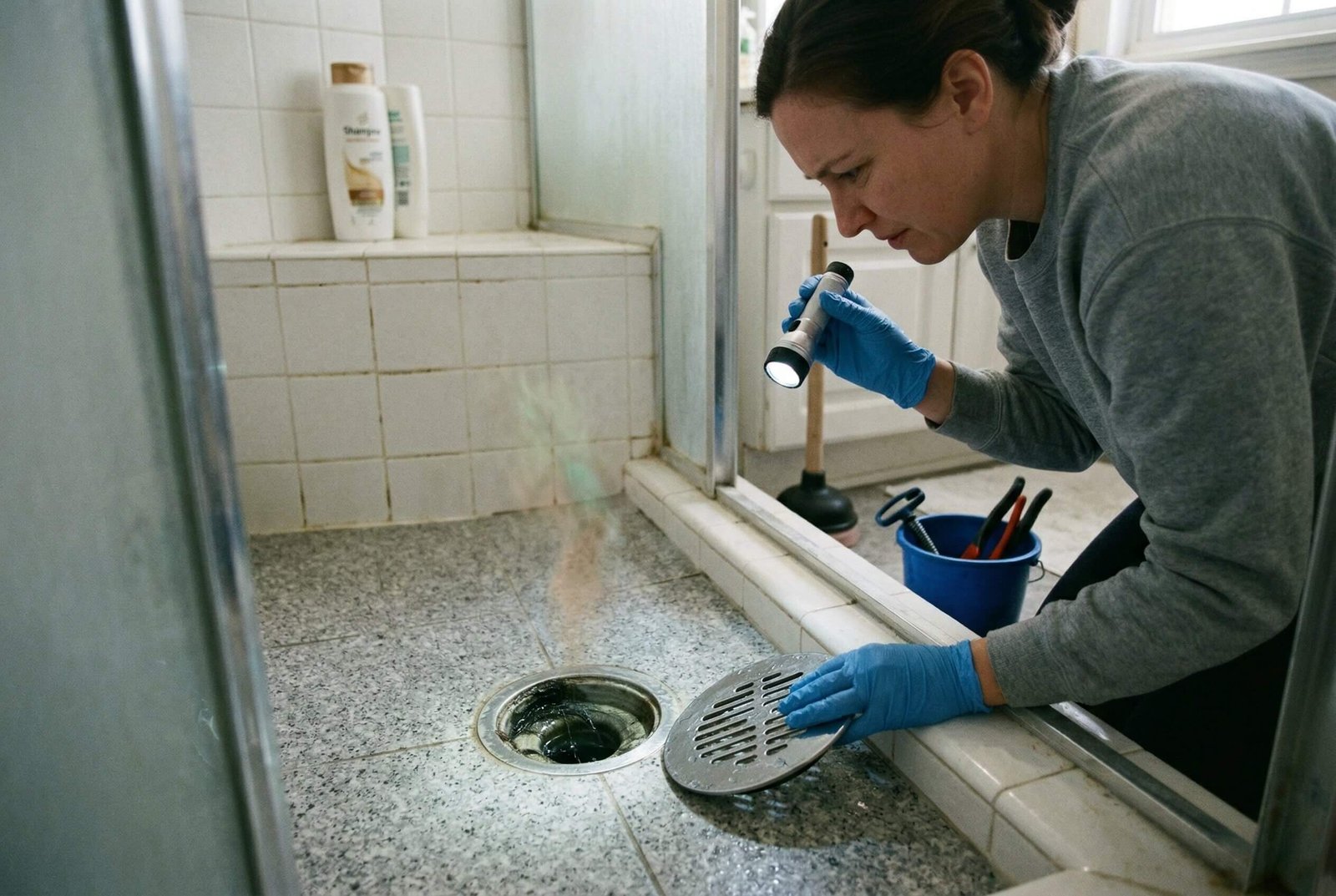
A shower drain that smells like sewage is a common but unpleasant plumbing issue that many homeowners experience. The odor often resembles the strong smell of sewer gas and can quickly fill the bathroom or nearby rooms. While the smell may seem like it is coming directly from the shower drain, it usually indicates that something inside the plumbing system is allowing sewer gases or decomposing organic material to release foul odors into the home.
In a properly functioning plumbing system, drains are designed to prevent sewer smells from entering the house. One of the most important components responsible for this is the P-trap, a curved pipe located beneath the shower drain. The P-trap holds a small amount of water that forms a seal, blocking sewer gases from traveling back through the drain and into the living space. Vent pipes also help maintain proper air pressure in the plumbing system, allowing wastewater to move through the pipes while keeping sewer odors contained.
When a shower drain begins smelling like sewage, it often means that something is disrupting this protective system. In some cases, the water seal inside the P-trap may dry out, allowing sewer gas to escape. In other situations, hair, soap residue, bacteria, or debris may accumulate inside the drain and begin producing unpleasant odors. Occasionally, the smell may also indicate a deeper plumbing issue involving the vent system or the main sewer line.
Understanding why a shower drain smells like sewage is important for identifying where the odor is coming from within the plumbing system. In this article, we will explain how shower drain systems prevent sewer smells, the most common causes of sewage odors in shower drains, the warning signs homeowners should watch for, and how professional plumbers diagnose these types of drainage problems in real residential plumbing systems.
What This Page Covers
ToggleHow Shower Drain Systems Prevent Sewer Smells
Residential plumbing systems are carefully designed to prevent sewer gases from entering the home. Wastewater from showers, sinks, toilets, and other fixtures travels through a network of drain pipes that ultimately connect to the municipal sewer system or a septic tank. Because these pipes carry wastewater and gases produced by decomposing organic material, several protective components are built into the plumbing system to keep sewer odors sealed inside the pipes.
Under normal conditions, homeowners should never smell sewage coming from a shower drain. The plumbing system relies on water seals, proper airflow, and pipe design to ensure that wastewater moves out of the house while sewer gases remain contained within the drainage system. When one of these protective features stops functioning properly, sewer odors may begin escaping through the drain.
Understanding how these components work helps explain why shower drains sometimes develop sewage smells.
The Role of the P-Trap in Blocking Sewer Gas
The P-trap is one of the most important parts of the plumbing system responsible for preventing sewer odors. Located directly beneath the shower drain, the P-trap is a curved section of pipe that holds a small amount of standing water at all times.
This water forms a seal that blocks sewer gases from traveling back through the drain pipe.
The P-trap performs several important functions:
-
Prevents sewer gas from entering the home
-
Creates a barrier between the household and the sewer system
-
Allows wastewater to pass while keeping gases trapped in the pipe
-
Maintains a water seal that protects indoor air quality
As long as the trap contains water, sewer gases remain contained within the plumbing system.
How Water Seals Protect Household Drains
The water inside the P-trap acts as a natural seal. Every time water flows down the drain, it refills the trap and maintains this barrier between the sewer line and the indoor environment.
If the water seal disappears, sewer gases may move through the drain pipe and enter the home.
The water seal can be lost when:
-
The shower has not been used for a long time
-
Water evaporates from the trap
-
Air pressure problems disturb the trap seal
-
Plumbing issues allow the trap to empty
When the trap loses its water seal, the shower drain may begin releasing sewer odors into the bathroom.
The Importance of Plumbing Vent Pipes
Plumbing vent pipes are another essential part of the drainage system. These pipes extend upward through the roof of the home and allow air to enter the plumbing system.
Vent pipes serve several important functions:
-
Maintain balanced air pressure in drain pipes
-
Prevent vacuum pressure from forming in the plumbing system
-
Allow wastewater to flow smoothly through pipes
-
Help protect the water seal in the P-trap
Without proper ventilation, negative pressure inside the drain system can disturb the water seal in the P-trap, allowing sewer gases to escape through the drain.
How Wastewater Normally Moves Through Drain Pipes
When a shower is used, wastewater flows down through the drain opening and into the P-trap. From there, gravity carries the water through the branch drain line and into the home’s main drain pipe. The wastewater then travels through the sewer line and exits the property through the municipal sewer system or septic tank.
During this process:
-
Gravity moves water downward through sloped pipes
-
Vent pipes allow air to balance pressure in the system
-
The P-trap prevents sewer gases from returning to the drain
-
Wastewater flows smoothly out of the home
When any part of this system stops functioning correctly—such as when debris blocks the pipe, the trap dries out, or venting becomes restricted—sewer odors may begin escaping through the shower drain.
Understanding how these systems work helps explain why a sewage smell in the shower drain often indicates that something within the plumbing system is not functioning properly.
Common Symptoms of a Shower Drain That Smells Like Sewage
When a shower drain begins to smell like sewage, the odor is often accompanied by other signs that something inside the plumbing system is not functioning properly. These symptoms can help homeowners identify whether the smell is caused by organic buildup inside the drain, a problem with the P-trap seal, or a deeper issue within the household drainage system.
In many cases, the odor may start mildly and become stronger over time as debris accumulates or sewer gases escape through the drain. Professional plumbers often evaluate these symptoms to determine where the odor is likely originating and whether the issue is isolated to the shower drain or connected to a larger plumbing problem.
Recognizing these warning signs early can help homeowners understand the nature of the issue and when further inspection may be necessary.
Strong Sewer Odor Coming From the Shower Drain
The most obvious symptom is a strong sewage-like smell coming directly from the shower drain. The odor may resemble rotten eggs, decaying organic matter, or the smell commonly associated with sewer systems.
Homeowners may notice:
-
A strong smell when standing near the shower drain
-
Odors becoming noticeable immediately after entering the bathroom
-
Sewer-like smells coming directly from the drain opening
-
The odor becoming stronger over time
This smell usually indicates that sewer gases or decomposing material are present inside the drain system.
Smell Becoming Stronger After Running Water
In some situations, the sewer smell becomes stronger when water runs through the shower drain. This can happen when moving water disturbs debris or bacteria buildup inside the pipes.
Common situations where the odor intensifies include:
-
During or immediately after a shower
-
When hot water flows down the drain
-
After running the bathroom sink connected to the same drain line
-
When the drain system is actively carrying wastewater
The movement of water can stir up organic buildup and release stronger odors from inside the pipe.
Bathroom Odors That Spread to Other Rooms
Sometimes the sewage smell from a shower drain can spread beyond the bathroom and become noticeable in nearby rooms. This typically occurs when sewer gases escape from the drain and circulate through the air inside the home.
Signs of spreading odors may include:
-
Smells noticeable in hallways or bedrooms near the bathroom
-
Odors lingering even after the bathroom door is closed
-
Smells becoming stronger during humid conditions
-
Odors noticeable when the bathroom ventilation fan is off
When sewer gases spread through the home, the source is often related to the plumbing system rather than a surface-level bathroom issue.
Gurgling Sounds From the Drain
Gurgling or bubbling sounds coming from the shower drain can also accompany sewer odors. These sounds are typically caused by air moving through the drain pipes when water flow or air pressure becomes irregular.
Homeowners may hear:
-
Bubbling sounds after water drains
-
Gurgling noises when the shower or sink is used
-
Air releasing from the drain opening
-
Occasional suction sounds from the pipe
These sounds can indicate that airflow within the plumbing system is not functioning normally.
Slow Drainage Along With the Odor
In some cases, the sewage smell is accompanied by slow drainage in the shower. When debris accumulates inside the pipes, it can both restrict water flow and create conditions where organic material begins decomposing.
Symptoms may include:
-
Water draining more slowly than usual
-
Small pools of water forming near the drain
-
Standing water that takes time to clear
-
Drain performance gradually worsening
When slow drainage occurs together with sewer odors, it often indicates that debris buildup inside the drain system is contributing to the problem.
Recognizing these symptoms helps homeowners understand that sewer odors rarely occur without an underlying plumbing cause. These warning signs provide important clues about whether the smell is related to organic buildup inside the drain, airflow issues in the plumbing system, or a developing blockage deeper within the pipes.
Most Common Causes of Sewer Smell in a Shower Drain
When a shower drain smells like sewage, the odor is usually caused by conditions inside the plumbing system that allow sewer gases or decomposing organic material to produce unpleasant smells. These odors rarely appear without a reason. In most cases, something inside the drain pipes is either blocking proper airflow, allowing gases to escape, or creating an environment where bacteria and organic debris begin breaking down.
Professional plumbers typically investigate several common causes when diagnosing sewer odors coming from shower drains. These causes may involve issues near the drain opening, within the P-trap, deeper in the drain pipes, or within the plumbing ventilation system.
Understanding these causes helps homeowners recognize why the smell occurs and where the problem may be developing within the plumbing system.
Dry or Empty P-Trap
One of the most common causes of sewer smells coming from a shower drain is a dry P-trap. The P-trap is designed to hold water at all times, creating a seal that blocks sewer gases from traveling back into the home.
If the water inside the P-trap evaporates or drains away, sewer gases can move freely through the drain pipe and escape into the bathroom.
A P-trap may dry out when:
-
The shower is rarely used
-
Water evaporates over time
-
The home has been vacant for an extended period
-
Plumbing airflow problems disturb the trap seal
When the trap loses its water barrier, sewer odors may begin entering the home through the drain opening.
Hair and Soap Buildup Inside the Drain
Hair and soap residue frequently accumulate inside shower drains. During normal shower use, hair strands and soap scum travel down the drain pipe where they can become trapped along pipe surfaces or within the P-trap.
As this buildup grows, it can trap moisture and organic material.
Hair and soap buildup can lead to:
-
Organic debris collecting inside the pipe
-
Bacteria growing on trapped materials
-
Slow drainage combined with unpleasant odors
-
Decomposing residue producing sewer-like smells
Over time, this buildup may begin producing odors that resemble sewage.
Biofilm and Bacteria Growth in the Pipes
Drain pipes can develop a layer of bacteria and organic slime known as biofilm. Biofilm forms when bacteria feed on organic material such as soap residue, body oils, and hair trapped inside the pipes.
This bacterial growth can produce strong odors as it breaks down organic matter.
Biofilm buildup may cause:
-
Persistent sewer-like smells from the drain
-
Slippery residue inside the pipes
-
Increased bacterial growth in warm, moist environments
-
Odors becoming stronger after water runs
Because shower drains regularly receive warm water and organic material, they can become an ideal environment for biofilm formation.
Clogged or Dirty P-Trap
In addition to holding water, the P-trap is also a common location where debris accumulates. Hair, soap residue, dirt, and other materials may settle inside the curved section of pipe.
When this material remains trapped inside the pipe, it can begin decomposing and produce unpleasant odors.
Common conditions inside a clogged P-trap include:
-
Tangled hair buildup
-
Soap scum deposits
-
Dirt and organic material accumulation
-
Sludge forming inside the trap
These materials can produce foul smells that travel back through the drain opening.
Blocked Plumbing Vent Pipe
Plumbing vent pipes allow air to enter the drainage system so wastewater can flow smoothly through the pipes. If a vent pipe becomes blocked, airflow within the plumbing system may be disrupted.
Without proper ventilation, pressure imbalances may disturb the water seal inside the P-trap.
Vent blockages may occur due to:
-
Leaves or debris entering the roof vent
-
Bird nests inside the vent pipe
-
Ice buildup in colder climates
-
Structural damage to the vent system
When airflow is restricted, sewer gases may escape through drains instead of remaining inside the plumbing system.
Sewer Gas Escaping From a Drain Line
In some situations, sewer odors may originate deeper within the drain system. Cracked pipes, loose connections, or damaged sewer lines can allow sewer gases to escape before they reach the main sewer system.
When this happens, the smell may travel upward through connected drains, including the shower.
Possible causes of sewer gas escaping from drain lines include:
-
Loose pipe joints
-
Cracked or deteriorating drain pipes
-
Blockages forcing gases back through the system
-
Sewer line problems outside the home
When sewer gas enters the plumbing system through these conditions, the shower drain may become one of the points where the odor becomes noticeable.
Understanding these common causes helps explain why a shower drain may begin producing sewage-like smells. In many cases, the odor is the result of organic buildup inside the pipes or a disruption in the system designed to keep sewer gases contained.
Where the Odor Is Usually Coming From
When a shower drain smells like sewage, the odor does not always originate exactly where the smell is noticed. Sewer odors can travel through connected drain pipes and emerge from the shower drain even if the source of the smell is deeper within the plumbing system. For this reason, professional plumbers often investigate several possible locations where odors may develop.
In most cases, the smell is caused by organic buildup, trapped debris, or sewer gas escaping from a specific section of the drain system. Identifying where the odor is forming helps determine whether the issue is minor—such as buildup inside the drain—or related to a larger plumbing problem.
Below are the most common locations where sewer smells associated with shower drains typically originate.
Inside the Shower Drain Body
The drain body is the section directly beneath the shower drain cover where water first enters the plumbing system. This area can collect hair, soap residue, skin cells, and other debris that wash down the drain during normal shower use.
Over time, this material can accumulate and begin breaking down.
When organic debris remains trapped in the drain body, it may lead to:
-
Decomposing hair and soap residue
-
Bacteria feeding on organic material
-
Sludge buildup near the drain opening
-
Odors rising through the drain cover
Because this area is close to the surface, smells produced here can easily enter the bathroom.
Inside the P-Trap
The P-trap is one of the most common locations for odor-related problems. This curved pipe holds water that blocks sewer gases from entering the home, but it can also collect debris as water slows down while passing through the bend.
Hair, soap residue, dirt, and organic material can settle inside the trap and begin decomposing.
When buildup forms inside the P-trap, it may cause:
-
Persistent sewer-like smells from the drain
-
Sludge accumulation in the curved section of pipe
-
Bacteria growth inside the trapped debris
-
Odors that become stronger after running water
Since the P-trap sits directly beneath the drain, odors produced here can easily travel upward through the shower drain.
Inside the Branch Drain Line
Beyond the P-trap, wastewater flows into the branch drain line that connects the shower to other fixtures in the bathroom. This pipe often carries water from sinks, bathtubs, and sometimes toilets before connecting to the main drain line.
If organic debris accumulates within this pipe, it can create odors that travel back toward the shower drain.
Common odor sources inside branch drain lines include:
-
Hair and soap buildup from multiple fixtures
-
Biofilm forming along pipe walls
-
Organic debris trapped in pipe bends
-
Sludge buildup inside aging pipes
Because this pipe connects several drains, odors generated here may appear in multiple fixtures within the same bathroom.
From the Plumbing Vent System
Plumbing vent pipes allow air to move through the drainage system and help maintain proper pressure inside the pipes. If the vent system becomes blocked or restricted, sewer gases may not escape through the roof as intended.
Instead, those gases may travel through the drain pipes and exit through household drains.
Vent-related odor problems may occur when:
-
Leaves or debris block the roof vent
-
Bird nests or animals obstruct the vent opening
-
Ice forms inside the vent pipe in colder climates
-
Vent pipes become damaged or disconnected
When airflow through the vent system is disrupted, sewer gases may begin escaping through the shower drain.
From the Main Sewer Line
In some cases, the odor may originate from the home’s main sewer line. This pipe carries wastewater from the entire house to the municipal sewer system or septic tank.
If the sewer line becomes partially blocked or damaged, sewer gases may accumulate inside the pipe and travel back through connected drains.
Possible causes of sewer odors from the main drain line include:
-
Sewer line blockages restricting wastewater flow
-
Organic buildup inside the main pipe
-
Cracked or deteriorating sewer pipes
-
Pressure changes inside the drain system
When this happens, the shower drain may simply be the location where the odor becomes most noticeable.
Understanding where sewer smells originate helps plumbers determine whether the issue is related to debris buildup inside the drain, a problem with the plumbing ventilation system, or a deeper issue within the household sewer line.
Hidden Plumbing Problems That Can Cause Sewer Odors
While many shower drain odors are caused by debris buildup or a dry P-trap, some sewer smells originate from hidden plumbing issues deeper within the system. These problems are not always visible from the drain opening and may involve damaged pipes, ventilation problems, or conditions affecting the main sewer line.
Professional plumbers often investigate these underlying causes when sewer odors persist even after the drain appears clean. Hidden plumbing issues can allow sewer gases to escape from the drainage system or create conditions where wastewater and organic debris begin producing foul smells.
Understanding these hidden problems helps explain why some sewer odors return repeatedly or appear throughout different areas of the home.
Loose or Damaged Drain Pipe Connections
Drain pipes are connected through a series of joints that carry wastewater from fixtures to the main sewer line. If these connections become loose, worn, or improperly sealed, small gaps may form between pipe sections.
These gaps can allow sewer gases to escape from the pipe system.
Loose or damaged pipe connections may occur due to:
-
Aging pipe seals or fittings
-
Pipe movement caused by structural settling
-
Improperly installed plumbing connections
-
Vibrations from household plumbing usage
When gases escape from these openings, the smell may travel through connected drains and become noticeable near the shower.
Cracked Drain Pipes
Over time, drain pipes can develop cracks due to age, corrosion, or physical stress on the plumbing system. These cracks may allow sewer gases to escape from the pipe before wastewater reaches the main sewer line.
Even small cracks can release noticeable odors into the surrounding area.
Cracked drain pipes may result from:
-
Corrosion in older metal pipes
-
Structural movement in the home
-
Damage during plumbing repairs
-
Long-term wear and deterioration
When sewer gases escape from damaged pipes, the smell may enter the home through nearby drains such as the shower.
Aging Cast Iron Pipes
Many older homes still use cast iron drain pipes that were installed decades ago. While cast iron plumbing is durable, it gradually corrodes from the inside as wastewater flows through the pipes over many years.
Corrosion can cause the interior of the pipe to become rough and uneven.
Common issues with aging cast iron pipes include:
-
Rust buildup narrowing the pipe interior
-
Flaking metal surfaces trapping debris
-
Organic material collecting along rough pipe walls
-
Increased bacterial growth inside the pipe
These conditions can contribute to both slow drainage and unpleasant sewer odors.
Sewer Line Blockages
Blockages in the main sewer line can also cause sewer odors inside the home. When wastewater cannot move freely through the sewer pipe, gases may build up inside the system and travel back through connected drain lines.
These gases may eventually escape through drains such as showers or bathtubs.
Common causes of sewer line blockages include:
-
Grease and debris buildup inside the pipe
-
Tree roots entering underground sewer lines
-
Collapsed or damaged sewer pipes
-
Foreign objects entering the sewer system
When the main sewer line becomes partially blocked, it can create pressure changes that push sewer gases back toward household drains.
Poor Plumbing Ventilation
Proper ventilation is essential for maintaining balanced airflow inside the plumbing system. Vent pipes allow sewer gases to exit safely through the roof while allowing air to enter the drain system.
If ventilation becomes restricted, sewer gases may not be able to escape properly.
Ventilation problems may occur when:
-
Debris blocks the roof vent opening
-
Animals or nests obstruct the vent pipe
-
Ice buildup forms inside the vent during winter
-
Vent pipes become damaged or disconnected
Without proper ventilation, sewer gases may accumulate inside the drain pipes and eventually escape through household drains such as the shower.
Hidden plumbing problems like these can allow sewer gases to travel through the drainage system and create persistent odors in bathrooms. Identifying these underlying issues often requires professional inspection of the plumbing system to determine where the odor is originating.
Warning Signs of a More Serious Sewer Problem
A shower drain that smells like sewage is often caused by localized issues such as debris buildup or a dry P-trap. However, in some cases, the odor may indicate a larger problem within the home’s plumbing system or sewer line. When sewer smells are accompanied by additional symptoms, it may suggest that wastewater or sewer gases are not moving properly through the drain system.
Professional plumbers often look for certain warning signs to determine whether the issue involves a simple drain odor or a more serious plumbing problem. Recognizing these signs early can help homeowners understand when the situation may require further inspection.
Below are several indicators that a sewer smell coming from the shower drain may be connected to a deeper plumbing issue.
Sewage Odors in Multiple Drains
If sewer smells begin appearing in more than one drain in the home, the problem may involve the shared drainage system rather than a single fixture. Bathroom sinks, showers, bathtubs, and floor drains are often connected to the same branch drain line.
Signs of this type of issue may include:
-
Sewer smells coming from both the shower and sink drains
-
Odors noticeable in multiple bathrooms
-
Strong smells near basement floor drains
-
Sewage odors appearing in different areas of the home
When multiple drains produce the same odor, the source may be located deeper in the plumbing system.
Repeated Drain Backups
Another warning sign of a larger plumbing issue is repeated drain backups. When blockages form in the main drain line or sewer pipe, wastewater may struggle to exit the home.
As pressure builds inside the plumbing system, water may begin backing up into lower drains such as showers or bathtubs.
Symptoms of recurring backups include:
-
Water backing up into the shower or bathtub
-
Dirty water appearing in drains during heavy water use
-
Drain backups happening repeatedly over time
-
Water pooling in drains without using the fixture
These conditions often indicate that the obstruction may be located deeper in the plumbing network.
Persistent Sewer Gas Smell in the House
If the sewer smell remains constant or becomes noticeable throughout the house, it may suggest that sewer gases are escaping from the drainage system. A strong odor that does not disappear after running water in the drain may indicate an underlying plumbing problem.
Homeowners may notice:
-
A continuous sewage smell inside the bathroom
-
Odors spreading into nearby rooms or hallways
-
Sewer smells becoming stronger during humid conditions
-
The odor remaining even when the shower is not used
Persistent sewer gas odors may require professional inspection to determine their source.
Multiple Slow Drains in the Home
When several drains throughout the house begin draining slowly at the same time, the issue may involve the main drain pipe rather than an individual fixture. This can happen when debris accumulates inside the central drainage system.
Common symptoms include:
-
Bathroom sinks draining slowly
-
Bathtubs taking longer to empty
-
The shower draining slowly along with other fixtures
-
Kitchen sinks showing slower drainage
These symptoms often indicate that wastewater is struggling to move through the main drain system.
Gurgling Sounds Throughout the Plumbing System
Gurgling sounds from drains or toilets can also indicate pressure changes within the plumbing system. These sounds often occur when air becomes trapped inside the pipes due to blockages or ventilation problems.
Homeowners may hear:
-
Bubbling sounds coming from shower drains
-
Gurgling noises when flushing the toilet
-
Air sounds coming from sink drains
-
Occasional suction noises inside the pipes
These sounds suggest that airflow within the plumbing system is being disrupted, which can contribute to sewer odors escaping through drains.
Recognizing these warning signs helps homeowners determine whether the sewage smell coming from the shower drain may be part of a larger plumbing problem. In many cases, persistent odors combined with these symptoms indicate that the issue may involve deeper sections of the drain system or the home’s main sewer line.
Real-World Plumbing Scenarios That Cause Shower Sewer Smells
In many homes, a shower drain that smells like sewage is not caused by a single sudden event. Instead, the odor usually develops due to everyday usage patterns, plumbing system conditions, or long-term buildup inside the drain pipes. Professional plumbers often encounter similar real-world situations when homeowners report sewer smells coming from their shower drains.
These scenarios help explain how normal household activities can gradually lead to drain odors. Factors such as plumbing layout, pipe age, drain usage habits, and the condition of the sewer system can all influence when and why these smells develop.
Below are several real-world plumbing situations that commonly lead to sewer odors in shower drains.
Rarely Used Guest Bathroom Showers
One of the most common scenarios involves showers that are rarely used, such as those located in guest bathrooms. When a drain is not used regularly, the water sitting inside the P-trap may slowly evaporate.
Once the water seal disappears, sewer gases can travel freely through the drain pipe and escape into the bathroom.
This situation often occurs when:
-
A guest bathroom is rarely used
-
A home has multiple bathrooms but only one is used daily
-
A vacation property sits unused for long periods
-
A recently purchased home has been vacant
In these cases, the odor often appears suddenly even though the plumbing system itself may still be functioning normally.
Hair and Soap Buildup in Family Bathrooms
Bathrooms that are used frequently by multiple household members often experience gradual buildup inside the shower drain. Hair, soap residue, shampoo, and body oils can collect inside the drain pipe over time.
As this material accumulates, it can create an environment where bacteria grow and organic matter begins decomposing.
Common conditions in busy family bathrooms include:
-
Hair collecting inside the drain and P-trap
-
Soap scum forming along pipe surfaces
-
Sludge developing inside the curved section of pipe
-
Odors forming as organic debris breaks down
In these cases, the sewer smell may become noticeable even though the drain is still functioning.
Vent Pipe Blockages on the Roof
Plumbing vent pipes extend through the roof of the home and allow sewer gases to escape safely outside. When these vents become blocked, the plumbing system may struggle to maintain proper airflow.
Without proper ventilation, sewer gases may travel through the drain pipes and exit through household drains.
Vent pipe blockages may occur due to:
-
Leaves or outdoor debris entering the vent opening
-
Bird nests inside the vent pipe
-
Small animals entering the vent system
-
Ice forming inside the vent during winter
When airflow through the vent system becomes restricted, sewer odors may begin appearing in drains such as the shower.
Aging Drain Systems in Older Homes
Homes built several decades ago often contain aging plumbing systems that may develop internal corrosion or residue buildup over time. Older pipes—especially cast iron drain pipes—can develop rough interior surfaces where debris collects more easily.
These rough surfaces allow organic materials to accumulate and remain inside the pipe.
Common issues in older plumbing systems include:
-
Corrosion narrowing the interior of drain pipes
-
Rough pipe surfaces trapping hair and debris
-
Biofilm buildup inside older pipes
-
Organic material decomposing inside the drain system
These conditions can create persistent sewer odors even if the plumbing system still drains normally.
Sewer Line Issues in Older Neighborhoods
In some cases, sewer odors from shower drains may be connected to problems in the underground sewer line outside the home. Sewer pipes buried beneath the property may develop cracks, root intrusion, or buildup that interferes with wastewater flow.
When sewer lines become partially blocked or damaged, gases may accumulate inside the pipe system and move back toward household drains.
Common sewer line issues include:
-
Tree roots entering underground pipes
-
Collapsed or misaligned sewer pipe sections
-
Grease and debris buildup inside the sewer line
-
Aging sewer infrastructure in older neighborhoods
When these conditions occur, sewer odors may travel through connected drain pipes and become noticeable in the shower drain.
These real-world plumbing situations demonstrate that sewer smells from shower drains often develop gradually due to normal household conditions and long-term plumbing system changes. Understanding these scenarios helps homeowners recognize why the odor occurs and where the underlying issue may be developing.
Minor Prevention Habits That Help Reduce Shower Drain Odors
Although sewer smells in shower drains are often caused by plumbing conditions inside the pipes, certain everyday habits can help reduce the buildup of debris and organic material that produces unpleasant odors. Preventive practices focus on keeping the drain system clean, maintaining the water seal inside the P-trap, and monitoring early signs of drainage issues.
Professional plumbers often recommend simple maintenance habits that homeowners can follow to reduce the chances of sewer odors developing in shower drains. These steps do not involve repairing the plumbing system but instead help prevent the conditions that allow bacteria, debris, and sewer gases to produce strong smells.
Adopting these habits can help keep the shower drain system functioning properly and reduce the risk of odors forming inside the pipes.
Running Water in Rarely Used Drains
One of the easiest ways to prevent sewer smells is to ensure that the P-trap always contains water. When a shower is not used for long periods, the water inside the trap may slowly evaporate.
If the trap becomes empty, sewer gases can travel through the pipe and enter the bathroom.
Homeowners can prevent this by:
-
Running water in rarely used showers once every few weeks
-
Flushing water through guest bathroom drains
-
Filling the P-trap after returning to a vacant home
-
Checking drains in seasonal or vacation properties
Keeping the P-trap filled with water helps maintain the barrier that blocks sewer gases.
Using Drain Strainers to Reduce Debris
Drain strainers can help prevent hair and debris from entering the plumbing system. These small devices sit over the drain opening and catch larger materials before they enter the pipes.
Drain strainers help reduce buildup by:
-
Catching loose hair during showers
-
Preventing debris from entering the drain line
-
Making it easier to remove collected materials
-
Reducing the amount of organic matter inside the pipes
Cleaning the strainer regularly helps prevent trapped debris from eventually washing into the drain.
Cleaning Shower Drains Regularly
Keeping the drain area clean helps reduce the organic buildup that can cause unpleasant odors. Hair, soap residue, and other debris may accumulate around the drain cover and inside the upper section of the drain body.
Regular cleaning can help remove this material before it begins decomposing.
Helpful cleaning habits include:
-
Removing visible hair from the drain after showers
-
Cleaning the drain cover periodically
-
Rinsing soap residue away from the drain area
-
Keeping the shower floor free from debris
These habits help limit the organic material that bacteria feed on inside the drain.
Monitoring Early Signs of Drain Problems
Paying attention to how the shower drain behaves can help homeowners detect early signs of developing issues. Small changes in drainage performance or odor strength may indicate that debris is beginning to accumulate inside the plumbing system.
Signs homeowners should monitor include:
-
Slight sewer smells from the drain
-
Water draining more slowly than usual
-
Gurgling sounds after water flows through the drain
-
Minor odors that appear intermittently
Recognizing these early warning signs can help homeowners identify potential drain problems before they develop into more serious plumbing issues.
While these prevention habits cannot eliminate every plumbing issue, they can significantly reduce the conditions that allow sewer odors to develop in shower drains. Maintaining the drain area and ensuring proper water flow through the plumbing system helps support cleaner, odor-free bathroom drains.
When Homeowners Should Call a Professional Plumber
While some shower drain odors may be caused by minor issues such as a dry P-trap or debris buildup near the drain opening, persistent sewage smells can sometimes indicate a deeper plumbing problem. If the odor continues even after normal cleaning or appears together with other drainage symptoms, professional inspection may be necessary.
Licensed plumbers have the experience and specialized tools needed to inspect plumbing systems and identify hidden issues that are not visible from the surface. Understanding when to seek professional help can prevent small problems from developing into larger plumbing or sewer system concerns.
Below are several situations where homeowners should consider contacting a professional plumber.
Sewer Smells That Keep Returning
If a sewer odor repeatedly returns after running water in the drain or cleaning the shower drain area, it may indicate that the source of the smell is deeper inside the plumbing system.
Recurring odors may suggest:
-
Organic buildup deeper in the drain line
-
A partially blocked P-trap
-
Biofilm growth inside the pipes
-
Venting problems affecting the drain system
When odors continue to return, a plumber may need to inspect the pipes to locate the underlying cause.
Odors Appearing in Multiple Drains
When sewage smells appear in more than one drain within the home, the issue may involve the shared drain line or plumbing vent system. Because household fixtures connect to the same drainage network, a problem in one section of pipe can affect several drains.
Signs that multiple drains are affected include:
-
Sewer odors coming from both showers and sinks
-
Smells noticeable in multiple bathrooms
-
Odors appearing in basement floor drains
-
Smells present in drains throughout the house
These symptoms may indicate that the problem is located deeper in the plumbing system.
Signs of Sewer Line Problems
A strong sewage smell combined with other drainage problems may indicate an issue with the home’s main sewer line. Sewer line problems can restrict wastewater flow and allow gases to accumulate inside the plumbing system.
Possible signs of sewer line issues include:
-
Dirty water backing up into drains
-
Slow drainage throughout the house
-
Gurgling sounds coming from multiple fixtures
-
Sewer odors appearing during heavy water use
Sewer line problems often require specialized equipment to inspect and diagnose.
Strong Odors With Slow Drainage
When sewer smells occur together with slow drainage, it may indicate that debris is accumulating inside the drain pipes. Organic material trapped in the plumbing system can both restrict water flow and produce unpleasant odors as it breaks down.
Homeowners may notice:
-
Water draining slowly from the shower
-
Odors becoming stronger after showers
-
Standing water near the drain
-
Drain performance gradually worsening
In these situations, professional inspection can help determine whether the blockage is located near the drain or deeper in the plumbing system.
Professional plumbers often use specialized tools such as drain inspection cameras and diagnostic equipment to evaluate the condition of drain pipes. These tools allow them to locate the source of odors and determine whether the issue involves debris buildup, ventilation problems, or sewer line conditions.
Final Thoughts on Shower Drains That Smell Like Sewage
A shower drain that smells like sewage is usually a sign that something within the plumbing system is allowing sewer gases or decomposing organic material to produce unpleasant odors. In many homes, the problem develops gradually as hair, soap residue, and organic debris accumulate inside the drain pipes. These materials can create conditions where bacteria grow and begin producing foul smells.
The plumbing system is designed to prevent sewer gases from entering the home through components such as the P-trap and vent pipes. When these components function properly, sewer odors remain contained within the drainage system. However, issues such as dry P-traps, debris buildup, ventilation problems, or damaged pipes can allow odors to escape through the shower drain.
Recognizing the symptoms of sewer odors—such as strong smells, slow drainage, gurgling sounds, or odors appearing in multiple drains—can help homeowners understand when a plumbing issue may be developing. Identifying these warning signs early can prevent the problem from becoming more serious.
Monitoring the condition of shower drains and maintaining awareness of how the plumbing system behaves can help homeowners keep their drainage system functioning properly. When odors persist or appear alongside other drainage problems, professional plumbing inspection can help determine the cause and ensure that the plumbing system continues operating safely.