
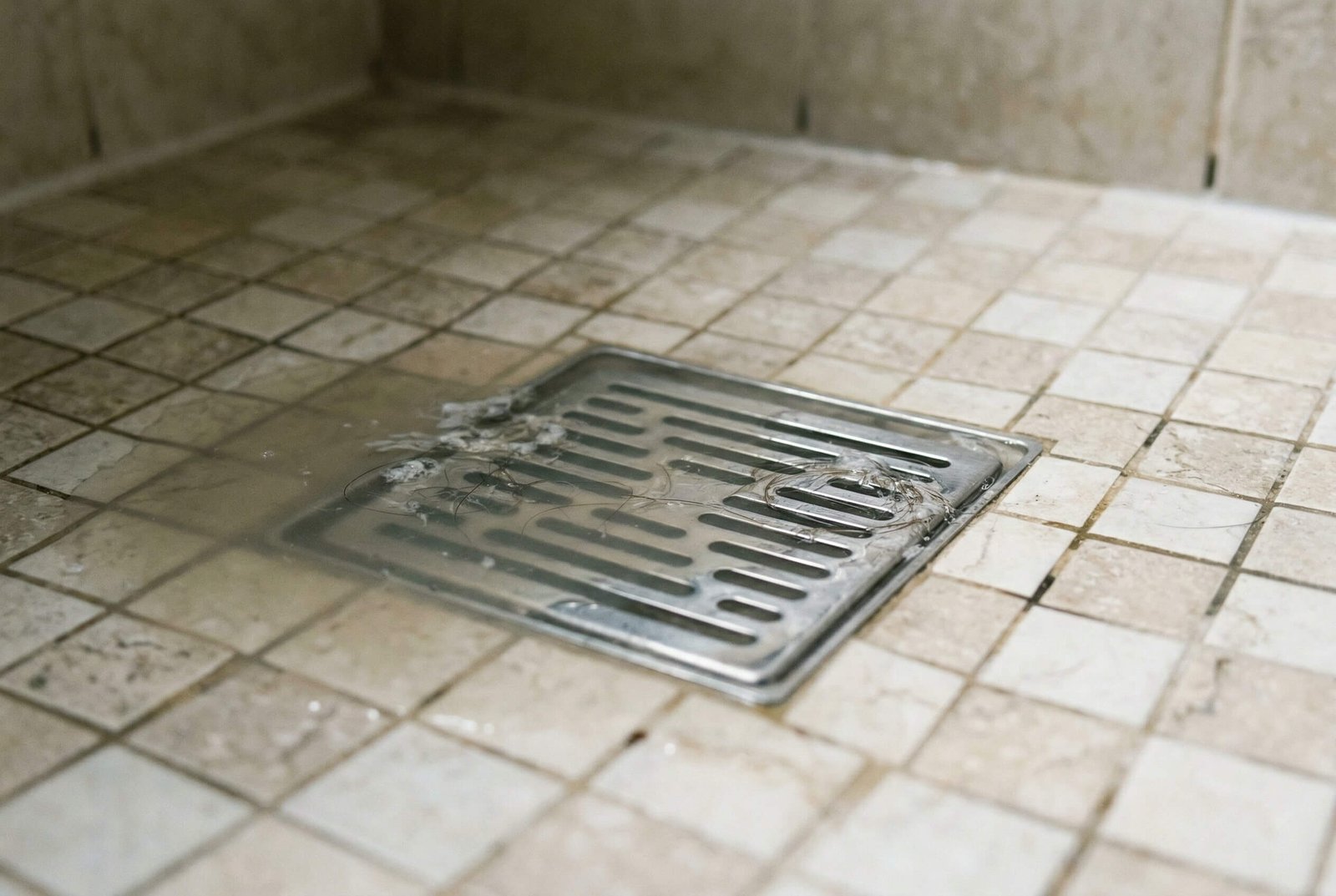
Standing water in a shower drain is a common plumbing symptom that many homeowners eventually notice. Instead of water flowing smoothly down the drain during or after a shower, some water remains pooled around the drain opening or sits inside the drain pipe. While this may appear to be a small inconvenience at first, it usually indicates that the shower drainage system is not working as efficiently as it should.
In a properly functioning plumbing system, wastewater from the shower should travel quickly through the drain opening, pass through the P-trap, and move through the household drain pipes toward the sewer line. Gravity and proper airflow within the plumbing system allow water to drain without interruption. When water begins to collect around the drain or remain inside the pipe, it typically means something is slowing the flow of wastewater through the system.
Standing water in a shower drain is often one of the earliest signs of a developing blockage. Hair, soap residue, and other organic debris can accumulate inside the pipes and gradually narrow the pathway that water uses to travel through the drain system. As the restriction grows, water may drain more slowly and begin collecting around the drain opening.
In some cases, standing water can also be connected to deeper plumbing conditions such as partial blockages in the branch drain line, improper pipe slope, or ventilation problems affecting the drainage system. These issues can interfere with normal water flow and prevent wastewater from leaving the shower as quickly as it should.
Understanding why standing water forms in a shower drain helps homeowners recognize the warning signs of drainage problems. In this article, we will explain how shower drain systems normally work, the most common causes of standing water in shower drains, where blockages are typically located, and how professional plumbers diagnose slow-draining shower systems in residential homes.
What This Page Covers
ToggleHow a Shower Drain System Normally Works
To understand why standing water forms in a shower drain, it is important to understand how a typical residential shower drainage system functions. In most American homes, shower drains are part of a larger plumbing network that carries wastewater away from the bathroom and into the home’s main sewer line or septic system. When the system is operating correctly, water should flow quickly and smoothly through the pipes without pooling around the drain.
The movement of wastewater through the drain system depends on gravity, proper pipe design, and adequate airflow within the plumbing system. As water flows through the pipes, air must also circulate freely to prevent pressure imbalances that could slow down drainage. If any part of this system becomes restricted, water may begin draining more slowly and start collecting around the shower drain.
Understanding the key components and mechanics of the shower drain system helps explain why standing water can appear when something inside the plumbing network begins to interfere with normal water flow.
The Basic Components of a Shower Drain System
A standard shower drain system includes several connected parts that work together to remove wastewater from the shower area.
The primary components include:
-
Drain cover or strainer – The visible grate on the shower floor that allows water to enter the drain while blocking larger debris such as hair.
-
Drain body – The pipe fitting beneath the shower base that connects the drain opening to the plumbing system.
-
P-trap – A curved pipe section that holds a small amount of water to prevent sewer gases from entering the home.
-
Branch drain line – The horizontal pipe that carries wastewater from the shower and nearby fixtures toward the main drain line.
-
Main household drain line – The larger pipe that transports wastewater from the home to the municipal sewer system or septic tank.
Each of these components plays an important role in ensuring that water flows away from the shower efficiently.
How Wastewater Flows Away From the Shower
When the shower is in use, water flows through the drain opening and enters the P-trap below the shower floor. From there, gravity pulls the wastewater through the branch drain line and into the main household drain pipe.
The drainage process works efficiently when:
-
Pipes are properly sloped
-
Airflow within the system remains balanced
-
The drain pipes remain clear of debris
If any obstruction or restriction develops within the pipes, water may slow down as it moves through the system. When this happens, water may begin to collect around the drain opening instead of draining immediately.
Why Proper Pipe Slope Matters
Drain pipes are installed with a slight downward slope so that gravity can carry wastewater through the plumbing system. If the slope is too shallow, water may move slowly through the pipes and begin to pool in certain areas.
Improper pipe slope can cause:
-
Slow-moving wastewater
-
Water lingering inside the drain line
-
Debris accumulating inside the pipes
-
Standing water near the shower drain
Over time, these conditions can make it easier for hair, soap residue, and other materials to collect inside the pipes and restrict water flow.
The Role of Plumbing Vent Pipes
Plumbing vent pipes help maintain proper air pressure inside the drainage system. These pipes extend through the roof of the home and allow air to enter the plumbing network while releasing sewer gases outside.
Vent pipes perform several important functions:
-
Allow air to enter the drain system
-
Prevent vacuum pressure from forming inside the pipes
-
Help wastewater flow smoothly through the drain lines
-
Maintain balanced airflow within the plumbing network
If the vent system becomes restricted or blocked, water may not move through the pipes as efficiently. Reduced airflow can slow drainage and contribute to standing water forming in the shower drain.
Understanding how these plumbing components work together helps explain why standing water in a shower drain usually signals that something inside the drainage system is interfering with normal water flow.
Common Symptoms of Standing Water in a Shower Drain
Standing water in a shower drain is usually one of the earliest signs that the drainage system is beginning to struggle. In many cases, the water does not completely block the drain at first. Instead, homeowners may notice small amounts of water remaining around the drain opening or slow drainage after the shower is used. These symptoms often develop gradually as debris accumulates inside the pipes or as airflow problems begin affecting the plumbing system.
Professional plumbers often evaluate several related symptoms when diagnosing shower drainage problems. These signs can help indicate whether the issue is caused by a minor obstruction near the drain or a larger restriction deeper within the plumbing system.
Recognizing these symptoms early can help homeowners understand that standing water is often a warning sign of developing drain problems.
Water Pooling Around the Drain
One of the most noticeable symptoms is water pooling around the shower drain during or after a shower. Instead of flowing directly down the drain, some water remains on the shower floor near the drain opening.
Homeowners may observe:
-
A small puddle forming around the drain
-
Water slowly moving toward the drain
-
Water remaining after the shower is turned off
-
Pooling that disappears gradually over time
This condition usually indicates that water is draining more slowly than normal.
Slow Draining After a Shower
Slow drainage is another common symptom associated with standing water in the shower drain. When water takes longer than usual to leave the shower floor, it often means something inside the pipe is restricting the flow.
Signs of slow drainage include:
-
Water taking several minutes to fully drain
-
Shower water collecting around the feet while bathing
-
Drain performance gradually worsening
-
Water levels rising slightly during longer showers
Slow drainage often develops when debris begins accumulating inside the drain pipes.
Water Remaining in the Drain Opening
Sometimes standing water appears inside the drain opening itself rather than on the shower floor. Homeowners may notice that the drain opening remains filled with water even after the shower has finished draining.
This may appear as:
-
Water visible inside the drain pipe
-
Water sitting just below the drain cover
-
A small pool remaining inside the drain opening
-
Water slowly moving downward after the shower stops
This condition often indicates that water is moving slowly through the P-trap or nearby pipe sections.
Gurgling Sounds While Draining
Standing water may sometimes be accompanied by unusual sounds coming from the drain. When water moves through partially restricted pipes, air may become trapped and forced through the drainage system.
These sounds may include:
-
Gurgling or bubbling noises
-
Air bubbles rising through the drain
-
Suction-like sounds after water drains
-
Occasional bubbling during showers
These noises usually suggest that airflow inside the plumbing system is being disrupted.
Soap or Hair Collecting Near the Drain
Another visible sign of developing drain problems is the accumulation of hair and soap residue around the drain opening. These materials can easily enter the drain during everyday shower use and begin collecting inside the pipes.
Homeowners may notice:
-
Hair strands visible around the drain cover
-
Soap residue forming near the drain opening
-
Debris collecting around the drain strainer
-
Material slowly washing into the drain
These materials are often the early contributors to blockages that eventually cause standing water in the shower drain.
Recognizing these symptoms can help homeowners understand that standing water in a shower drain is rarely random and often signals that the plumbing system is beginning to experience drainage restrictions.
Most Common Causes of Standing Water in Shower Drains
Standing water in a shower drain usually develops when wastewater cannot move freely through the plumbing system. In a properly functioning drain system, water should flow quickly through the drain opening, pass through the P-trap, and continue through the branch drain line toward the home’s main sewer pipe. When something restricts this flow, water begins draining more slowly and may start collecting around the shower drain.
Most causes of standing water are related to debris buildup inside the pipes or plumbing conditions that interfere with normal drainage. Over time, everyday shower use introduces hair, soap residue, and other materials into the drain system. These materials can accumulate inside the pipes and gradually reduce the available space for water to pass through.
Understanding the most common causes helps explain why standing water often appears as an early warning sign of a developing drain blockage.
Hair Buildup Inside the Drain Pipe
Hair accumulation is one of the most frequent causes of standing water in shower drains. Loose hair easily enters the drain during showers and can become tangled inside the pipe. Over time, strands of hair collect together and form clumps that partially block the flow of water.
Hair buildup often forms in areas such as:
-
Just below the drain opening
-
Inside the P-trap
-
Along rough pipe surfaces
As more hair accumulates, it can trap additional debris such as soap residue and dirt. This gradually reduces the pipe’s interior space and slows the movement of wastewater.
Soap Scum and Residue Accumulation
Soap, shampoo, and conditioner can leave behind residue that sticks to the interior walls of drain pipes. Over time, this sticky residue can combine with hair and other debris to create a thick layer of buildup.
Soap residue can contribute to standing water by:
-
Narrowing the interior of the drain pipe
-
Creating sticky surfaces that trap hair and debris
-
Slowing the movement of wastewater
-
Allowing organic materials to accumulate inside the pipes
This type of buildup often develops gradually and may not be immediately noticeable.
Partial Blockage in the P-Trap
The P-trap is a curved section of pipe located directly beneath the shower drain. While its primary purpose is to prevent sewer gases from entering the home, its curved design can also allow debris to collect more easily.
Materials that commonly collect inside the P-trap include:
-
Hair clumps
-
Soap residue
-
Dirt and small debris
-
Organic materials washed down the drain
When buildup forms inside the P-trap, water may begin draining more slowly, leading to standing water around the drain opening.
Debris in the Branch Drain Line
In many homes, the shower drain connects to a branch drain line that also carries wastewater from other bathroom fixtures. If debris accumulates inside this shared pipe, it can restrict water flow from multiple drains.
Debris buildup in the branch line may occur due to:
-
Hair and soap residue from the shower
-
Toothpaste or debris from bathroom sinks
-
Paper products from nearby fixtures
-
Organic material moving through the drain system
When this pipe becomes partially blocked, water from the shower may begin draining slowly and pool around the drain.
Poor Pipe Slope or Plumbing Installation Issues
Drain pipes rely on gravity to move wastewater away from fixtures. If the pipes were installed with an incorrect slope, water may move more slowly through the plumbing system.
Improper pipe slope can lead to:
-
Water pooling inside the pipes
-
Debris accumulating more easily
-
Reduced drainage efficiency
-
Standing water appearing near the shower drain
Although installation issues are less common than debris buildup, they can still contribute to ongoing drainage problems.
Early Signs of a Developing Drain Clog
Standing water often appears during the early stages of a drain clog. At this stage, the blockage may not be large enough to completely stop water flow, but it can slow drainage enough for water to collect near the drain opening.
Early clog symptoms may include:
-
Slightly slower drainage
-
Small amounts of standing water after showers
-
Hair visible near the drain
-
Drain performance gradually worsening
Recognizing these early signs can help homeowners understand that standing water often indicates a blockage forming somewhere inside the drain system.
Where the Blockage Is Usually Located
When standing water appears in a shower drain, the restriction causing slow drainage can exist in several different parts of the plumbing system. Although the water collects at the shower drain opening, the actual blockage is often located deeper within the connected pipes. Because shower drains connect to multiple sections of the household drainage network, plumbers typically inspect several key locations to determine where the obstruction may be forming.
Understanding where blockages commonly occur helps explain why water may drain slowly even when the drain opening itself appears clear. In many cases, debris buildup develops gradually in areas of the plumbing system where water flow slows or where pipes change direction.
Below are the most common locations where blockages that cause standing water are typically found.
At the Shower Drain Opening
The first place plumbers often check is directly beneath the shower drain cover. Hair, soap residue, and small debris frequently collect just below the drain opening where water first enters the pipe.
This buildup can partially block the drain and slow water flow.
Signs of a blockage near the drain opening may include:
-
Hair visible around the drain cover
-
Soap residue forming near the drain
-
Water pooling immediately around the drain area
-
Debris caught in the drain strainer
Because this area is the first entry point for debris, it is one of the most common places where standing water begins.
Inside the P-Trap
The P-trap is a curved pipe section located beneath the shower drain. Its purpose is to hold a small amount of water that blocks sewer gases from entering the home. However, the curved shape of the trap can also allow debris to accumulate more easily.
Common materials that collect inside the P-trap include:
-
Hair strands
-
Soap scum and residue
-
Dirt and organic debris
-
Small objects washed into the drain
As this material builds up, it can partially block the pipe and reduce the speed at which water moves through the drainage system.
In the Bathroom Branch Drain Line
The branch drain line is the horizontal pipe that carries wastewater from the shower and nearby bathroom fixtures toward the home’s main drain line. In many homes, the shower shares this pipe with sinks, bathtubs, and toilets.
If debris accumulates in this section of pipe, it can affect the drainage performance of several fixtures.
Possible signs of a blockage in the branch drain line include:
-
Slow drainage in multiple bathroom fixtures
-
Standing water appearing in the shower drain
-
Gurgling sounds when other fixtures are used
-
Drain performance gradually worsening
Because several fixtures connect to this pipe, buildup here can influence how quickly the shower drain empties.
In the Main Household Drain Line
In some situations, the restriction causing standing water may be located deeper in the plumbing system within the main household drain line. This larger pipe carries wastewater from the entire home to the sewer connection or septic system.
When debris accumulates in the main drain line, water from multiple fixtures may begin draining slowly.
Signs that the main drain line may be involved include:
-
Slow drainage throughout the home
-
Standing water appearing in multiple drains
-
Gurgling sounds in several fixtures
-
Drain backups during heavy water use
Because the main drain line serves the entire plumbing system, blockages in this pipe can have widespread effects.
Identifying where a blockage is located helps plumbers determine whether the standing water is caused by a simple localized obstruction near the shower drain or a deeper restriction affecting the household drainage system.
Hidden Plumbing Problems That Can Cause Standing Water
In many homes, standing water in a shower drain is caused by visible debris such as hair or soap buildup near the drain opening. However, when the problem persists even after the drain area appears clean, the cause may be located deeper within the plumbing system. These hidden plumbing issues often develop inside walls, beneath floors, or within underground sewer pipes, making them difficult for homeowners to identify without professional inspection.
Professional plumbers frequently investigate these deeper plumbing conditions when slow drainage continues or when standing water repeatedly appears in the shower drain. Even when the shower itself seems to function normally at times, hidden problems inside the drain system can interfere with wastewater flow and allow water to accumulate near the drain.
Understanding these less visible plumbing conditions helps explain why standing water sometimes develops even when the drain opening looks clear.
Plumbing Vent Restrictions
Plumbing vent pipes are essential for maintaining proper airflow within the drainage system. These pipes extend vertically through the roof and allow air to enter the plumbing network while allowing sewer gases to escape outside.
When vent pipes become partially blocked, airflow through the plumbing system may be restricted. Without adequate airflow, wastewater may not move as efficiently through the pipes.
Common causes of vent pipe restrictions include:
-
Leaves or outdoor debris entering the vent opening
-
Bird nests forming inside the vent pipe
-
Small animals entering the vent system
-
Ice or snow temporarily blocking the vent during winter
When airflow becomes limited, the plumbing system may struggle to maintain balanced pressure, which can slow drainage and contribute to standing water in the shower drain.
Aging Drain Pipes
Older homes often contain drain pipes made from materials such as cast iron or galvanized steel. Over time, these pipes can develop corrosion or internal roughness along their interior surfaces.
These rough surfaces allow debris to accumulate more easily inside the pipe.
Aging drain pipes may lead to:
-
Gradual narrowing of the pipe interior
-
Increased buildup of soap residue and hair
-
Slower wastewater movement through the system
-
Reduced drainage efficiency
As buildup grows inside aging pipes, water may begin draining more slowly and may remain visible near the shower drain.
Pipe Corrosion and Internal Buildup
Corrosion inside metal drain pipes can create uneven surfaces that trap debris more easily. As corrosion progresses, the interior diameter of the pipe may slowly shrink.
This condition can cause:
-
Debris collecting inside the pipe walls
-
Reduced pipe capacity for wastewater flow
-
Increased chance of partial blockages
-
Standing water appearing near the shower drain
Internal buildup caused by corrosion often develops gradually over many years.
Sewer Line Restrictions
Standing water in the shower drain may occasionally be linked to restrictions in the underground sewer line that carries wastewater away from the home. If this pipe becomes partially blocked, wastewater may drain more slowly throughout the plumbing system.
Common sewer line problems include:
-
Tree roots growing into underground pipes
-
Debris accumulation inside the sewer line
-
Pipe misalignment caused by soil movement
-
Aging sewer infrastructure
When the sewer line becomes restricted, water from multiple fixtures may struggle to drain properly.
Structural Pipe Misalignment
Drain pipes located beneath floors or underground can sometimes shift due to soil movement, foundation settling, or construction changes. When pipes become misaligned, sections of the pipe may develop low points where water collects.
Pipe misalignment can lead to:
-
Wastewater pooling inside the pipe
-
Debris settling in low sections of pipe
-
Slower drainage through affected areas
-
Standing water appearing in connected drains
Because these issues occur beneath the home or underground, they are usually identified during professional plumbing inspections.
Hidden plumbing problems are one reason standing water in a shower drain can sometimes persist even when the drain opening appears clean. When deeper sections of the plumbing system are affected, identifying the underlying cause often requires specialized inspection equipment.
Warning Signs of a More Serious Drain Problem
Standing water in a shower drain often begins as a minor drainage issue caused by debris buildup or slow water movement inside the pipes. However, when this symptom appears alongside other plumbing problems, it can indicate that a larger section of the drainage system is being affected. Professional plumbers often evaluate additional warning signs to determine whether the issue involves a localized shower drain blockage or a deeper plumbing problem.
Recognizing these warning signs early can help homeowners understand when standing water may be connected to a more serious condition within the household plumbing system.
Water Backing Up Into the Shower
One of the most concerning warning signs occurs when wastewater begins backing up into the shower drain. Because the shower drain is often one of the lowest points in the household plumbing system, it may be the first fixture where water appears during a blockage.
Signs of a backup may include:
-
Dirty or cloudy water appearing in the shower drain
-
Water rising in the shower when other fixtures are used
-
Water pooling quickly during normal drainage
-
Wastewater entering the shower unexpectedly
This situation often indicates that a restriction may exist deeper within the drainage system.
Standing Water Appearing in Multiple Drains
If standing water begins appearing in more than one drain in the home, the issue may involve the shared plumbing system rather than a single shower drain. Because many fixtures connect to the same branch drain line or main drain pipe, restrictions in these pipes can affect multiple drains at once.
Homeowners may notice:
-
Water pooling in both the shower and bathtub
-
Slow drainage in bathroom sinks
-
Standing water in basement floor drains
-
Drainage issues affecting several fixtures simultaneously
Multiple affected drains often suggest that the blockage may be located deeper within the plumbing network.
Persistent Sewer Odors
Standing water accompanied by sewer odors may indicate that organic debris is accumulating inside the drain pipes or that sewer gases are escaping from the plumbing system. These odors can develop when wastewater remains trapped inside partially blocked pipes.
Common signs include:
-
Strong sewage smells near the shower drain
-
Unpleasant odors appearing after showers
-
Smells spreading into nearby rooms
-
Sewer odors noticeable in multiple drains
When odors accompany drainage problems, it may indicate a deeper plumbing issue.
Multiple Slow Drains in the Home
When several drains throughout the house begin draining slowly at the same time, the plumbing system may be experiencing a restriction in a shared drain pipe.
Examples may include:
-
Shower draining slowly
-
Bathroom sinks emptying more slowly
-
Bathtubs taking longer to drain
-
Kitchen sink drainage becoming sluggish
These symptoms often suggest that the restriction may exist in a branch drain line or the main household drain pipe.
Repeated Plumbing Backups
Repeated plumbing backups are one of the strongest indicators that a larger drain system problem may be present. When wastewater cannot move freely through the pipes, pressure may build up and force water back into household fixtures.
Signs of repeated backups include:
-
Water returning through the shower drain
-
Drains temporarily filling before emptying
-
Wastewater appearing during heavy water use
-
Plumbing problems occurring frequently
These conditions may indicate that the drainage system requires professional inspection to identify the underlying cause.
Understanding these warning signs helps homeowners recognize when standing water in the shower drain may be connected to a deeper plumbing problem rather than a simple surface-level blockage.
Real-World Plumbing Scenarios That Cause Standing Water in Shower Drains
Standing water in a shower drain often develops gradually as a result of everyday household usage and long-term plumbing conditions. While the water pooling around the drain may appear suddenly, the underlying causes usually build up over time inside the drainage system. Professional plumbers frequently encounter similar situations when homeowners report slow shower drainage or water remaining near the drain opening.
These real-world scenarios help explain how normal shower use, plumbing system design, and aging infrastructure can contribute to standing water in the drain. Understanding these situations can help homeowners recognize why the problem occurs and how the plumbing system conditions inside the home may contribute to slow drainage.
Hair Buildup in High-Use Family Bathrooms
In busy households where multiple people use the same shower every day, hair accumulation is one of the most common causes of standing water in the drain. Hair strands easily enter the drain during showers and can collect inside the pipe over time.
Hair often combines with soap residue and body oils, forming dense clumps that partially block the pipe.
This situation may lead to:
-
Gradual narrowing of the drain pipe
-
Water draining more slowly than usual
-
Hair collecting around the drain opening
-
Small pools of water forming during showers
Because this buildup forms gradually, homeowners may notice standing water long before the drain becomes completely clogged.
Soap Residue in Frequently Used Showers
Soap, shampoo, conditioner, and body wash can leave behind residue that sticks to the interior surfaces of drain pipes. Over time, this residue can accumulate and form a sticky coating along the pipe walls.
This residue can contribute to standing water by:
-
Creating surfaces that trap hair and debris
-
Narrowing the interior of the pipe
-
Slowing the movement of wastewater
-
Allowing organic material to collect inside the drain
In showers that are used frequently, this buildup can gradually reduce drainage efficiency.
Drain Issues in Older Homes
Older homes often contain plumbing systems that have been in use for several decades. Pipes made from older materials such as cast iron may develop rough interior surfaces due to corrosion or wear over time.
These rough surfaces can allow debris to accumulate more easily inside the pipes.
Common conditions in older plumbing systems include:
-
Internal pipe corrosion
-
Rough pipe surfaces trapping debris
-
Gradual narrowing of drain pipes
-
Slower wastewater flow
As these conditions develop, water may begin draining more slowly and remain visible around the shower drain.
Sewer Line Restrictions in Older Neighborhoods
In some situations, standing water in the shower drain may be connected to restrictions in the underground sewer line outside the home. Sewer lines can develop blockages due to tree root intrusion, pipe aging, or debris accumulation.
Common sewer line issues include:
-
Tree roots growing into underground pipes
-
Debris accumulating inside sewer pipes
-
Pipe misalignment caused by soil movement
-
Aging sewer infrastructure
When the sewer line becomes partially restricted, wastewater from household fixtures may drain more slowly, allowing standing water to appear in the shower.
Plumbing Layout Issues in Renovated Bathrooms
In homes where bathrooms have been renovated or remodeled, changes to the plumbing layout may sometimes create drainage challenges. If pipes are installed with improper slope or if multiple fixtures share a narrow drain line, water may not flow as efficiently through the system.
These conditions can result in:
-
Slower wastewater movement through pipes
-
Increased chance of debris buildup
-
Reduced drainage capacity
-
Standing water appearing near the shower drain
Plumbers occasionally encounter these issues when inspecting recently renovated bathrooms where drainage problems have begun to develop.
These real-world plumbing scenarios demonstrate how everyday household conditions and long-term plumbing system changes can lead to standing water forming in shower drains.
Minor Prevention Habits That Help Reduce Standing Water in Shower Drains
While standing water in a shower drain is often caused by debris buildup or drainage restrictions inside the plumbing system, certain everyday habits can help reduce the chances of these problems developing. Preventive maintenance focuses on keeping debris out of the drain, maintaining clean pipe surfaces, and monitoring early signs of slow drainage.
Professional plumbers often recommend simple maintenance practices that homeowners can follow to help keep shower drains functioning properly. These habits do not involve major plumbing repairs but instead help reduce the conditions that allow blockages to form inside the pipes.
Adopting these preventive habits can help maintain smoother water flow and reduce the likelihood of standing water appearing around the shower drain.
Using Drain Strainers to Catch Hair
Drain strainers are small devices that sit over the shower drain opening and help capture hair and debris before they enter the plumbing system. Because hair is one of the most common contributors to shower drain blockages, using a strainer can significantly reduce the amount of material entering the pipes.
Drain strainers help by:
-
Catching loose hair during showers
-
Preventing large debris from entering the drain pipe
-
Reducing buildup inside the P-trap
-
Making it easier to remove collected materials
Cleaning the strainer regularly helps prevent trapped debris from eventually washing into the drain.
Removing Hair From Shower Drains Regularly
Hair that collects around the drain opening can easily slip into the pipe during normal shower use. Removing visible hair from the drain area after bathing can help prevent buildup inside the plumbing system.
Helpful habits include:
-
Clearing hair from the drain cover after showers
-
Checking the drain opening periodically
-
Removing hair caught in strainers
-
Preventing clumps of hair from entering the drain
Keeping the drain area free from hair helps maintain better water flow through the pipes.
Keeping Soap Residue From Building Up
Soap, shampoo, and conditioner can leave behind residue that sticks to pipe surfaces. Over time, this residue can trap hair and debris, contributing to slow drainage.
Homeowners can reduce soap buildup by:
-
Rinsing the shower floor and drain area after use
-
Avoiding excessive amounts of thick products entering the drain
-
Cleaning visible soap residue from the drain cover
-
Keeping the drain opening clear of residue
These habits help reduce the sticky surfaces that allow debris to accumulate inside the pipes.
Monitoring Early Signs of Slow Drainage
Paying attention to how the shower drain performs can help homeowners identify early signs of developing plumbing issues. Small changes in drainage speed or water movement can indicate that buildup is beginning to form inside the pipes.
Early warning signs may include:
-
Water taking slightly longer to drain
-
Small puddles forming around the drain
-
Hair collecting near the drain opening
-
Occasional gurgling sounds during drainage
Recognizing these signs early can help homeowners monitor the condition of their plumbing system and take steps to prevent more serious drainage problems.
Maintaining these simple habits can help keep shower drains cleaner and reduce the likelihood of standing water developing due to debris accumulation.
When Homeowners Should Call a Professional Plumber
Small amounts of standing water in a shower drain may sometimes be caused by minor debris buildup near the drain opening. However, when the problem continues or begins affecting other fixtures, it may indicate a deeper plumbing issue that requires professional inspection. Licensed plumbers are trained to evaluate drainage systems and identify problems inside pipes that are not easily visible.
Knowing when to contact a plumber can help prevent slow drainage from turning into a more serious plumbing problem that affects the entire household drain system.
Standing Water That Does Not Drain
If water remains in the shower drain for long periods or does not drain at all, it may indicate that a blockage has developed somewhere in the drain line. In some cases, the obstruction may be located deeper inside the pipes where homeowners cannot easily access it.
Signs that professional inspection may be needed include:
-
Water remaining in the shower long after use
-
Drainage stopping completely
-
Water pooling quickly during showers
-
Drain performance worsening over time
Persistent standing water often suggests that a blockage may exist beyond the visible drain opening.
Slow Drainage Affecting Multiple Fixtures
When slow drainage begins affecting more than one fixture in the home, the problem may involve a shared drain pipe rather than a single shower drain.
Homeowners may notice:
-
Shower draining slowly
-
Bathroom sinks emptying slowly
-
Bathtubs taking longer to drain
-
Kitchen sinks showing reduced drainage speed
When several fixtures show similar symptoms, the restriction may be located in a branch drain line or the main household drain pipe.
Drain Odors Appearing With Standing Water
Standing water that is accompanied by unpleasant odors can indicate that organic material is accumulating inside the drain pipes. When debris remains inside partially blocked pipes, bacteria can grow and produce foul smells.
Possible signs include:
-
Sewer odors near the shower drain
-
Smells becoming noticeable after showers
-
Odors appearing in multiple drains
-
Unpleasant smells lingering in the bathroom
These symptoms may indicate that debris buildup or ventilation issues are affecting the plumbing system.
Signs of Sewer Line Blockage
In some situations, standing water in the shower drain may be connected to a blockage in the home’s main sewer line. When the sewer line becomes restricted, wastewater from multiple fixtures may drain more slowly or begin backing up.
Warning signs of sewer line problems include:
-
Standing water appearing in multiple drains
-
Water backing up into the shower
-
Gurgling sounds in household drains
-
Drain backups occurring during heavy water use
Because sewer line issues can affect the entire plumbing system, professional inspection is often necessary to determine the condition of the underground pipes.
Professional plumbers use specialized equipment such as drain inspection cameras and diagnostic tools to locate the source of drainage problems and evaluate the condition of the plumbing system.
Final Thoughts on Standing Water in Shower Drains
Standing water in a shower drain is usually a sign that wastewater is not moving through the plumbing system as efficiently as it should. In a properly functioning drainage system, water should flow smoothly from the shower drain through the P-trap, into the branch drain line, and eventually toward the home’s main sewer connection. When water begins collecting around the drain opening or remains inside the pipe after the shower ends, it often indicates that something is slowing the flow of water through the system.
In many homes, the most common causes include hair accumulation, soap residue buildup, or debris collecting inside the P-trap or nearby drain pipes. These materials gradually reduce the space available for water to pass through the pipe, leading to slower drainage and small pools of water around the drain.
However, standing water can sometimes be connected to deeper plumbing issues such as partial blockages in branch drain lines, ventilation restrictions, aging drain pipes, or sewer line conditions. When these problems develop, water may struggle to move through the plumbing network, allowing standing water to appear in the shower.
Paying attention to early warning signs such as slow drainage, recurring standing water, unusual drain noises, or odors can help homeowners recognize when a drainage issue may be developing. Monitoring these symptoms allows problems to be identified before they become larger plumbing concerns.