
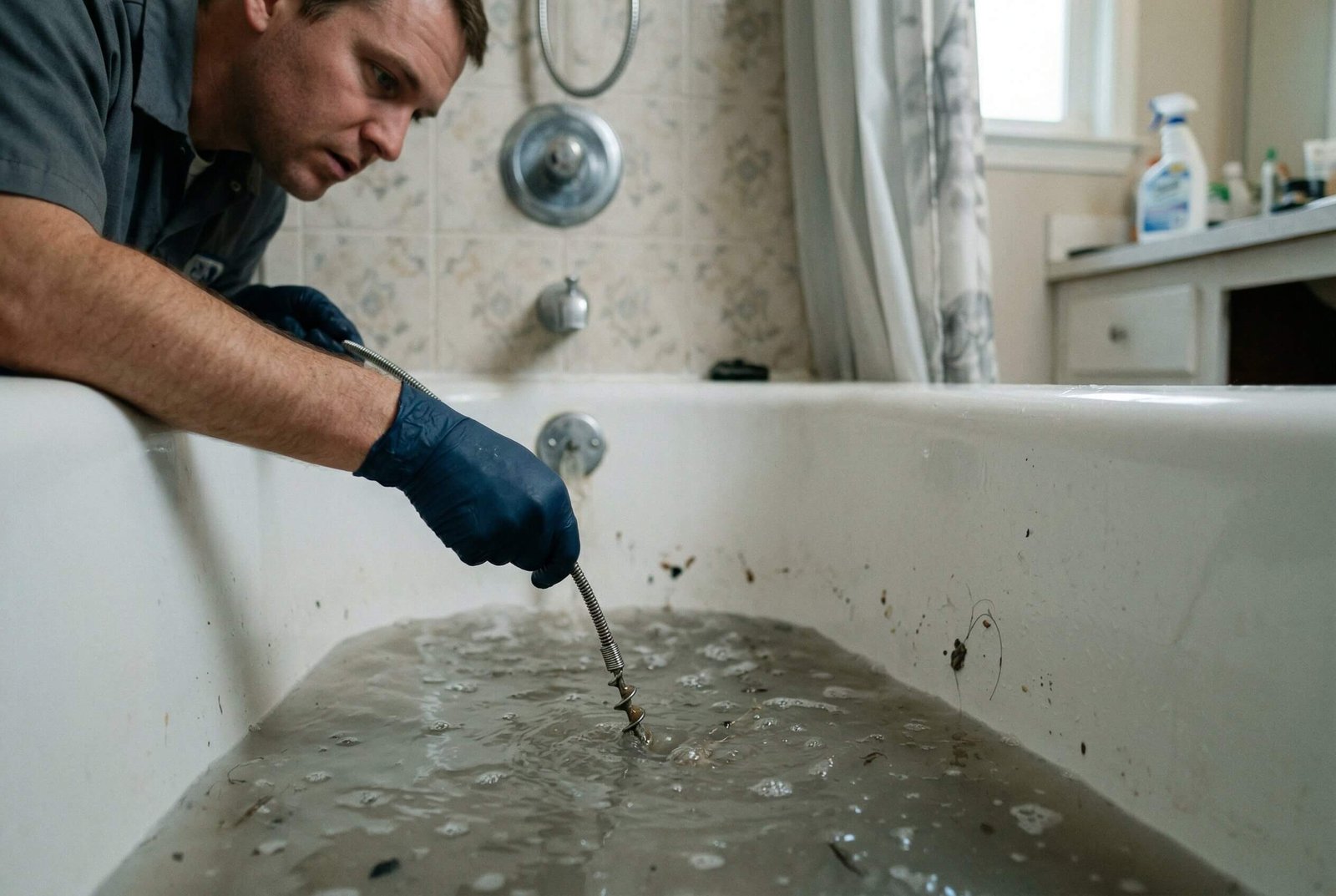
Seeing water backing up into a bathtub can be alarming for homeowners. Instead of draining normally, water may begin rising in the tub when the shower is running, when another bathroom fixture is used, or even when the washing machine drains. In many homes across the United States, this problem signals that wastewater cannot move freely through the plumbing system and is being forced back toward the bathtub drain.
A bathtub backup usually occurs when a partial or complete blockage forms somewhere in the drain system. Hair, soap scum, bath products, and other debris commonly accumulate inside pipes over time. As the obstruction grows, it reduces the space available for water to pass through the drain line. When water cannot move through the pipe quickly enough, pressure builds inside the plumbing system and the excess water may push back up through the bathtub drain.
Bathtubs are often one of the first fixtures where homeowners notice drainage problems. Because the tub drain typically sits at a lower point in the bathroom plumbing system, backed-up wastewater naturally finds its way there when a blockage restricts normal flow. In some cases the problem may be limited to the bathtub drain itself, while in other situations the issue may involve a larger section of the home’s plumbing system.
Understanding why bathtub water backs up into the tub requires looking at how the drain system works, where blockages commonly form, and what symptoms indicate a developing plumbing problem. By recognizing these signs early, homeowners can better understand what may be happening inside their plumbing system when bathtub drain backups occur.
What This Page Covers
ToggleHow a Bathtub Drain System Works
To understand why water backs up into a bathtub, it helps to understand how the bathtub drain system is designed to move wastewater out of the home. A bathtub drain is connected to several plumbing components that work together to carry used water from the tub to the home’s main sewer line or septic system.
When the system is functioning properly, gravity and proper pipe ventilation allow water to move smoothly through the pipes. However, if any part of this pathway becomes restricted or blocked, water may slow down, stop draining, or even reverse direction and rise back into the tub.
Understanding the basic structure of the bathtub drain system helps homeowners recognize where problems may develop.
Main Components of a Bathtub Drain
A typical bathtub drain system includes several key plumbing parts that work together to move water away from the tub.
Common components include:
• Drain opening where water leaves the bathtub
• Drain stopper assembly that allows the tub to hold water for bathing
• Drain shoe located directly beneath the drain opening
• Overflow drain that prevents the tub from overfilling
• P-trap which holds water to block sewer gases
• Branch drain line that carries wastewater to the main sewer pipe
Each of these components plays a role in directing water out of the bathtub and into the home’s drainage system.
How Wastewater Flows From the Tub to the Sewer Line
When water leaves the bathtub, it travels through the drain opening and enters the drain shoe, a short section of pipe located directly beneath the tub. From there, the water flows downward into the P-trap and then into the horizontal drain pipe connected to the bathroom plumbing.
The wastewater continues through the branch drain line until it eventually reaches the main sewer line, which carries all wastewater out of the home.
This process relies on gravity and proper pipe slope. The pipes are installed at a slight downward angle so that wastewater naturally flows toward the sewer system without needing pumps.
If debris collects anywhere along this pathway, it can slow the movement of water and increase the risk of drain backups.
The Role of the P-Trap in Preventing Sewer Gas
The P-trap is one of the most important components of the bathtub drain system. It is the curved pipe section located beneath the bathtub drain.
Its purpose is to hold a small amount of water at all times. This water forms a barrier that prevents sewer gases from traveling back up through the drain and entering the home.
Although the P-trap is essential for preventing odors, its curved shape also makes it a common location for debris buildup.
Materials that frequently collect in the P-trap include:
• Hair strands washed down during showers
• Soap scum residue
• Bath product buildup
• Small debris from the bathroom
As debris accumulates in this curved section of pipe, it can gradually restrict water flow.
Why Bathtubs Are Often the First Fixture to Show Drain Problems
In many homes, the bathtub is one of the lowest plumbing fixtures connected to the bathroom drain system. Because of its lower position, backed-up water naturally moves toward the bathtub drain when a blockage forms further down the pipe.
This is why homeowners may notice water rising in the tub when other fixtures are used.
Common situations include:
• Running the bathroom sink causes water to rise in the bathtub
• Flushing the toilet causes bubbling in the bathtub drain
• Shower water drains slowly and begins pooling in the tub
These symptoms occur because water cannot move past the obstruction quickly enough, forcing it to seek the lowest available opening in the plumbing system.
What It Means When Bathtub Water Backs Up Into the Tub
When water backs up into a bathtub, it usually means that wastewater cannot move freely through the drain system. Instead of flowing away from the tub and toward the sewer line, the water encounters resistance somewhere in the plumbing pipes. As pressure builds inside the drain line, the water may begin moving back toward the bathtub drain.
This situation often signals a developing blockage or restriction inside the plumbing system. While the problem may sometimes originate close to the bathtub drain itself, it can also occur deeper within the bathroom plumbing or even in the home’s main sewer line.
Understanding the behavior of drain backups can help homeowners recognize what the symptoms mean and where the blockage may be located.
Understanding Drain Backup Behavior
A drain backup occurs when wastewater reverses direction inside the plumbing system. Normally, gravity allows water to move through the pipes toward the sewer system. However, if the pipe becomes partially blocked, water cannot pass through at the same speed it enters the drain.
When this happens, water may begin collecting inside the pipe. As more water enters the system, the pressure inside the pipe increases and forces water back toward the nearest opening.
In many homes, that opening is the bathtub drain.
Typical backup behavior may include:
• Water rising inside the bathtub drain
• Water pooling in the tub during a shower
• Water appearing in the tub when another fixture drains
• Bubbling or movement in the drain opening
These symptoms indicate that wastewater is being redirected because it cannot continue through the pipe normally.
Why Water Returns Through the Bathtub Drain
Water often backs up into the bathtub because of the layout of bathroom plumbing systems. Bathtubs are typically positioned lower than other fixtures such as sinks or toilets.
When a blockage forms deeper in the plumbing system, water seeks the lowest point where it can escape.
Because of this plumbing design:
• Wastewater from sinks may rise in the bathtub
• Shower water may drain slowly and collect in the tub
• Water from other fixtures may enter the bathtub drain
This behavior does not necessarily mean the bathtub itself is the source of the blockage. In many cases, the obstruction may be located further down the drain system.
Differences Between Slow Drains and Drain Backups
Although slow drains and drain backups are related plumbing problems, they are not exactly the same. A slow drain usually indicates that water can still pass through the pipe but at a reduced speed due to partial obstruction.
A drain backup occurs when the blockage is significant enough that water cannot move through the pipe quickly enough, forcing it to reverse direction.
Key differences include:
• Slow drain: water drains gradually but eventually clears
• Drain backup: water rises or returns through the drain
• Slow drain: usually limited to one fixture
• Drain backup: may involve multiple fixtures
A slow bathtub drain can sometimes develop into a full backup if debris continues accumulating inside the pipe.
Why Backups Often Appear During Showers or When Other Fixtures Are Used
Drain backups often become noticeable when a large amount of water enters the plumbing system quickly. This frequently occurs during showers, when the bathtub is draining continuously, or when another fixture in the home is used.
For example:
• Running the bathroom sink may push water into the bathtub
• Flushing a toilet may cause bubbling in the tub drain
• A washing machine draining may send water back toward the tub
These situations happen because the blockage prevents the plumbing system from handling the incoming volume of water efficiently.
When water cannot move past the obstruction fast enough, it is forced to rise back toward the nearest fixture connected to the same drain line.
Most Common Causes of Bathtub Water Backing Up
When water backs up into a bathtub, the underlying cause is usually a restriction somewhere in the home’s drain system. This restriction prevents wastewater from moving smoothly through the plumbing pipes and forces the water to return toward the tub. In many homes, the blockage develops gradually as everyday materials accumulate inside the drain system.
Professional plumbers commonly identify several recurring causes behind bathtub drain backups. These causes range from debris buildup near the drain opening to deeper plumbing problems affecting larger sections of the drainage system.
Understanding these causes helps homeowners recognize why water may begin rising in the bathtub.
Hair and Soap Scum Buildup in the Drain
One of the most frequent causes of bathtub backups is the gradual buildup of hair and soap residue inside the drain pipes. During showers, loose hair strands naturally wash toward the drain along with soap, shampoo, conditioner, and body oils.
Hair easily becomes tangled when it encounters sticky surfaces inside the plumbing pipes. Soap scum often coats the interior walls of the pipes, creating a rough surface that traps hair and debris.
Over time this mixture can form a dense mass inside the drain system.
Common materials found in these clogs include:
• Hair strands washed down during showers
• Soap scum residue from bar soap and body wash
• Conditioner and shampoo buildup
• Skin particles and body oils
As this debris accumulates, the pipe opening becomes narrower and water flow slows until it eventually begins backing up.
Blocked P-Trap
The P-trap beneath the bathtub is another common location where clogs form. Because the pipe curves downward and then upward again, water naturally slows as it moves through this section.
This slower water movement allows debris to settle inside the curved pipe.
Plumbers often find the following materials trapped in P-traps:
• Tangled hair clumps
• Soap scum buildup
• Bath product residue
• Small debris from the bathroom
When enough material collects inside the P-trap, it can partially or completely block the flow of water, causing the bathtub to drain slowly or back up.
Clogged Branch Drain Line
Beyond the P-trap, the bathtub connects to a branch drain line that carries wastewater from multiple bathroom fixtures. This pipe may also receive water from the sink and sometimes the shower.
If debris moves beyond the bathtub drain and accumulates in this shared pipe, it can affect several fixtures at the same time.
Signs of a clogged branch drain line may include:
• Water backing up into the bathtub when the sink drains
• Multiple bathroom drains slowing down
• Gurgling sounds coming from drains
• Water movement between fixtures
Because the branch drain serves several fixtures, a blockage in this pipe can create widespread drainage problems in the bathroom.
Main Sewer Line Restriction
In some cases, bathtub backups are caused by restrictions in the home’s main sewer line. This pipe carries wastewater from all plumbing fixtures in the house to the municipal sewer system or septic tank.
When the sewer line becomes partially blocked, wastewater cannot leave the home efficiently. As pressure builds inside the plumbing system, water may begin backing up through the lowest fixtures connected to the drain system.
Common causes of sewer line restrictions include:
• Tree roots growing into underground pipes
• Grease buildup inside the sewer line
• Collapsed or damaged pipes
• Debris accumulation in older plumbing systems
Because bathtubs are often located at lower points in the plumbing layout, they frequently show the first signs of sewer line problems.
Drain Vent Problems
Every plumbing system includes vent pipes that allow air to enter the drain system. These vents help maintain proper air pressure inside the pipes so wastewater can flow smoothly.
If a vent pipe becomes blocked by debris, leaves, or animal nests, the plumbing system may struggle to move water efficiently.
Possible symptoms of vent-related issues include:
• Slow drainage across multiple fixtures
• Gurgling sounds from drains
• Bubbling water near the drain opening
• Unusual drainage behavior during showers
Although vent problems are less common than hair clogs, they can still contribute to water backing up into the bathtub if the plumbing system cannot maintain proper airflow.
Where the Blockage Usually Forms
When water backs up into a bathtub, the obstruction responsible for the problem can form in several different areas of the plumbing system. Although many homeowners assume the clog is directly beneath the drain opening, plumbers often find that the blockage may be located further inside the pipes.
Bathtub drainage systems include multiple components and pipe sections where hair, soap scum, and debris can accumulate. Identifying the most common clog locations helps explain why water may begin rising in the tub and why the problem sometimes affects other fixtures in the bathroom.
Under the Bathtub Drain Stopper
One of the most common clog locations is directly beneath the bathtub drain stopper. Many bathtub stoppers include mechanical components that extend slightly into the drain pipe, which makes them a natural place for hair to collect.
Loose hair strands entering the drain can easily wrap around these components.
Plumbers frequently find the following debris in this area:
• Hair tangled around the stopper linkage
• Soap residue coating the stopper mechanism
• Small debris trapped near the drain opening
• Sticky buildup from shampoo and conditioner
When hair accumulates beneath the stopper, it can slow the flow of water entering the drain and begin forming a larger clog.
Inside the Drain Shoe
The drain shoe is the short section of pipe located directly beneath the bathtub drain opening. This component connects the tub drain to the P-trap and often serves as the first pipe segment where debris begins accumulating.
Because water slows slightly as it passes through this section, hair and soap residue may settle inside the pipe.
Common materials found in the drain shoe include:
• Loose hair strands
• Soap scum buildup
• Bath product residue
• Small particles washed down during bathing
As debris collects in this narrow pipe segment, it can begin restricting the flow of water leaving the bathtub.
Inside the P-Trap
The P-trap is one of the most frequent locations where bathtub drain clogs develop. This curved pipe holds a small amount of water to block sewer gases from entering the home.
However, the curved design also slows water movement slightly, which allows debris to settle inside the pipe.
Plumbers commonly discover the following materials in clogged P-traps:
• Dense hair clumps
• Soap scum deposits
• Bath oil and product residue
• Small debris trapped in the curve of the pipe
Because debris collects in the lowest section of the P-trap, it can gradually form a thick obstruction that slows water flow and eventually causes backups.
In Horizontal Bathroom Drain Pipes
After leaving the P-trap, wastewater flows through a horizontal drain pipe that connects the bathtub to the bathroom’s branch drain line. These pipes rely heavily on gravity to move water toward the sewer system.
If the pipe slope is minimal or debris accumulates over time, materials may begin settling along the pipe walls.
In these horizontal sections plumbers often find:
• Hair and soap residue lining the pipe interior
• Gradual buildup reducing pipe diameter
• Debris collecting along pipe joints
• Partial restrictions forming several feet from the bathtub
Because these blockages are located deeper inside the plumbing system, they may be harder to detect without professional inspection.
In the Main Sewer Line
In some cases, the blockage responsible for bathtub backups is located in the home’s main sewer line. This pipe carries wastewater from all fixtures in the home toward the municipal sewer system or septic tank.
When a restriction forms in the sewer line, wastewater from sinks, showers, toilets, and appliances may struggle to leave the home.
Common sewer line problems that can lead to bathtub backups include:
• Tree roots growing into underground pipes
• Grease and debris buildup inside the line
• Collapsed or damaged sewer pipes
• Long-term buildup narrowing the pipe interior
Because bathtubs are often connected to lower sections of the plumbing system, they frequently become the first place where homeowners notice wastewater backing up.
Signs the Bathtub Backup Problem Is Getting Worse
When water begins backing up into a bathtub, it is often an early sign that a blockage is developing somewhere inside the plumbing system. In the beginning, the symptoms may appear minor or occasional. However, as the obstruction inside the pipes grows larger, the behavior of the drain system typically becomes more noticeable and frequent.
Professional plumbers often advise homeowners to watch for certain warning signs that indicate the problem is becoming more severe. These symptoms suggest that debris is continuing to accumulate in the pipes and the drainage system is struggling to move wastewater efficiently.
Recognizing these warning signs early can help homeowners understand when the issue may require closer inspection.
Standing Water in the Tub
One of the most obvious signs of a worsening drain backup is standing water remaining in the bathtub after use. Instead of draining normally, the water may take much longer to leave the tub or remain partially pooled around the drain.
Homeowners may notice:
• Water sitting around the drain after a shower
• The tub taking several minutes to empty
• Water levels slowly decreasing instead of draining quickly
• Increasing amounts of standing water over time
Standing water often indicates that the pipe opening is becoming more restricted and water cannot pass through the blockage efficiently.
Gurgling Sounds From the Drain
Gurgling noises coming from the bathtub drain are another common sign that the drainage system is struggling to move water properly. These sounds usually occur when air becomes trapped inside the pipes due to a developing blockage.
As water pushes past the obstruction, pockets of air may move through the pipe and create bubbling or gurgling noises near the drain opening.
Typical situations where gurgling may occur include:
• While the bathtub is draining
• When another bathroom fixture is used
• During toilet flushing
• When water is flowing rapidly through the pipes
These sounds often indicate that the plumbing system is experiencing pressure changes caused by restricted water flow.
Water Rising When Other Fixtures Drain
Another warning sign appears when water rises in the bathtub while other fixtures are used. Because bathroom plumbing fixtures are connected to the same branch drain line, a blockage in this pipe can cause wastewater to move between fixtures.
Homeowners may notice situations such as:
• Water appearing in the bathtub when the sink drains
• Bubbling in the tub during toilet flushing
• The bathtub filling slightly when the washing machine drains
• Drain movement when other fixtures release water
This behavior usually indicates that wastewater cannot pass through the obstruction quickly enough and is being redirected toward the bathtub.
Multiple Bathroom Drains Showing Problems
When more than one drain in the bathroom begins showing symptoms, the blockage may extend beyond the bathtub plumbing itself. A developing clog in the shared drain line can affect several fixtures simultaneously.
Common signs include:
• The bathtub and sink draining slowly
• Gurgling sounds from multiple drains
• Drainage problems appearing suddenly in the bathroom
• Water movement between connected fixtures
These symptoms often suggest that the obstruction may be located in the branch drain line serving the entire bathroom.
Sewer Odors Coming From the Drain
Persistent odors coming from the bathtub drain can also signal that debris is accumulating inside the pipes. Hair, soap residue, and organic material trapped inside the drain system may begin breaking down over time.
As bacteria grow on this trapped material, unpleasant smells may travel up through the drain opening.
Homeowners may notice:
• Musty or sour smells coming from the drain
• Sewer-like odors in the bathroom
• Odors becoming stronger after showers
• Smells that persist even after cleaning the tub
When odors appear along with slow drainage or backups, it often means organic debris is continuing to build up inside the plumbing system.
Factors That Increase the Risk of Bathtub Drain Backups
Bathtub water backing up into the tub usually develops when debris accumulates somewhere in the plumbing system. While clogs can occur in any home, certain household conditions and daily habits can significantly increase the likelihood of drain backups.
Professional plumbers often see patterns in homes where bathtub backups occur repeatedly. These situations create ideal conditions for hair, soap residue, and bath products to collect inside the pipes. Over time, these materials combine and form blockages that prevent wastewater from flowing normally.
Understanding the factors that increase the risk of drain backups can help explain why some bathtubs experience recurring drainage problems.
Heavy Hair Shedding During Showers
Hair is one of the most common materials found in bathtub drain clogs. During showers, loose strands naturally fall out and are carried toward the drain by the flowing water.
When large amounts of hair enter the plumbing system regularly, the risk of buildup increases significantly.
Situations that commonly contribute to hair accumulation include:
• Households with multiple people sharing the same bathroom
• Individuals with long or thick hair
• Frequent hair washing during showers
• Pets occasionally bathed in the bathtub
Hair strands easily tangle together inside the drain pipes. Once a small hair cluster forms, it begins trapping soap residue and other debris moving through the plumbing system.
Soap Scum Buildup in Hard Water Areas
Water quality also plays an important role in how quickly drain buildup forms. Many homes across the United States have hard water, which contains dissolved minerals such as calcium and magnesium.
When hard water mixes with soap, it produces a thick residue known as soap scum. This sticky substance coats the interior walls of drain pipes and makes it easier for debris to attach.
Hard water can contribute to drain backups by:
• Creating sticky pipe surfaces that trap hair
• Forming mineral deposits along pipe walls
• Narrowing the pipe diameter over time
• Accelerating the accumulation of soap scum
Once mineral deposits develop inside the pipes, even small amounts of hair and debris can begin forming clogs more easily.
Frequent Use of Bath Products
Modern bathing routines often involve a variety of products such as body wash, conditioner, bath oils, scrubs, and moisturizing soaps. While these products are designed to rinse away during showers, some ingredients may leave residue inside the plumbing system.
Certain bath products contain oils and thickening agents that can stick to pipe surfaces.
These materials may contribute to drain backups by:
• Coating the interior of pipes with oily residue
• Binding hair strands together into clumps
• Thickening existing soap scum buildup
• Increasing the density of debris inside the drain
Frequent use of heavy bath products can gradually increase the amount of buildup inside the plumbing system.
Older Plumbing Pipes
The age and condition of plumbing pipes can also affect how easily clogs develop. Older homes may have pipes made from materials such as cast iron or galvanized steel, which can deteriorate over time.
As these pipes age, corrosion and mineral buildup can create rough interior surfaces that trap debris.
Plumbers often find the following conditions in older plumbing systems:
• Interior pipe corrosion that catches hair and residue
• Mineral deposits reducing pipe diameter
• Rough pipe surfaces slowing water flow
• Pipe joints collecting debris more easily
Because these pipes are no longer smooth on the inside, debris moving through them is more likely to become trapped.
Lack of Regular Drain Maintenance
Another factor that contributes to bathtub drain backups is the absence of routine drain maintenance. Small amounts of hair and debris often collect near the drain opening before moving deeper into the plumbing system.
If this debris is not removed periodically, it can gradually work its way into the pipes and begin forming larger clogs.
Common maintenance-related issues include:
• Hair accumulating beneath the drain stopper
• Soap residue building up around the drain opening
• Debris remaining inside the drain cover
• Lack of inspection of bathroom drains
When these materials remain in place over time, they create the conditions needed for a blockage to develop inside the drain system.
How Bathtub Drain Backups Develop Over Time
A bathtub backing up with water rarely happens suddenly without warning. In most homes, the problem develops gradually as debris accumulates inside the drain pipes. Hair, soap residue, bath products, and mineral deposits slowly attach to the interior walls of the plumbing system. Over time, this buildup reduces the space available for water to pass through the pipes.
As the obstruction grows larger, the drain system becomes less efficient at moving wastewater away from the bathtub. Eventually, the restriction becomes severe enough that water cannot pass through the pipe quickly enough, causing it to return toward the bathtub drain.
Professional plumbers often observe that bathtub backups develop in several stages.
Early Drain Restriction
The earliest stage begins when a thin layer of residue forms inside the drain pipes. Soap scum, shampoo, conditioner, and body oils washed down during showers create a sticky coating along the pipe walls.
At this stage, the drain system still functions normally.
Typical characteristics of early buildup include:
• A light film of soap residue inside the pipes
• Hair passing through the drain without collecting
• No noticeable drainage problems
• Water draining normally after showers
Although the buildup is minimal, the sticky surface inside the pipe creates an ideal place for hair and debris to begin attaching later.
Partial Drain Blockage
As the residue inside the pipes thickens, loose strands of hair entering the drain may begin catching on these surfaces. Once hair becomes trapped, it starts forming small clusters that collect additional debris traveling through the plumbing system.
During this stage, the drain begins showing mild symptoms.
Homeowners may notice:
• Water taking slightly longer to drain
• Hair collecting near the drain opening
• Occasional gurgling sounds from the pipe
• Slow drainage after longer showers
At this point, the obstruction is still partial, but it is beginning to restrict the flow of water through the pipe.
Drain Pressure Buildup
As more debris accumulates, the clog becomes larger and begins narrowing the pipe opening significantly. Hair tangles combine with soap residue, bath products, and mineral deposits from hard water.
When a large volume of water enters the drain system, it cannot pass through the restriction quickly enough.
This stage often produces more noticeable symptoms such as:
• Water pooling around the bathtub drain
• Slow drainage during showers
• Bubbling or gurgling sounds in the drain
• Water movement when other fixtures drain
The plumbing system is now experiencing pressure buildup as wastewater struggles to move past the obstruction.
Full Drain Backup
Eventually, the obstruction may become severe enough to block most of the pipe opening. When this occurs, water entering the plumbing system has nowhere to go and begins backing up toward the nearest fixture.
Because the bathtub is often located at a lower point in the bathroom plumbing layout, it becomes the place where the backup appears first.
Symptoms of a full backup may include:
• Water rising in the bathtub drain
• The tub filling slightly when other fixtures drain
• Standing water remaining in the tub
• Wastewater returning through the drain opening
At this stage, the blockage has usually grown large enough that professional inspection may be needed to determine its exact location and cause.
How Professional Plumbers Diagnose Bathtub Drain Backups
When water backs up into a bathtub, professional plumbers focus on identifying where the blockage is located and what material is causing the restriction. While the symptoms may appear simple, the actual obstruction can exist at several points inside the plumbing system. Accurate diagnosis is essential because the solution depends entirely on the location and severity of the clog.
Plumbers follow a systematic inspection process that helps determine whether the backup is caused by debris near the drain opening, buildup inside the bathroom plumbing, or a deeper problem within the home’s sewer line.
Visual Drain Inspection
The first step plumbers usually take is a visual inspection of the bathtub drain area. This helps identify obvious debris that may be blocking the drain opening.
During this inspection, plumbers typically look for:
• Hair tangled around the drain stopper
• Soap scum buildup near the drain opening
• Debris trapped beneath the drain cover
• Water pooling around the drain during testing
If debris is visible near the drain opening, the plumber may remove it to see whether water flow improves. However, additional inspection is usually performed to confirm that deeper blockages are not present.
Checking the Drain Stopper Assembly
Many bathtubs include a mechanical stopper assembly connected to the overflow plate. This assembly contains rods and linkages that extend slightly into the drain pipe and frequently collect hair.
Plumbers often remove the stopper mechanism to inspect it for debris buildup.
Common findings include:
• Hair wrapped around the linkage rod
• Soap residue coating the stopper parts
• Debris trapped beneath the stopper seal
• Reduced water flow caused by tangled hair
Removing hair from the stopper assembly can sometimes restore proper drainage if the clog is located near the surface.
Inspecting the P-Trap
If the clog is not located near the drain opening, plumbers often inspect the P-trap beneath the bathtub. The P-trap is one of the most common locations where debris collects because its curved shape slows the movement of water.
Inside the P-trap plumbers frequently find:
• Dense clumps of hair
• Soap scum buildup
• Bath product residue
• Debris trapped in the curved section of pipe
If a clog is located in the P-trap, it can significantly restrict water flow and cause wastewater to back up into the bathtub.
Drain Camera Inspection
For deeper blockages or recurring drain problems, plumbers may use a drain inspection camera. These small waterproof cameras are attached to flexible cables that travel through the drain line.
The camera allows plumbers to see the inside of the pipes without removing sections of plumbing.
Drain camera inspections help identify:
• The exact location of the blockage
• Thickness of debris buildup inside the pipe
• Damage or corrosion inside the plumbing system
• Obstructions located further down the drain line
This technology is particularly useful when the clog may be located beyond the bathtub drain system.
Checking the Main Sewer Line
If the blockage does not appear to be located in the bathtub plumbing or bathroom drain line, plumbers may investigate the home’s main sewer line. Because this pipe carries wastewater from all fixtures in the house, restrictions here can cause backups in multiple locations.
Signs that lead plumbers to inspect the sewer line include:
• Multiple drains backing up at the same time
• Water rising in the bathtub when other fixtures drain
• Strong sewer odors near bathroom drains
• Recurring drainage problems throughout the home
If a sewer line restriction is discovered, further inspection and specialized equipment may be required to locate the exact cause of the blockage.
When a Bathtub Backup Indicates a Larger Plumbing Problem
Although many bathtub backups are caused by debris near the drain opening or inside the P-trap, sometimes the problem originates deeper within the home’s plumbing system. When this happens, the bathtub backup is not just a localized issue but a sign that wastewater is struggling to move through a larger section of the drainage network.
Professional plumbers often evaluate whether the symptoms point to a blockage in the bathtub drain itself or a more widespread plumbing problem. In some cases, the bathtub becomes the first place where the issue appears because it is connected to lower sections of the bathroom plumbing system.
Recognizing these situations helps homeowners understand when the backup may involve more than just the bathtub drain.
Blocked Bathroom Branch Drain Line
The branch drain line carries wastewater from multiple bathroom fixtures such as the bathtub, sink, and sometimes the shower. When debris moves beyond the bathtub plumbing and accumulates in this shared pipe, it can restrict the flow of water for the entire bathroom.
In these situations, the blockage may affect several fixtures at the same time.
Common signs of a branch drain blockage include:
• The bathtub and bathroom sink draining slowly
• Gurgling sounds coming from multiple drains
• Water movement between fixtures
• Drainage problems appearing suddenly across the bathroom
Because this pipe carries wastewater from multiple fixtures, a clog here can quickly lead to bathtub backups.
Sewer Line Obstruction
In some homes, bathtub backups occur because of a restriction in the main sewer line. This pipe carries all wastewater from the home to the municipal sewer system or septic tank.
When the sewer line becomes partially blocked, wastewater cannot leave the home efficiently. As pressure builds inside the plumbing system, water may begin backing up through the lowest fixtures connected to the drain system.
Common causes of sewer line obstructions include:
• Tree roots growing into underground pipes
• Grease and debris buildup inside the sewer line
• Pipe damage or collapse
• Long-term buildup narrowing the pipe interior
Because bathtubs are often located at lower elevations within the plumbing system, they frequently show the first signs of sewer line problems.
Plumbing Vent Issues
The drainage system in every home relies on vent pipes that allow air to enter the plumbing system. These vents prevent pressure imbalances and allow wastewater to move smoothly through the pipes.
If a vent pipe becomes blocked by leaves, debris, or animal nests, the plumbing system may struggle to drain water efficiently.
Possible signs of vent problems include:
• Slow drainage across multiple fixtures
• Gurgling sounds coming from drains
• Air bubbles appearing near the drain opening
• Irregular drainage behavior during showers
Although vent problems are less common than physical clogs, they can still disrupt the flow of water through the plumbing system.
Aging Plumbing Systems
Older homes sometimes experience bathtub backups due to aging plumbing pipes. Materials such as cast iron and galvanized steel can deteriorate over time, causing corrosion and mineral buildup along the interior walls of the pipes.
These rough interior surfaces allow debris to catch more easily as wastewater moves through the drain system.
Plumbers frequently observe the following issues in older plumbing systems:
• Interior pipe corrosion that traps hair and residue
• Mineral deposits narrowing the pipe diameter
• Rough pipe surfaces slowing water flow
• Pipe joints collecting debris
As the pipes become narrower and rougher inside, even small amounts of debris can eventually create blockages that lead to bathtub backups.
Real Plumbing Scenarios Seen in U.S. Homes
Bathtub water backing up into the tub is a problem plumbers frequently encounter in homes across the United States. While the causes often involve similar materials—such as hair, soap scum, and bath products—the specific situations that lead to these backups can vary depending on household habits, plumbing layouts, and regional water conditions.
Looking at real plumbing scenarios helps homeowners understand how everyday bathroom use can gradually lead to drain backups. These examples reflect common situations that plumbers regularly diagnose in American homes.
Shared Family Bathroom Drain Backups
In many households, a single bathroom is shared by several family members. When multiple people use the bathtub or shower daily, a large amount of hair and bath product residue may enter the drain system over time.
Because the bathtub receives frequent use, debris can accumulate quickly inside the pipes.
Plumbers often find the following conditions in shared bathrooms:
• Hair wrapped around the drain stopper mechanism
• Large hair clumps forming in the P-trap
• Soap scum buildup coating pipe surfaces
• Gradually worsening slow drainage leading to backups
These situations are especially common in homes where several people wash their hair frequently.
Hard Water Soap Scum Buildup
In areas with hard water, bathtub drain backups may develop more quickly due to the mineral content in the water supply. Hard water contains dissolved calcium and magnesium, which react with soap and body wash to form thick soap scum.
This residue easily sticks to the interior of plumbing pipes and creates rough surfaces that trap debris.
Typical conditions plumbers observe in hard water homes include:
• Thick layers of soap scum lining the pipes
• Hair strands stuck to mineral deposits
• Gradual narrowing of pipe diameter
• Slow drains that eventually lead to backups
Because soap scum accumulates faster in hard water environments, bathtub drains may require more frequent cleaning or inspection.
Basement Bathroom Backup Problems
Bathtub backups are also common in basement bathrooms, where the plumbing system may include longer horizontal drain pipes before reaching the main sewer line.
Horizontal pipes rely heavily on water flow to move debris through the system. When water slows down, materials such as hair and soap residue may begin settling inside the pipe.
Plumbers often encounter these conditions in basement plumbing systems:
• Debris accumulating in long horizontal pipe sections
• Blockages forming several feet away from the bathtub
• Multiple basement fixtures experiencing slow drainage
• Backups occurring when large volumes of water drain
Because the clog may form deeper in the pipe, these problems can sometimes be harder to diagnose without specialized inspection tools.
Multi-Family Building Plumbing Systems
In apartment buildings and multi-unit homes, bathtub drains often connect to shared vertical plumbing stacks that carry wastewater from several units. In these systems, debris from multiple households can combine inside the same drain pipe.
Plumbers sometimes find that hair and soap residue from several apartments contribute to a larger blockage within the shared plumbing system.
Possible conditions in multi-family buildings include:
• Hair and debris from multiple units collecting in one pipe
• Soap scum buildup thickening inside shared drain lines
• Drain backups affecting multiple apartments
• Plumbing issues appearing across several floors
In these cases, the source of the bathtub backup may not come from a single tub but from debris accumulating within the shared plumbing stack.
Preventing Bathtub Drain Backup Problems
Bathtub water backing up into the tub usually occurs after debris has accumulated inside the drain system for an extended period of time. While some buildup is unavoidable in any plumbing system, certain preventive habits can significantly reduce the amount of hair, soap residue, and bath product buildup entering the pipes.
Professional plumbers often recommend simple practices that help limit debris entering the drain and prevent materials from collecting inside the plumbing system. These preventive measures can help maintain smoother water flow and reduce the likelihood of bathtub backups.
Using Drain Hair Catchers
One of the most effective ways to reduce drain clogs is by installing a hair catcher or drain screen over the bathtub drain. These small devices allow water to pass through while trapping loose hair before it enters the plumbing system.
Hair catchers can help prevent backups by:
• Catching hair before it reaches the drain pipes
• Reducing debris entering the P-trap
• Preventing hair from wrapping around the drain stopper
• Making it easy to remove hair after each shower
Regularly cleaning the hair catcher prevents trapped debris from eventually slipping into the drain.
Cleaning the Drain Stopper Regularly
Hair frequently accumulates around the drain stopper assembly, especially in bathtubs with mechanical stoppers connected to the overflow plate. Because these parts extend slightly into the drain pipe, they can easily trap hair and soap residue.
Checking and cleaning the stopper periodically helps prevent this debris from forming larger clogs.
Helpful maintenance habits include:
• Removing visible hair from the stopper after showers
• Lifting the stopper occasionally to check for buildup
• Cleaning soap residue from the drain cover
• Rinsing away debris around the drain opening
These steps help prevent hair from working its way deeper into the plumbing system.
Managing Soap and Bath Product Residue
Soap residue and bath products play a major role in the formation of drain clogs. Some bath products contain oils, moisturizers, and thickening agents that can leave sticky residue inside the pipes.
Reducing excess residue entering the drain can help slow the buildup process.
Homeowners can help limit residue by:
• Avoiding excessive use of heavy bath oils
• Rinsing the bathtub thoroughly after bathing
• Allowing adequate water flow during showers
• Being mindful of products that leave thick residue
Although residue cannot be eliminated entirely, minimizing buildup can help prevent debris from accumulating quickly.
Periodic Plumbing Inspections
In homes where slow drains or backups occur frequently, periodic plumbing inspections can help identify developing problems before they become severe.
Professional plumbers can inspect bathroom drain systems and determine whether buildup is forming inside the pipes.
These inspections may reveal:
• Early hair and soap buildup inside drain pipes
• Mineral deposits caused by hard water
• Narrow pipe sections prone to clogging
• Signs of recurring blockage patterns
Routine inspection can help detect issues early and maintain proper drainage performance throughout the plumbing system.
When Homeowners Should Call a Professional Plumber
While minor drain issues sometimes resolve after removing visible debris, bathtub water backing up into the tub often indicates a deeper restriction inside the plumbing system. If the problem continues or begins affecting other fixtures, professional inspection may be necessary to determine the exact cause.
Licensed plumbers have the experience and tools required to locate blockages within the drain system and identify whether the issue is limited to the bathtub plumbing or involves a larger section of the home’s drainage network. Knowing when to contact a plumber can help prevent the situation from turning into a more serious plumbing problem.
Recurring Drain Backups
If water repeatedly backs up into the bathtub even after visible hair or debris has been removed, the blockage may be located deeper inside the drain pipes. Debris trapped in the P-trap or branch drain line can continue restricting water flow.
Homeowners may notice:
• Water backing up after multiple showers
• Temporary improvement followed by recurring backups
• Water draining slowly before backing up again
• Debris returning to the drain opening
When backups occur repeatedly, a professional plumber may need to inspect the pipes to locate the underlying obstruction.
Drain Cleaning Attempts Fail
Many homeowners attempt to improve drainage by removing hair from the drain opening or cleaning the stopper assembly. While these actions may help if the clog is near the surface, they may not solve problems deeper inside the plumbing system.
Professional plumbers often encounter situations where:
• Surface cleaning does not improve drainage
• The backup returns shortly after cleaning
• Water continues rising in the tub during showers
• Debris buildup remains hidden inside the pipes
When cleaning attempts fail to resolve the problem, further inspection may be required to locate the blockage.
Signs of Deeper Pipe Blockages
Certain symptoms suggest that the obstruction may exist beyond the bathtub drain and within the bathroom’s shared drain line. Because several fixtures connect to the same branch drain pipe, problems in this pipe can affect multiple fixtures simultaneously.
Possible warning signs include:
• The bathtub and bathroom sink draining slowly
• Gurgling sounds coming from several drains
• Water rising in the bathtub when other fixtures drain
• Drainage disturbances across the bathroom
These symptoms often indicate that the blockage is located further inside the plumbing system.
Sewer Line Warning Signs
In more serious situations, bathtub backups may be related to a restriction in the home’s main sewer line. Because this pipe carries wastewater from every fixture in the house, problems here can cause widespread drainage issues.
Possible sewer line warning signs include:
• Multiple drains backing up throughout the home
• Water rising in the bathtub when the washing machine drains
• Strong sewer odors near bathroom drains
• Toilets, sinks, and tubs showing drainage problems
If these symptoms appear, professional plumbers typically inspect the main sewer line to determine whether the blockage extends beyond the bathroom plumbing.
Final Thoughts
Bathtub water backing up into the tub is a clear sign that the plumbing system is struggling to move wastewater through the drain pipes. In most homes, the problem begins with hair, soap scum, bath products, and debris gradually accumulating inside the plumbing system. As this buildup grows, it restricts the flow of water and can eventually cause wastewater to return through the bathtub drain.
Because the bathtub is often located at a lower point in the bathroom plumbing system, it frequently becomes the first place where homeowners notice signs of a blockage. Water pooling in the tub, gurgling sounds from the drain, and water rising when other fixtures are used are all indications that the drain system may be experiencing pressure from a developing obstruction.
Understanding how bathtub backups occur helps homeowners recognize the warning signs of a growing drain problem. Identifying these symptoms early can make it easier to determine whether the issue is limited to the bathtub drain or connected to a larger plumbing restriction deeper within the home’s drainage system.