
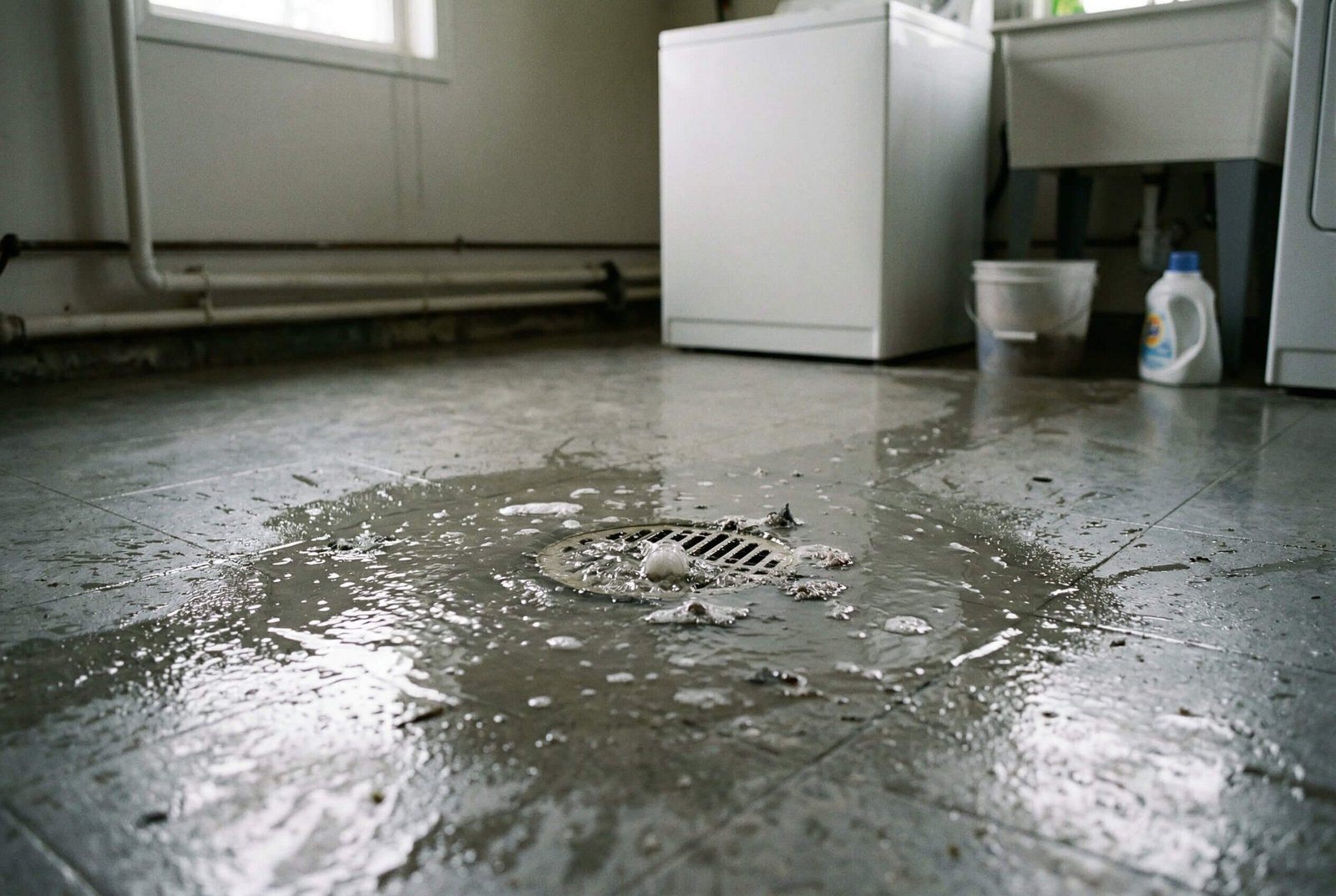
A laundry room floor drain backing up is a frustrating and sometimes alarming plumbing issue for homeowners. Laundry rooms handle large amounts of water during every wash cycle, and when the floor drain cannot properly handle that flow, water may begin rising from the drain opening instead of draining away. This can lead to standing water on the floor, unpleasant odors, and in severe cases, flooding that damages nearby walls, flooring, and stored items.
In many U.S. homes, laundry room floor drains are installed as a safety feature to prevent water damage when appliances leak or overflow. However, these drains are connected to the home’s plumbing system and can develop problems over time. Buildup from lint, detergent residue, dirt from clothing, or deeper sewer line issues can restrict water flow and cause backups. Understanding how laundry room drains work, what causes them to clog, and how plumbers diagnose these problems can help homeowners recognize early warning signs before the situation becomes a serious plumbing emergency.
What This Page Covers
ToggleUnderstanding Laundry Room Floor Drains in U.S. Homes
Laundry room floor drains are installed as a protective plumbing feature in many American homes. Their main purpose is to remove water that may collect on the floor during normal laundry activities or appliance leaks. Because washing machines discharge large amounts of water during each cycle, the presence of a floor drain helps reduce the risk of water damage if a drain hose fails, a pipe leaks, or a washing machine overflows.
Although the drain may appear simple, it plays an important role in protecting the home from flooding. The drain connects to the home’s plumbing system and provides a pathway for excess water to safely exit the laundry area. When working properly, the drain allows water to flow away quickly without accumulating on the floor.
Purpose of a Laundry Room Floor Drain
A laundry room floor drain acts as an emergency drainage outlet for excess water in the laundry area. If a washing machine hose bursts or a washing machine overflows during a cycle, the floor drain provides a direct path for water to leave the room.
These drains also help manage smaller amounts of water that may occur during routine laundry tasks, including:
-
Minor appliance leaks
-
Water spilled during cleaning
-
Condensation from appliances
-
Overflow from nearby utility sinks
Without a floor drain, even a small plumbing issue could allow water to spread across the floor and damage nearby walls, cabinets, or flooring materials.
Typical Locations of Laundry Room Drains
In most homes, the laundry floor drain is placed in a location where water can naturally flow toward it. Builders typically install the drain at the lowest point of the laundry room floor so gravity can direct water into the drain opening.
Common locations include:
-
Near the washing machine
-
Next to the laundry utility sink
-
In the center of the laundry room floor
-
Near the water heater or utility equipment
The floor is often slightly sloped toward the drain to ensure water moves efficiently into the drain system.
What Types of Water Enter These Drains
Laundry room drains may handle different types of water depending on the layout of the home and the plumbing system. While the washing machine itself typically drains into a standpipe, excess water from laundry activities may still reach the floor drain.
Common sources of water entering a laundry floor drain include:
-
Washing machine overflow or leaks
-
Water spilled during laundry tasks
-
Water from cleaning the laundry room floor
-
Condensation or appliance leaks
-
Utility sink overflow
Because this water can carry lint, detergent residue, and debris from clothing, the drain system may gradually collect materials that contribute to blockages.
How Laundry Drains Protect Homes from Flooding
Laundry rooms are one of the areas in a home where water leaks are most likely to occur. Washing machines operate under pressure and discharge large volumes of water during each cycle. If a hose fails or a connection becomes loose, water can quickly accumulate on the floor.
The floor drain helps reduce this risk by providing an escape path for the water. Instead of spreading throughout the home, excess water flows into the drain and through the plumbing system.
However, when the drain becomes clogged or restricted, it can no longer perform this protective function. In those situations, water may begin pooling around the drain or even backing up from the drain opening.
How Laundry Room Drain Systems Work
To understand why a laundry room floor drain backs up, it is helpful to understand how the drainage system is designed to function. Laundry drains rely on gravity, proper pipe slope, and adequate airflow within the plumbing system to move water safely away from the home.
When water enters the floor drain, it travels through several plumbing components before reaching the sewer system or another drainage outlet. If any part of this pathway becomes restricted or damaged, water may begin draining slowly or may even return through the floor drain opening.
Drain Opening and Grate
The most visible part of a laundry floor drain is the drain opening, which is typically covered by a metal or plastic grate. The grate allows water to flow into the drain while helping prevent large debris from entering the pipe.
Water reaching the drain may come from:
-
Washing machine overflow
-
Leaking appliance hoses
-
Spilled water during laundry tasks
-
Water used to clean the laundry room floor
Although the grate blocks larger debris, smaller materials such as lint, dirt from clothing, and detergent residue can still enter the drain system.
The Drain Trap and Sewer Gas Barrier
Just below the floor drain opening is a drain trap, often shaped like a curved pipe called a P-trap. This section of pipe holds a small amount of water that creates a barrier between the home and the sewer system.
The water inside the trap prevents sewer gases from traveling back through the drain and entering the laundry room. Without this barrier, unpleasant and potentially harmful sewer odors could escape into the home.
However, the trap can also collect debris that passes through the drain opening. Materials such as lint, detergent residue, and small particles from clothing may settle in the trap and gradually restrict water flow.
Laundry Branch Drain Pipe
After passing through the trap, water enters the branch drain pipe that carries wastewater away from the laundry room. This pipe usually runs beneath the floor or inside the walls and connects the floor drain to the home’s main drainage system.
The pipe is installed with a slight downward slope so gravity can move water efficiently through the system. Over time, debris that enters the drain may settle along the bottom of the pipe and create buildup that slows water movement.
Common materials that may accumulate in this pipe include:
-
Lint from washing machines
-
Soap and detergent residue
-
Dirt from heavily soiled clothing
-
Small fibers and fabric particles
If enough debris accumulates inside the pipe, it can create a partial blockage that restricts drainage.
Connection to the Home’s Main Sewer Line
The laundry room drain pipe eventually connects to the main sewer line of the home. This larger pipe carries wastewater from all plumbing fixtures in the house, including sinks, showers, toilets, and washing machines.
When the sewer line is clear, wastewater flows away from the home and into the municipal sewer system or septic system. However, if the sewer line becomes clogged or restricted, water may begin backing up through connected drains, including the laundry room floor drain.
Because floor drains are often located lower than other plumbing fixtures, they can become one of the first places where sewer backups appear.
Importance of Plumbing Vent Pipes
Drain systems also rely on plumbing vent pipes to function properly. Vent pipes allow air to enter the plumbing system, which helps maintain balanced pressure inside the pipes.
Without proper venting, water moving through the pipes can create suction that slows drainage and causes unusual drain behavior. Venting problems may lead to symptoms such as:
-
Slow drainage
-
Gurgling sounds in the drain
-
Water movement that seems inconsistent
Proper airflow ensures that wastewater can move smoothly through the pipes without creating pressure imbalances.
Signs That a Laundry Room Floor Drain Is Backing Up
A laundry room floor drain backing up usually does not happen suddenly. In most cases, the drainage system begins showing warning signs before a complete backup occurs. Because washing machines release large volumes of water during each cycle, even a partially restricted drain pipe can quickly reveal symptoms when the laundry system is in use.
Recognizing these early signs can help homeowners identify the problem before it leads to flooding, water damage, or contamination in the laundry area.
Water Coming Up Through the Floor Drain
One of the clearest signs of a drainage problem is water rising from the floor drain opening. Instead of water flowing down into the pipe, it begins to push upward through the drain.
This often happens when:
-
The main drain pipe is partially blocked
-
The sewer line is clogged
-
The drain system cannot handle the water volume from the washing machine
During a washing machine cycle, a large amount of water is discharged quickly. If the pipe cannot move the water away fast enough, the excess water may return through the floor drain.
Standing Water Around the Laundry Area
Another common symptom is standing water forming on the laundry room floor, particularly near the floor drain. Water that should normally disappear through the drain may remain on the floor for long periods.
This problem may appear when:
-
The washing machine finishes draining
-
The laundry room floor is cleaned with water
-
Minor appliance leaks occur
If the water drains very slowly or remains pooled around the drain, it usually indicates that the pipe is partially restricted.
Slow Drainage During Washing Machine Cycles
Homeowners may also notice slow drainage when the washing machine empties its water. During the drain cycle, the washing machine pumps water out rapidly, sending a strong surge into the plumbing system.
If the drain pipe contains buildup from lint, detergent residue, or debris, it may not be able to handle the high water flow. As a result, water may accumulate near the floor drain or inside the standpipe connected to the washing machine.
Slow drainage during laundry cycles often signals that a blockage is developing inside the pipe.
Gurgling Sounds in the Drain
Unusual gurgling or bubbling sounds coming from the floor drain may indicate restricted airflow or a developing clog in the drain system. These sounds occur when air becomes trapped inside the pipes and escapes through the drain opening as water flows through the system.
Gurgling sounds may be noticed when:
-
The washing machine drains water
-
Water is poured into the floor drain
-
Other plumbing fixtures in the home are used
These noises often suggest that the drainage system is struggling to maintain proper airflow due to a partial blockage.
Unpleasant Odors from the Drain
A strong or unpleasant odor coming from the floor drain can also signal a developing drainage problem. Debris trapped inside the pipe may begin decomposing, producing foul smells that travel back through the drain.
Common odor causes include:
-
Lint and fabric fibers decomposing in the pipe
-
Soap residue buildup
-
Organic debris trapped in the drain trap
If the odor becomes stronger over time, it may indicate that debris buildup inside the pipe is increasing and restricting water flow.
Most Common Causes of Laundry Room Floor Drain Backups
A laundry room floor drain backing up usually occurs when materials accumulate inside the drain system and restrict the flow of water. Laundry drains handle wastewater that often contains lint, detergent residue, dirt from clothing, and other debris. Over time, these materials can settle inside the drain trap or pipes and gradually form a blockage.
Because washing machines discharge large volumes of water very quickly, even a partially restricted pipe can lead to noticeable drainage problems. Understanding the most common causes of laundry floor drain backups can help homeowners identify what may be contributing to the issue.
Lint Buildup from Washing Machines
One of the most common causes of laundry drain problems is lint from clothing fibers. During each wash cycle, small fabric fibers separate from clothing and enter the washing machine wastewater.
Although modern washing machines include internal lint filters, a significant amount of lint can still travel through the drain system. Over time, this lint may collect inside the drain pipe and begin forming dense clumps that restrict water flow.
Lint buildup can cause problems because it:
-
Sticks to pipe walls and traps other debris
-
Combines with soap residue to form thick deposits
-
Gradually narrows the pipe opening
As the buildup increases, the drain may struggle to handle the water discharged during washing machine cycles.
Detergent and Soap Residue
Laundry detergents and fabric softeners can also contribute to drain blockages. Although these products dissolve in water, they may leave behind residue that sticks to the interior surface of drain pipes.
Over time, detergent residue can create a sticky layer inside the pipe that traps lint, dirt, and other particles traveling through the drainage system.
Factors that increase detergent buildup include:
-
Using excessive detergent during wash cycles
-
Frequent laundry loads
-
Cold water washing that leaves more residue behind
As this residue accumulates, it can gradually reduce the pipe’s ability to move water efficiently.
Dirt and Debris from Clothing
Clothing items often carry dirt, sand, and other debris that enter the washing machine during cleaning. Work clothes, sports uniforms, and outdoor garments may contain significant amounts of soil or dust.
During the wash cycle, these particles are released into the wastewater and travel through the drain system. Because dirt and sand are heavier than water, they tend to settle inside the drain pipe.
Over time, this sediment may collect along the bottom of the pipe and form a layer that restricts water flow.
Grease from Cleaning Cloths and Rags
In some households, washing machines are used to clean greasy shop rags, kitchen cleaning cloths, or automotive towels. These items can introduce grease and oil into the drainage system.
When grease enters the pipe, it may initially flow with the wastewater. However, as it cools inside the pipe, it can stick to the pipe walls and form a thick coating.
This coating can trap additional debris such as lint and dirt, gradually creating a blockage inside the drain pipe.
Sediment Accumulation Inside Drain Pipes
Over time, a combination of lint, detergent residue, dirt, and grease can form sediment deposits inside the drain pipe. These deposits slowly build up along the pipe walls or bottom of the pipe.
As the pipe becomes narrower, it may no longer handle the high volume of water released by the washing machine. This can cause water to slow down or back up through nearby drains, including the laundry room floor drain.
Because sediment buildup develops gradually, homeowners may not notice the problem until the drainage system begins showing clear symptoms such as slow drainage or water backing up from the drain.
Hidden Plumbing Problems That Cause Laundry Drain Backups
Not every laundry room floor drain backing up problem is caused by lint or debris near the drain opening. In many cases, the real issue is located deeper in the plumbing system where homeowners cannot easily see it. These hidden plumbing problems often develop slowly inside underground pipes or sewer lines and may remain unnoticed until the drainage system begins failing.
When these deeper issues occur, clearing the visible drain opening will not fully resolve the problem. Instead, the blockage or restriction may exist further down the pipe, preventing wastewater from moving away from the home properly.
Tree Root Intrusion in Sewer Pipes
One of the most common hidden plumbing problems is tree root intrusion into underground sewer pipes. Tree roots naturally grow toward moisture in the soil, and sewer lines provide a consistent source of water.
If the sewer pipe has small cracks or loose joints, roots can enter through these openings and begin growing inside the pipe. Over time, the roots expand and create a dense network that traps lint, debris, and other materials moving through the drain system.
Tree root intrusion can lead to:
-
Recurring drain clogs
-
Slow drainage throughout the home
-
Water backing up through floor drains
-
Gurgling sounds in plumbing fixtures
As the root mass grows larger, it can eventually block the pipe completely.
Broken or Cracked Drain Pipes
Another hidden cause of laundry drain backups is damage to underground drain pipes. Pipes can crack or break due to soil movement, aging materials, or external pressure from the ground.
When a pipe becomes cracked or partially collapsed, the damaged section can restrict the flow of wastewater. Debris moving through the pipe may accumulate at the damaged area and gradually form a blockage.
Common causes of underground pipe damage include:
-
Soil shifting around the foundation
-
Aging plumbing systems
-
Heavy ground pressure from vehicles or construction equipment
-
Corrosion in older metal pipes
Once the pipe is damaged, it may no longer allow wastewater to move smoothly through the drainage system.
Pipe Belly (Sagging Pipes)
A pipe belly occurs when a section of the drain pipe sinks or sags due to soil settling beneath it. Instead of maintaining a consistent downward slope, the pipe develops a low point where water begins collecting.
This standing water inside the pipe slows the flow of wastewater and allows debris such as lint, dirt, and detergent residue to settle in the sagging section. Over time, this debris can accumulate and form a blockage.
Pipe bellies often lead to recurring drainage problems because debris repeatedly collects in the same low point of the pipe.
Mineral Deposits in Old Pipes
In some homes, especially older properties, mineral deposits can accumulate inside drain pipes. Hard water contains minerals such as calcium and magnesium that may gradually build up along the interior walls of the pipe.
As these mineral deposits grow thicker, they narrow the pipe opening and create rough surfaces where lint and debris can become trapped.
Mineral buildup is more common in:
-
Older metal drain pipes
-
Homes with hard water conditions
-
Plumbing systems that have not been cleaned for many years
Although mineral buildup develops slowly, it can significantly reduce the pipe’s capacity to carry wastewater.
Misaligned Drain Pipe Connections
Underground pipes are connected through joints that allow sections of pipe to connect and maintain a continuous pathway for wastewater. Over time, soil movement or foundation settling may cause these pipe joints to become misaligned.
When pipe sections shift out of alignment, the connection may create a small ridge or gap inside the pipe. Debris moving through the pipe can become trapped at this point, gradually forming a blockage.
Misaligned pipe joints can cause recurring drain clogs because debris repeatedly accumulates in the same area of the pipe.
Sewer Line Problems That Trigger Laundry Drain Backups
Sometimes a laundry room floor drain backing up is not caused by lint or debris inside the laundry drain itself. Instead, the real issue may occur in the home’s main sewer line or the municipal sewer system. Because the laundry room floor drain is often located at a lower point in the home, it can become one of the first places where deeper sewer problems appear.
When wastewater cannot move freely through the sewer line, pressure begins building inside the plumbing system. As additional water enters the pipes from sinks, showers, toilets, or washing machines, the trapped water may begin flowing backward toward the lowest drain opening—often the laundry room floor drain.
Main Sewer Line Blockages
One of the most common reasons for drain backups is a blockage in the main sewer line. This pipe carries wastewater from every plumbing fixture in the house and directs it toward the municipal sewer system or septic tank.
If the sewer line becomes clogged, water from all parts of the home may struggle to drain properly. As the blockage worsens, wastewater may begin returning through connected drains.
Common causes of main sewer line blockages include:
-
Grease buildup from kitchen drains
-
Flushable wipes that do not break down properly
-
Tree root intrusion in underground pipes
-
Accumulated debris inside older sewer pipes
When the sewer line becomes restricted, water discharged from the washing machine may push wastewater back through the floor drain.
Sewer Line Overload During Heavy Water Use
Laundry machines release large volumes of water very quickly during their drain cycle. If the home’s plumbing system is already under heavy use—such as when multiple showers, sinks, or toilets are in use—the sewer line may temporarily struggle to handle the combined flow.
When the sewer pipe is partially restricted, the additional water from the washing machine can overwhelm the system. This may cause water to rise inside the plumbing network and escape through the floor drain.
Situations that may overload the sewer line include:
-
Running the washing machine while multiple fixtures are in use
-
Large laundry loads producing heavy water discharge
-
Simultaneous use of several plumbing fixtures
These situations can reveal hidden sewer line restrictions that might not otherwise be noticeable.
Municipal Sewer System Backups
In some cases, the issue originates outside the home in the municipal sewer system. Heavy rainfall, flooding, or infrastructure problems can cause city sewer lines to become overloaded.
When municipal sewer lines cannot handle the incoming water volume, wastewater may begin flowing back toward residential connections. Homes with floor drains located below street level—such as those in basements or laundry rooms—are particularly vulnerable to these types of backups.
Signs of a municipal sewer backup may include:
-
Dirty water emerging from floor drains
-
Multiple homes in the neighborhood experiencing similar issues
-
Drain backups during severe rainstorms
When this occurs, the problem typically requires intervention from municipal utility services.
Shared Drain Systems in Multi-Unit Homes
In some properties, particularly duplexes, townhouses, or apartment buildings, multiple units may share a section of the drainage system before connecting to the main sewer line.
If a blockage develops in the shared portion of the pipe, wastewater from several units may become restricted. Even if one household uses very little water, activity in other connected units may cause water to back up through the lowest available drain opening.
Shared drain problems may result in:
-
Sudden drain backups without warning
-
Recurring drainage issues after temporary clearing
-
Simultaneous plumbing problems in nearby units
In these cases, diagnosing the problem often requires inspection of the entire shared drain system.
Why Washing Machines Often Trigger Floor Drain Backups
Many homeowners first notice a laundry room floor drain backing up when the washing machine finishes a cycle and begins draining water. This is because washing machines release a large volume of water very quickly, which can overwhelm a partially restricted drain system.
Even if the drain pipe has only a minor buildup of lint, detergent residue, or debris, the sudden surge of water from the washing machine can expose the problem. When the pipe cannot move the water away fast enough, the excess water may begin rising through the nearby floor drain.
Large Water Discharge from Modern Washing Machines
Modern washing machines are designed to drain water rapidly in order to complete wash cycles efficiently. During the drain cycle, the washer pump forces water through the drain hose at a high flow rate.
A single load of laundry can discharge many gallons of water within a short period of time. If the drain pipe is partially clogged or narrowed by buildup, the pipe may not be able to handle this sudden flow.
When the pipe capacity is exceeded, the water may temporarily rise inside the plumbing system and escape through the floor drain.
Fast Pumping Speed of Washer Drain Pumps
Washing machines do not rely on gravity alone to drain water. Instead, they use internal drain pumps that actively push water out of the machine. These pumps are designed to move water quickly through the drain hose and into the home’s plumbing system.
Because the water is pumped with force, it enters the drain system faster than many other household fixtures. If the drain pipe contains even a small obstruction, the fast-moving water may create pressure that forces water toward nearby drains.
This pressure may cause:
-
Water bubbling from the floor drain
-
Temporary pooling around the drain opening
-
Gurgling sounds inside the plumbing system
Partially Clogged Pipes That Cannot Handle Washer Flow
A drain pipe that appears to function normally during everyday use may still contain a partial blockage. Smaller fixtures such as sinks or showers release water slowly enough that the pipe can still handle the flow.
However, when the washing machine discharges a large volume of water at once, the restricted pipe may suddenly become overwhelmed. The pipe cannot move the water away fast enough, causing water to rise inside the plumbing system.
This situation often reveals hidden buildup caused by:
-
Lint accumulation
-
Detergent residue
-
Dirt and sediment
-
Grease from cleaning cloths
Washing Machine Standpipe Overflow
Most washing machines drain into a vertical pipe called a standpipe, which connects to the home’s drainage system. If the drain pipe connected to the standpipe becomes restricted, water discharged from the washing machine may fill the pipe faster than it can drain.
When this happens, water may begin rising inside the standpipe and overflow onto the floor. If a floor drain is nearby, the excess water may flow toward it and reveal that the drain system is not functioning properly.
Standpipe overflows often indicate a deeper blockage somewhere in the laundry drain line or main sewer system.
Where Laundry Room Drain Blockages Usually Occur
When a laundry room floor drain backs up, the blockage may not always be located directly beneath the drain opening. Laundry drain systems are connected to several pipes that carry wastewater away from the home. A clog can develop anywhere along this pathway, from the drain trap beneath the floor to the main sewer line outside the house.
Professional plumbers typically consider several common locations where blockages tend to form. Identifying where the clog occurs helps determine the most effective method for diagnosing and resolving the problem.
Inside the Floor Drain Trap
One of the most common places for a clog to form is inside the drain trap located beneath the floor drain. The trap is designed to hold water that prevents sewer gases from entering the home, but its curved shape can also allow debris to settle.
Materials that frequently collect in the trap include:
-
Lint from washing machine discharge
-
Fabric fibers from clothing
-
Detergent residue
-
Dirt and debris washed from laundry items
As this debris builds up inside the trap, it can gradually reduce the space available for water to flow through the pipe.
In the Laundry Branch Drain Pipe
After leaving the drain trap, wastewater flows into the branch drain pipe that carries water away from the laundry room. This pipe may run beneath the floor or behind the walls before connecting to the main sewer line.
Over time, lint, soap residue, and sediment can accumulate inside this pipe. Because these materials travel slowly through the pipe, they may settle along the bottom and create a layer of buildup.
When the pipe becomes partially restricted, the large volume of water discharged by the washing machine may overwhelm the pipe and cause water to back up through the floor drain.
In the Main Sewer Line
Sometimes the blockage responsible for the drain backup is located in the main sewer line of the home. This pipe carries wastewater from all plumbing fixtures, including sinks, toilets, showers, and washing machines.
If the sewer line becomes clogged, wastewater may begin returning through connected drains. Because laundry room floor drains are often located at a lower elevation than other drains in the home, they may be the first place where the backup appears.
Common causes of sewer line blockages include:
-
Tree roots growing into underground pipes
-
Grease buildup from kitchen drains
-
Accumulated debris over many years
-
Aging or damaged sewer pipes
At Outdoor Sewer Connections
Another potential location for a blockage is the connection point between the home’s sewer line and the municipal sewer system. This area may develop problems if debris accumulates in the pipe or if the pipe joint becomes damaged.
Issues at this connection point may occur due to:
-
Tree root intrusion near the property line
-
Pipe misalignment from soil movement
-
Debris buildup near the sewer connection
-
Damage to the pipe near the street
If the connection becomes restricted, wastewater may struggle to exit the home’s plumbing system.
In Storm Drain Systems
In some homes, laundry room floor drains connect to stormwater drainage systems instead of the main sewer line. These systems carry rainwater away from the property.
Storm drain pipes can become clogged with materials such as:
-
Leaves and organic debris
-
Dirt and sediment carried by rainwater
-
Small branches and outdoor debris
When the storm drain becomes blocked, water entering the laundry drain may not be able to flow away properly, causing slow drainage or water backup inside the home.
How Professional Plumbers Diagnose Laundry Room Drain Backups
When a laundry room floor drain backs up, professional plumbers follow a structured diagnostic process to identify the exact cause of the problem. Because drain backups can occur at different points in the plumbing system—from the floor drain trap to the underground sewer line—accurate diagnosis is essential before any repair or cleaning work begins.
Plumbers rely on both experience and specialized tools to determine where the blockage is located and what is causing it. This approach helps prevent unnecessary repairs and ensures the underlying problem is properly addressed.
Visual Inspection of the Drain
The first step in diagnosing a drain backup is usually a visual inspection of the floor drain and surrounding area. Plumbers examine the drain opening, the grate, and nearby plumbing fixtures to identify any obvious signs of blockage or water damage.
During this inspection, plumbers often look for:
-
Lint or debris trapped near the drain opening
-
Residue buildup around the drain grate
-
Signs of standing water or past flooding
-
Water stains or mineral deposits on the floor
A visual inspection helps determine whether the blockage may be located close to the drain or deeper within the plumbing system.
Water Flow Testing
Another common diagnostic method is water flow testing. This involves introducing water into the drain system and observing how quickly it moves through the pipes.
A plumber may pour water into the floor drain or run the washing machine to see how the system responds during normal operation. By monitoring how the water drains, the plumber can determine whether the pipe is partially restricted or completely blocked.
Water flow testing can reveal issues such as:
-
Slow drainage caused by sediment buildup
-
Backflow occurring during heavy water discharge
-
Drain pipes that cannot handle the washer’s water volume
This step helps narrow down the possible location of the problem.
Drain Snake Inspection
If the blockage appears to be located within the nearby drain pipes, plumbers often use a drain snake, also known as a plumbing auger. This tool consists of a long flexible cable that can travel through pipes to break apart or retrieve debris causing the clog.
As the snake moves through the pipe, the plumber can feel resistance when it encounters debris. The rotating head of the tool can break apart materials such as:
-
Lint clumps
-
Soap residue buildup
-
Dirt and sediment deposits
-
Small debris lodged in the pipe
Drain snakes are particularly effective for removing clogs located within the branch drain pipe near the laundry room.
Sewer Camera Inspection
For more complex or recurring drainage problems, plumbers may perform a sewer camera inspection. This method involves inserting a small waterproof camera into the drain pipe to visually inspect the inside of the plumbing system.
The camera sends live video to a monitor, allowing the plumber to identify issues that cannot be seen from the surface.
A sewer camera inspection can reveal problems such as:
-
Tree roots growing inside sewer pipes
-
Cracked or collapsed pipe sections
-
Heavy sediment buildup inside the pipe
-
Pipe sagging that traps debris
Because many plumbing problems occur underground, this technology allows plumbers to pinpoint the exact cause of the backup.
Locating Underground Pipe Problems
Once the plumber identifies the issue using the camera, specialized locating equipment may be used to determine the exact location of the problem underground. The equipment tracks the position of the camera head as it travels through the pipe.
This allows plumbers to determine whether the blockage or damage is located:
-
Beneath the laundry room floor
-
Outside the home near the foundation
-
Near the property’s sewer connection
Accurate location helps plumbers plan the most effective repair while minimizing disruption to the home.
Warning Signs of Serious Laundry Drain Problems
A laundry room floor drain backing up may begin as a small drainage issue, but in some cases it can indicate a much more serious plumbing problem. While minor clogs caused by lint or detergent buildup are common, certain warning signs suggest that the drainage system may be experiencing deeper issues such as sewer line blockages, pipe damage, or major plumbing restrictions.
Recognizing these warning signs early can help homeowners prevent severe water damage, sewage contamination, and costly plumbing repairs.
Sewage Water Coming from the Floor Drain
One of the most serious warning signs is sewage water emerging from the floor drain. If dark, foul-smelling water begins rising from the drain, it may indicate that wastewater cannot exit the home through the sewer line.
This situation can occur when:
-
The main sewer line becomes clogged
-
Tree roots block the sewer pipe
-
The municipal sewer system backs up
Because sewage contains harmful bacteria and contaminants, homeowners should avoid contact with the water and contact a professional plumber immediately.
Multiple Drains Backing Up in the Home
If several drains in the home begin showing problems at the same time, the issue may not be limited to the laundry room drain. Instead, it may indicate a blockage in the main sewer line.
Homeowners may notice symptoms such as:
-
Toilets draining slowly
-
Bathtubs or showers backing up
-
Gurgling sounds in sink drains
-
Water rising from basement or floor drains
When multiple plumbing fixtures experience problems simultaneously, it often signals a larger issue affecting the entire drainage system.
Repeated Drain Backups
Occasional clogs can happen in any plumbing system, but frequent or recurring drain backups often indicate that the underlying problem has not been fully resolved.
Temporary cleaning may restore drainage for a short time, but if the backup continues returning, it may be caused by:
-
Tree roots growing inside sewer pipes
-
Sagging or misaligned drain pipes
-
Heavy sediment buildup in underground pipes
-
Structural damage in aging plumbing systems
Recurring backups usually require professional inspection to locate the exact cause.
Drain Problems During Heavy Rain
If the laundry room floor drain backs up during heavy rainstorms, the problem may be related to the storm drainage system or municipal sewer network. Excessive rainfall can overwhelm outdoor drainage systems and cause water to move backward through connected pipes.
This may lead to:
-
Water rising from floor drains during storms
-
Temporary flooding in lower areas of the home
-
Drainage problems that disappear once the rain stops
Repeated storm-related backups may indicate that the drainage system cannot handle heavy water flow.
Strong Sewer Gas Smells
A strong sewer odor coming from the floor drain can also signal a developing plumbing problem. This odor may occur when debris trapped inside the drain begins decomposing or when the drain trap fails to block sewer gases.
Possible causes include:
-
Organic debris trapped in the drain
-
A dry drain trap that no longer contains water
-
Blockages deeper in the sewer line
Persistent sewer odors should not be ignored because they may indicate underlying drainage issues.
Real-World Situations That Cause Laundry Floor Drain Backups
In many homes, a laundry room floor drain backing up is not caused by a single event but by everyday household activities that gradually introduce debris into the drain system. Washing machines handle clothing that may carry dirt, fibers, grease, and other materials that eventually move into the plumbing system.
Professional plumbers frequently see drain backups caused by real-world situations related to laundry habits and household routines. Understanding these scenarios can help homeowners recognize how normal laundry use may contribute to drainage problems over time.
Washing Heavily Soiled Work Clothes
Work clothes used in construction, landscaping, or mechanical jobs often contain large amounts of dirt, sand, and dust. When these clothes are washed, the debris is released into the washing machine water and enters the drainage system.
These particles are heavier than water and tend to settle inside drain pipes. Over time, the sediment may accumulate along the bottom of the pipe and gradually restrict water flow.
If the buildup becomes thick enough, the pipe may struggle to handle the large water volume discharged by the washing machine.
Washing Pet Bedding and Rugs
Pet bedding, blankets, and rugs can release large quantities of hair and fibers during washing. These materials often pass through the washing machine filter and travel into the plumbing system.
Once inside the pipes, pet hair and fibers may:
-
Tangle with lint and fabric fibers
-
Stick to detergent residue along pipe walls
-
Form dense clumps that trap additional debris
These clumps can eventually restrict the pipe opening and slow drainage, leading to backups near the floor drain.
Cleaning Greasy Shop Rags
Many households use washing machines to clean shop rags, garage towels, or automotive cleaning cloths. These items often contain grease, oil, or other automotive residues.
When grease enters the drain system, it may initially flow with the wastewater. However, as it cools inside the pipes, it can begin sticking to the pipe walls and forming a thick layer.
This grease layer can trap lint, dirt, and other debris traveling through the pipe, gradually creating a blockage.
Heavy Laundry Use in Large Households
In busy households with multiple family members, the washing machine may run several loads of laundry each day. This frequent water discharge can put significant stress on the plumbing system.
If the drain pipe already contains some debris buildup, the repeated flow of water may push debris further into the pipe and contribute to clog formation.
Large households may experience drainage problems when:
-
Several loads of laundry are run back-to-back
-
The plumbing system is already partially restricted
-
The washing machine releases high volumes of water rapidly
Lint Accumulation from Older Washing Machines
Older washing machines may release more lint and fabric fibers into the drain system than modern models. These fibers travel through the drain pipes and can gradually collect inside the plumbing system.
Over time, lint may combine with detergent residue and dirt to form thick deposits inside the pipes. This buildup reduces the pipe’s ability to move water efficiently and can eventually lead to drain backups.
Because lint buildup develops slowly, homeowners may not notice the problem until the washing machine discharge begins overwhelming the restricted pipe.
How to Prevent Laundry Room Floor Drain Backups
Although a laundry room floor drain backing up can occur over time, homeowners can significantly reduce the risk of drainage problems with simple preventive habits. Because washing machines release water that may contain lint, detergent residue, dirt, and fabric fibers, preventing these materials from entering the drain system is one of the most effective ways to keep the pipes clear.
Regular maintenance and mindful laundry practices can help maintain proper water flow through the drain system and prevent the buildup that leads to blockages.
Installing Washing Machine Lint Traps
One of the most effective preventive measures is installing a lint trap on the washing machine drain hose. These small devices capture lint and fabric fibers before they enter the plumbing system.
Lint traps are typically attached to the end of the drain hose where it connects to the standpipe. As wastewater passes through the trap, lint is caught in the mesh filter.
Using a lint trap can help prevent materials such as:
-
Fabric fibers from clothing
-
Lint from towels and blankets
-
Pet hair released during washing
Regularly cleaning or replacing the lint trap helps maintain proper drainage and prevents buildup inside the pipes.
Avoiding Excessive Detergent Use
Using too much laundry detergent can contribute to soap residue buildup inside drain pipes. Although detergent dissolves in water, excessive amounts may leave behind sticky deposits along the pipe walls.
These deposits can trap lint, dirt, and debris moving through the drain system. Over time, the buildup may narrow the pipe opening and slow water flow.
Homeowners can reduce detergent residue by:
-
Following the recommended detergent measurements
-
Avoiding excessive detergent during small loads
-
Using high-efficiency detergent when appropriate
Using the correct amount of detergent helps maintain cleaner drain pipes.
Cleaning Drain Covers Regularly
Laundry room floor drains usually have a protective grate or cover that prevents large debris from entering the drain. However, lint, dust, and debris may accumulate around the grate over time.
Periodically removing the drain cover and cleaning the area helps prevent debris from entering the pipe system.
During cleaning, homeowners may remove materials such as:
-
Lint and fabric fibers
-
Dust and dirt buildup
-
Small debris near the drain opening
Keeping the drain opening clear allows water to enter the drain more efficiently.
Preventing Debris from Entering the Drain
Another simple preventive step is keeping loose debris away from the floor drain. Laundry rooms often collect dust, lint, and dirt from clothing or storage areas.
Sweeping the laundry room floor regularly can help remove these materials before they are washed into the drain during cleaning or appliance leaks.
Homeowners can reduce debris entering the drain by:
-
Sweeping the floor frequently
-
Avoiding washing debris directly into the drain
-
Keeping the area around the drain clean
These small maintenance habits can help reduce the amount of material entering the plumbing system.
Scheduling Professional Drain Inspections
For homes that experience frequent laundry use or recurring drainage issues, it may be helpful to schedule periodic professional drain inspections. Professional plumbers can inspect the drain system using specialized tools to identify buildup or hidden plumbing problems.
A professional inspection may detect issues such as:
-
Lint or sediment buildup inside drain pipes
-
Tree root intrusion in sewer lines
-
Pipe sagging or misalignment
-
Blockages developing deep within the drainage system
Early detection of these issues can prevent more serious plumbing problems in the future.
Final Thoughts
A laundry room floor drain backing up is often a warning sign that the home’s drainage system is struggling to handle the water discharged during washing machine cycles. Laundry drains regularly deal with lint, detergent residue, dirt from clothing, and other debris that can gradually accumulate inside pipes. Over time, these materials can restrict water flow and eventually cause slow drainage or water rising from the floor drain.
Because washing machines release a large volume of water very quickly, even a small restriction in the drain system can lead to noticeable backups. In some cases, the issue may be located close to the drain trap, while in other situations the problem may exist deeper in the plumbing system, such as in the laundry branch line or the main sewer pipe.
Understanding the common causes and early warning signs of laundry drain problems can help homeowners address issues before they become serious plumbing emergencies. Slow drainage, gurgling sounds, foul odors, or repeated backups are all indicators that the drain system may require attention.
Regular maintenance, proper laundry practices, and occasional inspection of the drain system can help reduce the risk of backups. However, if drainage problems persist or worsen, contacting a professional plumber is the safest way to diagnose the issue and protect the home from potential water damage.