
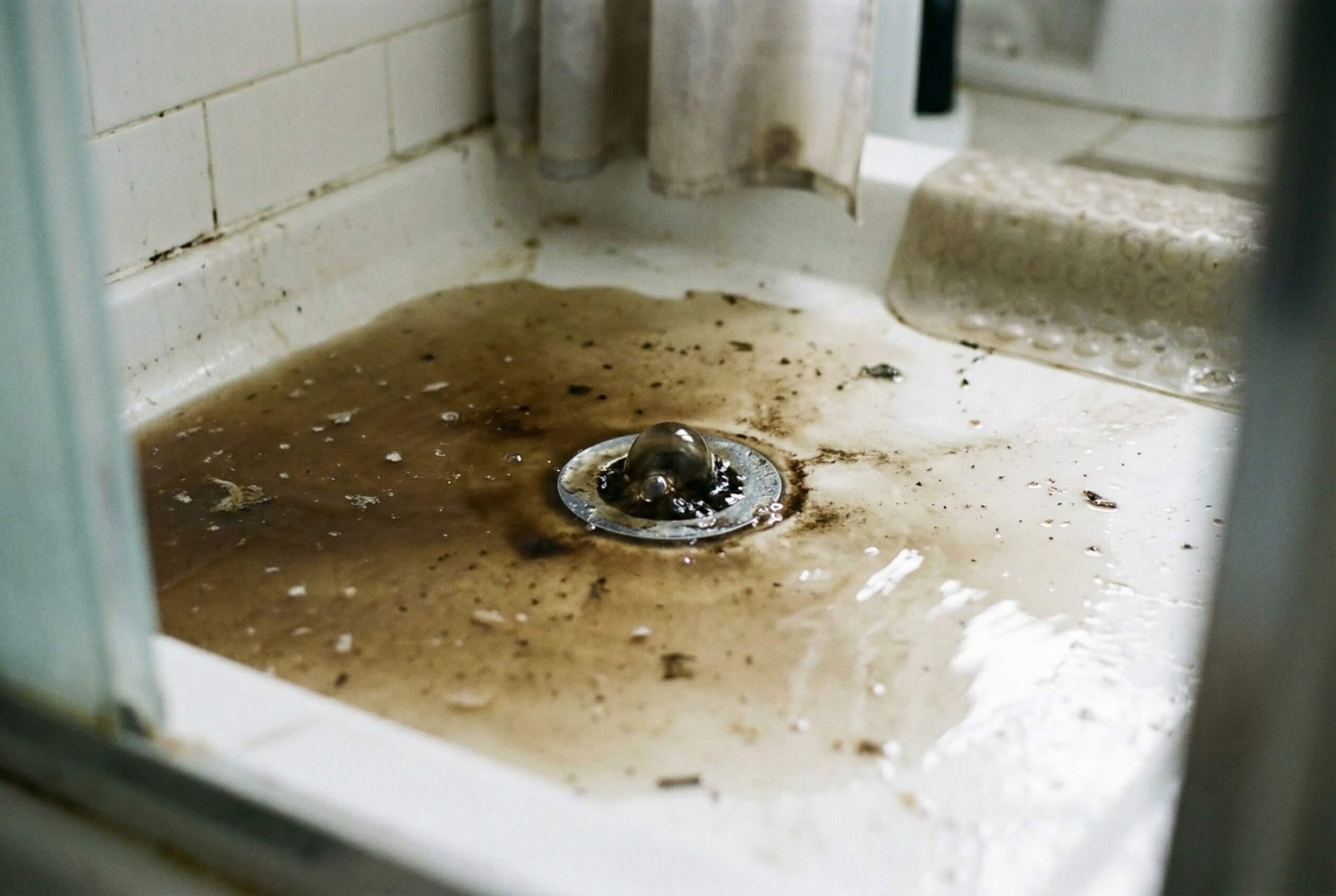
Sewage backing up into a shower drain is one of the most alarming plumbing problems a homeowner can experience. Instead of water flowing normally down the drain, dirty wastewater may begin rising from the shower drain, sometimes bringing unpleasant odors and visible debris with it. This situation often signals that the plumbing system is struggling to move wastewater away from the home.
In many cases, a shower backup is not caused by a simple clog in the shower drain itself. Because showers are often located at a low point in the plumbing system, they may become the first fixture where wastewater reappears when a deeper blockage forms in the drain system. Understanding why sewage backs up into shower drains can help homeowners recognize the warning signs of a larger sewer problem.
What This Page Covers
ToggleHow the Home Drain System Works
To understand why sewage can back up into a shower drain, it helps to first understand how the household drain system is designed to move wastewater. Every sink, toilet, shower, bathtub, and appliance in a home is connected to a network of pipes that carry wastewater away from the house.
Under normal conditions, wastewater flows through these pipes using gravity. The plumbing system is designed so that water moves from smaller fixture drains into larger pipes, eventually reaching the main sewer line that carries wastewater out of the home. When any part of this system becomes restricted, wastewater may begin moving slowly or even reverse direction inside the pipes.
How Wastewater Flows Through Household Plumbing
Each plumbing fixture in a home connects to a drain pipe located beneath the fixture. When water enters the drain, it travels through a series of pipes that gradually merge into larger drainage lines.
For example:
-
A shower drain connects to a bathroom branch drain
-
A bathroom sink connects to the same branch drain
-
The toilet also connects to that shared pipe
These smaller pipes combine into larger pipes that carry wastewater from different parts of the home.
Under normal conditions, gravity allows wastewater to flow steadily through the pipes and toward the sewer line outside the house.
The Role of Branch Drains in Bathrooms
Branch drains are the pipes that collect wastewater from fixtures located in the same area of the home. In most bathrooms, the toilet, sink, and shower all connect to a shared branch drain before the wastewater enters the larger building drain.
Because these fixtures share the same pipe, a blockage forming in the bathroom branch drain can affect multiple fixtures at once.
Homeowners may notice signs such as:
-
The shower draining slowly
-
Gurgling sounds in the sink
-
The toilet struggling to flush properly
If the blockage worsens, wastewater may begin appearing in the shower drain because the pipe can no longer carry water away efficiently.
How the Main Building Drain Connects the Entire House
All branch drains eventually connect to the main building drain, which is the large pipe that carries wastewater from the entire home toward the sewer line.
This pipe usually runs along the lowest level of the house, such as:
-
Under the basement floor
-
Beneath the slab in slab-on-grade homes
-
Along the crawl space under the home
Because every plumbing fixture ultimately depends on the building drain, a blockage in this pipe can cause problems across multiple drains throughout the house.
How the Sewer Line Carries Wastewater Outside the Home
After wastewater leaves the building drain, it enters the main sewer line that runs underground from the house to the municipal sewer system or septic tank.
This pipe is responsible for removing wastewater from the entire property. If the sewer line becomes clogged or damaged, wastewater cannot leave the house properly.
When this happens, the plumbing system begins backing up. Because showers are often located at lower points in the plumbing system, wastewater may start appearing in the shower drain before it becomes visible in other fixtures.
Why Sewage Backs Up Into a Shower Drain
When sewage begins appearing in a shower drain, it usually means that wastewater is unable to move through the drain system normally. Instead of flowing out of the house through the sewer line, wastewater encounters a blockage somewhere in the plumbing system.
As more water enters the system from toilets, sinks, or appliances, pressure begins building inside the drain pipes. When wastewater cannot move forward, it looks for the nearest exit point inside the home. Because shower drains are often located lower than many other fixtures, wastewater may begin rising through the shower drain first.
Understanding the different types of blockages that can cause this situation helps explain why sewage may suddenly appear in the shower.
Blockages in the Main Sewer Line
One of the most common causes of sewage backing up into a shower drain is a blockage in the main sewer line. The sewer line is the pipe responsible for carrying wastewater from the entire house to the municipal sewer system or septic tank.
If this pipe becomes clogged, wastewater from every fixture in the home begins encountering resistance. As toilets are flushed or sinks are used, the water entering the system pushes against the blockage.
When the wastewater has nowhere to go, it may begin backing up through the lowest drains in the home. This often includes:
-
Showers
-
Bathtubs
-
Basement floor drains
Because these fixtures sit lower in the plumbing system, they may become the first place where sewage becomes visible.
Branch Drain Blockages in the Bathroom
In some cases, the blockage may occur within the bathroom branch drain that connects the toilet, sink, and shower together.
When this pipe becomes clogged, wastewater from any of the fixtures connected to it may begin affecting the others. For example, flushing the toilet may force wastewater toward the shower drain if the pipe cannot carry the flow properly.
Common materials that contribute to branch drain blockages include:
-
Hair and soap buildup
-
Excess toilet paper
-
Hygiene products flushed into the toilet
-
Toothpaste and personal care residues
When the branch drain becomes heavily restricted, wastewater may begin rising through the shower drain during normal bathroom use.
Partial Sewer Line Restrictions
Not all sewer line problems involve complete blockages. In many homes, the sewer pipe may develop a partial restriction that slows wastewater flow without completely stopping it.
This situation often occurs when debris gradually accumulates inside the pipe. Materials such as grease, wipes, and soap residue can collect along the interior walls of the sewer line.
As the buildup grows thicker, the pipe becomes narrower. Wastewater can still pass through the pipe, but the flow becomes slower.
During periods of heavy water usage—such as when toilets are flushed or appliances are running—the restricted pipe may not be able to handle the increased volume of wastewater. When this happens, wastewater may begin backing up into lower drains like showers.
Severe Sewer System Backups
In more serious situations, the sewer line may become fully blocked or heavily obstructed. When this occurs, wastewater cannot leave the home at all.
As plumbing fixtures continue to be used, the drain pipes begin filling with wastewater. Eventually, the water level inside the pipes rises high enough that sewage begins emerging from drains inside the house.
Homeowners may notice symptoms such as:
-
Dirty water appearing in the shower drain
-
Toilets bubbling or filling with water
-
Bathtubs filling with wastewater
-
Basement floor drains backing up
These symptoms indicate that the drain system is no longer able to move wastewater away from the home properly.
Why the Shower Is Often the First Drain to Back Up
When a sewer or drain blockage develops in a home, the shower is often one of the first fixtures where wastewater becomes visible. This can surprise homeowners because the shower itself may appear clean and unused, yet dirty water or sewage suddenly begins rising from the drain.
The reason this happens is related to how residential plumbing systems are designed and how gravity moves wastewater through pipes. Because certain drains are positioned lower than others in the system, they become the first outlets where backed-up wastewater can escape.
Shower Drains Are Often the Lowest Fixture
In many homes, showers and bathtubs are installed at a lower elevation than sinks or toilets. Even small differences in pipe height can influence where wastewater appears when a blockage forms in the drain system.
Because water always follows the path of least resistance, wastewater trapped behind a blockage will eventually move toward the lowest available opening.
Common fixtures that sit low in the plumbing system include:
-
Shower drains
-
Bathtub drains
-
Basement floor drains
When the sewer line becomes restricted, wastewater may begin appearing in these drains before reaching higher fixtures like sinks.
Gravity and Wastewater Flow Inside Pipes
Residential drain systems rely almost entirely on gravity to move wastewater through the plumbing network. Pipes are installed at a slight downward slope so water flows naturally from the home toward the sewer connection.
When the system is functioning normally, gravity keeps wastewater moving steadily through the pipes.
However, when a blockage develops, wastewater begins slowing down or stopping completely. As more water enters the drain system, the pipes begin filling up behind the obstruction.
Once the water level inside the pipes rises high enough, wastewater may begin pushing back toward fixtures located lower in the plumbing system.
Why Toilets and Sinks Push Wastewater Toward the Shower
Toilets release a large volume of water quickly when flushed. If a sewer line blockage exists, this sudden surge of water may push wastewater toward other drains connected to the same pipe.
For example, when a toilet flushes into a restricted drain pipe:
-
The surge of water hits the blockage
-
Pressure builds inside the pipe
-
Wastewater is pushed backward through connected drains
Because showers often sit at a lower elevation than toilets or sinks, they may become the first drain where wastewater begins emerging.
This is why homeowners sometimes notice water appearing in the shower immediately after flushing a toilet.
Why Basement and Ground Floor Showers Back Up First
Showers located in basements or on ground floors are particularly vulnerable to sewer backups. These fixtures are typically located very close to the main building drain or sewer line.
If a blockage forms in the sewer line outside the house, wastewater traveling back through the pipe may reach basement fixtures quickly.
Homeowners with basement bathrooms may notice symptoms such as:
-
Dirty water appearing in basement showers
-
Basement floor drains filling with wastewater
-
Gurgling sounds in lower-level fixtures
Because these fixtures sit at the lowest point in the plumbing system, they often serve as the first visible warning that the sewer line is experiencing a serious restriction.
Common Signs of Sewage Backing Up Into a Shower Drain
When sewage begins backing up into a shower drain, the plumbing system usually shows several warning signs before the situation becomes severe. These symptoms occur because wastewater is encountering resistance somewhere in the drain system and is beginning to move in unexpected directions inside the pipes.
Recognizing these warning signs can help homeowners understand that the issue may involve a deeper plumbing problem rather than a simple shower drain clog. In many cases, these symptoms indicate that the main building drain or sewer line is becoming restricted.
Dirty Water Rising From the Drain
One of the most obvious signs of a sewer problem is dirty water appearing in the shower drain. Instead of draining normally, the shower may begin filling with murky water that contains debris or unpleasant odors.
This wastewater often originates from other fixtures in the house. When the drain system becomes blocked, water from toilets, sinks, and appliances may be forced back through the pipes and emerge through the shower drain.
Homeowners may notice:
-
Brown or cloudy water in the shower
-
Floating debris in the water
-
Water slowly rising from the drain opening
-
Wastewater appearing after using other fixtures
These symptoms suggest that the blockage is located deeper in the drain system rather than inside the shower drain itself.
Sewage Odors Coming From the Shower
Another common sign of sewer trouble is a strong sewage odor coming from the shower drain. When wastewater becomes trapped in the plumbing system due to a blockage, unpleasant gases can begin escaping through nearby drains.
These odors often resemble:
-
Rotten eggs
-
Decaying organic matter
-
Sulfur-like smells
Sewer odors may become stronger when plumbing fixtures are used because the movement of water inside the pipes pushes gases toward the drain openings.
Persistent sewer smells coming from a shower drain can indicate that wastewater is not moving properly through the plumbing system.
Gurgling Sounds in Bathroom Drains
Gurgling noises coming from the shower drain or nearby fixtures are another sign that the plumbing system may be experiencing a blockage. These sounds occur when air becomes trapped inside the drain pipes due to restricted wastewater flow.
As water attempts to move past the blockage, it may push air through nearby fixtures, creating bubbling or gurgling sounds.
Homeowners may hear these noises when:
-
Flushing the toilet
-
Running the bathroom sink
-
Using the shower or bathtub
-
Operating nearby plumbing fixtures
These sounds indicate that air pressure is building inside the drain system because water cannot move freely through the pipes.
Water Appearing in the Shower After Flushing a Toilet
A particularly strong sign of a shared drain blockage occurs when water appears in the shower drain after flushing a toilet. This behavior indicates that the toilet and shower are connected to the same drain pipe and that the pipe is struggling to carry wastewater away.
When the toilet flushes, a large amount of water enters the drain system at once. If the pipe is restricted, the surge of water may push wastewater toward other fixtures connected to the same pipe.
Homeowners may notice:
-
Water bubbling in the shower drain
-
Water briefly rising in the shower floor
-
Gurgling sounds from the drain
This interaction between fixtures strongly suggests that the blockage is located somewhere within the shared bathroom drain line or deeper in the sewer system.
Most Common Causes of Sewage Backups
Sewage backing up into a shower drain rarely happens without an underlying cause. In most homes, the problem develops gradually as debris accumulates inside the plumbing system or as structural issues begin affecting the sewer line.
Because all wastewater eventually travels through shared pipes, blockages that develop in these areas can interfere with the entire drain system. When the obstruction becomes severe enough, wastewater may begin backing up into lower drains such as showers or bathtubs.
Several common issues are responsible for most sewer backups in residential plumbing systems.
Grease and Debris Buildup in Sewer Pipes
Grease buildup is one of the most frequent causes of sewer line restrictions. Cooking oils, fats, and greasy food residues often enter the kitchen drain during normal dishwashing.
Although grease may flow through the drain as a liquid when it is hot, it begins to solidify as it moves through cooler sections of the plumbing system. Once the grease hardens, it sticks to the interior walls of the pipe.
Over time, this sticky surface begins collecting other debris moving through the drain system.
Materials that commonly become trapped in grease buildup include:
-
Food particles from sinks and garbage disposals
-
Soap residue from dishwashing
-
Hair and organic debris
-
Paper products flushed down toilets
As these materials accumulate, the pipe gradually becomes narrower. Eventually the buildup may restrict wastewater flow enough to cause backups in lower fixtures like shower drains.
Flushed Wipes and Hygiene Products
Another common cause of sewer blockages is the flushing of materials that do not break down easily in water. While toilets are designed to handle waste and toilet paper, many other products remain intact inside the plumbing system.
Items frequently found in sewer blockages include:
-
Flushable wipes
-
Baby wipes
-
Paper towels
-
Feminine hygiene products
-
Cotton swabs and dental floss
Unlike toilet paper, which dissolves quickly in water, these products can remain solid as they travel through the pipes. When they encounter rough pipe surfaces or existing debris buildup, they may become lodged inside the pipe.
Once trapped, these materials can collect additional debris and eventually form a significant blockage in the sewer line.
Tree Root Intrusion in the Sewer Line
Tree roots are another major contributor to sewer line blockages, particularly in homes with older underground pipes. Roots naturally grow toward sources of moisture, and sewer pipes carrying wastewater provide a consistent supply of water underground.
If the sewer pipe develops small cracks or loose joints, roots may enter through these openings and begin growing inside the pipe.
Once inside, the roots expand and form dense networks that can trap debris moving through the plumbing system.
Materials that commonly accumulate within root masses include:
-
Toilet paper
-
Grease deposits
-
Soap residue
-
Hair and organic debris
As the root network grows thicker, it restricts the pipe opening and interferes with wastewater flow. Over time, the blockage may become severe enough to cause sewage to back up into household drains.
Structural Pipe Damage and Pipe Collapse
Structural damage to sewer pipes can also cause severe drain system blockages. Underground pipes may develop cracks, misaligned joints, or weakened sections due to age, soil movement, or external pressure.
In some cases, sections of pipe may partially collapse, creating a major obstruction inside the sewer line.
Structural pipe problems may involve:
-
Cracked clay sewer pipes
-
Corroded cast iron pipes
-
Misaligned pipe joints
-
Sagging sections of pipe that collect debris
These damaged areas can trap debris traveling through the drain system and gradually form a blockage. As the obstruction grows larger, wastewater may begin backing up into lower fixtures such as shower drains.
Hidden Plumbing Problems That Can Trigger Shower Backups
Not all sewage backups are caused by obvious clogs such as grease buildup or flushed debris. In many homes, the underlying cause may involve hidden structural issues within the drain or sewer system. These problems often develop underground or inside walls where they cannot be seen without professional inspection.
When structural problems exist in the sewer line, they can create areas where wastewater slows down or debris begins accumulating. Over time, these conditions may lead to blockages that force sewage back into the home through lower fixtures like showers.
Understanding these hidden plumbing issues helps explain why sewage backups sometimes occur even when homeowners are careful about what goes down their drains.
Sagging Sewer Pipes (Pipe Belly)
A sagging sewer pipe—often referred to by plumbers as a pipe belly—is one of the structural issues that can disrupt wastewater flow. This condition occurs when a section of the pipe sinks downward instead of maintaining the proper slope needed for drainage.
Drain pipes are designed with a slight downward angle so gravity can move wastewater toward the sewer connection. When a pipe develops a low spot, wastewater may collect in that section instead of flowing smoothly through the pipe.
Several factors can cause pipe sagging, including:
-
Soil erosion beneath the pipe
-
Improper installation during construction
-
Ground settling over time
-
Heavy loads compressing the soil above the pipe
When wastewater pools inside the sagging section, solid debris carried in the water may begin settling in that area. Over time, this debris can accumulate and form a blockage that restricts wastewater movement through the pipe.
Offset Pipe Joints
Drain pipes are typically installed in sections connected by joints. Over time, shifting soil or ground movement may cause these pipe sections to move slightly out of alignment.
When two pipe sections no longer align properly, the connection forms an offset joint. This creates a small ridge or lip inside the pipe where debris can easily become trapped.
Materials that commonly catch on offset joints include:
-
Toilet paper
-
Grease and food residue
-
Hair and soap buildup
-
Flushed wipes and hygiene products
As debris continues collecting at the misaligned joint, the obstruction gradually grows larger. Eventually, the pipe may become restricted enough to interfere with wastewater flow and trigger sewage backups.
Corroded Cast Iron Drain Pipes
Many homes built several decades ago used cast iron pipes for their drain systems. While cast iron is durable, it can corrode internally after years of exposure to wastewater and moisture.
As corrosion develops, the interior surface of the pipe becomes rough and uneven. These rough surfaces make it easier for debris traveling through the pipe to become trapped.
Corroded pipes may develop issues such as:
-
Flaking metal inside the pipe
-
Reduced pipe diameter due to corrosion buildup
-
Weak spots that eventually crack or leak
These conditions increase the likelihood that debris will accumulate inside the pipe and eventually form a blockage that disrupts wastewater flow.
Sewer Line Blockages Outside the House
In some cases, the blockage causing sewage backups may be located outside the home in the yard sewer line. This pipe runs underground from the house to the municipal sewer system or septic tank.
Because this section of pipe is buried underground, it may be affected by environmental conditions or structural damage.
Common issues affecting yard sewer lines include:
-
Tree roots entering the pipe
-
Cracked or broken pipe sections
-
Soil shifting around the pipe
-
Debris entering through damaged areas
When a blockage develops in the yard sewer line, wastewater from the entire house may struggle to leave the property. As the plumbing system fills with wastewater, lower fixtures such as showers may begin experiencing backups.
Where the Blockage Is Usually Located
When sewage begins backing up into a shower drain, the blockage responsible for the problem is typically located somewhere within the shared sections of the home’s drain system. Because all plumbing fixtures eventually connect to larger drain pipes, restrictions in these areas can affect multiple drains at once.
Identifying the likely location of the blockage helps plumbers determine whether the issue originates inside the home or within the sewer line outside the property. In many cases, the obstruction develops in areas where several drains merge together before wastewater exits the house.
Inside the Bathroom Branch Drain
One possible location for the blockage is the branch drain serving the bathroom fixtures. In most homes, the toilet, sink, and shower in a bathroom connect to the same pipe before wastewater flows toward the larger building drain.
If this pipe becomes clogged, wastewater from one fixture may begin affecting the others.
Common materials that contribute to bathroom branch drain blockages include:
-
Hair and soap residue from showers
-
Excess toilet paper
-
Hygiene products flushed into the toilet
-
Toothpaste and personal care debris
When this pipe becomes restricted, flushing the toilet or running the sink may push wastewater toward the shower drain, causing water to appear in the shower.
In the Main Building Drain
Another common location for sewer backups is the main building drain, which is the large pipe that collects wastewater from all branch drains throughout the house.
This pipe typically runs along the lowest level of the home and carries wastewater toward the sewer line outside.
Because every plumbing fixture depends on the building drain, a blockage in this pipe can create symptoms across multiple fixtures.
Homeowners may notice signs such as:
-
Multiple drains slowing down
-
Toilets bubbling or struggling to flush
-
Water appearing in tubs or showers
-
Gurgling sounds coming from drains
These symptoms often indicate that wastewater is encountering resistance in the main building drain.
Under the Basement Floor
In homes with basements, sections of the main drain system often run beneath the basement floor slab before exiting the house.
Blockages in this section can be difficult to detect because the pipe is buried under concrete. However, when a clog forms in this area, it can interfere with drainage throughout the home.
Common contributors to blockages under basement floors include:
-
Grease and debris buildup
-
Flushed wipes or paper products
-
Tree root intrusion entering through small cracks
-
Structural damage in aging pipes
Because this pipe carries wastewater from multiple fixtures, restrictions here can easily lead to sewage backing up into lower drains like showers.
In the Yard Sewer Line
After wastewater leaves the house, it travels through the sewer line buried in the yard before connecting to the municipal sewer system or septic tank.
This section of pipe is vulnerable to environmental factors that may interfere with its condition.
Problems that commonly occur in yard sewer lines include:
-
Tree roots growing into the pipe
-
Soil shifting and misaligning pipe joints
-
Cracked or broken pipe sections
-
Debris entering through damaged areas
When the blockage occurs in this underground pipe, wastewater cannot leave the property efficiently. As the plumbing system fills with wastewater, it may begin backing up into the home through drains such as showers or basement floor drains.
How Plumbers Diagnose Sewage Backups
When sewage begins backing up into a shower drain, plumbers must determine where the blockage is located and what is causing it. Because this type of problem often involves deeper sections of the plumbing system, diagnosing it requires more than simply checking the shower drain.
Professional plumbers follow a step-by-step diagnostic process to identify whether the issue is located in the bathroom branch drain, the main building drain, or the sewer line outside the house. Understanding how plumbers investigate these problems helps homeowners see why certain tests and inspections are necessary.
Inspecting Fixture Behavior
One of the first things plumbers observe is how different plumbing fixtures react when water flows through the system. The interaction between fixtures often provides important clues about the location of the blockage.
Plumbers may ask homeowners questions such as:
-
Does the shower fill with water when the toilet flushes?
-
Do sinks drain slowly throughout the house?
-
Are there gurgling sounds coming from drains?
-
Do multiple fixtures show problems at the same time?
If the symptoms appear in only one bathroom, the issue may be located in a branch drain. If the symptoms affect multiple areas of the house, plumbers often suspect a blockage in the main building drain or sewer line.
Checking the Sewer Cleanout
Most homes include a sewer cleanout, which is an access point installed along the main drain pipe. This pipe opening allows plumbers to inspect the sewer line and identify where wastewater may be backing up.
By removing the cleanout cap, plumbers can observe what is happening inside the pipe.
Several observations can reveal valuable information:
-
Standing water inside the pipe may indicate a downstream blockage
-
A clear pipe may suggest the blockage is located inside the house
-
Wastewater rising through the cleanout may signal a severe sewer line obstruction
Because the cleanout provides direct access to the drain system, it often helps plumbers determine whether the problem is inside the home or outside in the sewer line.
Running Water Flow Tests
Plumbers may also perform controlled water flow tests to see how the plumbing system reacts under normal usage conditions.
These tests may include:
-
Flushing toilets while watching nearby drains
-
Running sinks and observing shower drains
-
Filling tubs and releasing the water quickly
-
Checking basement floor drains during fixture use
These tests help identify whether wastewater is moving properly through the drain system or if pressure is building behind a blockage.
If wastewater begins rising in the shower during these tests, it usually indicates that the drain system is unable to handle the flow due to a restriction.
Using Sewer Camera Inspections
When plumbers need to inspect the interior condition of the sewer line, they often use sewer camera inspections. This tool consists of a waterproof camera attached to a flexible cable that is inserted into the sewer pipe through the cleanout.
As the camera moves through the pipe, it sends live video footage to a monitor, allowing plumbers to see the inside of the drain system.
Camera inspections can reveal problems such as:
-
Tree roots growing inside the sewer line
-
Grease and debris buildup along the pipe walls
-
Flushed wipes and other debris causing blockages
-
Cracked or broken pipe sections
-
Misaligned joints or sagging pipe areas
Because many sewer problems occur underground, camera inspections are one of the most reliable ways to locate and diagnose the source of sewage backups.
Warning Signs the Problem Is Becoming a Plumbing Emergency
Sewage backing up into a shower drain can quickly escalate from a minor plumbing issue to a serious emergency. Because the sewer system is responsible for removing all wastewater from the home, a severe blockage can prevent wastewater from leaving the property entirely.
When this happens, continued use of sinks, toilets, and appliances can force wastewater back into the home through the drain system. Recognizing the warning signs of an escalating sewer problem can help homeowners understand when immediate professional attention is necessary.
Sewage Flooding From Shower Drains
One of the clearest signs of a plumbing emergency is wastewater actively rising out of the shower drain. Instead of remaining inside the pipe, sewage may begin pooling on the shower floor.
Homeowners may notice symptoms such as:
-
Dirty water rising rapidly from the shower drain
-
Visible debris floating in the water
-
Wastewater continuing to rise when other fixtures are used
-
Strong sewage odors filling the bathroom
These situations often occur when the sewer line becomes severely blocked and wastewater cannot move away from the house.
Basement Floor Drain Backups
Basement floor drains are often the lowest points in the plumbing system, making them vulnerable to sewer backups. When the main drain line becomes blocked, wastewater may emerge through these drains before reaching higher fixtures.
Signs of basement drain backups include:
-
Water pooling around the basement floor drain
-
Sewage odors coming from the drain
-
Dirty water appearing when upstairs fixtures are used
-
Water rising in the drain during heavy water usage
Because basement drains are located at the lowest level of the home, they often reveal sewer problems early.
Toilets Overflowing or Bubbling
Toilets may also begin showing unusual behavior when the drain system becomes severely restricted. When wastewater cannot pass through the sewer line, flushing the toilet may cause pressure to build inside the pipes.
Common warning signs include:
-
Toilets bubbling without being used
-
Water levels rising inside the bowl
-
Toilets struggling to flush
-
Overflowing toilets after flushing
These symptoms suggest that the plumbing system is unable to move wastewater through the sewer line efficiently.
Wastewater Backing Up Into Multiple Fixtures
One of the most serious indicators of a sewer emergency is wastewater appearing in several drains at once. This often occurs when the blockage affects the main building drain or sewer line.
Homeowners may observe:
-
Water backing up into showers or bathtubs
-
Sinks filling with wastewater
-
Multiple drains producing sewage odors
-
Drain backups occurring throughout the house
When wastewater begins entering multiple fixtures, it usually indicates that the drain system is no longer functioning properly and requires immediate professional inspection.
Situations That Increase the Risk of Sewage Backups
While sewage backing up into a shower drain can happen in many homes, certain conditions make these problems more likely. Factors such as the age of the plumbing system, environmental conditions around the sewer line, and daily household habits can all influence how easily blockages develop in drain pipes.
When these conditions exist, debris may accumulate more quickly inside pipes or structural weaknesses may begin affecting the sewer line. Over time, these issues increase the likelihood that wastewater will struggle to move through the plumbing system and eventually back up into lower drains such as showers.
Older Sewer Pipe Materials
Homes built several decades ago often contain sewer pipes made from materials that naturally deteriorate over time. Older pipe materials may become weaker, rougher, or more prone to cracking as they age.
Common older sewer pipe materials include:
-
Clay sewer pipes
-
Cast iron drain pipes
-
Orangeburg fiber pipes
As these materials age, they may develop cracks, corrosion, or loose joints. These conditions create areas where debris can collect or where tree roots may enter the pipe.
When wastewater encounters these weak points, the pipe may begin trapping debris and gradually forming blockages.
Homes With Mature Trees Nearby
Properties with large trees growing near the sewer line are more vulnerable to root intrusion. Tree roots naturally grow toward moisture sources, and sewer pipes carrying wastewater provide a steady supply of water underground.
If the sewer pipe develops small openings or weakened joints, roots may grow toward the pipe and eventually enter the drain system.
Once inside the pipe, roots can expand and create dense masses that trap debris traveling through the plumbing system.
Homes face a higher risk when:
-
Large trees grow near the sewer line path
-
Landscaping includes mature shade trees
-
Sewer pipes run beneath heavily landscaped yards
-
Older pipes have weakened joints
Root intrusion can gradually restrict the pipe and eventually contribute to sewage backups.
Heavy Household Water Usage
Homes with high daily water usage place greater demand on the drain system. If a partial blockage already exists in the plumbing system, heavy water usage can overwhelm the restricted pipe.
Situations that increase drain usage include:
-
Large families living in the home
-
Frequent laundry and dishwashing
-
Multiple bathrooms used daily
-
Long or frequent showers
When large volumes of water enter the drain system quickly, a restricted pipe may struggle to handle the flow. This can cause wastewater to move backward through the pipes and appear in lower drains like showers.
Improper Waste Disposal Habits
Daily household habits also influence the condition of the drain system. Materials that do not break down easily in water can accumulate inside pipes and contribute to sewer blockages over time.
Common habits that increase the risk of drain problems include:
-
Pouring cooking grease into kitchen sinks
-
Using garbage disposals for large food scraps
-
Flushing wipes or hygiene products
-
Washing excessive food debris into drains
Over time, these materials can combine with soap residue and other debris, creating buildup inside the pipes. As the buildup grows thicker, it can interfere with wastewater flow and increase the likelihood of sewer backups.
Minor Prevention Habits That Help Reduce Sewer Problems
While some causes of sewage backups—such as tree roots or damaged sewer pipes—may be outside a homeowner’s control, certain everyday habits can help reduce the chances of drain blockages developing in the plumbing system. These practices focus on minimizing the amount of debris entering the pipes and protecting the sewer line from unnecessary stress.
Although these steps do not fix existing sewer problems, they can help slow the buildup of materials that eventually lead to wastewater backing up into drains like showers.
Grease Disposal Awareness
Grease and cooking oils are among the most common contributors to sewer line buildup. When hot grease is poured down a kitchen sink, it flows through the pipes as a liquid but begins to solidify once it cools.
As grease hardens, it sticks to the interior walls of the pipe and creates a sticky layer that traps other debris traveling through the drain system.
To reduce grease entering the drain system, homeowners often practice habits such as:
-
Allowing grease to cool in a container before disposing of it
-
Wiping greasy cookware with paper towels before washing
-
Avoiding pouring cooking oils into the sink
-
Limiting greasy food waste entering garbage disposals
Reducing grease entering the plumbing system helps prevent the gradual narrowing of pipes that can eventually lead to sewer backups.
Responsible Toilet Use
Toilets are designed to handle human waste and toilet paper. Flushing other materials into the plumbing system introduces items that do not break down easily in water and may become trapped inside pipes.
Items that frequently contribute to sewer blockages include:
-
Flushable wipes
-
Paper towels
-
Feminine hygiene products
-
Cotton swabs
-
Dental floss
-
Disposable cleaning wipes
These materials can remain intact inside the plumbing system and collect other debris as they move through the pipes. Over time, they may accumulate and form a blockage that interferes with wastewater flow.
Using toilets only for waste and toilet paper helps reduce the likelihood of sewer line obstructions.
Watching Early Warning Signs
Many sewer problems develop gradually and may produce subtle symptoms before a serious backup occurs. Paying attention to these early warning signs can help homeowners recognize when the plumbing system may be experiencing a developing blockage.
Common early indicators include:
-
Slow drainage in multiple fixtures
-
Gurgling sounds coming from drains
-
Water appearing in the shower after flushing a toilet
-
Persistent sewer odors from drains
These symptoms may indicate that wastewater is beginning to encounter resistance somewhere in the drain system.
Protecting the Sewer Line Area
Understanding where the sewer line runs across the property can help homeowners avoid activities that might damage the pipe. Sewer lines typically extend underground from the house to the municipal sewer connection near the street.
Protecting this area can reduce the risk of structural damage or root intrusion.
Helpful precautions include:
-
Avoid planting large trees directly above sewer lines
-
Avoid heavy vehicles driving over the sewer line path
-
Locate underground pipes before digging or landscaping
-
Maintain proper drainage in the yard to reduce soil movement
Protecting the sewer line and maintaining responsible drain habits can help reduce conditions that contribute to sewer blockages and wastewater backups.
Final Thoughts on Sewage Backing Up Into Shower Drains
Sewage backing up into a shower drain is a strong indicator that something deeper in the plumbing system is preventing wastewater from flowing away from the home properly. While it may appear that the shower drain itself is the problem, this situation usually points to a restriction in a shared drain pipe, the main building drain, or the sewer line outside the house.
Because residential plumbing systems are interconnected, a blockage in one of these shared pipes can affect multiple fixtures at the same time. Wastewater from sinks, toilets, and appliances all travels through the same drainage network, so when that pathway becomes restricted, the pressure inside the pipes may force sewage back through lower drains such as showers, bathtubs, or basement floor drains.
Understanding the warning signs of sewer problems—such as gurgling drains, slow drainage across several fixtures, sewer odors, or water appearing in the shower after flushing a toilet—can help homeowners recognize when the issue may involve more than a simple drain clog. These symptoms often suggest that wastewater is struggling to move through the drain system.
Because sewer problems can worsen quickly and create sanitation concerns inside the home, widespread drain backups usually require professional inspection to identify the cause. Plumbers often use diagnostic methods such as sewer cleanout checks and camera inspections to locate the obstruction and evaluate the condition of the drain pipes.