
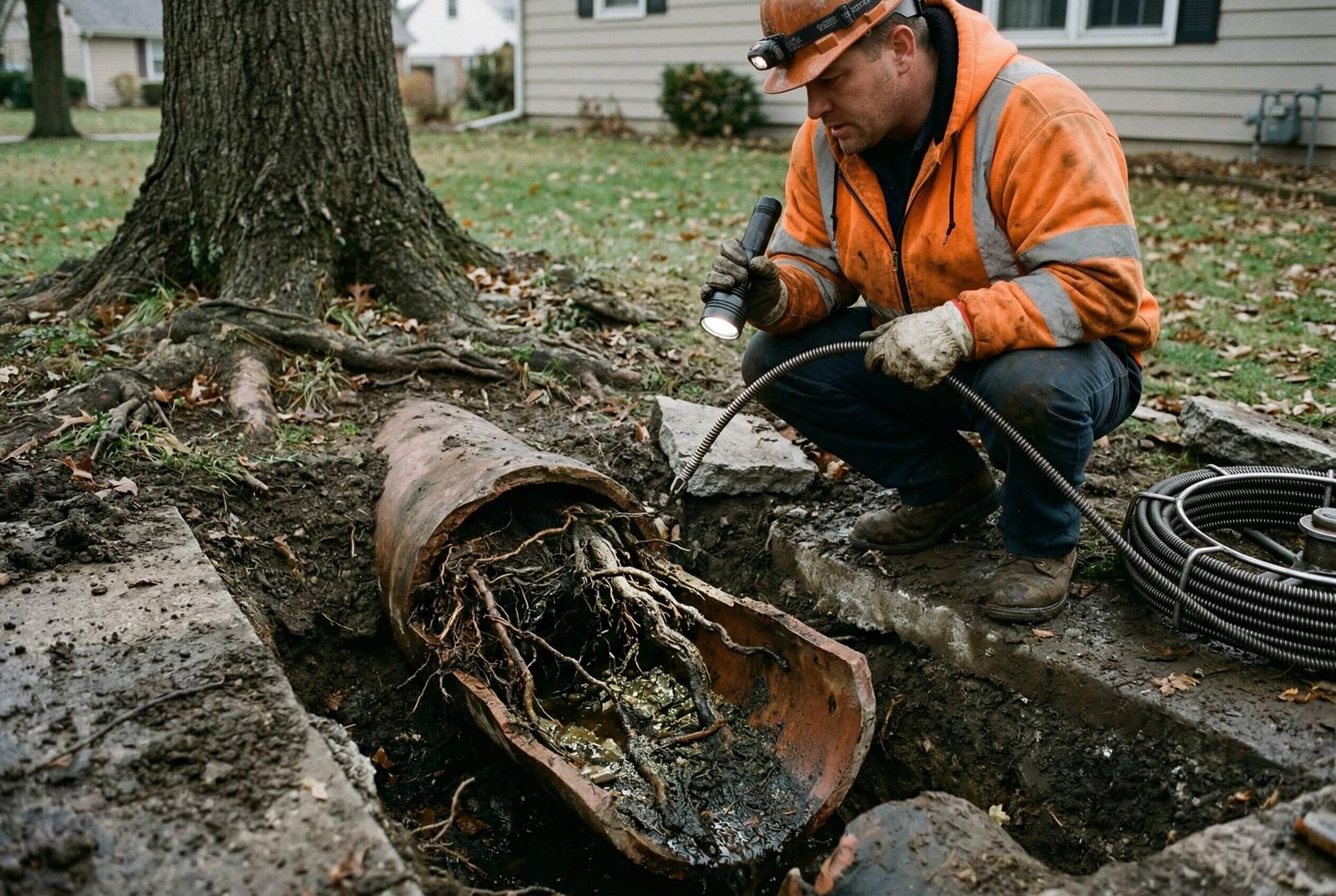
A sewer line clogged with tree roots is one of the most common underground plumbing problems in residential homes. While trees add beauty and shade to a property, their root systems constantly search for moisture beneath the ground. Sewer pipes carrying wastewater often become an attractive source of water and nutrients for nearby roots.
Over time, small cracks, loose pipe joints, or aging pipe materials can allow roots to enter the sewer line. Once inside, the roots continue growing and can gradually restrict the flow of wastewater through the pipe. As the blockage becomes more severe, homeowners may begin noticing warning signs such as slow drains, gurgling toilets, or wastewater backing up into showers or bathtubs.
What This Page Covers
ToggleHow Sewer Lines Work in Residential Plumbing
To understand how tree roots clog sewer lines, it helps to understand how a home’s drain and sewer system is designed to move wastewater away from the house. Every sink, toilet, shower, and appliance that uses water connects to a network of drain pipes that eventually lead to the main sewer line.
This system relies primarily on gravity to move wastewater through the pipes. Water flows from smaller fixture drains into larger pipes until it reaches the sewer line that carries wastewater away from the home and into the municipal sewer system or septic tank. When any part of this pathway becomes restricted, wastewater may begin draining slowly or backing up into fixtures inside the house.
How Wastewater Leaves the Home
Each plumbing fixture has a drain pipe beneath it that carries wastewater into the household drainage system. These smaller pipes gradually combine into larger pipes as wastewater travels through the plumbing network.
For example:
-
Kitchen sinks connect to a branch drain
-
Bathroom sinks, showers, and toilets connect to shared bathroom drains
-
Laundry drains connect to a separate branch pipe
These branch drains collect wastewater from multiple fixtures before directing it toward the main building drain.
Under normal conditions, gravity allows wastewater to move smoothly through these pipes and away from the house.
The Role of the Main Building Drain
The main building drain is the large pipe that collects wastewater from all branch drains inside the home. This pipe typically runs along the lowest level of the house before exiting through the foundation wall or beneath the slab.
Because every plumbing fixture eventually connects to this pipe, it serves as the primary pathway for wastewater leaving the home.
If the building drain becomes restricted, homeowners may begin noticing symptoms across multiple drains, such as slow sinks, gurgling toilets, or water backing up into tubs or showers.
How the Yard Sewer Line Connects to the City Sewer
After wastewater leaves the house through the building drain, it enters the yard sewer line, which runs underground from the home to the municipal sewer system or septic tank.
This pipe is often buried several feet below the ground and may extend across the yard toward the street connection.
The yard sewer line is responsible for transporting all wastewater from the house to the larger sewer infrastructure serving the neighborhood. Because it handles waste from the entire home, any obstruction in this pipe can disrupt the plumbing system throughout the house.
Why Sewer Lines Rely on Gravity
Most residential sewer systems operate without pumps and instead rely on gravity to move wastewater through the pipes. Drain pipes are installed with a slight downward slope so water naturally flows toward the sewer connection.
This slope allows wastewater to move steadily through the pipe network without mechanical assistance.
However, if the pipe becomes partially blocked—such as by tree roots—wastewater may begin slowing down or collecting inside the pipe. As the restriction grows larger, the pipe may eventually struggle to carry wastewater away from the home.
When this occurs, homeowners may begin noticing widespread plumbing symptoms that indicate the sewer line is no longer functioning properly.
Why Tree Roots Grow Into Sewer Pipes
Tree roots clogging sewer lines may seem surprising at first, but it is actually a natural result of how trees grow underground. Roots constantly expand in search of water, oxygen, and nutrients, and sewer pipes carrying wastewater provide an ideal environment for root growth.
Even a small leak or tiny opening in a sewer pipe can release enough moisture into the surrounding soil to attract nearby roots. Once roots discover this moisture source, they begin growing toward the pipe and eventually find a way inside.
Over time, these roots can expand significantly within the sewer line and interfere with the normal flow of wastewater.
Roots Naturally Seek Moisture and Nutrients
Tree roots are naturally drawn to areas where water and nutrients are available. Sewer lines carry wastewater that contains organic material, making them an attractive target for nearby root systems.
As roots grow through the soil, they follow moisture patterns underground. If the soil near a sewer pipe becomes slightly damp due to small leaks or condensation, roots may begin growing toward that area.
Once roots reach the pipe, they may begin probing for entry points such as joints or cracks.
Conditions that make sewer lines attractive to roots include:
-
Moist soil surrounding the pipe
-
Organic nutrients present in wastewater
-
Consistent water supply inside the sewer line
-
Small leaks releasing moisture into the ground
Because sewer pipes provide a steady source of water, they can become long-term targets for growing root systems.
Small Pipe Leaks Attract Root Growth
Sewer pipes are designed to be sealed systems, but over time small leaks may develop due to aging materials or shifting soil. Even very small leaks can release enough moisture into the surrounding soil to attract roots.
Once roots detect this moisture, they begin growing toward the source. As the roots approach the pipe, they may begin exploring small openings in the pipe structure.
Common entry points for roots include:
-
Tiny cracks in aging pipes
-
Gaps in pipe joints
-
Weak seals between pipe sections
-
Small fractures caused by ground movement
These openings may initially be very small, but roots are capable of squeezing through narrow spaces and gradually expanding once they gain access to the pipe interior.
Older Pipe Materials Are Vulnerable to Root Intrusion
Many older homes in the United States have sewer pipes made from materials such as clay or cast iron. While these materials were widely used in earlier construction, they can become more vulnerable to root intrusion as they age.
Clay pipes, for example, are often installed in short sections connected by joints. Over time, these joints may loosen or develop gaps that allow roots to enter.
Cast iron pipes may corrode internally or develop cracks that create entry points for roots.
Older sewer systems may experience root intrusion more easily because:
-
Pipe joints weaken over time
-
Pipe materials deteriorate with age
-
Soil movement can shift pipe connections
-
Older pipe designs are less resistant to root entry
These conditions increase the likelihood that roots will eventually find a way inside the sewer line.
How Roots Expand Once Inside the Pipe
Once tree roots enter a sewer pipe, they often grow rapidly because the pipe provides a constant supply of moisture and nutrients. Inside the pipe, the roots spread along the interior walls and begin forming dense networks.
As the root system expands, it may begin trapping debris traveling through the sewer line.
Materials that commonly become caught in root masses include:
-
Toilet paper
-
Grease and food residue
-
Hair and soap buildup
-
Flushed wipes and hygiene products
Over time, these materials combine with the growing root network to form a large obstruction inside the pipe. As the blockage becomes thicker, it restricts wastewater flow and eventually leads to plumbing symptoms throughout the home.
How Tree Roots Enter Sewer Pipes
Tree roots rarely break directly through intact sewer pipes. Instead, they typically enter through small openings that already exist in the pipe system. Over time, sewer pipes can develop weak points due to age, soil movement, corrosion, or installation joints.
Even very small openings are enough for thin roots to enter the pipe. Once inside, the roots begin expanding because the interior of the sewer line provides a constant supply of moisture and nutrients.
As the roots grow thicker and spread along the pipe interior, they can begin interfering with the normal flow of wastewater.
Cracks in Clay or Cast Iron Pipes
Older sewer systems often use materials such as clay or cast iron, both of which can develop cracks over time. Clay pipes are strong but brittle, and they may crack due to soil pressure or ground movement. Cast iron pipes may corrode internally after years of exposure to moisture.
These cracks may initially be very small and not immediately noticeable. However, they create entry points where tree roots can push through the pipe wall.
Factors that contribute to pipe cracking include:
-
Aging pipe materials
-
Soil shifting beneath the pipe
-
Freeze and thaw cycles in colder regions
-
Heavy vehicles or construction above the pipe
Once a root finds a crack in the pipe, it can grow into the sewer line and begin expanding inside the pipe.
Loose Pipe Joints and Pipe Connections
Sewer pipes are often installed in sections connected by joints. Over time, these joints may loosen slightly due to soil movement or natural settling of the ground.
When pipe sections shift apart even slightly, they can create small gaps where roots can enter.
Joint-related root intrusion often occurs in:
-
Clay pipe systems with multiple joints
-
Older sewer lines installed decades ago
-
Pipes affected by ground settling
Once roots enter through a joint gap, they begin spreading along the interior of the pipe where wastewater flows.
Deteriorated Pipe Seals
Many sewer pipe connections use rubber or flexible seals designed to prevent leaks. However, these seals may deteriorate over time due to constant exposure to moisture and environmental conditions.
When seals weaken, they may create small openings between pipe sections.
Common causes of seal deterioration include:
-
Age-related wear
-
Chemical exposure from wastewater
-
Soil pressure around the pipe
-
Temperature changes underground
As seals deteriorate, roots may find pathways into the sewer pipe through these weakened areas.
Pipe Damage Caused by Soil Movement
Soil surrounding underground sewer pipes can shift over time due to natural processes such as settling, erosion, or changes in moisture levels.
This movement may place pressure on the pipe or cause sections of pipe to shift slightly out of alignment.
When this happens, pipes may develop:
-
Cracks in the pipe wall
-
Misaligned joints
-
Small gaps between pipe sections
These structural changes create opportunities for nearby roots to enter the sewer system.
Once roots penetrate the pipe, they continue growing inside the sewer line and gradually begin trapping debris. Over time, this process can lead to significant blockages that disrupt wastewater flow throughout the home.
How Roots Cause Sewer Line Blockages
Once tree roots enter a sewer pipe, they rarely remain small. Inside the pipe, roots find an environment that supports rapid growth because wastewater provides a consistent supply of moisture and organic nutrients. As a result, the root system can expand quickly along the interior of the pipe.
As these roots grow, they begin interfering with the normal movement of wastewater. Over time, the root network can trap debris traveling through the sewer line and gradually form a dense obstruction that restricts wastewater flow.
Eventually, the blockage may become severe enough to cause slow drains, gurgling fixtures, or sewage backups inside the home.
Root Masses Restrict the Pipe Opening
When roots grow inside a sewer pipe, they often form clusters that spread along the interior walls. As these roots expand, they begin narrowing the open space available for wastewater to pass through.
At first, the roots may only reduce the pipe’s diameter slightly, allowing wastewater to continue flowing through the remaining space. However, as the root mass thickens, the available opening becomes smaller.
This restriction slows the movement of wastewater through the pipe and increases the likelihood that debris will become trapped inside the sewer line.
Over time, the narrowing caused by root growth can significantly reduce the pipe’s ability to carry wastewater away from the home.
Roots Trap Debris Moving Through the Sewer Line
The structure of tree roots inside a pipe often resembles a tangled net. This network of roots creates surfaces where debris moving through the sewer line can become caught.
Materials that commonly become trapped in root masses include:
-
Toilet paper
-
Grease and food residue
-
Soap buildup from household drains
-
Hair and organic debris
-
Flushed wipes and hygiene products
Once these materials become trapped, they begin accumulating around the roots. As more debris passes through the pipe, the obstruction gradually grows larger.
Grease and Paper Buildup Around Root Intrusions
Grease and paper products are particularly likely to collect around tree roots inside sewer pipes. Grease can stick to the root surfaces, while paper products such as toilet paper may wrap around the root network.
As these materials accumulate, they create thicker layers of buildup that further restrict the pipe.
Over time, the combination of roots and debris may form a dense blockage that significantly slows wastewater movement.
This process often develops gradually, meaning homeowners may first notice subtle symptoms before the blockage becomes severe.
How Blockages Gradually Become Severe
Tree root blockages rarely form overnight. Instead, they develop slowly as roots grow and debris accumulates around them.
Early stages of root intrusion may cause only minor symptoms such as slightly slower drains. As the root mass grows larger, the pipe becomes increasingly restricted.
Eventually, the sewer line may struggle to carry wastewater away from the home. When large amounts of water enter the drain system—such as during showers, laundry cycles, or toilet flushing—the restricted pipe may not be able to handle the flow.
When this occurs, wastewater may begin backing up into lower drains such as showers, bathtubs, or basement floor drains.
Common Signs of Tree Roots in a Sewer Line
Tree roots growing inside a sewer pipe often produce distinct warning signs throughout the home’s plumbing system. Because the sewer line carries wastewater from every fixture in the house, a restriction in this pipe can affect multiple drains at the same time.
In many cases, these symptoms begin gradually as the root intrusion slowly restricts the pipe. Homeowners may initially notice subtle drainage problems that worsen as the root mass grows and begins trapping more debris inside the sewer line.
Recognizing these warning signs early can help homeowners understand that the problem may involve the sewer line rather than a simple drain clog.
Multiple Drains Slowing Down
One of the most common early signs of tree roots in the sewer line is slow drainage in multiple fixtures throughout the home.
Instead of a single sink or shower draining slowly, homeowners may notice that several drains are affected at the same time.
Examples include:
-
Bathroom sinks draining slowly
-
Bathtubs taking longer to empty
-
Kitchen sinks draining sluggishly
-
Floor drains struggling to handle water flow
These symptoms occur because the root intrusion is restricting the main pathway that carries wastewater away from the home.
Toilets Bubbling or Gurgling
Another common sign of a sewer line obstruction is bubbling or gurgling sounds coming from toilets. These noises occur when air becomes trapped inside the plumbing system due to restricted wastewater flow.
As water attempts to move through the partially blocked pipe, pressure changes inside the drain system may force air through nearby fixtures.
Homeowners may hear bubbling sounds when:
-
Flushing a toilet
-
Running water in sinks
-
Using the shower or bathtub
-
Operating washing machines or dishwashers
These sounds often indicate that the plumbing system is struggling to move wastewater past an obstruction in the sewer line.
Water Backing Up Into Showers or Tubs
As root blockages become more severe, wastewater may begin appearing in lower drains such as showers or bathtubs.
Because these fixtures often sit lower in the plumbing system, they may become the first locations where wastewater backs up.
Homeowners may notice:
-
Dirty water rising from the shower drain
-
Water appearing in the bathtub after flushing the toilet
-
Bubbling in the shower drain when sinks are used
These symptoms indicate that wastewater cannot pass through the sewer line efficiently and is being pushed back through connected drains.
Sewage Odors Coming From Drains
A strong sewage smell coming from drains can also indicate that the sewer line is experiencing a blockage.
When wastewater becomes trapped inside the pipe due to root intrusion, gases produced by decomposing organic material may begin escaping through nearby drains.
These odors may resemble:
-
Rotten eggs
-
Decaying organic matter
-
Sulfur-like smells
Sewer odors may become stronger when plumbing fixtures are used because moving water pushes trapped gases through the pipes.
Persistent sewage smells combined with slow drains or backups often suggest that tree roots may be interfering with the sewer line.
Why Tree Root Sewer Problems Often Affect the Whole House
When tree roots invade a sewer line, the resulting blockage rarely affects just one drain. Because the sewer line is responsible for carrying wastewater from the entire home, any restriction in this pipe can disrupt the operation of multiple plumbing fixtures at once.
Unlike clogs that occur in individual sink or shower drains, root intrusions typically develop in the main sewer line outside the house. This pipe collects wastewater from every fixture in the home before sending it to the municipal sewer system or septic tank. When this pipe becomes restricted, the effects are often visible throughout the plumbing system.
The Sewer Line Serves Every Drain
All plumbing fixtures inside a home are connected to the sewer line through a network of branch drains and the main building drain. This system allows wastewater from sinks, toilets, showers, and appliances to combine into a single pipe that carries waste away from the house.
Because every drain ultimately relies on the same sewer line, a blockage in that pipe can interfere with the drainage of the entire home.
Homeowners may notice symptoms such as:
-
Multiple drains slowing down
-
Toilets struggling to flush
-
Water backing up into bathtubs or showers
-
Gurgling sounds from various fixtures
These symptoms occur because wastewater from different parts of the house is trying to pass through the same restricted pipe.
Why Backups Appear in the Lowest Fixtures
When a sewer line becomes clogged with tree roots, wastewater may begin backing up through the plumbing system. Because water follows the path of least resistance, it often emerges from the lowest drains inside the home.
Fixtures commonly affected first include:
-
Shower drains
-
Bathtub drains
-
Basement floor drains
These drains sit lower in the plumbing system, making them the first locations where wastewater may appear when the sewer pipe becomes blocked.
Why Heavy Water Usage Triggers Backups
In the early stages of a root blockage, the sewer pipe may still allow some wastewater to pass through. However, the narrowed pipe opening reduces the amount of water that can move through the system at one time.
When large volumes of water enter the plumbing system—such as during laundry cycles or multiple showers—the restricted pipe may not be able to handle the increased flow.
This can cause wastewater to move backward through the drain system, leading to backups in lower fixtures.
Situations that may trigger backups include:
-
Running washing machines
-
Taking long showers
-
Flushing toilets repeatedly
-
Using multiple fixtures simultaneously
How Root Blockages Disrupt Drain Flow
As tree roots grow inside the sewer line, they create a tangled network that interferes with wastewater movement. These roots not only reduce the size of the pipe opening but also trap debris traveling through the drain system.
Over time, this combination of roots and debris forms a thick obstruction inside the sewer line. As the blockage grows larger, the pipe becomes less capable of carrying wastewater away from the home.
Eventually, the sewer system may struggle to function properly, causing plumbing symptoms throughout the house rather than in a single drain.
Hidden Sewer Damage Caused by Tree Roots
Tree roots do more than simply clog sewer pipes. As they grow and expand inside the sewer line, they can also cause significant structural damage to the pipe itself. Over time, the pressure exerted by growing roots may weaken, crack, or separate sections of the sewer pipe.
Because these problems occur underground, homeowners usually cannot see the damage directly. Instead, the symptoms appear through plumbing issues such as slow drains, recurring clogs, or sewage backups inside the home.
Understanding the types of damage caused by root intrusion helps explain why sewer line problems may worsen if the underlying issue continues to develop.
Roots Expanding Inside the Pipe
Once tree roots enter a sewer pipe, they often continue growing aggressively. The interior of the pipe provides an ideal environment for root growth because wastewater offers a consistent supply of moisture and nutrients.
As the roots expand, they spread along the inside of the pipe and begin forming dense clusters.
Over time, the growing root system can:
-
Fill large portions of the pipe interior
-
Trap debris moving through the sewer line
-
Reduce the pipe’s internal diameter
-
Interfere with wastewater flow
As the root network becomes thicker, the pipe gradually becomes more restricted.
Cracked or Broken Sewer Pipes
Roots growing inside a pipe can also place pressure on the pipe walls. As the roots expand, they may widen existing cracks or create new fractures in the pipe.
Certain pipe materials are especially vulnerable to this type of damage, including:
-
Clay sewer pipes
-
Aging cast iron pipes
-
Older concrete pipes
When cracks develop in the pipe, they create larger openings where additional roots may enter. This process can accelerate the growth of the root intrusion and increase the severity of the blockage.
In some cases, sections of the pipe may become severely weakened or partially broken.
Pipe Misalignment and Joint Separation
Sewer pipes are often installed in segments connected by joints. When roots push into these joints, they may gradually force the pipe sections apart.
This movement can create misaligned pipe connections, sometimes referred to as offset joints.
Misaligned joints can cause several problems within the sewer system, including:
-
Debris catching on the uneven pipe edge
-
Wastewater slowing down as it passes the joint
-
Increased buildup of grease and paper products
As debris continues collecting at the misaligned joint, the obstruction inside the pipe may grow larger.
Soil Movement Around Damaged Pipes
When sewer pipes crack or separate due to root intrusion, surrounding soil may begin entering the pipe through the damaged areas. Soil entering the pipe can combine with roots and debris to form additional blockages.
At the same time, soil movement around the pipe may cause the pipe to shift or settle unevenly underground.
These conditions may lead to problems such as:
-
Sagging sections of pipe that collect wastewater
-
Pipe sections shifting out of alignment
-
Increased risk of further cracking or collapse
Because these issues occur underground, they often remain hidden until plumbing symptoms begin appearing inside the home.
Where Tree Root Intrusions Commonly Occur
Tree roots can invade sewer pipes in many different locations along the underground drain system. However, certain areas are more vulnerable because they contain pipe joints, older materials, or nearby tree growth. Understanding where root intrusions typically occur can help explain why sewer line problems develop even when the plumbing inside the house appears to be functioning normally.
Because the sewer line usually runs underground from the house to the municipal sewer connection near the street, root intrusion may occur anywhere along this buried pipe. The likelihood of root entry often depends on nearby landscaping, pipe material, and the age of the sewer system.
Near Large Trees in the Yard
One of the most common locations for root intrusion is near large trees growing close to the sewer line path. Mature trees have extensive root systems that spread outward through the soil in search of water.
If a sewer pipe runs within the reach of these roots, the roots may eventually grow toward the pipe and begin exploring small openings or weak points in the pipe structure.
Trees commonly associated with sewer root intrusion include:
-
Oak trees
-
Maple trees
-
Willow trees
-
Poplar trees
These species are known for aggressive root systems that can spread widely beneath the ground.
At Pipe Joints in Older Sewer Lines
Older sewer pipes are often installed in short segments connected by joints. Over time, these joints may loosen slightly as soil shifts or pipe materials age.
These joints can become vulnerable points where roots enter the sewer line.
Root intrusion at pipe joints is especially common in:
-
Clay sewer pipes with multiple joints
-
Older sewer systems installed decades ago
-
Pipes affected by ground settling
Once roots enter through a joint opening, they may grow along the interior of the pipe and begin trapping debris.
Under Driveways and Sidewalks
Sewer pipes often pass beneath driveways, sidewalks, or other paved areas as they travel from the house to the street connection. Although these areas may not appear to contain large trees, roots from nearby landscaping can still extend beneath these surfaces.
Roots may grow under pavement and reach sewer pipes located below.
In some cases, pressure from vehicles or shifting pavement can also contribute to small cracks in sewer pipes, creating additional entry points for roots.
Near the Street Sewer Connection
The point where the home’s sewer line connects to the municipal sewer system beneath the street is another area where root intrusion may occur.
This section of the sewer line may contain multiple pipe connections and joints, which can weaken over time. Nearby street trees or landscaping along sidewalks may also have root systems extending toward this area.
When roots enter the sewer pipe near the street connection, the blockage may affect wastewater flow from the entire home. Because this section of pipe handles all wastewater leaving the house, a root intrusion here can lead to widespread plumbing symptoms.
How Plumbers Diagnose Tree Root Sewer Blockages
When a sewer line becomes clogged with tree roots, plumbers must determine where the roots have entered the pipe and how severe the intrusion has become. Because sewer lines are buried underground, diagnosing the exact problem requires specialized inspection methods.
Professional plumbers typically use a combination of observations, testing, and inspection tools to identify whether tree roots are causing the blockage. These methods help determine the location of the root intrusion and how much damage may have occurred inside the sewer pipe.
Observing Drain Behavior in the Home
The first step plumbers often take is observing how the plumbing fixtures behave when water flows through the system. Certain patterns can suggest that the sewer line is partially blocked.
Plumbers may ask homeowners questions such as:
-
Are multiple drains slowing down at the same time?
-
Do toilets bubble when sinks or showers are used?
-
Does water back up into the bathtub or shower drain?
-
Do drain problems worsen when several fixtures are used together?
If several drains throughout the home show similar symptoms, plumbers often suspect that the blockage exists in the main sewer line rather than in a single fixture drain.
Inspecting the Sewer Cleanout
Many homes include a sewer cleanout, which is a capped access point installed along the main drain pipe. This access allows plumbers to inspect the sewer line without removing plumbing fixtures.
By opening the cleanout, plumbers can check the condition of the pipe and observe how wastewater is moving through the system.
Certain observations may reveal the location of the blockage:
-
Standing water inside the cleanout may indicate a downstream obstruction
-
A clear pipe may suggest the problem is inside the house
-
Wastewater rising inside the cleanout may signal a severe sewer blockage
The cleanout provides a convenient starting point for further sewer line inspection.
Performing Sewer Camera Inspections
One of the most effective tools for diagnosing sewer line problems is a sewer camera inspection. This procedure involves inserting a waterproof camera attached to a flexible cable into the sewer pipe.
As the camera travels through the pipe, it sends live video footage to a monitor, allowing plumbers to see the interior condition of the sewer line.
Camera inspections can reveal several important details, including:
-
Tree roots growing inside the pipe
-
Grease or debris buildup around root masses
-
Cracks or broken sections of pipe
-
Misaligned joints or sagging pipes
Because the camera shows the actual condition inside the pipe, it helps plumbers confirm whether tree roots are responsible for the sewer blockage.
Identifying Root Intrusion Inside the Pipe
During the camera inspection, plumbers can identify how far the roots have spread inside the sewer line. Root intrusions often appear as tangled networks of fibers extending into the pipe interior.
Plumbers may observe:
-
Roots growing through pipe joints
-
Thick root clusters partially blocking the pipe
-
Debris trapped within the root network
-
Damage to the pipe caused by expanding roots
By locating the exact area where roots have entered the sewer line, plumbers can better understand how the blockage formed and how it is affecting wastewater flow through the plumbing system.
Situations That Increase the Risk of Root Intrusion
While tree roots can invade sewer lines in many environments, certain conditions make root intrusion far more likely. Factors such as the type of trees on the property, the age of the sewer pipes, and the distance between the home and the street connection can all influence how vulnerable the sewer line is to root growth.
Understanding these risk factors helps explain why some homes experience repeated sewer root problems while others rarely encounter them.
Mature Landscaping Around the Property
Homes with mature landscaping often have large trees whose root systems extend far beyond the visible canopy. These underground root networks can spread widely through the soil and may eventually reach the sewer line.
Trees that have been growing for many years typically develop extensive root systems capable of reaching pipes buried several feet underground.
Properties with the following conditions may face a higher risk of root intrusion:
-
Large shade trees planted near the house
-
Trees growing along the path of the sewer line
-
Dense landscaping near underground pipes
-
Older trees with well-developed root systems
Once roots discover moisture near the sewer pipe, they may continue growing toward the pipe and eventually find entry points.
Aging Sewer Pipe Materials
Older sewer pipes are generally more vulnerable to root intrusion because pipe materials can weaken over time. As pipes age, they may develop cracks, loose joints, or deteriorated seals that create openings where roots can enter.
Pipe materials commonly found in older homes include:
-
Clay sewer pipes
-
Cast iron drain pipes
-
Concrete pipes
These materials may perform well for many years, but over time they can become susceptible to structural damage. As the pipe weakens, roots may find opportunities to enter the sewer system.
Long Sewer Line Runs From House to Street
Homes with long sewer lines running from the house to the street may face a greater risk of root intrusion simply because more pipe is exposed to surrounding soil and vegetation.
A longer sewer line increases the number of potential locations where roots could enter the pipe.
Factors that increase risk along long sewer lines include:
-
Multiple pipe joints along the line
-
Soil movement affecting underground pipes
-
Trees located at various points along the pipe path
Because these pipes travel across the yard before reaching the municipal sewer connection, they may pass through areas where tree roots are actively growing.
Poor Soil Conditions Around Sewer Pipes
Soil conditions can also influence the likelihood of root intrusion. Certain types of soil retain moisture more effectively, which can attract root systems seeking water.
Additionally, soil movement caused by erosion, heavy rainfall, or changing moisture levels can place stress on underground sewer pipes.
Conditions that may increase pipe vulnerability include:
-
Soil erosion beneath the pipe
-
Expanding clay soils that shift during wet and dry cycles
-
Ground settling over time
-
Improper pipe installation that leaves gaps or weak points
When the surrounding soil shifts or becomes unstable, sewer pipes may develop cracks or misaligned joints that allow roots to enter.
Minor Prevention Habits That Help Reduce Root Problems
While tree root intrusion cannot always be prevented entirely, certain homeowner practices can help reduce the likelihood of roots invading the sewer line. These habits focus on protecting the sewer pipe and recognizing early warning signs before a blockage becomes severe.
Although these steps are not repairs or solutions for existing root blockages, they can help slow the conditions that allow roots to enter and expand inside underground sewer pipes.
Monitoring Trees Near Sewer Lines
One of the most important preventive practices is being aware of where trees are located in relation to the sewer line. Tree roots can extend far beyond the visible branches of the tree, sometimes reaching several times the width of the tree canopy.
Homeowners may benefit from identifying the path of the sewer line across the yard and noting which trees grow nearby.
Situations that may require closer monitoring include:
-
Large shade trees located near the house
-
Trees planted directly above the sewer line
-
Fast-growing trees with aggressive root systems
-
Trees planted along the route from the house to the street
Monitoring the health and growth of these trees can help homeowners remain aware of potential root-related sewer issues.
Avoid Planting Trees Directly Above Sewer Pipes
When planning landscaping projects, it is generally helpful to avoid planting trees directly above the sewer line path. Young trees may seem harmless at first, but their root systems can expand significantly over time.
Planting large trees near underground pipes may eventually increase the likelihood that roots will reach the sewer line.
Instead, homeowners often consider planting trees:
-
Several feet away from known sewer line routes
-
In areas where underground utilities are not present
-
In parts of the yard where roots will not encounter drain pipes
Understanding the location of underground sewer lines can help prevent future plumbing issues related to root intrusion.
Watching Early Drain Warning Signs
Root intrusion often develops slowly, which means plumbing symptoms may appear gradually before a severe blockage forms. Paying attention to these early warning signs can help homeowners recognize potential sewer problems.
Common early symptoms include:
-
Multiple drains draining slowly
-
Toilets producing bubbling or gurgling sounds
-
Water backing up into showers or tubs
-
Persistent sewer odors from drains
Although these symptoms can have several causes, they may sometimes indicate that roots are beginning to restrict the sewer pipe.
Understanding the Sewer Line Location
Another helpful practice is knowing the exact path of the sewer line across the property. Sewer lines typically run from the home toward the street where they connect to the municipal sewer system.
Homeowners who know where the pipe runs can take precautions to protect it.
Examples include:
-
Avoiding heavy vehicle traffic over the pipe path
-
Being cautious when digging or installing landscaping features
-
Preventing construction activity directly above the sewer line
Protecting the sewer pipe area reduces the risk of structural damage that could create openings where roots may enter.
Final Thoughts on Sewer Lines Clogged With Tree Roots
A sewer line clogged with tree roots is a common underground plumbing problem that can gradually disrupt the entire drain system in a home. Because sewer pipes carry wastewater from every fixture, even a partial root intrusion can begin affecting multiple drains throughout the house.
Tree roots are naturally attracted to the moisture and nutrients found inside sewer pipes. When small cracks, loose joints, or aging pipe materials create entry points, roots can grow into the pipe and begin expanding inside it. Over time, these roots may trap debris such as grease, paper products, and other waste traveling through the sewer line.
As the root mass grows, the pipe opening becomes narrower and wastewater may begin moving more slowly through the system. Homeowners may first notice symptoms such as slow drains, gurgling toilets, or water backing up into showers and bathtubs. If the root intrusion continues to expand, the blockage can eventually interfere with the sewer line’s ability to carry wastewater away from the home.
Understanding how tree roots enter sewer pipes and recognizing the warning signs of root intrusion can help homeowners identify when a sewer line problem may be developing. Because these issues often occur underground, professional inspections are commonly required to confirm the presence of roots and evaluate the condition of the sewer pipe.