
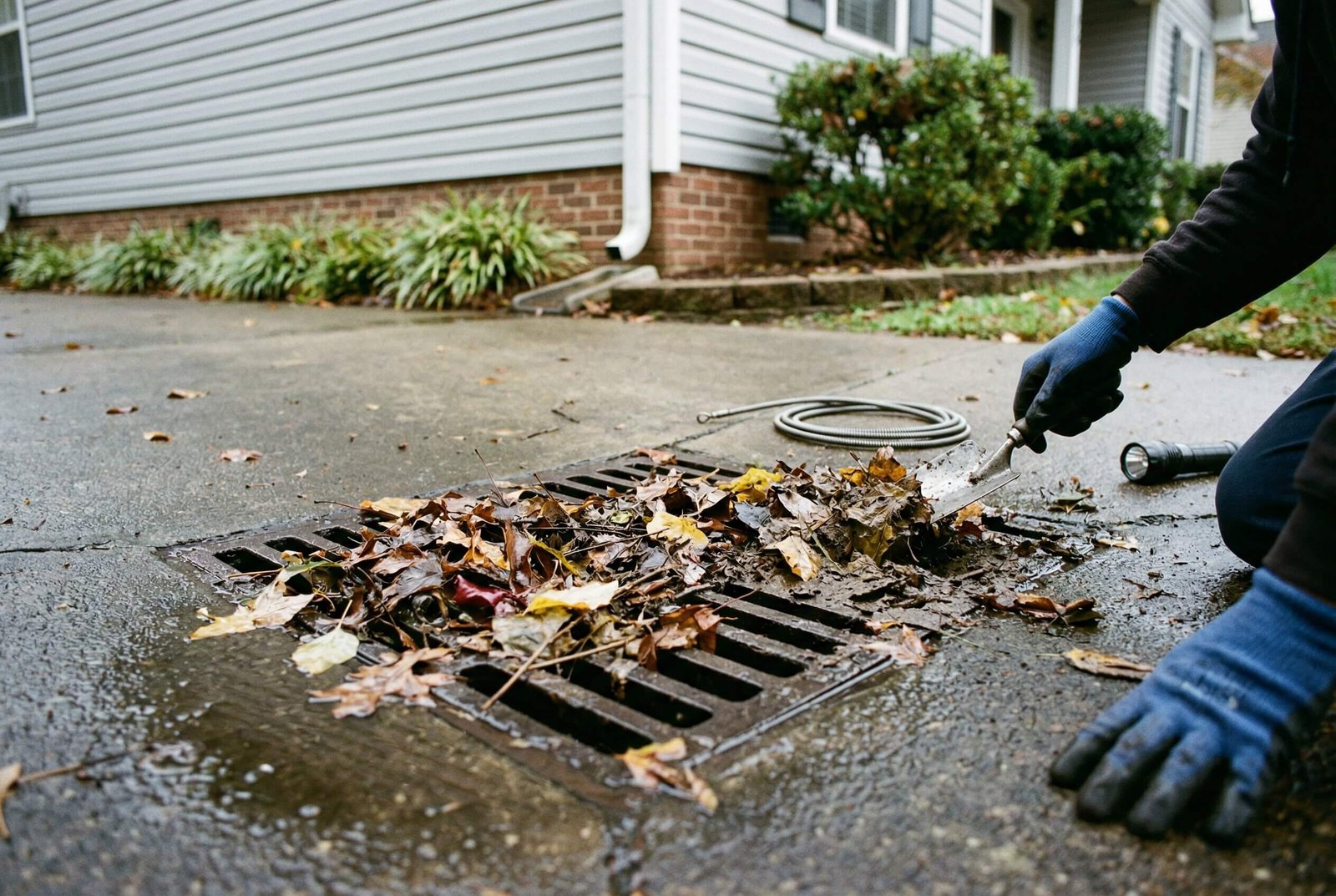
A storm drain clogged near the house is more than just a drainage inconvenience—it’s a direct threat to your home’s foundation and structural safety. When these drains fail to move water away efficiently, rainwater begins to collect in the most vulnerable area of your property: right next to your house. What may start as minor pooling during a storm can quickly turn into water intrusion, soil instability, and long-term damage if the underlying issue is not understood.
Storm drains installed near homes are designed to handle large volumes of water from multiple sources, including roof runoff, yard drainage, and surface flow. These systems rely on clear pathways and proper slope to carry water away from the foundation and toward a safe discharge point. When any part of the system becomes blocked—whether at the surface, within underground pipes, or near the exit—water flow is disrupted, and pressure begins to build around the home.
In many cases, homeowners assume the problem is visible at the drain opening, but the actual cause is often hidden deeper within the system. Debris buildup, root intrusion, pipe damage, or even issues with municipal storm lines can all contribute to a clogged storm drain near the house. Because these systems are interconnected, a blockage in one section can affect the entire drainage flow.
In this guide, we’ll break down how storm drains near houses work, the most common symptoms of clogging, what causes these blockages, and how professionals diagnose the exact problem. Understanding these factors is essential to identifying early warning signs and protecting your home from serious water-related damage.
What This Page Covers
ToggleWhat Is a Storm Drain Near a House and How It Works
Storm drains located near a house are a critical part of your property’s drainage system. Their primary job is to collect and redirect rainwater away from your home’s foundation, preventing water accumulation that can lead to structural damage. Unlike indoor plumbing systems, these drains are designed specifically for surface water and storm runoff, not wastewater.
Most homeowners only notice the visible grate or drain opening, but the actual system extends underground and connects multiple drainage sources. When functioning correctly, it quietly manages large volumes of water. When clogged, however, it quickly becomes one of the biggest risks to your home.
Types of Storm Drains Found Around Homes
Different types of storm drains may be installed around residential properties depending on layout, landscaping, and water flow patterns.
-
Yard storm drains
These are placed in low areas of the yard to collect surface runoff and prevent flooding. -
Catch basins near the foundation
Commonly installed close to the house, these drains capture water before it can pool around the structure. -
Downspout-connected drains
Roof gutters direct water into downspouts, which often connect to underground storm drain pipes. -
Driveway and channel drains
Installed along driveways or garage entrances to collect and redirect runoff from hard surfaces. -
Municipal storm drain connections
Many residential systems ultimately connect to city stormwater infrastructure or discharge points like curb outlets.
Each of these components may work independently, but they are often part of a connected system—meaning a clog in one area can affect the entire drainage network.
How Storm Drain Systems Move Water
Storm drain systems rely on a simple but highly effective principle: gravity. Water flows from higher ground to lower ground through a network of pipes designed with a specific slope.
Here’s how the process works:
-
Water enters the drain
Rainwater from the roof, yard, or surrounding surfaces flows into the drain opening or catch basin. -
Water travels through underground pipes
Once inside, the water moves through a buried piping system designed to carry it away from the house. -
Gravity drives the flow
The pipes are angled slightly downward so water can flow naturally without pumps. -
Water exits safely away from the home
The system discharges water to a safe location, such as:-
A street curb
-
A storm sewer system
-
A dry well or drainage field
-
Any disruption in this flow—whether from debris, roots, or pipe damage—can slow or stop the system entirely.
Why Storm Drains Are Critical Near the House
Storm drains placed near your home serve a very specific and important purpose: protecting the foundation from water damage.
-
Prevents water buildup around the foundation
Reduces the risk of water seeping into basements or crawl spaces. -
Minimizes hydrostatic pressure
Keeps excess moisture from pushing against foundation walls. -
Protects structural stability
Prevents soil from becoming unstable or shifting under the home. -
Controls runoff from roofs and hard surfaces
Ensures that large volumes of water are safely redirected away.
When a storm drain near the house becomes clogged, all of these protective functions begin to fail. Water starts accumulating where it should never stay—right next to your home—making early diagnosis essential.
Common Symptoms of a Clogged Storm Drain Near House
When a storm drain near your house becomes clogged, the warning signs usually show up quickly—especially during rain. Because these drains are positioned close to the foundation, even small drainage issues can become noticeable and serious. The key is understanding how water behaves around your home when the system is not functioning properly.
Water Pooling Close to the Foundation
One of the most obvious and concerning symptoms is water collecting near the base of your home.
-
Puddles forming along the foundation wall
-
Water sitting near basement windows or vents
-
Soil around the house becoming saturated
-
Water not draining even hours after rain stops
This is a strong indication that the drain is not pulling water away as it should, increasing the risk of seepage into the home.
Slow Drainage During Rainfall
In a properly functioning system, water should move quickly into the drain and disappear.
-
Water lingers around the drain opening
-
Drain appears to work but at a very slow rate
-
Pooling increases as rain continues
-
Drain struggles during moderate to heavy rainfall
This usually points to a partial blockage, where water flow is restricted but not completely stopped.
Overflowing Drain Grates or Basins
When the system becomes overwhelmed or blocked, water has nowhere to go and begins to overflow.
-
Water rising above the drain grate
-
Catch basin filling up and spilling over
-
Sudden spread of water across nearby areas
-
Drain works initially, then overflows
Overflow is a clear sign that the blockage is preventing proper flow further down the line.
Water Flowing Back Toward the House
This is one of the most dangerous symptoms and should be taken seriously.
-
Water moving in the opposite direction
-
Runoff collecting against foundation walls
-
Drain unable to redirect water away
-
Increased risk of basement or crawl space intrusion
This behavior usually indicates a blockage deeper in the system or near the discharge point.
Gurgling or Bubbling Sounds in Drain
Unusual sounds coming from the drain can signal airflow disruption inside the pipes.
-
Bubbling noises during rainfall
-
Gurgling when water enters the drain
-
Air pockets forming due to partial blockages
These sounds often indicate that water is struggling to pass through a restricted section of pipe.
Persistent Damp Soil Around Home
Even outside of heavy rain, the ground near your home may remain consistently wet.
-
Soil feels soft or spongy
-
Grass appears overwatered or unhealthy
-
Moisture remains long after dry weather
-
Areas near the drain never fully dry out
This suggests that water is not being properly carried away and is instead lingering in the surrounding soil.
These symptoms are not just surface-level issues—they are early indicators of a larger drainage problem that can affect your home’s structure and safety.
Most Common Causes of Storm Drain Clogs
A storm drain clogged near the house is usually the result of gradual buildup rather than a sudden failure. Because these drains handle large volumes of water from roofs, yards, and surrounding surfaces, they are constantly exposed to debris and environmental factors. Over time, this leads to restrictions that reduce flow and eventually cause backups near your home.
Understanding the most common causes helps identify whether the issue is surface-level, underground, or structural.
Leaves, Debris, and Organic Material
The most frequent cause of storm drain clogs starts right at the surface.
-
Leaves and twigs collecting over drain grates
-
Pine needles and small debris slipping into openings
-
Organic matter breaking down and forming sludge
-
Seasonal buildup during fall and storms
Even if the drain looks partially clear, small debris can accumulate underneath and begin restricting flow inside the pipe.
Dirt, Mulch, and Sediment Buildup
Storm drains near homes often sit in landscaped areas, making them vulnerable to soil and loose materials.
-
Mulch washing into drains during rain
-
Loose soil entering through the grate
-
Fine sediment settling inside pipes
-
Gradual narrowing of pipe diameter over time
This type of buildup often creates slow drainage issues before turning into a full blockage.
Tree Root Intrusion in Pipes
Tree roots are one of the most serious causes of underground drain clogs.
-
Roots grow toward moisture inside pipes
-
Enter through small cracks or pipe joints
-
Expand and create dense obstructions
-
Cause repeated clogging over time
Root intrusion doesn’t just block water—it can also damage the pipe structure, making the problem worse.
Roof Runoff Overloading the System
Storm drains near the house often handle water from downspouts, which can significantly increase flow volume.
-
Large amounts of roof water entering the system
-
Debris from gutters washing into pipes
-
System becoming overwhelmed during heavy rain
-
Partial clogs becoming full blockages under pressure
Even a small restriction can cause major issues when combined with high water flow from the roof.
Animal Nests or Foreign Objects
Outdoor drains are exposed to the environment, making them accessible to animals and debris.
-
Small animals nesting inside drain openings
-
Insects building colonies in pipes
-
Foreign objects entering the system
-
Blockages forming unexpectedly
These obstructions can occur suddenly and disrupt flow without warning.
Pipe Damage or Collapse
In some cases, the issue is not just a clog but a structural failure within the drainage system.
-
Cracked or broken pipes restricting flow
-
Collapsed sections blocking water completely
-
Misaligned joints catching debris
-
Aging materials deteriorating over time
Structural issues often lead to recurring or severe drainage problems that don’t resolve with simple cleaning.
Most storm drain clogs are a combination of multiple factors. A small amount of debris may start the blockage, but over time, sediment, roots, and structural issues can build on top of it, creating a more serious problem.
Hidden Causes That Often Go Undetected
Many storm drain clogs near the house appear straightforward on the surface, but the real cause is often hidden deeper within the system. These underlying issues are the reason why some drains continue to overflow or clog repeatedly, even after visible debris has been cleared. Professional plumbers frequently find that the most persistent drainage problems are linked to conditions homeowners cannot easily see.
Underground Downspout Line Blockages
One of the most overlooked causes of storm drain issues is the connection between roof drainage and underground pipes.
-
Gutter debris entering downspouts
Leaves, dirt, and shingle particles wash into the system during rain. -
Clogs forming in buried downspout lines
These pipes are rarely inspected, allowing buildup to accumulate over time. -
High water volume from the roof
Even a partial blockage can cause overflow when large amounts of water enter the system. -
Shared connection with nearby storm drains
A blockage in the downspout line can affect the drain near the house.
This is why water often pools near the foundation even when the visible drain appears clear.
Pipe Bellies and Poor Drain Slope
Storm drain systems rely entirely on proper slope to move water. When that slope is compromised, drainage slows down significantly.
-
Sagging sections in the pipe (pipe bellies)
Water collects instead of flowing through. -
Sediment settling in low areas
Dirt and debris build up over time in these sections. -
Common in older or poorly installed systems
Soil shifting or improper grading can cause pipes to sag. -
Recurring clogs in the same location
Even after cleaning, buildup returns because water continues to stagnate.
These issues are difficult to detect without specialized inspection tools.
Municipal Storm Line Backup
Sometimes the problem is not within your property, but in the system your drain connects to.
-
City storm drains becoming overloaded
During heavy rain, municipal systems may struggle to handle excess water. -
Shared drainage lines between properties
Multiple homes may feed into the same storm system. -
Blocked or restricted street discharge points
Debris or sediment can prevent water from exiting properly. -
Water backing up toward your property
Instead of draining away, water reverses direction.
This type of issue can make it seem like your drain is clogged when the real problem is downstream.
Improper Yard Grading Near Foundation
The way your yard is shaped plays a major role in how water flows toward or away from the drain.
-
Slope directing water toward the house
Increases pressure on the storm drain. -
Recent landscaping changes altering water flow
New soil or structures can redirect runoff. -
Low spots forming near the foundation
Water collects in these areas before reaching the drain. -
Increased runoff from hard surfaces
Driveways and patios can overwhelm the system.
Even a properly functioning drain can struggle if water is not being directed correctly.
Soil Compaction Around Drain Lines
Soil conditions can significantly affect how well a storm drain system performs.
-
Compacted soil reduces natural drainage
Water stays on the surface longer. -
Heavy traffic over drain areas
Compresses soil and may damage pipes. -
Clay-heavy soil slowing water absorption
Increases reliance on the drain system. -
Ground shifting over time
Can affect pipe alignment and slope.
These factors often develop gradually, making them easy to overlook until drainage problems become severe.
Hidden causes are often the reason storm drain problems near the house keep returning. While surface cleaning may provide temporary relief, these underlying issues continue to affect water flow until properly diagnosed.
Where the Blockage Is Usually Located
When a storm drain is clogged near your house, identifying where the blockage is located is one of the most important parts of diagnosing the problem. The location of the clog directly affects how water behaves around your home and how severe the issue may become.
In real-world plumbing scenarios, blockages typically occur in a few key areas within the drainage system. Each location creates different symptoms, which helps narrow down the source of the problem.
At the Drain Opening Near the House
This is the most visible and straightforward type of blockage.
-
Leaves and debris covering the grate
-
Mud or soil sealing the drain opening
-
Organic buildup just below the surface
-
Water immediately pooling around the drain
When the clog is at the surface, water cannot enter the system at all. This leads to rapid pooling during rain, especially near the foundation.
Inside Catch Basins or Drain Boxes
Catch basins are designed to collect debris before it enters the pipe, but they can become clogged themselves.
-
Debris accumulating inside the basin
-
Outlet pipe from the basin getting blocked
-
Water level rising inside the basin
-
Overflow during heavy rainfall
In this case, the drain may appear functional initially, but quickly fills up and spills over when water flow increases.
Mid-Line in Underground Pipes
This is the most common and often the most complex type of blockage.
-
Tree roots growing inside the pipe
-
Sediment and sludge buildup
-
Pipe misalignment or joint separation
-
Water draining slowly rather than stopping completely
Mid-line blockages are not visible from the surface and usually require professional inspection to confirm. They often cause recurring or persistent drainage issues.
Near the Street or Discharge Point
Sometimes the blockage occurs at the end of the drainage system, where water is supposed to exit.
-
Blocked curb outlet or emitter
-
Sediment buildup at the exit point
-
Water backing up through the system
-
Drain working briefly, then overflowing
This type of blockage can be misleading because the drain may seem to function before backing up under pressure.
Understanding the location of the blockage helps explain why water behaves the way it does around your home. For example, immediate pooling suggests a surface issue, while slow drainage or backflow usually indicates a deeper or downstream problem.
How Plumbers Diagnose a Storm Drain Clog
Diagnosing a storm drain clogged near the house requires more than just clearing visible debris. Because most of the drainage system is underground and closely tied to your home’s foundation, professional plumbers focus on identifying the exact cause, location, and severity of the blockage. This ensures the problem is properly understood rather than temporarily addressed.
Visual Yard and Foundation Inspection
The first step is a detailed visual inspection of the area around the drain and the house.
Plumbers assess how water behaves on the surface and how it interacts with the structure.
-
Condition of the drain opening and grate
-
Signs of water pooling near the foundation
-
Soil erosion or washed-out areas
-
Slope of the yard around the house
-
Presence of trees or large plants near drain lines
This helps determine whether the issue is likely at the surface or deeper within the system.
Water Flow Testing and Drain Behavior
Next, plumbers test how the drain responds to water.
This is usually done by running water into the drain to simulate rainfall and observe how the system performs.
-
Water entering slowly → indicates surface restriction
-
Water backing up quickly → suggests downstream blockage
-
Delayed drainage → points to partial clog inside pipe
-
No discharge at outlet → indicates blockage near exit point
This step provides immediate insight into how restricted the system is and how water is moving—or not moving—through it.
Camera Inspection of Underground Pipes
For accurate diagnosis, plumbers often use a drain camera to inspect the inside of the pipes.
A small camera is inserted into the system, allowing real-time visualization of internal conditions.
This reveals:
-
Tree root intrusion
-
Cracks, breaks, or collapsed sections
-
Mud, sludge, or debris buildup
-
Pipe misalignment or separation
-
Standing water indicating pipe bellies
Camera inspections are essential for identifying hidden issues that cannot be detected from the surface.
Identifying Root Intrusion or Pipe Damage
Once the internal condition is visible, plumbers assess the severity of any structural problems.
-
Extent of root growth inside pipes
-
Condition of pipe walls and joints
-
Whether damage is localized or widespread
-
Likelihood of recurring issues
Root intrusion and pipe damage are common causes of persistent clogs and often require more than basic cleaning.
Locating Exact Blockage Position
The final step is pinpointing the exact location of the blockage.
Plumbers use:
-
Camera distance markers
-
Surface mapping techniques
-
Observed water behavior
to determine:
-
Whether the clog is near the house, mid-line, or at the exit
-
Depth and accessibility of the pipe
-
Type of obstruction present
Accurate location is critical because it directly influences how the issue is addressed and whether it poses a risk to the home’s foundation.
Professional diagnosis focuses on understanding the entire drainage system—not just removing a blockage, but identifying why it occurred and whether it will happen again.
Real-World Scenarios of Storm Drain Problems
Storm drain clogs near a house rarely happen in isolation. In real U.S. homes, these issues usually develop over time due to a combination of debris buildup, water flow patterns, and hidden underground conditions. Looking at real-world scenarios helps connect the symptoms, causes, and system behavior you’ve learned so far.
Heavy Rain Causing Water Backup Near Foundation
A very common situation occurs during a heavy rainstorm.
A homeowner notices that water begins to collect rapidly around the base of the house. The storm drain initially takes in water, but within minutes, it starts to overflow, and water spreads toward the foundation.
In this scenario, plumbers often find:
-
Partial blockage inside the underground pipe
-
Debris buildup restricting high-volume flow
-
System functioning under normal conditions but failing under pressure
This type of issue is especially dangerous because it only appears during heavy rain, when the system is under maximum load.
Downspout Overload Flooding Drain Area
Another frequent problem involves roof drainage feeding into the storm drain.
During rainfall, large amounts of water from gutters are directed into the underground system. If the pipe is even slightly restricted, water begins to back up and overflow near the house.
Common findings include:
-
Clogged underground downspout lines
-
Debris from gutters entering the system
-
Shared piping between downspouts and yard drains
-
Drain system unable to handle combined water volume
This often leads to water pooling directly next to the foundation.
Tree Roots Blocking Storm Drain Line
In properties with mature trees, root intrusion is a major cause of long-term drainage issues.
A homeowner may experience slow drainage for months, followed by worsening conditions over time. Eventually, water begins to pool consistently near the house, even during light rain.
Plumbers typically discover:
-
Roots penetrating pipe joints or cracks
-
Dense root masses restricting flow
-
Structural damage to the pipe
This type of problem tends to recur and worsen if not properly addressed.
New Landscaping Redirecting Water Toward House
Drainage issues often appear after landscaping changes.
For example, a homeowner installs a new patio, adds soil, or changes the yard’s slope. Soon after, water begins collecting near the house instead of draining away.
In these cases, the issue is often:
-
Improper grading directing water toward the foundation
-
Increased runoff from hard surfaces
-
Drain no longer positioned at the lowest point
-
System being overwhelmed by redirected water flow
Even a properly installed drain can fail if the surrounding landscape changes how water moves.
These real-world scenarios highlight an important point: storm drain problems near the house are usually the result of multiple factors working together. What appears to be a simple clog is often part of a larger drainage system issue.
Warning Signs of Serious Drainage Problems Near House
A storm drain clogged near the house is not something to ignore. Because of its proximity to your foundation, even a minor blockage can escalate into a serious structural or moisture-related issue. The key is recognizing the warning signs that indicate the problem has moved beyond a simple clog and is starting to affect your home.
Water Seeping Into Basement or Crawl Space
One of the most critical warning signs is water entering your home.
When storm drains fail, water begins to accumulate around the foundation. Over time, this creates pressure that forces moisture into basements or crawl spaces.
-
Damp or wet basement walls
-
Water stains or pooling inside
-
Musty or moldy odors
-
Increased indoor humidity after rain
This indicates that the drainage system is no longer protecting your home from external water.
Foundation Cracks or Structural Movement
Long-term drainage issues can begin to affect the structural stability of your home.
-
Cracks appearing in foundation walls
-
Uneven floors or shifting inside the house
-
Doors and windows sticking or misaligning
-
Visible gaps forming around structures
These signs suggest that water is impacting the soil around the foundation, causing movement and instability.
Persistent Wet Soil Near Walls
If the ground around your home stays wet for extended periods, it’s a sign of poor drainage.
-
Soil remains damp long after rainfall
-
Ground feels soft or spongy
-
Grass appears overwatered or unhealthy
-
Water consistently collects in the same areas
This ongoing moisture increases the risk of foundation damage and pest problems.
Repeated Drain Overflow After Cleaning
If the storm drain continues to overflow even after being cleared, the issue is likely deeper in the system.
-
Temporary improvement followed by recurring problems
-
Drain fails during every rainfall
-
No lasting solution from basic cleaning
-
Symptoms returning in the same pattern
This often indicates root intrusion, pipe damage, or structural issues that require professional diagnosis.
Mold, Odor, or Indoor Dampness
Moisture problems caused by poor drainage don’t always stay outside.
-
Musty smells inside the home
-
Mold growth near walls or floors
-
Damp indoor air after rain
-
Increased allergy or respiratory issues
These signs suggest that water is affecting your indoor environment, often due to drainage failure outside.
These warning signs indicate that a clogged storm drain is no longer just a drainage issue—it’s a potential threat to your home’s structure, safety, and indoor conditions.
How a Clogged Storm Drain Affects Your Home
A clogged storm drain near the house doesn’t just create temporary water buildup—it directly impacts your home’s structure, safety, and long-term value. Because these drains are designed to protect the most critical part of your property—the foundation—any failure in the system can lead to cascading problems throughout your home.
Foundation Damage and Hydrostatic Pressure
One of the most serious effects of poor storm drainage is the pressure it creates around your foundation.
When water collects near the house, it saturates the soil and builds what plumbers call hydrostatic pressure—force pushing against foundation walls.
-
Water forces its way through small cracks
-
Foundation walls experience continuous stress
-
Soil expansion and contraction weaken structural support
-
Long-term exposure leads to significant damage
Even small drainage issues, if ignored, can eventually result in costly foundation repairs.
Basement Flooding Risks
Storm drains near homes are often the first line of defense against basement flooding.
When they fail, water has nowhere to go except toward the lowest point—often your basement or crawl space.
-
Water seeps through foundation walls
-
Basement floors become damp or flooded
-
Stored belongings get damaged
-
Increased need for water removal and cleanup
Flooding can happen quickly during heavy rain, especially if the drain is completely blocked.
Landscape Erosion Near House
Improper drainage can gradually destroy the landscaping around your home.
-
Soil gets washed away from around the foundation
-
Garden beds lose structure and stability
-
Mulch and decorative elements are displaced
-
Uneven ground develops over time
Erosion not only affects appearance but also contributes to foundation instability.
Pest and Moisture-Related Issues
Standing water and excess moisture create the perfect environment for pests and unhealthy conditions.
-
Mosquitoes breed in stagnant water
-
Insects thrive in damp soil
-
Rodents are attracted to moist areas
-
Mold and mildew develop in surrounding structures
These issues can extend from the yard into the home, affecting both comfort and health.
A clogged storm drain near the house is not an isolated issue—it affects multiple systems at once, from soil stability to indoor air quality. Addressing the problem early is essential to avoid long-term damage and costly repairs.
Preventing Storm Drain Clogs Near the House
Preventing a storm drain clogged near the house is not about constant maintenance—it’s about controlling what enters the system and ensuring water can move freely away from your foundation. Since these drains handle both surface runoff and roof water, even small preventive steps can make a significant difference in long-term performance.
Cleaning Drain Covers and Downspouts
The first and most effective step is keeping entry points clear.
-
Remove leaves, twigs, and debris from drain grates regularly
-
Check drains after storms or heavy winds
-
Clean gutters to prevent debris from entering downspouts
-
Ensure downspouts are flowing freely without overflow
A blocked entry point is often the starting point of a larger clog.
Managing Roof Runoff and Debris
Roof drainage contributes a large volume of water to storm drains near the house.
-
Keep gutters clean to reduce debris entering pipes
-
Monitor water flow during rainfall
-
Watch for overflow near downspout outlets
-
Prevent shingle grit and dirt buildup in drainage lines
Proper roof runoff management helps prevent overloading the system.
Maintaining Proper Yard Grading
The slope of your yard plays a major role in how water reaches and leaves the drain.
-
Ensure the ground slopes away from the foundation
-
Avoid creating low spots near the house
-
Check grading after landscaping changes
-
Prevent water from being directed toward the home
Even a well-functioning drain can struggle if water flow is not properly directed.
Regular Professional Inspection
Some problems develop underground and are not visible until they become serious.
-
Periodic inspections help detect hidden blockages
-
Camera inspections can identify root intrusion or pipe damage
-
Early detection prevents recurring drainage issues
-
Especially important for older homes or past problems
Professional evaluation ensures the system is functioning as intended.
Installing Drain Guards and Filters
Simple additions can reduce the amount of debris entering the system.
-
Use drain covers designed to block leaves and debris
-
Install filters in catch basins
-
Add guards to downspouts
-
Prevent large particles from entering underground pipes
These measures help maintain flow while minimizing buildup inside the system.
Preventing storm drain clogs near your house is about consistency and awareness. Small, regular actions can protect your drainage system and significantly reduce the risk of water damage to your home.
When to Call a Professional Plumber
A storm drain clogged near the house can quickly move from a minor inconvenience to a serious property risk. While surface debris can sometimes be cleared easily, many drainage issues involve hidden problems that require professional tools and expertise. Knowing when to call a plumber can help prevent costly damage and ensure the problem is properly diagnosed.
Water Accumulation Near Foundation
If water consistently collects near your home, it’s a clear sign the drainage system is not functioning properly.
-
Water pooling along foundation walls
-
Soil remaining wet for long periods
-
Water collecting near basement windows or vents
-
Drain not removing water efficiently
This situation should not be ignored, as prolonged exposure to moisture can lead to foundation damage.
Recurring Drain Blockages
If your storm drain keeps clogging even after being cleared, the issue is likely deeper in the system.
-
Temporary improvement followed by repeated problems
-
Drain failing during every rainfall
-
Frequent need for cleaning
-
Same symptoms returning over time
Recurring clogs often indicate root intrusion, pipe misalignment, or structural issues.
Signs of Pipe Damage or Collapse
Structural problems within the drainage system require professional attention.
-
Sudden change in drainage performance
-
Sinkholes or soft spots forming in the yard
-
Ground shifting near drain lines
-
Visible cracks or damage around drainage areas
These signs suggest that the pipe may be broken, collapsed, or severely compromised.
Suspected Municipal Drain Issues
In some cases, the problem may extend beyond your property.
-
Water backing up despite a clear drain
-
No discharge at the outlet point
-
Drainage issues affecting nearby properties
-
Overflow during heavy rain across multiple homes
These situations often involve municipal storm systems or shared drainage lines and require professional evaluation.
Calling a professional plumber ensures that the issue is not just temporarily cleared but properly diagnosed. With tools like camera inspections and flow testing, plumbers can identify the exact cause and location of the problem—something that is not possible through surface observation alone.
Final Thoughts on Storm Drain Issues Near Your Home
A storm drain clogged near the house is not just a drainage inconvenience—it’s a warning sign that water is not being properly controlled around one of the most critical areas of your property. Because these drains are designed to protect your foundation, even a small disruption in flow can lead to larger issues over time, including moisture intrusion, soil instability, and structural damage.
In many cases, the visible symptoms—like pooling water or slow drainage—are only part of the problem. The actual cause is often hidden underground, whether it’s debris buildup, root intrusion, pipe damage, or issues with the larger stormwater system. That’s why understanding how your drainage system works and recognizing early warning signs is essential for preventing long-term damage.
What makes storm drain problems near the house particularly important is their direct impact on your home’s safety. Unlike yard drains located farther away, these systems deal with water right next to your foundation. When they fail, the effects are immediate and can escalate quickly during heavy rainfall.
The key is not just reacting to visible issues, but understanding the behavior of your drainage system over time. Consistent maintenance, awareness of changes in water flow, and timely professional evaluation can help prevent minor problems from turning into costly repairs.