
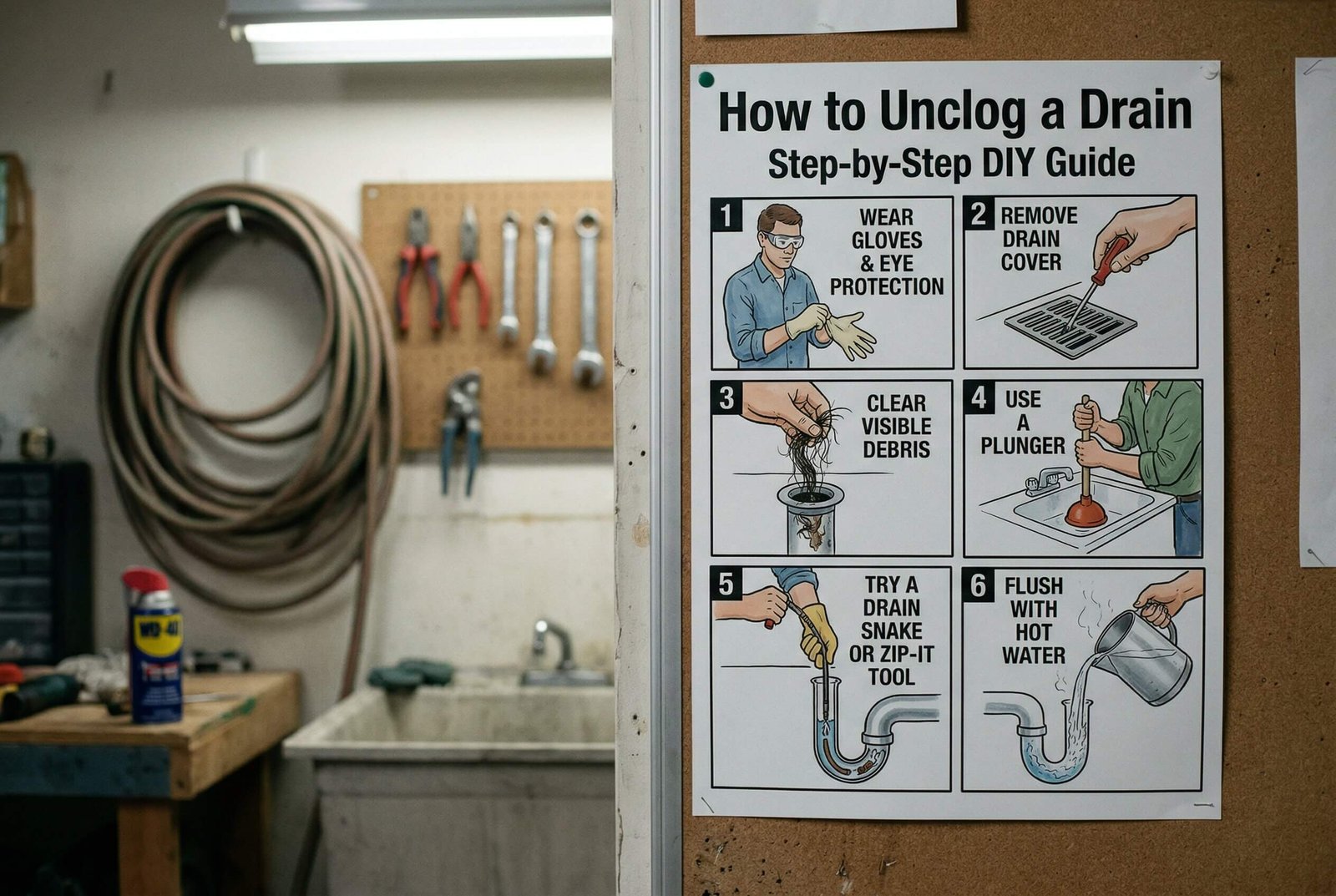
Clogged drains are one of the most common plumbing problems in U.S. homes, whether it’s a kitchen sink with a garbage disposal, a bathroom shower, or a laundry utility drain. What usually starts as a slow drain can quickly turn into standing water, unpleasant odors, or even backups into other fixtures if not handled properly. Knowing how to fix a clogged drain step-by-step helps you act early, avoid damage, and restore normal flow without unnecessary guesswork.
The most important thing to understand is that not all clogs are the same. Some are caused by simple surface debris like hair or food particles, while others develop deeper in the pipe due to grease buildup, soap residue, or long-term accumulation. The method you choose should always match the type of clog—using the wrong approach can push the blockage further down or damage your plumbing system.
In many cases, homeowners can successfully clear minor clogs using safe DIY methods such as hot water flushing, plunging, or using a drain snake. However, more stubborn or recurring blockages may require stronger techniques or professional tools. This guide walks you through practical, plumber-approved solutions—from basic fixes to advanced methods—so you can confidently decide what to try, what to avoid, and when it’s time to call a professional.
What This Page Covers
ToggleIdentify the Type of Clog Before Fixing
Before you start trying different methods to fix a clogged drain, it’s important to understand what kind of blockage you’re dealing with. Many homeowners jump straight into using plungers or chemical cleaners, but without proper diagnosis, those methods often fail or make the situation worse. A professional plumber always evaluates the type, depth, and severity of the clog first, because the right fix depends entirely on where and how the blockage has formed.
In most homes, clogs fall into a few clear categories. Some are close to the surface and caused by visible debris, while others develop deeper in the pipe due to long-term buildup. You may also notice the difference between a slow drain and a completely blocked one, which gives clues about how severe the issue is. Recognizing whether the problem is temporary or keeps coming back is equally important, as recurring clogs usually indicate a deeper issue in the drain system.
A simple way to assess your situation is by observing how the drain behaves. If water drains slowly but eventually clears, the clog is likely partial and manageable with intermediate methods. If water stands still or backs up immediately, the blockage is more severe and may require stronger tools. Pay attention to other warning signs as well—such as gurgling sounds, foul odors, or multiple drains acting up at once—as these often point to a more serious problem beyond a single fixture.
Making this initial assessment helps you avoid trial-and-error fixes and choose the safest, most effective method from the start. It also helps you recognize early when the problem may be beyond DIY and requires professional attention, saving you time, effort, and potential repair costs.
Quick Fixes You Can Try First (Low Risk)
Once you’ve identified that the clog is minor or likely near the surface, it’s best to start with simple, low-risk methods. These are the same first steps many professional plumbers try before moving to more aggressive solutions. The goal here is to break down or dislodge the blockage without damaging your pipes or pushing the clog deeper into the system.
These quick fixes work best for early-stage clogs caused by grease, soap residue, food particles, or hair buildup. They are safe for most standard residential plumbing systems in the U.S. and can often restore normal flow within minutes if the blockage isn’t severe.
Hot Water Flush Method
Hot water is one of the simplest and most effective ways to loosen grease and soap buildup inside pipes. This method is especially useful for kitchen sinks where oils and fats tend to solidify and restrict flow.
- Bring a pot of water to a near boil (not excessive rolling boil for PVC pipes)
- Slowly pour the hot water directly into the drain in stages
- Pause between pours to allow the heat to break down buildup
This method works best when the drain is still partially flowing. If water is completely blocked, the effect will be limited.
Dish Soap Breakdown Technique
Dish soap helps break down greasy residue that sticks to pipe walls, especially in kitchen drains connected to garbage disposals.
- Pour a generous amount of liquid dish soap into the drain
- Follow with hot water after a few minutes
- Let the mixture move through the pipe and dissolve buildup
This is a gentle but effective method for grease-related clogs and works well when combined with hot water flushing.
Manual Debris Removal (Hair, Food, Lint)
Many clogs are caused by visible debris sitting just below the drain opening. Removing it manually is often the fastest solution.
- Use gloves or a simple drain tool to pull out hair, food scraps, or lint
- Remove and clean the drain stopper if applicable
- Dispose of debris properly instead of pushing it back down
This method is especially effective for bathroom sinks, showers, and utility drains.
Using a Plunger Correctly
A plunger creates pressure that can dislodge clogs and restore flow. It’s one of the most commonly used tools in both homes and professional plumbing.
- Ensure there is enough water in the sink or fixture to cover the plunger cup
- Create a tight seal over the drain opening
- Push and pull firmly in a steady motion for 15–20 seconds
- Repeat a few times and check if water begins to drain
For best results, block any overflow openings (like sink overflow holes) to maintain proper pressure.
Starting with these low-risk methods allows you to fix many common drain clogs without tools or chemicals. If the drain doesn’t improve after trying these approaches, it usually means the blockage is deeper or more compact—at which point moving to more effective methods is the right next step.
Intermediate Fix Methods (More Effective)
If basic methods like hot water or plunging don’t resolve the clog, it usually means the blockage is deeper in the pipe or more compacted. At this stage, you need methods that can reach further into the drain system and physically break apart or remove the buildup. These approaches are still considered safe for homeowners, but they require a bit more effort and the right technique to avoid pushing the clog deeper or damaging the pipes.
Intermediate fixes are commonly used for bathroom drains clogged with hair, kitchen drains affected by grease buildup, and utility sinks where lint or debris accumulates over time. These methods are often enough to fully restore drainage without needing professional service.
Baking Soda and Vinegar Reaction
This method uses a natural chemical reaction to loosen sludge, grease, and light organic buildup inside pipes. It’s a safer alternative to harsh chemical cleaners and works best for partial clogs.
- Pour about half a cup of baking soda into the drain
- Follow with one cup of vinegar
- Allow the mixture to fizz and react for 10–15 minutes
- Flush with hot water to clear the loosened debris
While effective for minor to moderate buildup, this method may not work on solid blockages or heavy grease accumulation.
Using a Drain Snake or Hand Auger
A drain snake (also called a hand auger) is one of the most effective DIY tools for removing deeper clogs. It physically reaches into the pipe to break apart or pull out the obstruction.
- Insert the snake into the drain slowly
- Rotate the handle as you push forward
- When you feel resistance, continue rotating to break or hook the clog
- Pull the snake out carefully and remove debris
This method is highly effective for hair clogs, compacted debris, and buildup in bathroom and utility drains. Avoid forcing the snake aggressively, as that can damage pipes or push the clog further down.
Wet/Dry Vacuum Extraction
A wet/dry vacuum can sometimes pull out clogs using suction, especially if the blockage is not too deep.
- Set the vacuum to liquid mode
- Seal the drain opening as tightly as possible
- Use suction to try pulling the clog upward
This method works best for loose debris, small obstructions, or shallow clogs near the drain opening. It’s less effective for heavy or compacted blockages.
Cleaning the P-Trap Under the Sink
The P-trap is the curved section of pipe under sinks where debris often collects. Cleaning it is a very effective way to remove clogs that basic methods can’t reach.
- Place a bucket underneath the P-trap
- Unscrew the fittings carefully
- Remove the trap and clear out any buildup inside
- Rinse it thoroughly and reinstall
This method is especially useful for kitchen and bathroom sinks where grease, food particles, or soap residue accumulate over time. It directly targets one of the most common clog locations in residential plumbing.
These intermediate methods give you more control over the clog and significantly increase your chances of fully clearing the drain. If the blockage still persists after trying these techniques, it typically means the clog is deeper in the system or more severe—requiring stronger solutions or professional tools.
Advanced Fix Methods (Stronger Solutions)
If intermediate methods don’t clear the drain, the clog is likely deeper in the system or heavily compacted. At this stage, stronger solutions are required to break down stubborn buildup or reach further into the pipe. These methods are closer to what professional plumbers use, but some can still be attempted carefully by homeowners with the right precautions.
It’s important to proceed with caution here. Using overly aggressive techniques without understanding the pipe condition—especially in older U.S. homes with PVC or aging metal pipes—can lead to damage. The goal is to remove the blockage effectively without weakening the plumbing system.
Enzyme-Based Drain Cleaners
Enzyme cleaners are a safer, long-term solution designed to break down organic material such as grease, soap scum, and food waste. Unlike chemical cleaners, they don’t generate heat or corrosive reactions, making them safer for pipes.
- Ideal for recurring clogs and buildup
- Works gradually over several hours or overnight
- Safe for regular maintenance
These are commonly used in kitchen and utility drains where organic buildup is the main issue. However, they are not effective for solid obstructions or completely blocked drains.
Chemical Drain Cleaners (Risks and Safety)
Chemical cleaners can dissolve tough clogs quickly, but they come with significant risks. These products use strong acids or alkaline compounds that generate heat and can damage pipes if misused.
- Can weaken PVC pipes and corrode metal pipes
- Dangerous if splashed or inhaled
- Should never be mixed with other cleaners
If you choose to use a chemical cleaner, follow the manufacturer’s instructions exactly and use it as a last resort for severe clogs. Professional plumbers generally avoid these unless absolutely necessary due to the potential long-term damage.
High-Pressure Water Flushing
High-pressure flushing uses strong water force to push through and break apart clogs. While full hydro jetting is a professional service, some homeowners use high-pressure hose attachments for moderate blockages.
- Insert the hose attachment into the drain
- Turn on water gradually to build pressure
- Allow the force to dislodge buildup and push it through
This method works well for grease, sludge, and loose debris in larger drain lines, but it may not be effective against solid obstructions or heavy root intrusion.
Deep Drain Snaking Techniques
For clogs located further down the pipe, a longer or more flexible auger may be required. This is often used when a standard hand snake doesn’t reach the blockage.
- Allows deeper penetration into the drain line
- Breaks apart compacted debris or sludge
- Requires controlled handling to avoid pipe damage
If you feel strong resistance that doesn’t break with moderate effort, it’s best to stop. Forcing the tool can damage fittings or push the clog deeper into the system.
Advanced methods can resolve more stubborn drain problems, but they also come with higher risk if not used correctly. If these approaches don’t restore proper drainage, it’s usually a sign that the blockage is beyond standard DIY solutions and requires professional equipment.
Professional Drain Fix Methods
When DIY methods fail to clear the clog, professional plumbing solutions become necessary. At this stage, the blockage is usually deeper in the system, more compacted, or caused by underlying issues such as pipe buildup, grease scaling, or even early sewer line problems. Professional plumbers use specialized equipment and diagnostic tools that go far beyond standard household methods, allowing them to fix the problem completely rather than providing temporary relief.
These methods are designed to restore full pipe capacity, not just open a small passage through the clog. They are commonly used in U.S. homes where drains experience recurring issues, multiple fixture backups, or severe blockages that cannot be reached with basic tools.
Hydro Jetting (High-Pressure Cleaning)
Hydro jetting is one of the most effective ways to completely clear a clogged drain. It uses high-pressure water—often up to several thousand PSI—to blast away grease, sludge, soap buildup, and debris from the inside walls of the pipe.
- Cleans the entire pipe, not just the blockage
- Highly effective for grease-heavy kitchen drains
- Removes long-term buildup and residue
This method is especially useful for recurring clogs or heavily used drain lines. However, plumbers will usually inspect the pipe condition first to ensure it can handle the pressure safely.
Motorized Augers for Tough Blockages
Motorized augers (also called power snakes) are advanced versions of hand augers. They use a rotating cable powered by a motor to break through tough or deep clogs.
- Cuts through compacted debris and buildup
- Effective for deeper blockages in the line
- Commonly used for bathroom, kitchen, and main drains
These tools provide much more force and reach than manual snakes, making them ideal for stubborn clogs that DIY tools cannot handle.
Camera Inspection for Diagnosis
Professional plumbers often use drain inspection cameras to locate and identify the exact cause of the clog. This involves inserting a waterproof camera into the pipe to view the blockage in real time.
- Identifies the exact location of the clog
- Detects pipe damage, cracks, or root intrusion
- Helps determine the most effective repair method
Camera inspections are especially valuable for recurring clogs or when the cause of the blockage is unclear.
Pipe Repair or Replacement (If Required)
In some cases, the clog is not just a blockage but a symptom of a larger issue, such as damaged pipes, misaligned joints, or severe buildup that has hardened over time.
- Sections of pipe may need repair or replacement
- Common in older homes or damaged sewer lines
- Ensures long-term resolution instead of repeated clogs
This is typically the final step if cleaning methods cannot fully restore proper drainage.
Professional methods are designed to solve the root cause of the problem, not just provide a temporary fix. If your drain continues to clog despite multiple DIY attempts, investing in professional service can save time, prevent damage, and reduce long-term repair costs.
Tools Used to Fix Clogged Drains
Having the right tools makes unclogging a drain faster, safer, and more effective. Both homeowners and professional plumbers rely on specific tools depending on the severity and location of the clog. Using the correct tool not only helps clear the blockage but also prevents damage to the pipes.
For minor and intermediate clogs, basic tools are often enough, while more advanced or professional equipment is needed for stubborn or deep blockages. Knowing which tool to use in each scenario can save time and reduce the risk of worsening the problem.
Basic Household Tools
- Plunger – Creates suction to push or pull clogs out of the drain. Essential for sinks, tubs, and toilets.
- Drain Snake / Hand Auger – A flexible coil used to reach deeper clogs and physically break up debris.
- Bucket and Gloves – Necessary for catching water or debris when cleaning traps or using manual methods.
These tools are safe for most homeowners to use and are effective for common clogs like hair, food particles, or grease near the drain opening.
Professional Plumbing Tools
- Power Auger / Motorized Snake – Provides greater reach and force to tackle deep or compacted blockages.
- Hydro Jet Machine – Uses high-pressure water to clean pipes thoroughly and remove stubborn buildup.
- Inspection Camera – A waterproof camera used to locate blockages, detect pipe damage, or diagnose recurring clogs.
Professional tools allow plumbers to address deeper issues, recurring problems, or hard-to-reach blockages that DIY methods cannot fully resolve.
Choosing the right tool for the job ensures a faster, more complete fix and reduces the chance of accidental damage to your plumbing system.
Cost to Fix a Clogged Drain
Understanding the cost of fixing a clogged drain helps homeowners make informed decisions about whether to attempt DIY methods or hire a professional. Costs vary depending on the severity of the clog, the location, and whether emergency service is required. Knowing the range in advance also helps avoid unexpected plumbing bills.
DIY Cost Range
For minor clogs, DIY methods are extremely cost-effective. Basic tools and supplies like plungers, drain snakes, baking soda, vinegar, and gloves typically cost between $10 and $50. Even enzyme-based cleaners or wet/dry vacuum usage adds minimal expense. These methods are often enough for partial clogs, surface-level debris, or early-stage blockages.
Professional Plumbing Cost Range
Hiring a plumber in the U.S. typically ranges from $100 to $400 for standard drain unclogging, depending on the complexity and location. More severe clogs or deeper blockages may cost $300–$800 if advanced tools like hydro jetting or motorized augers are required. Emergency service calls, especially outside normal hours, can add an extra $100–$200 to the bill.
Factors That Affect Cost
- Severity and depth of the clog
- Location and accessibility of the drain
- Type of pipe material (PVC, metal, old pipes)
- Recurring versus one-time blockages
- Whether emergency or after-hours service is needed
Emergency Plumbing Costs
When drains are fully blocked or multiple fixtures back up, emergency plumbing may be required. Expect higher charges due to rapid response and specialized equipment. Emergency fees often range from $150 to $500 in addition to standard labor and tools.
Understanding these cost ranges allows homeowners to evaluate whether attempting DIY fixes is worth it or if professional intervention is the safer, long-term solution.
When NOT to Fix It Yourself
While many drain clogs can be handled safely at home, certain situations require professional intervention. Attempting DIY methods in these cases can worsen the problem, damage pipes, or create a health hazard. Recognizing when a clog is beyond your skill level is essential for protecting your home and avoiding unnecessary expense.
Some situations clearly indicate that the blockage is more serious than a simple DIY fix can handle. Sewer line issues, multiple fixture backups, and recurring clogs often point to deep or systemic problems that require specialized tools and expertise. Ignoring these signs or forcing aggressive DIY methods can push debris further into the system or cause pipe damage, ultimately increasing repair costs.
Signs You Should Not Attempt DIY
- Sewer Line Issues: Sewage backups or foul odors often indicate a main line blockage. DIY attempts may spread contamination or worsen the clog.
- Multiple Fixtures Backing Up: If sinks, tubs, or toilets clog simultaneously, it usually points to a main drain problem.
- Recurring Drain Problems: Frequent clogs suggest a deeper or structural issue in the piping.
- Risk of Pipe Damage: Older, brittle pipes, tight bends, or PVC joints can be damaged by excessive force from snakes or chemical cleaners.
Recognizing these red flags helps homeowners make the right decision and ensures that professional intervention occurs before the issue escalates. Attempting to fix serious blockages without experience can lead to more extensive repairs and higher costs.
How to Prevent Future Drain Clogs
Preventing drain clogs is often easier and less expensive than fixing them after they occur. By adopting good habits and routine maintenance, homeowners can minimize the risk of blockages in kitchen sinks, bathroom drains, utility sinks, and even main lines. Preventive measures help ensure smooth drainage, reduce odors, and extend the life of your plumbing system.
Proper Usage Habits
- Avoid pouring grease, oil, or coffee grounds down kitchen drains.
- Run hot water after using the sink to help carry away residual buildup.
- Use strainers in sinks and showers to catch hair, food particles, and debris.
These simple steps reduce the amount of material that can accumulate in pipes over time.
Managing Hair, Grease, and Debris
- Regularly clean the P-trap and remove visible debris from sink stoppers.
- For bathroom drains, remove hair and soap buildup weekly.
- Dispose of food scraps and lint properly instead of washing them down the drain.
Consistent removal of potential clogging material keeps pipes flowing freely and prevents minor blockages from becoming serious.
Routine Maintenance Tips
- Use enzyme-based cleaners monthly to break down organic buildup naturally.
- Flush drains occasionally with hot water to dissolve light grease or soap deposits.
- Schedule professional drain inspections if you notice recurring slow drains or unusual odors.
Routine maintenance prevents the accumulation of stubborn buildup that can lead to recurring clogs.
Drain-Friendly Cleaning Practices
- Avoid mixing chemical cleaners or using harsh chemicals frequently, as they can damage pipes.
- Opt for non-toxic alternatives or mechanical removal methods when possible.
- Educate household members about what can safely go down each drain.
Taking preventive steps helps homeowners maintain healthy drains, reduces emergency plumbing calls, and ensures that DIY or professional interventions are only needed occasionally.
Final Thoughts
Clogged drains are a common issue in homes, but understanding the right approach can save time, money, and stress. Starting with simple, low-risk DIY methods—like hot water flushing, plunging, or manual debris removal—often resolves minor blockages efficiently. If these approaches don’t work, intermediate and advanced methods such as drain snaking, P-trap cleaning, enzyme treatments, or even professional techniques may be required.
The key is to assess the type and severity of the clog before attempting any fix. Surface-level or temporary blockages can usually be handled at home, while deeper, recurring, or multi-fixture clogs often signal a more serious problem. Knowing when to escalate from DIY to professional intervention ensures the blockage is removed safely and prevents long-term damage to your plumbing system. By combining the right tools, techniques, and preventive habits, homeowners can maintain clear drains and reduce the likelihood of recurring problems.