
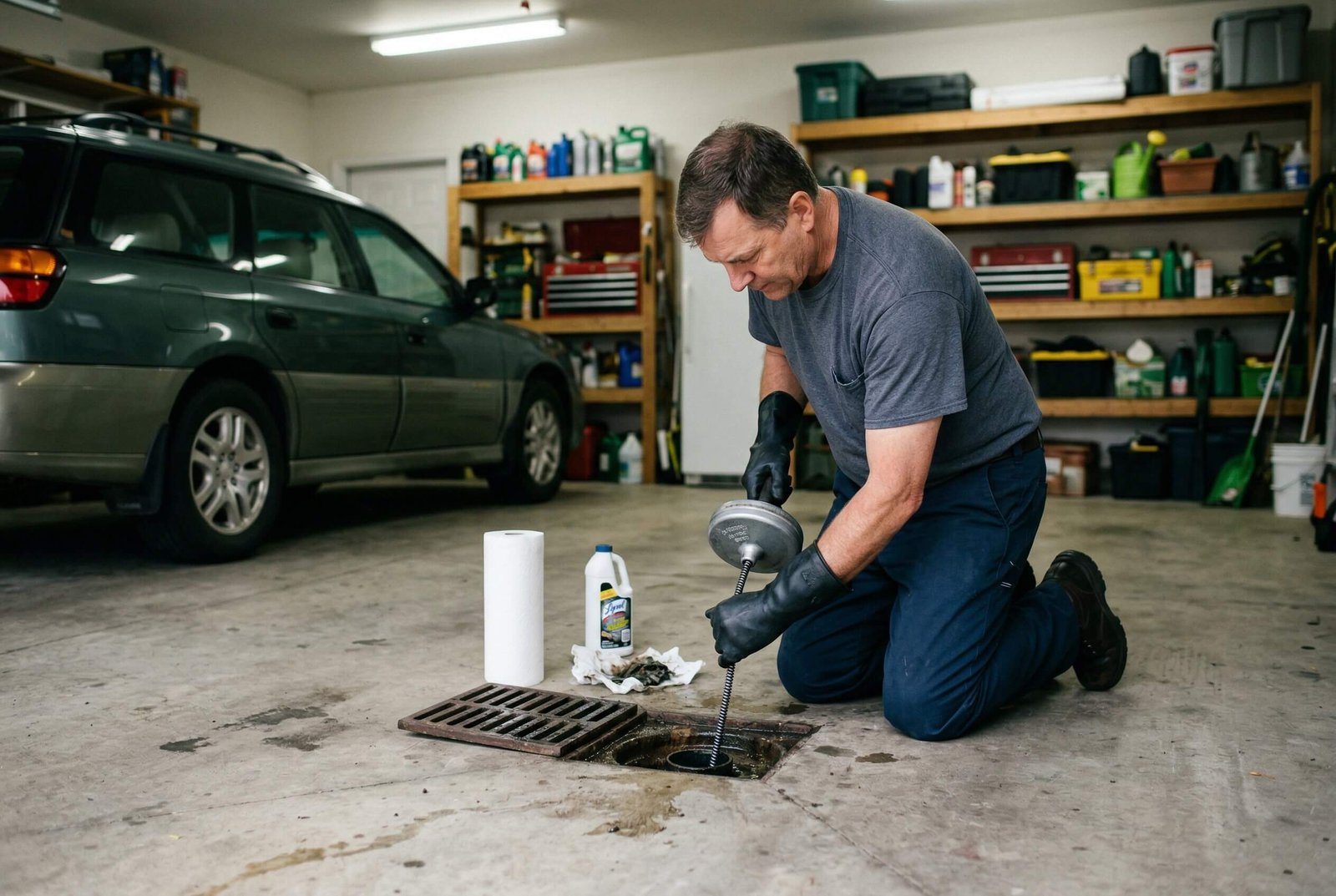
A garage floor drain plays a crucial role in managing water and runoff in many U.S. homes. It’s designed to handle rainwater, melting snow from vehicles, car wash runoff, and even minor spills. Unlike indoor drains, garage drains often deal with a mix of dirt, sand, oil, and debris, which makes them far more prone to blockages over time.
When a garage floor drain becomes blocked, the problem can escalate quickly. Water begins to pool across the garage floor, creating slipping hazards and potential damage to flooring, walls, and stored items. In colder regions, standing water can even freeze, adding another layer of risk. In some cases, if the drain is connected to the main sewer line, a blockage can lead to unpleasant odors or backups.
The most common causes of a garage floor drain blockage include compacted dirt, mud, leaves, small debris, and oil or grease buildup from vehicles. Over time, these materials settle inside the pipe and form a thick obstruction that restricts proper drainage. In older homes, the issue can be even more complex due to aging pipes or poor drainage design.
The good news is that many garage drain blockages can be fixed using safe DIY methods if caught early. Simple solutions like removing debris, flushing the drain, or using a plunger can often restore flow. However, more stubborn clogs may require tools like a drain snake, wet/dry vacuum, or professional-grade equipment.
In this guide, you’ll learn how to fix a garage floor drain blockage step-by-step. We’ll start with quick and low-risk methods, move into more effective solutions, and finally cover professional techniques used for severe clogs. You’ll also learn how to prevent future blockages and when it’s best to call a plumber before the problem gets worse.
What This Page Covers
ToggleIdentify the Type of Blockage Before Fixing
Before you start trying to fix a garage floor drain blockage, it’s important to understand what kind of clog you’re dealing with. In real U.S. garage drainage systems, not all blockages are the same. Some are simple surface issues caused by dirt and debris, while others are deeper problems connected to the drain line or even the main sewer system.
Taking a few minutes to properly identify the type of blockage helps you choose the right method and avoid making the problem worse. Using the wrong approach—like forcing water into a deep clog—can push debris further down and create a more serious issue.
Surface Debris vs Deep Pipe Blockage
A surface blockage is the most common type in garage floor drains. These clogs occur near the drain opening and are usually caused by dirt, sand, leaves, and mud that get washed into the drain.
Signs of a surface blockage:
- Water drains slowly but still moves
- Visible debris around or inside the drain opening
- Problem appeared after cleaning the garage or heavy rain
A deep pipe blockage is more serious and occurs further down in the drainage system.
Signs of a deep blockage:
- Water sits on the surface and does not drain
- No visible debris at the opening
- Problem does not improve after basic cleaning
Temporary vs Recurring Garage Drain Issues
Understanding whether the blockage is temporary or recurring is key to choosing the right fix.
Temporary blockage:
- Caused by recent debris buildup
- Usually resolved with basic cleaning
- No history of repeated issues
Recurring blockage:
- Drain clogs repeatedly over time
- Flow improves temporarily but slows again
- Indicates buildup deeper in the pipe or poor drainage conditions
Recurring issues often require more than just surface cleaning and may need deeper intervention.
Warning Signs of Serious Drain Problems
Some symptoms indicate that your garage floor drain blockage may be part of a larger plumbing issue.
Watch for these signs:
- Standing water that doesn’t drain at all
- Strong oil, grease, or sewage odor
- Gurgling sounds from nearby drains
- Slow drainage in other areas of the home
These signs suggest the blockage may not be isolated to the garage.
Local Garage Drain vs Main Sewer Line Problem
It’s critical to determine whether the issue is limited to the garage drain or connected to the main sewer line.
Local blockage:
- Only the garage drain is affected
- Other fixtures in the home work normally
- Usually caused by dirt, debris, or grease buildup
Main sewer line issue:
- Multiple drains in the home are slow or backing up
- Garage drain overflows when other fixtures are used
- Higher risk of sewage backup
This distinction is important because DIY methods are generally safe for local blockages but not effective for sewer line problems.
Once you clearly identify the type of blockage, you can move forward with the most effective and safest method to fix it.
Quick Fixes You Can Try First (Low Risk)
If the blockage appears minor or limited to the surface, it’s best to start with simple, low-risk methods. In most U.S. garages, floor drain clogs are caused by dirt, mud, sand, and light grease buildup—issues that can often be cleared without specialized tools.
Starting with these methods not only saves time and money but also reduces the risk of damaging your drain pipes. Many garage drain blockages can be resolved at this stage if addressed early.
Hot Water Flush for Dirt and Light Sludge
Hot water is one of the easiest ways to loosen and move light buildup inside a garage floor drain. Dirt, soap residue, and minor grease deposits can soften when exposed to heat, making it easier for water to carry them away.
When it works best:
- Slow drainage but not fully blocked
- No standing water on the garage floor
- Recent buildup from cleaning or runoff
Limitations:
- Ineffective for compacted dirt or heavy debris
- Won’t clear deep blockages
Pour the hot water slowly in stages, allowing it to work through the buildup instead of rushing it all at once.
Dish Soap Treatment for Grease Residue
Garage drains often collect oil and grease from vehicles, especially if you wash your car inside the garage. Dish soap is designed to break down grease, making it a simple and effective first step.
How it helps:
- Breaks down oil residue
- Loosens sticky buildup inside pipes
- Improves flow when followed by hot water
Best use cases:
- Oily or greasy residue
- Slippery drain surfaces
- Mild recurring slow drainage
Let the soap sit for several minutes before flushing to allow it to work effectively.
Manual Removal of Dirt, Leaves, and Debris
In many cases, the blockage is right at the drain opening. Dirt, leaves, sand, and debris can accumulate under the drain cover and restrict water flow.
What to do:
- Remove the drain cover if possible
- Pull out visible debris using gloves
- Clear any buildup around the opening
Important tips:
- Do not push debris further into the drain
- Dispose of removed material properly
- Wear gloves for safety
This step alone can often restore normal drainage if the clog is shallow.
Using a Plunger on Garage Floor Drains
A plunger can be surprisingly effective for garage floor drains when used correctly. It creates pressure that helps loosen and dislodge blockages inside the pipe.
Steps to follow:
- Ensure there is some water covering the drain
- Place the plunger firmly over the opening
- Push and pull to create suction
- Repeat several times and test drainage
Common mistakes to avoid:
- Poor seal around the drain
- Not using enough water
- Stopping too early
Plunging works best for soft clogs and partial blockages, especially when combined with flushing afterward.
These quick fixes are often enough to solve minor garage floor drain blockages. If the drain still doesn’t clear, it’s time to move to more effective intermediate methods.
Intermediate Fix Methods (More Effective)
If the quick fixes didn’t clear the blockage, it usually means the clog is more compacted or sitting deeper inside the drain pipe. Garage floor drains often collect heavy materials like mud, sand, and grease, which can harden over time and resist simple flushing.
At this stage, you need methods that physically remove or break apart the blockage rather than just loosening it. These techniques are commonly used in real U.S. plumbing situations and are still safe for homeowners when done carefully.
Baking Soda and Vinegar for Organic Buildup
This method is useful when the blockage includes organic material like dirt mixed with grease or soap residue. The reaction between baking soda and vinegar creates bubbling action that helps loosen debris inside the pipe.
How it helps:
- Breaks down light sludge buildup
- Loosens residue stuck to pipe walls
- Improves flow when followed by hot water
Best use cases:
- Mild to moderate clogs
- Drains with greasy or dirty buildup
- Situations where chemicals are not preferred
Limitations:
- Not effective for solid or heavy debris
- Won’t clear deep blockages
Using a Drain Snake or Hand Auger
A drain snake is one of the most effective tools for clearing garage floor drain blockages. It allows you to reach deeper into the pipe and either break apart or pull out the clog.
What it does:
- Reaches beyond the drain opening
- Breaks compacted debris
- Pulls out dirt, sludge, and buildup
Best for:
- Moderate to deep clogs
- Blockages that don’t respond to flushing
- Repeated slow drainage
Important considerations:
- Move slowly to avoid pipe damage
- Do not force the tool if resistance is strong
- Clean the auger after use
Wet/Dry Vacuum for Mud and Debris Removal
A wet/dry vacuum can be very effective for garage drains because many clogs involve loose dirt and sludge. Instead of pushing debris deeper, this method pulls it out.
When it works best:
- Mud, sand, or loose debris
- Standing water in the garage
- Shallow to mid-level clogs
How it helps:
- Removes clog material completely
- Reduces risk of pushing blockage further
- Quick results for certain types of buildup
Limitations:
- Requires a tight seal over the drain
- Not effective for deep or hardened clogs
Cleaning the Garage Drain Trap
Some garage floor drains include a trap that collects debris over time. Dirt, sand, grease, and sludge can settle in this area and restrict water flow.
Signs the trap may be clogged:
- Persistent slow drainage
- Foul or oily smell from the drain
- Water sitting near the opening
What to focus on:
- Removing accumulated sludge
- Clearing sediment buildup
- Restoring proper flow through the trap
Important notes:
- Use gloves and basic tools
- Avoid disassembling complex components unnecessarily
- Expect unpleasant odors during cleaning
These intermediate methods are often enough to fix most garage floor drain blockages. If the problem still persists, it usually indicates a more severe clog deeper in the system that requires stronger solutions.
Advanced Fix Methods (Stronger Solutions)
If intermediate methods didn’t clear the blockage, you’re likely dealing with a tougher clog made of compacted dirt, grease buildup, or debris lodged deeper in the drain system. Garage floor drains in U.S. homes often handle heavy materials like sand and automotive residue, which can harden over time and resist basic tools.
At this stage, stronger solutions are needed—but they must be used carefully. Using overly aggressive methods without proper understanding can damage pipes or push the blockage further into the system.
Enzyme Cleaners for Organic and Sludge Buildup
Enzyme-based cleaners are a safer advanced option that break down organic material over time. They use natural bacteria to digest sludge, grease, and dirt buildup inside the pipe.
How they work:
- Gradually dissolve organic material
- Clean pipe walls over time
- Improve flow without damaging pipes
Best use cases:
- Recurring slow drainage
- Sludge buildup mixed with grease
- Preventative maintenance after clearing a clog
Advantages:
- Safe for most pipe types
- Environmentally friendly
- Helps prevent future clogs
Limitations:
- Slow results (often overnight or longer)
- Not effective for solid debris or heavy blockages
Chemical Cleaners for Heavy Grease (Risks)
Chemical drain cleaners can break down tough grease and organic material quickly, but they should be used cautiously—especially in garage drains exposed to oil and residue.
When they may be used:
- Grease-heavy clogs
- Situations where other methods failed
Risks to consider:
- Can damage older or weakened pipes
- Produces strong fumes in enclosed garages
- Hazardous if misused
Safety guidelines:
- Follow product instructions carefully
- Never mix different chemical cleaners
- Ensure proper ventilation in the garage
Chemical cleaners should be used as a last DIY option rather than a routine solution.
High-Pressure Water Flushing
High-pressure water flushing helps break apart and push out compacted dirt and sediment. While not as powerful as professional hydro jetting, it can still be effective for stubborn garage drain blockages.
How it helps:
- Dislodges compacted debris
- Clears pipe walls
- Restores water flow
Best use cases:
- Dirt and sand buildup
- Sludge-heavy clogs
- After loosening debris with other methods
Limitations:
- May push clog deeper instead of removing it
- Not effective for roots or solid obstructions
Deep Snaking for Stubborn Blockages
When standard snaking doesn’t work, deeper snaking may be required to reach blockages further inside the drain system. This method targets clogs that are beyond the immediate pipe section.
Signs you need deeper snaking:
- Water backs up immediately
- No improvement after intermediate fixes
- Repeated clogging in the same drain
What it addresses:
- Compacted debris deep in pipes
- Partial blockages restricting flow
- Early-stage sewer line buildup
Important considerations:
- Avoid forcing the tool if resistance is high
- Excess pressure can damage pipes
- Stop if the clog does not clear after multiple attempts
If these advanced methods still don’t resolve the issue, the blockage is likely severe or located deep within the system. At that point, professional plumbing solutions are the safest and most effective option.
Professional Drain Fix Methods
When a garage floor drain blockage doesn’t respond to DIY or advanced methods, professional plumbers use specialized equipment to fully clear the system and identify the root cause. In many U.S. homes, garage drains are connected to long horizontal pipes or even the main sewer line, which makes deep blockages more complex than they appear on the surface.
Professional solutions are designed not just to remove the clog, but to restore full pipe function and prevent the issue from returning.
Hydro Jetting for Severe Garage Drain Blockages
Hydro jetting is one of the most powerful and effective methods used by plumbers. It involves blasting high-pressure water through the pipes to completely clear debris, grease, and sludge.
What it does:
- Breaks apart compacted dirt and sediment
- Removes grease and oil buildup from pipe walls
- Flushes the entire pipe system clean
Best for:
- Severe or long-standing blockages
- Recurring garage drain issues
- Heavy sludge and grease accumulation
Advantages:
- Thorough cleaning, not just clog removal
- Long-lasting results
- Reduces chances of future blockages
Limitations:
- Requires professional equipment
- Not suitable for severely damaged pipes
Motorized Augers for Deep Pipe Obstructions
Motorized augers (power snakes) are used to cut through tough blockages deep inside the drain system. These tools are much stronger than manual augers and can reach further into pipes.
How they work:
- Rotating cable breaks apart compact debris
- Cuts through grease buildup and obstructions
- Clears pathways for water flow
Best for:
- Deep clogs that DIY tools cannot reach
- Hardened dirt and sludge
- Early-stage root intrusion
Advantages:
- Highly effective for stubborn blockages
- Faster results compared to manual methods
- Can restore flow quickly
Camera Inspection for Drain Diagnosis
One of the biggest advantages of hiring a professional plumber is the ability to inspect the drain internally using a camera. This allows for accurate diagnosis instead of guesswork.
What it helps identify:
- Exact location of the blockage
- Oil and grease buildup patterns
- Pipe damage, cracks, or corrosion
- Root intrusion in underground lines
Why it matters:
- Ensures the correct fix is used
- Prevents unnecessary work
- Helps avoid recurring issues
Pipe Repair or Replacement if Needed
Sometimes the blockage is a symptom of a bigger problem, such as damaged or aging pipes. Garage drains in older U.S. homes may connect to pipes that have deteriorated over time.
Situations requiring repair:
- Repeated clogs despite cleaning
- Cracked or collapsed pipes
- Severe root intrusion
- Structural pipe issues
Possible solutions:
- Targeted pipe repair
- Pipe relining (in some cases)
- Full pipe replacement for major damage
Professional drain fix methods provide the most reliable and long-term solution for garage floor drain blockages. While they involve higher costs, they address the root cause and help prevent future issues.
Tools Used to Fix Garage Floor Drain Blockages
Fixing a garage floor drain blockage effectively depends on using the right tools for the situation. In real U.S. plumbing work, professionals always match the tool to the severity and depth of the clog. Starting with basic tools and progressing to advanced equipment ensures the problem is handled safely without causing damage.
As a homeowner, understanding these tools helps you make better decisions—whether you’re attempting a DIY fix or deciding when to call a plumber.
Basic Homeowner Tools
These are simple tools that are often enough for minor or surface-level blockages commonly found in garage drains.
Common tools:
- Plunger (cup-style for flat drains)
- Rubber gloves for safe debris removal
- Bucket for flushing or removing standing water
- Screwdriver or tool to remove drain cover
When to use:
- Slow drainage
- Visible dirt, mud, or debris near the opening
- Recent blockage caused by cleaning or runoff
These tools are easy to use and can solve many basic issues without needing additional equipment.
Intermediate Tools
When the blockage is deeper or more compacted, intermediate tools provide more reach and effectiveness. These are widely used in early-stage plumbing fixes.
Common tools:
- Hand auger (manual drain snake)
- Wet/dry vacuum for suction removal
- Flexible cleaning brushes for trap cleaning
When to use:
- Clogs beyond the surface level
- Mud, sand, and grease buildup
- Standing water that needs removal
Advantages:
- Can physically remove or break apart clogs
- More effective than basic methods
- Suitable for most moderate blockages
These tools are often the turning point between a failed quick fix and a successful drain repair.
Professional Equipment
For severe or deep blockages, professional plumbers rely on advanced equipment designed for power, precision, and full-system cleaning.
Common professional tools:
- Power auger (motorized snake)
- Hydro jetting machine
- Drain inspection camera
What they’re used for:
- Deep or stubborn clogs
- Sewer line blockages
- Diagnosing hidden issues inside pipes
Advantages:
- Highly effective for tough situations
- Provides long-term solutions
- Identifies underlying problems
Limitations:
- Requires training and experience
- Not suitable for DIY use in most cases
Choosing the right tool is critical when trying to fix a garage floor drain blockage. Starting simple and progressing only when needed ensures you fix the issue efficiently while minimizing risk.
Cost to Fix a Garage Floor Drain Blockage
The cost to fix a garage floor drain blockage can vary depending on how severe the clog is, how deep it sits in the system, and whether you handle it yourself or hire a professional. In U.S. homes, many garage drain issues start small and can be resolved cheaply, but if ignored, they can quickly turn into expensive repairs.
Understanding the cost breakdown helps you make a smart decision early—before the problem escalates.
DIY Cost Range
For minor blockages, DIY methods are usually the most affordable option. Most homeowners can fix light clogs using basic tools and cleaning solutions.
Typical DIY costs:
- Plunger: $10 – $25
- Hand auger: $25 – $80
- Enzyme cleaner: $10 – $30
- Chemical cleaner: $10 – $25
- Wet/dry vacuum (if needed): $50 – $150+
Estimated total:
- Basic fix: $10 – $50
- With tool purchase: $50 – $150+
DIY works best when the blockage is shallow and not deeply compacted.
Plumber Cost Range (U.S.)
If DIY methods fail, hiring a plumber becomes necessary. The cost depends on the complexity of the blockage and the method required to clear it.
Typical pricing:
- Service call fee: $75 – $150
- Basic snaking: $100 – $300
- Motorized auger: $250 – $600
- Hydro jetting: $300 – $800+
- Camera inspection: $150 – $400
More complex issues, such as deep clogs or grease buildup, typically require advanced tools and higher costs.
Factors That Affect Cost
Several factors influence how much it costs to fix a garage floor drain blockage.
Key factors:
- Type of blockage (dirt, grease, sludge)
- Depth of the clog in the pipe system
- Accessibility of the drain and piping
- Condition and age of pipes
- Equipment required for the job
More severe and deeper clogs generally result in higher costs.
Emergency Garage Flooding Costs
If the blockage leads to water pooling or flooding in the garage, the total cost can increase significantly due to emergency service and cleanup.
Potential costs:
- Emergency plumbing service: $150 – $500+
- Water removal and cleanup: $300 – $1,500+
- Structural or flooring damage repair: varies
- Mold prevention: $500 – $2,500+
Acting early is the best way to avoid these additional expenses.
Fixing a garage floor drain blockage early is almost always cheaper than waiting. Addressing the issue quickly can prevent damage and reduce the need for expensive professional services.
When NOT to Fix It Yourself
While many garage floor drain blockages can be handled with DIY methods, there are situations where attempting to fix the issue yourself can lead to bigger problems. In U.S. plumbing systems, garage drains often connect to larger drainage networks, and misjudging the severity of a clog can result in pipe damage, flooding, or even sewage backup.
Recognizing these warning scenarios early can save you time, money, and potential structural damage.
Sewer Line Issues
If the blockage is connected to the main sewer line, DIY methods are usually ineffective and can worsen the situation.
Signs of a sewer-related problem:
- Garage drain backs up when toilets or sinks are used
- Multiple drains in the home are slow or clogged
- Strong sewage odor coming from the drain
Why to avoid DIY:
- Standard tools can’t reach deep enough
- Risk of pushing the blockage further into the system
- Requires professional equipment like hydro jetting
Multiple Drain Backups
When more than one drain in your home is affected, the issue is not isolated to the garage. This indicates a larger blockage somewhere in the system.
Common signs:
- Slow drainage in sinks, showers, and garage drain
- Water backing up in different areas
- Gurgling noises across multiple fixtures
Why DIY is not enough:
- The blockage is deeper in the plumbing system
- Surface-level fixes won’t resolve the issue
- Incorrect attempts can increase pressure in pipes
Recurring Blockages
If your garage floor drain keeps clogging even after cleaning, it’s a sign of an underlying issue that hasn’t been properly addressed.
Possible causes:
- Partial blockage deep in the pipe
- Grease and sludge buildup along pipe walls
- Structural issues in the drainage system
- Poor drainage slope
Why to stop DIY:
- Temporary fixes won’t solve the root cause
- Repeated attempts can stress pipes
- Professional diagnosis is needed
Risk of Pipe Damage
Older homes in the U.S. often have aging plumbing systems that are more fragile. Using aggressive methods can damage these pipes and create more expensive problems.
Risk factors:
- Old cast iron or clay pipes
- History of plumbing issues
- Resistance when using a drain snake
- Signs of corrosion or leaks
Why DIY can be risky:
- Forcing tools can crack or collapse pipes
- Chemical cleaners can weaken pipe structure
- Repairs become significantly more expensive
In these situations, calling a professional plumber is the safest and most effective solution. Attempting to fix a serious problem yourself can often lead to higher repair costs and more extensive damage.
How to Prevent Future Garage Floor Drain Blockages
Fixing a garage floor drain blockage is only half the job. In most U.S. homes, these drains deal with constant exposure to dirt, sand, oil, and debris, which means clogs can return if proper care isn’t taken. Prevention is what keeps your drain functioning smoothly and avoids repeated problems.
With a few simple habits and routine maintenance, you can significantly reduce the chances of another blockage.
Regular Cleaning Routine
Consistent maintenance is the most effective way to prevent buildup inside your garage drain. Because these drains handle heavy debris, they require more attention than indoor plumbing.
Recommended routine:
- Flush the drain with hot water once a month
- Use an enzyme cleaner periodically to break down residue
- Inspect the drain opening for visible debris
Benefits:
- Prevents sludge accumulation
- Keeps water flowing properly
- Reduces risk of sudden clogs
Keeping Dirt and Debris Out
One of the biggest causes of garage drain blockages is dirt and debris entering the system. Washing everything into the drain may seem convenient, but it leads to buildup over time.
Best practices:
- Sweep the garage instead of washing debris into the drain
- Remove leaves, mud, and dirt manually
- Avoid rinsing construction dust or heavy sediment
These steps prevent large amounts of solid material from entering the pipes.
Managing Oil and Grease Runoff
Garage drains often collect oil and grease from vehicles, which can stick to pipe walls and trap other debris.
What to avoid:
- Washing oil spills directly into the drain
- Letting grease or automotive fluids enter the system
- Using the drain for disposal of dirty or contaminated water
Why it matters:
- Grease buildup creates a sticky layer inside pipes
- Traps dirt and debris, leading to clogs
- Makes future blockages harder to remove
Using Drain Covers and Filters
Installing a drain cover or filter is one of the simplest and most effective ways to prevent blockages.
Benefits:
- Stops large debris from entering the drain
- Reduces buildup inside pipes
- Easy to clean and maintain
Make sure to clean the cover regularly to keep it effective.
Annual Professional Maintenance
For long-term prevention, scheduling a professional inspection once a year can help identify potential issues before they become serious.
What professionals check:
- Early signs of buildup
- Pipe condition and structural integrity
- Potential drainage issues
Benefits:
- Prevents major blockages
- Extends the life of your drainage system
- Saves money on emergency repairs
Preventing garage floor drain blockages is simple when you stay consistent. A little maintenance goes a long way in keeping your drain clear and avoiding costly problems.
Final Thoughts
Fixing a garage floor drain blockage is not just about restoring drainage—it’s about protecting your garage from water damage, safety hazards, and long-term plumbing issues. In many U.S. homes, garage drains handle a mix of dirt, sand, grease, and debris, which means even a small blockage can quickly escalate if ignored.
The best approach is always to start simple and move step-by-step. Many blockages can be cleared using basic methods like debris removal, hot water flushing, or plunging. If those don’t work, intermediate tools like a drain snake or wet/dry vacuum can handle deeper clogs effectively. The key is choosing the right method based on the type of blockage instead of using aggressive solutions too early.
At the same time, knowing when to stop is critical. If you notice signs like recurring clogs, multiple drains backing up, or strong odors, the issue is likely deeper in the system. Professional solutions such as hydro jetting, camera inspections, and motorized augers are designed to handle these situations safely and provide long-term results.
Cost-wise, early action always saves money. A simple DIY fix can cost very little, but delaying the problem can lead to expensive repairs, especially if water damage or structural issues occur.
Ultimately, the goal is not just to fix the current blockage but to prevent future ones. With regular maintenance, proper usage habits, and occasional professional inspections, you can keep your garage floor drain working efficiently for years to come.