
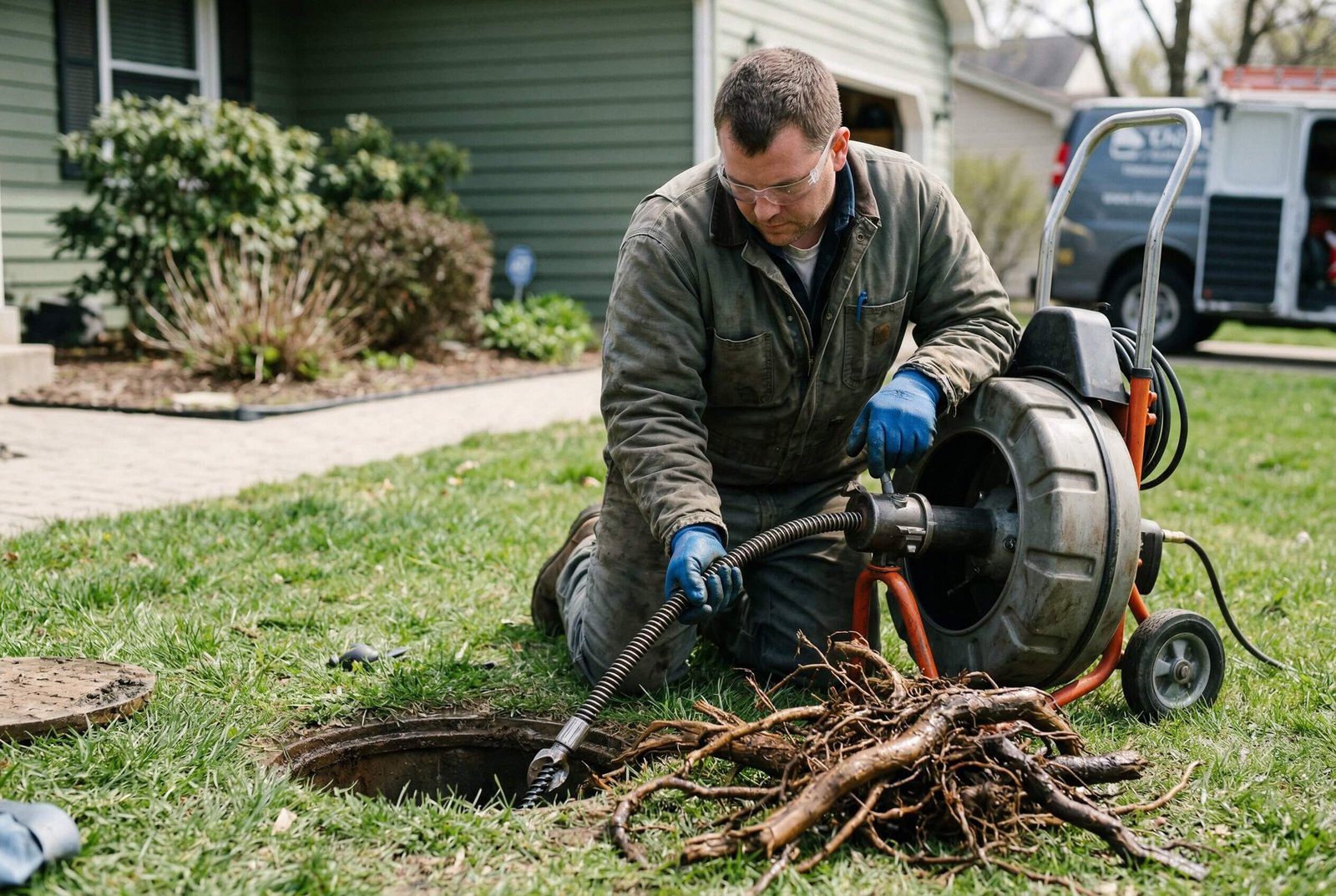
Tree roots inside a sewer line are one of the most common—and frustrating—causes of recurring drain problems in U.S. homes. Unlike grease or debris clogs that build up from inside the pipe, root intrusion starts from the outside. Tree roots naturally grow toward moisture and nutrients, and even a tiny crack or loose joint in your sewer line can attract them. Once inside, roots expand over time, trapping waste, slowing flow, and eventually causing full blockages.
What makes this issue more serious is that it rarely stays small. A minor root intrusion can quickly turn into a major clog if not addressed properly. You might clear the blockage temporarily, but unless the roots are fully removed and the entry point is dealt with, the problem will come back—often worse than before. That’s why removing tree roots from a sewer line isn’t just about clearing the clog; it’s about understanding the cause and choosing the right solution.
Some early-stage root intrusions can be managed with safe DIY methods, especially if the roots are thin and accessible through a cleanout. However, thicker root masses, deep intrusions, or damaged pipes usually require professional tools like motorized augers, hydro jetting, or even pipe repair. This guide will walk you through how to remove tree roots from a sewer line step by step—starting with safe, low-risk methods and progressing to more advanced and permanent solutions.
Before attempting any removal method, the first step is to confirm that tree roots are actually the cause of the problem.
What This Page Covers
ToggleIdentify Tree Root Intrusion Before Removing
Before you try to remove tree roots from a sewer line, you need to confirm that roots are actually the cause of the blockage. Misdiagnosing the issue can lead to wasted effort, ineffective fixes, or even pipe damage. In professional plumbing, identifying the exact cause is always the first step before choosing a removal method.
Common Signs of Tree Roots in Sewer Line
Tree root intrusion usually creates slow, recurring drainage problems rather than sudden blockages. These symptoms often build over time as roots expand inside the pipe.
- Multiple drains becoming slow at the same time
- Frequent clogs that return after clearing
- Toilets making gurgling sounds
- Water backing up in lower fixtures (like basement drains or tubs)
- Persistent sewage or musty odor
If you notice these signs repeating over weeks or months, there’s a strong chance roots are involved.
Confirming Root Intrusion vs Regular Clog
It’s important to distinguish between a standard clog and a root-related issue because the fix approach is completely different.
A typical clog:
- Caused by grease, soap, or debris
- Usually isolated or occasional
- Can often be cleared fully with snaking
A root intrusion:
- Causes recurring clogs even after cleaning
- Feels “spongy” or resistant when snaking
- Often partially clears but quickly builds up again
If your drain improves temporarily but then slows down again, roots are likely still inside the pipe.
Where Roots Typically Enter the Sewer Line
Tree roots don’t break into pipes randomly—they enter through weak points. Understanding these entry locations helps explain why the problem keeps returning.
- Pipe joints (common in older systems)
- Small cracks or fractures in the line
- Aging clay or cast iron pipes
- Loose or misaligned pipe connections
Once roots find a water source, they continue growing and expanding inside the pipe.
Warning Signs of Severe Root Damage
Some situations indicate that the root intrusion has gone beyond a simple blockage and may involve structural pipe damage.
- Very frequent backups or complete blockages
- Large amounts of debris returning after clearing
- Wet or sunken areas in your yard above the sewer line
- Strong sewage smells outdoors
- Sudden drop in drainage performance
These signs suggest that the roots may have caused pipe cracks, collapse, or major obstruction. In such cases, removal alone may not be enough—you may also need repair or replacement.
Once you’ve confirmed that tree roots are the cause, you can move forward with the safest removal methods, starting with low-risk options.
Quick Fixes You Can Try First (Low Risk)
If the tree root intrusion is still in an early stage—meaning the roots are thin, not deeply embedded, and haven’t caused major blockage—you can try a few low-risk methods to slow down or partially clear the problem. These approaches are not permanent fixes, but they can restore some flow and buy you time before more advanced solutions are needed.
Hot Water Flush (Limited Effect)
Hot water alone won’t remove tree roots, but it can help clear grease and sludge that get trapped around them. This can slightly improve flow in the pipe.
- Pour very hot water into the drain or cleanout
- Repeat multiple times to help loosen surrounding buildup
Best for:
- Early-stage root intrusion with minor blockage
- Supporting other cleaning methods
Limitations:
- Does not kill or remove roots
- Only improves flow temporarily
Rock Salt Treatment
Rock salt is sometimes used as a basic root control method because it dehydrates roots and slows their growth inside the pipe.
- Pour rock salt into the toilet or cleanout
- Let it sit overnight before flushing
Best for:
- Slowing down root growth
- Light root presence inside the pipe
Limitations:
- Does not fully remove roots
- Results are gradual and temporary
Copper Sulfate Application (Use With Caution)
Copper sulfate is a commonly used root-killing chemical that can help eliminate small root growth inside sewer lines.
- Applied through a toilet or cleanout
- Travels through the pipe and kills roots on contact
Best for:
- Killing small root intrusions
- Preventing further growth in early stages
Risks and considerations:
- Can harm surrounding soil and plants
- Not suitable for all plumbing systems (especially septic systems)
- Requires careful handling and correct dosage
Enzyme-Based Root Control Products
These are safer, eco-friendly alternatives that work gradually to weaken organic material, including minor root growth.
- Applied regularly over time
- Helps maintain flow and reduce buildup
Best for:
- Preventative maintenance
- Supporting other root removal methods
Limitations:
- Slow acting
- Not effective for thick or established roots
These quick fixes can help manage early root intrusion, but they rarely solve the problem completely. If the roots are already causing significant blockage or the issue keeps returning, you’ll need to move to more effective intermediate methods that physically break or remove the roots.
Intermediate Fix Methods (More Effective)
If low-risk methods haven’t improved the situation, the tree roots have likely grown thicker or extended deeper into the sewer line. At this stage, you need methods that can physically break, weaken, or partially remove the roots rather than just slowing their growth.
These approaches can be effective for moderate root intrusion but still require caution to avoid damaging the pipe.
Using a Hand Auger to Break Small Roots
A hand auger (manual drain snake) can sometimes cut through or pull out smaller root strands inside the pipe, especially if the intrusion is still light.
- Insert the auger through the cleanout
- Rotate the cable as you push forward
- Break apart or hook onto small roots
- Pull back slowly to remove debris
Best for:
- Thin or early-stage root intrusion
- Roots near the cleanout or within reach
Limitations:
- Not strong enough for thick root masses
- May only create a temporary opening
Foaming Root Killer Treatments
Foaming root killers are designed to expand inside the pipe and coat the entire interior surface, killing roots at their contact points.
- Applied through a toilet or cleanout
- Foam expands to reach areas liquid treatments may miss
- Kills roots and slows regrowth
Best for:
- Moderate root presence throughout the pipe
- Follow-up treatment after partial clearing
Limitations:
- Does not physically remove roots
- Dead roots still need to be flushed or cleared
Repeated Flushing and Clearing Cycles
Sometimes a combination approach works better than a single method. After weakening or cutting roots, repeated flushing can help remove loosened material.
Typical approach:
- Use auger or root treatment
- Flush with water to push debris out
- Repeat process if needed
Best for:
- Gradually improving flow
- Breaking down moderate blockages over time
Limitations:
- Time-consuming
- May not fully clear dense root clusters
Monitoring After Initial Removal
After using intermediate methods, it’s important to observe how your drainage system responds. This helps determine whether the issue is resolved or if deeper intervention is needed.
Watch for:
- Improved drainage speed
- Reduction in gurgling or backups
- Whether symptoms return within days or weeks
If the problem comes back quickly, it usually means:
- Roots were only partially removed
- Deeper root intrusion still exists
- There may be pipe damage allowing regrowth
Intermediate methods can temporarily restore function and reduce blockage, but they rarely eliminate the root cause completely. If roots are thick, deeply embedded, or causing repeated issues, stronger and more targeted solutions are required.
Advanced Fix Methods (Stronger Solutions)
When tree roots have grown thick inside the sewer line or formed dense blockages, basic and intermediate methods are no longer enough. At this stage, you need stronger solutions that can physically cut through roots and clear the pipe more effectively. These methods can work for experienced homeowners, but they come with higher risk and require careful handling.
Motorized Root Cutting Auger
A motorized auger (power snake) with a root-cutting head is one of the most effective tools for removing tree roots from a sewer line without digging.
- Uses an electric motor to spin a heavy-duty cable
- Equipped with cutting blades designed to slice through roots
- Can reach deeper sections of the sewer line
Best for:
- Thick root intrusion
- Blockages deeper inside the pipe
- Restoring flow quickly
Risks:
- Can damage weak or old pipes
- Requires steady control to avoid cable binding or snapping
This is often the first “serious” step in removing established root masses.
Chemical Root Killers (Stronger Formulas)
Stronger root-killing chemicals are sometimes used after mechanical cutting to kill remaining root fragments and slow regrowth.
- Applied through the cleanout or toilet
- Targets roots inside the pipe
- Prevents rapid regrowth
Best for:
- Follow-up after cutting roots
- Managing regrowth between professional cleanings
Risks:
- Can harm surrounding soil or vegetation
- May damage certain pipe materials
- Requires careful, controlled usage
These are not standalone solutions—they work best when combined with physical removal.
High-Pressure Water Flushing After Root Cutting
Once roots are cut, debris remains inside the pipe. High-pressure water flushing helps remove this material and restore flow.
- Water is forced through the line to push debris out
- Clears root fragments and buildup
Best for:
- Cleaning after auger use
- Improving flow after partial clearing
Limitations:
- Won’t cut roots by itself
- Needs prior loosening of blockage
Deep Line Snaking for Root Mass Removal
In severe cases, multiple passes with a heavy-duty auger may be required to fully break apart and remove dense root clusters.
- Repeated insertion and cutting cycles
- Gradual breakdown of root mass
- Combined with flushing for best results
Effective for:
- Dense, long-established root intrusion
- Partially blocked sewer lines
Risks:
- Time-intensive
- May indicate underlying pipe damage if roots are extensive
These advanced methods can restore flow in many cases, but they don’t always solve the root cause permanently. Tree roots will often grow back unless the entry point is repaired or the pipe is upgraded. That’s why professional solutions are often the next step for a complete and long-term fix.
Professional Drain Fix Methods
When tree roots have significantly invaded your sewer line, professional intervention is usually the only way to fully remove them and prevent the problem from returning. These methods don’t just clear the blockage—they address the root cause and restore the pipe’s condition as much as possible.
Hydro Jetting After Root Removal
Hydro jetting is one of the most effective professional methods used after initial root cutting. It uses high-pressure water to completely clean the inside of the pipe.
- Blasts away remaining root fragments
- Removes grease, sludge, and buildup
- Restores full pipe diameter
Best for:
- Final cleaning after root cutting
- Preventing immediate regrowth
- Recurring sewer line issues
Unlike basic flushing, hydro jetting cleans the entire pipe wall, not just the center flow path.
Professional Root Cutting Equipment
Plumbers use specialized motorized augers with heavy-duty cutting heads designed specifically for tree roots.
- Advanced cutting blades for thick root masses
- High-torque machines for deep sewer lines
- Multiple passes to fully clear blockage
Best for:
- Severe root intrusion
- Deep or dense root clusters
- Restoring flow quickly
This method is far more powerful and precise than DIY augers.
Sewer Camera Inspection
A camera inspection is one of the most important steps in professional root removal because it confirms both the cause and the result.
- Identifies exact root entry points
- Shows pipe condition (cracks, misalignment, collapse)
- Confirms whether roots are fully removed
Benefits:
- Eliminates guesswork
- Prevents incomplete fixes
- Helps plan long-term solutions
Most professional plumbers rely on camera inspection before and after clearing roots.
Pipe Repair, Relining, or Replacement
If roots entered through damaged pipes, clearing them alone is only a temporary fix. The pipe itself must be repaired to stop future intrusion.
Common solutions:
- Spot repair
Replacing a damaged section of pipe - Trenchless pipe relining
Creating a new inner lining without digging - Full sewer line replacement
Required for collapsed or severely damaged pipes
Best for:
- Recurring root problems
- Structural pipe damage
- Long-term permanent solution
Professional methods focus on both removal and prevention. If tree roots have already established inside your sewer line, combining root cutting, cleaning, inspection, and repair is often the only way to stop the problem from coming back.
Tools Used to Remove Tree Roots From Sewer Line
Removing tree roots from a sewer line requires tools that can both cut through roots and clear the pipe safely without causing damage. The right tool depends on how thick the roots are and how deep they’ve spread inside the line. Professional plumbers always match the tool to the severity of the intrusion—and homeowners should follow the same logic.
Basic Tools
These tools are suitable for very early-stage root intrusion where roots are thin and close to the cleanout.
- Hand auger (manual drain snake)
Helps break or pull small root strands from inside the pipe - Protective gloves
Needed when handling debris or working near the cleanout - Cleanout wrench
Used to safely open the sewer access point without damaging it
Best for:
- Light root presence
- Initial inspection and minor clearing
Limitations:
- Cannot cut thick or deep root masses
Intermediate Tools
These tools help weaken or control root growth and assist in partial removal.
- Root killer solutions (foaming or liquid)
Kill roots inside the pipe and slow regrowth - Extended drain snake
Reaches deeper into the sewer line to break apart moderate root buildup
Best for:
- Moderate root intrusion
- Follow-up after basic clearing
Limitations:
- Do not fully remove dense root clusters
- Often require repeated treatments
Professional Tools
These are the tools used in real plumbing scenarios to fully remove tree roots and restore proper sewer flow.
- Power auger with cutting head
Cuts through thick roots using motorized rotating blades - Hydro jetting system
Uses high-pressure water to flush out root debris and clean pipe walls - Sewer inspection camera
Identifies root location, entry point, and pipe condition
Best for:
- Severe or recurring root intrusion
- Deep sewer line blockages
- Diagnosing underlying pipe damage
Using the correct tool is critical. Attempting to remove thick tree roots with basic tools usually results in partial clearing at best—and can even worsen the problem by pushing debris deeper into the line.
Cost to Remove Tree Roots From Sewer Line
The cost to remove tree roots from a sewer line depends heavily on how severe the intrusion is and whether the pipe itself is damaged. In the U.S., root-related sewer issues are often more expensive than standard clogs because they require specialized cutting tools, cleaning, and sometimes repair work.
Understanding the cost range helps you decide whether a DIY approach is realistic or if professional service is the better long-term investment.
DIY Cost Range
DIY root removal is only practical for very light or early-stage root intrusion. Most of the cost goes toward tools and treatment products.
Typical DIY costs:
- Hand auger: $25 – $100
- Root killer chemicals (copper sulfate or foaming solutions): $15 – $60
- Protective gear and basic tools: $20 – $50
Estimated total DIY cost:
- $50 – $150 for basic attempts
- Up to $200+ if multiple tools or treatments are used
DIY is only effective when:
- Roots are thin and near the cleanout
- There is no pipe damage
- The blockage is not severe
Plumber Cost Range (U.S.)
Professional root removal costs vary based on the method used and how extensive the root intrusion is.
Typical pricing:
- Sewer line snaking with root cutting: $300 – $700
- Hydro jetting service: $400 – $1,200
- Sewer camera inspection: $150 – $500
For most cases:
- Standard root removal falls between $400 and $900
- Combined services (cutting + jetting + inspection) can reach $800 – $1,500+
Factors That Affect Cost
Several key factors influence how much you’ll pay to remove tree roots from a sewer line:
- Severity of root intrusion
Thick, dense root masses require more time and advanced equipment - Depth and location
Deeper clogs or hard-to-access lines increase labor - Pipe condition
Damaged pipes may require repair or replacement - Equipment required
Hydro jetting and inspection add to the total cost - Frequency of issue
Recurring problems may need more thorough and repeated work
Emergency Repair Costs
If the root blockage causes a full sewer backup or sewage overflow, emergency service may be required.
Typical emergency pricing:
- After-hours or urgent service: +$100 to $300
- Severe blockage clearing: $500 – $1,500+
- Emergency inspection and repair: higher overall cost
Emergency calls are common when:
- Sewage backs up into the home
- Multiple fixtures stop working
- There is a health or contamination risk
The key takeaway is that removing tree roots is often a recurring cost unless the underlying issue is fixed. While DIY methods are cheaper upfront, professional removal combined with repair or prevention usually offers better long-term value.
When NOT to Remove Tree Roots Yourself
While it’s possible to remove small root intrusions with DIY methods, there are many situations where attempting to handle the problem yourself can lead to pipe damage, incomplete removal, or repeated clogs. Tree roots are aggressive and persistent, and once they establish inside a sewer line, they often require professional-level solutions.
Severe Root Intrusion
If the roots inside your sewer line are thick, dense, or have formed a solid mass, DIY tools will not be strong enough to remove them effectively.
- Drain completely blocked or backing up
- Auger gets stuck or cannot pass through
- Large amounts of debris return after partial clearing
In these cases, attempting DIY removal may only create a small opening without solving the problem.
Pipe Damage or Collapse
Tree roots often enter through cracks, weak joints, or damaged sections of pipe. If the pipe is already compromised, aggressive DIY methods can make the situation worse.
- Sudden severe blockage without warning
- Signs of structural issues in the yard (sinking or wet areas)
- Repeated clogs even after clearing
Using augers or pressure methods in damaged pipes can lead to further cracking or collapse.
Recurring Root Problems
If you’ve already cleared roots once and they keep coming back, the issue is not just the roots—it’s the entry point.
- Clogs return within weeks or months
- Drain flow improves temporarily but worsens again
- Repeated need for cleaning
Recurring problems usually require:
- Camera inspection
- Pipe repair or relining
DIY methods cannot address the underlying cause.
Lack of Proper Tools
Removing tree roots requires specialized equipment. Without the right tools, attempts are often ineffective.
- Basic augers cannot cut thick roots
- Chemical treatments alone won’t remove root mass
- Improper tool use can push debris deeper
Professional equipment like motorized augers and hydro jetting systems are designed specifically for this type of problem.
Knowing when not to attempt removal is critical. Trying to force a solution in the wrong situation can increase repair costs and damage your sewer system further.
How to Prevent Tree Roots From Returning
Removing tree roots from your sewer line is only half the solution. If the entry point isn’t addressed or preventative steps aren’t taken, the roots will grow back—often within months. In real plumbing scenarios, long-term prevention is what separates a temporary fix from a permanent solution.
Root Barrier Installation
Root barriers are physical or chemical barriers installed in the soil to stop roots from reaching your sewer line.
- Placed between trees and sewer pipes
- Redirect root growth away from plumbing
- Common in properties with aggressive root systems
Best for:
- Homes with large trees near sewer lines
- Preventing future intrusion after root removal
This is a landscaping-level solution that helps reduce risk significantly.
Regular Sewer Line Maintenance
Routine maintenance is one of the most effective ways to prevent roots from becoming a major problem again.
- Schedule periodic sewer line cleaning (every 1–2 years)
- Use hydro jetting or professional snaking as preventative care
- Monitor early signs like slow drains or gurgling sounds
Best for:
- Homes with older pipes
- Properties with a history of root intrusion
Regular maintenance keeps roots from establishing large blockages.
Chemical Root Treatments (Preventative Use)
Certain root-killing products can be used on a scheduled basis to slow regrowth inside the pipe.
- Applied through toilet or cleanout
- Kills small root growth before it expands
- Used every few months or as recommended
Best for:
- Maintaining a recently cleared sewer line
- Slowing regrowth between professional cleanings
Important:
- Must be used carefully to avoid environmental damage
- Not a standalone solution for major root problems
Pipe Upgrades or Relining
The most effective long-term solution is to eliminate the entry point where roots are getting in.
- Trenchless pipe relining creates a sealed inner pipe
- Replacing old clay or cast iron pipes with PVC
- Repairing cracks or loose joints
Best for:
- Recurring root problems
- Aging or damaged sewer systems
Once the pipe is properly sealed or replaced, roots can no longer enter, making this a permanent fix.
Final Thoughts
Tree roots in a sewer line are not a one-time issue—they are a recurring problem driven by moisture, pipe condition, and surrounding landscaping. While you can remove roots and restore flow using DIY or advanced methods, the problem will continue unless you address how the roots got in.
The most effective approach is a combination of removal, inspection, and prevention. Start with safe methods if the intrusion is minor, but don’t hesitate to move to professional solutions when roots are thick, recurring, or causing major blockages. Acting early can prevent pipe damage, costly repairs, and sewage backups.
In the long run, investing in proper maintenance or pipe repair will save far more than repeatedly clearing roots. A well-maintained and properly sealed sewer line should remain root-free and function reliably for years.