
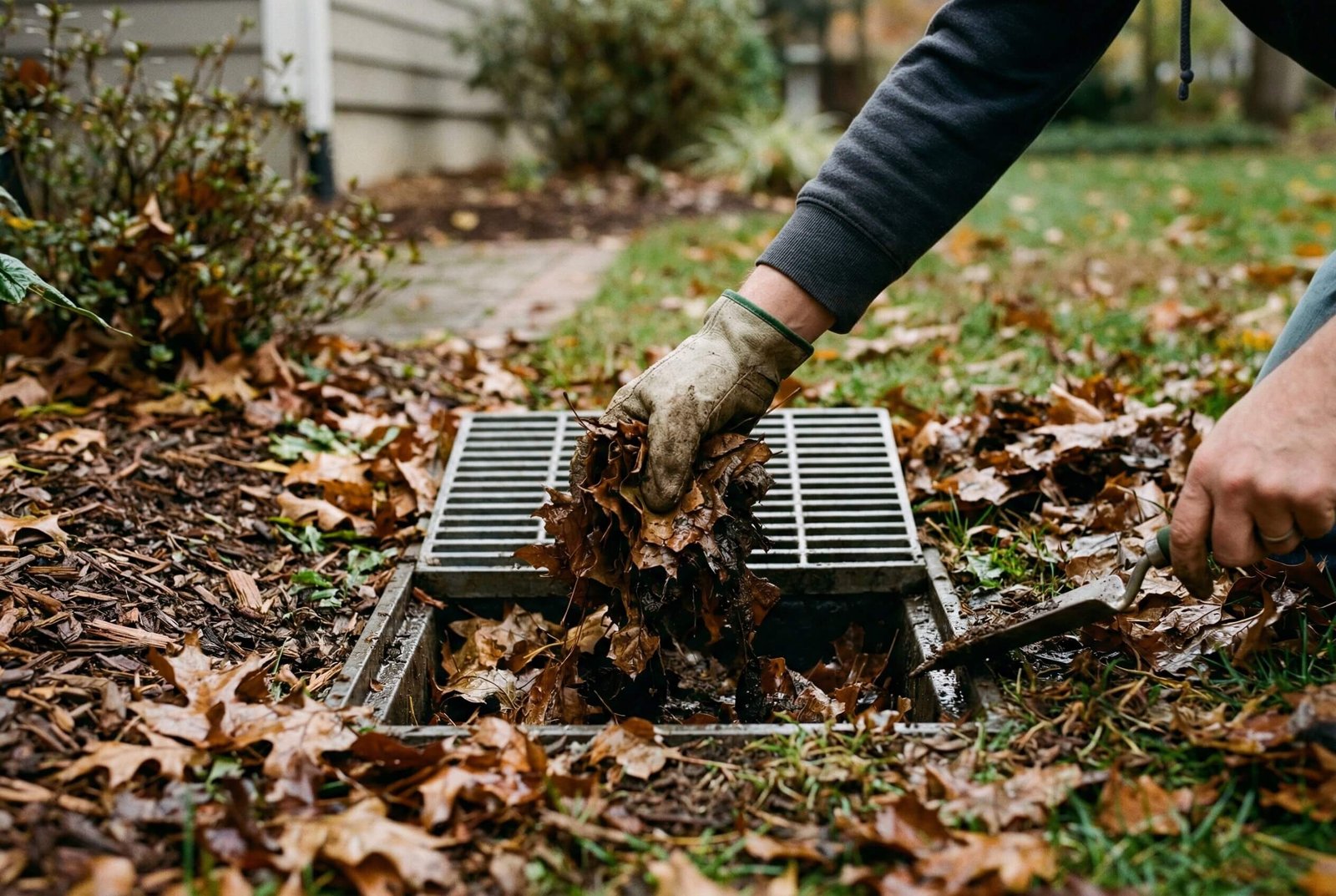
Yard drains are designed to move rainwater away from your lawn, garden, patio, or driveway—but they often become clogged with leaves, especially during fall or after storms. In many U.S. homes, yard drains sit at ground level, making them the first place where leaves, grass, dirt, and debris collect. Once enough material builds up, water can’t enter the drain properly, leading to pooling, soggy lawns, and even minor flooding.
Leaves are one of the most common causes of yard drain clogs because they don’t just sit on the surface—they break down over time. Wet leaves stick together, forming a dense mat that blocks the drain opening. As they decompose, they turn into sludge that can travel deeper into the pipe and create more stubborn blockages. This is why a simple leaf clog can quickly turn into a deeper drainage problem if not handled early.
The good news is that most leaf-related clogs are easy to fix if you act quickly. Surface buildup can usually be cleared in minutes, while deeper leaf clogs may require simple tools like a hose, vacuum, or drain snake. The key is to start with low-risk methods and only move to stronger solutions if needed.
In this guide, you’ll learn how to clear leaves from a yard drain step by step. We’ll cover how to identify the type of clog, the safest DIY methods, and when to move to more advanced or professional solutions.
What This Page Covers
ToggleIdentify the Type of Leaf Clog Before Fixing
Before you start clearing leaves from a yard drain, it’s important to understand exactly where and how the blockage is happening. Not all leaf clogs are the same. Some sit right on the surface and are easy to remove, while others break down into sludge and travel deeper into the pipe. Choosing the right fix depends on identifying the type of clog first.
In most U.S. residential yard drainage systems, you’ll be dealing with a grate, a catch basin (in many cases), and a connected underground pipe. Leaves can clog any of these areas, so a quick diagnosis will save you time and effort.
Surface Leaf Buildup vs Deeper Blockage
A surface clog is the most common type. This happens when dry or wet leaves collect directly on top of the drain grate or just underneath it. Water can’t enter the drain because the opening is physically blocked.
A deeper blockage occurs when leaves have already passed through the grate and started decomposing inside the pipe. Over time, they form a thick, muddy sludge that sticks to the pipe walls and restricts flow.
How to identify:
- Leaves visible at grate → surface clog
- Grate looks clear but water still pools → deeper blockage
Water Pooling vs Slow Drainage
The behavior of water around the drain gives you a clear signal about the severity of the clog.
If water pools and doesn’t move at all, you’re likely dealing with a full blockage. This could be a dense layer of wet leaves or sludge stopping water completely.
If water drains slowly, the clog is partial. This usually means there’s buildup inside the pipe, but not enough to fully block it.
What this means:
- Standing water → stronger clearing methods needed
- Slow drainage → start with basic or intermediate fixes
Temporary Seasonal Clog vs Recurring Issue
Leaf clogs often happen during fall or after storms, and many of them are temporary. Once you clear the leaves, the drain works normally again.
But if the problem keeps coming back, there may be a deeper issue beyond just leaves.
Common causes of recurring clogs:
- Leaves turning into sludge inside the pipe
- Poor drain slope causing debris to settle
- Catch basin not being cleaned regularly
- Pipe partially blocked from previous buildup
Recurring clogs require more than surface cleaning—they often need deeper clearing methods.
Warning Signs of a Deeper Drain Problem
Sometimes what looks like a simple leaf clog is actually part of a larger drainage issue.
Watch for these signs:
- Water still pooling after removing all visible leaves
- Multiple drains in the yard draining slowly
- Foul or musty smell from the drain
- Soft or soggy ground near the drain line
- Drain overflowing during moderate rain
These symptoms suggest that leaves may have already formed sludge deeper in the pipe or that there’s another blockage present.
Identifying the type of clog helps you choose the right method to clear leaves from your yard drain without wasting time or pushing debris deeper into the system.
Quick Fixes You Can Try First (Low Risk)
If your yard drain is clogged with leaves, always start with simple, low-risk methods. In most U.S. homes, leaf clogs are surface-level or just below the grate, and these can usually be cleared quickly without special tools. The goal here is to remove the blockage without forcing debris deeper into the pipe.
These quick fixes solve the majority of leaf-related drain issues—especially if you catch the problem early.
Remove Leaves and Debris from the Drain Grate
This is the most effective and fastest method for clearing a yard drain clogged with leaves.
Start by removing all visible leaves from the top of the drain. If the grate can be lifted, take it off and clean underneath as well. Wet leaves tend to stick together, so make sure you remove the entire layer—not just what’s on top.
Focus on:
- Wet, compacted leaves
- Grass clippings and mulch
- Dirt mixed with leaf debris
Even a thin layer can block water flow, so clear the area completely.
Scoop Out Wet Leaf Buildup from Basin
If your yard drain has a catch basin, leaves often collect inside it rather than going straight into the pipe.
Remove the grate and use a scoop, small shovel, or your hands (with gloves) to pull out all the wet leaf material from the basin. This buildup can become thick and heavy, especially after rain.
Make sure:
- The basin is fully cleared
- The pipe opening inside the basin is visible
- No sludge remains at the bottom
This step alone often restores proper drainage.
Flush with a Garden Hose
After removing visible debris, flushing the drain helps clear loose material that may have entered the pipe.
Insert a garden hose into the drain and run water at steady pressure for a few minutes. This helps push out remaining leaf fragments and dirt.
Watch the water flow:
- Drains quickly → clog is likely cleared
- Water backs up → blockage is deeper
Avoid pushing the hose too far into the pipe if you feel resistance.
Light Plunging for Shallow Clogs
If there’s standing water and the clog is just below the surface, a plunger can help loosen it.
Place the plunger over the drain opening and create a seal. Use steady, controlled plunging to generate suction and pressure.
For best results:
- Ensure enough water covers the plunger
- Use consistent motion, not excessive force
- Check flow after a few attempts
This method works well for shallow leaf clogs that haven’t compacted deeply.
These quick fixes handle most leaf-related clogs in yard drains. If the drain still isn’t working properly after these steps, it means leaves have likely moved deeper into the system or started forming sludge.
Intermediate Fix Methods (More Effective)
If the quick fixes didn’t fully clear the yard drain, it usually means the leaves have moved deeper into the system or started breaking down into a thick, compacted sludge. At this stage, you’ll need methods that can reach inside the pipe or basin and physically remove or loosen the buildup.
These methods are still safe for homeowners but require a bit more effort and the right tools.
Wet/Dry Vacuum for Wet Leaf Extraction
A wet/dry vacuum is one of the most effective tools for removing wet leaves and sludge from a yard drain.
Set the vacuum to liquid mode and place the hose over the drain opening. Try to create a tight seal so the vacuum can pull out water, leaves, and debris from inside the basin or pipe.
This works best for:
- Wet, compacted leaves
- Sludge buildup in catch basins
- Shallow blockages
It removes debris without pushing it deeper, which makes it a safer option than forcing water through the drain.
Hand Auger to Remove Deeper Leaf Clogs
If leaves have moved further into the pipe, a hand auger (drain snake) can help you reach and remove them.
Insert the auger into the drain and slowly feed it into the pipe. When you feel resistance, rotate the handle to break apart or hook the clog. Then pull it back out to remove the debris.
Tips for better results:
- Move slowly to avoid damaging the pipe
- Expect multiple passes to fully clear the clog
- Clean the auger after each pull
This method is effective for:
- Deeper leaf blockages
- Compacted organic debris
- Partial clogs inside the pipe
Cleaning the Catch Basin Thoroughly
If your yard drain includes a catch basin, it can fill with decomposed leaves and sediment over time.
Remove the grate and clean out everything inside the basin. Use a scoop or bucket to remove debris, then rinse the basin with a hose.
Make sure:
- No sludge remains at the bottom
- The pipe opening is fully clear
- Water flows freely after cleaning
A neglected basin is one of the most common causes of recurring leaf clogs.
Baking Soda + Vinegar for Organic Sludge
When leaves break down, they form a sticky organic sludge inside the pipe. A baking soda and vinegar flush can help loosen this material.
Pour baking soda into the drain, followed by vinegar. Let it sit for 15–20 minutes, then flush with hot water.
This method works best for:
- Light to moderate organic buildup
- Sludge forming along pipe walls
- Drains that are slow but not fully blocked
It’s not strong enough for heavy clogs, but it can improve flow and support other cleaning methods.
At this stage, you’ve used more effective techniques to clear leaves from the yard drain. If the drain still isn’t working properly, the clog is likely deeper or more compacted.
Advanced Fix Methods (Stronger Solutions)
If intermediate methods didn’t fully clear the leaves from your yard drain, the blockage has likely turned into dense, compacted sludge or moved deeper into the pipe. At this stage, stronger methods are needed to break apart buildup and restore full water flow.
These methods are more powerful but should be used carefully to avoid damaging the drain line—especially in older U.S. residential systems where pipes may be fragile or partially buried.
Enzyme Cleaners for Decomposed Leaf Sludge
When leaves sit inside a drain for long periods, they break down into a thick organic sludge that sticks to pipe walls. Enzyme cleaners are designed to break down this material gradually.
Pour the enzyme cleaner into the drain and allow it to sit for several hours or overnight. Then flush the system with water to move the loosened debris through the pipe.
Best used for:
- Decomposed leaf sludge
- Organic buildup inside pipes
- Preventive cleaning after partial clog removal
This method is safe for pipes but works slowly, so it’s not ideal for urgent clogs.
Chemical Cleaners (Use Carefully)
Chemical drain cleaners can dissolve organic material, including decomposed leaves. However, they must be used with caution.
Only use them if:
- Other methods have failed
- The clog is organic (not caused by roots or solid debris)
- You follow safety instructions strictly
Important precautions:
- Avoid repeated use—it can weaken pipes
- Never mix different chemicals
- Wear gloves and eye protection
They can help with moderate clogs but are not effective for deep or structural issues.
High-Pressure Hose Flushing
Using higher water pressure can help break apart compacted leaf debris and push it through the system.
Insert a hose into the drain and apply steady pressure. A jetting attachment can improve effectiveness by directing water forward into the pipe.
Effective for:
- Compacted leaf buildup
- Sludge along pipe walls
- Partial blockages deeper in the drain
Be cautious not to use excessive pressure, especially if the pipe condition is unknown.
Deep Snaking for Compacted Organic Debris
If the clog is located deeper in the pipe, a longer or more flexible drain snake can reach and break it apart.
Feed the snake further into the drain until you encounter resistance. Rotate and move it carefully to break up the blockage and pull debris out.
This method works well for:
- Deep leaf clogs
- Thick, compacted organic debris
- Stubborn partial blockages
By this point, you’ve applied strong DIY methods to clear leaves from your yard drain. If the drain still isn’t functioning properly, the issue may involve deeper blockages, root intrusion, or pipe problems that require professional attention.
Professional Drain Fix Methods
If strong DIY methods still haven’t cleared the yard drain, the leaf buildup has likely turned into a deeper system issue. In many U.S. homes, yard drains connect to underground pipes or dry wells, and once organic debris compacts or mixes with soil, it can create blockages that standard homeowner tools cannot fully remove.
At this stage, professional methods are not just about clearing leaves—they are about restoring the entire drainage system and preventing the problem from coming back.
Hydro Jetting for Heavy Organic Buildup
Hydro jetting is one of the most effective ways to completely clear leaf sludge and debris from a yard drain. This method uses high-pressure water to break apart buildup and flush it out of the pipe.
Unlike basic flushing, hydro jetting cleans the entire pipe wall, removing:
- Compacted leaf sludge
- Dirt and sediment buildup
- Residue left behind from previous clogs
This is ideal for:
- Recurring leaf clogs
- Long sections of partially blocked pipe
- Systems that haven’t been cleaned in years
Motorized Auger for Dense Blockages
When leaves mix with mud and compact into dense blockages, plumbers use motorized augers to break through the clog.
These machines can:
- Cut through thick organic buildup
- Break apart compacted debris
- Reach deeper sections of the drain line
This is especially useful when manual snaking isn’t enough to clear the pipe.
Camera Inspection for Persistent Issues
If the yard drain keeps clogging even after cleaning, a camera inspection helps identify the exact problem.
This allows plumbers to check for:
- Remaining sludge or debris
- Pipe damage or misalignment
- Root intrusion
- Sections where buildup repeatedly forms
A camera inspection is often the key to solving recurring issues permanently.
Pipe Repair or Replacement (If Needed)
If the pipe is damaged, misaligned, or partially collapsed, clearing leaves won’t fix the problem. Water will continue to collect and debris will keep building up.
In these cases, plumbers may recommend:
- Spot repair of damaged sections
- Pipe relining (in some systems)
- Full replacement of the affected pipe
Professional methods ensure that the entire drainage system is functioning properly—not just temporarily cleared. If your yard drain continues to clog despite repeated cleaning, investing in professional service can prevent ongoing maintenance and future damage.
Tools Used to Clear Leaves From Yard Drain
Using the right tools makes clearing leaves from a yard drain faster, safer, and more effective. In real U.S. residential setups, the type of tool you use should match the severity of the clog. Starting with simple tools and moving to more advanced ones helps you avoid pushing debris deeper or damaging the pipe.
Most homeowners can handle leaf clogs with basic and intermediate tools, but deeper or recurring issues may require professional equipment.
Basic Tools
These tools are ideal for surface-level leaf clogs and routine maintenance. They should always be your starting point.
- Gloves, rake, or scoop to remove leaves and debris
- Bucket for collecting and disposing of wet leaves
- Garden hose for flushing loose material
Best used for:
- Dry or wet leaves on the surface
- Light buildup around the drain
- Regular seasonal cleaning
These tools are low-risk and often solve the problem quickly.
Intermediate Tools
When leaves have moved into the drain or started forming sludge, intermediate tools allow you to reach inside and remove or break apart the blockage.
- Wet/dry vacuum for extracting water, leaves, and sludge
- Hand auger (drain snake) for pulling out deeper debris
Best used for:
- Wet, compacted leaves
- Shallow to mid-depth clogs
- Catch basin cleaning
These tools provide more control and are effective for most moderate clogs.
Professional Tools
For severe clogs or system-level problems, professional tools are required. These tools are designed for deep cleaning and handling complex blockages.
- Power auger for breaking through dense, compacted debris
- Hydro jet for high-pressure cleaning of the entire pipe
- Inspection camera for diagnosing hidden issues
Best used for:
- Deep underground clogs
- Recurring leaf sludge problems
- Structural or root-related issues
Using the correct tool for the situation ensures that you clear the drain effectively without causing additional problems. A tool that’s too weak won’t fix the clog, while one that’s too aggressive can damage the pipe—especially in older systems.
Cost to Clear Leaves From Yard Drain
The cost to clear leaves from a yard drain in the U.S. depends on how severe the buildup is and whether you handle it yourself or hire a professional. In most cases, leaf clogs are among the cheapest drainage problems to fix—especially if caught early before they turn into sludge or deeper blockages.
DIY Cost Range
If you’re clearing leaves yourself, the cost is very low and often close to zero if you already have basic tools.
Typical DIY costs include:
- Gloves, rake, scoop, bucket: $10–$40
- Garden hose (if needed): $20–$60
- Wet/dry vacuum (optional): $80–$200
- Hand auger (optional): $25–$100
Most homeowners can clear a leaf-clogged yard drain for under $50, since basic cleaning usually solves the problem.
Professional Cost Range (U.S.)
If the clog has moved deeper or turned into sludge, professional cleaning may be needed.
Typical pricing:
- Basic drain cleaning: $100–$300
- Standard yard/storm drain cleaning: $100–$500
- Average general drain cleaning: ~$150–$350
- Hydro jetting (heavy buildup): $300–$800+
For most yard drain leaf clogs, homeowners typically pay $100–$400 depending on severity.
Factors Affecting Cost
Several factors determine how much you’ll pay:
- Amount of leaf buildup: Surface leaves are cheap; sludge is more expensive
- Depth of clog: Deeper blockages require more time and tools
- Drain design: Catch basins vs long underground pipes
- Accessibility: Hard-to-reach drains increase labor time
- Condition of pipe: Damaged or partially blocked pipes raise costs
More complex cases can quickly move from simple cleaning to repair-level pricing.
Emergency Cost Considerations
If your yard drain is causing flooding or water pooling near your home, you may need urgent service.
Typical emergency costs:
- Extra service fee: $100–$300
- Total emergency job: $300–$1,000+
Emergency calls cost more, but they can prevent lawn damage, erosion, or even foundation issues.
The best strategy is simple: remove leaves early and regularly. Once leaves turn into sludge or move deeper into the pipe, the cost increases significantly. A few minutes of maintenance can save hundreds of dollars in professional cleaning.
When NOT to Fix It Yourself
Clearing leaves from a yard drain is usually a simple DIY task—but there are situations where what looks like a basic leaf clog is actually a deeper drainage problem. In these cases, trying to fix it yourself can waste time, push debris further into the pipe, or even cause damage to the system.
Knowing when to stop is key.
Water Not Draining After Cleaning
If you’ve removed all visible leaves and debris but water is still pooling, the clog is not at the surface anymore. This usually means leaves have already broken down into sludge inside the pipe or combined with dirt to form a deeper blockage.
Continuing to flush or force tools into the drain can push the clog further down, making it harder to remove.
Multiple Drains Clogged
If more than one yard drain is backing up at the same time, the issue is likely in a shared underground pipe rather than a single drain.
Common causes include:
- Main drainage line blockage
- Heavy sediment buildup
- Pipe misalignment or collapse
This type of problem requires professional equipment and inspection.
Recurring Leaf Clogs Turning Into Sludge
If you keep clearing leaves but the drain clogs again quickly, the problem is no longer just leaves—it’s sludge buildup inside the pipe.
This happens when:
- Leaves decompose inside the drain
- Organic matter sticks to pipe walls
- Flow is too slow to carry debris away
Repeated DIY cleaning won’t fully solve this. Deeper cleaning or professional methods are usually needed.
Suspected Pipe Blockage or Damage
If the drain shows signs of a deeper issue, it’s best not to attempt aggressive fixes.
Be cautious if:
- The drain overflows even during light rain
- You notice foul odors coming from the drain
- The ground near the drain feels soft or unstable
These signs may indicate pipe damage, root intrusion, or a major blockage.
Yard Flooding Near the Foundation
If water is pooling close to your home instead of draining away, this is a serious issue. Yard drains are meant to protect your foundation, and failure here can lead to structural damage.
Avoid aggressive DIY methods in this situation. Forcing water or tools into the system can worsen the problem or redirect water toward your home.
In these situations, calling a professional plumber is the safest option. Proper diagnosis and repair will not only fix the immediate problem but also prevent long-term damage to your drainage system and property.
How to Prevent Leaves From Clogging Yard Drains
Clearing leaves from a yard drain is easy—but doing it repeatedly gets frustrating. The real solution is prevention. In most U.S. homes, leaf clogs are predictable and seasonal, especially during fall or after storms. With the right habits and a few simple upgrades, you can stop leaves from becoming a recurring problem.
The goal is to reduce how many leaves enter the drain and ensure water flows freely at all times.
Regular Leaf Removal Routine
The simplest and most effective prevention method is consistency. Leaves don’t cause problems overnight—they build up over time.
Make it a habit to:
- Remove leaves from around the drain every few days during fall
- Check drains after heavy wind or rain
- Clear nearby areas where leaves tend to collect
Frequent cleaning prevents leaves from getting wet, compacting, and turning into sludge.
Installing Drain Covers and Guards
Drain covers act as a barrier to stop leaves from entering the pipe while still allowing water to flow.
Consider using:
- Grates with smaller openings
- Leaf guards specifically designed for yard drains
- Catch basin filters for systems with basins
These reduce the amount of debris entering the system and make cleaning much easier.
Landscaping Adjustments
Your yard layout can directly affect how many leaves end up in your drain.
To reduce buildup:
- Trim overhanging branches near drains
- Avoid placing drains directly under trees if possible
- Keep mulch and loose soil away from drain openings
Small landscaping changes can significantly reduce debris accumulation.
Seasonal Maintenance (Fall Focus)
Fall is the highest-risk season for leaf clogs. During this time, drains can get blocked quickly if not monitored.
Focus on:
- More frequent cleaning during peak leaf fall
- Checking drains before and after storms
- Removing wet leaves immediately before they compact
Being proactive during fall prevents deeper issues later.
Proper Yard Slope and Water Flow
Water should naturally carry leaves toward the drain—but not overwhelm it.
Ensure:
- The yard is graded properly so water flows efficiently
- There are no low spots where leaves accumulate
- Water isn’t carrying excessive debris into one point
Good water flow reduces the chance of leaves settling and blocking the drain.
Preventing leaf clogs is simple when you stay consistent. A few minutes of regular maintenance can eliminate the need for deeper cleaning and keep your yard drainage system working smoothly year-round.
Final Thoughts
Clearing leaves from a yard drain is one of the simplest drainage fixes—but only if you catch it early. Most problems start with a thin layer of leaves on the grate and slowly turn into compacted buildup or sludge inside the pipe. That’s why the best approach is always to act quickly and start with basic cleaning methods before the clog becomes more serious.
In many cases, removing leaves and flushing the drain is enough to restore proper flow. If the blockage has already moved deeper, tools like a wet/dry vacuum or hand auger can handle most situations. But when leaves have turned into dense sludge or the clog keeps coming back, it’s a sign that stronger methods—or professional help—may be needed.
One of the most important takeaways is knowing when a simple leaf clog is no longer simple. If water continues to pool, multiple drains are affected, or the problem keeps returning, there may be a deeper issue in the drainage system. Trying to force a fix in those cases can make things worse.
Long-term, prevention is what keeps your yard drain working efficiently. Regular leaf removal, proper landscaping, and using drain guards can eliminate most clogs before they even start. A small amount of maintenance goes a long way in avoiding bigger drainage problems.
If you follow a step-by-step approach—starting simple, using the right tools, and maintaining the system—you can keep your yard drain clear and functioning properly year-round.