
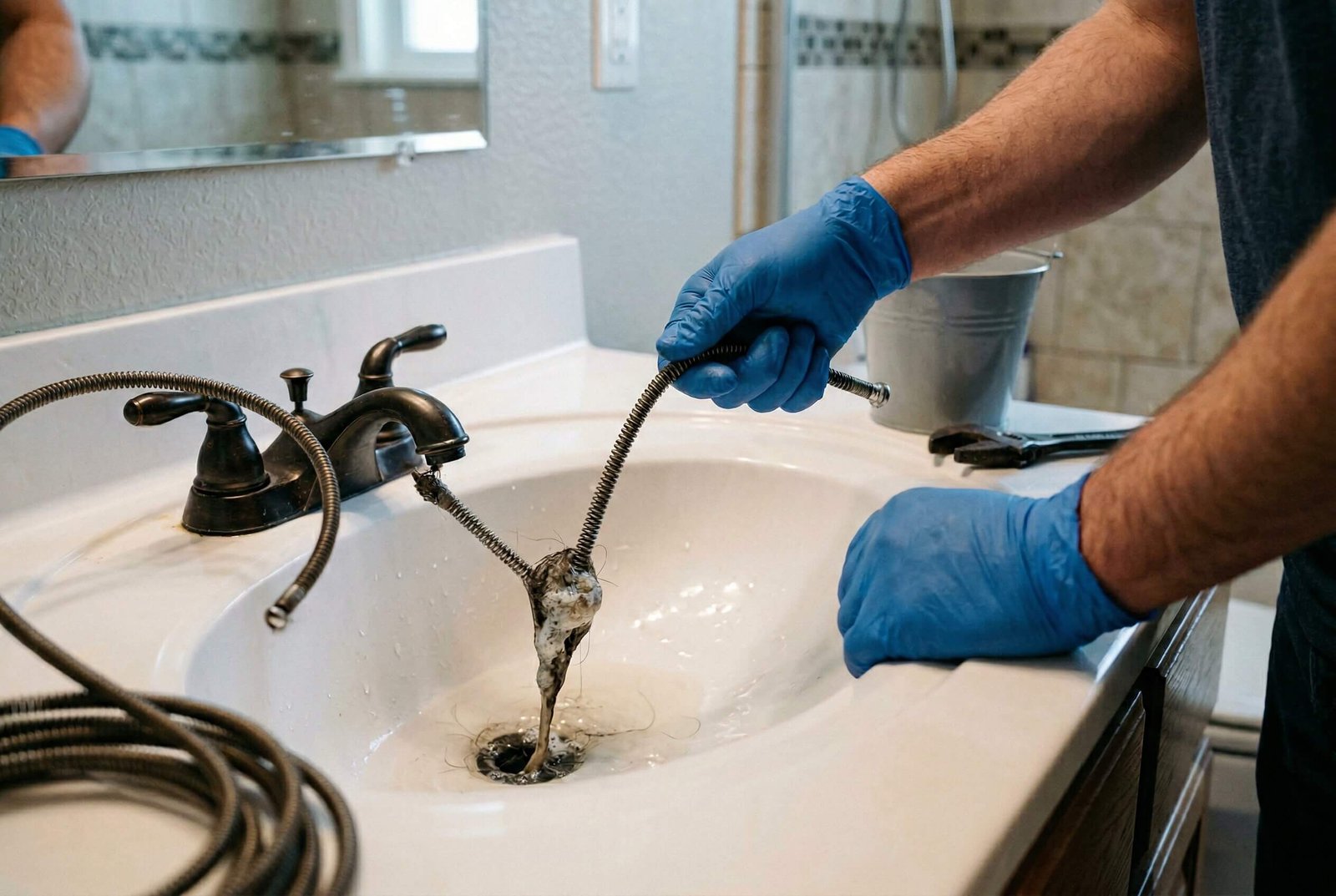
A clogged drain is one of the most common plumbing issues in U.S. homes, whether it’s a bathroom sink slowing down from hair buildup, a shower drain blocked with soap scum, or a kitchen sink struggling with grease and food residue. In many cases, these clogs are caused by organic material that builds up gradually inside the pipe walls, restricting water flow over time.
One of the safest and most effective DIY methods to fix a clogged drain is using baking soda and vinegar. This natural cleaning reaction can help break down light to moderate organic buildup without damaging your pipes or exposing your home to harsh chemicals. It’s especially useful for bathroom drains, shower drains, and early-stage kitchen clogs where grease hasn’t fully hardened.
However, this method is not a universal solution. It works best for surface-level or partially blocked drains and may not be effective for deep clogs, solid obstructions, or sewer line issues. Understanding when to use this method—and when to switch to stronger tools or call a plumber—is key to fixing the problem correctly without making it worse.
In this guide, you’ll learn exactly how to fix a clogged drain using baking soda and vinegar, along with when this method works, when it fails, and how professionals handle more serious blockages.
What This Page Covers
ToggleIdentify the Type of Clog Before Fixing
Before you pour anything down your drain—even a safe solution like baking soda and vinegar—you need to understand what kind of clog you’re dealing with. This step is where most homeowners go wrong. Using the wrong method on the wrong type of blockage can waste time or even push the clog deeper into the system.
A proper diagnosis helps you decide whether a simple natural reaction will work or if you need a more mechanical or professional solution.
Surface-Level vs Deep Drain Clogs
Surface-level clogs are the most common and the easiest to fix with baking soda and vinegar. These typically form near the drain opening and are caused by slow buildup over time.
- Surface-level clog signs:
- Water drains slowly but doesn’t stop completely
- You can see debris (hair, soap, sludge) near the drain
- No issues in other fixtures
Deep clogs occur further inside the pipe or even in the main line. These are harder to reach and usually require tools.
- Deep clog signs:
- Water backs up quickly
- Standing water that doesn’t move
- Gurgling sounds from pipes
- Other drains affected
Baking soda and vinegar usually won’t reach or fix deep clogs effectively.
Organic vs Non-Organic Clogs
The baking soda and vinegar method works by breaking down organic material, so identifying the clog type is critical.
- Organic clogs (ideal for this method):
- Hair
- Soap scum
- Grease (light buildup)
- Food residue
- Non-organic clogs (this method won’t work):
- Plastic objects
- Jewelry or solid debris
- Paper towels or wipes
- Mineral or hard scale buildup
If the clog is non-organic, you’ll need manual removal or a drain snake, not a chemical reaction.
Temporary vs Recurring Clogs
Not all clogs are one-time issues. Some drains clog repeatedly due to underlying problems.
- Temporary clog:
- Happens occasionally
- Clears fully after cleaning
- No lingering slow drainage
- Recurring clog:
- Same drain clogs again within weeks
- Water always drains slowly
- Indicates buildup deeper in the pipe
Baking soda and vinegar can help temporarily, but recurring clogs often require deeper cleaning or professional inspection.
Warning Signs of a Serious Problem
Certain symptoms mean you should skip DIY methods entirely and consider professional help immediately.
- Multiple drains backing up at once
- Strong sewer odor from drains
- Water coming up in another fixture (e.g., tub when flushing toilet)
- Bubbling or gurgling sounds
- Basement or floor drain backup
These are signs of a main sewer line issue, not a simple clog. Using baking soda and vinegar in this case won’t fix the problem and could delay proper repair.
Understanding your clog type ensures you use the right fix from the start. If your situation matches a light to moderate organic blockage, you’re in the ideal scenario to fix a clogged drain with baking soda and vinegar.
Quick Fixes You Can Try First (Low Risk)
Before using baking soda and vinegar, it’s smart to start with a few simple, low-risk fixes. In many real-world plumbing situations, especially in U.S. homes, a clog can be loosened or partially cleared with basic methods. This improves the effectiveness of the baking soda and vinegar reaction and can sometimes solve the problem entirely.
These methods are safe, require no special tools, and help you avoid pushing the clog deeper into the pipe.
Hot Water Flush
Hot water is one of the simplest and most overlooked solutions. It works especially well on grease, soap residue, and light organic buildup that hasn’t fully hardened.
- Boil a pot of water
- Slowly pour it directly into the drain in stages
- Allow a few seconds between pours to let heat penetrate buildup
This method is effective for:
- Kitchen sinks with light grease
- Bathroom sinks with soap residue
- Shower drains with early buildup
Avoid using boiling water on PVC pipes repeatedly, as extreme heat over time can weaken joints.
Dish Soap Breakdown Method
If the clog is caused by grease or oily residue (common in kitchen sinks), dish soap can help break it down before flushing.
- Pour a generous amount of liquid dish soap into the drain
- Let it sit for 10–15 minutes
- Follow with hot (not boiling) water
This helps lubricate and soften grease, making it easier to flush out.
Manual Debris Removal
Many clogs sit right near the surface, especially in bathroom drains. Removing visible debris manually can significantly improve drainage.
- Remove the drain cover
- Use gloves or a simple hook tool to pull out hair and sludge
- Dispose of debris properly (don’t push it back into the drain)
This is one of the most effective first steps for:
- Shower drains
- Bathtub drains
- Bathroom sink drains
Plunger Usage Before Natural Cleaning
Using a plunger before applying baking soda and vinegar helps loosen the clog and creates space for the solution to work deeper into the pipe.
- Fill the sink or tub with a small amount of water
- Place the plunger over the drain
- Perform 10–15 firm plunges
- Check if water begins to drain
Plunging helps:
- Break up compacted debris
- Improve flow before chemical reaction
- Prevent pushing the clog further down
These quick fixes prepare the drain and often reduce the severity of the clog. In many cases, combining these steps with baking soda and vinegar gives much better results than using the solution alone.
Intermediate Fix Method: Baking Soda and Vinegar (Core Section)
Once you’ve tried basic fixes, this is the most effective natural method to fix a clogged drain without using harsh chemicals. In real plumbing scenarios, this approach works best when the clog is made of organic material and hasn’t hardened deep inside the pipe.
The key is not just pouring ingredients randomly—but using the correct sequence so the reaction actually reaches and breaks down the blockage.
Why Baking Soda and Vinegar Works
Baking soda (a base) and vinegar (an acid) create a chemical reaction that produces carbon dioxide gas and bubbling action. This fizzing helps loosen debris stuck to pipe walls and break apart soft organic buildup.
- The bubbling action agitates the clog
- Helps dislodge hair, soap scum, and light grease
- Cleans pipe walls where buildup accumulates
- Safe for most residential plumbing systems
However, it’s important to understand that this method does not dissolve solid blockages. It works by loosening and breaking apart softer materials.
Step-by-Step Process to Unclog Drain
Follow this exact sequence to get the best results:
- Boil water
Start by boiling a pot of water. This prepares the drain by softening grease and loosening buildup. - Pour hot water into the drain
Slowly pour the hot water down the drain to open up the blockage slightly. - Add baking soda
Pour about ½ cup of baking soda directly into the drain. Try to get as much of it inside the pipe as possible. - Add vinegar
Immediately pour 1 cup of white vinegar into the drain. - Cover the drain
Use a drain plug or cloth to seal the opening. This forces the reaction to work inside the pipe instead of escaping upward. - Let it sit (15–30 minutes)
Allow the mixture to fizz and break down buildup. - Flush with hot water again
Finish by pouring another pot of hot water to wash away loosened debris.
This full process often restores normal flow if the clog is mild to moderate.
Best Situations to Use This Method
This method is highly effective in the following real-world situations:
- Bathroom sink drains with hair and soap buildup
- Shower and bathtub drains with slow drainage
- Early-stage kitchen clogs (before grease fully hardens)
- Maintenance cleaning to prevent buildup
It’s especially useful when the drain is still partially flowing.
When This Method Fails
There are clear situations where baking soda and vinegar won’t fix the problem:
- Completely blocked drains with standing water
- Solid objects stuck in the pipe
- Deep clogs far from the drain opening
- Heavy grease that has hardened
- Tree roots or sewer line intrusions
If the drain doesn’t improve after one or two attempts, repeating this method won’t help. At that point, you need to move to mechanical tools or professional solutions.
This method is a powerful first-line solution when used correctly. But knowing its limits is just as important as knowing how to apply it.
Intermediate Fix Methods (More Effective Backup Options)
If baking soda and vinegar improves the drain but doesn’t fully clear it, that’s a clear sign the clog has loosened but not completely broken apart. This is where intermediate methods come in. In real plumbing work, professionals often combine chemical loosening with mechanical removal to fully clear the line.
These methods are still DIY-friendly but more effective because they physically remove or extract the debris that’s causing the blockage.
Using a Drain Snake After Vinegar Treatment
After the baking soda and vinegar reaction loosens the buildup, a drain snake (also called a hand auger) can remove what’s left inside the pipe.
- Insert the snake slowly into the drain
- Rotate the handle as you push it deeper
- When you feel resistance, twist to latch onto debris
- Pull the snake out carefully
This works especially well for:
- Hair clogs in bathroom drains
- Soap buildup mixed with debris
- Partially loosened blockages
Using a snake after the natural treatment is far more effective than using it alone because the clog is already softened.
Cleaning the P-Trap
If the clog is sitting just below the sink, it’s often trapped in the P-trap—the curved pipe under the fixture.
- Place a bucket underneath
- Unscrew the slip nuts on both ends of the trap
- Remove the pipe and empty debris
- Clean the inside thoroughly
- Reattach securely
This method is ideal when:
- Water backs up quickly
- The clog is not responding to surface treatments
- You suspect buildup close to the fixture
It’s one of the most direct and reliable ways to fix a localized clog.
Wet/Dry Vacuum Method
A wet/dry vacuum can be surprisingly effective for pulling clogs out instead of pushing them deeper.
- Set the vacuum to liquid mode
- Seal the hose tightly over the drain opening
- Turn it on to create suction
This method helps:
- Extract loosened debris after vinegar treatment
- Clear light to moderate clogs
- Avoid pushing blockages further into the pipe
It works best when combined with prior loosening methods like hot water or baking soda and vinegar.
These intermediate methods are often the turning point between a partially cleared drain and a fully restored one. If the clog still persists after these steps, it usually means the blockage is deeper, denser, or part of a larger system issue.
Advanced Fix Methods (Stronger Solutions)
If the clog still isn’t fully cleared after using baking soda and vinegar and intermediate tools, you’re likely dealing with a deeper or more stubborn blockage. At this stage, stronger methods are required—either to break down dense buildup or physically reach further into the drain system.
These methods are more powerful but also require more caution. In real plumbing scenarios, this is where homeowners need to be careful not to damage pipes or make the situation worse.
Enzyme Drain Cleaners
Enzyme-based cleaners are a safer alternative to harsh chemicals and are commonly used by professionals for ongoing maintenance and mild-to-moderate clogs.
- Use natural bacteria and enzymes to break down organic waste
- Work slowly over several hours or overnight
- Safe for pipes, septic systems, and regular use
Best for:
- Recurring slow drains
- Organic buildup like grease, soap, and hair
- Preventative maintenance
They’re not an instant fix, but they’re effective for long-term cleaning.
Chemical Drain Cleaners (With Risks)
Chemical cleaners are widely available but should be used as a last resort. While they can dissolve tough clogs, they come with risks.
- Can damage PVC or older pipes with repeated use
- Generate heat that may weaken pipe joints
- Hazardous fumes and skin contact risks
Use only if:
- Other methods have failed
- The clog is organic and not a solid object
- You follow all safety instructions carefully
Avoid mixing chemicals with previous treatments like vinegar, as this can create dangerous reactions.
High-Pressure Flushing
High-pressure flushing uses strong water force to push through blockages and clean pipe walls.
- Can be done with a hose attachment or pressure tool
- Helps remove grease buildup and loose debris
- Effective for longer pipe sections
This method is useful when:
- The clog is further down the pipe
- Water flow exists but is restricted
- Debris has been partially loosened
However, excessive pressure on weak pipes can cause leaks.
Deep Drain Snaking
For clogs that are beyond the reach of a standard hand auger, deeper snaking methods are required.
- Longer augers can reach several feet into the pipe
- Break apart compacted debris
- Restore flow in deeper sections
This is often needed when:
- Multiple attempts have failed
- The clog is dense or compacted
- The blockage is not near the drain opening
At this level, you’re approaching the limits of safe DIY work. If these methods don’t resolve the issue, the clog is likely part of a larger plumbing problem that requires professional equipment.
Professional Drain Fix Methods
When baking soda and vinegar, along with DIY tools, fail to fully clear the clog, it usually means the blockage is deeper, more compacted, or part of a larger drainage issue. This is where professional plumbers step in with specialized equipment designed to fully restore pipe flow without causing damage.
In real U.S. residential plumbing systems, these methods are commonly used when standard solutions are no longer effective.
Hydro Jetting
Hydro jetting is one of the most powerful and effective methods used by professionals. It uses high-pressure water (often 3,000–4,000 PSI) to completely clean the inside of pipes.
- Removes grease, sludge, and scale buildup
- Clears long sections of pipe
- Restores pipes close to original condition
Best for:
- Heavy grease buildup in kitchen lines
- Recurring clogs that keep coming back
- Main line cleaning
This method doesn’t just clear the clog—it cleans the entire pipe.
Motorized Augers
Motorized augers (also called power snakes) are advanced versions of hand augers. They use a rotating cable powered by a motor to cut through tough blockages.
- Break through dense clogs
- Reach deeper into the system
- Effective for compacted debris
Commonly used for:
- Bathroom and kitchen drain blockages
- Deep clogs that manual tools can’t reach
- More stubborn organic or mixed debris
Camera Inspection
Before or after clearing a clog, plumbers often use a drain camera to inspect the inside of pipes.
- Identifies the exact location of the blockage
- Detects pipe damage, cracks, or root intrusion
- Helps prevent unnecessary guesswork
This is especially important when:
- Clogs keep returning
- Multiple drains are affected
- There’s suspicion of structural issues
Pipe Repair or Replacement
Sometimes, a clog is not just buildup—it’s a symptom of a bigger issue.
- Collapsed or cracked pipes
- Tree root intrusion
- Misaligned or damaged pipe sections
In these cases, clearing the clog won’t fix the root cause. The damaged section may need repair or replacement to prevent ongoing problems.
Professional methods are designed to fully solve the issue—not just temporarily relieve it. If your drain hasn’t improved after multiple DIY attempts, calling a plumber at this stage can save time, prevent damage, and avoid higher repair costs later.
Tools Used to Fix Drain Clogs
To effectively fix a clogged drain—whether using baking soda and vinegar or more advanced methods—having the right tools makes a significant difference. In real plumbing scenarios, professionals rely on a combination of simple and advanced tools depending on the severity and location of the clog.
Understanding these tools also helps you decide how far you can safely go with DIY before needing professional help.
Basic Tools
These are commonly used by homeowners and are often enough for light to moderate clogs.
- Plunger
Creates pressure to loosen and dislodge clogs. Best used before or after applying baking soda and vinegar to improve flow. - Drain Snake (Hand Auger)
A flexible cable that reaches into the pipe to grab or break apart debris. Highly effective for hair and soft blockages.
These tools are ideal for:
- Bathroom sink and shower drains
- Early-stage clogs
- Maintenance cleaning
Advanced Tools
These tools are typically used by professionals or experienced DIY users for more stubborn clogs.
- Power Auger (Motorized Snake)
A stronger, motor-driven version of a hand snake that cuts through dense clogs and reaches deeper into the system. - Hydro Jet Machine
Uses high-pressure water to completely clean pipe interiors and remove grease, sludge, and scale buildup. - Inspection Camera
A small camera inserted into the pipe to locate clogs, assess damage, and identify hidden issues.
These tools are used for:
- Deep or recurring clogs
- Main line blockages
- Situations where the cause of the clog is unknown
Choosing the right tool depends on how severe the clog is. For most homeowners, combining baking soda and vinegar with a plunger or hand auger provides a strong and safe approach. But once deeper tools are required, it’s usually a sign that professional equipment may be needed.
Cost to Fix a Drain Clog (U.S.)
Understanding the cost to fix a clogged drain helps you decide whether to continue with DIY methods like baking soda and vinegar or call a professional. In real U.S. plumbing scenarios, costs vary widely depending on the severity of the clog, its location, and the tools required to fix it.
Starting with low-cost DIY methods is always recommended, but knowing when costs can escalate is key to making the right decision.
DIY Cost Range
Fixing a clogged drain using baking soda and vinegar is one of the most affordable solutions available.
- Baking soda + vinegar: $2–$5 total
- Plunger: $10–$25 (one-time purchase)
- Hand auger (drain snake): $15–$40
Typical DIY total:
- $5–$50 depending on tools needed
This makes it a great first step for light to moderate clogs, especially when you already have basic tools at home.
Plumber Cost Range
If DIY methods fail, hiring a plumber becomes necessary. Costs depend on how complex the clog is.
- Minor clog (simple drain cleaning): $100–$250
- Moderate clog (deeper blockage): $250–$500
- Severe clog (main line or heavy buildup): $500–$1,000+
Specialized services:
- Hydro jetting: $300–$800
- Camera inspection: $150–$400
Factors Affecting Cost
Several real-world factors influence the final price:
- Clog location: Sink vs main sewer line
- Severity: Partial blockage vs complete backup
- Accessibility: Easy access vs behind walls or underground
- Equipment required: Basic tools vs hydro jetting
- Time required: Quick fix vs extended labor
Emergency Pricing
Emergency plumbing services (nights, weekends, holidays) can significantly increase costs.
- Emergency surcharge: +$100–$300 or more
- Faster response but higher total bill
In most cases, starting with baking soda and vinegar is the most cost-effective way to fix a clogged drain. But if the problem escalates, understanding these price ranges helps you make a smart, informed decision without surprises.
When NOT to Fix It Yourself
While baking soda and vinegar is a safe and effective method to fix a clogged drain, there are situations where DIY approaches can do more harm than good. In real plumbing scenarios, knowing when to stop is just as important as knowing how to start.
Certain warning signs indicate that the problem goes beyond a simple clog and requires professional tools or expertise.
Multiple Fixture Backups
If more than one drain in your home is backing up at the same time, the issue is likely not isolated.
- Water backing up in tubs when flushing the toilet
- Kitchen sink affecting bathroom drains
- Multiple slow or blocked drains simultaneously
This usually points to a main sewer line blockage, which cannot be fixed with baking soda and vinegar or basic tools.
Recurring Clogs
If the same drain keeps clogging again and again, there’s likely a deeper issue that hasn’t been fully resolved.
- Temporary relief after cleaning
- Drain slows down again within days or weeks
- Indicates buildup deeper in the pipe
Repeated DIY fixes may only treat the surface while the real blockage continues to grow.
Risk of Pipe Damage
Older plumbing systems, especially in U.S. homes with aging pipes, can be sensitive to repeated treatments.
- Frequent use of chemical cleaners weakens pipes
- Excessive force from tools can cause cracks
- High-pressure methods may damage joints
If you’re unsure about your pipe condition, it’s safer to avoid aggressive DIY attempts.
Standing Water That Won’t Drain
If water is completely stagnant and doesn’t move at all, it indicates a severe blockage.
- No improvement after plunging or flushing
- Water level remains unchanged
- Strong resistance in the pipe
At this stage, baking soda and vinegar won’t reach the clog effectively and may simply sit in the water.
Ignoring these warning signs can lead to bigger problems like pipe damage, flooding, or costly repairs. When these conditions are present, it’s best to stop DIY attempts and bring in a professional to properly diagnose and fix the issue.
How to Prevent Future Drain Clogs
Once you fix a clogged drain using baking soda and vinegar, the next step is making sure it doesn’t happen again. In real U.S. households, most drain clogs are preventable with simple habits and consistent maintenance. The goal is to stop buildup before it turns into a blockage.
Prevention is always easier—and far cheaper—than repeated fixes.
Proper Usage Habits
What goes down your drain directly impacts how often it clogs. Small daily habits make a big difference over time.
- Avoid pouring grease or oil down kitchen sinks
- Do not flush food scraps unless using a garbage disposal properly
- Keep coffee grounds and fibrous food waste out of drains
- Limit soap-heavy products that leave residue
Even small amounts of grease or debris can accumulate and create stubborn buildup inside pipes.
Use Drain Strainers
Drain strainers are one of the simplest and most effective tools for preventing clogs.
- Catch hair in bathroom sinks, tubs, and showers
- Prevent food particles from entering kitchen drains
- Easy to clean and inexpensive
Regularly removing trapped debris from strainers keeps it from entering your plumbing system.
Regular Maintenance Routine
Routine maintenance helps keep your pipes clean and flowing smoothly.
- Flush drains with hot water once a week
- Use baking soda and vinegar once a month as preventive cleaning
- Consider enzyme cleaners for ongoing organic buildup control
These simple steps help break down buildup before it turns into a blockage.
Bathroom Drain Care
Bathroom drains are especially prone to clogs due to hair and soap residue.
- Remove visible hair regularly
- Brush hair before showering to reduce shedding
- Avoid letting soap scum accumulate
Consistent cleaning prevents buildup near the drain opening.
Kitchen Drain Care
Kitchen sinks deal with grease and food waste, making them one of the most common clog points.
- Wipe greasy pans before washing
- Use cold water when running garbage disposal (helps solidify grease for removal)
- Avoid dumping starchy or sticky foods down the drain
Proper kitchen habits significantly reduce the risk of deep clogs.
Preventing clogs isn’t complicated—it’s about consistency. When you combine smart usage with occasional maintenance like baking soda and vinegar cleaning, you can keep your drains running smoothly and avoid most common plumbing issues.
Final Thoughts
Fixing a clogged drain with baking soda and vinegar is one of the safest and most practical starting points for homeowners. It’s affordable, easy to apply, and effective for light to moderate organic clogs commonly found in bathroom and kitchen drains. When used correctly, it can restore proper flow without risking damage to your plumbing system.
However, the key to success is understanding where this method fits in the bigger picture. It works best as a first-line solution, especially after basic preparation like hot water flushing or manual debris removal. If the clog improves but doesn’t fully clear, combining it with tools like a drain snake or P-trap cleaning often completes the job.
At the same time, it’s important to recognize its limits. Deep blockages, recurring clogs, or system-wide issues require stronger methods or professional intervention. Continuing DIY attempts in those situations can delay proper repair and increase long-term costs.
A smart approach is to treat drain cleaning as a step-by-step process:
- Start with low-risk methods
- Move to intermediate tools if needed
- Escalate to advanced or professional solutions when required
When you combine the right method with proper diagnosis, you not only fix the immediate clog but also prevent future issues. With consistent maintenance and good usage habits, most drains can stay clear without frequent problems.