
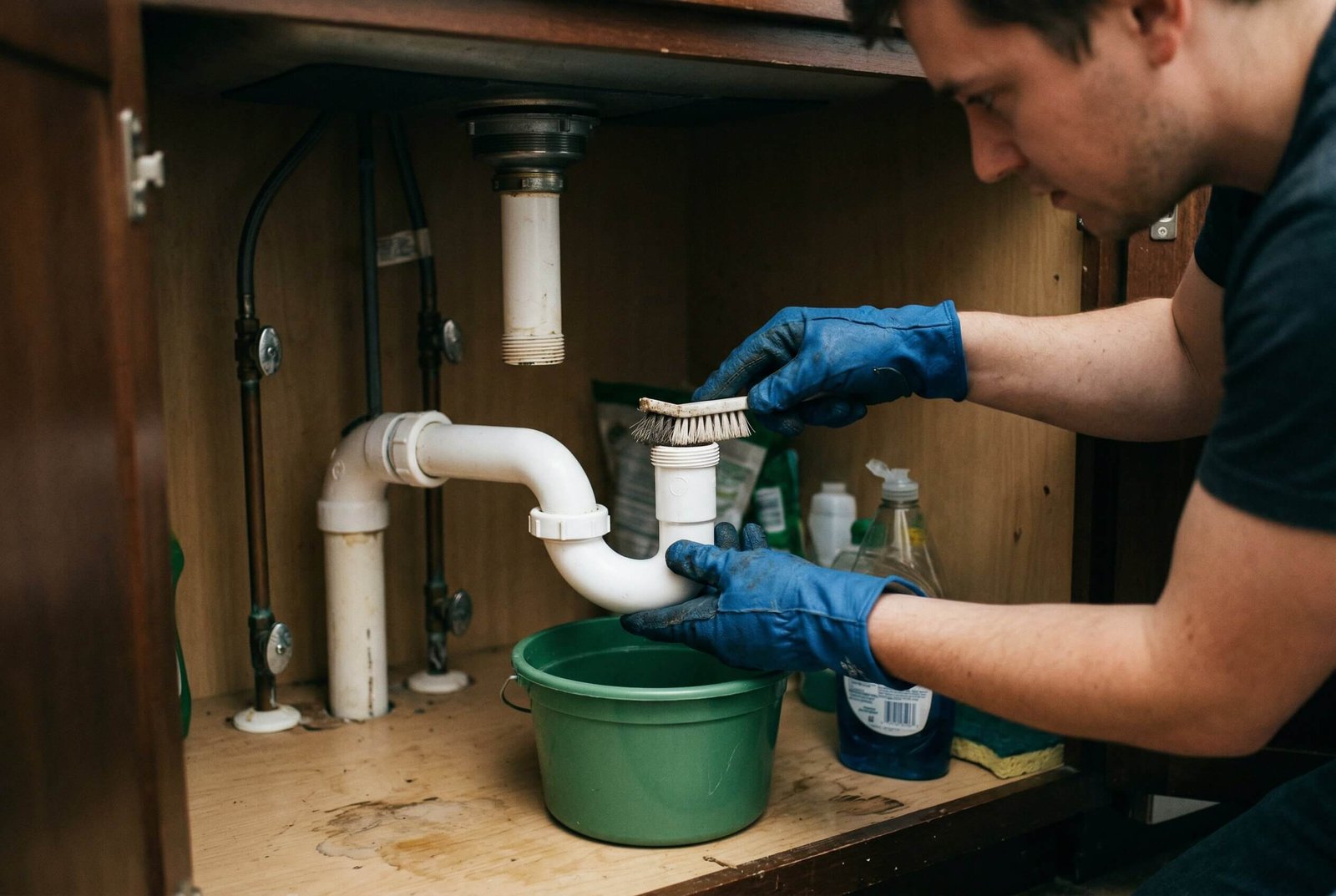
A clogged drain is one of the most common plumbing problems in U.S. homes, and in many cases, the issue is sitting right inside the P-trap. The P-trap is the curved pipe located directly beneath your sink, and its job is to hold a small amount of water to block sewer gases from entering your home. Because of its shape, it also becomes the first place where debris like grease, soap scum, hair, food particles, and lint start to collect. Over time, that buildup can slow down drainage or completely block the pipe.
In real residential setups—especially in kitchen sinks, bathroom sinks, and utility or laundry sinks—the P-trap handles a lot of waste that shouldn’t always be going down the drain. Grease from kitchen use, shaving debris in bathroom sinks, and lint from washing machines connected to utility sinks all contribute to frequent clogging at this exact point in the plumbing system.
The good news is that cleaning a P-trap is one of the most effective and straightforward ways to fix a clogged drain. In many cases, you don’t need expensive tools or harsh chemicals. A simple manual cleaning can restore full drainage within minutes if the clog is localized in the trap. However, it’s important to understand that not every clog is inside the P-trap. Sometimes the blockage sits deeper in the drain line, which requires different tools or professional intervention.
The approach to fixing the problem should always move from simple to more advanced methods. Start with safe, low-risk steps, confirm where the clog is located, and only then move toward deeper cleaning or professional solutions if needed. This prevents unnecessary damage to pipes and avoids wasting time on methods that won’t work for your specific situation.
Cleaning a P-trap is a homeowner-friendly task when done correctly, but knowing when not to attempt it is just as important. If the clog is part of a larger drainage issue—like multiple fixtures backing up or recurring blockages—it may indicate a deeper problem in your plumbing system that requires professional tools and expertise.
In this guide, you’ll learn exactly how to fix a clogged utility or household drain by cleaning the P-trap, along with all the supporting methods, tools, and decision points used by professional plumbers in real U.S. homes.
What This Page Covers
ToggleIdentify the Type of Clog Before Cleaning the P-Trap
Before you start taking apart pipes, it’s important to confirm whether the clog is actually inside the P-trap or somewhere deeper in the drain system. In real plumbing scenarios, misdiagnosing the clog location is one of the most common mistakes homeowners make. Cleaning the P-trap works extremely well—but only when the blockage is actually sitting there.
A quick diagnosis can save you time, prevent unnecessary work, and help you choose the right fix method from the start.
Signs the Clog Is Inside the P-Trap
When the blockage is located in the P-trap, the symptoms are usually very localized and immediate. The sink will struggle to drain even with small amounts of water, and the issue doesn’t affect other fixtures in the home.
Look for these clear indicators:
- Water drains slowly almost instantly after turning on the faucet
- Sink fills up quickly even with light use
- Bad odor coming directly from the drain (trapped debris rotting inside the P-trap)
- No issues in nearby drains (toilet, shower, or other sinks working normally)
In most U.S. homes, this type of clog is caused by:
- Grease and food residue in kitchen sinks
- Hair and soap buildup in bathroom sinks
- Lint, dirt, or detergent residue in utility/laundry sinks
If you’re seeing these signs, cleaning the P-trap is usually the fastest and most effective fix.
Signs the Clog Is Beyond the P-Trap
If the blockage is deeper in the drain line (past the trap arm or further into the plumbing system), cleaning the P-trap alone won’t solve the problem. You may still need to open it for inspection, but the real issue lies beyond it.
Watch for these signs:
- Multiple fixtures draining slowly at the same time
- Gurgling sounds when water drains
- Water backing up in nearby fixtures (e.g., sink water affecting bathtub or floor drain)
- Slow drainage even after basic cleaning attempts
These symptoms typically indicate:
- A clog in the branch drain line
- Partial blockage in the main drain line
- Early-stage sewer line restriction
In these cases, tools like a drain snake or professional methods may be required after inspecting the P-trap.
Temporary vs Recurring Drain Issues
Not all clogs are the same. Some happen once due to a specific incident, while others keep coming back because of ongoing buildup or system issues.
Understanding the difference helps you decide how aggressive your fix needs to be.
- Temporary clog
- Caused by a one-time buildup (food, debris, lint)
- Usually fixed with simple cleaning
- Drain returns to normal after repair
- Recurring clog
- Happens repeatedly over weeks or months
- Indicates buildup further down the pipe or poor drainage slope
- May require deeper cleaning or professional inspection
Recurring clogs are especially common in utility sinks connected to washing machines, where lint and detergent residue continuously accumulate.
Warning Signs of a More Serious Problem
Some symptoms go beyond a simple P-trap clog and should stop you from attempting DIY fixes immediately. These situations often involve deeper plumbing issues that require professional tools or inspection.
Pay attention to these warning signs:
- Sewage smell coming from multiple drains
- Water backing up into basement floor drains
- Multiple fixtures clogging at the same time
- Standing water appearing in unexpected places (like shower or laundry area)
These are strong indicators of:
- Main sewer line blockage
- Severe pipe buildup or collapse
- Venting issues in the plumbing system
Attempting to fix these problems by only cleaning the P-trap won’t work and may delay proper repair.
By correctly identifying where the clog is located, you avoid unnecessary effort and choose the most effective method right away. In many cases, if the symptoms point clearly to the P-trap, cleaning it will solve the issue quickly and safely.
Quick Fixes You Can Try First (Low Risk)
Before you remove and clean the P-trap, it’s always smart to try a few low-risk methods. In real plumbing situations, many minor clogs—especially in utility sinks, bathroom sinks, and even kitchen drains—can be cleared without opening any pipes. These quick fixes target soft buildup like grease, soap residue, and light debris that hasn’t fully compacted inside the P-trap yet.
Starting with these methods helps you avoid unnecessary work and reduces the chance of leaks or improper reassembly. If the clog is light, you may restore full drainage in just a few minutes.
Hot Water Flush Before Cleaning
Hot water is one of the simplest and most effective first steps, especially for grease-related clogs. In kitchen and utility sinks, grease and detergent residue often solidify inside the P-trap, slowing down water flow.
Here’s how it helps:
- Softens grease and soap buildup
- Breaks down light residue stuck to pipe walls
- Flushes partially loosened debris through the trap
How to use it:
- Bring water to a near-boiling temperature (not aggressively boiling for PVC pipes)
- Pour it slowly into the drain in stages
- Allow a few seconds between pours to let it work through buildup
This method works best when the clog is still forming. If the drain improves even slightly, it indicates the blockage may be soft and manageable without removing the P-trap.
Dish Soap Grease Breakdown
If grease buildup is suspected, adding dish soap before hot water can significantly improve results. Dish soap is designed to break down oils, making it especially effective for kitchen and laundry sink clogs.
What this method does:
- Cuts through grease and oily residue
- Helps loosen buildup stuck inside the P-trap
- Improves the effectiveness of hot water flushing
Simple approach:
- Add a generous amount of liquid dish soap into the drain
- Let it sit for 10–15 minutes
- Follow with hot water flush
This combination is commonly used by plumbers as a first step when dealing with mild grease-related clogs.
Manual Debris Removal at Drain Opening
Sometimes, the clog isn’t fully inside the P-trap yet—it may be sitting right at the drain opening or just below it. This is especially common in bathroom sinks (hair buildup) and utility sinks (lint and debris).
Check and remove:
- Hair clumps
- Soap residue buildup
- Lint or visible debris
- Food scraps in kitchen drains
You can use:
- Gloves for safe removal
- A small hook or plastic drain tool
- Paper towels to pull out loose debris
Even removing a small amount of blockage at the top can significantly improve drainage and reduce pressure inside the P-trap.
Plunger Usage Before Opening the P-Trap
Using a plunger is another effective low-risk method that can dislodge clogs sitting inside or just beyond the P-trap. This works by creating pressure and suction to move the blockage.
When plunging works well:
- Partial clogs inside the P-trap
- Soft debris buildup
- Blockages near the trap arm
How to do it correctly:
- Add enough water to cover the plunger cup
- Seal the overflow opening (for bathroom sinks)
- Use steady, controlled plunges (not aggressive force)
- Test drainage after several attempts
Plunging is especially useful when the clog is not fully solidified. If you notice improved flow after plunging, it means the blockage has either shifted or partially cleared.
These quick fixes are always worth trying before moving on to opening and cleaning the P-trap. In many real-world cases, especially with early-stage clogs, these simple methods are enough to fully restore proper drainage.
If the sink remains slow or completely blocked after these steps, it’s a strong indication that the clog is compacted inside the P-trap or beyond—meaning it’s time for a more direct cleaning approach.
Intermediate Fix Methods (More Effective)
If the quick fixes didn’t restore proper drainage, the clog is likely more compacted or sitting directly inside the P-trap. This is where more hands-on methods come in. In real U.S. plumbing scenarios, this is the stage where most homeowners successfully fix the problem—especially when dealing with utility sinks, bathroom sinks, and grease-heavy kitchen drains.
These methods are still DIY-friendly but require a bit more effort and attention. The goal here is to physically remove or break apart the blockage rather than just loosening it.
How to Clean a P-Trap Step-by-Step
Cleaning the P-trap is one of the most effective ways to fix a clogged drain because you’re directly removing the buildup instead of trying to push it through the system.
What you’ll need:
- Bucket
- Adjustable pliers or slip-joint pliers
- Rubber gloves
- Old brush or bottle brush
- Towels or rags
Step-by-step process:
- Place a bucket under the P-trap to catch water and debris
- Loosen the slip nuts on both ends of the trap (usually hand-tight or slightly tightened with pliers)
- Carefully remove the curved section of the pipe
- Empty the contents into the bucket (expect dirty water and debris)
- Use a brush to clean inside the trap thoroughly
- Rinse the trap with warm water
- Reattach the trap and tighten the connections securely (do not overtighten)
- Run water to check for leaks and proper drainage
This method directly eliminates:
- Grease buildup
- Hair and soap scum
- Lint and sludge from laundry drains
- Small solid debris
In most cases, if the clog is inside the P-trap, this step alone will completely fix the issue.
Using Baking Soda and Vinegar After Cleaning
Once the P-trap is cleaned and reinstalled, using a natural flushing solution can help clear any remaining residue further down the pipe.
Why this works:
- Breaks down light organic buildup
- Helps deodorize the drain
- Loosens minor leftover debris
How to apply:
- Pour baking soda into the drain
- Follow with vinegar
- Let the mixture sit and react for 10–15 minutes
- Flush with hot water
This is not a primary fix for heavy clogs, but it works well as a follow-up step after cleaning the P-trap.
Using a Hand Auger Through the Trap Arm
If you clean the P-trap and still experience slow drainage, the clog is likely just beyond it—in the trap arm or branch drain line.
A hand auger (manual drain snake) is designed for this situation.
What it does:
- Reaches deeper into the pipe
- Breaks apart compacted clogs
- Pulls out debris stuck further inside
Basic usage approach:
- Insert the auger cable into the pipe after removing the P-trap
- Rotate the handle to push through resistance
- Pull back slowly to remove debris
This method is commonly used by plumbers before moving to more advanced equipment.
Wet/Dry Vacuum for Stubborn Debris
In utility sinks and garage drains, clogs often involve thick sludge, lint, or construction debris that doesn’t move easily with water or plunging. A wet/dry vacuum can help extract this material instead of pushing it deeper.
When this works best:
- Lint-heavy clogs from washing machines
- Mud, dirt, or debris in utility sinks
- Semi-solid sludge buildup
How it helps:
- Pulls debris out instead of forcing it through
- Reduces risk of pushing clog deeper into system
You can place the vacuum hose over the drain opening or directly at the pipe (after removing the P-trap) to extract material.
These intermediate methods are where most real drain problems get resolved. Cleaning the P-trap combined with basic tools like a hand auger or vacuum gives you direct control over the clog and significantly increases your chances of fixing it without professional help.
If the drain is still blocked after these steps, the clog is likely deeper or more severe—requiring stronger methods or professional equipment.
Advanced Fix Methods (Stronger Solutions)
If cleaning the P-trap and using basic tools didn’t fully restore drainage, the clog is likely deeper in the pipe or more compacted than typical household buildup. At this stage, stronger methods are required to break down or remove the blockage. These approaches are still used in real plumbing situations, but they come with more risk and should be handled carefully.
The goal here is not just to remove the clog, but to clear the pipe walls and restore proper flow. However, this is also the point where you need to be more cautious—especially with older pipes or unknown plumbing conditions.
Enzyme Drain Cleaners for Organic Buildup
Enzyme-based cleaners are one of the safest advanced options, especially for recurring clogs caused by organic materials like grease, soap, hair, or food residue.
How they work:
- Use bacteria and enzymes to break down organic matter
- Gradually dissolve buildup on pipe walls
- Help maintain long-term drain health
Best use cases:
- Utility sinks with detergent and lint buildup
- Kitchen sinks with grease accumulation
- Bathroom drains with soap and hair residue
Important considerations:
- Works slowly (usually overnight or repeated applications)
- Not effective for solid blockages or non-organic debris
- Ideal as a follow-up after cleaning the P-trap
This method is commonly recommended by plumbers as a maintenance solution rather than an emergency fix.
Chemical Cleaners (Use with Caution)
Chemical drain cleaners are widely available and can break down tough clogs, but they come with significant risks. In professional plumbing, these are typically avoided unless absolutely necessary.
What they do:
- Use strong chemicals to dissolve organic and some inorganic clogs
- Generate heat that helps break apart buildup
Risks involved:
- Can damage PVC pipes if overused
- May corrode older metal pipes
- Hazardous to skin and eyes
- Can create dangerous fumes
When they may be used:
- Severe organic clogs that haven’t responded to other methods
- Situations where mechanical cleaning isn’t immediately possible
If you choose to use chemical cleaners, follow instructions carefully and avoid mixing different products. In many cases, mechanical methods (like snaking) are safer and more effective.
High-Pressure Flushing After Trap Cleaning
Once the P-trap is cleaned, high-pressure flushing can help clear out loosened debris further down the pipe. This method uses strong water flow to push remaining buildup through the system.
How it helps:
- Clears residue left behind after manual cleaning
- Restores smoother pipe walls
- Improves overall drainage speed
Common approach:
- Use a strong water flow (such as a hose or high-pressure faucet setting)
- Flush in intervals rather than continuous force
- Monitor drainage improvement after each attempt
This method works best when the clog is partially cleared but still restricting flow deeper in the line.
Deep Drain Snaking Beyond the Trap
When the blockage is located beyond the immediate reach of the P-trap, deeper snaking becomes necessary. This involves feeding a longer cable into the drain line to break apart or retrieve the clog.
What this method does:
- Reaches further into branch drain lines
- Breaks apart hardened buildup
- Removes debris lodged deeper in the system
When it’s needed:
- Persistent slow drainage after cleaning the P-trap
- Recurring clogs that return quickly
- Signs of blockage beyond the trap arm
Manual augers can handle moderate depth, but for longer or tougher clogs, professionals use motorized equipment.
At this stage, you’re dealing with more stubborn or deeper plumbing issues. While these methods can still be performed by experienced homeowners, they require careful judgment. If the clog doesn’t respond or you’re unsure about pipe condition, it’s often more efficient—and safer—to move to professional solutions.
Professional Drain Fix Methods
When basic and advanced DIY methods don’t fully resolve the issue, professional plumbing tools and techniques become necessary. In real U.S. homes, this usually means the clog is deeper in the drain system, more compacted, or part of a recurring problem that can’t be fixed with simple cleaning alone.
Professional plumbers don’t rely on guesswork. They use specialized equipment to locate, break apart, and completely clear blockages while also checking the condition of your pipes. This not only fixes the immediate clog but helps prevent repeat issues.
Motorized Auger Cleaning
A motorized auger (also called a power snake) is one of the most commonly used tools by plumbers when dealing with stubborn clogs beyond the P-trap.
What it does:
- Uses a rotating cable to break through tough blockages
- Reaches deeper into branch lines and main drain lines
- Cuts through grease buildup, compacted debris, and minor root intrusion
When plumbers use it:
- Clogs beyond the reach of a manual auger
- Recurring slow drains that return after DIY cleaning
- Blockages in longer horizontal drain runs
This method is far more powerful than manual snaking and is usually the next step before considering more aggressive solutions.
Hydro Jetting for Severe Blockages
Hydro jetting is a high-pressure cleaning method that uses water to completely clear pipes. This is one of the most effective professional solutions for severe or recurring clogs.
How it works:
- Uses highly pressurized water to blast through buildup
- Cleans pipe walls, not just the center of the clog
- Flushes out grease, sludge, soap residue, and debris
Best use cases:
- Heavy grease buildup in kitchen or utility lines
- Sludge and detergent accumulation from laundry drains
- Long-term buildup causing repeated clogs
Hydro jetting doesn’t just fix the clog—it restores the pipe to near-original flow conditions. However, it requires proper equipment and inspection to ensure pipes can handle the pressure.
Camera Inspection for Recurring Issues
When clogs keep coming back or the cause isn’t clear, plumbers often use a drain inspection camera. This allows them to see exactly what’s happening inside your pipes.
What it helps identify:
- Hidden blockages beyond reach
- Pipe damage or cracks
- Misaligned or sagging pipes
- Tree root intrusion in sewer lines
This step removes guesswork and ensures the correct fix is applied. It’s especially useful in older homes or properties with a history of drainage issues.
Pipe Repair or Replacement if Needed
In some cases, the clog is a symptom of a larger problem. If the pipe itself is damaged, clogged sections may continue to fail even after cleaning.
Situations where repair is needed:
- Cracked or leaking P-trap
- Corroded metal pipes
- Collapsed or severely restricted drain lines
- Improper pipe slope causing repeated buildup
Plumbers may recommend:
- Replacing the P-trap
- Repairing sections of pipe
- Reconfiguring drain lines for better flow
While this is less common, it’s critical in situations where cleaning alone won’t provide a long-term solution.
Professional drain fix methods are designed to fully resolve the problem, not just temporarily improve it. If your drain clog persists after cleaning the P-trap and using intermediate methods, it’s a strong indication that deeper or more advanced intervention is required.
Tools Used to Clean a P-Trap and Fix Drain Clogs
To fix a clogged utility sink drain effectively, having the right tools makes a significant difference. In real U.S. plumbing work, professionals choose tools based on the severity and location of the clog. For homeowners, starting with basic tools is usually enough for P-trap cleaning, but knowing the full range of tools helps you understand when to escalate.
You don’t need everything listed below—but understanding what each tool does will help you make better decisions and avoid unnecessary damage.
Basic Homeowner Tools
These are the essential tools used for cleaning a P-trap safely and effectively. Most of these are inexpensive and commonly found in households.
- Bucket
- Adjustable pliers or slip-joint pliers
- Rubber gloves
- Towels or rags
- Bottle brush or small cleaning brush
What these tools are used for:
- Catching dirty water when removing the P-trap
- Loosening and tightening slip nuts
- Manually cleaning grease, sludge, and debris
- Preventing mess and maintaining hygiene
In most cases, these basic tools are all you need to fix a clog inside the P-trap.
Drain Cleaning Tools
When the clog extends beyond the P-trap, you’ll need tools designed to reach deeper into the pipe.
- Hand auger (manual drain snake)
- Plastic drain removal tool (for hair and debris)
- Plunger
What these tools do:
- Break apart clogs further inside the drain line
- Pull out debris lodged beyond the trap
- Dislodge soft blockages using pressure
A hand auger is especially useful after removing the P-trap, allowing direct access into the pipe.
Professional Tools
Professional plumbers use advanced equipment when clogs are severe, recurring, or located deeper in the system.
- Motorized auger
- Hydro jetting machine
- Drain inspection camera
What these tools are used for:
- Cutting through tough, compacted blockages
- Cleaning pipe walls with high-pressure water
- Diagnosing hidden issues inside pipes
These tools are not typically used by homeowners but are important to understand when deciding whether to call a plumber.
Using the correct tool for the situation is key to fixing the problem efficiently. Starting with basic tools for P-trap cleaning and gradually moving to more advanced equipment ensures you don’t overcomplicate the repair or risk damaging your plumbing system.
Cost to Fix a Drain Clog by Cleaning the P-Trap
Understanding the cost helps you decide whether to fix the problem yourself or call a plumber. In most U.S. homes, cleaning a P-trap is one of the lowest-cost plumbing fixes, especially when the clog is localized and doesn’t require specialized equipment.
The total cost depends on how severe the clog is, how accessible the P-trap is, and whether the issue extends beyond it.
DIY Cost Range
For homeowners, cleaning a P-trap is usually very affordable because it requires minimal tools and no expensive materials.
Typical DIY costs:
- Basic tools (pliers, bucket, brush): $10 – $40 (one-time purchase)
- Cleaning supplies (gloves, soap, baking soda, vinegar): $5 – $20
- Hand auger (optional): $15 – $50
Estimated total DIY cost:
- $0 (if tools already available)
- Up to $50–$100 if buying tools for the first time
This makes it one of the most cost-effective plumbing fixes you can handle yourself.
Plumber Cost Range in the U.S.
If you hire a plumber, the cost increases due to labor, service call fees, and expertise. However, it may be worth it if you’re unsure or dealing with a more complex issue.
Typical pricing:
- Basic service call: $75 – $150
- P-trap cleaning service: $100 – $250
- Minor drain clearing beyond trap: $150 – $300
Total expected cost:
- $100 – $300 for straightforward P-trap-related issues
If additional work is needed (like snaking deeper lines), the price can increase.
Factors That Affect Cost
Several factors influence how much you’ll pay, especially when hiring a professional:
- Accessibility of the P-trap (tight spaces vs open utility sink)
- Severity and type of clog (grease, sludge, solid debris)
- Whether the clog extends beyond the P-trap
- Condition of existing pipes (old, corroded, or damaged)
- Time required to diagnose and fix the issue
A simple, easy-to-access utility sink P-trap will cost much less than a hidden or complex setup.
Emergency or After-Hours Pricing
If you need immediate help—such as a blocked utility sink causing flooding or backup—emergency service costs can increase significantly.
Typical emergency pricing:
- After-hours service call: $150 – $300+
- Emergency drain clearing: $200 – $500+
These higher costs reflect urgency, availability, and labor outside normal working hours.
Cleaning a P-trap is one of the few plumbing issues where DIY can save you a significant amount of money. However, if the clog turns out to be deeper or more complex, hiring a professional can prevent further damage and higher repair costs later.
When NOT to Fix It Yourself
Cleaning a P-trap is one of the safest DIY plumbing tasks, but it’s not always the right solution. In real-world plumbing situations across U.S. homes, there are clear warning signs that indicate the problem goes beyond a simple clog. Attempting to fix these issues yourself can waste time, worsen the blockage, or even damage your plumbing system.
Knowing when to stop and call a professional is just as important as knowing how to fix the problem.
Multiple Drain Backups
If more than one fixture in your home is draining slowly or backing up at the same time, the issue is not limited to a single P-trap.
Common signs include:
- Kitchen sink, bathroom sink, and bathtub draining slowly together
- Water backing up into a different fixture when you use another
- Basement floor drain filling when upstairs water is used
These symptoms usually point to:
- A blockage in the main drain line
- Sewer line restriction or buildup
Cleaning one P-trap won’t fix this type of problem because the clog is located further downstream.
Recurring Clogs After Cleaning
If you’ve already cleaned the P-trap and the drain works temporarily but clogs again within days or weeks, the issue is likely deeper in the system.
Recurring clogs often indicate:
- Partial blockage further down the pipe
- Buildup along pipe walls
- Poor drainage slope or pipe design issues
In these cases, repeated DIY cleaning won’t solve the root problem. A deeper cleaning method or inspection is required.
Old or Fragile Pipes
In older homes, pipes may be made of materials that are more prone to damage, such as:
- Corroded metal pipes
- Thin or brittle PVC
- Loose or worn slip joints
Trying to remove or clean a P-trap in these conditions can lead to:
- Cracked fittings
- Leaks after reinstallation
- Complete pipe failure
If the plumbing looks aged or unstable, it’s safer to have a professional handle the repair.
Strong Sewage Odor or Water Backup
Certain warning signs should immediately stop any DIY attempt. These symptoms suggest a more serious plumbing or sewer issue.
Watch for:
- Strong sewage smell coming from drains
- Water backing up into sinks, tubs, or floor drains
- Standing water in multiple areas
These conditions often indicate:
- Main sewer line blockage
- Venting issues in the plumbing system
- Severe buildup or pipe damage
Handling these problems requires specialized tools like motorized augers, hydro jetting equipment, or camera inspections.
Recognizing these situations early helps you avoid unnecessary effort and prevents small problems from turning into major repairs. If any of these signs are present, skipping DIY and calling a professional is the smarter and more cost-effective decision.
How to Prevent Future P-Trap Clogs
Once you fix a clogged drain by cleaning the P-trap, the next step is making sure it doesn’t happen again. In real U.S. households, most recurring clogs are not random—they’re caused by daily habits and gradual buildup. The P-trap naturally collects debris because of its curved design, so prevention is all about reducing what goes into it and maintaining it regularly.
A few simple changes can significantly extend the time between clogs and keep your drain flowing smoothly.
Proper Sink Usage Habits
What you put down the drain directly determines how quickly the P-trap clogs again. Utility sinks, kitchen sinks, and bathroom sinks all have different types of waste, but the principle remains the same—limit materials that stick, settle, or solidify.
Avoid putting these into the drain:
- Grease, oils, and fats (they harden inside pipes)
- Food scraps, especially starchy or fibrous material
- Paint, drywall residue, or construction debris
- Excess soap or heavy detergent buildup
Instead:
- Wipe grease into a container before washing dishes
- Dispose of solid waste in the trash
- Use sinks only for appropriate waste (especially utility sinks)
These small habits prevent buildup from forming inside the P-trap in the first place.
Regular Maintenance Cleaning
Even with careful usage, some buildup is unavoidable. Regular maintenance helps keep the P-trap clear and prevents clogs from forming.
Simple maintenance routine:
- Flush with hot water once a week
- Use dish soap occasionally to break down grease
- Apply baking soda and vinegar monthly to reduce residue
- Inspect the drain for slow drainage early
This type of routine maintenance is commonly recommended by plumbers to avoid sudden blockages.
Installing Drain Screens
Drain screens are one of the easiest and most effective preventive tools. They sit over the drain opening and catch debris before it enters the P-trap.
They help stop:
- Hair in bathroom sinks
- Lint and debris in utility sinks
- Food particles in kitchen sinks
Drain screens are inexpensive and can significantly reduce the amount of material entering your pipes.
Lint and Debris Control in Utility Sinks
Utility and laundry sinks are especially prone to clogs because they often handle washing machine discharge or dirty water. Lint and detergent residue are major contributors to P-trap blockages.
To reduce buildup:
- Use a lint trap on washing machine discharge hoses
- Avoid rinsing heavy dirt, sand, or debris into the sink
- Periodically clean the sink after heavy use
- Monitor drainage speed after laundry cycles
In many real-world cases, lint accumulation is the main reason utility sink P-traps clog repeatedly.
Preventing clogs is much easier than fixing them. By controlling what enters your drain and maintaining the system regularly, you can avoid most P-trap issues altogether and reduce the need for frequent cleaning or repairs.
Final Thoughts
Cleaning a P-trap is one of the most practical and effective ways to fix a clogged drain in a typical U.S. home. Whether it’s a kitchen sink dealing with grease, a bathroom sink clogged with hair and soap, or a utility sink filled with lint and debris, the P-trap is often the first place where buildup occurs—and the first place you should check.
The key to solving the problem efficiently is following the right approach. Start with simple, low-risk methods to see if the clog can be loosened or flushed out. If that doesn’t work, move to physically cleaning the P-trap, which directly removes the blockage in most cases. Only after that should you consider deeper tools like augers or stronger methods if the issue extends beyond the trap.
What separates a quick fix from a recurring problem is proper diagnosis. Understanding whether the clog is inside the P-trap or deeper in the drain line helps you avoid wasting time and prevents unnecessary trial-and-error. Many homeowners repeat the same fixes without realizing the problem is further down the system.
It’s also important to recognize your limits. While cleaning a P-trap is a safe DIY task, signs like multiple drain backups, recurring clogs, or strong sewage odors indicate a larger issue that requires professional tools and expertise. Acting early in those situations can save you from more expensive repairs later.
From a cost perspective, this is one of the few plumbing issues where DIY can provide real savings. With minimal tools and a bit of care, you can restore proper drainage without needing a service call. However, knowing when to bring in a plumber ensures you don’t turn a small issue into a bigger one.
In the end, fixing a clogged drain by cleaning the P-trap is about combining the right method with the right timing. With proper maintenance, smart usage habits, and early action, you can keep your drains working efficiently and avoid most common clogs altogether.