
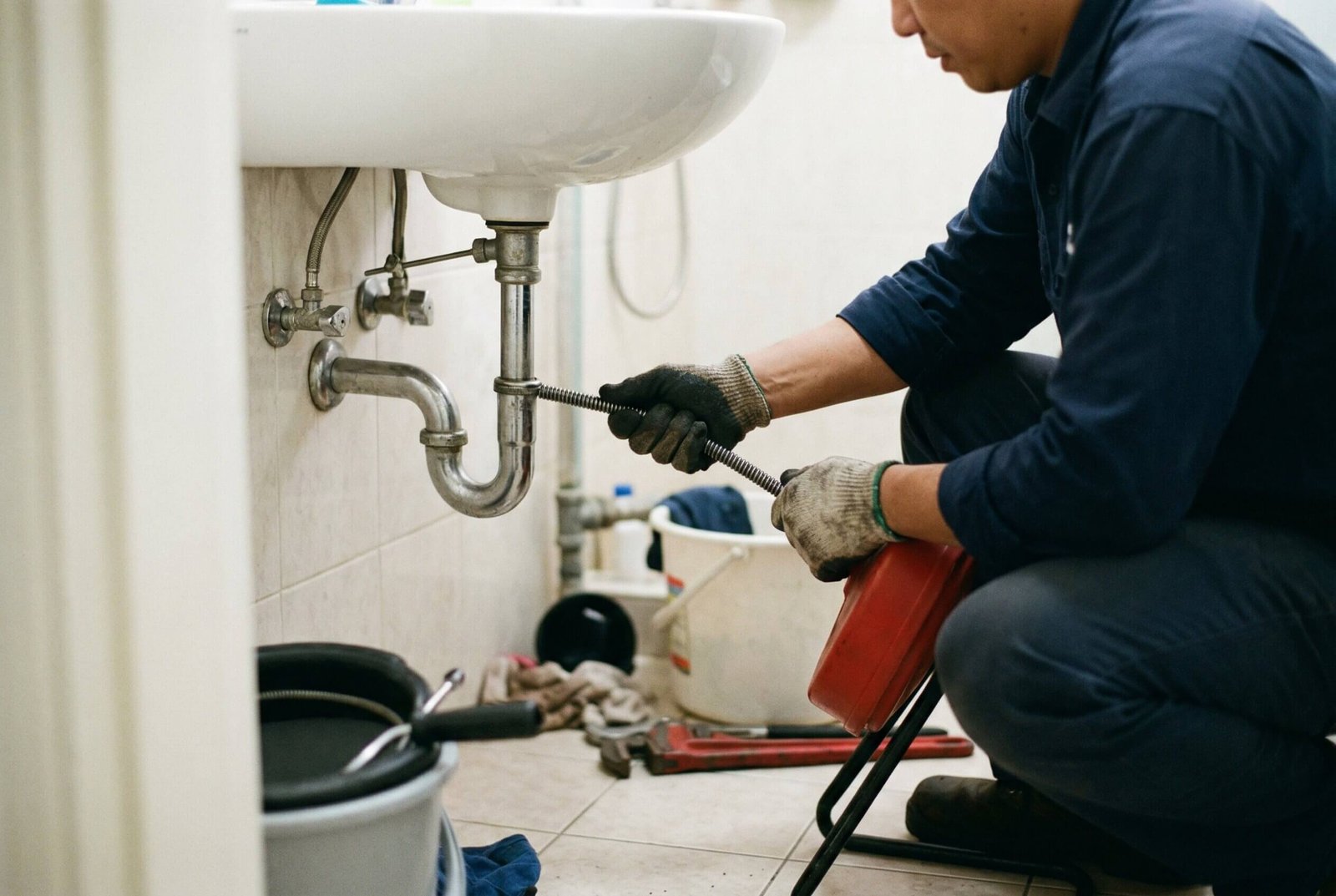
A plumbing auger, often called a drain snake, is one of the most effective tools for clearing clogged drain pipes in U.S. homes. Unlike simple methods like hot water or plunging, an auger is designed to reach inside the pipe, break apart blockages, and physically remove debris. This makes it especially useful when clogs are too deep or too compacted for surface-level fixes.
In real residential plumbing systems, clogs don’t always sit right at the drain opening. They often build up inside the P-trap or further down the branch drain line. Common materials like hair, grease, soap residue, food particles, and lint gradually accumulate and harden over time. When this happens, water flow slows down or stops completely, and basic methods are no longer enough. That’s where a plumbing auger becomes the go-to solution.
Augers are commonly used in:
- Bathroom sinks clogged with hair and soap scum
- Kitchen drains affected by grease and food buildup
- Utility and laundry sinks filled with lint and detergent residue
- Shower and bathtub drains with deep hair blockages
The key advantage of using a plumbing auger is control. Instead of pushing the clog further down the pipe, you can break it apart and often pull it out completely. This reduces the risk of creating bigger blockages deeper in the system, which is a common issue when using improper methods.
However, using an auger correctly is critical. Applying too much force, using the wrong type of auger, or misunderstanding where the clog is located can damage pipes or make the problem worse. That’s why the process should always start with proper identification of the clog and a step-by-step approach that moves from simple to more advanced methods.
In this guide, you’ll learn exactly how to use a plumbing auger to fix clogged drain pipes, including when it works best, how to use it safely, what tools are needed, and when it’s time to call a professional plumber.
What This Page Covers
ToggleIdentify the Type of Clog Before Using an Auger
Before you insert a plumbing auger into your drain, you need to understand what kind of clog you’re dealing with. In real U.S. plumbing scenarios, using an auger blindly can waste time or even damage pipes if the blockage isn’t suitable for snaking. A quick diagnosis helps you choose the right approach and improves your chances of clearing the drain on the first attempt.
A plumbing auger is most effective for clogs that are deeper inside the pipe or compacted enough that simple methods won’t work. But not every clog falls into that category.
Surface vs Deep Drain Clogs
The first step is determining whether the clog is near the drain opening or deeper in the pipe.
- Surface clogs
- Located at or just below the drain opening
- Caused by hair, soap buildup, or visible debris
- Can often be removed manually or with simple tools
- Deep clogs
- Located inside the P-trap or further down the drain line
- Caused by grease buildup, sludge, lint, or compacted debris
- Require tools like a plumbing auger to reach and clear
If water drains slowly even after removing visible debris, the clog is likely deeper—and an auger becomes the right tool.
Soft vs Solid Blockages
Not all clogs behave the same way inside pipes. Some are soft and easy to break apart, while others are more solid and resistant.
- Soft clogs
- Grease, soap scum, organic buildup
- Can sometimes be loosened with hot water or plunging
- Easier for an auger to break apart
- Solid clogs
- Food scraps, hardened grease, small foreign objects
- May require more force or repeated auger use
- Risk of pushing the clog deeper if handled incorrectly
Understanding this difference helps you adjust how aggressively you use the auger.
Temporary vs Recurring Clogs
Knowing whether the clog is a one-time issue or a recurring problem changes how you approach the fix.
- Temporary clog
- Caused by a recent buildup or blockage
- Usually cleared with one proper auger pass
- Drain returns to normal afterward
- Recurring clog
- Happens repeatedly over time
- Indicates buildup along pipe walls or deeper blockage
- May require multiple passes or professional cleaning
Recurring clogs are common in kitchen and utility drains where grease and residue continuously build up.
Warning Signs of a Serious Drain Problem
There are situations where using a plumbing auger is not enough—or not appropriate at all. Recognizing these signs early prevents unnecessary effort and potential damage.
Watch for:
- Multiple drains clogging at the same time
- Gurgling sounds from different fixtures
- Water backing up into other drains
- Strong sewage odor coming from pipes
These symptoms often indicate:
- Main drain line blockage
- Sewer line issues
- Venting problems in the plumbing system
In these cases, an auger may not reach the clog or fully resolve the issue. Professional tools like motorized augers or hydro jetting are usually required.
By identifying the type and location of the clog first, you can use the plumbing auger more effectively and avoid common mistakes. This step ensures you’re using the right tool for the job instead of relying on trial and error.
Quick Fixes You Can Try First (Low Risk)
Before reaching for a plumbing auger, it’s always worth trying a few simple, low-risk methods. In real U.S. plumbing situations, many clogs—especially early-stage ones—can be cleared without inserting a cable into the pipe. These quick fixes help loosen or remove soft buildup and may eliminate the need for snaking altogether.
Starting with these steps also reduces the chance of forcing a clog deeper into the system, which can happen if an auger is used too aggressively from the beginning.
Hot Water Flush
Hot water is one of the easiest and most effective ways to deal with grease, soap residue, and light organic buildup. In kitchen and utility drains, these materials often coat the inside of pipes and begin restricting flow.
When it works:
- Early-stage grease buildup
- Soap residue in bathroom drains
- Detergent accumulation in utility sinks
How to do it:
- Heat water to a near-boiling temperature (safe for PVC)
- Pour it slowly into the drain in stages
- Pause between pours to allow heat to break down buildup
If the flow improves even slightly, it means the clog is soft and may not require an auger yet.
Dish Soap for Grease Breakdown
Dish soap is specifically designed to cut through grease, making it a useful step before using hot water. This combination is often used by plumbers as a first attempt on kitchen and laundry drain clogs.
How it helps:
- Breaks down oily residue
- Loosens buildup stuck to pipe walls
- Makes flushing more effective
Simple method:
- Pour a generous amount of dish soap into the drain
- Let it sit for 10–15 minutes
- Follow with a hot water flush
This is particularly effective when grease is the primary cause of the blockage.
Manual Debris Removal
Sometimes the clog is partially visible at the drain opening or just below it. Removing this material manually can immediately improve drainage and reduce pressure inside the pipe.
Check for:
- Hair in bathroom sinks or showers
- Food particles in kitchen drains
- Lint and debris in utility sinks
You can use:
- Gloves for safe handling
- A small hook or plastic removal tool
- Paper towels to pull out debris
Even removing a small portion of the clog can make a noticeable difference.
Plunger Before Auger
A plunger is a powerful but often overlooked tool that can dislodge clogs sitting inside or just beyond the P-trap. It works by creating pressure and suction to move the blockage.
When to use it:
- Partial clogs
- Soft or movable debris
- Blockages near the trap
How to use it correctly:
- Add enough water to cover the plunger cup
- Seal any overflow openings
- Use controlled, steady plunges
- Test drainage after several attempts
If plunging improves flow, the clog may already be partially cleared—reducing the need for aggressive auger use.
These quick fixes are always worth trying before moving to a plumbing auger. In many cases, especially with soft or early-stage clogs, they can fully restore drainage without requiring additional tools.
If the drain remains slow or completely blocked after these steps, it’s a clear sign that the clog is deeper or more compacted—making it the right time to use a plumbing auger.
Intermediate Fix Methods (More Effective)
If quick fixes didn’t restore proper drainage, it’s time to use a plumbing auger directly. This is the stage where most real-world clogs get resolved. In U.S. homes, once buildup becomes compacted inside the P-trap or further down the drain line, mechanical removal is the most reliable solution.
Using an auger correctly allows you to break apart the clog, hook debris, and pull it out instead of pushing it deeper into the system. The key is controlled movement, not force.
How to Use a Plumbing Auger Step-by-Step
Using a plumbing auger properly is what separates a quick fix from a damaged pipe. Follow a controlled process rather than rushing.
Step-by-step method:
- Insert the auger cable slowly into the drain opening
- Push the cable gently until you feel resistance
- Rotate the handle clockwise to engage the clog
- Continue feeding the cable while rotating
- Once resistance increases, move the cable back and forth to break the clog
- Slowly pull the cable out while continuing rotation
- Remove any debris attached to the cable
- Run water to check if drainage has improved
- Repeat if necessary
Key tips:
- Do not force the cable—this can damage pipes
- Maintain steady rotation to prevent cable kinking
- Work in short sections instead of pushing all at once
This method is effective for most hair, grease, and sludge clogs.
Using Auger Through the P-Trap Removal
If inserting the auger through the drain opening isn’t effective, removing the P-trap gives you direct access to the drain line. This is a common professional approach when dealing with deeper clogs.
Why this works better:
- Allows direct entry into the pipe beyond the trap
- Avoids sharp bends that block cable movement
- Provides better control and reach
Basic approach:
- Remove the P-trap carefully
- Insert the auger into the exposed pipe (trap arm)
- Follow the same controlled snaking process
This significantly increases your ability to clear deeper blockages.
Choosing the Right Auger Type
Not all augers are the same, and using the right type improves both efficiency and safety.
- Hand auger (manual snake)
- Best for sinks and short drain lines
- Ideal for DIY use
- Drum auger
- Holds more cable length
- Better for deeper or longer clogs
- Closet auger
- Designed specifically for toilets
- Not used for sink drains
For most sink-related clogs, a standard hand auger is sufficient.
Common Mistakes to Avoid When Using an Auger
Many drain issues get worse because of incorrect auger use. Avoiding these mistakes is critical.
- Forcing the cable aggressively into the pipe
- Using the wrong auger size for the drain
- Not rotating the cable while feeding it
- Pulling the cable out too quickly
- Failing to clean the cable after use
- Ignoring resistance and continuing blindly
These mistakes can lead to:
- Pipe damage
- Cable tangling or kinking
- Pushing the clog deeper instead of removing it
This stage is where most homeowners successfully fix clogged drain pipes. A properly used plumbing auger provides direct control over the clog and is far more effective than relying on flushing or chemicals alone.
If the clog still doesn’t clear after proper auger use, it usually means the blockage is deeper, more severe, or part of a larger system issue.
Advanced Fix Methods (Stronger Solutions)
If using a standard plumbing auger didn’t fully clear the drain, the clog is likely deeper in the pipe or more compacted than usual. At this stage, stronger and more targeted methods are needed to completely restore flow. In real U.S. plumbing scenarios, this is where homeowners either upgrade their approach or prepare to involve professional tools.
The focus now is not just breaking the clog, but clearing the entire pipe section to prevent immediate recurrence.
Using Longer Augers for Deep Clogs
When a standard hand auger can’t reach the blockage, a longer cable is required. This is common in utility sinks, kitchen drains, and basement setups where pipes run further before connecting to the main line.
How this helps:
- Extends reach deeper into branch drain lines
- Accesses clogs beyond the P-trap and trap arm
- Breaks apart buildup that basic tools can’t reach
When to use:
- Drain remains clogged after multiple passes with a short auger
- You feel resistance further down the pipe
- Recurring clogs suggest deeper buildup
A drum auger is typically used in these situations, as it holds more cable and allows controlled feeding.
Combining Auger with Flushing
After using an auger, flushing the drain is an important step that many homeowners skip. Once the clog is broken apart, leftover debris can remain inside the pipe and cause another blockage.
Effective approach:
- Use the auger to break or remove the clog
- Flush the drain with hot water
- Repeat the process if needed
Why it works:
- Pushes loosened debris out of the system
- Clears pipe walls of residue
- Improves overall drainage speed
This combination is often enough to fully restore normal flow without further intervention.
Enzyme Cleaners After Snaking
After clearing the main blockage, enzyme-based cleaners can help break down any remaining organic residue inside the pipe. These are especially useful for drains that regularly deal with grease, soap, or detergent buildup.
Benefits:
- Gradually cleans pipe walls
- Reduces chances of future clogs
- Safe for most plumbing systems
Best use cases:
- Kitchen drains with grease buildup
- Bathroom drains with soap and hair residue
- Utility sinks with detergent and lint accumulation
This is more of a maintenance step rather than a primary fix.
Chemical Cleaners (Risks Included)
Chemical drain cleaners are sometimes used when other methods fail, but they should be approached carefully. In professional plumbing, these are considered a last resort due to potential risks.
What they do:
- Dissolve organic material
- Generate heat to break down clogs
Risks:
- Can damage pipes, especially older or PVC systems
- May weaken seals and joints
- Hazardous to handle
- Can make future repairs more difficult
When to consider:
- Only if mechanical methods (like augers) have not worked
- When used exactly as directed and not mixed with other chemicals
In most cases, mechanical cleaning remains the safer and more effective option.
At this level, you’re dealing with more stubborn or deeper clogs that require a combination of methods. If these approaches still don’t resolve the issue, it’s a strong indication that the blockage is beyond DIY capability and needs professional equipment.
Professional Drain Fix Methods
When a plumbing auger doesn’t fully clear the drain, it usually means the blockage is deeper, more compacted, or part of a larger issue within the plumbing system. In real U.S. homes, this is where professional tools and experience make a significant difference. Plumbers don’t just try to push through the clog—they diagnose the exact cause and apply the most effective method to fully restore flow.
Professional methods are designed to solve the root problem, not just provide temporary relief.
Motorized Auger Usage
A motorized auger (power snake) is a more advanced version of the manual auger. It uses a powered rotating cable that can cut through tough clogs with much greater force and reach.
What it does:
- Breaks through compacted grease, sludge, and debris
- Reaches deeper into branch lines and main drain lines
- Clears clogs that manual augers cannot handle
When plumbers use it:
- Repeated clogs that return after DIY snaking
- Blockages located further down the pipe system
- Drains that remain slow despite multiple attempts
This is often the first professional step before moving to more intensive methods.
Hydro Jetting for Severe Blockages
Hydro jetting is one of the most powerful drain cleaning techniques available. It uses high-pressure water to completely clean the inside of pipes.
How it works:
- Shoots pressurized water through the pipe
- Breaks apart grease, sludge, and buildup
- Cleans pipe walls, not just the clog
Best for:
- Heavy grease buildup in kitchen drains
- Long-term sludge accumulation
- Recurring clogs caused by pipe wall buildup
Hydro jetting restores the pipe to near-original condition, but it requires inspection first to ensure the pipes can handle the pressure.
Camera Inspection
When the cause of the clog isn’t clear or keeps coming back, plumbers use a drain inspection camera. This allows them to visually inspect the inside of the pipe in real time.
What it helps identify:
- Exact location of the clog
- Pipe damage, cracks, or corrosion
- Tree root intrusion in sewer lines
- Misaligned or sagging pipes
This step eliminates guesswork and ensures the correct fix is applied.
Pipe Repair if Needed
Sometimes the clog is not the main issue—the pipe itself may be damaged or improperly installed. In these cases, cleaning alone won’t provide a long-term solution.
Situations where repair is required:
- Cracked or leaking pipes
- Corroded metal plumbing
- Collapsed or restricted drain lines
- Poor pipe slope causing repeated buildup
Plumbers may recommend:
- Replacing damaged sections of pipe
- Reinstalling proper drain connections
- Upgrading outdated plumbing materials
Professional drain fix methods are designed to completely resolve the problem and prevent it from returning. If a plumbing auger doesn’t solve the issue after proper use, it’s a clear sign that deeper or more advanced intervention is needed.
Tools Used When Using a Plumbing Auger
Using a plumbing auger effectively isn’t just about the auger itself—it’s about having the right supporting tools and choosing the correct type of auger for the job. In real U.S. plumbing work, the tool selection depends on the drain type, clog depth, and pipe configuration.
For homeowners trying to fix a clogged drain pipe, understanding these tools helps you work more efficiently and avoid unnecessary mistakes.
Hand Auger (Manual Snake)
The hand auger is the most common tool used for clearing drain pipes in sinks, tubs, and utility drains. It’s simple, affordable, and designed for controlled use.
Key features:
- Manual crank handle for rotation
- Flexible cable that navigates pipe bends
- Compact size for short to medium drain lines
Best used for:
- Bathroom sink clogs (hair and soap buildup)
- Kitchen drains with grease and food residue
- Utility sinks with lint and detergent buildup
This is the go-to tool for most DIY drain cleaning tasks.
Drum Auger
A drum auger is a more advanced version of the hand auger. It contains a longer cable stored inside a drum, making it suitable for deeper or more stubborn clogs.
Key advantages:
- Longer cable length for extended reach
- Better control when feeding cable into pipes
- Reduced mess since cable stays contained
Best used for:
- Deeper clogs beyond the P-trap
- Branch drain lines that extend further
- Recurring clogs requiring deeper access
This tool is often used when a standard hand auger isn’t enough.
Closet Auger
A closet auger is specifically designed for toilets and should not be used in sink drains. It has a protective sleeve to prevent damage to porcelain fixtures.
Key purpose:
- Clearing toilet blockages safely
Important note:
- Not suitable for sink or utility drain pipes
Understanding the difference prevents using the wrong tool for the job.
Supporting Tools
In addition to the auger itself, several supporting tools make the process cleaner, safer, and more effective.
- Gloves
- Bucket
- Towels or rags
- Flashlight (to inspect drain opening)
What these tools help with:
- Protecting your hands from debris and bacteria
- Catching water when opening pipes or removing P-trap
- Cleaning up after removing debris
- Improving visibility when working in tight spaces
Using the right combination of tools ensures that the plumbing auger works efficiently and safely. Starting with the correct auger type and having basic support tools ready helps you fix clogged drain pipes without causing additional issues.
Cost to Clear Drain Pipes Using an Auger
When deciding whether to fix a clogged drain pipe yourself or call a plumber, cost plays a major role. Using a plumbing auger is one of the most cost-effective methods, especially when the clog is accessible and doesn’t require professional equipment.
In real U.S. plumbing scenarios, auger-based cleaning is often the first paid service plumbers offer—and also one of the easiest DIY solutions if you have the right tool.
DIY Cost Range
If you choose to clear the drain yourself using a plumbing auger, the cost is relatively low, especially compared to hiring a professional.
Typical DIY expenses:
- Hand auger (manual snake): $15 – $50
- Drum auger (longer reach): $40 – $100
- Tool rental (for higher-end augers): $20 – $50 per day
- Basic supplies (gloves, bucket, cleaning materials): $10 – $25
Estimated total DIY cost:
- $20 – $100 depending on tool choice
- Lower if you already own basic tools
This makes it one of the most affordable ways to fix a clogged drain pipe.
Plumber Cost Range in the U.S.
Hiring a plumber increases the cost due to labor, expertise, and equipment, but it also provides a more reliable and complete solution—especially for deeper or more complex clogs.
Typical pricing:
- Basic service call: $75 – $150
- Drain snaking (standard auger service): $100 – $300
- Deeper or more complex snaking: $200 – $500
Total expected cost:
- $150 – $400 for most standard drain clogs
If additional tools like motorized augers or inspections are required, the cost may increase further.
Factors That Affect Cost
The total cost depends on several real-world factors that plumbers evaluate before and during the job.
- Depth of the clog within the pipe
- Accessibility of the drain line
- Type of clog (soft buildup vs solid obstruction)
- Length of pipe that needs to be cleared
- Condition of existing plumbing system
A simple sink clog near the P-trap is much cheaper to fix than a deeper blockage in a long branch line.
Emergency Pricing
If the clog causes urgent issues—such as water backup, flooding risk, or unusable fixtures—you may need emergency service, which increases the cost.
Typical emergency rates:
- After-hours service call: $150 – $300+
- Emergency drain clearing: $250 – $600+
These higher costs reflect immediate response, extended work hours, and urgency.
Using a plumbing auger yourself can save a significant amount of money for standard clogs. However, if the blockage is deeper or more severe, paying for professional service can prevent repeated issues and avoid costly damage in the long run.
When NOT to Use a Plumbing Auger
A plumbing auger is a powerful and effective tool, but it’s not suitable for every situation. In real U.S. plumbing scenarios, using an auger in the wrong conditions can damage pipes, worsen the clog, or delay proper repair. Knowing when not to use it is just as important as knowing how to use it correctly.
If the problem goes beyond a standard blockage, forcing an auger into the system can create bigger issues instead of solving the original one.
Fragile or Old Pipes
Older plumbing systems often use materials that are more vulnerable to damage, especially when pressure or mechanical force is applied.
Common risks include:
- Corroded metal pipes that can crack under stress
- Thin or brittle PVC that may split or loosen at joints
- Weak connections that may start leaking after disturbance
In these cases, inserting and rotating an auger cable can cause:
- Pipe damage or breakage
- Leaks after the clog is cleared
- Costly repairs that could have been avoided
If your plumbing system looks aged or unstable, it’s safer to avoid DIY snaking and call a professional.
Complete Blockage with Standing Water
If your drain is completely blocked and filled with standing water that doesn’t move at all, using an auger blindly can be ineffective or risky.
Why this is a concern:
- You can’t see or feel where the clog starts
- The auger may push the blockage further instead of breaking it
- Thick or solid obstructions may require stronger tools
In these situations, professionals often use motorized augers or hydro jetting instead of manual tools.
Multiple Fixture Backups
When more than one drain in your home is affected, the problem is not isolated to a single pipe.
Watch for:
- Sink, bathtub, and toilet all draining slowly
- Water backing up into different fixtures
- Basement floor drain filling when water is used upstairs
These signs typically indicate:
- Main drain line blockage
- Sewer line issue
A standard plumbing auger may not reach or fully clear these blockages. Attempting DIY methods can delay proper repair and increase the risk of damage.
Recurring Clogs After Snaking
If you’ve already used an auger and the clog keeps coming back, the issue is likely deeper or more complex than it appears.
Recurring problems may indicate:
- Buildup along pipe walls
- Partial blockage further down the system
- Structural issues like poor pipe slope
Repeatedly using an auger in these cases may only provide temporary relief without fixing the root cause.
Recognizing these situations early helps you avoid unnecessary effort and potential damage. While a plumbing auger is highly effective for many clogs, it’s not a universal solution. If any of these warning signs are present, professional tools and inspection are usually the smarter and more cost-effective choice.
How to Prevent Future Drain Clogs
Clearing a drain with a plumbing auger solves the immediate problem, but preventing future clogs is what saves you time, effort, and repeated repairs. In real U.S. homes, most drain issues are caused by gradual buildup rather than sudden blockages. That means prevention comes down to daily habits and simple maintenance.
A properly maintained drain system reduces the need for frequent auger use and keeps pipes flowing efficiently.
Proper Drain Usage
What goes down your drain directly affects how quickly buildup forms inside your pipes. Many clogs happen because materials that shouldn’t enter the system are regularly washed in.
Avoid putting these into your drains:
- Grease, oils, and fats (they solidify and stick to pipe walls)
- Food scraps, especially fibrous or starchy waste
- Coffee grounds and heavy sediment
- Paint, drywall residue, or construction debris
Instead:
- Dispose of grease in a container, not the sink
- Scrape plates into the trash before washing
- Use drains only for water and appropriate waste
These habits significantly reduce the chances of needing to fix a clogged drain pipe again.
Regular Maintenance
Routine maintenance keeps small buildup from turning into a full blockage. This is especially important in kitchen and utility drains where residue accumulates faster.
Simple maintenance routine:
- Flush drains with hot water weekly
- Use dish soap occasionally to break down grease
- Apply baking soda and vinegar monthly
- Monitor drainage speed and act early if it slows
These steps help maintain pipe flow and delay the need for tools like an auger.
Using Drain Screens
Drain screens are one of the easiest ways to prevent debris from entering your pipes. They act as a physical barrier, catching materials before they reach the P-trap or deeper lines.
They help block:
- Hair in bathroom sinks and showers
- Food particles in kitchen drains
- Lint and debris in utility sinks
Drain screens are inexpensive and can prevent a large percentage of common clogs.
Routine Inspection
Paying attention to early warning signs can help you fix small issues before they turn into major blockages.
Watch for:
- Slow drainage starting to develop
- Occasional gurgling sounds
- Minor odors coming from the drain
Addressing these signs early—using simple cleaning or light snaking—can prevent the need for more aggressive methods later.
Preventing clogs is much easier than clearing them. With proper usage, basic maintenance, and early action, you can keep your drain pipes in good condition and reduce how often you need to use a plumbing auger.
Final Thoughts
A plumbing auger is one of the most reliable tools you can use to fix clogged drain pipes in a typical U.S. home. Unlike surface-level methods, it gives you direct access to the blockage, allowing you to break it apart and remove it instead of pushing it deeper into the system. When used correctly, it can solve most sink, tub, and utility drain clogs without the need for professional intervention.
The key to success is using the auger with the right approach. Start by identifying where the clog is located and what type of material you’re dealing with. Try simple methods first, then move to controlled auger use when needed. Avoid rushing or forcing the cable, as proper technique is what prevents pipe damage and ensures effective results.
It’s also important to understand the limits of DIY solutions. While a plumbing auger can handle many common clogs, situations like recurring blockages, multiple drain backups, or signs of sewer issues require professional tools and inspection. Recognizing these warning signs early can save you from more expensive repairs later.
From a cost perspective, using an auger is one of the most affordable ways to fix a clogged drain pipe. A small investment in the right tool can eliminate the need for repeated service calls. However, when the problem goes beyond basic snaking, professional services provide a more complete and long-term solution.
In the end, learning how to use a plumbing auger properly gives you control over one of the most common household plumbing issues. Combined with good maintenance habits and smart usage, it helps keep your drains clear, efficient, and free from recurring problems.