
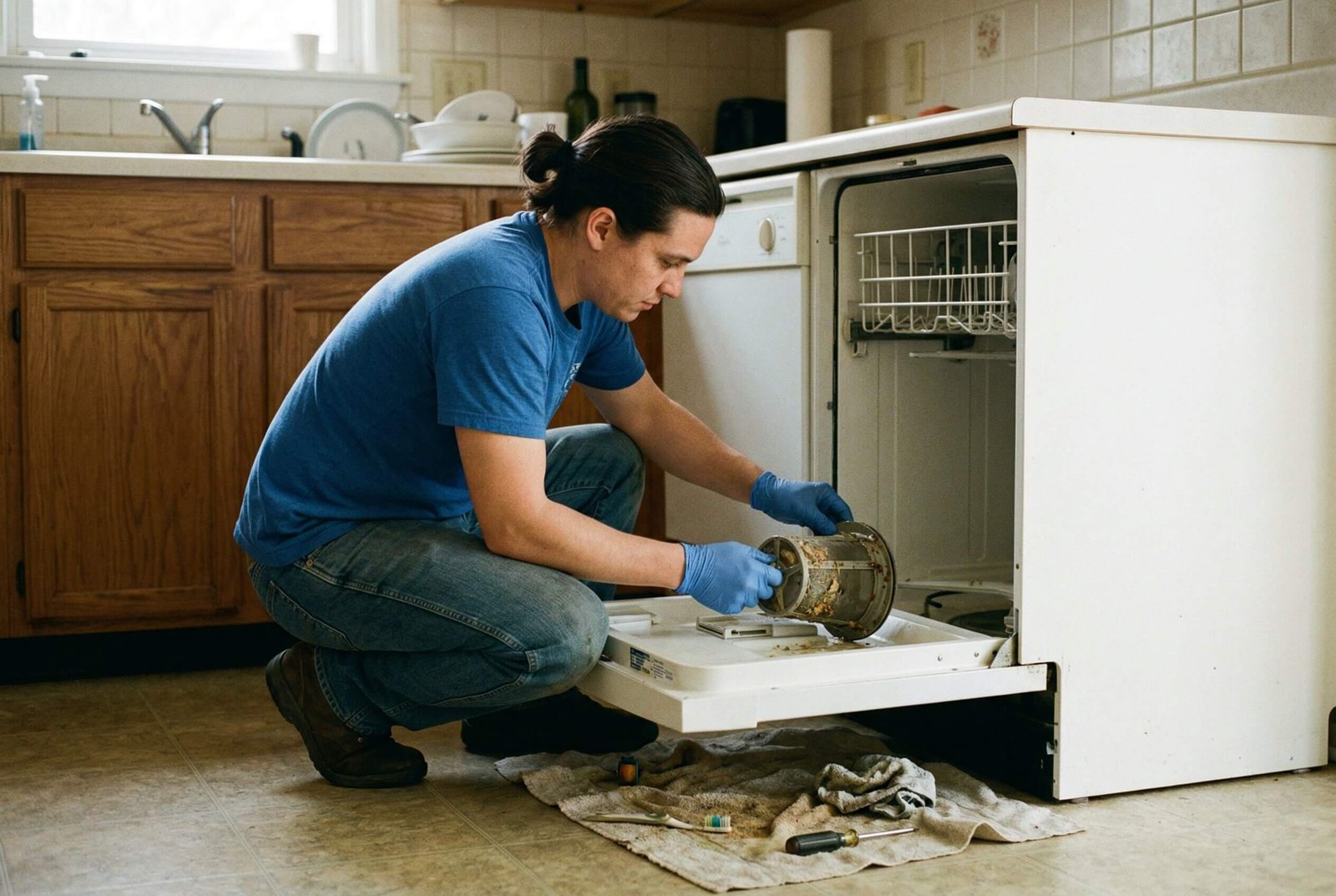
A clogged dishwasher drain is a common kitchen problem in U.S. homes, and it usually becomes noticeable when you open the dishwasher and see standing water at the bottom instead of a clean, empty basin. You might also notice slow draining, unpleasant odors, or dishes not coming out as clean as they should. While it can seem like a major appliance issue, in most cases, the problem is caused by a simple blockage somewhere in the drain system.
Dishwashers deal with a combination of food particles, grease, soap residue, and small debris that gets washed off dishes during every cycle. Even with modern filters in place, some of this material makes its way into the drain system. Over time, it builds up in the filter, drain hose, or connected plumbing, eventually restricting water flow and causing a clog.
What makes dishwasher drain issues slightly different from other household drains is that the system is connected to multiple components. The clog could be inside the dishwasher itself, in the drain hose, or even in the garbage disposal or sink drain line. That’s why identifying the exact location of the blockage is important before attempting a fix.
The good news is that many dishwasher drain clogs can be cleared using safe DIY methods, especially if the issue is caught early. Cleaning the filter, flushing the system, or checking the drain hose can often solve the problem without professional help. However, deeper or recurring clogs may require more advanced techniques or a plumber’s expertise.
In this guide, you’ll learn how to fix a clogged dishwasher drain step by step—from simple fixes to more advanced solutions. You’ll also understand how to identify the type of clog, choose the right method, avoid damaging your appliance, and know when it’s time to call a professional.
What This Page Covers
ToggleIdentify the Type of Clog Before Fixing
Before you start trying different ways to fix a clogged dishwasher drain, it’s important to understand where the blockage is and what’s causing it. Dishwasher drain systems are slightly more complex than standard sinks because they involve multiple components working together. A proper diagnosis helps you avoid unnecessary work and ensures you choose the right fix method the first time.
Professional plumbers always begin with identification before action, because treating the wrong part of the system can leave the actual problem unresolved.
Filter vs Drain Line Clog
The most common place for a dishwasher clog is the internal filter. This is where food particles, grease, and debris collect during each wash cycle. If the filter becomes clogged, water won’t drain properly and will remain at the bottom of the dishwasher.
A drain line clog, on the other hand, occurs beyond the dishwasher—inside the drain hose or the connected plumbing. This type of clog is usually caused by grease buildup, soap residue, or accumulated debris further down the line.
You can often tell the difference by checking:
- Water sitting inside dishwasher → likely filter blockage
- Dishwasher drains slowly or backs up into sink → likely drain line clog
Garbage Disposal Connection Issues
In many U.S. homes, the dishwasher drain is connected to the garbage disposal. This connection is a common source of problems.
If the garbage disposal is clogged, it can block the dishwasher from draining properly. Another common issue occurs when a new garbage disposal is installed and the knockout plug inside the disposal inlet is not removed. This completely blocks the dishwasher drain path.
Check for:
- Slow draining in both sink and dishwasher
- Dishwasher backing up when disposal is full
- Recent garbage disposal installation
Temporary vs Recurring Dishwasher Drain Problem
Some clogs happen as a one-time issue, while others indicate a deeper problem.
A temporary clog is usually caused by a buildup of food debris or grease from a heavy load. Once cleaned, the dishwasher returns to normal operation.
A recurring clog is a sign that something hasn’t been fully cleared or that there is buildup throughout the system. It may also indicate improper usage habits or an issue in the drain line.
Recurring problems often require a more thorough cleaning approach rather than just clearing visible debris.
Warning Signs of Serious Plumbing Problems
In some cases, the issue may not be limited to the dishwasher at all.
Watch for these signs:
- Water backing up into the kitchen sink
- Gurgling sounds from the drain when dishwasher runs
- Multiple drains in the kitchen slowing down
- Persistent foul or sewage odors
These symptoms can indicate a blockage in the main kitchen drain line or even the sewer line. In such cases, standard dishwasher fixes won’t fully solve the problem.
Once you understand where the clog is and what’s causing it, you can move forward with the right solution—starting with the safest and simplest methods first.
Quick Fixes You Can Try First (Low Risk)
Once you’ve identified where the clog is likely located, start with simple, low-risk methods. These are the same initial steps many plumbers take before moving to tools or more aggressive solutions. In many cases, especially when the clog is in the filter or caused by light grease buildup, these quick fixes are enough to restore proper drainage.
The goal here is to remove or loosen the blockage without damaging internal dishwasher components or pushing debris deeper into the plumbing.
Cleaning the Dishwasher Filter
The dishwasher filter is the most common place for clogs. It traps food particles and debris, and if not cleaned regularly, it can restrict water flow.
Steps to clean the filter:
- Turn off the dishwasher and remove the bottom rack.
- Locate the filter at the bottom of the unit (usually a twist-lock or pull-out type).
- Remove the filter and rinse it under warm water.
- Use a soft brush to remove grease and stuck debris.
- Reinstall the filter securely.
A clogged filter alone can cause standing water and poor drainage, so this should always be your first step.
Checking and Clearing the Drain Hose
The drain hose carries water from the dishwasher to the sink drain or garbage disposal. If it’s kinked or partially blocked, water won’t flow properly.
What to check:
- Look under the sink for any visible bends or kinks
- Ensure the hose is positioned correctly (not compressed)
- Disconnect and flush it if blockage is suspected
A simple hose issue can mimic a serious clog but is often easy to fix.
Running a Hot Water Cycle
Grease and detergent residue can build up inside the dishwasher and drain system. Running a hot water cycle helps loosen and flush out this buildup.
How to do it:
- Run the kitchen sink with hot water first to prime the system.
- Start a dishwasher cycle on the hottest setting.
- Let it run fully without interruption.
This method works best for minor grease-related clogs and as a maintenance step.
Dish Soap and Hot Water Flush
Dish soap can help break down greasy residue inside the drain system. When combined with hot water, it can loosen buildup and improve drainage.
Steps to follow:
- Add a small amount of liquid dish soap to the bottom of the dishwasher.
- Run a short hot water cycle.
- Observe if drainage improves after the cycle.
This is a safe and effective method for early-stage clogs caused by grease or detergent buildup.
These quick fixes solve a large percentage of dishwasher drain problems, especially when the clog is internal or near the surface. If the dishwasher still doesn’t drain properly after trying these steps, it’s time to move on to more effective intermediate methods.
Intermediate Fix Methods (More Effective)
If the quick fixes didn’t resolve the issue, the clog is likely deeper in the system or more compacted. At this stage, you need methods that go beyond surface cleaning and actually clear blockages inside the drain hose, pump area, or connected plumbing.
These methods are still safe for homeowners but require a bit more effort and attention to detail.
Baking Soda and Vinegar Method
This method helps break down grease, soap residue, and light organic buildup inside the dishwasher drain system. While it won’t clear heavy blockages, it can improve flow and loosen buildup before using tools.
Steps to follow:
- Remove standing water from the dishwasher if present.
- Pour 1 cup of baking soda into the bottom of the dishwasher.
- Add 1 cup of white vinegar.
- Let the mixture sit and react for 15–20 minutes.
- Run a hot water rinse cycle to flush the system.
This method works best as a supporting step rather than a standalone solution for tough clogs.
Cleaning the Drain Hose Thoroughly
If the clog is not inside the dishwasher, it may be in the drain hose connecting it to the sink or garbage disposal.
How to clean it:
- Turn off power to the dishwasher.
- Disconnect the drain hose from both ends.
- Flush the hose with water or use a flexible brush to remove buildup.
- Check for grease or debris inside.
- Reconnect securely and test.
This step is important because hose blockages are common and often overlooked.
Checking Garbage Disposal Connection
If your dishwasher is connected to a garbage disposal, a blockage in the disposal can prevent proper drainage.
What to do:
- Run the garbage disposal to clear any debris
- Flush with water while running it
- Check that the dishwasher connection port is not blocked
Also, if the disposal was recently installed, make sure the internal knockout plug was removed. If not, water cannot pass through at all.
Manual Debris Removal from Drain Area
Sometimes debris gets stuck in the drain area inside the dishwasher, near the drain pump or sump.
Steps:
- Remove the bottom rack and filter.
- Inspect the drain area using a flashlight.
- Carefully remove visible debris such as food particles, glass, or sludge.
- Avoid damaging internal components while cleaning.
This step helps eliminate blockages that are not visible during normal use.
At this stage, most dishwasher drain clogs can be cleared effectively. If the problem still persists, it usually means the blockage is deeper in the plumbing system or requires stronger methods.
Advanced Fix Methods (Stronger Solutions)
If the dishwasher still isn’t draining after intermediate steps, the clog is likely deeper in the kitchen drain line or more compacted. At this point, you’ll need stronger methods that can break down heavy buildup or physically clear the blockage further down the system.
These approaches can be effective, but they require more caution—especially when dealing with appliance components and connected plumbing.
Enzyme Cleaners for Grease Breakdown
Enzyme-based cleaners are a safer way to deal with grease and organic buildup inside the drain system. They use natural bacteria to break down food particles, oils, and residue over time.
They don’t provide instant results but are very effective for recurring or buildup-related clogs.
When to use:
- Slow draining caused by grease buildup
- Recurring dishwasher drain issues
- Preventive cleaning after partial clog removal
How to use:
- Pour the recommended amount into the dishwasher or sink drain.
- Let it sit for several hours (preferably overnight).
- Flush with hot water or run a rinse cycle.
This method is best for cleaning pipe walls rather than removing solid obstructions.
Chemical Cleaners (Use with Caution)
Chemical drain cleaners can dissolve grease and organic material quickly, but they come with risks—especially in dishwasher systems.
Dishwasher components include rubber seals, plastic parts, and metal fittings that can be damaged by harsh chemicals.
Use only if:
- Other methods have failed
- You follow product instructions strictly
- The clog is likely grease-based (not solid debris)
Risks include:
- Damage to internal dishwasher parts
- Pipe corrosion over time
- Harmful fumes in enclosed spaces
Because of these risks, chemical cleaners should not be your first choice.
Deep Drain Snaking Through Sink Line
If the clog is beyond the dishwasher, it may be located in the sink drain line or shared kitchen plumbing. In this case, using a drain snake through the sink drain is often more effective than working through the dishwasher itself.
Steps to follow:
- Insert a hand auger into the kitchen sink drain.
- Feed it into the pipe until you feel resistance.
- Rotate to break up or hook the clog.
- Pull back and remove debris.
- Repeat until flow improves.
This method targets deeper clogs that affect both the sink and dishwasher.
High-Pressure Flush Through Drain Line
A stronger flushing method can help remove stubborn buildup along the pipe walls. This can be done using a pressurized hose attachment or controlled water pressure.
Best used for:
- Grease-lined pipes
- Long sections of buildup
- Partial clogs that keep returning
Important considerations:
- Avoid excessive pressure that could damage pipes
- Ensure proper drainage path before flushing
This method is more effective than standard flushing but must be used carefully.
Advanced methods can solve most stubborn dishwasher drain clogs, but they also increase the risk of damage if not handled properly. If the problem still isn’t resolved, it’s likely time for professional tools and diagnosis.
Professional Drain Fix Methods
When a dishwasher drain clog doesn’t clear with DIY or advanced methods, the issue is usually deeper in the plumbing system or related to the appliance itself. At this point, professional tools and proper diagnosis are essential to fix the problem correctly and prevent it from returning.
Plumbers and appliance technicians focus not just on clearing the clog, but on identifying the exact cause—whether it’s in the drain line, garbage disposal, or internal dishwasher components.
Motorized Auger Cleaning
A motorized auger (power snake) is a professional-grade tool used to break through tough or compacted clogs in kitchen drain lines. It has significantly more power than a manual snake and can reach deeper into the plumbing system.
Used for:
- Deep or stubborn blockages
- Grease and food buildup in drain lines
- Clogs affecting both dishwasher and sink
This method is effective when manual snaking fails and is often the first step a plumber takes for serious clogs.
Hydro Jetting Kitchen Drain Lines
Hydro jetting uses high-pressure water to completely clean the inside of drain pipes. Instead of just removing the clog, it clears grease, sludge, and buildup along the entire pipe wall.
Benefits:
- Restores full pipe diameter
- Removes long-term buildup
- Reduces chances of recurring clogs
Common use cases:
- Recurring kitchen drain issues
- Heavy grease accumulation
- Slow drainage across multiple fixtures
Hydro jetting is one of the most effective long-term solutions but must be performed by professionals to avoid pipe damage.
Camera Inspection for Drain Issues
A camera inspection allows plumbers to see inside the drain system and identify exactly what’s causing the blockage. This eliminates guesswork and ensures the correct fix is applied.
Helps identify:
- Location of the clog
- Type of blockage (grease, debris, obstruction)
- Pipe condition (cracks, corrosion, alignment issues)
This step is especially useful when clogs keep returning or when the source of the problem is unclear.
Drain Pump Repair or Replacement
In some cases, the issue is not a clog in the plumbing but a problem inside the dishwasher itself—specifically the drain pump.
The drain pump is responsible for pushing water out of the dishwasher. If it becomes blocked or fails, water will remain in the unit even if the drain line is clear.
Signs of pump issues:
- Dishwasher not draining at all
- Humming noise without water movement
- Water remaining after cycle completes
Professional solutions include:
- Cleaning debris from the pump
- Repairing damaged components
- Replacing the drain pump if necessary
This is typically handled by an appliance repair technician rather than a plumber.
Professional methods ensure that both the clog and the root cause are properly addressed. If your dishwasher drain problem is persistent or unclear, bringing in a professional early can save time, prevent damage, and avoid repeated issues.
Tools Used to Fix Dishwasher Drain Clogs
Fixing a clogged dishwasher drain becomes much easier when you use the right tools for the job. Unlike other drains, dishwasher systems involve both appliance components and plumbing connections, so the tools used may vary depending on where the clog is located.
Knowing what each tool does helps you choose the correct approach and avoid unnecessary damage.
Screwdriver (for Filter Access)
A screwdriver is often needed to access the dishwasher’s internal components, especially the filter and drain area. Some models require removing screws to lift covers or panels.
Used for:
- Opening filter housing
- Accessing drain pump area
- Removing internal covers
This is usually the first tool required when working inside the dishwasher.
Plunger
A plunger can be used on the kitchen sink drain to help clear blockages that are affecting both the sink and dishwasher.
Best used for:
- Minor clogs in shared drain lines
- Situations where water backs up into the sink
Limitations:
- Not effective for internal dishwasher clogs
- Requires proper sealing to work effectively
Hand Auger
A hand auger (drain snake) is one of the most useful tools for clearing deeper clogs in the kitchen drain line. It allows you to reach beyond the sink and into the pipe where buildup may be located.
Best used for:
- Grease and food buildup in drain pipes
- Clogs beyond the dishwasher unit
- Persistent drainage issues
This tool is commonly used by both homeowners and plumbers.
Wet/Dry Vacuum
A wet/dry vacuum can be used to remove standing water and extract loose debris from the dishwasher or drain hose.
Best used for:
- Removing water before repair
- Pulling out loose blockages
- Cleaning drain hose or sump area
This method reduces the risk of pushing debris further into the system.
Inspection Camera
An inspection camera is used by professionals to visually inspect the inside of drain pipes and identify the exact cause of the clog.
Used for:
- Locating deep blockages
- Diagnosing recurring issues
- Checking pipe condition
While not commonly used by homeowners, it plays a key role in professional diagnostics.
Using the right tools at the right stage makes the repair process more efficient and prevents unnecessary trial and error. Most basic dishwasher clogs can be handled with simple tools, but more serious issues require specialized equipment.
Cost to Fix a Dishwasher Drain Clog
The cost to fix a clogged dishwasher drain depends on where the problem is located and how severe it is. Some issues can be resolved with simple cleaning at little to no cost, while others—especially those involving the drain line or internal components—may require professional service.
Understanding the cost range helps you decide whether to handle the fix yourself or bring in a plumber or appliance technician.
DIY Cost Range
Most dishwasher drain clogs can be resolved with basic tools and cleaning materials, making DIY the most affordable option.
Typical DIY costs:
- Replacement or cleaning supplies (brush, cloth, cleaner): $5 – $20
- Baking soda and vinegar: $5 – $15
- Enzyme cleaner: $10 – $30
- Hand auger (if needed): $25 – $80
- Wet/dry vacuum (if not already owned): $50 – $150
If the clog is limited to the filter or hose, you can often fix the issue for under $50.
Plumber Cost in the U.S.
If the clog is in the kitchen drain line or connected plumbing, a plumber may be required.
Typical plumber pricing:
- Basic drain cleaning: $100 – $250
- Snaking kitchen drain: $150 – $350
- Hydro jetting service: $300 – $600
- Camera inspection: $150 – $400
Emergency service pricing:
- After-hours calls can range from $300 – $800+ depending on urgency
These costs vary by location and severity but are common across most U.S. households.
Appliance Repair vs Plumbing Cost
If the issue is inside the dishwasher—such as a blocked or faulty drain pump—you may need an appliance repair technician instead of a plumber.
Typical appliance repair costs:
- Drain pump cleaning: $100 – $200
- Drain pump replacement: $150 – $400
- General dishwasher diagnostic visit: $80 – $150
Choosing the right professional depends on whether the issue is in the plumbing or the appliance itself.
Factors That Affect Cost
The total cost can vary based on several factors:
- Location of the clog (filter, hose, or main drain line)
- Severity of the blockage
- Accessibility of plumbing or dishwasher components
- Type of equipment required
- Condition of pipes or appliance parts
- Whether diagnostics (like camera inspection) are needed
Simple clogs near the dishwasher are inexpensive to fix, while deeper plumbing issues or mechanical failures increase costs.
Knowing these cost ranges allows you to make a more informed decision and avoid unnecessary expenses by choosing the right solution early.
When NOT to Fix It Yourself
While many dishwasher drain clogs can be handled with DIY methods, there are situations where attempting a fix yourself can lead to further damage—either to the appliance or your plumbing system. Knowing when to stop is critical to avoiding costly repairs.
Professional plumbers and appliance technicians step in when the issue goes beyond basic cleaning or involves components that require expertise.
Electrical or Appliance Issues
Dishwashers are electrical appliances, and not all drainage problems are caused by clogs. If the issue involves internal components like the drain pump, sensors, or wiring, it’s not something you should attempt to fix without proper training.
Warning signs include:
- Dishwasher not draining at all despite a clear filter
- Humming or unusual noises during the drain cycle
- Error codes on the control panel
- Intermittent draining issues
These problems often require diagnosis and repair by a qualified technician.
Recurring Drain Failures
If your dishwasher drain keeps clogging even after cleaning the filter and hose, the problem likely hasn’t been fully resolved. Recurring clogs usually indicate buildup deeper in the drain system or a larger plumbing issue.
Repeated DIY fixes may temporarily improve drainage but won’t eliminate the root cause. In such cases, professional cleaning methods like motorized snaking or hydro jetting may be required.
Multiple Fixture Backups
When your dishwasher issue is accompanied by problems in the kitchen sink or other drains, it’s no longer an isolated problem.
Common signs:
- Water backing up into the sink when the dishwasher runs
- Slow drainage in multiple kitchen fixtures
- Gurgling sounds in the drain system
These symptoms usually point to a blockage in the shared drain line or main kitchen plumbing, which requires professional tools to fix properly.
Risk of Internal Dishwasher Damage
Dishwashers have delicate internal components, including seals, pumps, and spray arms. Using the wrong cleaning method or applying too much force can cause damage.
Risks include:
- Damaging the drain pump or internal fittings
- Cracking plastic components
- Loosening hose connections leading to leaks
- Using harsh chemicals that degrade seals
If you’re unsure about accessing internal parts or using advanced methods, it’s safer to stop and seek professional help.
Recognizing these situations early can prevent more serious damage and higher repair costs. When in doubt, it’s always better to get expert assistance rather than risk worsening the problem.
How to Prevent Future Dishwasher Drain Clogs
Once you’ve fixed a clogged dishwasher drain, the focus should shift to preventing it from happening again. Most dishwasher clogs develop gradually due to everyday usage habits, so small changes in how you use and maintain your dishwasher can make a significant difference over time.
Professional plumbers often emphasize prevention because it reduces the risk of recurring issues and keeps both your appliance and plumbing system working efficiently.
Proper Food Scraping Habits
One of the main causes of dishwasher drain clogs is food debris entering the system. While dishwashers are designed to handle small particles, large or sticky food residues can accumulate and block the filter or drain.
Best practices:
- Scrape off large food particles before loading dishes
- Avoid putting grease-heavy plates directly into the dishwasher
- Do not rely on the dishwasher to handle solid waste
You don’t need to pre-wash dishes completely, but removing excess food helps prevent buildup.
Regular Filter Cleaning
The dishwasher filter plays a key role in trapping debris and preventing it from entering the drain system. If it becomes clogged, water flow is restricted, leading to drainage problems.
Maintenance routine:
- Clean the filter at least once a week for regular use
- Rinse thoroughly under warm water
- Use a soft brush to remove grease and residue
Keeping the filter clean is one of the simplest and most effective ways to prevent clogs.
Using the Correct Detergent
Using too much detergent or the wrong type can lead to residue buildup inside the dishwasher and drain system. This residue can trap food particles and create blockages over time.
Recommendations:
- Use the correct amount of detergent as per manufacturer guidelines
- Choose high-quality dishwasher detergent
- Avoid excessive use of additives that leave residue
Proper detergent use helps maintain clean pipes and better drainage.
Routine Maintenance Cycles
Running periodic cleaning cycles helps remove grease, soap residue, and minor buildup before it turns into a clog.
Suggested maintenance:
- Run a hot water cycle with a dishwasher cleaner once a month
- Occasionally use vinegar to help break down residue
- Check and clean the drain area during maintenance
These simple steps keep the internal system clean and reduce the risk of future issues.
Preventing dishwasher drain clogs is mostly about controlling what goes into the system and maintaining it regularly. With consistent habits, you can avoid most drainage problems and keep your dishwasher running smoothly.
Final Thoughts
A clogged dishwasher drain might seem like a major problem at first, but in most cases, it’s a manageable issue when approached correctly. The key is to understand where the clog is happening and apply the right fix method instead of jumping straight into aggressive solutions.
Starting with simple steps like cleaning the filter, checking the drain hose, and running a hot water cycle can often resolve the issue quickly. If the clog is deeper, using intermediate or advanced methods like snaking the drain line or flushing buildup can restore proper drainage. The process should always move from low-risk to more involved solutions.
At the same time, it’s important to recognize when the issue is beyond a basic clog. Recurring drainage problems, multiple fixture backups, or signs of appliance malfunction indicate that professional help is needed. Addressing these situations early can prevent damage to your dishwasher and avoid more expensive repairs later.
Cost also plays a role in decision-making. Many dishwasher clogs can be fixed at little to no cost, but delaying a proper fix for deeper issues can lead to higher expenses over time. Choosing the right approach early helps you save both time and money.
Ultimately, fixing a clogged dishwasher drain is about proper diagnosis, using the right tools, and maintaining good habits. With regular cleaning and smart usage, you can prevent most clogs and keep your dishwasher running efficiently for years.