
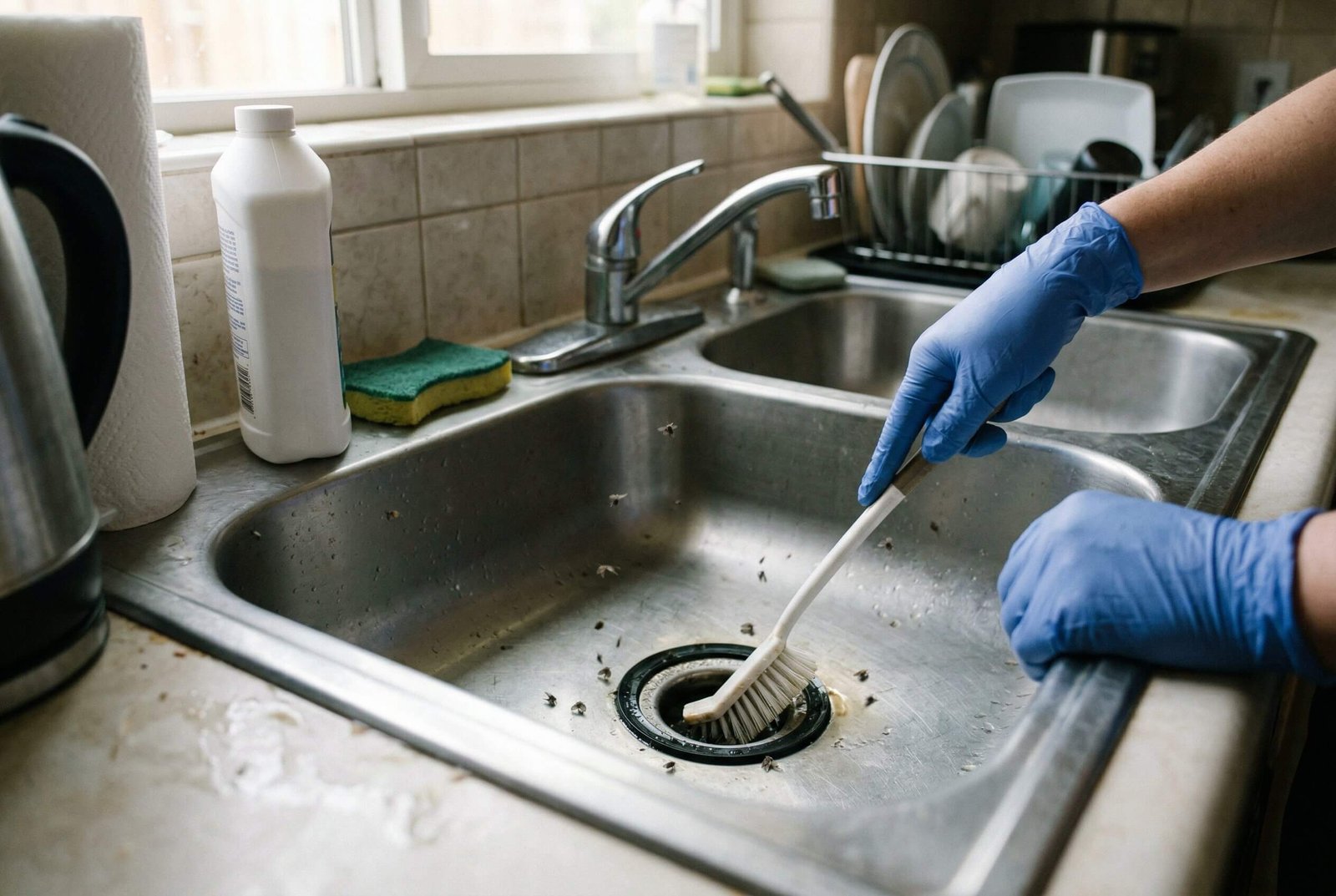
Drain flies in your sink can quickly turn from a minor annoyance into a persistent household problem if not handled properly. These small, moth-like insects are commonly found hovering around kitchen and bathroom sinks, especially near drains where moisture and organic buildup exist. While they don’t bite or cause direct harm, their presence is a clear sign that something inside your drain needs attention.
Drain flies are attracted to the slimy organic layer—often called biofilm—that forms inside pipes. This buildup consists of grease, food particles, soap residue, and other debris that sticks to the inner walls of the drain. Over time, this environment becomes the perfect breeding ground for drain flies, allowing them to lay eggs and multiply rapidly. Simply removing the visible flies won’t solve the problem unless the source inside the drain is properly cleaned.
One of the biggest mistakes homeowners make is treating drain flies like surface pests. Sprays or traps may reduce the number temporarily, but they don’t eliminate the root cause. As long as the organic buildup remains inside the drain, new flies will continue to hatch and reappear within days.
The good news is that most drain fly problems can be fixed using safe and effective DIY methods—especially if caught early. From simple flushing techniques to deeper cleaning methods, there are multiple ways to remove the buildup and stop the breeding cycle. However, in more severe cases, professional cleaning or plumbing inspection may be required.
In this guide, you’ll learn how to fix drain flies in your sink step by step. We’ll cover how to identify the source, eliminate the infestation, choose the right cleaning method, and prevent the problem from coming back.
What This Page Covers
ToggleIdentify the Source Before Fixing
Before you try to fix drain flies in your sink, you need to confirm where they are coming from. This is the most important step, because drain flies don’t just appear randomly—they breed inside organic buildup within moist areas. If you treat the wrong location, the infestation will continue even after cleaning.
Professional plumbers and pest control experts always focus on identifying the exact breeding source before applying any solution. This ensures the problem is eliminated at its root, not just temporarily reduced.
Confirm They Are Drain Flies
Not all small flies around your sink are drain flies. Misidentifying them can lead to using the wrong treatment method.
Drain flies have distinct characteristics:
- Small, fuzzy, moth-like appearance
- Gray or dark-colored wings
- Weak, fluttering flight pattern
- Usually found resting on walls near drains
They are often confused with fruit flies, but fruit flies are more active, lighter in color, and usually gather around exposed food rather than drains.
Correct identification is important because drain flies require cleaning the drain system, while other flies may require different solutions.
Locate the Breeding Area
Drain flies lay eggs in the slimy organic layer inside drains. This means the infestation source is almost always inside a moist, buildup-heavy area.
Common breeding locations include:
- Sink drain (kitchen or bathroom)
- Garbage disposal unit
- Drain hose or pipe connections
- Overflow drain openings in sinks
- Floor drains in laundry or basement areas
Even if you only see flies near one sink, the actual breeding area could be slightly deeper in the drain system or connected plumbing.
Signs of Heavy Infestation
A small number of flies may indicate early-stage buildup, but a large or persistent presence usually means a well-established breeding environment.
Warning signs include:
- Flies appearing daily even after cleaning surfaces
- Increased activity during evening hours
- Visible sludge or buildup inside the drain
- Multiple drains in the home showing activity
In these cases, simple surface cleaning will not be enough—you’ll need deeper drain cleaning to fully eliminate the problem.
Sticky Tape Test for Confirmation
A simple way to confirm the exact source is by using a tape test.
How to do it:
- Place a piece of clear tape (sticky side down) over the drain opening at night.
- Leave a small gap for air flow if needed.
- Check the tape in the morning.
If flies are stuck to the tape from underneath, the drain is confirmed as the breeding source.
Once you’ve confirmed the source, you can move forward with the right fix method—starting with safe and simple solutions.
Quick Fixes You Can Try First (Low Risk)
Once you’ve confirmed that drain flies are coming from your sink, start with simple, low-risk methods. These are designed to reduce the infestation quickly while beginning to break down the organic buildup inside the drain.
At this stage, the goal is not just to kill visible flies, but to disrupt their breeding environment. If caught early, these methods can significantly reduce or even eliminate the problem without needing advanced cleaning.
Boiling Water Flush
Boiling water is one of the simplest ways to kill drain fly larvae and loosen light buildup inside the pipe.
The heat helps break down grease and soft organic material while also killing eggs and larvae near the surface of the drain.
How to do it:
- Boil a full kettle or pot of water.
- Slowly pour it directly into the drain in stages.
- Allow a few seconds between pours to let it work through the pipe.
This method works best for early infestations and should be repeated daily for a few days for better results.
Dish Soap and Hot Water Method
Dish soap helps break down greasy residue inside the drain, which is a major component of the biofilm where drain flies breed.
Steps to follow:
- Pour a generous amount of liquid dish soap into the drain.
- Follow with hot water to push it through the pipe.
- Let it sit for 10–15 minutes.
- Flush again with hot water.
This method helps loosen the sticky layer that traps organic material and supports larvae growth.
Vinegar and Baking Soda Flush
This method creates a mild reaction that helps clean light buildup and reduce odor inside the drain.
Steps:
- Pour 1 cup of baking soda into the drain.
- Add 1 cup of white vinegar.
- Let the mixture fizz for 15–20 minutes.
- Flush with hot water.
While this won’t remove heavy sludge, it’s effective for early-stage buildup and maintenance.
Sticky Tape Monitoring Method
Even after starting treatment, it’s important to monitor whether the infestation is reducing.
Using tape over the drain helps you track activity and confirm whether your efforts are working.
How to use it:
- Place tape over the drain overnight
- Check in the morning for trapped flies
- Repeat for a few days to observe reduction
If the number of flies decreases, your cleaning methods are working. If not, deeper cleaning will be required.
These quick fixes are effective for light infestations and should always be your starting point. However, if flies continue to appear after a few days, it means the breeding source is deeper in the drain.
Intermediate Fix Methods (More Effective)
If drain flies are still appearing after trying quick fixes, it means the problem is deeper than surface-level buildup. At this stage, you need to physically remove the biofilm inside the drain—the slimy layer where drain flies lay eggs and thrive.
These methods are more effective because they directly target the breeding environment rather than just killing the flies.
Deep Cleaning the Drain with Brush
The most effective way to eliminate drain flies is to scrub the inside of the pipe and remove the biofilm completely. This is exactly what professional plumbers focus on—removing the source, not just treating the symptoms.
How to do it:
- Use a long, flexible drain brush designed for pipes.
- Insert it into the drain as far as possible.
- Scrub the inner walls by rotating and moving the brush up and down.
- Pull it out and rinse off debris.
- Flush with hot water afterward.
What you’re removing:
- Slimy organic buildup
- Grease and soap residue
- Larvae and eggs attached to pipe walls
This method is one of the most important steps for fully eliminating drain flies.
Cleaning Garbage Disposal Thoroughly
If your sink has a garbage disposal, it can be a major breeding ground for drain flies. Food particles and grease often collect inside the disposal chamber and along its inner surfaces.
Steps to clean it:
- Turn off the disposal for safety
- Scrub inside using a brush (especially under the rubber splash guard)
- Flush with hot water while running the disposal
- Use dish soap to break down grease
The underside of the rubber flap is often overlooked but is a common place for buildup and larvae.
Using Enzyme Drain Cleaners
Enzyme cleaners are highly effective for breaking down organic matter inside the drain over time. Unlike chemical cleaners, they work gradually by digesting grease, food residue, and sludge.
When to use:
- After manual cleaning to remove remaining residue
- For recurring infestations
- As ongoing maintenance
How to apply:
- Pour the recommended amount into the drain.
- Let it sit overnight for maximum effect.
- Flush with warm water the next day.
These cleaners help eliminate any leftover organic material that brushing may have missed.
Cleaning Overflow Drain Channel
Many sinks have an overflow opening near the top, and this area is often ignored during cleaning. However, it can also collect moisture and organic residue, making it another breeding spot for drain flies.
How to clean it:
- Pour a small amount of cleaner or vinegar into the overflow opening
- Use a narrow brush if accessible
- Flush with warm water
Even if your main drain is clean, leaving the overflow untreated can allow the infestation to continue.
At this stage, most drain fly problems can be eliminated if the biofilm is fully removed. If flies still persist after thorough cleaning, the issue may be deeper in the plumbing system or require stronger methods.
Advanced Fix Methods (Stronger Solutions)
If drain flies are still present after thorough cleaning, it means the breeding source is deeper in the drain system or more heavily established. At this stage, stronger methods are needed to remove stubborn biofilm, sludge buildup, and hidden organic material that basic cleaning cannot reach.
These methods are more aggressive and should be used carefully to avoid damaging your plumbing.
Chemical Drain Cleaners (Use Carefully)
Chemical cleaners can help break down heavy organic buildup that supports drain fly infestations. They work faster than enzyme cleaners but come with higher risk.
When to use:
- Thick sludge buildup that brushing cannot remove
- Persistent infestation despite cleaning
- Deep organic residue inside pipes
Risks to consider:
- Can damage older pipes or seals
- May not fully remove thick biofilm
- Harmful fumes if used improperly
Always follow product instructions and avoid repeated use. These should be a last resort rather than a first option.
Drain Line Snaking for Sludge Removal
If the buildup extends deeper into the drain line, using a hand auger can help break up and remove accumulated sludge where flies are breeding.
Steps to follow:
- Insert the drain snake into the pipe.
- Feed it slowly until you feel resistance.
- Rotate to break up the buildup.
- Pull it back and remove debris.
- Repeat as needed.
This method is effective for reaching areas beyond the immediate sink opening where biofilm may still exist.
High-Pressure Drain Cleaning
High-pressure flushing uses strong water flow to remove buildup from the inner walls of pipes. It is more effective than standard flushing and can clean larger sections of the drain line.
Best used for:
- Stubborn biofilm along pipe walls
- Recurring infestations
- Partial blockages that keep returning
Important:
Use controlled pressure only. Excessive force can damage pipe joints or cause leaks.
Replacing Severely Contaminated Drain Components
In rare cases, the infestation may be caused by severely contaminated or damaged components that cannot be cleaned effectively.
Examples include:
- Old drain pipes with heavy buildup
- Worn-out P-traps filled with sludge
- Damaged or corroded sections of plumbing
If cleaning methods fail repeatedly, replacing affected components may be the only long-term solution.
Advanced methods are designed to fully eliminate the environment where drain flies breed. If the infestation still persists after these steps, it usually indicates a deeper issue that requires professional tools and inspection.
Professional Drain Fly Removal Methods
If drain flies continue to return even after deep cleaning and advanced methods, the infestation is likely rooted deeper in the plumbing system or hidden in areas that are difficult to access. At this stage, professional intervention is the most effective way to completely eliminate the problem.
Plumbers and, in some cases, pest control professionals focus on removing the entire breeding environment—not just the visible flies—using specialized tools and thorough system cleaning.
Hydro Jetting to Remove Biofilm
Hydro jetting is one of the most effective professional methods for eliminating drain flies permanently. It uses high-pressure water to clean the entire interior surface of the pipe.
Unlike basic flushing or snaking, hydro jetting removes:
- Thick biofilm layers
- Grease and sludge buildup
- Organic residue along pipe walls
- Hidden breeding material deep in the system
This method essentially restores the pipe to a clean state, removing the environment where drain flies lay eggs.
Camera Inspection for Hidden Breeding Areas
A major advantage of hiring a professional is the ability to inspect the inside of your plumbing using a specialized camera.
This allows the plumber to:
- Locate the exact breeding source
- Identify hidden buildup areas
- Detect pipe damage or structural issues
- Confirm whether the problem extends beyond the sink
Camera inspection removes guesswork and ensures the correct solution is applied.
Full Drain System Cleaning
In some cases, the infestation is not limited to a single sink drain. The breeding source may exist across multiple connected pipes.
Professional cleaning may include:
- Sink drain cleaning
- Garbage disposal cleaning
- P-trap removal and cleaning
- Main kitchen drain line flushing
This comprehensive approach ensures that no hidden breeding areas are left untreated.
Plumbing Repairs if Needed
If the infestation keeps returning despite cleaning, there may be an underlying plumbing issue.
Common problems include:
- Improper pipe slope causing stagnant water
- Cracks or rough surfaces inside pipes
- Old or corroded plumbing that traps buildup
In such cases, repairing or replacing the affected section of pipe is necessary for a permanent solution.
Professional methods are designed to eliminate both the infestation and its root cause. If drain flies persist after multiple cleaning attempts, bringing in a professional early can save time and prevent ongoing frustration.
Tools Used to Fix Drain Flies in Sink
Fixing drain flies effectively requires the right tools—not just to kill the flies, but to remove the organic buildup where they breed. Unlike simple drain clogs, this problem is about cleaning biofilm inside the pipes, so tools that can scrub, flush, and break down residue are essential.
Using the correct tools at each stage makes the process faster and ensures the infestation doesn’t return.
Drain Brush
A drain brush is one of the most important tools for eliminating drain flies. It allows you to physically scrub the inside of the pipe and remove the slimy biofilm layer where eggs and larvae develop.
Best used for:
- Scrubbing inner pipe walls
- Removing grease and organic sludge
- Reaching deep into the drain
This tool is critical because chemical or flushing methods alone cannot fully remove biofilm.
Enzyme Cleaner
Enzyme cleaners help break down organic material inside the drain over time. They are safe for pipes and highly effective for maintaining a clean system after manual scrubbing.
Best used for:
- Breaking down leftover residue
- Preventing future infestations
- Ongoing maintenance
They work slowly but are excellent for long-term results.
Wet/Dry Vacuum
A wet/dry vacuum can be used to remove standing water and extract loose debris from the drain or surrounding areas.
Best used for:
- Pulling out loose sludge or buildup
- Clearing water before cleaning
- Supporting other cleaning methods
This tool reduces the risk of pushing debris deeper into the pipe.
Flashlight
A flashlight helps you inspect the inside of the drain and identify visible buildup or breeding areas.
Used for:
- Checking drain openings
- Inspecting garbage disposal interiors
- Identifying sludge or debris
While simple, it’s an essential tool for proper diagnosis.
Inspection Camera
An inspection camera is used by professionals to look deep inside the drain system and locate hidden problem areas.
Best used for:
- Finding deep or hidden infestations
- Diagnosing recurring issues
- Checking pipe condition
This tool ensures the correct fix is applied when the source is not visible.
Using the right combination of tools allows you to fully remove the breeding environment and prevent drain flies from returning. Most homeowners can handle the problem with basic tools, but severe cases may require professional equipment.
Cost to Fix Drain Flies in Sink
The cost to fix drain flies in your sink depends on how severe the infestation is and how deep the breeding source exists within your plumbing. In most cases, this problem can be resolved with low-cost DIY methods, but persistent or large infestations may require professional cleaning or inspection.
Understanding the cost helps you decide whether to handle it yourself or bring in a plumber or pest control expert.
DIY Cost Range
Most drain fly problems can be fixed using simple tools and cleaning products, making DIY the most affordable option.
Typical DIY costs:
- Drain brush: $10 – $25
- Enzyme cleaner: $10 – $30
- Baking soda and vinegar: $5 – $15
- Dish soap and basic supplies: $5 – $20
- Wet/dry vacuum (if not already owned): $50 – $150
In most cases, you can eliminate drain flies for under $50 if you already have basic tools.
Plumber Cost in the U.S.
If the infestation is deep in the drain system or keeps returning, a plumber may be required.
Typical plumber pricing:
- Basic drain cleaning: $100 – $250
- Snaking drain line: $150 – $350
- Hydro jetting service: $300 – $600
- Camera inspection: $150 – $400
Professional cleaning ensures that all biofilm and hidden buildup are removed.
Pest Control Cost (If Severe)
If the infestation spreads beyond the drain or becomes severe, pest control services may be needed in addition to plumbing work.
Typical pest control costs:
- Initial treatment: $100 – $300
- Follow-up visits (if needed): $50 – $150
However, most drain fly issues are resolved by cleaning the drain system rather than using pest control alone.
Factors That Affect Cost
The total cost can vary depending on several factors:
- Location of the breeding source (surface vs deep pipe)
- Severity of the infestation
- Length of time the problem has existed
- Accessibility of plumbing
- Type of cleaning method required
- Whether inspection or repairs are needed
Simple infestations near the drain opening are inexpensive to fix, while deeper or recurring issues can increase costs.
Understanding these cost ranges helps you take action early and avoid unnecessary expenses by addressing the root cause before it worsens.
When NOT to Fix It Yourself
While most drain fly problems can be handled with proper cleaning, there are situations where DIY methods won’t fully solve the issue—or could even make things worse. Drain flies are a symptom of a deeper problem, and if that problem extends beyond what you can access, professional help is the safer and more effective option.
Recognizing these situations early can save time, prevent repeated infestations, and avoid unnecessary damage to your plumbing system.
Severe Infestation
If you’re seeing a large number of drain flies every day, the infestation is likely well established inside your plumbing system. This means there is significant organic buildup that simple cleaning methods may not fully remove.
Warning signs:
- Flies appearing in large numbers daily
- Multiple areas in the home affected
- Infestation not improving after several cleaning attempts
In these cases, deeper cleaning using professional tools is often required to eliminate the breeding environment completely.
Hidden Plumbing Issues
Sometimes the problem is not just buildup—it’s a structural issue within the plumbing system that creates ideal conditions for drain flies.
Possible issues include:
- Poor pipe slope causing standing water
- Cracks or rough surfaces inside pipes
- Improper venting leading to moisture retention
These problems cannot be fixed with basic cleaning and require professional inspection and repair.
Recurring Fly Problem
If drain flies keep returning after you’ve cleaned the drain thoroughly, it means the root cause hasn’t been fully addressed.
Recurring infestations often indicate:
- Biofilm deeper in the pipe
- Multiple breeding areas in connected drains
- Incomplete cleaning of the system
At this point, repeated DIY attempts will only provide temporary relief. A more thorough professional cleaning is needed for a long-term solution.
Sewer Line Involvement
If the infestation is linked to a larger plumbing issue, such as the main sewer line, DIY methods will not be effective.
Signs of sewer-related issues:
- Strong sewage odors
- Multiple drains affected
- Slow drainage across the home
- Water backing up in different fixtures
These symptoms require immediate professional attention, as they indicate a more serious problem beyond a single sink drain.
Knowing when to stop DIY efforts is essential for solving the problem correctly. If you notice any of these signs, calling a professional early can prevent ongoing infestations and more expensive repairs.
How to Prevent Drain Flies in Sink
Once you’ve eliminated drain flies, prevention becomes the most important step. These pests only appear when there is organic buildup and moisture inside your drain, so controlling those conditions will stop them from coming back.
Professional plumbers focus heavily on prevention because even a small amount of neglected buildup can allow drain flies to return within a few days.
Regular Drain Cleaning Habits
The most effective way to prevent drain flies is to keep your drain clean on a consistent basis. Since biofilm builds up gradually, regular cleaning stops it from becoming a breeding ground.
Recommended routine:
- Flush drains with hot water weekly
- Use a drain brush periodically to scrub pipe walls
- Apply enzyme cleaner monthly to break down residue
Consistency is key—occasional cleaning is not enough to prevent buildup over time.
Proper Food Waste Management
Food particles are a major contributor to drain fly infestations, especially in kitchen sinks. When food debris enters the drain, it sticks to pipe walls and feeds bacteria growth.
Best practices:
- Scrape food scraps into the trash before washing dishes
- Avoid rinsing grease or oil down the drain
- Use a sink strainer to catch solid particles
Reducing what enters the drain significantly lowers the risk of buildup.
Keeping Drains Dry When Not in Use
Drain flies are attracted to moist environments. Reducing moisture when the sink is not in use helps limit their ability to breed.
Simple steps:
- Run water briefly to clear residue after use
- Avoid leaving standing water in the sink
- Use stoppers or covers when drains are unused for long periods
Even small changes in moisture control can make a big difference.
Routine Maintenance Schedule
Preventing drain flies requires a simple but consistent maintenance routine.
Suggested schedule:
- Weekly: Hot water flush
- Monthly: Enzyme cleaning treatment
- Periodically: Deep cleaning with brush
This routine helps remove early buildup before it becomes a problem.
Preventing drain flies is much easier than eliminating an infestation. By maintaining clean drains and controlling what enters your plumbing system, you can keep your sink free from both buildup and pests.
Final Thoughts
Drain flies in your sink are not just a surface nuisance—they’re a clear sign of organic buildup inside your drain system. The key to solving the problem permanently is not just removing the flies, but eliminating the environment where they breed.
A structured approach always works best. Start with simple cleaning methods to reduce the infestation, then move to deeper cleaning techniques that physically remove biofilm from the pipe walls. In most cases, once the buildup is fully cleared, the drain fly problem disappears completely.
It’s also important to recognize when the issue goes beyond basic cleaning. Recurring infestations, multiple affected drains, or signs of deeper plumbing problems indicate that professional tools or inspection may be required. Addressing these situations early prevents ongoing frustration and more expensive repairs later.
Cost-wise, most drain fly problems can be solved with minimal expense if handled early. However, delaying proper cleaning or ignoring the root cause can lead to more serious buildup, requiring professional intervention.
Ultimately, the long-term solution comes down to maintenance. Regular cleaning, proper waste handling, and consistent drain care will prevent biofilm from forming and stop drain flies from returning.
With the right approach, tools, and habits, you can fix drain flies in your sink effectively—and keep them from coming back.