
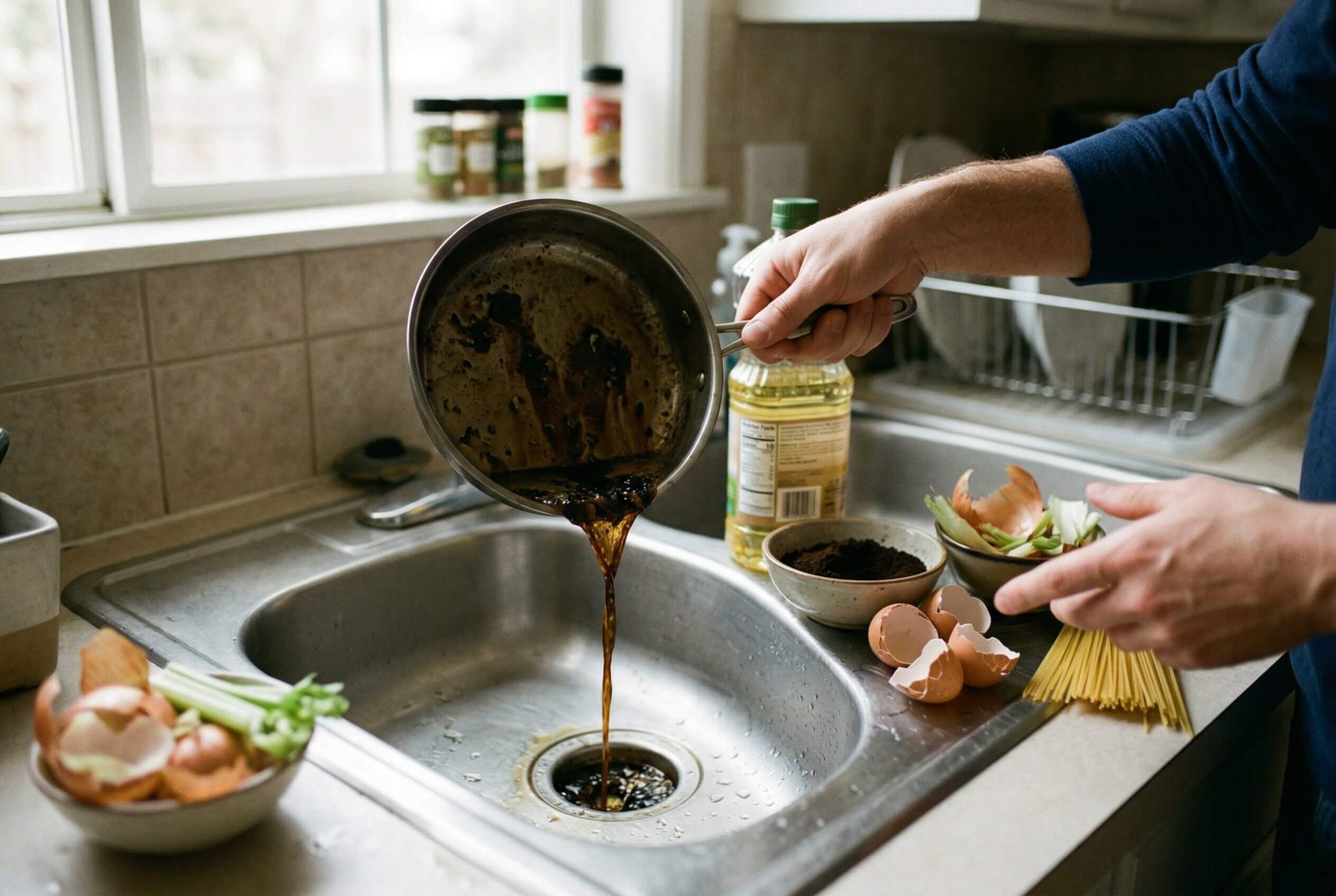
Most drain problems don’t start with a sudden blockage — they start with small, everyday habits that slowly build up inside your pipes. What you rinse off your plates, wash down your sink, or let slip into your shower drain doesn’t just disappear. It travels through your plumbing system, and if it doesn’t fully dissolve, it begins to stick, collect, and narrow your pipes over time.
That’s where drain maintenance comes in. Real maintenance isn’t just about cleaning after a clog happens — it’s about controlling what goes into your drains so buildup never gets a chance to form. This is the key difference most homeowners miss. Cleaning removes existing buildup. Unclogging deals with a blockage. But maintenance prevents both from happening in the first place.
One of the biggest reasons homeowners deal with repeated drain issues is because they unknowingly treat their drains like disposal systems. Grease, food scraps, hair, and even “flushable” products seem harmless in the moment, especially when water is running. But inside your pipes, these materials behave very differently. They cool, harden, bind together, and create layers that restrict water flow long before you notice a problem.
The cost difference between prevention and repair is significant. A few simple habit changes can keep your drains clear for years, while ignoring what goes down your pipes often leads to recurring clogs, emergency plumber visits, and even sewer line issues. In real-world plumbing, most major problems I see could have been avoided with better day-to-day usage.
In this guide, you’ll learn exactly what should never go down your drains, why these materials cause problems, and how to build simple habits that protect your plumbing system long-term. This isn’t a list of random tips — it’s a practical system you can follow to prevent clogs, reduce maintenance, and keep your drains working the way they should.
What This Page Covers
ToggleWhy What You Put Down Your Drain Matters
Every drain in your home is part of a larger system designed to move water efficiently — not to handle waste the way a trash can does. Once something goes down your drain, it doesn’t just vanish. It travels through a network of pipes, including bends, joints, and horizontal sections where flow naturally slows down. These slower areas are exactly where problems begin.
The key issue is how different materials behave inside pipes. Water flows freely, but substances like grease, soap residue, food particles, and hair don’t. Instead of moving smoothly, they stick to the inner walls of your pipes. At first, this layer is thin and barely noticeable. But over time, it builds up, catching more debris as it passes through. This is how a perfectly clear pipe gradually turns into a restricted one.
One of the biggest misconceptions homeowners have is that if water is draining, everything is fine. In reality, slow buildup can exist for months or even years before it becomes obvious. By the time you notice slow drainage or odors, your pipe diameter may already be significantly reduced. At that point, even normal usage starts to trigger recurring clogs.
Another important factor is how materials interact with each other. Grease alone may not cause an immediate blockage, and hair alone might pass through. But when grease coats the pipe and hair sticks to it, you now have a structure that traps everything else — soap, food particles, and debris. This combination is what creates the dense, stubborn clogs that require more than simple DIY fixes.
From a real plumber’s perspective, the homes that rarely experience drain issues aren’t constantly cleaning their pipes — they’re simply not putting problematic materials into the system to begin with. Good drain maintenance starts at the source, not at the point of failure.
Understanding this changes how you use your drains. Instead of reacting to clogs after they happen, you begin preventing them through smarter everyday habits. And that shift alone can save you from most common plumbing problems over the long term.
What Causes Drain Buildup Over Time
Drain buildup doesn’t come from one big mistake — it comes from small, repeated inputs that slowly collect inside your pipes. Even in homes that are careful, some level of buildup is natural. But certain materials accelerate the process significantly, especially when they combine with each other.
- Grease and oils
Hot grease may go down as a liquid, but inside your pipes it cools and solidifies. It sticks to pipe walls and creates a sticky base layer that traps everything else flowing through. - Soap scum
Soap reacts with minerals in water and forms a residue that coats pipes. Over time, this hard layer reduces the internal diameter of the pipe and slows water flow. - Hair and organic waste
Hair doesn’t dissolve. It catches on rough surfaces inside pipes and binds with grease and soap, forming clumps that grow larger with each use. - Food particles
Even small food scraps can settle in pipe bends where water flow slows down. Once they stick to grease or residue, they begin building mass instead of washing away. - Mineral deposits (hard water)
In many U.S. homes, hard water leaves behind calcium and magnesium deposits. These minerals create scale buildup that narrows pipes and makes it easier for debris to stick. - Lint and fibers
Laundry drains often carry lint, fabric fibers, and small debris. These materials collect in pipes and act like a filter, trapping additional buildup over time.
What really causes problems is not just these materials individually, but how they layer together. Grease creates the base, soap hardens it, hair binds it, and food or debris fills the gaps. This layered buildup is what turns a clear pipe into a restricted one.
From a maintenance standpoint, the goal isn’t just to clean pipes occasionally — it’s to reduce how much of this material enters your system in the first place. That’s what keeps your drains working smoothly long-term.
The Biggest Mistake: Treating Drains Like Trash Cans
One of the most common causes of drain problems isn’t a lack of cleaning — it’s how drains are used every day. Many homeowners unknowingly treat their sinks, showers, and toilets like disposal systems, assuming that anything small enough or soft enough will safely wash away. In reality, drains are designed to move water, not handle waste that doesn’t fully dissolve.
This misunderstanding becomes even more common in kitchens with garbage disposals. A disposal doesn’t eliminate waste — it only breaks it into smaller pieces. Those pieces still travel through your plumbing system, and if they’re sticky, fibrous, or heavy, they will settle somewhere along the line. Over time, this creates buildup in pipe bends, horizontal sections, and eventually in the main sewer line.
Another issue is the assumption that running water solves everything. Many people rinse grease, food scraps, or residue down the drain while keeping the tap on, thinking it will carry everything through. But water alone doesn’t prevent materials from sticking. Grease still coats the pipe walls, food still settles in slow-flow areas, and residue still accumulates over time.
The key difference to understand is this: drains are transport systems, not processing systems. If a material doesn’t dissolve easily in water or break down quickly, it doesn’t belong in your pipes. This includes many everyday substances that seem harmless in the moment but create long-term problems inside the system.
From a real-world plumbing perspective, the homes with the least drain issues are not the ones that clean their drains the most — they’re the ones that are mindful about what goes into them. Once you stop using your drains like a trash can, most common clog problems are prevented before they even start.
What NOT to Put Down Your Drain (Complete Breakdown)
This is the most important part of drain maintenance. If you control what goes into your drains, you eliminate most clogs before they ever form. The materials below are the ones I consistently see causing buildup, slow drainage, and major blockages in real homes.
Grease, Oil, and Fat
Grease is the number one cause of kitchen drain problems. It may look harmless when it’s hot and liquid, but once it enters your pipes and cools, it thickens and sticks to the inner walls. This creates a sticky coating that traps food particles and debris.
Over time, this layer grows thicker and restricts water flow. In many cases, grease buildup continues into the main sewer line, leading to larger blockages that affect the entire home. Even small, repeated amounts can create significant issues.
Coffee Grounds
Coffee grounds don’t dissolve in water. Instead, they settle inside pipes and begin to accumulate, especially in areas where water flow slows down.
They often combine with grease or soap residue to form a dense, sludge-like material. This buildup doesn’t wash away easily and can create stubborn clogs that require mechanical cleaning to remove.
Eggshells
Eggshells are often believed to help clean garbage disposal blades, but in reality, they contribute to buildup. The inner membrane of the shell is slightly sticky and can adhere to pipe surfaces.
The crushed shell pieces can also mix with grease and other debris, forming a gritty layer that settles in the pipes rather than flushing out.
Pasta, Rice, and Starchy Foods
These foods absorb water and expand after going down the drain. Even small amounts can swell inside pipes, especially in curved sections where flow is slower.
They also leave behind a starchy residue that sticks to pipe walls, creating a base for other debris to attach and build upon.
Fibrous Vegetables
Vegetables like celery, onion skins, corn husks, and asparagus contain long fibers that don’t break down easily. These fibers can wrap around themselves and other debris, forming strong, tangled clogs.
In garbage disposals, they can also wrap around internal components, reducing efficiency and causing jams.
Flour and Dough
When flour mixes with water, it forms a paste that behaves like glue inside your pipes. This paste sticks to pipe walls and traps other particles passing through.
Dough is even worse, as it can expand and create thick blockages that restrict water flow quickly.
Hair
Hair is one of the most common causes of bathroom drain clogs. It doesn’t dissolve and easily catches on rough surfaces inside pipes.
Once hair starts collecting, it forms a net-like structure that traps soap, grease, and debris. Over time, this buildup becomes dense and difficult to remove without tools.
Soap Residue and Heavy Bar Soaps
Traditional bar soaps can leave behind a residue that combines with minerals in water to form soap scum. This material coats pipe walls and gradually reduces their internal diameter.
As the layer thickens, it creates more surface area for other debris to stick, accelerating buildup.
“Flushable” Wipes and Hygiene Products
Despite being labeled as flushable, most wipes do not break down like toilet paper. They remain intact and can get caught in pipes or bends in the plumbing system.
This also applies to paper towels, cotton swabs, and sanitary products. These materials are designed to stay strong when wet, which makes them a major cause of blockages.
Paper Towels and Non-Dissolvable Paper
Unlike toilet paper, paper towels are designed to absorb and hold water without breaking apart. When flushed or washed down drains, they can easily get stuck and create blockages.
They often combine with grease and debris, forming dense clumps inside pipes.
Harsh Chemical Drain Cleaners (Overuse)
Chemical drain cleaners may seem like a quick solution, but overusing them can damage your pipes. These products generate heat and use strong chemicals to break down clogs.
While they may temporarily open a blockage, they often leave residue behind and can weaken pipe materials over time. This is especially risky for older plumbing systems.
From a real plumber’s perspective, nearly every major drain problem can be traced back to one or more of these materials. The goal of effective drain maintenance isn’t just cleaning — it’s eliminating these inputs so buildup never gets the chance to start.
Early Signs You’re Putting the Wrong Things Down the Drain
Drain systems rarely fail without warning. In most homes, the plumbing gives clear early signals that buildup is forming inside the pipes. The problem is that these signs are often ignored because they seem minor or temporary. In reality, they are early indicators of restricted flow — and the sooner you act, the easier it is to fix.
- Slow drainage
Water taking longer than usual to drain is one of the first signs of internal buildup. This means the pipe diameter is already starting to narrow due to grease, soap, or debris layers. - Minor odors from the drain
Unpleasant smells often come from organic material trapped inside the pipes. As food, grease, or residue sits and breaks down, it creates odors that travel back up through the drain. - Occasional gurgling sounds
Gurgling happens when air gets trapped due to uneven water flow. This is often caused by partial blockages that disrupt how water moves through the system. - Water pooling around drains
If water briefly collects before draining, it’s a sign that flow is restricted. This typically points to buildup forming in nearby pipe sections. - Frequent light clogs
If you find yourself plunging or clearing minor clogs regularly, it usually means there’s an underlying buildup that hasn’t been fully removed.
These signs should never be treated as small inconveniences. They are early warnings that your drain maintenance habits need adjustment — especially what you’re putting down your drains.
From a practical standpoint, addressing these issues early is simple and low-cost. Ignoring them allows buildup to continue growing until it turns into a full blockage, which often requires tools or professional intervention.
Basic Drain Maintenance Routine (Prevention-Focused)
The goal of basic drain maintenance is simple: keep buildup from forming in the first place. You don’t need complicated tools or harsh chemicals — just consistent, small habits that prevent grease, residue, and debris from settling inside your pipes.
This routine is designed for real homes. It’s quick, practical, and easy to follow without overthinking.
Daily Habits (What You Do Without Thinking)
- Scrape food into the trash before rinsing dishes
Don’t rely on water or the garbage disposal to carry food away. Removing solids before they enter the drain is the most effective prevention step. - Avoid pouring grease or oily liquids down the sink
Let grease cool and dispose of it in a container or trash. Even small amounts build up over time. - Use a drain strainer in sinks and showers
Catch food particles, hair, and debris before they enter the pipes. This alone prevents a large percentage of clogs. - Run water after each use (especially in kitchen sinks)
Let water flow for a few seconds after washing to help move light residue through the system before it settles.
Weekly Routine (Light Cleaning to Prevent Buildup)
- Flush drains with hot water
Run hot water for 1–2 minutes to help loosen and move minor grease or soap residue before it hardens. - Use dish soap to break down grease
Add a small amount of dish soap, then flush with hot water. This helps emulsify light grease buildup inside the pipes. - Clean drain strainers thoroughly
Remove and rinse strainers to prevent trapped debris from breaking down and entering the drain later.
Garbage Disposal Care (If Installed)
- Run cold water before and after using the disposal
Cold water helps keep grease solid so it can be chopped and moved through instead of coating pipes. - Avoid grinding problematic materials
Stay away from fibrous vegetables, grease, and starchy foods even if you have a disposal. - Use the disposal regularly (but correctly)
Occasional use prevents internal buildup, but it should never be used as a primary waste solution.
This routine works because it focuses on prevention rather than reaction. Instead of waiting for buildup to form and then trying to remove it, you’re constantly reducing what enters and what settles inside your pipes.
From a plumber’s perspective, homeowners who follow this kind of simple, consistent routine rarely deal with major drain issues. It’s not about doing more — it’s about doing the right things regularly.
Intermediate Maintenance (Monthly / Quarterly)
Even with good daily and weekly habits, some level of buildup will still form over time. This is where intermediate maintenance comes in. These methods are designed to break down early-stage buildup before it turns into a restriction, without damaging your pipes.
Think of this as a reset layer — not aggressive cleaning, but controlled maintenance that keeps your system flowing properly.
Baking Soda and Hot Water Method
This method works best for light grease and odor control. It’s not a clog remover, but it helps loosen residue before it hardens.
Steps:
- Pour about ½ cup of baking soda into the drain
- Let it sit for 10–15 minutes
- Flush with hot water for 1–2 minutes
This creates a mild reaction that helps lift light buildup from pipe walls. It’s especially useful in kitchen sinks where grease residue is common.
Enzyme-Based Cleaners
Enzyme cleaners are one of the safest long-term maintenance tools. They use natural bacteria to break down organic material like grease, food particles, and soap residue.
How to use:
- Pour the recommended amount into the drain (usually at night)
- Let it sit for several hours or overnight
- Flush with warm water the next day
These cleaners work slowly but effectively. They’re ideal for regular monthly use and won’t damage pipes like harsh chemicals can.
Light Manual Cleaning (Accessible Areas)
Some buildup occurs in areas you can physically access, especially near the drain opening.
What to do:
- Remove visible debris from sink and shower drains
- Pull out hair or buildup using a simple drain tool
- Clean around the drain opening where residue collects
This prevents surface-level buildup from moving deeper into the system.
P-Trap Cleaning (Every Few Months)
The P-trap (the curved pipe under your sink) is one of the most common places for buildup to collect. It’s designed to hold water, but it also traps debris.
Steps:
- Place a bucket underneath the P-trap
- Unscrew the fittings carefully
- Remove and clean out any buildup inside
- Reassemble and check for leaks
This is one of the most effective ways to remove early buildup before it spreads further into the system.
When These Methods Work Best
Intermediate maintenance works best when:
- You’re starting to notice minor slowdowns
- There are occasional odors
- You want to prevent buildup from becoming a clog
These methods are not meant to fix fully blocked drains. If water is no longer draining properly, stronger tools or professional help may be needed.
From a real plumber’s perspective, this level of maintenance is what separates reactive homeowners from proactive ones. It keeps your pipes in a clean, functional state and reduces the need for aggressive cleaning or emergency fixes later on.
Advanced Maintenance Methods
At this stage, you’re no longer just preventing light buildup — you’re dealing with deeper residue that has started to harden or restrict flow inside your pipes. Advanced maintenance is about restoring pipe performance, not just maintaining it. These methods require more control and awareness, because doing them incorrectly can damage your plumbing.
Deep Hot Water Flushing (Controlled Method)
This is more than just running hot water. It’s a controlled flush designed to soften and move buildup that has started to settle deeper in the system.
Steps:
- Heat water to a very hot (but not boiling) temperature
- Add a small amount of dish soap into the drain
- Slowly pour the hot water in stages instead of all at once
- Allow short pauses between pours to let buildup soften and move
This method works best for grease-heavy kitchen lines where buildup hasn’t fully hardened yet. The key is gradual flushing — not overwhelming the pipe with a sudden surge.
Descaling Prevention (Hard Water Homes)
In areas with hard water, mineral deposits build up inside pipes and create a rough surface. This roughness makes it easier for grease, soap, and debris to stick.
What to do:
- Use mild descaling solutions periodically (non-corrosive)
- Flush with warm water after treatment
- Focus on sinks and drains that see frequent use
Descaling isn’t just about removing minerals — it’s about restoring smooth pipe surfaces so buildup doesn’t attach as easily.
Controlled Pressure Cleaning (DIY Limits)
Some homeowners attempt pressure-based cleaning using tools or attachments. While this can help in certain cases, it comes with clear limitations.
What it can do:
- Push loose debris further down the pipe
- Help clear partial obstructions
What it cannot safely do:
- Remove hardened grease layers
- Break down heavy scale buildup
- Clean the full diameter of the pipe
Improper pressure use can also damage joints or force debris into worse positions, especially in older systems.
Where DIY Advanced Methods Stop
This is the point where many homeowners try to go too far with DIY solutions. It’s important to understand the limits:
- If buildup has hardened, basic flushing won’t remove it
- If multiple drains are slowing, the issue may be deeper in the system
- If problems keep returning, the buildup hasn’t been fully cleared
Advanced maintenance can improve flow, but it cannot fully restore heavily restricted pipes. That requires professional-level equipment.
From a plumber’s perspective, this stage is where proper judgment matters most. Doing light maintenance regularly prevents you from needing these methods often. But when you do reach this point, it’s important to recognize when you’re maintaining — and when you’re trying to fix a problem that needs deeper intervention.
Professional Drain Maintenance
There comes a point where routine and intermediate maintenance aren’t enough. This usually happens when buildup has hardened, spread deeper into the system, or started affecting multiple drains in the home. At this stage, professional drain maintenance isn’t just helpful — it’s the only way to fully restore pipe performance.
What separates professional work from DIY methods is the ability to clean the entire internal surface of the pipe, not just push debris through or partially break it down.
Hydro Jetting (Full Pipe Cleaning)
Hydro jetting is one of the most effective drain maintenance methods available. It uses high-pressure water to clean the inside of your pipes, removing grease, sludge, soap buildup, and even some mineral deposits.
Instead of just opening a path through a clog, hydro jetting clears the entire pipe diameter. This restores proper flow and significantly reduces the chance of recurring issues.
This method is commonly used for:
- Kitchen drain lines with heavy grease buildup
- Main sewer lines with long-term accumulation
- Homes with repeated clog history
Camera Inspections (Understanding the Problem)
A camera inspection allows plumbers to see inside your pipes in real time. This is especially important when issues keep returning or when the cause isn’t clear.
It helps identify:
- Exact location of buildup or blockage
- Pipe condition (cracks, corrosion, scaling)
- Areas where debris commonly collects
This step ensures that the right solution is used instead of guessing and repeating ineffective fixes.
Pipe Descaling (Removing Hardened Deposits)
In older homes or hard water areas, pipes often develop scale — a hardened layer of mineral buildup that reduces internal diameter.
Descaling involves mechanically or chemically removing this layer to restore the pipe’s original capacity. This is more intensive than basic cleaning and requires specialized tools.
It’s especially useful when:
- Drains are consistently slow despite cleaning
- Pipes have years of mineral buildup
- Water flow has noticeably reduced over time
Preventive Maintenance Plans
Some homeowners choose scheduled professional maintenance, especially in properties with heavy usage or older plumbing systems.
This may include:
- Periodic inspections
- Routine cleaning of main lines
- Early-stage buildup removal
These plans are designed to prevent major issues before they develop, rather than reacting after a blockage occurs.
When You Should Call a Professional
You don’t need to wait for a complete blockage to bring in a plumber. In fact, earlier intervention is often faster and less expensive.
Consider professional maintenance when:
- Multiple drains are slowing at the same time
- You’re dealing with recurring clogs
- There are persistent odors that don’t go away
- DIY methods only provide temporary relief
- Your home has older pipes or a history of buildup
From a real-world standpoint, professional drain maintenance isn’t something you need constantly — but when it’s needed, it makes a significant difference. It resets your system in a way that basic maintenance cannot, giving you a clean starting point to maintain your drains properly going forward.
Tools Used in Drain Maintenance
Drain maintenance doesn’t require a large toolkit, but using the right tools makes a big difference. The goal isn’t to aggressively fix problems — it’s to prevent buildup, remove early-stage debris, and maintain smooth flow inside your pipes.
Below are the most commonly used tools in real homes, along with what they actually do.
- Drain strainers
These are one of the most effective and overlooked tools. They sit over your drain opening and catch food particles, hair, and debris before they enter the pipes. By stopping buildup at the source, they reduce the need for deeper cleaning later. - Hand auger (drain snake)
A hand auger is used to remove clogs or buildup located close to the drain opening. It works by reaching into the pipe and physically pulling out hair, debris, or soft blockages. It’s useful for bathroom sinks, showers, and tubs. - Wet/dry vacuum
This tool can be used to pull out debris or standing water from drains. In some cases, it can help remove loose blockages near the surface. It’s not a full cleaning solution but can assist with early-stage issues. - Enzyme cleaners
These are not tools in the traditional sense, but they play an important role in maintenance. Enzyme cleaners break down organic material like grease, food residue, and soap buildup over time without damaging pipes. - Inspection camera
Used mainly by professionals, this tool allows a clear view inside your pipes. It helps identify where buildup is forming, what type of blockage exists, and whether there’s any pipe damage. - Hydro jet equipment
This is a professional-grade tool that uses high-pressure water to clean the entire interior of the pipe. It removes grease, sludge, and buildup completely, restoring full flow.
From a practical standpoint, most homeowners only need a few basic tools like strainers and a hand auger for regular maintenance. More advanced tools are typically used by professionals when deeper cleaning or inspection is required.
The key is not having more tools — it’s knowing when and how to use them correctly to maintain your drains without causing damage.
Drain Maintenance Schedule (Simple & Actionable)
A good drain maintenance routine isn’t about doing everything at once — it’s about doing the right things at the right time. When you spread maintenance across a monthly, quarterly, and yearly schedule, it becomes easy to manage and highly effective.
This is the exact type of schedule I recommend to homeowners who want to avoid clogs without overcomplicating things.
Monthly Maintenance
This is your foundation layer. It focuses on keeping light buildup from turning into a restriction.
- Flush kitchen and bathroom drains with hot water for 1–2 minutes
- Use a small amount of dish soap in kitchen drains to break down grease
- Clean all drain strainers (remove trapped food, hair, debris)
- Do a light baking soda flush for odor control and minor residue
These steps take very little time but prevent most common buildup issues from forming.
Quarterly Maintenance
This level targets areas where buildup naturally collects over time, especially in slower sections of your plumbing.
- Use an enzyme cleaner overnight to break down organic buildup
- Perform a deeper flush (hot water + controlled flow)
- Clean accessible drain openings and remove any visible buildup
- Open and clean the P-trap under sinks to remove trapped debris
Quarterly maintenance helps reset your system before minor buildup becomes a problem.
Yearly Maintenance
This is where you assess the overall health of your drain system and address anything deeper that routine care can’t handle.
- Inspect drains for recurring slowdowns or odor issues
- Consider professional inspection if your home has older plumbing
- Schedule deep cleaning (like hydro jetting) if buildup is noticeable
- Check main sewer line performance if multiple drains are affected
Not every home needs professional service every year, but checking your system annually helps you catch issues early.
This schedule works because it balances prevention with practicality. You’re not over-maintaining your system, but you’re also not waiting for problems to appear.
From a plumber’s perspective, homeowners who follow a simple structured schedule like this rarely deal with emergency drain issues. It creates consistency — and consistency is what keeps your plumbing system running smoothly long-term.
Cost of Drain Maintenance in the U.S.
One of the biggest advantages of proper drain maintenance is cost control. When you prevent buildup instead of reacting to clogs, you avoid emergency calls, major repairs, and repeated service visits. Most homeowners underestimate how expensive reactive plumbing can become over time.
- DIY maintenance costs
Basic maintenance is very affordable. Drain strainers, dish soap, baking soda, and enzyme cleaners typically cost very little and last for months. A simple maintenance routine usually stays under a small monthly expense, making it the most cost-effective approach. - Professional maintenance costs
Routine professional services, such as basic drain cleaning or inspections, typically fall into a moderate price range depending on your location and the complexity of the system. These services are far less expensive than emergency repairs and are often recommended for long-term prevention. - Hydro jetting costs
Hydro jetting is a more advanced service and costs more than standard cleaning. However, it provides a full reset of your pipes by removing heavy buildup. For homes with recurring issues, this can actually save money by reducing repeated service calls. - Camera inspection costs
A camera inspection is usually a one-time diagnostic service. It helps identify hidden issues inside your pipes and ensures the right solution is used. This prevents wasted money on trial-and-error fixes.
What Affects the Cost
Several factors influence how much you’ll spend on drain maintenance:
- Age and condition of your plumbing system
- Frequency of maintenance (preventive vs reactive)
- Severity of buildup or blockage
- Accessibility of pipes and main lines
- Local service rates
Homes that follow consistent maintenance routines typically stay on the lower end of costs, while neglected systems often require more expensive interventions.
Why Maintenance Is Cheaper Than Repair
From a real-world plumbing perspective, prevention is always cheaper than repair. A small amount spent on routine care can prevent large, unexpected expenses later.
When drains are properly maintained:
- Pipes stay cleaner for longer
- Water flows efficiently without strain
- Fewer emergency visits are needed
- Major blockages are avoided
On the other hand, ignoring what goes down your drain often leads to repeated clogs, deeper buildup, and eventually costly repairs.
The difference isn’t just in money — it’s in consistency. Maintenance keeps your plumbing predictable, while neglect turns it into a recurring problem.
Common Drain Maintenance Mistakes
Most drain problems aren’t caused by a lack of effort — they’re caused by doing the wrong things consistently. Many homeowners believe they’re maintaining their drains properly, but a few common mistakes actually make buildup worse over time instead of preventing it.
Overusing Chemical Drain Cleaners
One of the biggest mistakes is relying too heavily on chemical cleaners. These products may provide a quick temporary fix, but they don’t fully remove buildup. Instead, they often create a small opening through the clog while leaving residue behind.
Repeated use can also weaken pipes, especially in older systems or plastic (PVC) plumbing. Over time, this can lead to damage, leaks, or more serious issues that require repair.
Thinking “A Little Bit Won’t Hurt”
Many homeowners avoid pouring large amounts of grease or waste down the drain but still allow small amounts occasionally. The problem is that buildup doesn’t come from one event — it comes from repetition.
Small amounts of grease, food residue, or debris gradually layer inside your pipes. Over time, this creates the same problem as dumping large amounts all at once.
Ignoring Early Warning Signs
Slow drainage, minor odors, or occasional gurgling are often dismissed as normal. In reality, these are early indicators of buildup forming inside your pipes.
Waiting until a full clog occurs turns a simple maintenance issue into a more complex problem that may require tools or professional intervention.
Using Tools Incorrectly
Using tools like drain snakes or plungers without understanding how they work can sometimes push debris deeper into the system instead of removing it.
Improper use can also damage pipe joints or scratch internal surfaces, making it easier for buildup to stick in the future.
Skipping Routine Maintenance
Many homeowners only think about their drains when something goes wrong. Without a consistent routine, small amounts of buildup are allowed to accumulate unchecked.
Regular maintenance doesn’t need to be complicated, but skipping it entirely almost always leads to recurring issues over time.
Relying Too Much on Garbage Disposals
Garbage disposals are often misunderstood. They are helpful tools, but they are not a solution for disposing of all food waste.
Putting too much material through a disposal — especially grease, fibrous foods, or starches — increases the likelihood of buildup further down the pipes.
From a plumber’s perspective, avoiding these mistakes is just as important as following a good maintenance routine. Most major drain problems I encounter are not due to lack of effort — they’re due to habits that seem harmless but create long-term issues inside the system.
How to Maintain Different Drains
Not all drains behave the same way. Each type of drain in your home deals with different materials, which means the maintenance approach needs to match the type of usage. Treating all drains the same is a common mistake that leads to uneven buildup and recurring issues.
Kitchen Drains
Kitchen drains handle the heaviest load of grease, food particles, and oils. This makes them the most prone to buildup.
Focus on preventing grease from entering the system at all. Always scrape food into the trash before rinsing dishes, and never pour cooking oils down the sink. Use dish soap with hot water regularly to break down light grease residue before it hardens.
If you have a garbage disposal, use it carefully. It should assist with small scraps, not replace proper waste disposal habits.
Bathroom Sink Drains
Bathroom sinks mainly deal with soap, toothpaste, and small amounts of hair. Over time, soap scum and residue can coat the inside of the pipes.
Clean the drain opening regularly and remove any visible buildup. Occasional flushing with warm water helps reduce residue before it accumulates. Avoid letting hair or debris enter the drain whenever possible.
Shower and Tub Drains
Hair is the biggest issue in shower and tub drains. It combines with soap residue to form dense clogs that are difficult to remove once established.
Use a drain strainer to catch hair before it enters the pipe. Clean it frequently to prevent buildup. Periodically remove any hair or debris near the surface to stop it from moving deeper into the system.
Laundry Drains
Laundry drains carry lint, fibers, and detergent residue. Over time, lint can accumulate and trap other debris inside the pipes.
Using a lint filter or trap helps reduce the amount entering the system. Regular flushing with water helps prevent buildup from settling, especially in pipes that don’t see constant flow.
Floor Drains
Floor drains are often overlooked because they are used less frequently. When they’re not used regularly, the water in the trap can evaporate, and debris can settle inside.
Occasionally pour water into floor drains to keep the trap filled and prevent odors. Keeping the drain clear of dirt and debris helps maintain proper flow when it is needed.
Main Sewer Line
The main sewer line carries all wastewater from your home. Problems here affect multiple drains at once and are usually more serious.
You can’t directly maintain this line with basic tools, but your habits inside the home directly impact it. Avoiding grease, debris, and non-dissolvable materials is the best form of protection.
If multiple drains slow down or clog at the same time, it’s often a sign that the issue is in the main line and may require professional attention.
From a practical standpoint, maintaining each drain based on how it’s used is what keeps your entire system balanced. When each part of the system is handled correctly, you reduce the risk of buildup spreading from one area to another.
Long-Term Drain Care Strategy
Good drain maintenance isn’t about doing one thing perfectly — it’s about building a system that works over time. The goal is to reduce what enters your pipes, manage what does get through, and step in early before buildup turns into a problem.
The first part of a long-term strategy is consistency. Small daily habits, like keeping grease out of the sink and using strainers, do more to protect your plumbing than occasional deep cleaning. When you reduce the amount of problematic material entering your drains, you automatically reduce the need for aggressive maintenance later.
The second part is layering your maintenance approach correctly. Basic routines handle everyday residue, intermediate methods control early buildup, and advanced or professional maintenance resets the system when needed. Each level supports the others. Skipping one layer — especially the preventive habits — puts more pressure on the rest of the system.
Another important factor is knowing when to step up your approach. If you notice recurring slow drainage, persistent odors, or repeated clogs, it’s a sign that your current routine isn’t enough. This is where many homeowners make the mistake of repeating the same basic fixes instead of moving to a deeper solution or calling a professional.
A strong long-term strategy also considers the condition of your plumbing. Older homes, hard water conditions, and heavy usage require more attention than newer systems. Adjusting your routine based on how your drains actually perform is key to keeping everything working smoothly.
From a real-world perspective, the most reliable plumbing systems are not the ones that are constantly being fixed — they’re the ones that are consistently maintained. When you combine good habits, the right maintenance methods, and timely intervention, you create a system that prevents problems instead of reacting to them.
Final Thoughts
What you put down your drain has a direct impact on how your entire plumbing system performs. Most drain problems are not sudden failures — they are the result of repeated small habits that slowly build up inside your pipes over time.
The most effective form of drain maintenance is prevention. By avoiding materials that cause buildup and following a simple, consistent routine, you can keep your drains flowing properly without relying on harsh chemicals or frequent repairs. This not only protects your pipes but also reduces long-term costs and unexpected issues.
It’s also important to recognize the limits of DIY maintenance. While good habits and basic routines prevent most problems, there are times when deeper cleaning or professional help is necessary. Knowing when to act early can save you from more serious issues later.
In real homes, the difference between constant drain problems and a smooth-running system comes down to awareness and consistency. When you treat your drains properly and maintain them regularly, you turn your plumbing from something reactive into something reliable.