
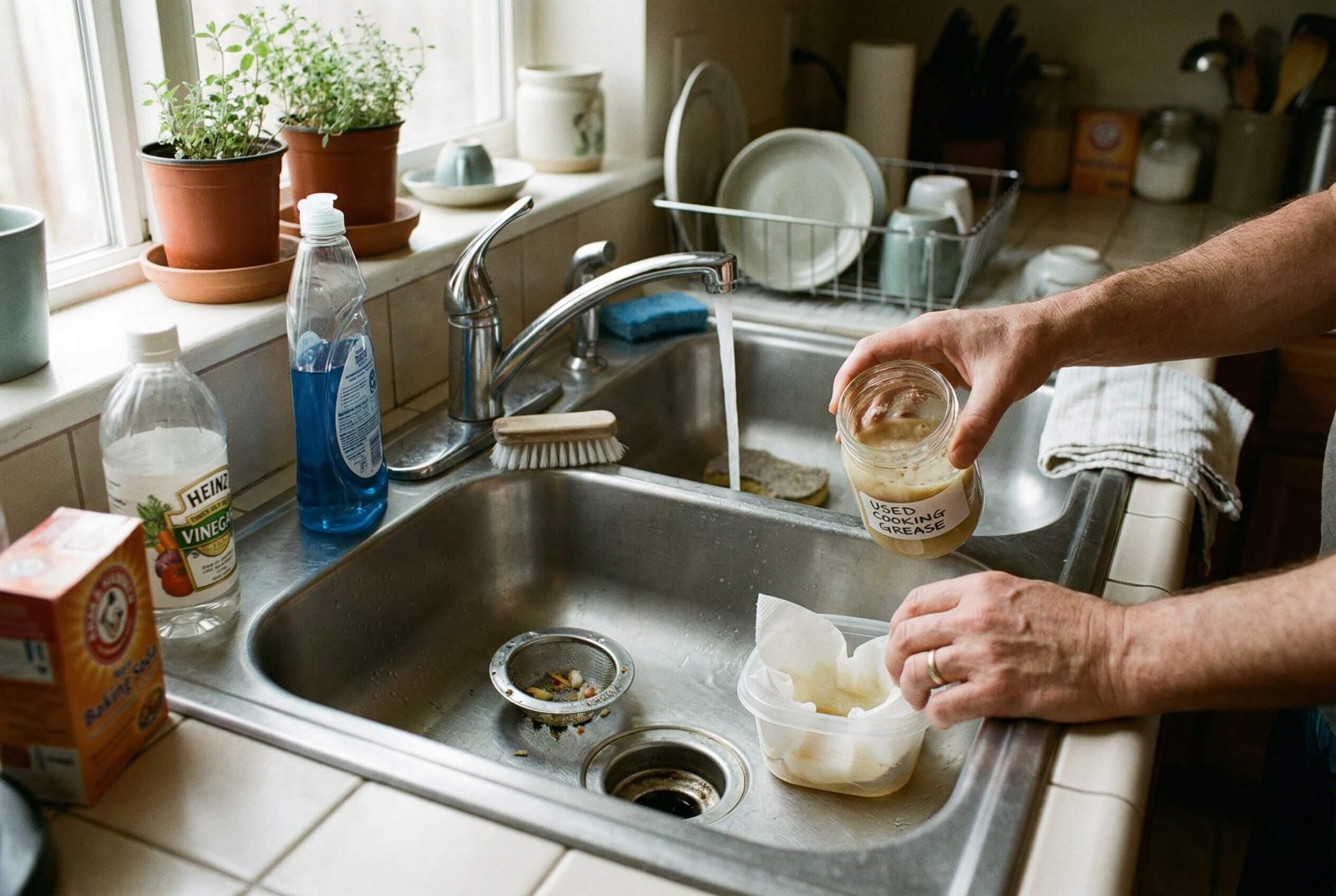
Kitchen sink drain maintenance is less about cleaning and more about control — specifically, controlling grease before it ever becomes a problem. In real homes, grease buildup is the number one reason kitchen drains slow down, smell, and eventually clog. And the tricky part is that it doesn’t happen overnight. It builds quietly, layer by layer, from everyday habits like rinsing pans, washing dishes, or pouring leftover oil down the sink.
Most homeowners think of grease as a liquid that simply washes away with hot water. But inside your pipes, grease behaves very differently. As it cools, it thickens and sticks to the pipe walls, creating a sticky surface that traps food particles and debris. Over time, this buildup narrows the pipe and restricts water flow, leading to slow drainage and recurring issues that basic cleaning can’t fully solve.
This is where proper drain maintenance makes the difference. Cleaning removes some buildup after it forms, but maintenance prevents it from forming in the first place. That’s a key shift in thinking. If you focus only on cleaning, you’ll always be reacting to problems. If you focus on prevention, you avoid most of them entirely.
The cost difference is significant. A few simple daily habits and a basic maintenance routine can keep your kitchen drain clear for years. On the other hand, ignoring grease buildup often leads to repeated clogs, professional cleaning, and in some cases, main sewer line issues — all of which are far more expensive and disruptive.
In this guide, you’ll learn exactly how grease buildup forms, what habits cause it, and how to maintain your kitchen sink drain the right way. The goal isn’t complicated plumbing work — it’s building a simple, effective system that keeps your pipes clean, your sink draining properly, and your maintenance effort minimal over time.
What This Page Covers
ToggleWhy Grease Is the Biggest Problem in Kitchen Drains
Grease is the most common and most damaging material that enters kitchen drains. The reason isn’t just how often it’s used — it’s how it behaves once it’s inside your plumbing system. Unlike water or soap, grease does not stay in a liquid state for long. As it moves through your pipes, it cools down, thickens, and begins to stick to the inner walls.
At first, this layer is thin and barely noticeable. Water still flows, and everything seems normal. But that thin coating creates a sticky surface that catches other materials passing through the drain — food particles, coffee grounds, soap residue, and small debris. This is where the real problem begins. The grease doesn’t just sit there; it becomes the foundation for buildup.
Over time, each use of the sink adds another layer. Grease hardens, debris sticks to it, and the pipe gradually narrows. This doesn’t cause an immediate clog, which is why it’s often ignored. Instead, it slowly reduces flow efficiency until you start noticing slow drainage, odors, or recurring minor blockages.
Another important factor is that grease buildup doesn’t stay limited to your sink line. It can travel further into the plumbing system and collect in larger pipes, including the main sewer line. When this happens, the problem becomes more serious and harder to resolve.
From a real plumber’s perspective, most kitchen drain issues are not caused by a single mistake — they’re caused by repeated exposure to grease combined with everyday debris. That combination creates dense, stubborn buildup that simple DIY methods can’t fully remove.
This is why grease prevention is the foundation of kitchen drain maintenance. If you control grease, you control the biggest source of buildup in your entire kitchen plumbing system.
How Grease Buildup Forms Inside Pipes
Grease buildup doesn’t happen all at once. It follows a predictable process that repeats every time grease enters your drain. Understanding this process is what helps you prevent it effectively, instead of just reacting when problems appear.
- Hot grease enters the drain as a liquid
When you rinse a pan or pour leftover oil into the sink, grease flows easily with hot water. At this stage, it seems like it’s being washed away completely. - Grease cools as it travels through pipes
Once inside the plumbing system, the temperature drops quickly. Pipes are cooler than your sink water, especially further down the line. This causes the grease to thicken. - A thin layer forms on pipe walls
As grease cools, it begins to stick to the inner surface of the pipes. This first layer is very thin and doesn’t affect flow immediately, which is why it often goes unnoticed. - The surface becomes sticky and uneven
That initial layer creates a rough, sticky surface. This is important because smooth pipes allow debris to pass through, but rough surfaces trap it. - Food particles and debris start attaching
As you continue using the sink, small food particles, coffee grounds, and soap residue begin to stick to that grease layer instead of washing away. - The buildup thickens over time
Each new layer adds to the previous one. Grease hardens further, debris fills gaps, and the pipe diameter slowly reduces. - Water flow becomes restricted
Eventually, the pipe becomes narrow enough that water cannot flow efficiently. This is when you start noticing slow drainage, odors, and recurring clogs.
This process can take weeks or months depending on usage, which is why it often goes unnoticed until the problem is more advanced.
From a practical standpoint, this is why flushing with hot water alone doesn’t solve grease problems. It may move some residue, but it doesn’t remove the layer already stuck to the pipe walls. Once buildup begins, it needs consistent maintenance — or in advanced cases, professional cleaning — to fully restore proper flow.
Early Signs of Grease Buildup
Grease buildup rarely causes an immediate blockage. Instead, your kitchen drain gives gradual warning signs as the pipe becomes more restricted. Recognizing these early signs is critical, because this is the stage where simple maintenance can still solve the problem before it turns into a full clog.
- Slow drainage after washing dishes
One of the first signs is water taking longer to drain, especially after cooking or cleaning greasy cookware. This indicates that grease has already started narrowing the pipe. - Oily or sticky residue around the drain
If the area around your sink drain feels greasy or looks dull and coated, it’s often a sign that grease is accumulating not just at the surface, but inside the pipes as well. - Unpleasant kitchen drain odors
Grease traps food particles, and as those particles break down, they create a sour or rotten smell. This odor often becomes noticeable before a clog forms. - Gurgling sounds when water drains
Gurgling happens when airflow is disrupted by partial blockages. It’s a sign that water is no longer moving smoothly through the pipe. - Frequent minor clogs or need for plunging
If your sink occasionally backs up but clears with simple effort, it usually means there’s a buildup layer inside the pipe that hasn’t fully blocked it yet.
These signs should never be ignored. At this stage, the buildup is still manageable with basic and intermediate maintenance methods. Waiting too long allows grease to harden and combine with debris, making it much harder to remove.
From a real plumber’s perspective, this is the ideal time to act. Early intervention is simple, low-cost, and prevents the need for more aggressive cleaning or professional services later.
Daily Kitchen Habits to Prevent Grease Buildup
The most effective way to prevent grease buildup isn’t deep cleaning — it’s changing what happens at the sink every day. These small habits are what keep grease from entering your pipes in the first place. If you get this part right, you’ll rarely need aggressive maintenance later.
- Never pour grease or oil down the drain
Hot grease may look like it will wash away, but it always cools and sticks inside pipes. Instead, pour it into a container, let it solidify, and dispose of it in the trash. This single habit prevents the majority of kitchen drain issues. - Wipe greasy pans and plates before washing
Before rinsing cookware, use a paper towel or cloth to remove grease. This reduces the amount entering your drain and keeps pipes cleaner over time. - Scrape food into the trash first
Food particles combine with grease and create dense buildup. Always remove solids before rinsing dishes, even if you have a garbage disposal. - Use a sink strainer consistently
A strainer catches small food particles that would otherwise enter your pipes and stick to grease layers. Clean it regularly so debris doesn’t build up and slip through later. - Run hot water after washing dishes
After cleaning, let hot water run for a short time to help move light residue through the system before it settles. This doesn’t remove grease buildup, but it helps reduce early accumulation. - Be mindful when using a garbage disposal
Disposals don’t eliminate grease or problematic foods. Avoid putting oily, starchy, or fibrous materials through them, and always run water during use.
These habits may seem simple, but they directly control the biggest cause of kitchen drain problems. From a practical standpoint, homeowners who follow these steps consistently rarely deal with serious grease buildup.
Good drain maintenance starts before anything goes down the drain — and daily habits are where that control happens.
Basic Weekly Maintenance Routine
Even with good daily habits, a small amount of grease and residue will still make its way into your pipes. A simple weekly routine helps break down this early buildup before it hardens and starts restricting flow. This isn’t aggressive cleaning — it’s preventive maintenance that keeps your kitchen drain running smoothly.
Step-by-Step Weekly Routine
- Flush with hot water (1–2 minutes)
Turn on hot water and let it run steadily. This helps soften and move light grease before it has time to solidify inside the pipes. - Add dish soap to break down grease
Pour a small amount of dish soap into the drain while the water is running. Dish soap is designed to cut grease, helping to loosen residue from pipe walls. - Continue flushing with hot water
Let the water run for another minute after adding soap. This helps carry loosened particles further down the system instead of letting them settle again. - Clean the sink strainer thoroughly
Remove the strainer and wash off any trapped food particles and grease. If left uncleaned, this debris can re-enter the drain and contribute to buildup. - Wipe the drain opening area
Use a cloth or paper towel to clean around the drain opening where grease and residue often collect. This prevents surface buildup from moving deeper into the pipe.
Why This Routine Works
This routine targets grease at its earliest stage — before it turns into a hardened layer. By combining heat and a degreasing agent (dish soap), you reduce the chances of buildup sticking and accumulating over time.
It’s important to understand that this method maintains flow, but it won’t remove heavy or long-term grease buildup. That’s why consistency matters. Doing this weekly keeps your pipes in a clean state so deeper cleaning isn’t needed as often.
From a plumber’s perspective, this type of routine is what prevents most kitchen drain problems. It’s quick, low-effort, and highly effective when done regularly.
Monthly Grease Prevention Methods
Even with strong daily habits and a weekly routine, some grease residue will still build up over time. Monthly maintenance is designed to break down that early-stage buildup before it hardens into a thick, stubborn layer. This is where you reinforce your system and keep your pipes in a consistently clean state.
Baking Soda and Hot Water Method
This method helps loosen light grease and neutralize odors. It’s not a heavy-duty cleaner, but it’s effective for maintaining clean pipe surfaces.
Steps:
- Pour about ½ cup of baking soda into the drain
- Let it sit for 10–15 minutes
- Flush with hot water for 1–2 minutes
This helps lift residue and prevent grease from settling into a solid layer.
Enzyme Cleaners for Grease Breakdown
Enzyme-based cleaners are one of the best long-term solutions for grease maintenance. They use natural bacteria to break down organic material inside your pipes.
How to use:
- Pour the recommended amount into the drain (preferably at night)
- Let it sit undisturbed for several hours or overnight
- Flush with warm water the next day
These cleaners work gradually and safely, making them ideal for monthly use without damaging your pipes.
Light Manual Cleaning Near the Drain
Some grease buildup starts right at the drain opening before moving deeper into the system.
What to do:
- Remove and clean any visible residue around the drain
- Wipe away grease buildup from the sink surface and opening
- Check and clean the strainer thoroughly
This prevents early buildup from entering your pipes.
Garbage Disposal Cleaning (If Installed)
Garbage disposals can accumulate grease and food residue internally, which then gets pushed into your pipes.
Simple method:
- Run cold water
- Add a small amount of dish soap
- Turn on the disposal briefly
- Let water run for a few seconds after
This helps clear internal residue and reduces grease entering your drain line.
Why Monthly Maintenance Matters
Monthly maintenance targets buildup that weekly routines can’t fully address. It breaks down residue before it hardens and becomes difficult to remove.
From a real-world perspective, this is the stage that prevents most recurring kitchen drain issues. Homeowners who skip this step often end up dealing with slow drains that require deeper cleaning later.
Consistent monthly care keeps your system balanced — not overloaded, not neglected — just maintained the way it should be.
Advanced Grease Maintenance Methods
When grease buildup moves beyond light residue and starts forming thicker layers inside your pipes, basic and monthly routines won’t be enough to fully manage it. At this stage, you need more controlled and targeted methods to restore proper flow before the problem turns into a full blockage.
These methods are still within a homeowner’s reach, but they require more care and understanding. The goal here is not just prevention — it’s partial restoration of pipe performance.
Deep Degreasing Flush (Controlled Method)
This method is designed to soften and move grease that has already started to stick inside the pipes. The key is controlled application, not rushing the process.
Steps:
- Add a small amount of dish soap directly into the drain
- Let it sit for 5–10 minutes to start breaking down grease
- Slowly pour very hot (not boiling) water in stages
- Pause between pours to allow grease to soften and move
This staged approach works better than a single flush because it gives the grease time to loosen before being pushed further down the line.
Repeated Hot Water + Soap Cycles
For moderate grease buildup, a single flush may not be enough. Repeating the process helps break down layers gradually.
How to apply:
- Perform the degreasing flush once
- Wait 10–15 minutes
- Repeat the process again
This helps remove buildup in layers instead of trying to clear everything at once.
Targeted Cleaning for Slow Sections
Grease tends to collect in certain parts of your plumbing system — especially bends and horizontal pipe sections.
What to focus on:
- Drains that slow down more than others
- Areas with recurring minor clogs
- Sinks used heavily for cooking
Applying advanced maintenance methods specifically to these areas improves results and prevents buildup from spreading.
Limitations of DIY Grease Removal
It’s important to understand what these methods can and cannot do.
They can:
- Soften and move moderate grease buildup
- Improve flow in partially restricted pipes
- Reduce recurring minor issues
They cannot:
- Remove hardened grease layers completely
- Clean the full internal surface of pipes
- Fix deep or system-wide buildup
Once grease has fully hardened or spread into larger pipes, DIY methods will only provide temporary improvement.
When Advanced Maintenance Isn’t Enough
If you notice any of the following, it usually means the grease buildup has gone beyond what home methods can handle:
- Slow drainage returns quickly after cleaning
- Multiple drains are affected
- Strong odors persist despite maintenance
- Water backs up during heavy use
At this point, professional cleaning is the only way to fully remove the buildup and restore the system.
From a plumber’s perspective, advanced maintenance is where homeowners either regain control of their drain system — or continue struggling with recurring issues. Used correctly, these methods can significantly extend the life of your pipes and delay the need for professional intervention.
Professional Solutions for Grease Buildup
When grease buildup reaches a certain level, home maintenance methods stop being effective. At that point, the goal is no longer just prevention — it’s restoring the full internal diameter of your pipes. This is where professional drain maintenance becomes necessary.
Unlike DIY methods that only loosen or partially move grease, professional tools are designed to remove buildup completely from the pipe walls.
Hydro Jetting (Complete Grease Removal)
Hydro jetting is the most effective solution for grease buildup. It uses high-pressure water to clean the entire inside of your pipes, not just create a small opening through the blockage.
This method breaks apart hardened grease, washes away sludge, and restores smooth pipe surfaces. It’s especially useful for kitchen drain lines where grease has built up over months or years.
Hydro jetting is commonly recommended when:
- Grease buildup keeps returning after DIY cleaning
- Water flow is consistently slow
- There’s heavy usage of the kitchen sink
- The main drain line is affected
Camera Inspection (Identify the Real Problem)
Before or after cleaning, a camera inspection allows a plumber to see exactly what’s happening inside your pipes.
This helps identify:
- Thickness and location of grease buildup
- Areas where debris is collecting
- Any underlying pipe issues
Without inspection, cleaning is often guesswork. With it, the solution becomes targeted and effective.
Grease Buildup in the Sewer Line
In more advanced cases, grease doesn’t stay limited to the kitchen drain. It travels into larger pipes and begins collecting in the main sewer line.
When this happens, you may notice:
- Multiple drains slowing at once
- Backups in sinks or floor drains
- Strong odors throughout the system
At this stage, professional cleaning is essential. Ignoring it can lead to major blockages that affect the entire home.
When to Call a Plumber
You don’t need to wait for a complete blockage before seeking professional help. In fact, earlier intervention is usually faster and less expensive.
Call a professional when:
- DIY methods only provide temporary relief
- Slow drainage keeps returning
- You notice buildup affecting more than one drain
- There are persistent odors that don’t go away
- Your home has older plumbing with a history of issues
From a real-world plumbing perspective, professional drain maintenance isn’t something you need frequently — but when grease buildup reaches this level, it’s the only way to properly reset your system.
Once your pipes are fully cleaned, your regular maintenance routine becomes far more effective, and you’re no longer dealing with the same recurring problems.
Tools That Help Prevent Grease Buildup
You don’t need a complex setup to maintain a clean kitchen drain. The right tools are simple, affordable, and focused on one goal — stopping grease and debris before they become buildup inside your pipes.
- Sink strainers
This is one of the most important tools for any kitchen. A strainer sits over your drain and catches food particles before they enter the pipe. Since grease buildup becomes worse when combined with food debris, stopping solids at the surface makes a major difference. - Grease containers (disposal jars)
Instead of pouring oil down the drain, collect it in a container and throw it away once it solidifies. This simple tool replaces one of the biggest causes of drain problems with a safe and controlled habit. - Dish soap (degreasing agent)
Dish soap is designed to break down grease on dishes — and it works the same way inside your pipes when used correctly. It helps loosen light grease residue and prevent it from sticking and building up. - Enzyme cleaners
These are used for monthly maintenance to break down organic material inside pipes. Unlike harsh chemicals, enzyme cleaners work gradually and safely, helping control grease buildup over time. - Hand auger (for early-stage blockages)
A hand auger can help remove minor buildup or debris near the drain opening. It’s not meant for heavy grease removal, but it’s useful for preventing small issues from getting worse.
From a practical standpoint, most homeowners only need these basic tools to keep grease under control. The key isn’t having more equipment — it’s using the right tools consistently as part of your maintenance routine.
When combined with proper habits, these tools act as your first line of defense, preventing grease from ever becoming a serious problem inside your plumbing system.
Kitchen Drain Maintenance Schedule (Grease-Focused)
A structured schedule makes grease control simple and consistent. Instead of guessing when to clean or waiting for problems, this routine keeps your kitchen drain in a maintained state all year round.
Weekly
This is your frontline defense against grease buildup.
- Flush the drain with hot water for 1–2 minutes
- Add dish soap during flushing to break down light grease
- Clean the sink strainer and remove trapped debris
- Wipe around the drain opening to remove surface grease
These steps prevent grease from settling and forming early layers inside the pipes.
Monthly
This level targets buildup that weekly maintenance can’t fully remove.
- Use an enzyme cleaner overnight to break down grease
- Perform a baking soda flush for light residue and odor control
- Clean visible buildup around the drain and inside the strainer
- Run a disposal cleaning cycle (if installed)
Monthly care helps keep your pipes internally clean and prevents grease from hardening.
Quarterly
This is your deeper maintenance layer to reset the system before problems develop.
- Perform a controlled deep degreasing flush (hot water + soap in stages)
- Check for early signs like slow drainage or odors
- Clean accessible areas thoroughly
- Repeat maintenance cycles if needed for heavier use kitchens
Quarterly maintenance prevents moderate buildup from turning into a restriction.
Yearly
This is where you assess the overall condition of your drain system.
- Monitor for recurring issues across the year
- Consider a professional inspection if slow drainage persists
- Schedule deep cleaning (like hydro jetting) if grease buildup is noticeable
- Check overall kitchen usage habits and adjust routines if needed
Not every home needs professional service yearly, but this check ensures your system stays under control long-term.
This schedule works because it spreads maintenance across manageable intervals. You’re not over-cleaning, and you’re not neglecting your system either.
From a plumber’s perspective, this kind of structured routine is what prevents most grease-related drain problems. It keeps buildup minimal, flow consistent, and your kitchen drain working the way it should — without surprises.
Common Mistakes That Cause Grease Buildup
Most kitchen drain problems don’t come from a lack of effort — they come from habits that seem harmless but create buildup over time. Even homeowners who try to maintain their drains properly often make a few key mistakes that allow grease to accumulate inside the pipes.
Pouring “Small Amounts” of Grease
One of the biggest misconceptions is that a little grease won’t hurt. In reality, buildup happens from repetition, not quantity. Small amounts poured down the drain regularly create the same long-term effect as dumping large amounts at once.
Each time grease enters the pipe, it adds to the existing layer. Over time, this builds into a thick coating that restricts flow and traps debris.
Relying on Hot Water Alone
Many people believe running hot water is enough to flush grease away. While hot water may keep grease in liquid form temporarily, it cools quickly inside the pipes and still sticks to the walls.
This gives a false sense of security — the grease appears to be gone, but it’s actually settling further down the line.
Overusing the Garbage Disposal
Garbage disposals are often treated as a solution for all kitchen waste, including greasy food. However, disposals only grind waste — they don’t prevent grease from entering the pipes.
When grease mixes with ground food particles, it creates dense buildup that is even harder to remove than grease alone.
Skipping Regular Maintenance
Some homeowners rely only on daily habits and skip weekly or monthly maintenance. While good habits reduce buildup, they don’t eliminate it completely.
Without routine flushing and cleaning, small amounts of grease eventually harden and accumulate, leading to slow drainage over time.
Ignoring Early Warning Signs
Slow drainage, minor odors, or occasional clogs are often ignored because they don’t seem urgent. But these are clear signs that grease buildup has already started inside the pipes.
Waiting too long allows the buildup to harden, making it much more difficult to remove with basic maintenance methods.
Using Harsh Chemicals as a Fix
Chemical drain cleaners may seem like a quick solution, but they don’t remove grease buildup completely. They often create a temporary opening while leaving residue behind.
Repeated use can also damage pipes and make the problem worse over time instead of solving it.
From a practical standpoint, avoiding these mistakes is just as important as following a maintenance routine. Most grease-related drain problems I see are not due to neglect — they’re caused by small, repeated habits that gradually lead to buildup.
Long-Term Strategy to Keep Kitchen Drains Grease-Free
Keeping your kitchen drain free from grease isn’t about one-time cleaning — it’s about building a system that works consistently over time. The goal is to control what enters your pipes, manage early buildup, and step in at the right time before problems develop.
The first part of this strategy is habit control. If grease doesn’t enter your drain, it can’t build up inside your pipes. Simple actions like wiping pans, disposing of oil properly, and using strainers do more to protect your plumbing than any cleaning method. These habits reduce the load on your entire system from the start.
The second part is layering your maintenance correctly. Weekly routines handle light residue, monthly treatments break down early buildup, and occasional deeper maintenance prevents accumulation from turning into restriction. Each level supports the next. Skipping one layer — especially the preventive habits — puts pressure on the rest of your system and leads to recurring issues.
Another important factor is recognizing when your current routine isn’t enough. If slow drainage keeps returning or you notice odors that don’t go away, it’s a sign that grease buildup has moved beyond basic maintenance. This is where many homeowners repeat the same light cleaning methods instead of stepping up to deeper cleaning or professional help.
A strong long-term approach also depends on your kitchen usage. Homes that cook frequently or use more oils will naturally require more consistent maintenance. Adjusting your routine based on how often your sink is used keeps your system balanced instead of overloaded.
From a real-world plumbing perspective, the most reliable kitchen drains are not the ones that are cleaned aggressively — they’re the ones that are managed consistently. When you combine good habits, structured maintenance, and timely intervention, you prevent grease buildup instead of constantly fighting it.
Final Thoughts
Grease buildup in kitchen drains is one of the most common — and most preventable — plumbing problems. It doesn’t happen suddenly, and it doesn’t require complicated solutions to avoid. It builds over time from small, repeated habits that can easily be changed once you understand how your plumbing system works.
The most effective approach is prevention. By controlling what goes down your drain and following a simple maintenance routine, you can keep your pipes clear, reduce the need for repairs, and avoid the frustration of recurring clogs. This not only saves money but also keeps your kitchen functioning smoothly without interruptions.
It’s also important to know the limits of DIY maintenance. While regular care prevents most issues, there are times when grease buildup requires deeper cleaning or professional attention. Acting early when signs appear helps avoid more serious problems later.
In real homes, the difference between constant kitchen drain issues and a trouble-free system comes down to consistency. When you build the right habits and maintain your drains regularly, you turn grease from a recurring problem into something you control — not something you deal with.