
Garbage disposal maintenance isn’t just about keeping the unit clean — it’s about protecting your entire drain system. Many homeowners assume that once food goes into the disposal, it’s “taken care of.” In reality, a garbage disposal doesn’t eliminate waste. It simply grinds it into smaller pieces that still travel through your pipes. If those particles aren’t handled properly, they become one of the biggest contributors to drain buildup and clogs.
This is where the misunderstanding starts. A disposal is not a replacement for proper waste disposal habits — it’s a support tool. When used correctly, it helps manage small food scraps and keeps your sink clear. But when it’s overused or used incorrectly, it pushes grease, starch, and debris deeper into your plumbing system, where they settle and accumulate over time.
The connection between your garbage disposal and your drain is direct. Everything that passes through the disposal ends up in the same pipes that carry water away from your home. If those pipes begin to collect residue from ground food, grease, or fibrous materials, flow becomes restricted. That’s when you start seeing slow drainage, odors, and recurring clogs — even if the disposal itself seems to be working fine.
The key difference to understand is this: disposal use and drain maintenance are not the same thing. You can have a perfectly functioning disposal and still have a poorly maintained drain system. True maintenance means controlling what goes into the disposal, how it’s used, and how you clean both the unit and the pipes regularly.
In this guide, you’ll learn how garbage disposals actually affect your plumbing, what materials to avoid, and how to build a simple maintenance routine that protects both your disposal and your drain long-term. The goal isn’t complicated maintenance — it’s using your system the right way so problems don’t develop in the first place.
What This Page Covers
ToggleWhy Garbage Disposal Maintenance Matters
A garbage disposal can either help your drain system or quietly damage it over time — it all depends on how it’s used and maintained. The biggest misunderstanding is thinking that a disposal “gets rid of” food waste. In reality, it only grinds waste into smaller particles. Those particles still travel through your pipes, and if they don’t move efficiently, they begin to settle and build up.
This becomes a problem when ground food combines with grease, soap residue, and other materials already inside your pipes. Instead of flowing smoothly, these particles stick to pipe walls, especially in bends and horizontal sections where water slows down. Over time, this creates a thick layer of buildup that reduces flow and leads to slow drainage and recurring clogs.
Another important factor is frequency of use. Kitchens that rely heavily on garbage disposals without proper maintenance tend to experience more drain issues. This is not because the disposal is faulty, but because the system is being overloaded with materials it wasn’t designed to handle continuously.
From a real plumber’s perspective, many kitchen drain problems are directly linked to improper disposal use. It’s not uncommon to see pipes partially blocked with a mixture of grease and finely ground food — a combination that’s much harder to remove than either material alone.
Proper garbage disposal maintenance ensures that waste is processed correctly, moved efficiently through the pipes, and doesn’t accumulate over time. It also reduces strain on your plumbing system, improves water flow, and minimizes the need for frequent cleaning or professional intervention.
In simple terms, maintaining your disposal isn’t just about keeping the unit running — it’s about protecting everything connected to it.
How Garbage Disposals Affect Your Drain System
A garbage disposal changes how waste enters your plumbing system, but it doesn’t change how your pipes behave. This is where many homeowners get caught off guard. The disposal may grind food into tiny particles, but those particles still need to travel through the same pipes — and they don’t always move as easily as expected.
The key difference to understand is grinding vs dissolving. When something dissolves, it fully mixes with water and flows through the system without leaving residue. But when food is ground, it becomes smaller solid particles — not liquid. These particles can still settle, stick, and accumulate inside your pipes, especially when combined with grease or soap residue.
Inside your plumbing system, there are natural points where buildup is more likely to occur. Pipe bends (like the P-trap), horizontal sections, and longer drain lines all slow down water flow slightly. When ground food particles reach these areas, they can settle instead of continuing downstream. Over time, this creates layers of buildup that restrict flow.
Another important factor is how materials interact. Ground food on its own might pass through without causing immediate problems. But when it mixes with grease, it forms a thick, sticky mass that clings to pipe walls. This combination is one of the most common causes of kitchen drain clogs.
Improper disposal use accelerates this process. Overloading the disposal, grinding the wrong types of food, or running it without enough water increases the chances of particles settling inside the pipes. Instead of moving through the system, they collect and build up.
From a practical standpoint, a garbage disposal should be seen as a tool that assists with small waste — not a system designed to handle everything. When used correctly, it helps keep your sink clean. When misused, it becomes a major source of drain problems.
Understanding how your disposal affects your pipes is what allows you to use it properly and protect your drain system long-term.
What You Should NEVER Put in a Garbage Disposal
Knowing how to use a garbage disposal is important, but knowing what not to put into it is what actually protects your drain system. Most disposal-related drain problems come from materials that don’t break down properly or behave poorly inside pipes.
- Grease, oil, and fat
These are the biggest problems. Even if they pass through the disposal, they cool and solidify inside your pipes. Once they stick to the pipe walls, they trap other debris and create long-term buildup. - Fibrous vegetables (celery, onion skins, corn husks, asparagus)
These materials contain stringy fibers that don’t grind cleanly. Instead, they wrap around disposal components or pass through as strands that tangle and collect inside pipes. - Coffee grounds
Coffee grounds form a dense, sludge-like material when mixed with water. They don’t dissolve and tend to settle in pipe bends, contributing to buildup over time. - Eggshells
Eggshell membranes are slightly sticky, and the crushed shell pieces can combine with grease and debris. This creates a gritty layer that settles rather than flushing out. - Pasta, rice, and starchy foods
These foods absorb water and expand after being ground. They can swell inside pipes and create a thick, sticky residue that traps other debris. - Large or hard bones
While some disposals can handle small bones, large or hard ones can strain the motor or fail to grind properly. Even if partially ground, they can contribute to blockages further down the line. - Non-food items (paper, plastic, wrappers)
Garbage disposals are not designed for non-food waste. These materials don’t break down and can cause immediate blockages or damage to the unit.
Each of these items creates problems for a different reason — but the result is the same: buildup inside your pipes. Once that buildup starts, it becomes much harder to manage with basic maintenance.
From a real-world plumbing perspective, avoiding these materials is one of the most effective ways to protect both your garbage disposal and your drain system.
Early Signs Your Garbage Disposal Is Causing Drain Issues
Garbage disposal problems don’t always show up as a complete failure. In many cases, the unit continues to run, but your drain system starts showing early warning signs. These signs are often ignored because the disposal still “works,” but they usually indicate buildup forming inside the pipes.
- Slow drainage after using the disposal
If water drains slowly after grinding food, it’s a strong sign that particles are settling inside the pipes. This usually means buildup has already started restricting flow. - Frequent resets or minor jams
If your disposal jams often or needs resetting, it may be overloaded or handling materials it shouldn’t. This also means more debris is being pushed into your drain system than it can handle efficiently. - Persistent bad odors
Foul smells coming from the sink often indicate trapped food particles inside the disposal or pipes. When food mixes with grease and sits inside the system, it begins to break down and produce odors. - Gurgling sounds from the drain
Gurgling usually happens when water flow is disrupted by partial blockages. This suggests that ground food and debris are not moving smoothly through the pipes. - Water backing up into the sink
If water backs up when the disposal is used, it’s a clear sign that the drain line is restricted. At this point, buildup is no longer minor and needs attention.
These signs should never be treated as small inconveniences. They are early indicators that your garbage disposal habits or maintenance routine need adjustment.
From a practical standpoint, this is the best time to act. Addressing these issues early is simple and prevents the buildup from turning into a full blockage that requires tools or professional cleaning.
Daily Garbage Disposal Habits (Prevention First)
The way you use your garbage disposal every day has the biggest impact on your drain system. Maintenance isn’t just about cleaning the unit — it’s about using it in a way that prevents buildup from forming in the first place. These daily habits keep both your disposal and your pipes working efficiently.
- Run cold water before, during, and after use
Cold water helps keep grease in a more solid state so it can be chopped and moved through the system instead of coating pipe walls. Start the water a few seconds before turning on the disposal, keep it running while grinding, and let it run briefly afterward to flush particles through. - Feed food waste gradually
Avoid dumping large amounts of food into the disposal at once. Add small amounts slowly so the unit can grind effectively and water can carry particles away without overwhelming the system. - Use the disposal as a helper, not the main solution
The disposal should handle small scraps left on plates — not full portions of food waste. Scrape most solids into the trash first, then use the disposal for minor leftovers. - Avoid overloading the unit
Putting too much material into the disposal at once increases the chances of incomplete grinding. Larger or uneven particles are more likely to settle inside pipes and create buildup. - Keep water flowing after grinding stops
Let water run for a few seconds after turning off the disposal. This helps move remaining particles further down the line so they don’t settle in the immediate pipe sections. - Be mindful of what you’re grinding
Even if something technically “fits” in the disposal, it doesn’t mean it belongs there. Avoid greasy, fibrous, or starchy materials that are known to cause buildup.
These habits take almost no extra effort, but they directly control how much debris enters and settles inside your pipes.
From a plumber’s perspective, most disposal-related drain issues don’t come from broken units — they come from how the disposal is used daily. When these habits are followed consistently, your disposal works efficiently, and your drain system stays clear long-term.
Weekly Disposal Maintenance Routine
Even when you use your garbage disposal correctly, small amounts of food residue and grease can still build up inside the unit and the nearby pipe sections. A simple weekly routine helps clear this early buildup before it turns into odors, jams, or drain restrictions.
Step-by-Step Weekly Routine
- Flush with cold water (1–2 minutes)
Turn on cold water and let it run through the disposal. This helps move any loose particles sitting inside the unit or nearby pipes. - Add dish soap for light degreasing
Pour a small amount of dish soap into the disposal while the water is running. This helps break down light grease and food residue inside the unit. - Run the disposal briefly
Turn on the disposal for a few seconds while the soapy water is flowing. This helps distribute the soap inside and clean internal surfaces. - Continue flushing with water
Let the water run for another 30–60 seconds after turning off the disposal. This ensures loosened particles are carried away instead of settling again. - Clean the splash guard (rubber flaps)
Lift and clean under the rubber splash guard where food residue often collects. This area is a common source of odors and buildup.
Optional Odor Control (If Needed)
If you notice mild odors, you can add a simple step:
- Drop small citrus peels (like lemon) into the disposal and run it briefly with water
This helps freshen the unit, but it should be used occasionally — not as a replacement for proper cleaning.
Why This Routine Works
This routine focuses on removing early-stage residue before it builds up inside the disposal or moves into your pipes. It keeps the unit clean internally and reduces the amount of grease and debris entering your drain system.
It’s important to understand that this is maintenance, not deep cleaning. It won’t fix heavy buildup, but when done consistently, it prevents most common disposal-related issues.
From a real-world standpoint, this weekly routine is one of the simplest ways to keep your disposal running smoothly and protect your drain at the same time.
Monthly Deep Cleaning for Garbage Disposal
Weekly maintenance keeps your disposal running, but monthly cleaning is what resets the system and prevents buildup from developing inside the unit and nearby pipes. This level of maintenance targets grease residue, trapped food particles, and odor-causing buildup that regular flushing doesn’t fully remove.
Baking Soda Cleaning Method
This is a safe and effective way to clean internal surfaces and control odors without damaging your disposal or pipes.
Steps:
- Pour about ½ cup of baking soda into the disposal
- Let it sit for 10–15 minutes
- Flush with cold or warm water while briefly running the disposal
This helps loosen residue and neutralize odors inside the unit.
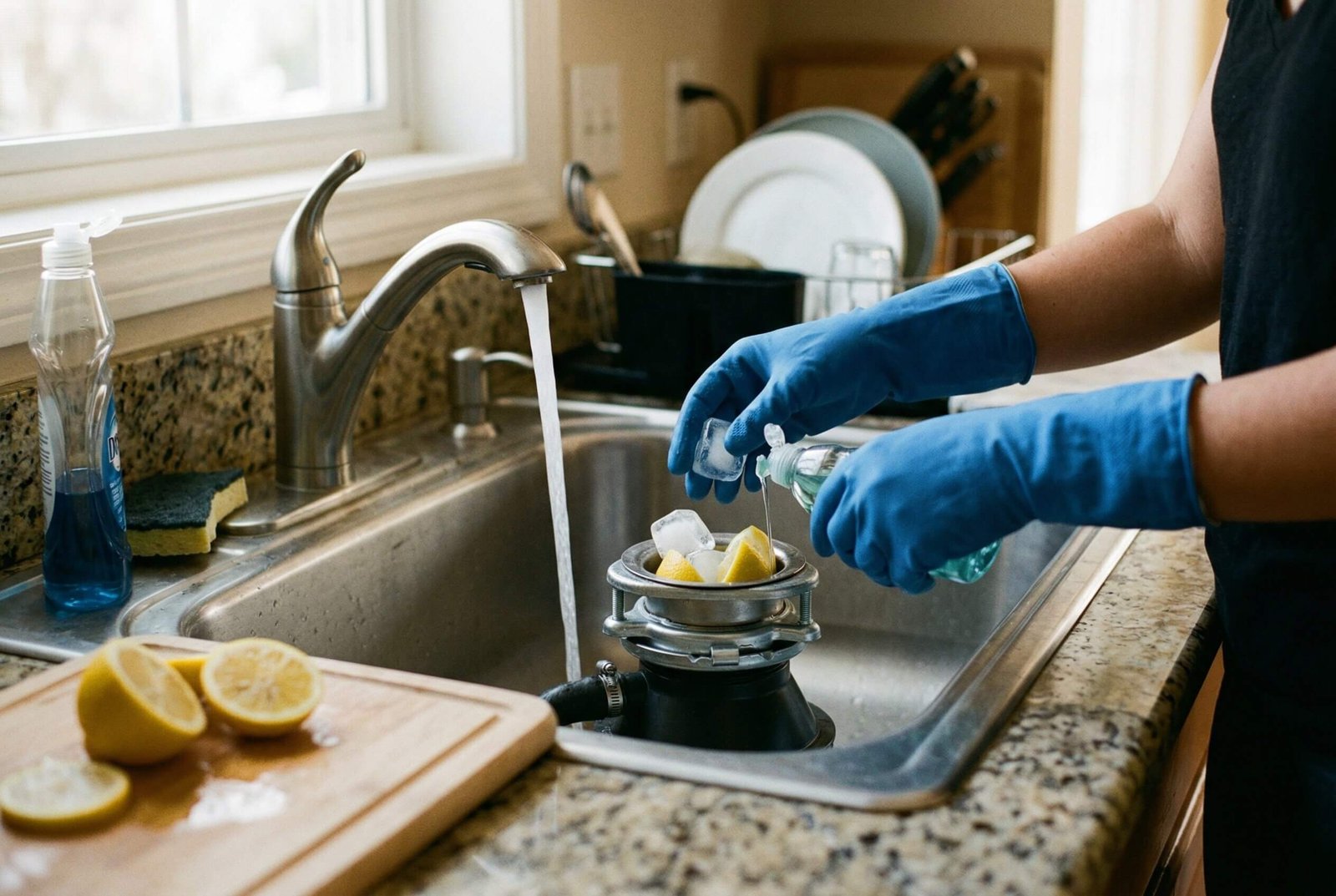
Ice + Mild Cleaning Method (Optional)
Ice helps scrub the inside of the disposal and remove light buildup from the grinding chamber.
Steps:
- Add a handful of ice cubes into the disposal
- Run cold water
- Turn on the disposal for a few seconds
As the ice moves through the unit, it helps dislodge residue from internal components. This method is optional but useful for maintaining cleanliness inside the disposal.
Enzyme Cleaner Treatment
For deeper maintenance, enzyme cleaners help break down organic buildup inside both the disposal and the connected pipes.
How to use:
- Pour the recommended amount into the drain (preferably at night)
- Let it sit undisturbed for several hours or overnight
- Flush with warm water the next day
This method works gradually and is ideal for long-term grease and residue control.
Cleaning the Splash Guard Thoroughly
The rubber splash guard is one of the most overlooked areas. Food particles often stick underneath it and create persistent odors.
What to do:
- Lift the guard carefully
- Clean underneath using a brush or cloth
- Rinse thoroughly
Keeping this area clean prevents buildup from re-entering the disposal.
Why Monthly Cleaning Matters
Monthly cleaning goes beyond surface-level maintenance. It removes residue that would otherwise continue building up and eventually move into your drain system.
From a plumber’s perspective, this is the stage that prevents most disposal-related odor and clog issues. When combined with proper daily habits and weekly maintenance, it keeps your disposal clean, efficient, and safe for your plumbing long-term.
Advanced Maintenance Tips
When basic and monthly routines aren’t enough, advanced maintenance helps you handle early problems before they turn into serious drain issues. This level is about controlled intervention — not aggressive fixing. Done correctly, it can restore performance and prevent the need for professional service.
Safely Removing Minor Jams
Occasional jams happen, especially if something slightly harder or fibrous goes into the disposal. The key is to clear them safely without damaging the unit.
What to do:
- Turn off power to the disposal (very important)
- Use a disposal wrench (or hex key) to manually rotate the motor from below
- Check inside (without putting your hand in) for any visible obstruction
- Restore power and test with running water
Never use your hands or metal tools inside the disposal. Proper tools prevent injury and avoid damaging internal components.
Checking for Internal Buildup
If your disposal starts smelling or draining slower despite regular cleaning, there may be buildup inside the grinding chamber or nearby pipe sections.
Signs to check:
- Sticky or greasy residue inside the unit
- Reduced grinding efficiency
- Water draining slower after use
At this stage, combining a deep degreasing flush with enzyme treatment can help reduce buildup before it hardens further.
Controlled Deep Cleaning Cycle
For moderate buildup, a more structured cleaning approach works better than one-time methods.
How to apply:
- Start with dish soap and warm water flush
- Let it sit briefly to loosen grease
- Follow with a gradual water flush
- Repeat the process once more if needed
This layered cleaning approach removes buildup more effectively than a single quick rinse.
Knowing the Limits of DIY Maintenance
This is where many homeowners make mistakes — trying to fix deeper issues with repeated basic methods.
DIY can handle:
- Minor jams
- Early-stage buildup
- Light odors and residue
DIY cannot fully handle:
- Hardened grease layers inside pipes
- Deep or recurring clogs
- System-wide drainage issues
Recognizing this boundary prevents wasted effort and avoids pushing problems deeper into the system.
When Advanced Maintenance Isn’t Enough
If you notice any of the following, it usually means the issue has gone beyond what home maintenance can solve:
- Disposal works, but drainage remains slow
- Problems return quickly after cleaning
- Multiple drains are affected
- Persistent odors don’t go away
At this point, the issue is likely in the pipes rather than the disposal itself.
From a real plumber’s perspective, advanced maintenance is about timing and judgment. When used correctly, it can extend the life of your disposal and protect your drain system. But knowing when to stop and move to professional help is just as important as knowing what to do.
Professional Maintenance for Disposal and Drain
There comes a point where proper use, weekly care, and even advanced DIY maintenance won’t fully solve the problem. When buildup moves beyond the disposal unit and into the drain system, professional maintenance becomes necessary. At this stage, the goal is not just to improve flow — it’s to restore the system completely.
A common mistake homeowners make is assuming the disposal is the issue when, in reality, the problem lies deeper in the pipes. The disposal may still run normally, but the drain line connected to it could be partially blocked with grease, ground food, and residue.
When the Disposal Starts Affecting the Main Drain
If your garbage disposal is used heavily over time, ground food particles and grease can travel beyond the immediate pipe and settle further down the line. This is especially common in:
- Homes with frequent cooking and disposal use
- Older plumbing systems with rough pipe interiors
- Kitchens where grease is occasionally rinsed down
When buildup reaches this level, you may notice multiple drains slowing or recurring issues that basic cleaning can’t fix.
Hydro Jetting (Full System Cleaning)
Hydro jetting is one of the most effective professional solutions. It uses high-pressure water to clean the entire inside of your pipes, removing grease, sludge, and buildup completely.
Unlike DIY methods, which only create a temporary opening, hydro jetting restores the full diameter of the pipe. This significantly improves flow and reduces the chances of recurring clogs.
Camera Inspection (Accurate Diagnosis)
Before performing deep cleaning, plumbers often use a camera inspection to see inside your pipes. This allows them to identify:
- Where buildup is located
- How severe the blockage is
- Whether there are any pipe issues
This step ensures the right solution is used instead of relying on guesswork.
Repair vs Replacement Decisions
In some cases, repeated buildup or damage may affect the disposal unit itself. This could include:
- Worn grinding components
- Reduced efficiency
- Frequent jamming
A professional can determine whether the unit needs repair or replacement, or if the issue is purely within the drain system.
When You Should Call a Professional
You don’t need to wait for a complete failure before calling a plumber. Early intervention often prevents bigger problems.
Consider professional help when:
- Drainage remains slow despite regular maintenance
- The same issue keeps returning
- You notice multiple drains affected
- There are strong, persistent odors
- Water backs up during disposal use
From a real-world perspective, professional maintenance is not something you need frequently — but when it’s needed, it makes a major difference. It resets your system to a clean state, allowing your regular maintenance routine to work effectively again.
Once the system is properly cleaned, your disposal and drain can function as intended — without recurring issues or hidden buildup.
Tools That Help Maintain Garbage Disposal
You don’t need a complicated toolkit to maintain your garbage disposal properly. A few simple, practical tools can help you prevent buildup, clean the unit effectively, and handle minor issues safely. The goal is not to fix major problems yourself — it’s to maintain the system so those problems don’t develop.
- Sink strainer
Even if you have a garbage disposal, a sink strainer is still important. It helps catch larger food scraps before they enter the disposal, reducing the load on the unit and preventing unnecessary grinding of materials that could cause buildup. - Enzyme cleaners
These are one of the best tools for long-term maintenance. Enzyme cleaners break down organic material like grease and food residue inside both the disposal and connected pipes without damaging them. They are ideal for monthly use. - Disposal wrench (hex key)
This tool is used to manually rotate the disposal motor from below when it gets jammed. It allows you to safely clear minor jams without forcing the unit or risking damage. - Cleaning brushes (long-handled)
A brush designed for narrow spaces helps clean around the drain opening and under the splash guard. This is where food residue often collects and causes odors. - Dish soap (degreasing agent)
Dish soap isn’t just for dishes — it’s one of the simplest and safest ways to break down light grease inside the disposal and pipes during regular maintenance.
From a practical standpoint, these tools are more than enough for most homeowners. You don’t need advanced equipment to maintain your disposal — just the right basics used consistently.
When combined with proper daily habits and routine cleaning, these tools help keep your disposal running efficiently and prevent buildup from reaching your drain system.
Garbage Disposal Maintenance Schedule
A structured schedule makes disposal maintenance simple and consistent. Instead of waiting for jams, odors, or slow drainage, this routine keeps your disposal and drain system working efficiently all year.
Weekly
This keeps the disposal clean and prevents early residue buildup.
- Flush with cold water for 1–2 minutes
- Add dish soap and run the disposal briefly
- Clean the splash guard (rubber flaps)
- Check for any unusual sounds or minor issues
These steps remove surface residue and prevent odors from developing.
Monthly
This level focuses on deeper cleaning and internal maintenance.
- Use baking soda cleaning method
- Perform ice cleaning (optional)
- Apply enzyme cleaner overnight
- Clean under and around the splash guard thoroughly
Monthly maintenance helps break down buildup that weekly cleaning can’t fully remove.
Quarterly
This is your inspection and deeper maintenance stage.
- Check for early signs like slow drainage or recurring odors
- Perform a controlled deep cleaning cycle (soap + water stages)
- Inspect for minor jams or reduced grinding performance
- Adjust usage habits if needed
Quarterly checks help catch issues before they turn into drain problems.
Yearly
This is where you evaluate the overall system health.
- Monitor long-term performance (flow, odors, efficiency)
- Consider professional inspection if issues persist
- Schedule deep cleaning (like hydro jetting) if needed
- Evaluate disposal condition (repair or replace if worn)
Not every home needs professional service every year, but reviewing your system annually keeps everything under control.
This schedule works because it balances daily use with structured maintenance. You’re not overdoing it, and you’re not neglecting it either.
From a plumber’s perspective, homeowners who follow a simple schedule like this rarely deal with disposal-related drain problems. It keeps buildup minimal, performance consistent, and your kitchen system reliable.
Common Garbage Disposal Mistakes
Most garbage disposal problems aren’t caused by a faulty unit — they’re caused by how the disposal is used every day. These mistakes are common, and many of them feel harmless in the moment, but over time they lead to buildup, clogs, and drain issues.
Using the Disposal for All Food Waste
A garbage disposal is not meant to replace your trash can. One of the biggest mistakes is relying on it to handle large amounts of food regularly.
When too much material is ground and sent through the pipes, it increases the chances of particles settling and building up. The disposal should only handle small scraps, not full portions of waste.
Pouring Grease or Oily Food Into the Disposal
Many people assume that grinding greasy food makes it safe for the drain. In reality, grease still behaves the same way — it cools, sticks to pipe walls, and traps debris.
Grinding it only spreads it further into the system, making the problem harder to detect and fix.
Overloading the Unit
Adding too much food at once prevents the disposal from grinding effectively. Larger or uneven particles can pass through and settle in the pipes instead of being flushed out.
This also puts extra strain on the motor and increases the chances of jams.
Running the Disposal Without Enough Water
Water is what carries ground particles through your pipes. Running the disposal without enough water allows debris to settle near the drain opening or in nearby pipe sections.
This is one of the fastest ways to create buildup, especially when combined with grease.
Ignoring Early Warning Signs
Unusual noises, slow drainage, odors, or frequent resets are often ignored because the disposal still “works.” These signs usually indicate buildup or improper use.
Waiting too long allows the issue to spread from the disposal into the drain system.
Treating Odor Fixes as Cleaning
Using citrus peels or similar methods to remove odors can make the disposal smell better temporarily, but it doesn’t remove buildup inside the unit or pipes.
This creates a false sense of cleanliness while the real problem continues to develop.
From a practical standpoint, avoiding these mistakes is just as important as following a maintenance routine. Most disposal-related drain issues I see are not due to lack of cleaning — they’re due to habits that slowly create buildup over time.
How Disposal Maintenance Protects Your Drain Long-Term
Garbage disposal maintenance isn’t just about keeping the unit clean — it directly affects the health of your entire drain system. When the disposal is used and maintained properly, it reduces the amount of problematic material entering your pipes. When it’s misused, it becomes one of the main sources of buildup.
The biggest benefit of proper maintenance is buildup control. By preventing grease, large particles, and improper waste from entering the system, you reduce the chances of material sticking to pipe walls. This keeps the internal surface of your pipes smoother, allowing water and debris to flow through more efficiently.
Another important advantage is improved drainage performance. When ground particles are properly flushed with water and not overloaded into the system, they move through the pipes instead of settling. This prevents slow drainage, gurgling, and recurring minor clogs that often develop over time.
Proper disposal maintenance also helps prevent larger system issues. When buildup is controlled at the source, it reduces the risk of debris traveling into the main sewer line and creating more serious blockages. This is especially important in homes that use the kitchen sink frequently.
Over time, consistent maintenance contributes to longer pipe lifespan. Pipes that remain clear and free of buildup experience less strain, less pressure, and fewer chemical exposures from repeated cleaning attempts. This reduces the likelihood of damage and costly repairs.
From a real-world perspective, the disposal is one of the first points where drain problems either start or are prevented. When you manage it correctly, you’re not just maintaining a single appliance — you’re protecting your entire plumbing system.
Final Thoughts
A garbage disposal is a useful tool, but it’s often misunderstood. It doesn’t replace proper waste management, and it doesn’t eliminate the need for drain maintenance. It simply assists with handling small amounts of food waste — and how you use it determines whether it helps or harms your plumbing system.
The most effective approach is prevention. By avoiding the wrong materials, using the disposal correctly, and following a simple maintenance routine, you can keep both your disposal and your drains working efficiently. This reduces the risk of clogs, odors, and long-term buildup that leads to bigger problems.
It’s also important to recognize when basic maintenance isn’t enough. If issues persist, stepping up to deeper cleaning or professional help prevents small problems from turning into expensive repairs.
In real homes, the difference between a trouble-free kitchen and constant drain issues comes down to consistent habits. When you treat your disposal as a controlled tool — not a catch-all solution — you protect your drain system and avoid most common plumbing problems.