
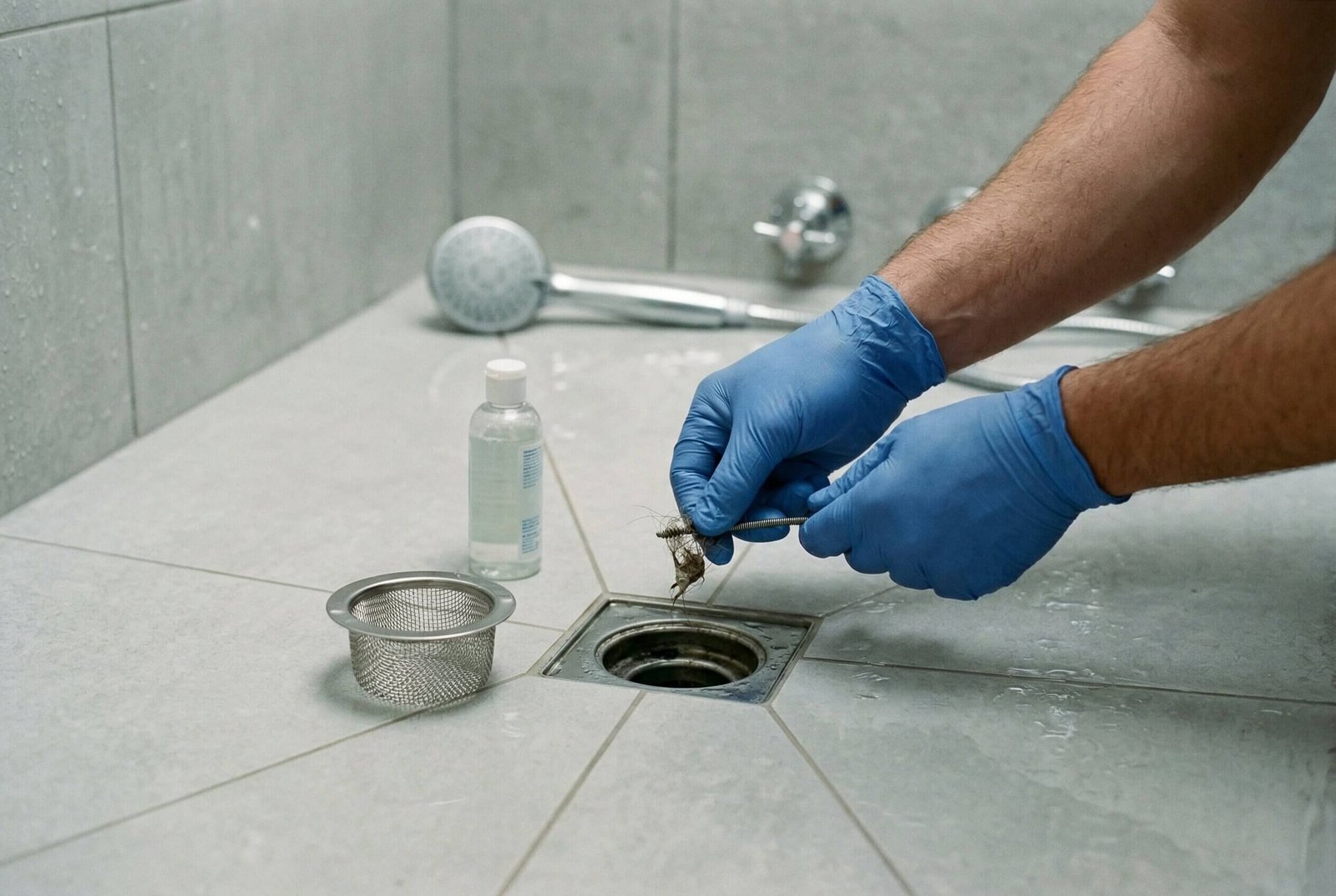
Shower drains are one of the most common places where clogs develop, and in most homes, it’s not a question of if it will happen—it’s when. Unlike kitchen drains that deal with food waste or bathroom sinks that see lighter use, shower drains constantly collect hair, soap residue, body oils, and product buildup. Over time, these materials don’t just wash away. They combine, stick to the inside of the pipe, and slowly form a blockage that restricts water flow.
What most homeowners don’t realize is that hair clogs don’t appear suddenly. They build up gradually, layer by layer, often over weeks or months. By the time you notice slow drainage or standing water, the problem has already developed deeper inside the pipe. At that stage, simple fixes like hot water or quick cleaners usually only provide temporary relief, not a real solution.
This is where proper drain maintenance changes everything. Instead of reacting to clogs after they happen, maintenance focuses on controlling buildup before it becomes a problem. It’s not about aggressive cleaning or using harsh chemicals—it’s about following a simple, consistent system that keeps your shower drain flowing freely.
In this guide, I’ll walk you through exactly how plumbers approach shower drain maintenance in real homes. You’ll learn how clogs actually form, how to prevent them with a practical routine, what tools actually work, and when it’s time to step in with deeper cleaning or call a professional.
What This Page Covers
ToggleWhat Shower Drain Maintenance Really Means
Most homeowners think “maintenance” means cleaning the drain once it starts slowing down. But from a plumber’s point of view, that’s not maintenance—that’s already a problem. True shower drain maintenance is about managing what goes into the pipe and controlling buildup before it turns into a clog.
It’s important to understand the difference. Cleaning is what you do when you notice visible dirt or slow drainage. Unclogging is what you do when water stops flowing properly. Maintenance, on the other hand, is a routine system designed to keep the drain working normally all the time. If you’re only acting when there’s an issue, you’re always one step behind the problem.
Hair clogs are not random. Every time you shower, strands of hair go down the drain. On their own, they might pass through. But inside the pipe, those strands catch on rough surfaces, soap residue, and tiny imperfections. Over time, they form a net-like structure that traps more hair and debris. Add conditioner, oils, and hard water minerals, and that buildup becomes sticky, dense, and harder to remove.
Proper maintenance focuses on interrupting that process early. Instead of letting buildup harden deep inside the pipe, you remove surface hair regularly, flush out light residue, and prevent layers from forming. The goal is not to keep your drain perfectly clean—it’s to keep buildup soft, minimal, and manageable so it never turns into a full blockage.
When you approach your shower drain this way, you stop reacting to clogs and start preventing them entirely.
Why Shower Drain Maintenance Matters
Most homeowners don’t think about their shower drain until it starts causing problems. But by the time water begins to drain slowly or pool around your feet, the buildup inside the pipe has already reached a point where simple fixes won’t fully solve it. Regular maintenance isn’t just about keeping things clean—it’s about avoiding a chain of problems that get harder and more expensive to deal with over time.
Hair clogs are one of the most predictable plumbing issues. If nothing is done to control buildup, hair and soap will continue collecting inside the pipe, gradually narrowing the flow path. This doesn’t just slow drainage—it puts extra stress on the entire system. Water sits longer in the pipe, residue hardens, and odors begin to develop from trapped organic material breaking down.
From a cost perspective, prevention is always cheaper than repair. A few minutes of weekly maintenance can save you from needing drain snaking, chemical treatments, or even professional cleaning. In more severe cases, long-term neglect can lead to deep pipe blockages that require advanced tools or partial pipe replacement—something no homeowner wants to deal with for a problem that was entirely preventable.
There’s also a usability factor. A properly maintained shower drain keeps water flowing smoothly, prevents standing water, and eliminates unpleasant smells. It’s one of those small systems in your home that, when working correctly, you don’t notice—but when neglected, it quickly becomes frustrating.
In simple terms, shower drain maintenance matters because it keeps a small, manageable issue from turning into a recurring, expensive problem.
What Causes Hair Clogs in Shower Drains
Hair clogs don’t happen because of one single issue—they form when multiple everyday factors combine inside your drain over time. Understanding these causes is the first step to preventing them, because once you know what’s building up inside the pipe, your maintenance routine starts to make a lot more sense.
- Hair binding with soap residue: Loose hair doesn’t usually clog a drain by itself. The problem starts when it mixes with soap scum, which creates a sticky surface that traps more hair and debris.
- Conditioner and body oils coating the pipe: Shampoos, conditioners, and natural body oils leave behind a thin film inside the pipe. This coating acts like glue, making it easier for hair to stick instead of washing away.
- Hard water mineral buildup: In many homes, minerals in the water (like calcium and magnesium) slowly form a rough layer inside pipes. This roughness gives hair something to catch onto, accelerating clog formation.
- High hair volume and length: Households with long or thick hair naturally send more material down the drain. Without regular removal, this quickly turns into a dense buildup.
- Lack of regular flushing: If the drain isn’t flushed or maintained, light buildup stays in place and gradually thickens into a blockage.
- Poor drain design or slope: Some shower drains are more prone to clogging due to pipe angles or slow drainage flow, which allows debris to settle instead of moving through.
When these factors combine, they create the perfect environment for hair clogs to form—and once that process starts, it continues to build unless you interrupt it with proper maintenance.
How Hair Clogs Actually Form Inside Pipes
From the outside, a shower drain looks simple—water goes in, and it disappears. But inside the pipe, the process is very different. Hair clogs don’t form all at once. They build slowly in stages, and understanding this helps you stop the problem early instead of dealing with a full blockage later.
It usually starts with a few loose strands of hair going down the drain during a shower. As these strands move through the pipe, some of them catch on tiny rough spots, joints, or leftover residue from soap and products. At this stage, the drain still works perfectly, so there are no visible signs of a problem.
Next, those trapped strands begin to collect more hair. Soap scum, conditioner, and body oils stick to them, creating a soft, sticky layer. This is where the buildup begins to grow. The inside of the pipe slowly develops a coating that makes it easier for additional hair to attach instead of flowing through.
Over time, this layer thickens and becomes denser. Minerals from hard water can harden the buildup, turning it into a more solid mass. The opening inside the pipe gets narrower, and water starts draining more slowly. Eventually, the clog reaches a point where it restricts flow enough to cause standing water or backups.
The important thing to understand is that most of this buildup happens out of sight. By the time you notice a problem at the surface, the clog has already formed deeper inside the pipe. That’s why maintenance isn’t about reacting—it’s about breaking this process early, before the buildup has a chance to harden and expand.
Early Warning Signs of a Hair Clog
Hair clogs rarely happen overnight. In most cases, your shower drain gives clear warning signs before it becomes fully blocked. The problem is that these early signals are easy to ignore, especially when the water is still draining—just a little slower than usual. Catching these signs early is what allows you to fix the issue with simple maintenance instead of dealing with a stubborn clog later.
- Water draining slower than usual: One of the first signs. You may notice water taking a few extra seconds to clear, especially during longer showers.
- Water pooling around your feet: Even a thin layer of standing water means the pipe is already partially restricted.
- Gurgling or bubbling sounds: Air trapped by buildup inside the pipe creates these sounds as water tries to pass through.
- Hair collecting around the drain opening: Visible hair at the surface often means more hair is already caught just below.
- Musty or sour smells: Organic material like hair and soap starts to break down inside the pipe, producing unpleasant odors.
- Drain working fine, then slowing suddenly: This usually means a buildup has reached a tipping point and is starting to restrict flow more aggressively.
If you notice even one or two of these signs, it’s a signal to act early. At this stage, maintenance is quick and effective. If ignored, the buildup continues to thicken, making the problem harder to remove and more likely to require deeper cleaning or professional help.
Basic Shower Drain Maintenance Routine
Most shower drain problems can be prevented with a simple weekly routine. This isn’t about deep cleaning or using strong products—it’s about consistently removing what builds up before it has time to turn into a clog. When done regularly, this routine keeps the inside of your pipe clear and slows down the entire clog formation process.
Start by removing any visible hair from the drain opening. This takes less than a minute but makes a big difference. Hair sitting at the surface is the starting point of most clogs, and if it’s left there, it will eventually get pulled deeper into the pipe where it’s harder to remove.
Next, run hot water down the drain for about 30–60 seconds. The goal here isn’t to “flush a clog,” but to keep soap residue and oils from settling and sticking to the pipe walls. Consistent flushing helps prevent that sticky layer from forming.
After that, use a small amount of dish soap and let it run with warm water. Dish soap helps break down light grease and body oils that shampoo and conditioner leave behind. You don’t need much—just enough to reduce buildup inside the pipe.
Once a week, take an extra minute to check just below the drain cover if possible. If you can access it, remove any trapped hair before it gets pulled further down.
The key to this routine is consistency. Done weekly, it keeps buildup soft and minimal. Skipped for weeks, that same buildup starts to thicken and turn into a clog that requires much more effort to remove.
Monthly Deep Maintenance for Hair Prevention
Weekly maintenance keeps things under control, but it doesn’t remove everything. Over time, some hair and residue still settle just below the drain opening and inside the first section of pipe. That’s why a monthly deep maintenance routine is important—it resets the system before buildup turns into a clog.
Start by removing the drain cover or stopper. In most showers, this is where the majority of hair gets trapped. You’ll often find a mix of hair, soap scum, and residue sitting just below the surface. Physically remove this material by hand or with a simple tool. This step alone prevents a large percentage of clogs from forming.
Next, use a basic drain snake or hair removal tool. Insert it a short distance into the drain and pull out any hair buildup that has started forming deeper inside. You don’t need to go far—most shower clogs begin within the first few inches of the pipe.
After removing the debris, flush the drain with hot water for a minute or two. This helps clear out any loosened residue and keeps the pipe interior cleaner.
Avoid using harsh chemical cleaners during this process. While they might seem effective, they don’t remove hair physically and can damage pipes over time if used regularly. The goal here is simple: remove buildup manually, then flush the system clean.
Done once a month, this routine prevents small accumulations from turning into the kind of dense, stubborn clogs that require heavy tools or professional help.
Intermediate Maintenance Methods (Safe DIY Cleaning)
Once your weekly and monthly routines are in place, you can add a few intermediate cleaning methods to help manage buildup that sits deeper inside the pipe. These methods aren’t meant to replace physical cleaning—they’re meant to support it by breaking down light organic residue before it hardens into a clog.
One common method is using baking soda followed by hot water. This helps loosen mild buildup and reduce odors, but it’s important to understand its limits. It doesn’t dissolve hair, and it won’t clear a developing clog on its own. Think of it as a light maintenance step that keeps residue from sticking too aggressively inside the pipe.
Enzyme-based drain cleaners are another useful option. Unlike chemical cleaners, these use bacteria or enzymes to slowly break down organic material like soap, oils, and small debris. They work best as a preventative tool, not as a quick fix. When used occasionally, they help keep the inside of the pipe cleaner without damaging it.
The key with these methods is timing and expectation. They are most effective when used before buildup becomes dense and compacted. If your drain is already slow or showing clear signs of clogging, these methods won’t solve the problem—they’ll only delay it.
Used correctly, intermediate methods extend the life of your maintenance routine by keeping buildup softer, lighter, and easier to manage over time.
Advanced Maintenance Approaches (Limits of DIY)
At some point, every homeowner reaches a stage where basic and intermediate maintenance isn’t enough. This usually happens when buildup has moved deeper into the pipe or has hardened to the point where simple tools and light cleaning methods can’t remove it effectively. Knowing these limits is important, because pushing DIY methods too far can waste time—or even make the problem worse.
Deeper buildup often forms beyond the first few inches of the drain, especially in the curved section of the pipe (the trap) or further down the line. Hair, soap scum, and minerals can compact into a dense mass that doesn’t respond to hot water, baking soda, or enzyme treatments. At this stage, surface cleaning may make the drain seem slightly better, but the core problem remains untouched.
Some homeowners try to repeat DIY methods more aggressively—using stronger chemicals or excessive flushing—but this rarely solves the issue. Chemical cleaners, in particular, can damage pipes over time and still won’t remove solid hair clogs effectively. In many cases, they just create a temporary opening through the blockage, which quickly closes again.
Clear signs that you’ve reached the limit of DIY include recurring clogs, water backing up quickly after cleaning, or slow drainage that keeps returning within days. When this happens, the issue is no longer about maintenance—it’s about removing a developed blockage.
This is the point where deeper mechanical cleaning or professional tools are needed to fully clear the pipe and restore proper flow.
Professional Shower Drain Maintenance
When a shower drain reaches the point where DIY methods stop working, professional maintenance isn’t just a backup option—it’s the correct next step. Plumbers don’t rely on guesswork or temporary fixes. They use specific tools and methods designed to fully remove buildup, not just push through it.
The most common professional method is drain snaking. Unlike small handheld tools, professional-grade snakes go deeper into the pipe and physically break apart or pull out compacted hair clogs. This is especially effective when the blockage sits in the trap or further down the line where DIY tools can’t reach.
For more severe buildup, plumbers may use hydro jetting. This involves high-pressure water that cleans the inside of the pipe walls, removing grease, soap residue, and hardened deposits. It doesn’t just open the drain—it restores the pipe closer to its original condition. This is usually recommended when clogs are recurring or when buildup has developed over a long period.
In some cases, especially when the problem isn’t clear, a camera inspection may be used. This allows the plumber to see exactly what’s inside the pipe—whether it’s a hair clog, mineral buildup, or a deeper issue like pipe damage or misalignment.
You should consider calling a professional when the drain keeps clogging despite regular maintenance, when water backs up quickly after cleaning, or when multiple fixtures start showing drainage issues. At that point, the problem has moved beyond routine care and needs proper equipment to fix it completely.
Tools Used in Shower Drain Maintenance
Having the right tools makes shower drain maintenance much easier and more effective. You don’t need anything complicated or expensive, but using the correct tools consistently can prevent most hair clogs from ever forming in the first place. From a plumber’s perspective, it’s always better to control what goes into the drain and remove buildup early rather than deal with it later.
The most important tool is a hair catcher or drain cover. This sits on top of the drain and stops loose hair before it enters the pipe. It’s a simple solution, but it eliminates the main cause of clogs at the source. For households with long hair or heavy use, this is one of the most effective preventive tools you can use.
A drain snake or hair removal tool is used for monthly maintenance. These tools are designed to reach just below the drain opening and pull out trapped hair. They’re inexpensive, easy to use, and far more effective than trying to flush hair deeper into the pipe.
Zip tools or plastic hair sticks work similarly but are designed for quick, shallow cleaning. They’re useful for regular upkeep but won’t reach deeper buildup.
Enzyme cleaners can be used occasionally to break down organic residue inside the pipe. They support your maintenance routine but don’t replace physical cleaning.
A plunger can also be useful in certain situations where there’s minor blockage, but it’s not a primary maintenance tool for hair clogs. The focus should always be on prevention and removal—not forcing buildup further down the line.
Shower Drain Maintenance Schedule
A good maintenance routine isn’t about doing everything at once—it’s about doing the right things at the right time. When you spread maintenance across a simple weekly, monthly, and occasional schedule, you keep buildup under control without it feeling like a chore. This is exactly how plumbers think about prevention in real homes.
- Weekly (basic control)
Remove visible hair from the drain cover or opening, run hot water for 30–60 seconds, and use a small amount of dish soap to flush light residue. This keeps oils and soap from settling and slows down buildup formation. - Monthly (buildup reset)
Remove the drain cover and clean underneath it. Use a drain snake or hair removal tool to pull out hair from just inside the pipe. Follow this with a thorough hot water flush. This step prevents small accumulations from turning into dense clogs. - Every 2–3 months (support cleaning)
Use an enzyme-based cleaner to break down organic residue inside the pipe. This helps maintain a cleaner interior and reduces odor without damaging pipes. - Every 6–12 months (inspection level)
Check for recurring slow drainage, smells, or signs of deeper buildup. If issues keep returning, this is the stage to consider professional cleaning before it becomes a major blockage.
This schedule works because it matches how clogs actually form—slowly and in layers. By interrupting that process at different stages, you prevent buildup from ever reaching the point where it causes real problems.
Cost of Shower Drain Maintenance in the U.S.
One of the biggest advantages of proper shower drain maintenance is how little it actually costs compared to dealing with a clog after it forms. Most of the routine work can be done with simple tools and a few minutes of effort, which makes it one of the most cost-effective parts of home maintenance.
For basic DIY maintenance, the cost is very low. A good hair catcher or drain cover typically costs between $5 and $15, and it can last for years. A drain snake or hair removal tool is usually under $10–$20 and can be reused many times. Occasional use of enzyme cleaners might cost around $10–$20 per bottle, depending on the brand and frequency of use. Overall, you can maintain your shower drain for less than $50 per year in most cases.
Professional maintenance is more expensive but still reasonable when used occasionally. A standard drain cleaning service for a shower drain may range from $100 to $250, depending on the severity of the clog and your location. More advanced services like hydro jetting or camera inspections can cost more, typically in the $250 to $500 range, but these are usually only needed for recurring or deeper issues.
The real cost comes from neglect. Emergency plumbing visits, severe blockages, or pipe repairs can quickly run into several hundred dollars or more. Compared to that, a simple maintenance routine is a small investment that prevents much larger expenses down the line.
Common Shower Drain Maintenance Mistakes
Most shower drain problems aren’t caused by a lack of effort—they’re caused by doing the wrong things at the wrong time. From a plumber’s perspective, these small mistakes are what turn a manageable situation into a recurring clog or a deeper issue that requires professional intervention.
- Relying on chemical drain cleaners too often
Many homeowners reach for chemical cleaners as a quick fix. While they may create temporary relief, they don’t remove hair effectively and can damage pipes over time if used regularly. - Ignoring early warning signs
Slow drainage, minor pooling, or light odors are often dismissed. By the time action is taken, the buildup has already hardened deeper inside the pipe. - Only cleaning what’s visible
Removing hair from the drain surface helps, but most clogs form just below or further down the pipe. Skipping deeper cleaning allows buildup to continue growing out of sight. - Skipping a hair catcher
Letting hair go directly into the drain is one of the biggest preventable mistakes. A simple drain cover can stop most clogs before they start. - Overusing DIY methods instead of removing buildup
Repeating hot water, baking soda, or similar methods without physically removing hair often just delays the problem instead of solving it. - Waiting until the drain is fully clogged
Maintenance should happen before there’s a problem. Once water stops draining properly, you’re no longer maintaining—you’re dealing with a developed blockage.
Avoiding these mistakes keeps your maintenance routine effective and prevents small issues from turning into bigger, more expensive problems.
How to Maintain Different Types of Shower Drains
Not all shower drains behave the same way. The design of your shower, how often it’s used, and even the age of your plumbing can all affect how quickly hair clogs form. That’s why maintenance shouldn’t be one-size-fits-all—you need to adjust your approach based on the type of drain you have.
Standard shower drains are the most common and usually the easiest to maintain. These drains benefit from a simple routine: consistent use of a hair catcher, weekly surface cleaning, and monthly removal of buildup just below the drain. Since most clogs form close to the opening, regular attention here prevents deeper issues.
Tub-shower combo drains tend to clog faster because they handle both bathing and showering. Soap residue is often heavier, and hair has more opportunity to accumulate. In these setups, monthly deep maintenance becomes even more important, and using a drain snake regularly helps prevent buildup from settling in the pipe.
Walk-in showers often have wider or linear drains, which can collect more debris across a larger area. While they may seem less prone to clogging, hair and residue can still accumulate underneath the drain cover. These require more thorough cleaning under the cover rather than just surface-level maintenance.
Older plumbing systems are more prone to clogs due to rougher pipe interiors and years of mineral buildup. Hair catches more easily in these pipes, so maintenance needs to be more consistent and proactive. In some cases, occasional professional cleaning may be necessary to keep things flowing properly.
High-use households, especially those with long hair, need more frequent maintenance regardless of drain type. In these homes, weekly cleaning and monthly deep maintenance are essential, not optional.
By adjusting your routine to match your specific setup, you make your maintenance more effective and reduce the chances of recurring clogs.
Long-Term Strategy to Prevent Hair Clogs Permanently
If you look at how most homeowners deal with shower drains, it’s usually reactive—wait for a clog, fix it, then forget about it until it happens again. That cycle continues because there’s no system in place. A long-term strategy changes that by making drain maintenance predictable, controlled, and almost effortless over time.
The first part of that strategy is stopping as much hair as possible before it enters the drain. A good hair catcher isn’t optional—it’s your first line of defense. When you reduce what goes into the pipe, everything else becomes easier. Without this step, you’re always relying on cleaning instead of prevention.
The second part is consistency. A simple weekly routine and a monthly deep clean may seem small, but together they interrupt the entire clog formation process. Instead of buildup forming layer by layer, you’re removing it while it’s still soft and easy to manage. This is what keeps your drain functioning without sudden issues.
The third part is awareness. Pay attention to how your drain behaves. If you notice small changes—slower drainage, light odors, or more hair than usual—that’s your signal to act early. Waiting until there’s a visible problem always makes the solution harder.
Finally, know when to step up your approach. If clogs start happening more often despite regular maintenance, it usually means buildup has moved deeper into the system. That’s when a professional cleaning resets the pipe and brings you back to a manageable starting point.
When you combine prevention, routine, and awareness, you move from reacting to problems to controlling them. That’s how you keep your shower drain clear long-term without constant frustration.
Final Thoughts
Shower drain clogs are one of the most common plumbing issues, but they’re also one of the most preventable. The key is understanding that these clogs don’t happen suddenly—they build slowly over time. When you shift your focus from reacting to problems to maintaining the system, you take control of how your drain performs.
You don’t need complicated tools or aggressive cleaning methods to keep your shower drain clear. A simple routine—removing hair regularly, flushing the drain, and doing a quick monthly clean—handles most of the problem before it starts. When done consistently, these small steps prevent the kind of buildup that leads to slow drainage, odors, and full blockages.
It’s also important to be realistic about limits. Not every issue can be handled with DIY methods, and recognizing when to step in with deeper cleaning or professional help saves time, effort, and potential damage to your plumbing system.
In the end, maintaining your shower drain isn’t about doing more work—it’s about doing the right work at the right time. Stay consistent, pay attention to early signs, and use the right tools, and you’ll avoid most hair clog problems entirely.