
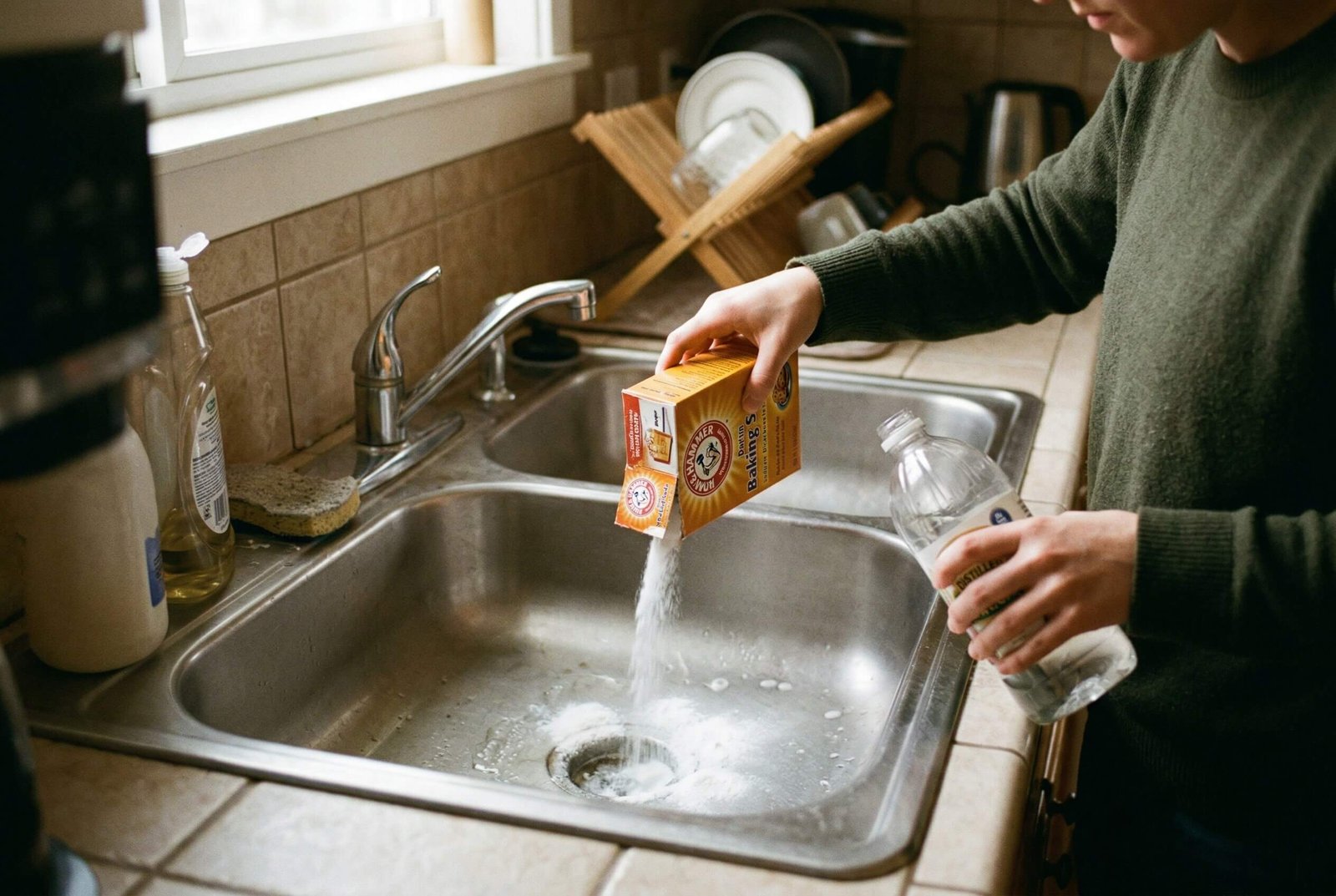
Most homeowners turn to natural drain maintenance methods for one simple reason—they want something safe, easy, and chemical-free that actually works. Baking soda and vinegar is probably the most popular option out there. It’s cheap, accessible, and feels effective because of that fizzy reaction people associate with “cleaning power.” But in real plumbing, what matters isn’t how something looks—it’s what it actually does inside your pipes.
Here’s the honest plumber perspective: baking soda and vinegar can play a role in drain maintenance, but only in the right situations. This method is not a solution for clogged drains, and it won’t magically clear grease, hair, or heavy buildup. Where it does help is in early-stage maintenance—keeping minor residue from turning into bigger problems and helping control odors before they become noticeable.
Think of it like brushing your teeth. It won’t fix a cavity, but it helps prevent one. Used correctly, this method becomes part of a simple, ongoing home drain maintenance routine—not a one-time fix when things go wrong. The key is understanding its limits, using it at the right time, and combining it with better habits that actually protect your pipes long-term.
If you approach it the right way, baking soda and vinegar can help you prevent drain clogs—not solve them after they’ve already formed.
What This Page Covers
ToggleWhat Natural Drain Maintenance Really Means
Natural drain maintenance isn’t about replacing real cleaning methods—it’s about slowing down the conditions that lead to clogs in the first place. In plumbing terms, this means managing early-stage buildup before it turns into something solid and restrictive inside your pipes. Methods like baking soda and vinegar don’t “clean” pipes the way professional tools or chemical cleaners do—they lightly interact with residue and help keep things from getting worse.
The key difference is strength. Natural methods rely on mild reactions and surface-level effects. They can help loosen small amounts of organic residue, reduce odor-causing bacteria, and keep drains fresh when used consistently. But they do not break down grease layers, dissolve hair clumps, or remove hardened sludge from pipe walls. That’s where many homeowners misunderstand what “natural cleaning” actually means.
In real homes, natural maintenance works best as a preventive habit, not a reactive fix. If your drain is already slow, backing up, or holding standing water, you’re no longer in the maintenance stage—you’re dealing with a blockage. At that point, baking soda and vinegar won’t solve the problem, and relying on it can actually delay proper cleaning.
So when we talk about natural drain maintenance, we’re really talking about routine upkeep. It’s something you do regularly to keep drains flowing smoothly—not something you use when there’s already a serious issue.
Maintenance vs Cleaning vs Unclogging
One of the biggest reasons homeowners get frustrated with baking soda and vinegar is simple—they expect it to do a job it was never designed for. In plumbing, there are three completely different stages of drain care, and mixing them up leads to wasted time and recurring problems.
Maintenance is preventive. This is where natural methods like baking soda and vinegar actually belong. At this stage, your drain is still flowing normally, and you’re just managing light residue, minor odor, and early buildup before it turns into something solid. Think of it as keeping things from getting worse, not fixing anything that’s already broken.
Cleaning is the next level. This involves removing buildup that has already formed along the pipe walls—soap scum, grease layers, biofilm, or mineral deposits. Natural methods have very limited impact here because they don’t have the strength to break down or detach these materials. Proper cleaning usually requires hot water flushing, mechanical action, or enzyme-based solutions that work over time.
Unclogging is a completely different situation. This means there is an actual blockage restricting water flow—hair clumps, grease plugs, food waste, or foreign objects. At this point, you need physical removal (like a plunger or drain snake) or professional tools. Baking soda and vinegar won’t clear a clog, no matter how many times you try it.
Understanding this difference changes how you use natural methods. When used in the maintenance stage, they can help prevent drain clogs. When used in the cleaning or unclogging stage, they simply delay the real solution.
Why Natural Maintenance Can Still Be Valuable
Even though baking soda and vinegar aren’t powerful cleaners, they still have a place in a well-planned drain maintenance routine. The value comes from consistency and timing—not strength. When used regularly, this method helps manage the early stages of buildup before it turns into something harder to remove.
One of the biggest advantages is safety. Unlike harsh chemical cleaners, this method won’t damage most residential pipes when used properly. That matters more than people realize, especially in older homes with aging plumbing where aggressive chemicals can weaken joints or corrode materials over time. It’s a low-risk way to stay proactive without introducing unnecessary wear on your system.
It’s also effective for odor control. Many drain smells come from organic residue sitting inside the pipe, especially in bathroom and kitchen drains. The reaction between baking soda and vinegar helps disturb that layer slightly and reduce the bacteria causing the smell. It won’t deep clean the pipe, but it can keep things fresh if done regularly.
Another benefit is cost and simplicity. You’re using basic household items, and the process takes only a few minutes. That makes it easier to stay consistent—which is what actually prevents problems long-term.
The key is to treat this method as a support tool, not a solution. It works best when combined with good habits like using strainers, avoiding grease buildup, and doing occasional deeper cleaning when needed.
What Causes Buildup That Natural Methods Target
To understand where baking soda and vinegar actually help, you need to look at the kind of buildup forming inside your pipes in the early stages. Most drain problems don’t start as full blockages—they begin as thin layers of residue that slowly collect along the pipe walls. This is exactly the stage where natural maintenance methods can still make a difference.
In real homes, these early deposits are usually soft, uneven, and loosely attached. They haven’t hardened yet, and they don’t fully restrict water flow. That’s why mild reactions like baking soda and vinegar can interact with them slightly—helping disrupt the surface before it turns into something more stubborn.
Common types of buildup this method can target include:
- Light organic residue from food particles, soap, and daily use
- Early soap film forming inside bathroom drains
- Minor biofilm (bacteria layer) that causes unpleasant odors
- Small amounts of grease before it cools and solidifies
- Toothpaste and grooming product residue in sink drains
What’s important to understand is timing. Once these materials layer up, compress, or mix together—like grease binding with food waste or hair—they become much harder to remove. At that point, natural methods lose their effectiveness completely.
So this approach works best when buildup is still fresh, thin, and manageable. Catching it early is what keeps your drains flowing and prevents the need for more aggressive cleaning later.
What Baking Soda and Vinegar Actually Do Inside a Drain
When you pour baking soda followed by vinegar into a drain, the reaction you see—that fizzing and bubbling—is a simple acid-base reaction. It creates carbon dioxide gas, which produces agitation inside the pipe. This movement can help disturb loose residue sitting on the surface, but it’s important to understand what it doesn’t do.
That bubbling action is not strong enough to cut through grease, dissolve hair, or break apart solid clogs. It doesn’t generate the pressure or chemical strength needed to clean pipe walls deeply. What it really does is create a light scrubbing effect, similar to gently shaking debris that hasn’t fully settled yet.
This is why many homeowners feel like it’s working—because it looks active. But in plumbing terms, activity doesn’t equal effectiveness. The reaction is short-lived, and once it stops, there’s no continued cleaning action happening inside the pipe.
Where it can help is in loosening soft residue and disrupting odor-causing buildup. The fizz can reach small areas and lightly shift early-stage deposits, especially when followed by a hot water flush. But beyond that, its role is limited.
The biggest misconception is thinking this reaction “cleans” pipes. In reality, it only assists with minor surface-level maintenance. Used correctly, it supports your routine—but it won’t replace proper cleaning or unclogging methods.
Where This Method Works Best
Baking soda and vinegar can be useful—but only in specific situations where buildup is still light and manageable. In real homes, this method performs best in drains that are still flowing normally but starting to show early signs of residue or odor. When used at the right time, it helps maintain flow rather than restore it.
Bathroom sink drains are one of the best use cases. These drains collect toothpaste, soap, and light grooming residue that stays relatively soft in the early stages. The mild reaction can help disturb that layer and reduce odors before it thickens into a sticky buildup that slows water over time.
Shower and bathtub drains can also benefit—but only before hair accumulation becomes dominant. If you’re regularly removing visible hair and using this method as a follow-up, it can help manage soap film and minor residue. However, once hair starts binding with soap and forming clumps, this method becomes ineffective.
Kitchen sinks are more limited. This method can help only in the early phase, before grease has time to cool and solidify inside the pipe. If you’re already dealing with grease buildup, the reaction won’t break it down. In those cases, hot water and proper cleaning methods are far more effective.
It’s also useful for odor control across most drains. If a drain smells but still flows fine, this method can help disrupt the bacteria causing that odor.
The pattern is simple: it works best in light-use, early-stage conditions—not in problem drains.
Where This Method Does NOT Work
This is where most homeowners get misled. Baking soda and vinegar feels powerful because of the fizzing reaction, but in real plumbing situations, there are many cases where it simply won’t do anything useful—and relying on it can actually make things worse by delaying proper action.
The biggest limitation is grease. In kitchen drains, grease doesn’t stay soft for long. It cools, sticks to pipe walls, and starts trapping food particles. Once that layer forms, a mild reaction won’t break it down or remove it. You might hear bubbling, but the grease remains untouched underneath.
Hair clogs are another major issue. In showers and bathroom drains, hair binds with soap and forms dense, stringy blockages. Baking soda and vinegar can’t dissolve or separate that mass. Without physical removal, the clog will continue to grow regardless of how many times you use this method.
It also doesn’t work on solid obstructions. If something is physically blocking the pipe—like debris in the P-trap or a compacted clog deeper in the line—this method has no impact at all. There’s no pressure, cutting ability, or mechanical force involved.
And most importantly, it won’t help with deeper plumbing problems. If multiple drains are slow, water is backing up, or you’re dealing with sewer line issues, this method is completely ineffective.
The rule is simple: if water flow is already restricted, you’re past the maintenance stage—and this method is no longer the solution.
Early Warning Signs This Method Can Still Help
The effectiveness of baking soda and vinegar comes down to timing. If you catch your drain early—before buildup turns into a blockage—this method can still play a useful role. But once clear symptoms of a clog appear, it’s already too late for natural maintenance to make a real impact.
In real-world plumbing, there are a few early warning signs that tell you you’re still in the maintenance stage. These signs indicate that buildup is starting, but hasn’t hardened or restricted flow significantly yet.
Common signs where this method can still help include:
- Water draining slightly slower than usual, but not pooling
- Occasional unpleasant odors coming from the drain
- Light gurgling sounds after water drains
- A “sticky” feeling in flow, where water doesn’t move as freely as before
- No visible standing water or backup
At this stage, buildup is usually soft and loosely attached to the pipe walls. This is where the mild agitation from baking soda and vinegar can help disrupt that layer and keep things moving.
But if you notice water collecting in the sink or tub, frequent backups, or complete slowdowns, you’ve already crossed into the cleaning or unclogging stage. Using this method at that point won’t fix the issue—and can give a false sense of progress while the problem continues to grow.
The key is to act early and consistently, not react when it’s already too late.
Step-by-Step Natural Drain Maintenance Routine
To get real value from baking soda and vinegar, the process needs to be done correctly and at the right time. This isn’t something you rush through or use randomly—it works best as a simple, repeatable routine when your drain is still in good condition.
Prepare the Drain First
Start by flushing the drain with hot water. This helps soften any light residue and clears the path so the reaction can reach the pipe walls instead of sitting on top of debris. Use hot tap water for about 30–60 seconds. In kitchen sinks, hotter water works better because it helps loosen early grease before it starts to harden.
Add Baking Soda
Pour about half a cup of baking soda directly into the drain. Try to get as much of it inside the pipe as possible instead of letting it sit at the opening. This step sets up the reaction and allows the powder to settle against areas where light buildup is forming.
Add Vinegar Slowly
Follow with about one cup of vinegar. Pour it steadily so it flows into the pipe rather than splashing back. As soon as it makes contact, you’ll hear the fizzing reaction begin. That bubbling is what creates the mild agitation inside the pipe.
Let the Reaction Work
Allow the mixture to sit for 10–15 minutes. This gives the reaction enough time to disturb soft residue and odor-causing buildup. Avoid running water during this period so the reaction isn’t diluted too quickly.
Flush With Hot Water Again
Finish by flushing the drain with hot water for another 1–2 minutes. This step is critical—it helps carry away any loosened material and clears the pipe. Without this flush, the process loses most of its effectiveness.
How Often to Use This Routine
- Once a month for general home drain maintenance
- Every 2–3 weeks for frequently used drains (kitchen or main bathroom)
- Immediately when you notice early warning signs like mild odor or slight slow drainage
Consistency matters more than intensity. Used regularly and at the right stage, this routine helps prevent drain clogs—but it won’t fix them once they’ve formed.
How to Make This Method More Effective
Baking soda and vinegar on their own have limited strength, but when used the right way—and combined with a few smart habits—you can get much better results from the same basic process. The goal isn’t to make the reaction stronger, but to make sure it actually reaches and affects the buildup before it becomes a problem.
Use Hot Water Strategically
Hot water is what actually helps move and soften residue inside the pipe. Always start and finish with a proper hot water flush. In kitchen drains especially, this step is more important than the reaction itself because it helps prevent grease from sticking and hardening along the pipe walls.
Time the Reaction Properly
Most people rush this step. If you immediately flush the drain after adding vinegar, the reaction doesn’t have enough time to interact with the buildup. Letting it sit for at least 10–15 minutes allows the fizzing action to work where it needs to—against the pipe surface, not just at the drain opening.
Use It Before Problems Develop
This method is most effective when used early. If you wait until the drain is already slow, the buildup has likely thickened beyond what this reaction can handle. Using it proactively—before visible issues—keeps the residue from reaching that stage.
Combine With Physical Maintenance
Natural methods work better when paired with simple mechanical actions. Removing visible hair, cleaning strainers, or using a plunger occasionally helps eliminate the material that baking soda and vinegar can’t break down. Without this step, buildup continues underneath.
Keep the Drain Entry Clear
If the drain opening is clogged with debris, the reaction won’t even reach the pipe properly. Always clear out visible gunk first so the mixture can travel inside and interact with the actual problem area.
Stay Consistent, Not Aggressive
Using this method more frequently doesn’t make it stronger—it just keeps buildup from accumulating. A consistent routine is far more effective than trying to “fix” a neglected drain all at once.
When used this way, baking soda and vinegar become a small but useful part of a larger drain maintenance system—not a standalone solution.
Limitations of Baking Soda and Vinegar (Critical Section)
This is the part most homeowners don’t hear often enough—baking soda and vinegar has clear limits, and understanding them is what prevents bigger plumbing problems down the line. When used outside its role, it doesn’t just fail—it delays the real solution.
The biggest limitation is that it cannot break down grease. In kitchen drains, grease forms a sticky layer that hardens along the pipe walls and traps other debris. The mild reaction from baking soda and vinegar doesn’t dissolve or lift that layer. Even if the drain seems slightly better after use, the underlying buildup remains and continues to grow.
It also cannot handle hair clogs. Hair binds together with soap and forms dense, rope-like blockages inside bathroom drains. This type of clog requires physical removal. No amount of fizzing will separate or dissolve it, which is why repeated use often leads to worsening slow drainage over time.
Another key limitation is depth. This method doesn’t clean the full length of your pipes. The reaction is short-lived and mostly affects the upper section of the drain. Deeper buildup, especially in horizontal pipes or traps, remains untouched.
There’s also a common misconception that using more of it makes it stronger. It doesn’t. Once the reaction occurs, it’s over—adding more won’t increase its effectiveness.
In real plumbing terms, this method is only for surface-level, early-stage maintenance. Anything beyond that requires proper cleaning tools, stronger methods, or professional help.
Intermediate Natural Maintenance Alternatives
Once you move beyond very light buildup, baking soda and vinegar alone won’t be enough to maintain your drains effectively. This is where intermediate methods come in—still relatively safe and homeowner-friendly, but more practical for handling the types of residue that actually cause problems over time.
One of the most effective upgrades is using enzyme-based cleaners. These are designed to break down organic material like food particles, soap residue, and biofilm slowly over time. Unlike the short reaction of baking soda and vinegar, enzymes continue working for hours, making them much better suited for ongoing maintenance in drains that see regular use.
Hot water combined with dish soap is another simple but highly effective method—especially for kitchen drains. Dish soap helps emulsify grease, allowing hot water to carry it further down the pipe before it sticks and hardens. This is something baking soda and vinegar simply cannot do.
Manual cleaning is also a key part of real drain maintenance. Removing hair from shower drains, clearing sink stoppers, and occasionally checking visible areas of the drain prevents buildup from forming in the first place. These physical steps often make a bigger difference than any liquid solution.
In practice, the best results come from combining methods. Natural reactions like baking soda and vinegar can help with light upkeep, but pairing them with enzyme treatments, hot water flushing, and basic manual cleaning creates a much more effective system.
This is how plumbers actually think about maintenance—not as a single solution, but as a layered approach that adapts as buildup changes.
Tools That Improve Natural Drain Maintenance
Natural methods like baking soda and vinegar only work as well as the condition of your drain allows. If debris is constantly entering the pipe or sitting at the opening, even the best routine won’t make much difference. That’s why simple tools play a big role in making natural drain maintenance actually effective.
The goal of these tools isn’t to clean the drain—they’re there to control what goes into it and support the maintenance process so buildup doesn’t form in the first place.
Some of the most useful tools include:
- Drain strainers – These sit over the drain opening and catch food particles, hair, and debris before they enter the pipe
- Hair catchers – Essential for showers and bathtubs where hair is the primary cause of clogs
- Sink stoppers with filters – Help trap fine debris while still allowing water to flow
- Kettle or hot water source – Used for regular flushing, especially in kitchen drains to manage early grease buildup
- Basic plunger – Useful for occasional minor flow issues before they become full clogs
What most homeowners miss is that prevention tools reduce the need for cleaning in the first place. If hair and debris never enter the pipe, baking soda and vinegar becomes more effective because it’s only dealing with light residue—not physical blockages.
In real-world plumbing, the combination of tools + routine is what keeps drains working long-term. Natural methods alone can’t do that—they need support.
Natural Maintenance Schedule for Homeowners
The biggest mistake homeowners make with natural drain maintenance is using it randomly—only when something feels “off.” In reality, this method works best when it’s part of a simple schedule. Consistency is what prevents buildup from forming, not occasional use.
A practical schedule doesn’t need to be complicated. It just needs to match how often your drains are used and the type of buildup they typically deal with.
Weekly Maintenance (Light Prevention)
For frequently used drains like kitchen and main bathroom sinks, a quick hot water flush once a week helps keep residue from settling. This is especially important in kitchen drains where grease can start sticking almost immediately after use.
Monthly Maintenance (Baking Soda + Vinegar)
Use the full baking soda and vinegar routine about once a month. This helps manage early-stage buildup and keeps odor-causing residue under control. In high-use areas, you can shorten this to every 2–3 weeks, but more frequent use won’t increase effectiveness—it just maintains consistency.
Quarterly Maintenance (Deeper Check)
Every few months, take a few minutes to do basic manual checks. Clean out sink stoppers, remove visible hair from drains, and inspect for slow drainage. This step is critical because physical debris is something natural methods can’t handle.
When to Skip the Routine
If a drain is already slow, backing up, or showing signs of a clog, don’t continue with natural maintenance. At that point, you need proper cleaning or unclogging methods. Sticking to the routine in those situations only delays the real fix.
A simple schedule like this keeps your drains in the maintenance stage—where natural methods actually work—instead of letting problems build up unnoticed.
Cost of Natural Drain Maintenance in the U.S.
One of the biggest reasons homeowners try baking soda and vinegar is cost—it’s one of the cheapest ways to maintain your drains. But the real value isn’t just the price of the ingredients. It’s how using them correctly can help you avoid much more expensive plumbing work later.
On average, a box of baking soda and a bottle of vinegar together cost only a few dollars and can last for multiple treatments. Even if you use this method monthly across several drains, your yearly cost stays very low compared to store-bought chemical cleaners or professional services.
Compared to chemical drain cleaners, natural maintenance is not only cheaper but also safer for long-term pipe health. Chemical cleaners may seem effective, but repeated use can damage pipes, especially in older homes. Avoiding that risk can save you from costly repairs that far exceed the price of basic household products.
However, there’s an important hidden cost to be aware of—using this method at the wrong time. If you rely on baking soda and vinegar when a real clog is forming, you may delay proper cleaning. That delay can turn a minor issue into a more serious blockage that requires professional service.
In real plumbing terms, the cost savings come from prevention, not problem-solving. Used correctly, this method helps you avoid bigger expenses—but it doesn’t replace the need for proper maintenance when issues develop.
Common Maintenance Mistakes
Most problems with baking soda and vinegar don’t come from the method itself—they come from how it’s used. In real homes, these small mistakes are what turn a simple maintenance routine into ongoing drain issues that never fully get resolved.
One of the most common mistakes is using this method as a clog remover. Once a drain is slow or partially blocked, the buildup has already thickened or compacted. At that stage, the reaction does nothing meaningful, but homeowners keep repeating it, thinking it will eventually work. This delays proper cleaning and allows the clog to worsen.
Another mistake is using it too late. Natural maintenance only works in the early stages, when residue is still soft and loosely attached. Waiting until there are clear signs of blockage—like standing water or frequent backups—means you’ve already moved beyond what this method can handle.
Skipping physical cleaning is also a big issue. Hair, food debris, and solid particles don’t dissolve with this reaction. If they’re not removed manually or blocked with strainers, they continue building up underneath, regardless of how often you use the method.
Some homeowners also assume more is better—using larger amounts or repeating the process multiple times. This doesn’t increase effectiveness because the reaction is short-lived and limited by nature.
The key takeaway is simple: this method works only when used correctly, at the right time, and alongside proper drain habits—not as a standalone fix.
How to Maintain Different Drains Naturally
Natural drain maintenance isn’t one-size-fits-all. Each type of drain in your home collects different kinds of buildup, so the way you use baking soda and vinegar—and how effective it is—depends on the situation. Understanding these differences helps you apply the method where it actually works and avoid relying on it where it won’t.
Kitchen Sink
Kitchen drains are the most challenging because of grease. Baking soda and vinegar can help only in early stages, before grease has time to stick and harden. Once grease buildup forms, this method won’t break it down.
For kitchen maintenance:
- Use hot water flushing regularly to keep grease moving
- Apply baking soda and vinegar occasionally for odor and light residue
- Avoid pouring oils or fats down the drain
The key here is prevention—once grease solidifies, natural methods won’t help.
Bathroom Sink
Bathroom sinks respond well to this method because buildup is usually softer—things like toothpaste, soap, and light grooming residue. Regular use can help keep the drain fresh and reduce early buildup.
Focus on:
- Monthly baking soda and vinegar treatment
- Keeping the stopper clean
- Removing visible debris regularly
This is one of the most effective areas for natural maintenance.
Shower and Bathtub
Hair is the main problem here, not just residue. Baking soda and vinegar can help with soap film, but it won’t remove hair clogs.
Best approach:
- Use a hair catcher consistently
- Remove hair manually before it enters the drain
- Use the natural method only as a follow-up for light residue
Without removing hair, this method won’t make a real difference.
Laundry Drain
Laundry drains deal with lint, detergent residue, and fabric fibers. Baking soda and vinegar have limited impact here, especially with lint buildup.
What works better:
- Prevent lint from entering the drain
- Use occasional hot water flushing
- Use natural methods only for minor odor control
Physical prevention matters more than any cleaning method.
Floor and Basement Drains
These drains are often used less frequently, which leads to odor from stagnant water or light residue. Baking soda and vinegar can help manage smells and keep the drain fresh.
Recommended use:
- Occasional treatment for odor control
- Flushing with water to maintain trap seal
- Monitoring for slow drainage or backups
Across all drain types, the pattern stays the same—natural methods help with light, early-stage maintenance, but they always need to be combined with good habits and occasional physical cleaning.
When to Stop DIY and Call a Professional
Natural drain maintenance works only as long as your drains are still in good condition. The moment you start seeing signs that buildup has moved beyond the early stage, continuing with DIY methods—especially baking soda and vinegar—stops being helpful and starts delaying the real solution.
One of the clearest signs is persistent slow drainage. If water consistently drains slower than normal, even after maintenance routines, it usually means buildup has already thickened inside the pipe. At this point, surface-level methods won’t reach or remove what’s causing the restriction.
Recurring clogs are another warning. If the same drain keeps slowing down or backing up every few weeks, there’s likely a deeper issue—either buildup further down the line or a section of pipe that needs proper cleaning. Repeating natural methods in this situation only treats the symptom, not the cause.
You should also pay attention if multiple drains are affected at the same time. This often points to a larger problem in the main line or sewer connection, where DIY methods have no impact at all.
Other signs include:
- Water backing up into sinks, tubs, or floor drains
- Gurgling sounds coming from multiple fixtures
- Strong, persistent sewer odors
- Standing water that doesn’t clear
In real plumbing, knowing when to stop DIY is just as important as knowing what to try first. Calling a professional at the right time prevents small issues from turning into expensive repairs—and ensures the problem is actually fixed, not temporarily masked.
Long-Term Drain Care Strategy (Real Plumber Approach)
If you want drains that stay clear for years—not just weeks—you need to think beyond one method. In real plumbing, long-term results come from combining prevention, routine maintenance, and timely intervention. Baking soda and vinegar can be part of that system, but only as a small piece of a much bigger picture.
The foundation is prevention. Most serious clogs don’t happen suddenly—they build slowly from habits. Keeping grease out of kitchen drains, using strainers to catch debris, and removing hair before it enters the pipe does more to protect your plumbing than any cleaning method ever will. If the material never gets into the pipe, it never becomes a problem.
The second layer is routine maintenance. This is where natural methods fit in. A simple monthly baking soda and vinegar treatment, combined with regular hot water flushing, helps manage light residue and keeps odors under control. It’s not about fixing issues—it’s about keeping your system stable so problems don’t develop.
The third layer is periodic deeper care. Every few months, taking time to clean stoppers, remove debris, and check for early warning signs prevents hidden buildup from progressing. If needed, using stronger methods like enzyme cleaners or mechanical tools keeps things from reaching the clog stage.
Finally, there’s knowing when to step back and bring in a professional. Even well-maintained drains can develop issues over time, especially in older homes or high-use systems. Addressing those early prevents costly damage later.
The real strategy is simple: stop buildup before it becomes a blockage, maintain consistently, and act early when something changes. That’s how plumbers keep drains working long-term—and how homeowners can avoid most common drain problems altogether.
Final Thoughts
Baking soda and vinegar is one of the most misunderstood drain maintenance methods. It’s not a powerful cleaner, and it won’t clear clogs—but that doesn’t mean it’s useless. When used correctly, at the right time, it can help manage early buildup and keep drains fresh as part of a consistent routine.
The key is realistic expectations. This method works best in the maintenance stage, when your drains are still flowing normally and buildup is minimal. Used proactively, it helps prevent drain clogs—not solve them after they’ve already formed.
What truly makes the difference is how you combine it with better habits. Preventing debris from entering the drain, using simple tools like strainers, and staying consistent with basic maintenance will always have a bigger impact than any single cleaning method.
In the end, good drain care isn’t about one solution—it’s about a system. And when you build that system the right way, you spend less time dealing with problems and more time avoiding them altogether.