
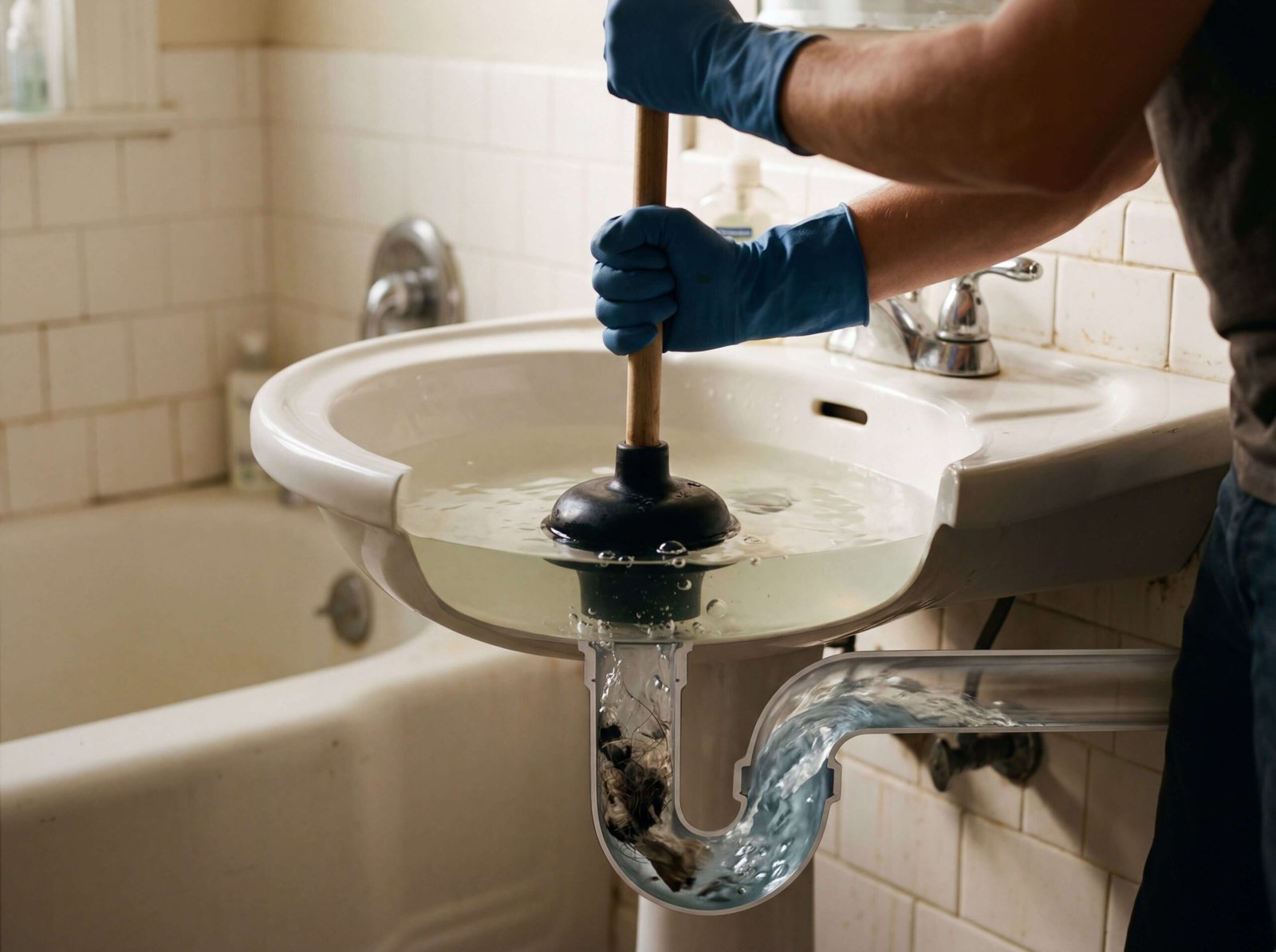
Most homeowners think of a plunger as a basic, almost last-minute tool—something you grab when the drain is already fully blocked and water is sitting still. But in real plumbing work, a plunger is often the first and most important tool used to clear clogs quickly and safely. The difference between success and failure usually doesn’t come down to the tool itself, but how well you understand what it’s actually doing inside the pipe.
A drain plunger is not designed to “push” a clog down the pipe. That’s one of the biggest misconceptions. What it actually does is create a controlled cycle of pressure and suction inside the drain system. When used correctly, this movement loosens buildup, breaks weak blockages, and restores flow without needing to take anything apart. In many cases, a properly used plunger can solve problems that people wrongly assume require chemicals or expensive tools.
Another common issue is technique. Most people plunge too aggressively, too randomly, or without proper sealing. This not only reduces effectiveness but can also make the clog worse by compacting debris deeper into the pipe. In older plumbing systems, excessive force can even stress joints or weaken pipe connections. That’s why understanding the right approach matters just as much as having the tool.
In this guide, you’ll learn how a drain plunger actually works, when it should be your first choice, and how to use it in a way that clears clogs efficiently without causing damage. More importantly, you’ll learn its limits—so you know exactly when to stop and move to the next solution instead of wasting time or risking bigger problems.
What This Page Covers
ToggleWhy Understanding the Plunger Matters
A plunger looks simple, but in real plumbing work, it’s one of the most misused tools in a home. Most people only reach for it when a drain is completely blocked, and even then, they use it without understanding how it actually interacts with the pipe system. That lack of understanding is exactly why plungers often get blamed for “not working,” when in reality, they were just used at the wrong time or in the wrong way.
In many cases, a plunger can clear a clog in under a minute—if it’s used early and correctly. Slow-draining sinks, minor toilet backups, and fresh buildup near the drain opening are all situations where a plunger works best. But if you wait until the pipe is heavily clogged or the blockage has hardened, the same plunger becomes far less effective. Timing plays a bigger role than most homeowners realize.
There’s also a bigger risk: using a plunger incorrectly can actually make the problem worse. For example, aggressive plunging without a proper seal often pushes debris deeper into the pipe instead of loosening it. In kitchen drains, this can compress grease buildup further down the line. In bathroom drains, it can tangle hair clogs tighter, making them harder to remove later with a snake or other tools.
Another important factor is tool selection. Not all plungers are the same, and using the wrong type for the wrong fixture reduces effectiveness immediately. A flat cup plunger on a toilet, for example, won’t create the proper seal, which means you’re not generating the pressure needed to move the clog at all. Understanding which plunger to use—and why—makes a noticeable difference in results.
When you understand how a plunger works and when it should be used, it becomes more than just a basic tool. It becomes your first line of defense against most common drain problems. Used at the right time, it can save you from using harsh chemicals, dismantling pipes, or calling a plumber for something that could have been handled in minutes.
How a Drain Plunger Actually Works
Most people think a plunger works by forcing a clog down the pipe, but that’s not what’s really happening. A plunger works by creating a rapid cycle of pressure and suction inside the drain. This movement disturbs the blockage, loosens it from the pipe walls, and allows water flow to carry it away.
Understanding this internal action is what separates effective plunging from random effort.
Pressure and Suction Principle
When you press the plunger down, you are pushing water and air into the pipe. This creates positive pressure that compresses whatever is sitting in the drain. When you pull the plunger back up, it creates negative pressure—a vacuum effect—that pulls against the clog.
This back-and-forth motion is what breaks the clog’s grip. Instead of trying to push everything in one direction, you are essentially shaking the blockage loose from both sides. In real-world situations, most clogs are not solid plugs—they are sticky, layered buildups. That’s why this alternating force is so effective.
Why Water Is Critical for Effectiveness
A plunger works best when the rubber cup is fully submerged in water. Water is what transfers force efficiently through the pipe. If you plunge without enough water, you’re mostly compressing air, which reduces the impact significantly.
With proper water coverage, every push sends a strong hydraulic force into the drain. Every pull creates a meaningful suction effect. Without that water seal, the plunger loses most of its effectiveness, no matter how hard you push.
What Happens Inside the Pipe During Plunging
Inside the pipe, the motion you create with the plunger does three key things:
- It loosens soft buildup like grease, soap residue, and food particles
- It breaks the seal of partial clogs that are restricting flow
- It reopens small channels that allow water to start moving again
In many cases, you’re not removing the clog all at once. You’re gradually restoring flow by disrupting the blockage enough for water to do the rest of the work. Once flow begins again, even partially, the drain often clears itself completely within seconds.
This is why controlled, consistent plunging works better than aggressive, uneven force. The goal is not to overpower the clog, but to weaken it until the system starts flowing again.
Types of Drain Plungers and Their Uses
Not all plungers are the same, and using the wrong type is one of the main reasons homeowners struggle to clear clogs. Each plunger is designed to create a proper seal for a specific type of drain opening. If the seal isn’t right, you lose pressure and suction—meaning the plunger won’t do its job, no matter how hard you try.
Understanding the differences helps you choose the right tool quickly and avoid wasting time on something that simply won’t work.
Cup Plunger (Flat Plunger)
This is the most common plunger found in homes. It has a simple rubber cup with a flat bottom and is designed to sit flush against flat surfaces.
It works best on:
- Bathroom sinks
- Kitchen sinks (without complex fittings)
- Bathtubs
- Floor drains
Because these fixtures have relatively flat drain openings, the cup plunger can create a tight seal. When used with enough water and proper technique, it’s very effective for soft clogs like soap buildup, light grease, or hair near the surface.
However, it does not work well on toilets. The shape of a toilet drain prevents it from sealing properly, which means you won’t generate enough pressure to move the clog.
Flange Plunger (Toilet Plunger)
A flange plunger is specifically designed for toilets. It looks similar to a cup plunger but has an extended rubber flap (flange) that fits into the toilet drain opening.
This design allows it to:
- Create a strong seal inside the curved toilet outlet
- Generate more focused pressure where the clog sits
For toilet clogs caused by waste and paper, this is the correct and most effective tool. In fact, a proper flange plunger can clear most toilet blockages in seconds when used correctly.
Some flange plungers can also be folded, allowing limited use on flat surfaces, but they are primarily built for toilets.
Accordion Plunger
The accordion plunger is less common in households but produces much stronger pressure than standard plungers. It is usually made of hard plastic and has a bellows-style design.
It is typically used for:
- Stubborn toilet clogs
- Situations where standard plungers fail
Because it generates high force, it can clear tougher blockages. However, it comes with a higher risk. If used too aggressively, it can cause splash-back or put unnecessary stress on the fixture.
This type of plunger is generally better suited for experienced users who understand how much pressure to apply and when to stop.
Choosing the right plunger isn’t just about convenience—it directly affects whether the clog clears quickly or turns into a bigger problem. In most homes, having both a cup plunger for sinks and a flange plunger for toilets is the simplest and most effective setup.
When You Should Use a Plunger
A plunger works best when it’s used early and in the right situations. Most homeowners wait too long—until the drain is completely blocked—when in reality, the plunger is most effective during the early stages of a clog. Knowing when to use it can save you from needing more aggressive tools or dealing with a bigger plumbing issue later.
Early-Stage Slow Drains
One of the best times to use a plunger is when you notice water draining slowly but not completely stopped. This usually means there is partial buildup inside the pipe—enough to restrict flow, but not enough to fully block it.
At this stage, the clog is still loose and responsive. A few controlled plunging cycles can break that buildup apart and restore normal flow quickly. If you ignore it and wait, that same buildup can harden or collect more debris, making it much harder to clear later.
Soft Organic Clogs
Plungers are especially effective on soft, common household clogs. These include:
- Grease and food residue in kitchen sinks
- Soap and toothpaste buildup in bathroom sinks
- Hair clogs in showers and tubs
These types of clogs are not solid objects—they are sticky layers that cling to the pipe walls. The pressure and suction from a plunger can easily loosen them, allowing water to flush them away.
Toilet Blockages from Waste and Paper
For toilet clogs caused by regular use—waste and toilet paper—a plunger should always be your first step. These clogs are usually soft and close to the surface, making them ideal for pressure-based clearing.
A properly used flange plunger can resolve most toilet blockages within a few cycles. Jumping straight to other tools or methods in these situations is usually unnecessary.
Minor Backups in Single Fixtures
If only one drain is showing signs of backup (for example, just one sink or one tub), a plunger is a good starting point. This typically indicates a localized clog rather than a deeper system issue.
Plunging can help restore flow before the problem spreads or affects other fixtures.
Using a plunger at the right time is what makes it powerful. It’s not just a tool for emergencies—it’s a preventive tool that can stop small clogs from turning into major blockages. The earlier you use it, the higher your chances of clearing the drain quickly and safely.
When a Plunger Will NOT Work
A plunger is powerful for the right type of clog, but it has clear limits. One of the biggest mistakes homeowners make is continuing to plunge when the situation already requires a different tool. This not only wastes time, but can also make the clog worse or put unnecessary stress on your plumbing system.
Understanding when a plunger won’t work is just as important as knowing when it will.
Deep Pipe Blockages
Plungers work best on clogs that are relatively close to the drain opening. If the blockage is deeper in the pipe—especially several feet down—the pressure and suction from a plunger won’t reach it effectively.
In these cases, you might notice:
- Repeated plunging with no improvement
- Water level rising and falling without draining
- Slow return of backup after temporary clearing
This usually means the clog is beyond the plunger’s range, and a drain snake or auger is needed to physically reach and break it apart.
Solid Obstructions
If something solid is stuck in the pipe, a plunger won’t remove it. Items like plastic caps, food packaging, small toys, or foreign objects don’t break apart under pressure.
Instead of loosening, plunging can actually wedge these objects tighter into the pipe. This makes removal more difficult and may require disassembly or professional tools to retrieve the item safely.
Heavy Grease or Hardened Buildup
In kitchen drains, grease doesn’t always stay soft. Over time, it can cool, thicken, and form a dense layer along the pipe walls. A plunger may disturb the surface slightly, but it won’t fully break through heavy buildup.
If you notice:
- Recurring slow drainage
- Greasy residue returning quickly after plunging
- No lasting improvement
then the clog likely requires mechanical cleaning or flushing methods rather than pressure alone.
Sewer Line or Main Drain Issues
If multiple drains in your home are backing up at the same time, the problem is likely not at a single fixture. This points to a larger issue in the main drain line or sewer connection.
In these situations, plunging one fixture won’t solve the problem. You may see:
- Water backing up in different drains
- Toilet bubbling when using sinks or showers
- Persistent slow drainage across the home
These are signs of a deeper blockage that requires professional equipment like motorized augers or hydro jetting.
A good rule to follow is simple: if a plunger doesn’t show progress after a few consistent attempts, it’s time to stop and switch tools. Forcing it beyond its limits won’t solve the issue and can lead to bigger problems.
How to Use a Drain Plunger Properly
Using a plunger correctly is less about strength and more about control. Most failures happen because of poor setup—no proper seal, not enough water, or inconsistent movement. When the setup is right, even moderate effort can clear a clog quickly.
The goal is to create steady pressure and suction, not random force.
Step-by-Step Method
Start by preparing the drain so the plunger can work efficiently. Positioning and sealing matter more than anything else in this process.
- Ensure the plunger cup is fully submerged
The rubber cup should be covered with water. If needed, add water to the sink or ensure there’s enough in the toilet bowl. Water is what transfers force effectively into the pipe. - Create a tight seal over the drain opening
Place the plunger directly over the drain and press down gently to remove any trapped air inside the cup. A proper seal ensures that all pressure goes into the pipe, not out the sides. - Start with slow, controlled pushes
Begin with gentle downward pressure to stabilize the seal. Jumping straight into aggressive plunging often breaks the seal and reduces effectiveness. - Build a steady rhythm
Use consistent up-and-down motions without lifting the plunger off the drain. Each push and pull should maintain contact, allowing pressure and suction to work together. - Increase force gradually
Once the seal is stable, you can apply stronger pressure. Avoid sudden, forceful thrusts. Controlled movement is far more effective than brute force. - Test the drain after several cycles
After 10–15 consistent plunges, stop and check if the water starts draining. If flow improves, repeat the process until the drain clears completely.
Sink-Specific Tips
Sinks often have additional openings that can reduce pressure if not sealed properly.
- Cover the overflow opening (usually near the top of the sink) with a wet cloth
- This prevents air from escaping and improves pressure inside the pipe
- Double sinks may require sealing the second drain for better results
These small adjustments can make a noticeable difference in effectiveness.
Toilet-Specific Tips
Toilets require a slightly different approach due to their shape and design.
- Always use a flange plunger for a proper seal
- Insert the flange into the drain opening before plunging
- Start gently to avoid splashing, then increase pressure gradually
Toilet clogs are often soft and respond quickly when the seal and technique are correct.
Proper technique turns a basic plunger into a highly effective tool. Most clogs don’t require excessive force—they require consistent pressure applied the right way. Once you understand that, you’ll clear drains faster and with far less effort.
Common Mistakes When Using a Plunger
A plunger is simple, but small mistakes can completely reduce its effectiveness or even make the clog worse. In real plumbing situations, most failures with a plunger come down to how it’s used—not the tool itself. Understanding these mistakes helps you avoid wasted effort and unnecessary escalation to more aggressive methods.
Using the Wrong Type of Plunger
One of the most common issues is using a plunger that doesn’t match the fixture. A flat cup plunger on a toilet, for example, won’t create a proper seal inside the curved drain opening. Without that seal, you’re not generating enough pressure or suction to move the clog.
On the other hand, using a flange plunger on a flat sink surface can also reduce effectiveness because the shape doesn’t sit evenly. The result in both cases is the same—weak pressure and no real impact on the blockage.
Plunging Without Enough Water
A plunger relies on water to transfer force. If the rubber cup is not fully submerged, you’re mostly compressing air instead of pushing water through the pipe.
This is why dry plunging rarely works. Even if you apply more force, the lack of water means the pressure doesn’t reach the clog effectively. Always make sure there’s enough water to cover the plunger cup before starting.
Breaking the Seal Repeatedly
Lifting the plunger off the drain during each motion is a very common mistake. When the seal breaks, the pressure cycle resets, and you lose the suction effect completely.
Effective plunging depends on maintaining a continuous seal. The motion should be controlled, with the plunger staying connected to the drain the entire time. Breaking the seal turns a pressure system into random pushing, which is far less effective.
Using Excessive Force
Many people assume that more force means better results. In reality, aggressive plunging can compact the clog further into the pipe instead of loosening it.
In kitchen drains, this can push grease deeper into narrower sections of the pipe. In older plumbing systems, too much force can also stress joints or weak connections. Controlled pressure works better than brute force in almost every situation.
Ignoring Overflow Openings
Sinks often have an overflow hole near the top. If this opening is not sealed during plunging, air escapes through it, reducing the pressure inside the drain.
This small detail can make a big difference. Covering the overflow with a wet cloth helps maintain pressure and improves results significantly.
Continuing Too Long Without Results
Another mistake is continuing to plunge even when there’s no progress. If the drain shows no improvement after several consistent attempts, the issue is likely beyond what a plunger can handle.
At that point, continuing to plunge won’t solve the problem and may worsen it. Recognizing when to stop and switch tools is an important part of using a plunger effectively.
Avoiding these mistakes turns a basic tool into a reliable solution for many common clogs. Most problems with plungers are not about the tool—they’re about how it’s used.
Safety Considerations
Using a plunger may seem harmless, but there are a few real risks involved—especially when you’re dealing with dirty water, pressure inside pipes, and older plumbing systems. Most of these risks are easy to manage if you understand what to watch for and how to adjust your approach.
Avoiding Splash-Back and Contamination
When you plunge a drain, you’re moving water and debris back and forth under pressure. If the seal breaks suddenly or force is applied too aggressively, dirty water can splash out of the fixture.
This is especially important with toilets and kitchen sinks, where the water may contain bacteria or waste.
- Start slowly to stabilize the seal before increasing pressure
- Keep your face and body slightly back from the drain area
- Consider using basic protection like gloves when dealing with heavily clogged drains
Controlled motion reduces the chance of sudden release and keeps the process cleaner.
Protecting Pipes from Pressure Damage
Plungers generate internal pressure inside the pipe system. While modern plumbing can usually handle this, older pipes or weak joints may be more vulnerable.
Applying excessive force doesn’t just risk the clog—it can stress connections, especially in:
- Older homes with aging pipes
- Pipes that have existing cracks or weak seals
- Improperly fitted or repaired sections
Using steady, controlled pressure instead of aggressive thrusting helps protect the system while still being effective.
Being Careful with Recently Used Chemicals
If a chemical drain cleaner has been used recently, plunging can become risky. The pressure created by the plunger can cause those chemicals to splash back or release unexpectedly.
This can lead to:
- Skin irritation or burns
- Damage to surrounding surfaces
- Exposure to fumes in confined spaces
If chemicals have already been used, it’s safer to wait, flush the system thoroughly with water, and avoid plunging until you’re sure it’s safe.
Knowing When to Stop
One of the most important safety habits is recognizing when to stop. If the clog isn’t responding after several controlled attempts, continuing to plunge won’t solve the issue and may increase risk.
Signs to stop include:
- No improvement in water movement
- Water backing up more aggressively
- Unusual noises or pressure behavior in the pipe
At this point, switching to a different tool or approach is the safer and more effective option.
A plunger is safe when used properly, but like any tool, it has limits. Paying attention to pressure, cleanliness, and timing ensures you solve the problem without creating a bigger one.
Plunger vs Other Drain Tools
A plunger is often the first tool you should reach for, but it’s not the only solution. The key is knowing where it fits in the overall process of clearing a drain. Each tool works differently, and choosing the right one depends on the type of clog, its location, and how severe it has become.
In real plumbing work, tools are not used randomly—they are used in sequence based on what the situation requires.
Where the Plunger Fits in the Process
A plunger is best used as the first line of action for most common clogs. It works without disassembling pipes, without introducing chemicals, and without pushing anything deeper when used correctly.
It is ideal for:
- Fresh clogs near the drain opening
- Soft buildup like grease, soap, and hair
- Toilet blockages caused by waste and paper
Because it works through pressure and suction, it’s fast and non-invasive. If it clears the clog, you avoid using more aggressive methods altogether.
When to Switch to a Drain Snake
If plunging doesn’t produce results, the next step is usually a drain snake (also called an auger). Unlike a plunger, which works from the outside using pressure, a snake physically enters the pipe to reach the clog.
A drain snake is better suited for:
- Deeper clogs beyond the plunger’s reach
- Hair tangles that need to be pulled out
- Blockages that don’t respond to pressure
This tool doesn’t rely on loosening the clog—it directly breaks it apart or retrieves it. That makes it more effective when the blockage is stubborn or located further inside the pipe.
Where Chemical and Enzyme Methods Fit
Chemical cleaners and enzyme treatments work differently from both plungers and snakes. Instead of applying force, they break down organic material over time.
They can be useful in specific situations, such as:
- Light grease buildup in kitchen drains
- Ongoing maintenance to reduce organic residue
However, they are not immediate solutions. They take time to work and are often ineffective against solid obstructions or heavy clogs. Overuse of harsh chemicals can also damage pipes, especially in older systems.
Because of this, they should not replace mechanical tools—they should be used carefully and selectively.
Why the Plunger Should Always Come First
Starting with a plunger makes sense for both safety and efficiency. It’s the least invasive method and often resolves the issue quickly if the clog is still manageable.
Jumping straight to more aggressive tools or chemicals can:
- Push clogs deeper into the system
- Damage pipes or fittings
- Create unnecessary complications
A simple approach works best:
- Start with a plunger
- Move to a snake if needed
- Use advanced methods only when necessary
Understanding how these tools compare helps you avoid trial-and-error. The plunger isn’t the only tool, but it plays a critical role in solving most everyday drain problems quickly and safely.
Maintaining Your Plunger
A plunger comes into direct contact with dirty water, bacteria, and debris every time it’s used. If it’s not cleaned and stored properly, it can become unhygienic and even lose effectiveness over time. Maintenance is simple, but it makes a noticeable difference in how well the tool performs and how long it lasts.
Cleaning After Each Use
After clearing a clog, the plunger should always be cleaned before storing it. This is especially important for toilet use, but it applies to all fixtures.
Rinse the plunger thoroughly with clean water to remove visible debris. Then, wash the rubber cup with a mild disinfectant or soap solution. This helps eliminate bacteria and prevents odor buildup.
For a deeper clean:
- Submerge the plunger in a bucket with warm water and disinfectant
- Let it sit briefly to sanitize the surface
- Rinse again with clean water
Allowing it to dry properly before storage is just as important as cleaning. A damp plunger stored in a closed space can develop odor and bacteria quickly.
Preventing Rubber Damage
The rubber cup is the most important part of the plunger. If it becomes stiff, cracked, or misshapen, it won’t create a proper seal—and without a seal, the plunger won’t work effectively.
To keep the rubber in good condition:
- Avoid storing it in very hot or very cold areas
- Keep it away from direct sunlight for long periods
- Do not place heavy objects on top of it
Flexible rubber maintains better suction and pressure, which directly improves performance.
Proper Storage
Where and how you store your plunger affects both hygiene and usability. Leaving it sitting in open areas can spread moisture and bacteria, especially after toilet use.
A better approach is to:
- Store it in a dedicated holder or tray that allows airflow
- Keep it in a separate area for bathroom vs kitchen use if possible
- Ensure it is fully dry before placing it in enclosed storage
Some homeowners also keep separate plungers for different fixtures to maintain better hygiene standards.
Maintaining a plunger doesn’t take much effort, but it ensures the tool is always ready when you need it. A clean, flexible, and properly stored plunger will perform better, last longer, and keep your home environment more hygienic.
Cost and Value of a Plunger
A plunger is one of the lowest-cost tools in plumbing, but it delivers one of the highest returns when used correctly. In most homes, a single successful use can save the cost of a service call, which is why plumbers always consider it a must-have basic tool.
Typical Cost Range in the U.S.
The price of a plunger varies based on type, build quality, and added features like holders or ergonomic handles.
- Basic cup plungers (sinks/tubs): around $4 – $8
- Standard household plungers: typically $5 – $15
- Mid-range quality plungers: around $10 – $25
- Premium or specialty plungers: $30+ (with caddies, design upgrades)
Overall, most plungers fall in a general range of $3 to $20, with some high-end models going higher depending on features .
Why Every Home Should Have One
From a practical standpoint, a plunger is not optional—it’s essential. Drain issues don’t wait for convenience, and when a clog happens, you need an immediate solution.
For such a low cost, a plunger gives you:
- Immediate response to common clogs
- No need for chemicals or disassembly
- A reusable tool that lasts for years
Even if you only use it occasionally, it pays for itself the first time it prevents a bigger issue.
Cost vs Calling a Professional
The real value of a plunger becomes clear when you compare it to professional plumbing costs. Even a basic service visit can cost significantly more than the tool itself.
- A simple clog fix by a plumber can cost many times more than a plunger
- Emergency visits or after-hours calls increase costs further
- Minor clogs that could be solved in minutes often turn into paid service calls
In most cases, using a plunger early prevents the need for any of that.
When Buying a Better Plunger Makes Sense
Not all plungers perform equally. While a basic model works for occasional use, investing slightly more in a better-designed plunger can improve results.
It makes sense to upgrade when:
- You deal with frequent clogs (kitchen or hair-heavy drains)
- You want better sealing and stronger pressure
- You prefer easier cleaning and storage (with caddy systems)
A slightly higher-quality plunger often provides better control, durability, and hygiene.
A plunger is one of the few tools where low cost meets high effectiveness. It’s simple, reliable, and often all you need to solve everyday drain problems without escalating to more expensive solutions.
How Professionals Use a Plunger Differently
Most homeowners see a plunger as a simple push-and-pull tool. Professionals see it as a controlled method of diagnosing and clearing a clog. The difference isn’t in the tool—it’s in how it’s used, when it’s used, and what the plumber is observing during the process.
Technique Over Force
A common mistake is thinking that more force will clear the clog faster. Professional plumbers do the opposite. They focus on creating a perfect seal first, then applying controlled, consistent pressure.
Instead of aggressive plunging, they:
- Start slowly to build a stable seal
- Use smooth, rhythmic motion to maintain pressure and suction
- Increase force gradually only when needed
This approach prevents breaking the seal and avoids pushing debris deeper into the pipe. It also allows the pressure to work effectively through water rather than being wasted through air gaps.
Diagnosing the Clog Before Plunging
Before even using a plunger, a professional quickly reads the situation. The way water drains—or doesn’t drain—gives clues about the type and location of the clog.
For example:
- Slow drainage suggests partial buildup near the surface
- Standing water with no movement may indicate a deeper blockage
- Gurgling sounds can point to air movement issues or partial obstruction
Based on these signs, the plumber decides whether a plunger is the right starting tool or if another method will be more effective.
Watching for Feedback During Use
Professionals don’t just plunge—they pay attention to how the system responds.
While plunging, they look for:
- Changes in water level or movement
- Sudden drops in resistance (indicating the clog is breaking)
- Air bubbles or flow sounds that signal progress
This feedback helps them adjust technique in real time. If there’s no response after controlled attempts, they stop early and switch tools instead of continuing blindly.
Combining Tools When Needed
In many cases, a plunger is just the first step in a sequence. Professionals often use it to loosen the clog before moving to another tool like a drain snake.
This combination approach:
- Reduces resistance before inserting a snake
- Makes deeper clogs easier to break apart
- Minimizes strain on both tools and pipes
Rather than relying on one tool to do everything, plumbers use each tool for its specific strength.
Efficiency and Decision-Making
The biggest difference is efficiency. A professional doesn’t spend excessive time on one method if it’s not working. They recognize limits quickly and move to the next step.
This saves:
- Time
- Effort
- Potential damage to the plumbing system
The plunger itself doesn’t change—but the results do when it’s used with proper technique and decision-making. Understanding how professionals approach it helps you use the same tool more effectively and avoid common trial-and-error mistakes.
Simple Strategy for Homeowners
Most drain problems don’t require advanced tools or complicated fixes. What makes the biggest difference is having a simple, repeatable approach. Instead of reacting randomly every time a clog happens, you can follow a basic system that handles most situations quickly and safely.
Keep the Right Plunger for Each Fixture
The first step is having the correct tool ready before a problem occurs. Many homeowners rely on a single plunger for everything, which reduces effectiveness immediately.
A more practical setup is:
- One cup plunger for sinks, tubs, and floor drains
- One flange plunger specifically for toilets
This ensures you can create the right seal for each fixture without improvising. Keeping them in separate areas also improves hygiene and convenience.
Use the Plunger Early, Not Late
Timing is one of the most important factors. A plunger works best when the clog is still forming—not when the drain is completely blocked.
If you notice:
- Water draining slower than usual
- Minor backup starting to form
- Gurgling or inconsistent flow
that’s the right moment to act. A few controlled plunging cycles at this stage can clear the buildup before it becomes a bigger issue.
Follow a Simple Escalation Approach
Not every clog will clear with a plunger, and that’s normal. The key is knowing what to do next without overcomplicating things.
A simple approach works well:
- Start with a plunger using proper technique
- If there’s no progress, switch to a drain snake
- Use other methods only if the situation requires it
This keeps you from jumping straight to harsh solutions or wasting time on ineffective attempts.
Avoid Overusing Chemicals
It’s tempting to rely on chemical cleaners, especially when a plunger doesn’t work immediately. But in many cases, chemicals are either unnecessary or ineffective for the type of clog you’re dealing with.
They can also:
- Weaken pipes over time
- Create safety risks if combined with other methods
- Fail to solve deeper or solid blockages
Using mechanical tools first gives you better control and more reliable results.
Know When to Stop and Reassess
A key part of a good strategy is knowing when the problem is beyond basic tools. If the drain isn’t improving after proper plunging and a follow-up attempt, continuing won’t help.
At that point, stepping back and switching tools—or calling a professional—is the smarter decision.
A simple, consistent approach removes guesswork. With the right plunger, proper timing, and a clear plan, most everyday drain issues can be handled quickly without turning into bigger problems.
Final Thoughts
A drain plunger may look like the simplest tool in your home, but when used correctly, it becomes one of the most effective ways to handle everyday drain problems. The key is not just having the tool—it’s understanding how and when to use it.
Most clogs don’t require complicated solutions. They require early action, proper technique, and the right expectations. A plunger works best when the blockage is still manageable, when there’s enough water to transfer pressure, and when the seal is maintained consistently. In those conditions, it can clear a drain in minutes without chemicals, disassembly, or additional tools.
At the same time, it’s important to recognize its limits. A plunger is designed to loosen and move soft, nearby clogs—not to handle deep blockages, solid obstructions, or system-wide issues. Knowing when to stop and switch tools is just as important as knowing how to start.
If you treat a plunger as your first line of defense—not your last resort—you’ll solve most minor drain problems faster, more safely, and with less effort. Combined with a simple maintenance mindset and the right follow-up tools when needed, it becomes part of a reliable system rather than a one-time fix.
In the end, the value of a plunger isn’t in its design—it’s in how effectively you use it.