
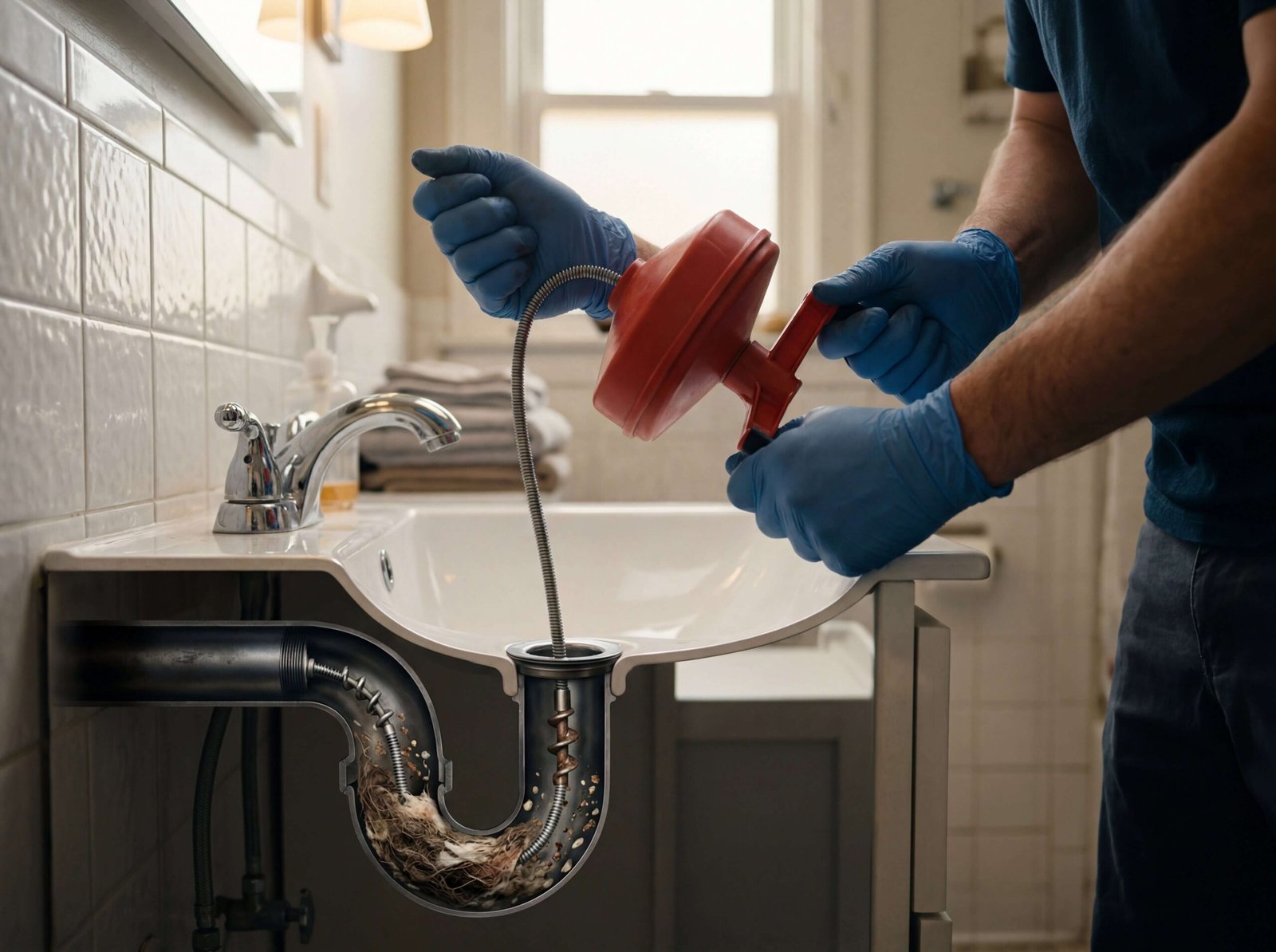
Most homeowners think of drain tools as quick fixes—something you grab only when water stops draining. In reality, tools like a drain snake are not just emergency solutions. They are part of how plumbers actively manage and control what’s happening inside pipes. The biggest misunderstanding is this: not all clogs are meant to be pushed through. Some need to be broken apart, and others need to be physically pulled out. That difference is exactly where the right tool—and the right approach—matters.
A drain snake stands out among drain tools because it doesn’t rely on pressure like a plunger or chemicals to dissolve buildup. It works by directly engaging the clog inside the pipe. When used properly, it reaches into the blockage, hooks into it, breaks it apart, or pulls it back out. This makes it one of the most reliable tools for real-world clogs, especially the kind caused by hair, soap buildup, or compact debris sitting deeper in the line where basic tools can’t reach.
In many homes, the turning point comes when a plunger stops working. Water may move slightly, but the clog doesn’t fully clear. That usually means the blockage isn’t sitting near the surface anymore—it’s deeper, denser, or physically stuck to the pipe walls. This is where a drain snake becomes the correct tool, not because it’s stronger, but because it solves the problem differently. Instead of forcing water pressure, it physically interacts with the obstruction.
There’s also an important mindset shift between DIY use and professional use. Homeowners often focus on the tool itself—buying a snake and expecting it to solve everything. Plumbers think differently. They focus on what the clog is made of, where it’s located, and how it’s behaving inside the pipe. The tool is just a way to execute that understanding. That’s why the same drain snake can either clear a clog in minutes or cause frustration if used without a clear approach.
Understanding how a drain snake actually works—and when it’s the right tool—is what separates trial-and-error from confident problem-solving. Once you see it as a targeted tool rather than a general fix, you start using it the way professionals do: with purpose, control, and clear expectations of what it can and cannot do.
What This Page Covers
ToggleWhat Drain Tools Actually Do
Most people group all drain tools into one category—something that “clears clogs.” But in real plumbing work, drain tools are designed to solve very different types of problems inside the pipe. If you don’t understand what a tool is actually doing, you end up using the wrong approach, which either fails to clear the clog or makes it worse.
At a practical level, all drain cleaning tools fall into three functional roles: breaking the clog, removing the clog, or flushing it through the system. A plunger, for example, works by creating pressure to push a blockage loose. Hot water or cleaning solutions try to soften or dissolve buildup so it can flow away. A drain snake, however, does something entirely different—it physically reaches into the pipe and interacts with the clog itself.
This difference is critical. Many clogs are not just loose debris sitting in water. They are often compacted materials—hair tangled into a mass, grease that has hardened along the pipe walls, or a combination of both. These types of blockages don’t respond well to pressure or surface-level solutions. They need direct contact. That’s where tools like a drain snake become effective, because they don’t rely on force alone—they rely on controlled mechanical action.
A drain snake works by entering the pipe and traveling through bends until it meets resistance. That resistance is usually the clog. Instead of pushing blindly, the tool allows you to engage with the blockage. Depending on the head design and how you use it, the snake can break the clog into smaller pieces, hook onto it and pull it back, or loosen it enough so water can carry it away. This level of interaction is what separates it from most basic DIY drain tools.
Another important point is that no single tool does everything well. A plunger might be faster for shallow clogs. Hot water might help with light grease buildup. But when the clog is deeper, more compact, or physically attached to the pipe interior, those methods reach their limit. The drain snake fills that gap—it’s not the first tool for every situation, but it’s often the most effective when simpler methods stop working.
Once you understand this, choosing the right tool becomes less about guessing and more about diagnosing the problem. You’re no longer asking, “What tool should I try?” Instead, you’re asking, “What is this clog made of, and what does it take to remove it?” That shift is what makes drain tools actually work the way they’re meant to.
Understanding the Drain Snake as a Tool
A drain snake is often described as a simple tool—a flexible cable you push into a pipe—but in real use, it’s much more than that. It’s designed to navigate tight bends, maintain strength over distance, and apply controlled force exactly where the clog is located. That combination is what makes it one of the most effective drain tools for real household problems. When you understand how it’s built and what it’s designed to do, you start using it with far more precision instead of trial and error.
How a Drain Snake Is Built
At its core, a drain snake is a coiled metal cable that balances flexibility with strength. It needs to be flexible enough to move through pipe curves like P-traps and elbows, but rigid enough to push forward without simply bending back on itself. This balance is what allows it to reach clogs that are several feet inside the drain while still giving you control from the outside.
At the front end of the cable is the working head, and this is where most of the actual clearing happens. Different head types are designed for different situations. A corkscrew-style head is common for general use—it can bore into soft clogs and help break them apart. Hook-style heads are better for grabbing and pulling hair or fibrous debris out of bathroom drains. Some heads are designed more for scraping pipe walls, which helps loosen buildup rather than pulling it out directly.
The other key part of the tool is how it rotates. In manual snakes, rotation comes from turning a handle, which gives you slower but more controlled movement. In more advanced versions, rotation can be powered by a drill or motor, which increases cutting power but also requires more care. That rotation is what allows the snake to “bite” into the clog rather than just pushing against it.
What Types of Clogs It Handles Best
A drain snake works best when the clog is something it can physically engage with. In real homes, this usually means hair, soap buildup, food debris, or soft grease accumulations that have formed a partial blockage. Bathroom drains are a common example—hair tends to wrap around the snake head, allowing you to pull out material that no amount of flushing would remove.
In kitchen drains, the situation is slightly different. Grease clogs often start soft but become sticky and layered. A drain snake can break through these layers or create a path for water to start flowing again, but it may not fully clean the pipe walls. In these cases, the snake is effective as a first step, restoring flow even if additional cleaning is needed later.
It’s also useful for clogs that are deeper in the line, beyond the reach of basic tools. If water drains slowly but not completely blocked, it often indicates a clog forming further down the pipe. A drain snake can reach that distance and address the problem before it turns into a full blockage.
Where It Struggles or Fails
Despite how useful it is, a drain snake has clear limitations, and understanding those limits is just as important as knowing how to use it. One of the biggest challenges is heavy grease buildup that has hardened along the entire pipe wall. In this case, the snake may punch a hole through the clog but leave most of the buildup intact, which means the problem will return.
It also struggles with more serious issues like tree roots in sewer lines. While professional-grade snakes can cut through smaller roots, standard household tools are not designed for that level of obstruction. Similarly, if the pipe itself is damaged—collapsed, misaligned, or heavily corroded—a snake won’t solve the underlying problem and may even get stuck.
Another common limitation is user technique. If the snake is forced too aggressively, it can coil back on itself or push the clog deeper instead of removing it. This is where many DIY attempts fail—not because the tool is wrong, but because it’s being used without a clear understanding of how it should interact with the clog.
Once you recognize both its strengths and its limits, the drain snake becomes a much more predictable and reliable tool. You stop expecting it to solve every problem and start using it where it actually excels—physically engaging with clogs that other drain tools simply can’t reach or remove.
Types of Drain Snake Tools
A lot of homeowners think a “drain snake” is just one tool with different sizes. In reality, there are multiple types of drain snakes, and each one is designed for a very specific level of clog, pipe depth, and resistance. Choosing the wrong type doesn’t just make the job harder—it often leads to incomplete clearing, where the clog seems gone but returns within days.
The key difference between these tools isn’t just length or power. It’s how much control, torque, and reach you have inside the pipe. As clogs become deeper and more compact, the tool needs to do more than just reach—it needs to actively work through resistance without damaging the pipe.
Basic Household Drain Snake Options
Basic drain snakes are designed for shallow clogs and quick access points like bathroom sinks, tubs, and shower drains. These are the tools most homeowners start with, and when used in the right situation, they can solve problems quickly without much effort.
These typically include small hand snakes (often around 15–25 feet) and simple zip tools or micro snakes. They are lightweight, easy to control, and ideal for clogs that are close to the drain opening. In most cases, these tools don’t “cut” through clogs—they grab or loosen debris so it can be pulled out.
You’ll see the best results with:
- Hair clogs near the drain opening
- Soap and debris buildup in bathroom lines
- Early-stage slow drains
What’s important to understand is that these tools rely more on access than power. If the clog is just a few feet inside the pipe, they work well. But once the blockage sits deeper or becomes compacted, these tools start losing effectiveness quickly.
Intermediate Drain Snake Tools
This is where drain snakes start becoming more serious tools rather than convenience items. Intermediate options include hand-crank augers (typically 25–50 feet) and drill-powered snakes. These are designed to go further into the pipe and apply more controlled force when engaging the clog.
A hand-crank auger gives you better reach and more consistent rotation compared to basic tools. You can feed the cable deeper while maintaining control, which is critical when navigating bends and traps. Drill-powered snakes take this a step further by adding torque, allowing the head to break into tougher clogs rather than just pushing against them.
These tools are better suited for:
- Kitchen sink clogs caused by grease and food buildup
- Deeper bathroom clogs that basic tools can’t reach
- Recurring slow drains that indicate buildup further down the line
However, with more power comes more responsibility. It’s easier to over-rotate or force the cable, which can damage pipes or cause the snake to kink. At this level, technique starts to matter just as much as the tool itself.
Advanced DIY Drain Snake Tools
Advanced drain snakes move into a space where homeowners are using tools that closely resemble professional equipment. These include compact electric drain snakes and small motorized units designed for residential use. They offer significantly more power and can handle tougher clogs that manual tools struggle with.
The main advantage here is consistency. Instead of relying on hand rotation, the motor maintains steady torque, allowing the snake to cut through or break apart denser clogs. This makes them effective for more stubborn blockages and longer pipe runs.
These tools are typically used for:
- Stubborn clogs that keep returning after manual snaking
- Longer drain lines where manual feeding becomes difficult
- Situations where more cutting power is needed
That said, this is where many DIY users run into trouble. These tools are powerful enough to cause damage if misused. Feeding too quickly, applying too much pressure, or not recognizing resistance can lead to cable tangling or pipe stress. At this level, you’re no longer just “trying a tool”—you’re operating it with intent.
Professional Drain Snake Equipment
Professional drain snakes are built for situations where standard tools simply aren’t enough. These include heavy-duty motorized augers, sectional cable machines, and specialized attachments like root cutters. These tools are designed to handle long pipe runs, dense obstructions, and even invasive materials like tree roots.
The biggest difference here isn’t just power—it’s capability. Professional equipment allows plumbers to:
- Maintain control over long distances inside pipes
- Switch between different cutting heads based on the clog
- Apply consistent force without damaging the system
These tools are commonly used for:
- Main sewer line blockages
- Tree root intrusions
- Severe or repeated clogs affecting multiple fixtures
For homeowners, the takeaway isn’t that you need these tools—it’s understanding where your tools stop being effective. When a clog reaches this level, continuing with DIY methods often leads to frustration or temporary fixes at best.
Understanding these categories changes how you approach drain problems. Instead of assuming a bigger or stronger tool will always work, you begin matching the tool to the situation. That’s exactly how professionals think—and it’s what makes drain tools actually solve problems instead of just delaying them.
How to Choose the Right Drain Snake
Choosing the right drain snake is not about picking the “best” tool—it’s about matching the tool to the situation inside your pipe. Most failures with drain tools happen because the wrong type of snake is used for the wrong kind of clog. When you understand what you’re dealing with, the choice becomes much more straightforward and the results become far more reliable.
There are three factors that matter most when selecting a drain snake: what the clog is made of, where it’s located, and how severe it has become. These are the same variables plumbers evaluate before even touching a tool.
Based on Clog Type
Different clogs behave differently inside the pipe, and a drain snake needs to interact with them in a specific way to be effective. Some clogs can be grabbed and removed, while others need to be broken apart or opened up to restore flow.
- Hair and fibrous clogs
These are common in bathroom drains and are ideal for a drain snake. A basic or intermediate snake with a hook or corkscrew head works well because it can latch onto the material and pull it out. This is one of the most effective use cases for DIY drain tools. - Grease and soap buildup
These clogs are softer but often stick to pipe walls. A drain snake can break through the blockage and restore flow, but it usually won’t fully clean the pipe. In these cases, an intermediate snake with better reach and rotation works best, but you should expect partial clearing rather than complete removal. - Food debris and compact blockages
Kitchen drains often develop dense clogs from food waste combined with grease. These require more torque. A hand-crank or drill-powered snake is more effective here because it can break into the clog rather than just pushing against it. - Solid obstructions or unknown clogs
If you’re not sure what’s causing the blockage, it’s safer to start with a controlled tool like a manual auger. Jumping straight to high-powered tools without understanding the clog can lead to pushing the blockage deeper or damaging the pipe.
The goal is not just to clear the clog but to choose a tool that interacts with it correctly. That’s what makes the difference between a temporary fix and a proper solution.
Based on Drain Location
Where the clog sits in your plumbing system directly affects what type of drain snake you should use. Different parts of the system have different pipe sizes, bends, and accessibility.
- Bathroom sinks and tubs
These usually have smaller pipes and tighter bends. A basic or light intermediate snake is ideal because it offers enough flexibility to navigate traps without causing damage. Overpowered tools in these areas can be difficult to control and unnecessary. - Kitchen sinks
Kitchen lines are slightly larger and often deal with more stubborn clogs. An intermediate drain snake is usually the right choice here, especially one with a bit more length and rotation capability. These lines also tend to have more buildup over time, so reach becomes important. - Floor drains and shower drains
These can vary depending on the layout, but they often benefit from a longer snake. The clog may not be immediately near the opening, so having enough cable length to reach deeper sections is key. - Main drain or sewer line access
This is where standard household drain tools start reaching their limits. If the clog is affecting multiple fixtures or located far down the system, even an advanced DIY snake may struggle. This is typically where professional tools become necessary.
Understanding the location helps you avoid overusing a tool that isn’t designed for that part of the system.
Based on Severity and Depth
Not all clogs are equal. Some are early-stage slowdowns, while others are fully developed blockages that have built up over time. The severity of the clog determines how much reach and force you need.
- Slow drainage (early-stage clogs)
These are often easier to manage with basic tools. A short drain snake can remove buildup before it becomes a complete blockage. This is where preventive use of drain cleaning tools can be very effective. - Partial blockages
Water drains slowly but doesn’t stop completely. This usually means the clog is deeper or more compact. An intermediate snake with more reach is the better option here, as it can access and break through the obstruction. - Fully blocked drains
When water doesn’t move at all, the clog is likely dense and well-formed. This requires a tool that can apply consistent force and reach the exact location. Depending on depth, this may push you into advanced DIY tools or even professional equipment. - Recurring clogs
If the same drain keeps clogging, it’s often a sign that the buildup isn’t being fully removed. In this case, upgrading your tool—or your approach—is more effective than repeating the same method.
Choosing the right drain snake becomes much easier when you stop thinking in terms of tool size and start thinking in terms of problem type. Once you match the tool to the clog, the process becomes more predictable, more efficient, and far less frustrating.
How a Drain Snake Clears a Clog (Step-by-Step)
A drain snake doesn’t clear a clog instantly—it works through a controlled process. What matters most is not how fast you push it in, but how you interact with resistance inside the pipe. When used correctly, the snake doesn’t just “poke” the clog; it engages with it, breaks it apart, or pulls it out. Understanding each step helps you avoid the most common DIY mistakes and makes the tool far more effective.
Step-by-Step Process
- Insert the cable slowly into the drain
Start by feeding the cable gently into the drain opening. You want the snake to follow the natural path of the pipe, especially through bends like the P-trap. Forcing it too quickly at this stage often causes the cable to buckle or loop back instead of moving forward. A steady, controlled feed gives you better alignment inside the pipe. - Advance until you feel resistance
As the snake moves deeper, it will either glide freely or begin to resist. That resistance is important—it usually means you’ve reached a bend, a narrowing, or the clog itself. The key is to pause and assess. If the resistance feels soft or uneven, it’s likely the clog. If it feels solid and immovable, you may be hitting a pipe turn or obstruction that requires repositioning. - Rotate the snake to engage the clog
Once you suspect you’ve reached the clog, begin rotating the snake. This is where the tool starts doing real work. The rotation allows the head to dig into the blockage, wrap around debris, or break it apart. Keep the motion controlled—fast or aggressive spinning doesn’t improve performance and often reduces control. - Work the clog, don’t force through it
Instead of pushing harder, alternate between slight forward pressure and rotation. This helps the head bite into the clog gradually. In many cases, you’ll feel the resistance change as the blockage loosens. If you force the cable straight through, you risk pushing the clog deeper rather than clearing it. - Pull back and remove debris if possible
After engaging the clog, slowly pull the snake back out. If it’s a hair or fibrous clog, you’ll often bring material back with it. This is one of the biggest advantages of a drain snake—it removes the source of the blockage instead of just shifting it. You may need to repeat this process multiple times to fully clear the line. - Test and flush the drain
Once resistance decreases, run water through the drain to check flow. If the water drains smoothly, you’ve likely cleared the main obstruction. If it improves but isn’t fully clear, it usually means some buildup remains, and another pass with the snake may be needed.
What You Should Feel During Use
Using a drain snake is as much about feel as it is about steps. The tool gives you feedback through resistance, and learning to interpret that feedback makes a big difference in results.
When the cable moves freely, it means you haven’t reached the clog yet. As you approach the blockage, you’ll feel a change—slight resistance or a dragging sensation. When you’re actively engaging the clog, the resistance becomes more consistent, sometimes with a slight “catching” feeling as the head grabs material.
A noticeable release of resistance often indicates progress. This can mean the clog has broken apart or shifted. However, that doesn’t always mean the pipe is fully clear. A completely cleared drain usually feels smooth when feeding the cable and shows strong, consistent water flow when tested.
If the resistance becomes too hard or the cable starts to twist back, it’s a sign to stop and reassess. Forcing the tool at that point can lead to kinks in the cable or unnecessary stress on the pipe. The goal is controlled engagement, not brute force.
Once you understand this process, using a drain snake becomes far more predictable. You’re no longer guessing—you’re reading the pipe, adjusting your approach, and using the tool the way it was designed to work.
Safe Use of a Drain Snake
A drain snake is a powerful and effective tool, but it’s also one of the easiest drain tools to misuse. Most problems don’t come from the tool itself—they come from how it’s handled. When used without control, a snake can kink, get stuck, or even damage pipes. Safe use is not about being overly cautious; it’s about understanding how the tool behaves inside the drain and working with it instead of against it.
Tool Handling Safety
The most important rule when using a drain snake is to stay in control of the cable at all times. The moment you lose control—by feeding too fast or rotating too aggressively—the tool stops working properly and starts creating problems.
- Avoid cable kinks and snapping
A drain snake is designed to flex, but only within limits. If you push too hard or rotate while the cable is not aligned, it can bend sharply and form a kink. Once that happens, the cable loses strength and can snap under pressure. Always feed the cable gradually and keep it as straight as possible at the entry point. - Control the rotation speed
Whether you’re using a manual or powered snake, rotation should be steady and controlled. Spinning too fast doesn’t improve cutting ability—it reduces control and increases the chance of the cable twisting back on itself. Slow, consistent rotation allows the head to engage the clog more effectively. - Use proper feeding technique
The cable should move forward in small, controlled increments. Push slightly, rotate, then pause. This pattern helps the snake follow the pipe naturally and reduces stress on both the tool and the plumbing. Continuous force without pauses often leads to the cable binding inside the pipe.
Pipe Safety Considerations
It’s easy to focus on clearing the clog and forget that the pipe itself is just as important. Not all plumbing systems are equally strong, and using a drain snake without considering pipe condition can cause unintended damage.
- Be cautious with older pipes
Older plumbing, especially metal pipes, may be weakened by corrosion over time. Aggressive snaking can scrape or stress these pipes, leading to leaks. If you feel unusual resistance or grinding, it’s better to stop and reassess rather than push through. - Understand the difference between PVC and metal pipes
PVC pipes are smoother and less prone to internal buildup, but they are also softer. Excessive force or sharp tool heads can scratch or weaken them. Metal pipes can handle more abrasion but may already have internal roughness from corrosion. Adjust your pressure accordingly. - Know when to stop pushing forward
If the snake stops advancing and begins to resist strongly, forcing it further can push the clog deeper or cause the cable to twist. This is a critical moment where technique matters more than force. Pull back slightly, rotate, and try to re-engage rather than pushing harder.
Common Risks to Avoid
Many DIY issues come from repeating the same mistakes. These risks are not always obvious in the moment, but they can turn a simple clog into a more complicated problem.
- Over-forcing the tool
The biggest mistake is treating the snake like a pushing tool. It’s not designed to shove clogs through—it’s designed to interact with them. Force reduces effectiveness and increases risk. - Letting the cable twist uncontrollably
If the cable starts to loop or twist near the drain opening, it means it’s not moving properly inside the pipe. Continuing at that point can damage the cable or make it harder to retrieve. - Ignoring warning signs from the tool
Sudden tight resistance, unusual vibrations, or difficulty pulling the snake back are all signs that something isn’t right. These signals should prompt you to stop and adjust your approach, not push forward.
Using a drain snake safely is less about strength and more about control. When you move deliberately, pay attention to feedback from the tool, and respect the limits of both the cable and the pipe, the process becomes much smoother. That’s how professionals avoid damage while still clearing clogs effectively—and it’s a mindset that makes any drain tool work better.
Common Mistakes When Using a Drain Snake
Most problems people face with a drain snake don’t come from the tool—they come from how it’s used. The same drain snake that clears a clog in minutes can fail completely or even make things worse if used without the right approach. Understanding these common mistakes helps you avoid turning a simple blockage into a recurring or deeper issue.
Using the Wrong Type of Drain Snake
One of the most overlooked issues is choosing a snake that doesn’t match the situation. A small, basic snake might work well for a shallow bathroom clog, but it won’t reach or effectively handle a deeper blockage in a kitchen line. On the other hand, using a heavy or powered snake in a small, delicate pipe can make control difficult and increase the risk of damage.
The problem here isn’t just inefficiency—it’s false confidence. The drain may seem partially cleared, but the underlying clog remains. This is why matching the tool to the clog type and location is critical. A drain snake works best when its design aligns with the job it’s trying to do.
Forcing the Snake Instead of Working the Clog
A drain snake is not meant to push through a blockage with force. One of the most common mistakes is treating it like a rod—pushing harder when resistance is felt. This usually leads to one of two outcomes: the clog gets pushed deeper into the pipe, or the cable begins to twist and lose alignment.
The correct approach is controlled engagement. When you hit resistance, that’s your signal to slow down and start rotating the snake. The goal is to let the head interact with the clog—breaking it apart or grabbing it—rather than forcing it forward. Pressure without control rarely solves the problem and often complicates it.
Not Removing the Debris Properly
Another common issue is assuming the job is done as soon as water starts draining again. In many cases, the drain snake creates a small opening through the clog, allowing water to pass, but leaves most of the debris behind. This leads to temporary improvement followed by another blockage shortly after.
A proper clearing often involves pulling debris back out of the drain. Hair, grease clumps, and other materials should be removed physically when possible. This may require multiple passes with the snake, not just one. Skipping this step is one of the main reasons clogs return quickly.
Over-Rotating or Losing Control of the Cable
Rotation is what makes a drain snake effective, but too much rotation—especially without forward movement—can cause problems. The cable can begin to twist back on itself, forming loops or kinks. Once that happens, the tool loses its ability to move smoothly through the pipe and becomes harder to control.
This is especially common with drill-powered or motorized snakes. More power doesn’t mean better results if control is lost. The key is steady, controlled rotation combined with gradual feeding. When rotation and movement are out of sync, the tool stops working the way it should.
Ignoring Signs of a Bigger Problem
A drain snake is designed to handle common clogs, but not every blockage is a simple one. If you notice that the clog keeps returning, multiple drains are affected, or the snake struggles to move beyond a certain point, it may indicate a deeper issue.
Continuing to use the same tool in these situations often leads to repeated frustration. The snake may create temporary relief, but it won’t solve structural problems, heavy buildup, or obstructions further down the system. Recognizing these signs early helps you avoid wasting time and prevents unnecessary stress on your plumbing.
Assuming One Pass Is Enough
It’s common to run the snake once, see improvement, and stop there. In practice, effective clearing often takes multiple passes. The first pass might break into the clog, the second might remove debris, and the third ensures the pipe is properly opened.
Stopping too early is one of the biggest reasons clogs come back. A drain snake works best when you use it as a process, not a single action. Taking the time to repeat the steps properly usually leads to a much more reliable result.
When you avoid these mistakes, the drain snake becomes far more predictable and effective. Instead of guessing and reacting, you’re working with the tool in a controlled way—removing clogs properly rather than just disturbing them. That’s the difference between a quick fix and a lasting solution.
When a Drain Snake Is NOT Enough
A drain snake is one of the most effective drain tools for common household clogs, but it has clear limits. Knowing those limits is what prevents you from wasting time on repeated attempts that only give temporary relief. In real plumbing situations, the goal isn’t just to “get water moving”—it’s to solve the underlying problem. When a drain snake stops being effective, it usually means the issue is deeper, heavier, or more structural than a single tool can handle.
Signs the Clog Is Beyond a Snake
One of the clearest signs is when the problem keeps coming back. You use the snake, the drain improves, and then within days or weeks, the slow drainage or blockage returns. This typically means the snake is only creating a small opening through the clog rather than removing it completely. The buildup remains along the pipe walls, gradually closing the gap again.
Another common sign is when multiple drains in the home are affected at the same time. For example, if a sink, shower, and floor drain all show slow drainage or backing up, the issue is likely deeper in the main line rather than in a single branch. A standard drain snake, especially a household version, is not designed to handle that level of blockage or reach that far into the system.
You may also notice that the snake reaches a certain point and stops progressing, no matter how carefully you work it. This kind of consistent, hard resistance often indicates something more than a typical clog. It could be heavy buildup, a solid obstruction, or even a structural issue within the pipe. Continuing to push at that point doesn’t improve the situation—it increases the risk of damaging the tool or the plumbing.
Situations That Require More Than a Drain Snake
Some types of blockages are simply outside the capability of standard drain snakes. One of the most common examples is thick grease buildup that has hardened over time. In these cases, the snake may punch a narrow path through the clog, but it won’t remove the layers stuck to the pipe walls. This is why the problem often returns even after it seems “cleared.”
Tree root intrusion is another situation where a basic drain snake falls short. Roots can enter sewer lines through small cracks and expand inside the pipe. While professional-grade equipment can cut through roots, standard DIY drain tools are not designed for this. Attempting to force through roots with a household snake usually leads to poor results and potential tool damage.
There are also structural problems that no drain tool can fix. Pipes that are collapsed, misaligned, or severely corroded will continue to cause drainage issues regardless of how many times they are cleaned. In these cases, the issue is not the clog—it’s the condition of the pipe itself.
When to Step Back and Reassess
The most important decision in these situations is knowing when to stop. If you’ve made multiple controlled attempts with a drain snake and the results are temporary or inconsistent, it’s a signal that the tool is no longer the right solution. Continuing to use it doesn’t improve the outcome—it just delays proper resolution.
This is where professional drain tools and inspection methods come into play. More advanced equipment can clean pipe walls thoroughly, cut through tougher obstructions, or inspect the inside of the pipe to identify structural issues. The difference is not just power—it’s the ability to diagnose and address the root cause of the problem.
Understanding when a drain snake is not enough is just as important as knowing how to use it. It allows you to move from trial-and-error into a more informed approach, where each step actually brings you closer to solving the problem instead of repeating the same temporary fix.
Drain Snake Maintenance & Storage
A drain snake is not a one-time-use tool. If you maintain it properly, it can last for years and perform consistently every time you need it. If you don’t, it quickly becomes harder to use, less effective, and more likely to fail when you need it most. Most homeowners overlook this part, but in real plumbing work, tool maintenance is just as important as tool selection.
Cleaning After Use
Every time you use a drain snake, it comes into contact with debris, grease, bacteria, and residue from inside the pipe. Leaving that material on the cable doesn’t just make the tool unpleasant to handle—it directly affects its performance over time.
After pulling the snake out, the cable should be wiped down thoroughly as you retract it. This removes debris before it dries and hardens onto the surface. If buildup is left on the cable, it can make future feeding less smooth and increase friction inside the pipe.
For more thorough cleaning, especially after heavy clogs, rinsing the cable with water helps remove fine residue. The key is not just cleaning—it’s doing it immediately after use, before anything has time to stick or dry.
Preventing Rust and Cable Damage
Drain snakes are typically made of metal, which means they are naturally prone to rust if left wet or exposed to moisture. Rust doesn’t just affect appearance—it weakens the cable and reduces flexibility, making it more likely to kink or break during use.
After cleaning, the cable should be dried before storage. Even a quick wipe-down makes a difference. For longer-term durability, applying a light coat of oil to the cable helps protect it from moisture and keeps it moving smoothly during the next use.
It’s also important to avoid sharp bends when handling the snake. Forcing the cable into tight angles during storage or use can create weak points. Once a cable is bent beyond its natural curve, it loses strength and becomes more difficult to control inside the pipe.
Proper Storage Practices
How you store the drain snake has a direct impact on how it performs later. A loosely handled or poorly stored cable can develop twists and irregularities that affect feeding and rotation.
The cable should be coiled naturally, following its original shape rather than forcing it into a tighter loop. Most drain snakes are designed to sit in a drum or holder, which keeps the cable organized and protected. Using that structure correctly prevents unnecessary stress on the cable.
Storage location also matters. Keeping the tool in a dry, clean area reduces exposure to moisture and dirt. Leaving it in damp environments, such as under sinks or in garages without protection, increases the chances of rust and long-term damage.
Why Maintenance Affects Performance
A well-maintained drain snake feeds more smoothly, rotates more consistently, and responds better when engaging a clog. A poorly maintained one does the opposite—it sticks, resists movement, and becomes harder to control. This often leads to the same mistakes people try to avoid, like forcing the tool or over-rotating.
Maintenance is not just about keeping the tool clean—it’s about preserving how it behaves inside the pipe. When the cable moves the way it’s supposed to, the entire process becomes easier, safer, and more effective.
Treating a drain snake as a reusable, reliable tool rather than a one-time solution is what makes it consistently useful. With proper care, it becomes something you can depend on—not just something you hope works when a clog appears.
Cost of Drain Snake Tools (U.S.)
The cost of a drain snake can vary widely, but price alone doesn’t determine value. What matters is how often you deal with clogs, how serious those clogs tend to be, and whether the tool you choose actually matches your needs. Many homeowners either overspend on tools they rarely use or underspend and end up with something that can’t solve the problem properly.
Basic vs Advanced Drain Snake Pricing
At the entry level, basic manual drain snakes are the most affordable option. These are typically small hand-held tools designed for short distances and light clogs. They are inexpensive and useful for occasional issues, especially in bathroom drains where hair buildup is common. For simple, surface-level problems, these tools provide good value without requiring a large investment.
Intermediate drain snakes, such as hand-crank augers or drill-powered options, fall into a mid-range price category. These tools offer better reach and more control, making them suitable for kitchen drains and deeper clogs. This is often the most practical category for homeowners who deal with recurring issues or want a more reliable solution than basic tools.
Advanced and motorized drain snakes are significantly more expensive. These tools are designed to handle tougher clogs and longer pipe runs, but they also require more careful handling. While they bring more power and efficiency, they are not always necessary for typical household use. Their value comes into play when dealing with repeated or more stubborn blockages that simpler tools cannot resolve.
Professional-grade equipment sits at the highest end of the range. These tools are built for heavy-duty use, including main line blockages and more complex situations. For most homeowners, owning this level of equipment is not practical, but understanding its role helps set realistic expectations about what DIY tools can achieve.
Buy vs Rent Decision
Deciding whether to buy or rent a drain snake depends on how often you expect to use it and the type of problems you’re dealing with. For occasional clogs in sinks or tubs, owning a basic or intermediate tool usually makes sense. It gives you immediate access without the need to arrange a rental each time an issue comes up.
However, for more advanced tools—especially motorized snakes—the situation is different. These are typically used less frequently, and their higher cost makes ownership less practical for most homeowners. In these cases, renting can be a better option. It allows you to use a more powerful tool when needed without committing to a large upfront cost.
There’s also a practical consideration beyond cost. Renting often gives you access to better equipment than you might buy at the same price level. But it also assumes you know how to use the tool safely and effectively. Without that understanding, even a high-end tool won’t deliver better results.
Thinking Beyond Price
The real cost of a drain snake isn’t just the purchase price—it’s how effectively it solves your problem. A low-cost tool that doesn’t fully clear a clog can lead to repeated issues, wasted time, and frustration. On the other hand, a slightly higher investment in the right tool can save multiple attempts and prevent recurring blockages.
It’s also worth considering the cost of not solving the problem properly. Repeated clogs, water damage, or eventual professional service calls can easily outweigh the initial savings from choosing the cheapest option. That’s why the focus should always be on matching the tool to the job, not just minimizing the upfront expense.
When you approach it this way, the decision becomes clearer. You’re not just buying a tool—you’re investing in a solution that works when you need it.
Using a Drain Snake as Part of a Maintenance System
Most homeowners only reach for a drain snake when something is already wrong. But in real plumbing practice, tools like this are not just reactive—they’re part of a simple maintenance system that prevents clogs from forming in the first place. When used correctly and occasionally, a drain snake can reduce buildup before it turns into a full blockage.
Weekly and Monthly Use Strategy
You don’t need to use a drain snake constantly, but certain drains benefit from periodic attention—especially those that naturally collect debris over time. Bathroom sinks, showers, and tubs are the most common examples because hair and soap buildup gradually accumulate even when everything seems to be draining fine.
A light, preventive pass with a basic drain snake every few weeks can remove early buildup before it compacts. This doesn’t mean deep snaking every time. In most cases, you’re just checking the upper section of the drain and removing any loose material starting to collect. It’s a quick process, but it makes a noticeable difference over time.
Kitchen drains usually don’t require frequent snaking in the same way, but they do benefit from occasional inspection. If you notice water slowing slightly or draining less smoothly than usual, that’s often the right time to use an intermediate snake. Addressing the issue early prevents grease and food residue from forming a dense blockage deeper in the pipe.
The key here is timing. Using drain tools before the problem becomes severe is far more effective than trying to fix a fully developed clog later.
Emergency Readiness
Even with good habits, clogs can still happen. Having the right drain snake available—and knowing how to use it—makes a big difference in how quickly you can respond. This is where a basic or intermediate tool becomes valuable as part of your home setup.
Instead of scrambling to find a solution when water stops draining, you already have a tool that can address the problem immediately. In many cases, this prevents the situation from escalating into overflow, backup, or water damage.
Emergency use is also where familiarity matters. If you’ve used the snake before in a maintenance context, you’re more confident when a real blockage occurs. You’re not learning under pressure—you’re applying something you already understand.
Preventing Recurring Problems
One of the biggest advantages of using a drain snake as part of a system is breaking the cycle of recurring clogs. Many homeowners deal with the same drain clogging repeatedly because the underlying buildup is never fully removed.
By occasionally clearing early-stage debris, you reduce the chance of that buildup turning into a solid blockage. Over time, this leads to more consistent drainage and fewer sudden issues.
It’s important to keep expectations realistic, though. A drain snake is not a full pipe-cleaning solution. It helps manage and reduce buildup, but it doesn’t replace deeper cleaning methods when needed. Think of it as a tool that maintains flow, not one that completely resets the pipe condition.
When used this way, a drain snake becomes more than just a fix-it tool. It becomes part of how you manage your plumbing over time—keeping drains functional, reducing surprises, and giving you more control over how problems develop instead of reacting after they happen.
How Professionals Use Drain Snakes Differently
The biggest difference between a homeowner and a professional isn’t the drain snake—it’s how the tool is used. Most DIY attempts focus on getting the cable into the pipe and hoping it clears the clog. Professionals approach it as a controlled process. They read what’s happening inside the pipe, adjust technique in real time, and use the tool with a clear objective.
Technique Over Tool
Professionals don’t rely on force—they rely on feedback. As the drain snake moves through the pipe, every change in resistance tells them something. A soft drag might indicate buildup along the pipe wall. A sudden stop could mean a compact clog or a bend. A slight vibration during rotation often signals that the head is engaging with debris.
Instead of pushing harder when resistance is felt, they slow down and adjust. They may pull back slightly, change rotation speed, or reposition the cable before moving forward again. This allows the snake to work into the clog rather than against it.
Another key difference is patience. A professional rarely expects the clog to clear in one pass. They work the area repeatedly—loosening, pulling, and re-engaging—until they’re confident the blockage is properly removed. This method is slower but far more effective than a single aggressive attempt.
Understanding When to Switch Tools
One of the most important skills professionals have is knowing when a drain snake is no longer the right tool. If the clog isn’t responding the way it should, they don’t keep forcing the same approach. They recognize the signs—limited progress, repeated resistance, or partial clearing—and adjust accordingly.
This might mean switching to a different type of snake with a different head, or moving to a completely different tool depending on the situation. The decision is based on what the clog is doing, not just on what tool is already in hand.
For homeowners, this is often where frustration builds. Repeating the same method with the same tool rarely produces different results. Professionals avoid that cycle by treating tool selection as flexible, not fixed.
Efficiency and Control
Experience allows professionals to work faster, but not because they rush. They move efficiently because they avoid unnecessary steps. They know how far to feed the cable, how much rotation to apply, and when to stop and reassess. This reduces trial-and-error and keeps the process focused.
Control is also a major factor. The cable is always managed carefully, with attention to how it enters the pipe and how it behaves during rotation. This prevents common issues like kinking, looping, or pushing the clog deeper. The result is not just a cleared drain, but a cleaner and more stable outcome.
Why This Difference Matters
Understanding how professionals use drain snakes changes how you approach the tool. It shifts the focus from “getting through the clog” to “working with the clog.” That difference leads to better results with less effort and lower risk.
You don’t need professional equipment to adopt this mindset. The same principles apply with basic and intermediate drain tools. When you slow down, pay attention to feedback, and adjust your approach instead of forcing it, the tool becomes far more effective.
In the end, it’s not about having a better drain snake—it’s about using it with intention. That’s what separates a temporary fix from a proper solution.
Long-Term Strategy Using Drain Tools
Most homeowners treat drain tools as one-time solutions—something you use when a clog appears and then put away until the next problem. But the real value of tools like a drain snake comes from how you use them over time. When you shift from a reactive approach to a structured strategy, you reduce the number of clogs, handle issues faster, and avoid bigger plumbing problems altogether.
Building a Smart Home Toolkit
You don’t need every type of drain tool, but you do need the right combination for the situations you’re most likely to face. A well-thought-out toolkit is not about having more tools—it’s about covering the most common scenarios in your home.
For most households, this means starting simple and building up only when needed:
- A basic drain snake or zip tool for quick removal of hair and surface-level debris
- An intermediate hand auger for deeper clogs in sinks and kitchen lines
- Optional upgrades like a drill-powered snake if recurring issues demand more reach or torque
The goal is to handle everyday problems without overcomplicating your setup. Adding more advanced tools only makes sense when your current tools consistently fall short. This prevents unnecessary spending while still giving you the capability to deal with most common clogs.
Preventive vs Reactive Approach
The biggest shift in long-term strategy is moving from reacting to clogs to preventing them. Reactive use means waiting until water stops draining and then trying to fix it under pressure. Preventive use means addressing buildup before it turns into a blockage.
A preventive mindset doesn’t require constant effort. It’s about small, occasional actions—like clearing early debris in bathroom drains or responding quickly when drainage starts to slow. These small steps stop minor buildup from turning into a compact clog that requires more force and effort later.
Over time, this approach changes how your plumbing behaves. Drains stay more consistent, clogs become less frequent, and when problems do occur, they are easier to handle.
Knowing When to Upgrade
As you gain experience using drain tools, you’ll start recognizing patterns. Some drains may clog more often, or certain types of blockages may be harder to clear. These patterns help you decide whether your current tools are enough.
If you find yourself repeating the same process without fully solving the problem, it may be time to upgrade. This doesn’t mean jumping to professional-grade equipment—it means choosing a tool that better matches the type of clog you’re dealing with.
Upgrading should always be based on need, not assumption. A more powerful tool is only useful if it solves a problem your current setup cannot handle. Otherwise, it adds complexity without improving results.
Thinking Like a System, Not a Fix
The long-term strategy is not about any single tool—it’s about how all your tools and habits work together. A drain snake becomes more effective when it’s used at the right time, in the right way, and as part of a broader approach to maintenance.
When you think in terms of a system, you stop relying on last-minute fixes. Instead, you maintain control over how your drains function. Problems become easier to predict, easier to manage, and less disruptive when they do happen.
This is how professionals approach drain tools—not as isolated solutions, but as part of an ongoing system that keeps plumbing working reliably over time.
Final Thoughts
A drain snake is one of the most practical and effective drain tools a homeowner can have, but its real value comes from understanding how and when to use it. It’s not just about clearing clogs—it’s about interacting with the problem in a controlled and informed way.
When used correctly, a drain snake doesn’t just restore flow—it removes the cause of the blockage, reduces the chances of it returning, and gives you more confidence in handling future issues. But just as important is knowing its limits. Not every clog can be solved with a single tool, and recognizing when to stop is part of using it effectively.
The difference between frustration and success with drain tools comes down to approach. When you focus on the type of clog, use the tool with control, and follow a clear process, the results become far more predictable.
In the end, the drain snake is not just a tool—it’s a method. And once you understand that method, you’re no longer guessing. You’re solving the problem with purpose.