
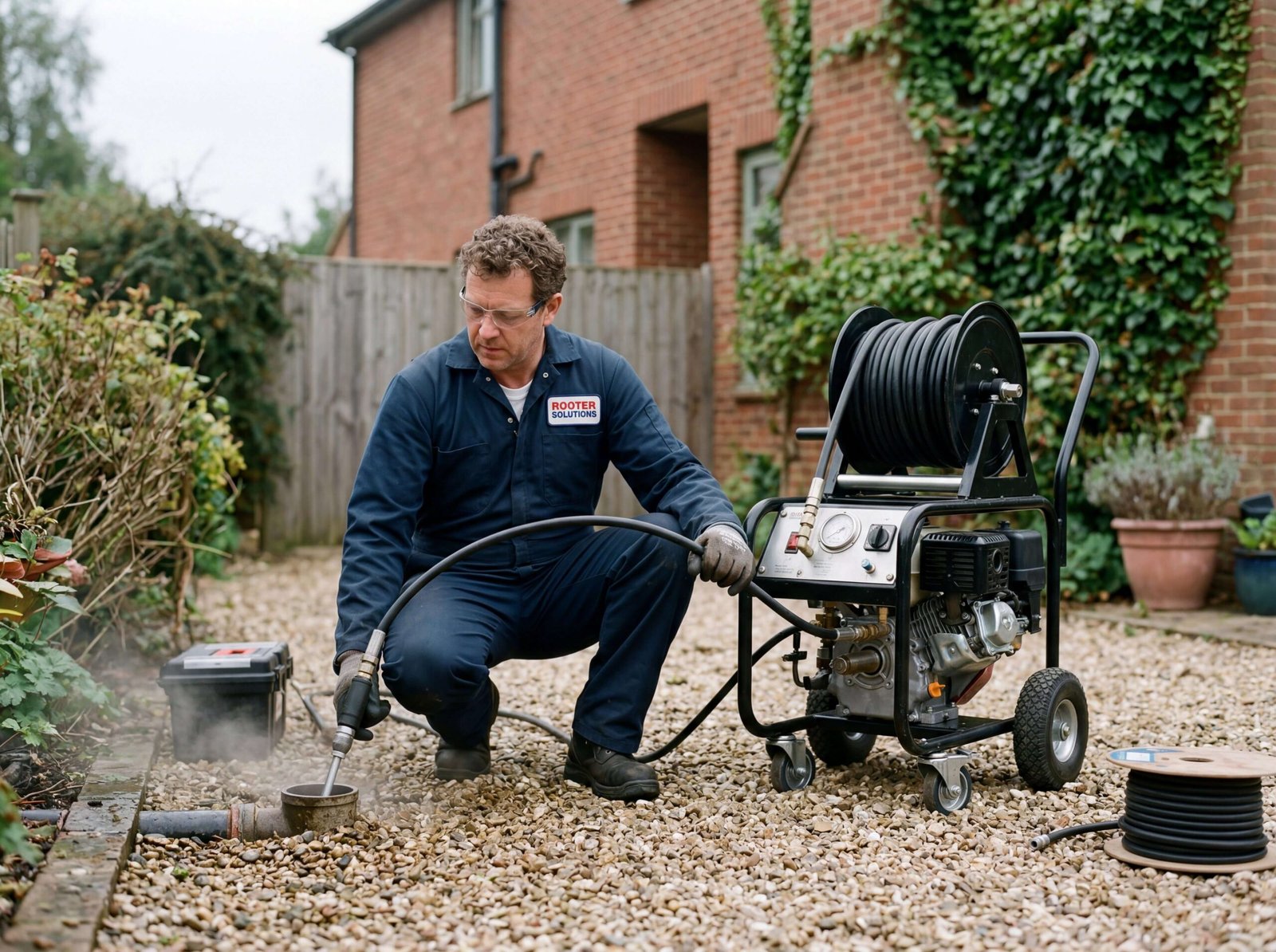
Hydro jetting is often considered the most powerful method professional plumbers use to clean drains, but its real value is not just power—it’s completeness. Unlike tools that focus on breaking through a clog, hydro jetting is designed to clean the entire pipe. That distinction is what makes it fundamentally different from other drain tools.
In most homes, drain problems develop gradually. Grease, soap, scale, and debris begin to coat the inside of the pipe. Over time, this buildup reduces the flow area and eventually leads to clogs. Mechanical tools like augers can break through these blockages and restore flow, but they often leave residue behind. That remaining buildup is what causes recurring problems.
Hydro jetting approaches the problem differently. Instead of targeting a single blockage, it uses high-pressure water to remove buildup along the entire inner surface of the pipe. This not only clears the clog but also restores the pipe closer to its original condition. The result is not just a working drain, but a cleaner system overall.
Another important point is that hydro jetting is not a typical DIY solution. The equipment operates at pressure levels far beyond what standard household tools can safely produce. It requires proper setup, control, and understanding of the plumbing system. This is why it is primarily used by professionals who can adjust the process based on the condition of the pipes and the type of blockage.
Understanding hydro jetting at this level helps shift the mindset from “clearing a clog” to “restoring a system.” That difference is what makes it one of the most effective tools available for long-term drain maintenance.
What This Page Covers
ToggleWhat Hydro Jetting Equipment Actually Does
Hydro jetting equipment is designed to do more than just open a blocked drain. Its real function is to restore the inside of the pipe by removing buildup that standard tools cannot fully address. This difference is important because many drain problems are not caused by a single clog—they are caused by layers of material that have accumulated over time.
Cleaning vs Clearing a Drain
Most drain tools are built to clear a blockage. They create a path through the clog so water can flow again. While this solves the immediate issue, it often leaves residue behind on the pipe walls. That leftover material becomes the starting point for future clogs.
Hydro jetting works at a different level. It uses high-pressure water to strip away buildup from the entire inner surface of the pipe. Instead of creating a small opening, it removes grease, sludge, and residue along the full diameter of the line. This is why drains cleaned with hydro jetting tend to stay clear longer.
In practical terms, clearing restores flow, but cleaning restores the condition of the pipe. Hydro jetting is one of the few methods that does both at the same time.
Types of Problems It Solves
Hydro jetting equipment is effective because it can handle a wide range of drain issues, especially those that involve buildup rather than a single obstruction.
- Grease buildup in kitchen lines
Grease does not just block pipes—it coats them. Over time, it hardens and traps other debris. High-pressure water can break this layer apart and wash it out completely. - Sludge and soap accumulation
Bathroom drains often develop thick residue from soap, shampoo, and organic material. This buildup narrows the pipe and slows drainage. Hydro jetting removes these layers instead of just opening a path through them. - Tree root intrusion
In some cases, roots enter sewer lines and create dense obstructions. Specialized jetting nozzles can cut through smaller root masses and flush them out, restoring flow more effectively than basic mechanical tools. - Recurring clogs
When clogs keep coming back, it usually means the pipe has not been fully cleaned. Hydro jetting addresses the underlying buildup, which reduces the chances of repeated blockages.
The strength of hydro jetting equipment is not just in its pressure, but in how that pressure is applied. It doesn’t target one point—it works along the entire pipe, removing what other tools leave behind.
Understanding this helps explain why hydro jetting is often used after other methods or when problems keep returning. It is not just another way to clear a clog—it is a method for resetting the condition of the drain system.
Core Components of Hydro Jetting Equipment
Hydro jetting systems may seem complex, but they are built around a few key components that work together as a controlled system. Each part has a specific role, and the effectiveness of the process depends on how these components are matched to the pipe and the problem.
High-Pressure Water Jetting Machine
The jetting machine is the core of the system. It generates the high-pressure water needed to break through buildup and clean the pipe walls. Unlike simple pressure washers, these machines are designed specifically for plumbing applications, where both pressure and flow need to be controlled carefully.
Pressure levels can vary depending on the job, but the key is adjustability. Professionals do not always use maximum pressure. They select a level that is strong enough to clean effectively but safe for the condition of the pipe. This balance is what allows the equipment to be powerful without being destructive.
Machines can be electric or gas-powered. Electric units are often used for smaller residential jobs, while gas-powered systems provide higher output for larger or more demanding applications.
Water Supply System
Hydro jetting requires a consistent and reliable water source. This can come from a direct connection to a water supply or from a dedicated tank, depending on the setup.
Flow rate is just as important as pressure. High pressure without sufficient water flow limits the cleaning ability of the system. A steady supply ensures that debris is not only broken apart but also flushed out of the pipe completely.
This is one of the reasons hydro jetting is effective—it combines pressure and volume to both cut through buildup and carry it away.
High-Pressure Hose
The hose is what delivers the pressurized water into the pipe. It is reinforced to handle high pressure while remaining flexible enough to travel through bends and turns.
As the hose moves through the pipe, it needs to maintain stability. Too much stiffness would prevent it from navigating curves, while too much flexibility would reduce control. The design balances both, allowing it to move efficiently through the system.
The hose also plays a role in how the system advances. It does not rely on pushing alone—the water jets themselves help pull the hose forward as it operates.
Specialized Nozzles
The nozzle is where the water pressure is directed and controlled. Different nozzles are used depending on the type of clog and the condition of the pipe. This is one of the most important aspects of hydro jetting because it determines how the water interacts with the buildup.
- Forward-facing nozzles focus on penetrating blockages directly
- Rear-facing nozzles create backward jets that pull the hose forward and flush debris out
- Rotating nozzles distribute water evenly to clean pipe walls
- Cutting nozzles are used for tougher obstructions like roots or hardened buildup
Each nozzle changes the behavior of the system. Choosing the right one ensures that the pressure is used effectively rather than simply applied at maximum force.
Why These Components Matter Together
Hydro jetting equipment is not just about high pressure—it is about controlled application. The machine, water supply, hose, and nozzle must all work together to create a balanced system.
When properly set up, the equipment does three things at the same time:
- Breaks apart buildup
- Cleans the pipe walls
- Flushes debris out of the system
This combination is what makes hydro jetting different from other drain tools. It is not a single action—it is a coordinated process that restores the pipe rather than just opening it.
How Hydro Jetting Equipment Works
Hydro jetting is not just about spraying water into a pipe. It is a controlled process where pressure, flow, and movement work together to break down buildup and clean the entire system. When done correctly, it restores the pipe from the inside rather than just opening a path through a blockage.
Step-by-Step Process
- Initial inspection of the drain line
Before any jetting begins, the condition of the pipe must be understood. Professionals typically check for damage, heavy buildup, or structural issues. This step determines whether hydro jetting is safe and what level of pressure should be used. - Selecting the correct pressure and nozzle
The equipment is set based on the type of clog and pipe material. Higher pressure is not always better. The goal is to use enough force to clean effectively without stressing the pipe. The nozzle is chosen to match the problem, whether it requires cutting, flushing, or full-wall cleaning. - Inserting the hose into the system
The high-pressure hose is fed into the pipe, usually through a cleanout or accessible opening. The hose is positioned so that it can move through the line without resistance before pressure is applied. - Activating high-pressure water flow
Once the system is ready, water is released through the nozzle at high pressure. The rear-facing jets begin pulling the hose forward while simultaneously flushing debris backward toward the entry point. - Breaking and removing buildup
As the hose advances, the water jets cut through grease, sludge, scale, and other buildup. Instead of pushing material deeper into the pipe, the system breaks it apart and carries it out. This is what allows hydro jetting to clean rather than just clear. - Final pass and flow testing
After the main cleaning, the line is often flushed again to remove any remaining debris. Water flow is then tested to confirm that the pipe is clear and functioning properly.
What Happens Inside the Pipe
Inside the pipe, hydro jetting creates a continuous cleaning action. The forward pressure breaks through obstructions, while the rear jets create movement and flushing at the same time. This combination ensures that debris is not left behind.
Unlike mechanical tools that focus on a single point, hydro jetting works along the entire length of the pipe. It removes buildup from the walls, clears the center of the line, and carries waste out in one process.
This is why the results are more complete. The pipe is not just opened—it is cleaned throughout, which improves flow and reduces the chances of future clogs.
Why the Process Requires Control
Although the concept is simple, the execution requires precision. Pressure must be adjusted based on pipe condition, and the hose must be moved at the right pace. Too fast, and buildup may not be fully removed. Too slow, and unnecessary stress may be placed on the system.
When controlled properly, hydro jetting becomes one of the most effective ways to maintain and restore drainage systems. It turns a clogged or restricted pipe into one that flows more freely and consistently over time.
Types of Hydro Jetting Machines
Hydro jetting equipment is not one-size-fits-all. The type of machine used depends on the size of the pipe, the severity of the problem, and how far into the system the cleaning needs to reach. Understanding these differences helps explain why professionals choose specific equipment for specific situations.
Portable Residential Jetters
Portable jetting machines are compact units designed for residential use. They are commonly used for smaller drain lines such as kitchen drains, bathroom pipes, and short sewer connections.
These machines are easier to transport and set up, which makes them practical for indoor or tight-access jobs. They provide enough pressure and flow to handle grease buildup, soap residue, and moderate clogs without overwhelming the pipe system.
Their main advantage is control. Because they operate at a more moderate level, they allow precise cleaning without excessive force. However, their limitation is capacity. For deeper lines or heavy blockages, they may not provide enough power to fully clean the system.
Trailer-Mounted Jetters
Trailer-mounted jetting systems are a step up in both power and capacity. These units are typically used for main sewer lines in residential or light commercial settings. They come with larger water tanks, stronger pumps, and longer hoses.
The increased flow rate allows these machines to clean longer sections of pipe more effectively. They can handle heavier buildup and more stubborn clogs that smaller units cannot fully address.
These systems are designed for efficiency. They can cover more distance in less time while maintaining consistent cleaning performance. This makes them a common choice for situations where the problem extends beyond a single section of pipe.
Truck-Mounted Hydro Jetting Units
Truck-mounted systems represent the highest level of hydro jetting equipment. These are large, fully integrated units used for major sewer lines, commercial systems, and municipal work.
They deliver maximum pressure and flow, allowing them to handle severe blockages, extensive buildup, and long pipe runs. These machines are capable of cleaning entire systems where smaller equipment would not be effective.
Because of their power, they require precise control and experienced handling. They are not just stronger versions of smaller machines—they are designed for a completely different scale of work.
Choosing the Right Machine for the Job
The choice of machine is based on the situation, not just availability. Using equipment that is too small may result in incomplete cleaning, while using equipment that is too powerful can risk unnecessary stress on the pipes.
Professionals match the machine to the job by considering:
- The diameter of the pipe
- The length of the line
- The type and severity of buildup
- The overall condition of the plumbing system
When the equipment is properly matched, hydro jetting becomes both effective and controlled. It delivers the right level of cleaning without relying on excessive force, which is what makes it a reliable solution across different types of drain systems.
How Plumbers Choose the Right Equipment
Choosing hydro jetting equipment is not about using the most powerful machine available. Professionals focus on matching the equipment to the condition of the pipe and the nature of the problem. This decision directly affects how effective the cleaning will be and whether the pipe remains safe during the process.
- Based on pipe size
The diameter of the pipe determines how much pressure and flow can be used safely. Smaller pipes require more controlled pressure to avoid damage, while larger sewer lines can handle higher output. Using oversized equipment in a small pipe can be as ineffective as using underpowered equipment in a large one, because control is just as important as strength. - Based on clog type
Not all blockages respond the same way. Grease buildup, sludge, scale, and roots each require a different approach. This affects both the nozzle selection and the pressure setting. For example, soft buildup may require steady cleaning, while tougher obstructions need more focused cutting action. Matching the equipment to the clog type ensures that the water pressure is used effectively rather than wasted. - Based on pipe condition
The condition of the pipe is one of the most important factors. Older or weakened pipes cannot handle the same level of pressure as newer systems. Before jetting begins, the pipe is assessed to determine how much force it can safely handle. This prevents damage while still achieving proper cleaning. - Based on system depth and length
The distance the hose needs to travel affects both the equipment and the setup. Longer pipe runs require machines with higher flow capacity and hoses that can maintain pressure over distance. Shorter lines can be handled with smaller, more controlled systems. This ensures that the cleaning is consistent from start to finish.
Choosing the right hydro jetting setup is a balance between capability and control. It is not about maximizing pressure—it is about applying the right level of cleaning to the specific situation. When this balance is achieved, the equipment works efficiently, and the results are more complete and long-lasting.
Why Hydro Jetting Equipment Is Not DIY-Friendly
Hydro jetting may sound simple—just high-pressure water cleaning a pipe—but in practice, it requires a level of control, awareness, and equipment handling that goes beyond typical DIY tools. The risks are not just about the tool itself, but how easily things can go wrong without proper understanding.
Pressure Risks
Hydro jetting operates at extremely high pressure levels, far beyond what standard household equipment can produce. This pressure is strong enough to cut through buildup, but it can also damage pipes if not controlled properly.
The risk is not just inside the pipe. The water stream itself can cause serious injury if mishandled. Unlike typical tools, where mistakes are often minor, hydro jetting leaves very little margin for error. Even a small misjudgment in pressure or positioning can lead to unintended consequences.
This is why professionals adjust pressure carefully instead of using maximum output by default. The effectiveness of the process comes from controlled application, not raw force.
Skill and Control Requirements
Using hydro jetting equipment effectively requires more than turning it on. The operator must control how the hose moves, how fast it advances, and how the pressure interacts with the pipe.
Key factors that require skill include:
- Selecting the correct nozzle for the situation
- Adjusting pressure based on pipe condition
- Managing hose movement through bends and long runs
- Recognizing when to slow down or stop
Without this control, the process becomes unpredictable. The hose can move too quickly, miss sections of buildup, or apply uneven force inside the pipe.
Understanding Pipe Condition
One of the biggest challenges with hydro jetting is knowing what the pipe can handle. Pipes may look fine from the outside but be weakened internally due to age, corrosion, or previous damage.
Using high-pressure water in a weakened pipe can cause cracks or leaks that were not visible before. This is why professionals often assess the pipe condition before starting and adjust their approach accordingly.
For a homeowner without that level of insight, it becomes difficult to judge how much pressure is safe to use.
Equipment Complexity
Hydro jetting systems are not simple handheld tools. They involve a combination of pressure control, water flow management, and specialized attachments. Setting up and operating the equipment correctly requires familiarity with how all these parts work together.
Even small mistakes in setup—such as incorrect nozzle selection or improper hose handling—can reduce effectiveness or create problems during operation.
Why Professional Use Matters
The reason hydro jetting is not DIY-friendly is not just because it is powerful, but because it requires decision-making at every step. Professionals adjust their approach continuously based on what they observe and feel during the process.
Without that experience, it becomes easy to either underuse the equipment—leading to incomplete cleaning—or overuse it, which increases risk.
Understanding these limitations helps set realistic expectations. Hydro jetting is one of the most effective drain cleaning methods available, but it achieves that effectiveness through controlled, experienced use—not just high pressure alone.
Common Mistakes Without Proper Equipment
Hydro jetting is highly effective when done correctly, but without the right equipment or understanding, it can lead to incomplete cleaning or unnecessary risk. These mistakes usually come from trying to apply pressure without control or skipping important steps in the process.
Using Too Much Pressure
One of the most common mistakes is assuming that higher pressure will always give better results. In reality, excessive pressure can damage pipes, especially in older or weaker systems. It can also cause the hose to behave unpredictably inside the line.
Effective hydro jetting is about controlled pressure, not maximum force. Professionals adjust pressure based on the pipe condition and the type of buildup. Without that adjustment, the process becomes less controlled and more risky.
Choosing the Wrong Nozzle
The nozzle determines how water is applied inside the pipe. Using the wrong type can reduce effectiveness even if the pressure is high. For example, a nozzle designed for flushing may not be able to cut through dense buildup, while a cutting nozzle may not clean the pipe walls evenly.
When the nozzle does not match the problem, the result is often partial cleaning. The clog may open temporarily, but residue remains, leading to recurring issues.
Skipping Inspection Before Jetting
Hydro jetting should not start without understanding the condition of the pipe. Skipping this step means you are working without knowing whether the pipe can handle the pressure or what type of blockage is present.
Without inspection, you may apply the wrong approach entirely. This can lead to ineffective cleaning or, in some cases, damage that could have been avoided with proper assessment.
Moving Too Quickly Through the Pipe
Another common mistake is advancing the hose too quickly. When the hose moves too fast, the water does not have enough time to fully remove buildup from the pipe walls. This results in partial cleaning, even though the drain may appear clear.
Controlled movement is essential. Slower, steady advancement allows the water to break down and flush away debris more effectively.
Incomplete Cleaning
Stopping once water flow is restored is a frequent issue. Similar to mechanical tools, hydro jetting can create an opening through buildup without fully cleaning the pipe. If the process is not completed properly, residue remains and becomes the base for future clogs.
A proper cleaning involves multiple passes when necessary, ensuring that buildup is removed along the full length of the pipe.
Lack of Control During Operation
Hydro jetting requires continuous control over pressure, movement, and positioning. Without proper handling, the hose can become difficult to manage, and the cleaning process becomes inconsistent.
Control is what makes the equipment effective. Without it, even high-quality equipment cannot deliver reliable results.
Understanding the Impact of These Mistakes
These mistakes do not just reduce effectiveness—they often lead to recurring problems. A drain may appear clear initially, but without proper cleaning, the underlying issue remains.
Hydro jetting is most effective when every part of the process is handled correctly, from setup to execution. When the equipment and technique are aligned, the result is not just a temporary fix, but a more complete restoration of the pipe system.
Hydro Jetting vs Augers and Snakes
Hydro jetting and mechanical tools like augers and snakes are often used for the same problem—clogged drains—but they solve it in very different ways. Understanding this difference is what helps you choose the right method instead of relying on trial and error.
Mechanical vs Water-Based Cleaning
Mechanical tools such as augers and snakes work by physically interacting with the clog. They reach the blockage, break it apart, or pull it out. This makes them effective for restoring flow quickly, especially when the clog is concentrated in one area.
Hydro jetting works differently. It uses high-pressure water to clean the entire pipe, not just the blockage. Instead of focusing on one point, it removes buildup along the full length of the pipe, including the walls where residue collects over time.
In simple terms:
- Mechanical tools are designed to clear a clog
- Hydro jetting is designed to clean the entire system
Both approaches are effective, but they solve different levels of the same problem.
When Each Tool Is Used
The choice between hydro jetting and mechanical tools depends on the condition of the drain and the type of issue being addressed.
- Augers and snakes are used when:
- The clog is localized
- The goal is to restore flow quickly
- The blockage can be broken or removed directly
- Hydro jetting is used when:
- There is heavy buildup along the pipe walls
- Clogs keep returning after being cleared
- The system needs thorough cleaning, not just a temporary fix
In many real situations, these methods are not used separately. A mechanical tool may be used first to open the blockage, followed by hydro jetting to clean the remaining buildup. This combination provides both immediate results and longer-term improvement.
Practical Difference in Results
When you use a mechanical tool, you often restore flow but leave some material behind. This is why clogs can return after some time. The pipe is open, but not fully clean.
Hydro jetting, on the other hand, removes that remaining buildup. It restores more of the pipe’s original diameter, which improves flow and reduces the chances of future clogs.
Choosing the Right Approach
The mistake many homeowners make is expecting one method to solve everything. Mechanical tools are faster and more practical for immediate issues. Hydro jetting is more complete but requires the right setup and conditions.
Choosing between them is not about which is better—it’s about what the situation requires. When you match the method to the problem, you get both effective clearing and long-term reliability in your drain system.
Cost of Hydro Jetting Equipment (U.S.)
Hydro jetting equipment is built for professional use, and its cost reflects that. Unlike basic drain tools, these machines are designed to deliver controlled high pressure over long distances, which requires specialized components and higher capacity systems. Understanding the cost helps explain why this equipment is rarely owned by homeowners.
Equipment Cost (Professional Level)
The price of hydro jetting machines varies depending on size, power, and capacity. Smaller units are designed for residential work, while larger systems handle long sewer lines and heavy-duty cleaning.
- Portable residential jetters: typically range from $1,500 to $5,000
- Trailer-mounted jetters: typically range from $5,000 to $25,000
- Truck-mounted hydro jetting units: can range from $30,000 to $100,000+
These costs are not just for pressure—they include high-capacity pumps, reinforced hoses, water tanks, and control systems. Each level of equipment is built for a specific scale of work, which is why the price increases significantly with capability.
Service Cost vs Ownership
For most homeowners, buying hydro jetting equipment does not make practical sense. The cost is high, and the equipment is not used frequently enough to justify the investment.
Instead, hydro jetting is typically accessed as a service. This allows homeowners to use professional-grade equipment only when needed, without dealing with the cost, storage, or maintenance of owning it.
Service costs are generally based on:
- The severity of the clog
- The length of the pipe being cleaned
- The accessibility of the system
In many cases, paying for a single professional service is far more cost-effective than owning equipment that may only be used occasionally.
Why Ownership Is Limited to Professionals
Owning hydro jetting equipment is not just about the initial cost. It also involves maintenance, proper storage, and the ability to operate it safely and effectively. These factors make it more suitable for professionals who use it regularly and understand how to adjust it for different situations.
For homeowners, the practical approach is to rely on simpler tools for routine issues and use hydro jetting services when a deeper level of cleaning is required.
Cost vs Value
The value of hydro jetting is not in owning the equipment—it’s in what the process delivers. When used correctly, it provides a level of cleaning that reduces recurring problems and improves long-term drain performance.
Understanding this helps shift the focus from cost alone to overall effectiveness. Instead of investing in expensive equipment, the better decision is to use the right level of service at the right time.
How Professionals Use Hydro Jetting Differently
The effectiveness of hydro jetting does not come from the equipment alone. The real difference is how professionals use it. They treat the process as a controlled system, not just a high-pressure cleaning task. This is what allows them to achieve consistent and complete results without damaging the plumbing.
Pre-Inspection Before Any Jetting
Professionals do not start hydro jetting blindly. They first assess the condition of the pipe and identify the type of problem they are dealing with. This step determines whether hydro jetting is appropriate and how it should be applied.
Understanding the pipe condition helps avoid unnecessary risk. If the pipe is weakened or damaged, the approach is adjusted accordingly. This initial evaluation is one of the main reasons professional results are more reliable.
Pressure Calibration Instead of Maximum Force
A common misconception is that hydro jetting is about using the highest possible pressure. In reality, professionals rarely operate at maximum output. They adjust the pressure to match the pipe size, material, and condition.
Too little pressure leads to incomplete cleaning. Too much pressure can stress the pipe or create unnecessary wear. The goal is to find the correct balance where the buildup is removed effectively without overloading the system.
This level of control is what separates effective cleaning from unpredictable results.
Nozzle Selection Based on the Problem
Professionals choose nozzles carefully based on the type of blockage and the cleaning objective. The nozzle controls how water is directed inside the pipe, which directly affects how the buildup is removed.
Instead of using a single setup for every situation, they match the nozzle to the problem. This ensures that the water pressure is applied in the most effective way, whether the goal is cutting through buildup, flushing debris, or cleaning the pipe walls.
Controlled Movement Through the Pipe
The speed at which the hose moves through the pipe is just as important as the pressure. Professionals advance the hose at a controlled pace, allowing the water to fully clean each section before moving forward.
Moving too quickly can leave residue behind, while moving too slowly can apply unnecessary stress. Maintaining the right pace ensures that the cleaning process is consistent from start to finish.
Multiple Passes for Complete Cleaning
Hydro jetting is rarely a one-pass process. Professionals often make multiple passes through the pipe to ensure that all buildup is removed. The first pass may break down the majority of the material, while additional passes clean the remaining residue.
This approach focuses on complete cleaning rather than quick results. It reduces the chances of recurring clogs and improves the overall condition of the drain system.
Knowing When to Stop or Change Approach
Experienced professionals recognize when hydro jetting is no longer the best solution. If the pipe condition, type of blockage, or response to cleaning indicates a different approach is needed, they adjust accordingly.
This decision-making is based on observation and experience, not just continuing with the same method. It prevents unnecessary effort and ensures that the problem is addressed in the most effective way.
What Homeowners Can Learn From This
The key takeaway is not just the technique, but the mindset. Hydro jetting works best when it is treated as a controlled process rather than a force-based solution.
By focusing on proper setup, controlled execution, and complete cleaning, professionals achieve results that last longer and reduce future problems. This approach is what makes hydro jetting one of the most reliable methods for maintaining a healthy drain system.
Long-Term Strategy Using Hydro Jetting
Hydro jetting is not just a solution for severe clogs—it plays an important role in long-term drain maintenance when used at the right time. Instead of waiting for a blockage to form, it can be used strategically to keep the entire system clean and functioning efficiently.
Preventive Maintenance Use
Most drain problems develop slowly. Grease, soap residue, and organic debris build up along the pipe walls over time. Even if water is still flowing, the effective diameter of the pipe is gradually reduced.
Hydro jetting can be used periodically to remove this buildup before it turns into a blockage. This is especially useful in systems that are prone to accumulation, such as kitchen drains or older lines.
When used as a preventive measure:
- It restores flow efficiency
- Reduces the chances of sudden clogs
- Extends the time between major drain issues
The key is timing. It does not need to be done frequently, but using it before problems become severe makes the process more effective and less demanding.
When to Upgrade from Auger to Jetting
A plumbing auger is often the first step in dealing with clogs, but it has limitations. If problems keep returning or if the pipe never seems fully clear, it may be time to move beyond mechanical tools.
Signs that indicate the need for hydro jetting include:
- Recurring clogs in the same drain
- Slow drainage even after clearing a blockage
- Buildup that extends beyond a single location
- Grease or residue that continues to accumulate
In these situations, an auger may only provide temporary relief. Hydro jetting addresses the underlying condition by cleaning the pipe more completely.
Reducing Long-Term Maintenance Effort
One of the biggest advantages of hydro jetting is that it reduces the need for repeated fixes. By removing buildup thoroughly, it minimizes the cycle of clearing the same type of clog over and over.
This does not eliminate the need for basic maintenance, but it makes routine care more effective. Drains stay cleaner for longer periods, and minor issues are less likely to escalate into major blockages.
Building a Balanced Approach
A practical long-term strategy combines different tools rather than relying on one method. Mechanical tools handle immediate clogs, while hydro jetting is used when deeper cleaning is required.
This balanced approach allows you to:
- Handle small issues quickly with basic tools
- Address deeper problems with more advanced methods
- Maintain the overall condition of the system over time
Thinking Beyond Immediate Fixes
The most important shift is moving from reactive fixes to planned maintenance. Instead of waiting for a clog to form, you recognize the signs of buildup and act before it becomes a problem.
Hydro jetting fits into this strategy as a periodic reset for the system. It clears out what gradually accumulates and restores the pipe to a cleaner state.
When used this way, it becomes more than just a solution for tough clogs—it becomes part of a system that keeps your drains working consistently with fewer interruptions and less effort over time.
Final Thoughts
Hydro jetting equipment represents a completely different level of drain cleaning. It is not designed to simply open a blockage—it is designed to restore the condition of the pipe. That distinction is what makes it one of the most effective tools available in professional plumbing.
What sets it apart is how it works across the entire system. Instead of focusing on a single clog, it removes buildup along the full length of the pipe. This leads to better flow, fewer recurring issues, and a more stable drainage system overall. It solves the underlying problem, not just the symptom.
At the same time, it is important to understand that hydro jetting is not about maximum power. Its effectiveness comes from control, correct setup, and proper execution. When used correctly, it delivers thorough and reliable results. When misused, it can become ineffective or even risky. This is why it is handled at a professional level rather than as a DIY tool.
The most practical way to think about hydro jetting is as part of a larger system. Mechanical tools handle immediate clogs. Hydro jetting is used when the system needs deeper cleaning or when problems keep returning. Together, they create a balanced approach to maintaining drains over time.
When you understand where hydro jetting fits, it becomes easier to make the right decision at the right time. Instead of repeatedly clearing the same problem, you address the condition of the pipe itself. That shift leads to longer-lasting results and a more reliable plumbing system.