
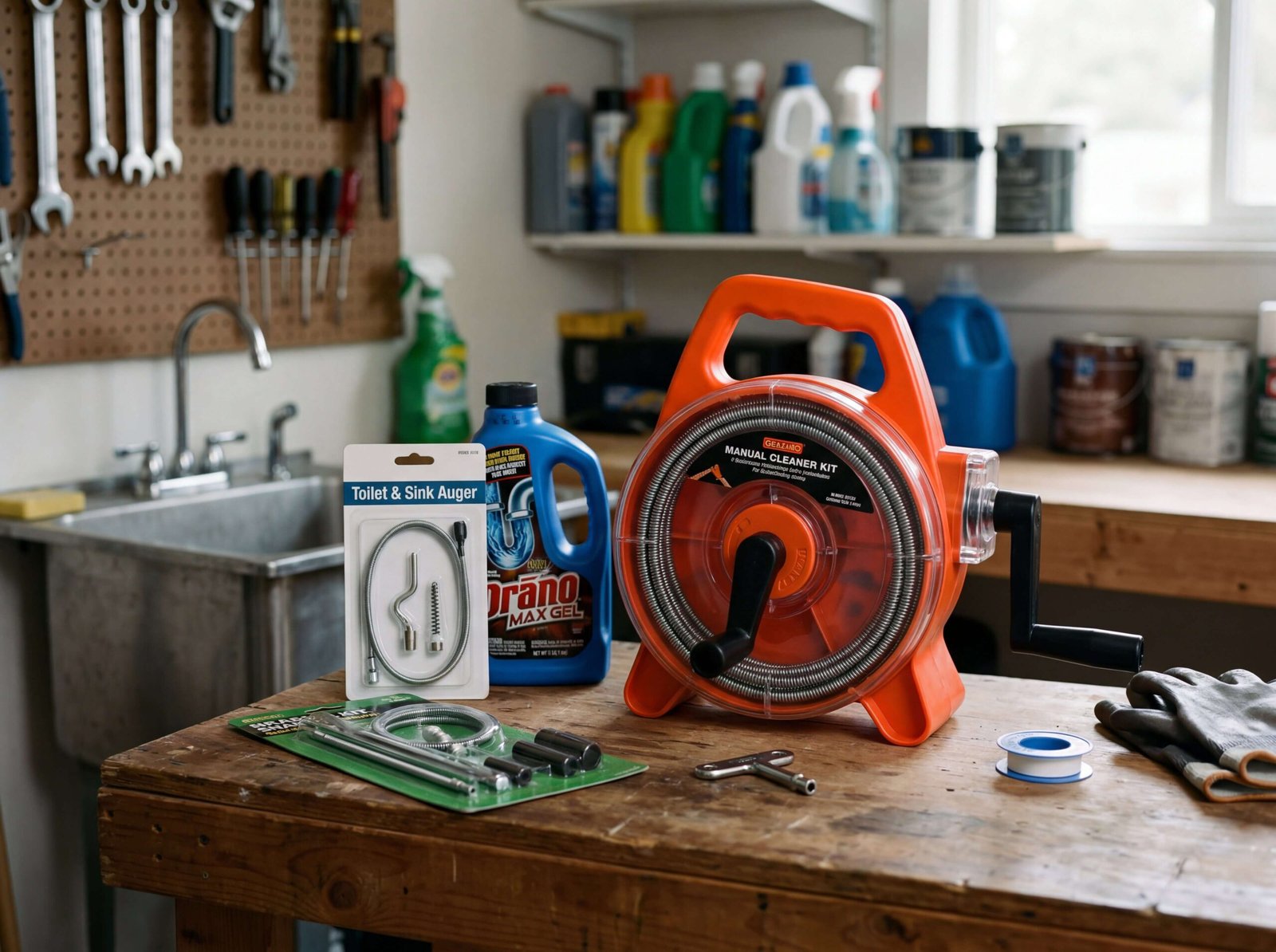
Drain cleaning kits are designed to simplify a problem that often becomes confusing for homeowners—choosing the right tool for the right type of clog. Instead of buying individual tools and guessing what might work, a kit provides a combination of tools that are meant to handle different situations within a single system. This makes the process more structured and reduces the chances of using the wrong approach.
Many drain issues are not solved by a single tool. A clog may need to be loosened, partially removed, and then cleared completely. When tools are used in isolation, the result is often incomplete. A kit addresses this by including multiple tools that work together, allowing you to move step-by-step from initial contact with the clog to full removal and cleanup.
Another advantage of using a kit is practicality. Most households deal with more than one type of drain—bathroom, kitchen, and sometimes outdoor lines. Each of these can develop different kinds of clogs. A kit provides flexibility, giving you options without needing to purchase separate tools for each scenario.
There is also an important distinction between DIY-level kits and professional-grade setups. Home kits are designed for light to moderate issues and ease of use, while professional tools are built for deeper, more complex problems. Understanding this difference helps set realistic expectations and ensures that the kit is used where it is most effective.
When used correctly, a drain cleaning kit becomes more than just a collection of tools. It becomes a system for handling clogs in a structured way—starting with simple removal and moving toward deeper cleaning only when needed. This approach leads to more complete results and reduces the need for repeated fixes.
What This Page Covers
ToggleWhy Drain Cleaning Kits Are Useful
Drain cleaning kits are useful because they remove uncertainty from the process. Instead of trying to figure out which single tool might work, a kit gives you a set of options that are designed to handle different stages of a clog. This makes the approach more organized and reduces the chances of using the wrong method.
Convenience of Having All Tools Together
One of the biggest advantages of a kit is convenience. When a drain problem happens, you do not need time to research or purchase additional tools. Everything is already available, and you can start working on the issue immediately.
This also prevents trial-and-error with random tools. Instead of switching between unrelated methods, you can move through a structured process using tools that are meant to complement each other. This saves time and leads to more consistent results.
Covers Multiple Types of Clogs
Not all clogs are the same. Some are caused by hair, others by grease, soap buildup, or debris. A single tool is rarely effective in every situation. A kit solves this by including tools designed for different types of blockages.
This allows you to:
- Start with simple extraction tools for surface clogs
- Move to deeper tools if the problem persists
- Use flushing methods to clear remaining residue
Having multiple options makes it easier to adapt based on what the clog requires.
Designed for Different Drain Situations
Homes typically have multiple drains, each with different behavior. A bathroom drain may have hair buildup, while a kitchen drain may have grease-related clogs. Outdoor drains may collect debris.
Drain cleaning kits are built to handle these variations. The tools included are generally versatile enough to be used across different drain types, which makes the kit useful beyond a single problem.
Reduces Guesswork and Mistakes
When tools are used individually without a system, it is easy to make mistakes—using too much force, choosing the wrong tool, or skipping important steps. A kit encourages a more structured approach.
You are more likely to:
- Begin with lighter tools
- Progress to stronger tools only if needed
- Finish with proper cleaning
This reduces the risk of incomplete removal and repeated clogs.
A Practical Approach for Homeowners
For most homeowners, drain issues are occasional but frustrating. A kit provides a practical solution by preparing you in advance. Instead of reacting each time with a new tool, you have a ready-made system that can handle most common problems.
This combination of convenience, flexibility, and structure is what makes drain cleaning kits useful. They simplify the process while improving the chances of solving the problem completely.
What a Drain Cleaning Kit Actually Includes
A drain cleaning kit is not just a random collection of tools. It is designed as a system where each component plays a role in handling different stages of a clog. Instead of relying on a single method, the kit allows you to move step-by-step—from reaching the clog, to removing it, and finally clearing the remaining buildup.
Core Idea of a “Kit”
At its core, a drain cleaning kit combines tools for three main purposes:
- Reaching the clog inside the pipe
- Removing or breaking the blockage
- Clearing remaining residue to restore flow
Most drain problems require more than one of these actions. A clog may need to be loosened first, then partially removed, and finally flushed out. A kit is built to support this sequence, which is why it is more effective than using a single tool.
Why Kits Are Built as Systems
The reason kits work well is because the tools are meant to complement each other. Each tool handles a specific part of the process, and together they create a complete approach.
For example:
- A hair remover tool may extract surface buildup
- A snake or auger may reach deeper and break the clog
- A flushing tool or method may clear leftover debris
Using these tools in sequence ensures that the clog is not just disturbed, but fully removed.
Moving From Extraction to Cleaning
One of the biggest advantages of a kit is that it encourages a proper workflow. Instead of jumping directly to stronger methods, you begin with extraction and move toward deeper cleaning only if needed.
This approach helps:
- Avoid pushing the clog deeper
- Reduce unnecessary force
- Improve the chances of complete removal
It also minimizes the risk of damaging pipes, since you are not starting with aggressive methods.
Designed for Real Household Use
Drain cleaning kits are built with typical household problems in mind. This means they are designed to handle:
- Hair clogs in bathrooms
- Light grease buildup in kitchen drains
- General debris in smaller pipes
They are not meant for major sewer issues, but they cover most everyday situations effectively.
Why Understanding the Kit Matters
Many people own drain cleaning kits but do not use them effectively because they treat each tool separately. The real value comes from understanding how the tools work together.
When you use the kit as a system—starting with lighter tools and progressing as needed—you get better results with less effort. Instead of trying multiple unrelated methods, you follow a structured process that leads to a more complete solution.
Common Tools Found in Basic Kits
Basic drain cleaning kits are designed to handle the most common household clogs, especially those caused by hair, soap buildup, and light debris. These kits usually include simple, easy-to-use tools that focus on physical removal rather than complex or aggressive methods. While each tool has a specific function, they are most effective when used together as part of a step-by-step process.
Plastic Hair Removal Tools
Plastic hair removal tools are one of the most common items included in basic kits. These are thin, flexible strips with small barbs along the edges, designed to catch and pull hair out of the drain.
They are ideal for surface-level clogs or buildup just below the drain opening. Because of their flexibility, they can navigate small bends and reach areas that are not visible from the top. They are also disposable or low-cost, making them easy to replace after use.
However, their limitation is depth. They work best when the clog is within reach and not heavily compacted.
Manual Drain Snake / Spring Tool
A manual drain snake is a step up from plastic tools in terms of strength and reach. It typically consists of a coiled metal cable that can be pushed into the pipe and rotated to latch onto clogs.
This tool is useful when the blockage is deeper or more compact. It allows you to:
- Reach beyond the immediate drain opening
- Break through denser clogs
- Pull out larger sections of debris
It requires a bit more control than plastic tools, but it is one of the most effective tools included in basic kits for handling moderate clogs.
Flexible Grabber Tool
A flexible grabber tool is designed for picking up debris that is visible or slightly below the surface. It usually has a claw mechanism at the end that opens and closes when you press a handle.
This tool is helpful when:
- The clog is visible but difficult to reach by hand
- You need precision rather than force
- The debris is not tightly compacted
While it does not provide the reach of a snake, it offers better control for targeted removal in shallow areas.
Why These Tools Work Together
Each of these tools serves a different purpose:
- Plastic tools handle quick, surface-level removal
- Snakes handle deeper and more compact clogs
- Grabber tools handle precise extraction
Using them together allows you to approach the clog from different angles. Instead of relying on a single method, you adapt based on what the situation requires.
Limits of Basic Kit Tools
While these tools are effective for most household clogs, they have limitations. They are not designed for:
- Deep sewer line blockages
- Heavy grease buildup throughout the pipe
- Structural pipe issues
Understanding these limits helps you use the kit effectively without expecting it to solve problems beyond its scope.
Cleaning and Flushing Components in Kits
After a clog is loosened or partially removed, the next step is clearing out what remains inside the pipe. This is where cleaning and flushing components in a drain cleaning kit become important. These tools are not designed to grab hair or debris—they are meant to push, wash, or break down what is left after the main blockage has been handled.
Rubber Drain Bladders
A rubber drain bladder is a simple tool that uses water pressure to clear pipes. It is attached to a hose and inserted into the drain. When water flows through it, the bladder expands inside the pipe, creating a seal. This forces water forward with pressure, pushing loose debris further down the line.
This tool works best after the main clog has been loosened or partially removed. It is effective for:
- Clearing small remaining debris
- Restoring flow after extraction
- Flushing out residue from the pipe walls
However, it should not be used as the first step. If the clog is still solid, the pressure may not clear it and could push it deeper.
Chemical or Enzyme Cleaners (Sometimes Included)
Some kits include chemical or enzyme-based cleaners. These are designed to break down organic material such as grease, soap residue, and light buildup.
While they can support the cleaning process, they should be used carefully. They are not effective at removing hair clogs on their own because hair does not dissolve easily. Instead, they are better used after physical removal to clean remaining residue inside the pipe.
Relying only on these cleaners often leads to incomplete results. They are most useful as a supporting step rather than a primary solution.
Hot Water and Supporting Methods
Although not always included in the kit, hot water is commonly used alongside these tools. After debris has been removed, hot water helps flush out smaller particles and loosen any remaining buildup.
This step:
- Clears residue left behind after extraction
- Improves overall flow
- Helps confirm that the drain is fully open
It is a simple but important part of the process, especially when combined with other cleaning methods.
Why Flushing Comes After Extraction
One of the most important principles when using a kit is the sequence. Flushing should always come after the clog has been loosened or removed. Starting with flushing methods alone often leads to pushing the blockage deeper or only partially clearing it.
When used correctly, cleaning and flushing tools complete the process. They remove what extraction tools cannot reach and ensure that the pipe is not just open, but properly cleared.
Role in the Overall System
These components are not standalone solutions. Their effectiveness depends on how they are used with other tools in the kit. When combined with extraction tools, they help achieve a more complete result.
Together, extraction and flushing create a full cleaning process—removing the clog first and then clearing the remaining buildup. This is what restores proper flow and reduces the chance of the problem returning.
Advanced Kit Components (Premium Kits)
Basic kits handle most household clogs, but premium drain cleaning kits include more advanced components designed for tougher and deeper problems. These tools add power, reach, and efficiency, allowing you to deal with clogs that cannot be fully removed with simple manual methods. However, they also require more control and a better understanding of how drains behave.
Drill or Auger Attachments
Some advanced kits include attachments that connect to a drill, turning a manual process into a powered one. These attachments rotate a cable or cleaning head, allowing it to move through dense clogs more effectively.
The advantage here is consistent rotation. Instead of manually turning a snake, the drill provides steady motion, which helps the tool penetrate compacted hair, soap buildup, or mixed debris. This makes it easier to break through stubborn blockages that resist manual effort.
However, this added power must be used carefully. Too much speed or pressure can push the clog deeper or damage the pipe. The key is controlled movement, not force.
Hydro Jet Hose Attachments
Hydro jet attachments are designed to connect to a pressure washer or high-pressure water source. These tools use directed water jets to clean the inside of pipes.
Unlike basic flushing tools, hydro jet attachments do more than push debris forward. They are designed to:
- Move through the pipe using backward-facing jets
- Break up buildup along the pipe walls
- Flush debris out more thoroughly
This makes them effective when hair clogs are combined with soap residue or grease that coats the pipe.
High-Pressure Nozzle Systems
Premium kits may also include specialized nozzles that control how water is delivered into the pipe. These nozzles direct water in specific patterns to improve cleaning efficiency.
Some are designed to:
- Propel the hose forward through the pipe
- Clean the pipe walls as they move
- Break apart buildup more evenly
These systems provide a more complete cleaning compared to simple water flushing, especially in longer or more complex pipe sections.
When Advanced Components Are Useful
These tools are most useful when:
- The clog is deeper than standard tools can reach
- Hair has combined with other materials to form dense buildup
- Basic and intermediate tools have not fully cleared the drain
- The drain continues to clog repeatedly
At this level, the problem is no longer just a simple blockage—it involves the overall condition of the pipe.
Why These Tools Require Careful Use
Advanced tools are effective because of their power, but that also increases the risk if used incorrectly. Applying too much force, using high pressure without understanding the pipe condition, or skipping earlier steps can lead to damage or incomplete results.
These tools work best when used as part of a system—after extraction and with a clear purpose. They are not replacements for basic tools, but extensions of the process when stronger action is needed.
Moving Beyond Simple Clog Removal
With advanced components, the goal shifts from just removing a clog to improving the condition of the pipe. Instead of creating a path for water, these tools help clean the pipe more thoroughly, reducing the chances of buildup returning quickly.
Understanding when and how to use these tools ensures that you get the benefit of their power without creating additional problems.
How to Choose the Right Drain Cleaning Kit
Choosing the right drain cleaning kit is less about finding the biggest set of tools and more about matching the kit to the type of problems you actually face. A well-chosen kit should handle your most common drain issues effectively without including unnecessary or overly aggressive tools.
Based on Clog Type
Different clogs require different approaches. A kit that works well for hair may not be effective for grease or mixed buildup.
- Hair clogs (bathroom drains) → look for kits with zip tools, snakes, and grabbers
- Grease and soap buildup (kitchen drains) → include flushing tools and cleaning components
- Mixed clogs (hair + residue) → need both extraction tools and deeper cleaning options
Choosing a kit based on the type of clog ensures that you have the right tools for actual use, not just a general assortment.
Based on Usage Frequency
How often you deal with drain issues should influence the level of kit you choose.
- Occasional use → basic kit with simple tools is enough
- Regular minor clogs → mid-range kit with better reach and durability
- Frequent or recurring issues → kit with advanced components and stronger tools
If the problem is rare, a simple kit is more practical. If it happens often, investing in better tools saves time and effort in the long run.
Based on Pipe Access and Location
Different areas of the home require different levels of access and control.
- Shower and sink drains → short tools with good flexibility
- Kitchen drains → tools that can handle grease and deeper buildup
- Outdoor or longer pipes → kits with extended reach or stronger cleaning options
A kit that works well in one location may not be effective in another. Considering where you will use it helps avoid limitations later.
Balancing Simplicity and Capability
It is important to avoid both extremes:
- A kit that is too basic may not solve deeper problems
- A kit that is too advanced may be difficult to use and unnecessary
The ideal kit provides enough capability to handle common issues while remaining easy to use. This balance ensures that the tools are practical, not overwhelming.
Matching the Kit to Your Needs
The right drain cleaning kit should:
- Cover the most common problems you face
- Include tools that work together as a system
- Be easy to use without requiring advanced experience
When the kit matches your needs, you are more likely to use it correctly and effectively.
Why Proper Selection Matters
Choosing the wrong kit leads to the same issues as using the wrong tool—partial results and repeated problems. A well-matched kit allows you to handle clogs in a structured way, moving from simple to more advanced methods as needed.
This not only improves effectiveness but also reduces frustration. Instead of guessing each time, you have a reliable system that works consistently.
How to Use a Drain Cleaning Kit Effectively
A drain cleaning kit is only as effective as the way it is used. Many homeowners have the right tools but still struggle with clogs because they use them in the wrong order or skip important steps. The key is to treat the kit as a system—starting with removal, then moving deeper if needed, and finishing with proper cleaning.
Step-by-Step Workflow
-
Start with extraction tools
Begin with tools designed to remove the clog physically, such as a zip tool, grabber, or basic snake. Most household clogs—especially hair and light debris—are located near the drain opening and can be removed directly.This step is important because physical removal addresses the root of the blockage. Mechanical tools like drain snakes are commonly used for this purpose because they can reach into pipes and pull out debris effectively.
-
Move to deeper tools if needed
If the clog is not fully removed, switch to tools with more reach and control, such as a manual auger or stronger snake. These tools are designed to navigate bends and reach deeper into the pipe system.At this stage, the goal is not just to break the clog but to remove as much of it as possible. Going deeper too early without extraction often leads to pushing the blockage further down.
-
Use cleaning and flushing components
Once the main clog is removed or loosened, use flushing tools like water pressure devices or hot water to clear remaining residue. This helps restore smooth flow and removes smaller particles left behind.Cleaning at the end ensures that the pipe is not just partially open but properly cleared, reducing the chance of the clog returning.
Why the Sequence Matters
Using the correct order is critical. If you start with pressure or flushing tools before removing the clog, you may push it deeper into the pipe. This makes the problem harder to reach and often requires stronger tools later.
A structured approach:
- Removes the clog first
- Clears the remaining buildup second
- Restores flow completely
This sequence is what turns a kit into an effective system rather than a set of random tools.
Adjusting Based on the Situation
Not every clog requires all tools in the kit. The workflow should adapt based on what you encounter:
- Light clog → extraction + flush is enough
- Moderate clog → extraction + deeper tool + flush
- Recurring clog → full sequence with more thorough cleaning
The key is to escalate only when needed, not start with the most aggressive method.
Avoiding Common Workflow Mistakes
The most common mistakes when using kits include:
- Starting with chemicals or pressure instead of extraction
- Switching tools randomly without a clear sequence
- Stopping once water flows without fully removing the clog
These mistakes lead to temporary results instead of complete removal.
Why Proper Use Makes the Difference
A drain cleaning kit is designed to solve problems step-by-step. When used correctly, it allows you to:
- Remove the clog completely
- Avoid pushing debris deeper
- Reduce repeated blockages
The difference between success and frustration is not the tool—it is the process. Following the right sequence ensures that each tool does its job properly and leads to a more reliable result.
Common Mistakes When Using Drain Cleaning Kits
Drain cleaning kits are designed to simplify the process, but they can still lead to poor results if used incorrectly. Most problems happen not because the kit is ineffective, but because the tools are used without a clear method. Avoiding these common mistakes ensures that the kit works as intended.
Using All Tools Randomly
One of the biggest mistakes is using tools without a sequence. Switching between tools without understanding their purpose often leads to confusion and incomplete results.
Each tool in the kit has a specific role—some are meant for extraction, others for deeper reach, and some for cleaning. When used randomly, you may disturb the clog without fully removing it, which makes the problem harder to fix.
Skipping the Extraction Step
Many people jump directly to flushing or pressure-based tools. This can push the clog further down the pipe instead of removing it.
Extraction should always come first. Removing as much of the clog as possible before applying pressure ensures that the blockage is not compressed or relocated deeper in the system.
Relying Only on Chemical Components
If the kit includes chemical or enzyme cleaners, there is a tendency to rely on them as the main solution. While they can help with residue, they are not effective for solid clogs like hair or compact debris.
Using them alone often leads to temporary improvement rather than full removal. Physical tools are still necessary to extract the main blockage.
Overusing Pressure-Based Tools
Tools that use water pressure can be effective, but they can also cause problems if used too early or too aggressively. Applying pressure to a solid clog may not clear it—it may simply move it deeper.
Pressure should be used after the clog has been loosened or partially removed. This ensures that it helps clear residue instead of creating a more difficult blockage.
Stopping Too Early
A common mistake is stopping once water starts flowing again. This often means that only part of the clog has been removed.
Residual buildup can remain inside the pipe and quickly lead to another blockage. Completing the full process—extraction followed by cleaning—ensures that the drain is properly cleared.
Ignoring Tool Limitations
Every kit has limits. Basic kits are not designed for deep sewer clogs or structural issues. Continuing to use the same tools when they are no longer effective leads to frustration and wasted effort.
Recognizing when the kit is not enough allows you to shift to a better method instead of repeating ineffective attempts.
Why Avoiding These Mistakes Matters
Each of these mistakes leads to the same result—temporary improvement instead of a complete solution. The drain may appear clear, but the underlying issue remains.
Using the kit correctly turns it into a structured system. When tools are used in the right order and for the right purpose, the clog is removed more completely, and the chances of it returning are reduced.
When a Kit Is Not Enough
Drain cleaning kits are designed for common household clogs, but there are situations where even a well-equipped kit cannot fully solve the problem. Recognizing these limits is important because continuing to rely on the same tools often leads to repeated failures instead of real progress.
Deep Sewer Line Clogs
If the blockage is located far beyond the reach of standard tools, a typical home kit will not be effective. Most kits are designed for short to moderate pipe lengths, not for deep sewer lines.
Signs of a deeper clog include:
- Water backing up in multiple fixtures
- Slow drainage across different areas of the home
- Repeated clogs despite cleaning attempts
In these cases, the problem is not near the drain opening but further down the system. A deeper approach is required rather than continuing with surface-level tools.
Structural Pipe Issues
Not all drainage problems are caused by clogs. Pipes can develop cracks, misalignment, or partial collapse over time. These issues restrict flow in a way that tools cannot fix.
If the pipe itself is damaged, removing debris will not restore proper function. The problem requires inspection and possibly repair. Continuing to use cleaning tools in this situation will not produce lasting results.
Recurring System-Wide Blockages
When clogs return quickly or affect multiple drains, it usually indicates a larger issue within the system. This could be buildup along the pipe walls or a blockage that is not fully accessible.
A kit may improve flow temporarily, but the underlying condition remains. This leads to a cycle of repeated clogs and repeated use of the same tools without full resolution.
When Tools Stop Making Progress
A clear sign that a kit is no longer enough is when:
- Each attempt produces minimal improvement
- Only small amounts of debris are removed
- The drain returns to slow flow quickly
At this point, continuing with the same approach often makes the situation more difficult. The clog may become more compact or move further into the system.
Moving Beyond the Kit
When a kit reaches its limits, the solution is not more force—it is a different approach. This may involve:
- Deeper inspection to locate the exact issue
- Stronger tools designed for longer reach
- Methods that clean the entire pipe instead of just one section
Understanding this transition prevents wasted effort and helps you move toward a more effective solution.
Why Recognizing Limits Matters
Trying to force a solution with the wrong tools often leads to frustration and incomplete results. Knowing when a kit is no longer sufficient allows you to shift your approach early.
This saves time, reduces repeated work, and increases the chances of resolving the problem properly. A drain cleaning kit is a powerful tool for everyday use, but knowing its limits is what makes it truly effective.
Cost of Drain Cleaning Kits
The cost of a drain cleaning kit depends on how many tools it includes, how durable those tools are, and what level of clog it is designed to handle. For most homeowners, the goal is not to buy the biggest kit available, but to choose one that matches the kind of drain problems that happen most often in the home.
Basic Kits
Basic kits are designed for light household clogs and everyday maintenance. These usually include simple extraction tools such as plastic hair removers, small grabber tools, and a light manual snake.
These kits are typically the most affordable and work well for:
- Hair clogs in bathroom drains
- Light buildup near the drain opening
- Occasional slow-drain issues
For most homes, a basic kit is enough for early-stage clogs and routine use. It gives you practical tools without adding unnecessary complexity.
Mid-Range Kits
Mid-range kits include stronger and more reusable tools. These often add a better-quality manual auger, more durable snakes, and sometimes flushing components.
These kits are more suitable when:
- Clogs happen more than occasionally
- You need better reach into the pipe
- Basic tools often remove only part of the blockage
The higher cost usually reflects better durability and more versatility. For homeowners who deal with repeated drain issues, this level often provides the best balance between cost and usefulness.
Advanced Kits
Advanced kits include more powerful components such as drill attachments, stronger auger systems, or pressure-based cleaning accessories. These are built for tougher clogs and more demanding situations.
They are most useful when:
- The blockage is deeper in the system
- Mixed buildup is common
- Basic and mid-range tools are no longer enough
However, these kits are not always necessary for standard household use. Their added cost only makes sense if the problems you face actually require that level of capability.
Buy Based on Need, Not Size
A common mistake is choosing a larger kit just because it looks more complete. More tools do not automatically mean better results. If the extra tools are never used, the added cost does not create real value.
A better approach is to choose based on:
- The type of clogs you usually deal with
- How often they happen
- How deep or severe they tend to be
This keeps the kit practical and avoids overpaying for tools that do not match your needs.
Cost vs Long-Term Value
The real value of a drain cleaning kit is not just in the initial purchase. It comes from how effectively it helps you solve common drain problems without repeated frustration.
A lower-cost kit can be excellent if it fully handles the clogs you normally face. A more expensive kit becomes worthwhile only when it prevents repeated problems that simpler tools cannot solve.
When you think about cost this way, the best kit is not the cheapest or the most advanced. It is the one that gives you the right level of tools for the type of drain maintenance your home actually needs.
Tool-Based Maintenance Using Kits
A drain cleaning kit is not only for emergencies. When used regularly, it becomes part of a simple maintenance routine that helps prevent clogs from forming in the first place. This is where a kit becomes more valuable than a single tool—it allows you to handle small buildup early, before it turns into a full blockage.
Weekly Maintenance
Weekly maintenance should focus on surface-level cleaning. At this stage, the goal is not deep drain work. It is simply removing what is starting to collect before it moves further into the pipe.
This usually includes:
- Cleaning the drain opening or cover
- Removing visible hair or debris with a plastic tool or grabber
- Flushing lightly with hot water after removal
These small actions take very little time, but they prevent buildup from becoming dense. When surface debris is removed consistently, deeper tools are needed far less often.
Monthly Maintenance
Monthly maintenance is where the kit becomes more useful as a full system. Even when the drain appears to be working fine, small amounts of buildup often collect just below the surface.
At this stage, you can use:
- A manual snake or spring tool
- A deeper hair removal tool
- A light flushing step after extraction
This allows you to remove early clogs before they compact. It is especially useful in bathroom drains, kitchen drains, and any area that has shown slow drainage in the past.
Preventive Cleaning
Preventive cleaning is not about using every tool in the kit each time. It is about using the right tool at the right level before there is an actual blockage.
A good preventive routine looks like this:
- Start with light extraction tools first
- Use deeper tools only when buildup is likely
- Finish with a clearing step to remove loose residue
This keeps the drain in a stable condition without overworking the pipe or relying on stronger methods too early.
Why Maintenance With a Kit Works
Most clogs do not appear suddenly. They build over time through repeated small deposits of hair, grease, soap, or debris. A drain cleaning kit helps interrupt that process early.
Instead of waiting for water to stop draining, you:
- Remove buildup in stages
- Keep the pipe clearer over time
- Reduce the chance of major blockages forming
This turns the kit from a reactive set of tools into a preventive system.
Long-Term Benefit
When a kit is used regularly, drain care becomes much easier. Small maintenance steps reduce the need for larger cleanup later, and the same tools you would use for emergencies become part of normal upkeep.
That is what makes a drain cleaning kit practical for home use. It is not just for fixing clogs after they happen—it is a way to keep them from happening as often in the first place.
How Professionals Use Kits Differently
The biggest difference between a homeowner using a drain cleaning kit and a professional using similar tools is not the kit itself—it is the method. Professionals do not treat drain cleaning as a single-tool task. They use the kit as part of a system, where each tool has a purpose and each step builds on the previous one.
Systematic Approach Instead of Random Tool Use
Professionals rarely start with the most aggressive tool. They begin by understanding the likely type of clog, the location of the blockage, and how the drain is behaving. From there, they move through the process in a controlled sequence.
That usually means:
- Starting with surface-level extraction if possible
- Moving to deeper-reaching tools only when needed
- Finishing with a cleaning or flushing step
This structured approach prevents unnecessary force and reduces the risk of making the clog worse. It also saves time because the problem is handled in the correct order instead of through trial-and-error.
Tool Combination Strategy
Professionals do not expect one tool to solve the entire problem. They combine tools based on what the clog requires.
For example, they may:
- Use a grabber or remover to extract visible debris
- Follow with a snake or auger for deeper buildup
- Finish with flushing to clear loosened residue
This combination makes the result more complete. Instead of just improving flow, the goal is to remove the clog fully and leave the drain in a cleaner condition.
Reading the Drain While Working
Another major difference is that professionals pay close attention to feedback from the drain and the tool. Resistance, movement, debris coming out, and how water flows afterward all provide information.
This helps them decide:
- Whether the clog is surface-level or deeper
- Whether the current tool is working or needs to be changed
- Whether the drain is fully cleared or only partially open
That ability to adjust during the process is what makes the same tools more effective in experienced hands.
Preventing Recurrence, Not Just Clearing Once
Professionals do not stop the moment water starts moving again. They know that many drains appear clear while still holding leftover buildup inside the pipe.
That is why they often:
- Repeat the process more than once
- Remove additional debris after initial flow improves
- Recommend preventive steps to stop the same problem from returning
This mindset changes the result from a temporary fix to a more lasting solution.
What Homeowners Can Learn From This
You do not need professional equipment to use a more professional approach. The main lesson is to treat the kit like a system, not a box of random tools.
That means:
- Start simple
- Escalate only when needed
- Combine tools instead of relying on one
- Focus on full removal, not just restored flow
When you use a drain cleaning kit this way, even a basic home kit becomes much more effective.
Long-Term Strategy Using Drain Kits
A drain cleaning kit becomes most valuable when it is not treated as an emergency box that only comes out after a clog has already formed. The better approach is to use it as part of a long-term system. That means keeping a kit that matches your home, using it early when small signs appear, and upgrading only when your actual drain problems justify it. When you do that, the kit stops being a reactive purchase and becomes part of regular home maintenance.
Build a Reliable Home Kit
The most effective home kit is not the largest one. It is the one that covers the drain issues your home actually faces most often. For many households, that means having a simple combination of tools for hair removal, light extraction, and deeper cleaning when needed. A practical setup usually includes a plastic hair remover, a manual drain snake, and one flushing or cleanup method for final clearing.
This kind of setup works because it covers the full process without becoming unnecessarily complicated. You can handle most bathroom clogs, light kitchen buildup, and early-stage slow drains with a few tools that are easy to understand and easy to store. The goal is to create a reliable system you will actually use, not a large collection of tools that stays untouched.
Upgrade Based on Real Needs
A common mistake is buying advanced kits before there is any real need for them. More tools do not automatically lead to better results. In fact, having too many tools can make the process more confusing if the basic problems in your home only require a simple approach.
Upgrading should happen only when you start seeing clear patterns. If basic tools are no longer reaching the clog, if deeper buildup is becoming common, or if the same drain keeps clogging despite proper maintenance, then it makes sense to step up to a stronger kit or add one more capable tool. This keeps your system efficient and prevents unnecessary spending.
Focus on Prevention Instead of Reaction
The strongest long-term strategy is prevention. Most clogs form gradually, which means there is almost always a point where the problem could have been handled earlier with far less effort. A drain cleaning kit supports this kind of maintenance because it gives you the tools to act before the blockage becomes severe.
This usually means removing visible buildup regularly, using light extraction tools when you first notice slower drainage, and keeping the system clear enough that deeper clogs never get the chance to form. When you use the kit this way, you are not waiting for failure. You are reducing the chance of failure in the first place.
Turn the Kit Into a Routine, Not a Backup Plan
The difference between a useful kit and a forgotten one is routine. If the kit only comes out during a major clog, it is being used too late. When it becomes part of small weekly or monthly maintenance, the drain system stays more stable and easier to manage.
That does not mean heavy cleaning all the time. It means small, consistent actions. Remove surface buildup before it drops deeper. Use the snake before the drain becomes fully blocked. Clear leftover residue before it has time to harden or collect more debris. These simple steps make the entire plumbing system easier to manage over time.
Why This Strategy Works
A long-term drain strategy works because it matches how clogs actually develop. Drains do not usually fail all at once. They narrow slowly, collect debris gradually, and show early warning signs before becoming serious problems. A drain cleaning kit gives you the ability to respond at each of those stages.
That is why the best use of a kit is not just solving clogs. It is preventing them, managing them early, and keeping your home from needing stronger solutions more often than necessary. When you use a kit with that mindset, it becomes one of the most practical maintenance tools in the house.
Final Thoughts
Drain cleaning kits are useful because they turn a confusing problem into a more manageable process. Instead of guessing which single tool might work, you get a set of tools that can handle different stages of a clog. That makes drain cleaning more practical for homeowners, especially when the issue is common, moderate, and caught early.
The real value of a kit is not in how many tools it includes, but in how those tools work together. A good kit helps you remove the clog first, reach deeper only when needed, and clear leftover buildup at the end. When used in the right order, even a basic kit can solve most everyday drain problems more effectively than random one-off tools.
It is also important to keep expectations realistic. Home-use kits are best for light to moderate clogs in bathroom and kitchen drains. They are not designed for collapsed pipes, deep sewer blockages, or larger system-wide problems. Knowing that limit is what keeps the kit useful instead of frustrating.
The best long-term approach is simple: choose a kit that fits your home, use it as a system, and treat it as part of regular maintenance rather than only as an emergency solution. When you do that, drain cleaning becomes less reactive, less stressful, and much more effective over time.