
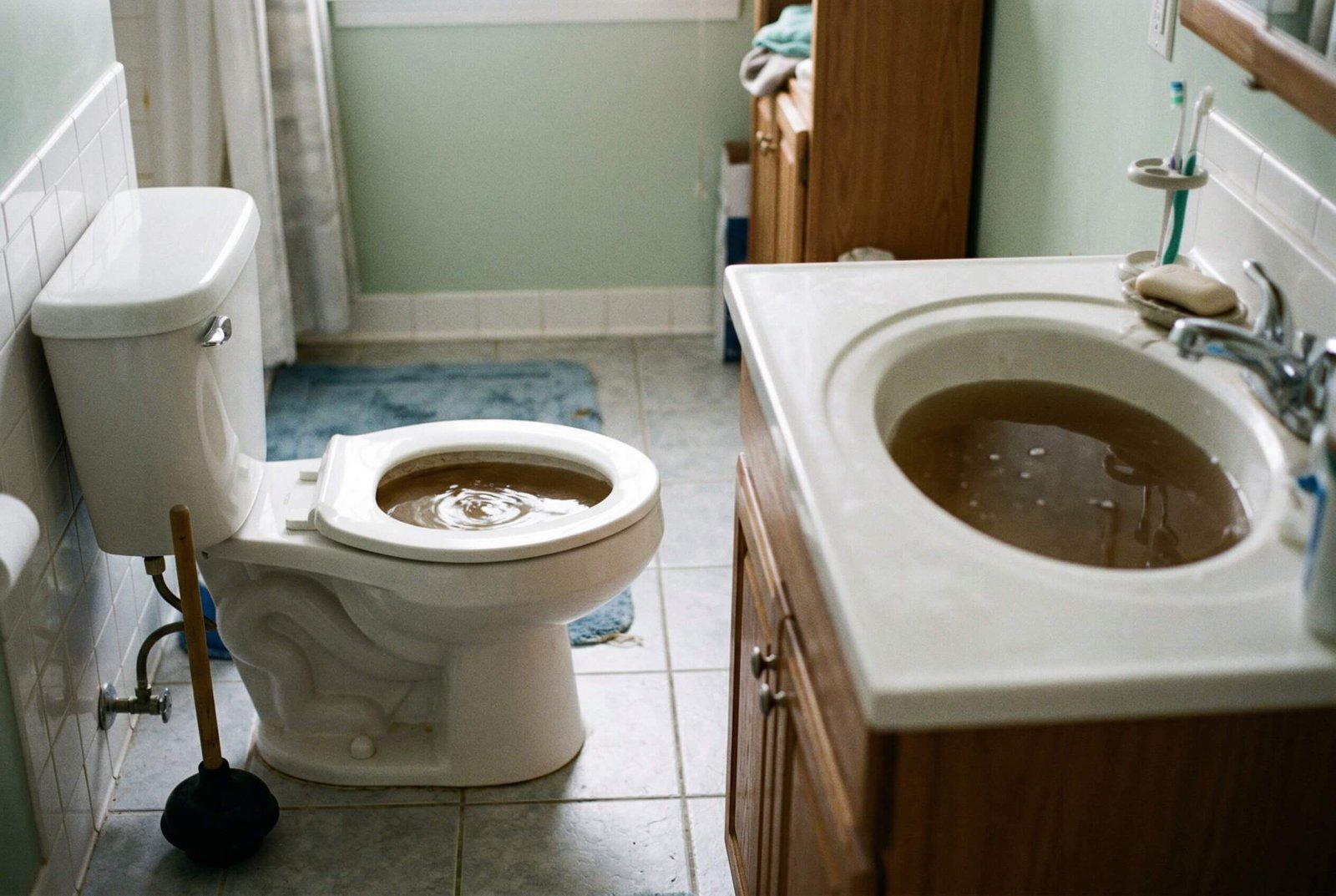
When a toilet and sink start backing up at the same time, it’s rarely a coincidence. This is one of the clearest early warning signs that something deeper is wrong in your plumbing system—usually a developing issue in the main sewer line. What might seem like two separate problems is often a single blockage affecting multiple fixtures at once.
Unlike a typical clog that stays contained to one drain, this kind of situation shows that your system is starting to lose its ability to move water efficiently. At first, the signs may be subtle—slow drainage, slight gurgling, or minor water movement. But once multiple fixtures begin reacting together, the system is already under pressure, and the risk of escalation increases quickly.
What makes this more important is how fast it can turn into a full drain emergency. A system that is partially blocked may still function under light use, but a single toilet flush or running sink can overload it. When that happens, water has nowhere to go and starts backing up into the lowest or most accessible drains.
Many homeowners make the mistake of treating each fixture separately—trying to fix the sink while ignoring the toilet, or vice versa. But in this situation, the problem is not in the fixtures. It’s in the shared system behind them.
The key is recognizing what this pattern means and responding in the right way. Acting quickly is important, but acting correctly—stopping water use, observing the system, and avoiding actions that increase pressure—is what prevents the situation from becoming more serious.
This guide will walk you through how to understand this problem, what to do immediately, and how to keep it from turning into a larger and more damaging drain emergency.
What This Page Covers
ToggleWhat This Problem Means (Not Just Two Separate Clogs)
When a toilet and sink back up at the same time, the issue is almost never in those two fixtures individually. What you’re seeing is a shared system problem, most often a restriction or blockage in the main sewer line that both drains connect to.
Each fixture in your home has its own branch pipe, but those branches all lead into a single main line. When that main line begins to clog, water from different fixtures starts to interfere with each other. Instead of flowing out smoothly, it meets resistance, builds pressure, and looks for another path—often through nearby drains.
How Household Drains Are Connected
Your plumbing system is designed like a network. A sink and a toilet in the same bathroom typically share a common branch line before connecting to the main sewer line. Under normal conditions, water flows in one direction without affecting other fixtures.
When a restriction forms in the main line, that flow changes. Water slows down, pressure increases, and air gets displaced irregularly. This is why you may hear gurgling or see water movement in one fixture when using another.
What’s important to understand is that the system is reacting as a whole. The sink is not causing the toilet problem, and the toilet is not causing the sink problem. Both are responding to the same blockage further down the line.
Why This Is Rarely a Coincidence
It’s extremely unlikely for two separate clogs to happen at the exact same time in different fixtures without a shared cause. When a toilet and sink both show symptoms together, it almost always points to a deeper issue.
Common signs that confirm this include:
- The sink gurgling when the toilet is flushed
- The toilet water level changing when the sink is used
- Both fixtures draining slowly at the same time
- The problem appearing suddenly across multiple fixtures
These patterns indicate that the system is no longer functioning independently. The blockage is affecting how water moves through the entire connected section of plumbing.
When This Is a True Emergency vs a Minor Issue
Not every interaction between fixtures is immediately an emergency, but it becomes one when the system loses stability.
A minor issue may involve:
- Slight gurgling with no backup
- Occasional slow drainage that resolves
- No visible dirty water or overflow
A true drain emergency involves:
- Repeated or worsening interaction between fixtures
- Water backing up instead of draining
- Multiple fixtures affected at the same time
- Dirty water or strong sewer odor
Once backup begins or the problem becomes consistent, the situation should be treated seriously. The system is no longer handling normal use, and continued water flow can quickly escalate the issue.
Understanding that this is a system-wide problem changes how you respond. Instead of trying to fix each fixture separately, you focus on controlling the situation and preventing further pressure in the system.
Most Common Situations Where Toilet and Sink Back Up Together
When a toilet and sink start reacting to each other, it usually doesn’t happen all at once. The system gives signals through specific patterns of behavior. Recognizing these patterns helps you understand how far the problem has progressed and whether you’re dealing with an early warning or an active drain emergency.
These situations are not random—they reflect how pressure and restricted flow are moving through your plumbing system.
Flushing the Toilet Causes Sink Reaction
One of the most common scenarios is flushing the toilet and noticing movement in the sink. This may appear as bubbling, gurgling, or even water rising slightly in the sink drain.
This happens because flushing sends a large volume of water into a system that cannot handle it efficiently. When the main line is restricted, that water slows down and pushes air and pressure backward through connected pipes. The sink becomes an outlet for that pressure, even though it’s not being used.
This is often one of the earliest clear signs of a developing main sewer line problem.
Real-World Scenario: Flush → Sink Reaction
A homeowner flushes the toilet and hears a gurgling sound from the sink. The sink may not overflow, but the sound is noticeable and consistent. Over time, the gurgling becomes stronger, and the sink may begin draining more slowly.
At this stage, the system is still functioning, but it is under stress. Ignoring it allows the restriction to worsen.
Running the Sink Affects the Toilet
The reverse situation can also occur. You run the sink, and the toilet water level shifts—either rising slightly or bubbling.
This indicates that the blockage is affecting how water moves through the shared line. Even smaller volumes of water from the sink are enough to disrupt the system, which means the restriction is becoming more significant.
Real-World Scenario: Sink Use → Toilet Response
A homeowner turns on the sink and notices the toilet water moving or making noise. At first, it seems minor and inconsistent. But over time, the reaction becomes more noticeable and happens more frequently.
This pattern shows that the system is losing its ability to separate flow between fixtures.
Both Fixtures Draining Slowly at the Same Time
Another common situation is when both the toilet and sink begin to drain slowly. This is different from a single clogged fixture. The slowdown happens across both drains because the blockage is further down the line.
In this stage, water still drains, but at a reduced capacity. The system is partially blocked, and normal usage is starting to overwhelm it.
This is often the last stage before actual backup begins.
Backup Appearing in the Same Bathroom Group
As the problem progresses, you may start to see water backing up in one or both fixtures. This is no longer just interaction—it’s failure of the system to move water out.
You might notice:
- Water rising in the sink after flushing
- The toilet struggling to drain completely
- Minor overflow that seems to settle after a short time
These are signs that the blockage is close to becoming a full drain emergency.
Additional Fixtures Starting to Show Symptoms
What begins in one bathroom often spreads. You may notice similar behavior in other sinks, tubs, or drains in the home.
This confirms that the issue is not isolated. The main line is affecting multiple parts of the system, and the problem is expanding.
These situations show how a drain problem develops step by step. What starts as a small interaction between fixtures can quickly escalate into a full backup if ignored.
The next step is learning how to recognize the warning signs early—before the system reaches the point where water starts coming back into your home.
Warning Signs Before Both Drains Start Backing Up
Before a toilet and sink begin backing up together, the plumbing system usually gives several warning signals. These signs often appear subtle at first, which is why they’re easy to ignore. But in reality, they are early indicators that the main sewer line is starting to struggle.
Recognizing these signs early gives you a chance to act before the situation turns into a full drain emergency.
Early Signs That Indicate a Developing Problem
In the early stage, the system is still functioning, but not efficiently. Water can still pass through, but with increasing resistance. This creates small, noticeable changes in how your drains behave.
Common early signs include:
- Slow drainage in one fixture that gradually affects others
- Occasional gurgling sounds from the sink or toilet
- Water movement in the sink when flushing the toilet
- Minor delays in drainage that weren’t present before
These symptoms are often dismissed because they don’t cause immediate disruption. However, they show that flow inside the pipes is no longer smooth and unrestricted.
Gurgling and Air Movement in the System
One of the most important warning signs is gurgling. This sound is not random—it’s caused by air being pushed through water due to uneven pressure in the pipes.
When the main line is partially blocked, air cannot move freely. As water tries to pass through the restriction, it forces air into nearby pipes, creating bubbling or gurgling sounds.
This is often one of the first clear signals that the system is under pressure and beginning to fail.
Slow Drains Turning Into Cross-Reactions
Another key pattern is progression. A sink that was slightly slow may begin to affect the toilet. A toilet that occasionally drains slowly may start reacting when the sink is used.
This shift from isolated symptoms to shared behavior is critical. It means the problem is no longer local—it has moved into the main line and is affecting multiple fixtures.
At this stage, the system is becoming unstable.
Temporary Relief That Misleads Homeowners
Sometimes the problem seems to fix itself temporarily. Water may drain normally for a short period, and symptoms may disappear. This often leads homeowners to believe the issue has resolved.
In reality, this is usually a partial blockage that has shifted position. The restriction is still there, but the flow has temporarily improved. The underlying problem remains and will likely return—often worse than before.
Sewer Odor as a Late Warning Sign
A noticeable sewer smell inside the home is a stronger indicator that the system is struggling. This can happen when waste is not moving properly through the pipes or when pressure forces gases back into the home.
This is not an early sign—it usually appears after the problem has progressed. At this point, the risk of backup is much higher.
These warning signs form a pattern. The system moves from slight inefficiency to visible interaction between fixtures, and eventually to backup.
Understanding this progression allows you to act early, before water starts coming back into your home.
Severity 판단 (Triage): How Serious Is the Situation
When a toilet and sink start backing up together, the most important question is not just what is happening, but how serious it is right now. Not every situation requires the same level of urgency, but every situation needs to be understood correctly so you can respond in the right way.
The system typically moves through stages. Identifying which stage you’re in helps you decide whether to monitor, act immediately, or escalate.
Low-Level Stage (Early Warning Phase)
At this stage, the system is still functioning, but it is beginning to show signs of restriction. Water is moving slower than it should, and fixtures may start to react to each other slightly.
You may notice:
- Occasional gurgling in the sink or toilet
- Minor water movement when another fixture is used
- Slightly slower drainage than usual
- Symptoms that come and go rather than staying constant
In this phase, there is no visible backup, and the system still handles normal use. However, this is the point where early action can prevent a larger problem. Ignoring these signs allows buildup to continue until the system can no longer compensate.
Moderate Stage (System Under Stress)
In the moderate stage, the restriction has increased to the point where normal water use starts to overwhelm the system. Fixtures interact more consistently, and drainage becomes noticeably slower.
Typical signs include:
- Repeated interaction between toilet and sink
- Both fixtures draining slowly at the same time
- Occasional minor backup that settles after a short time
- More consistent gurgling or bubbling sounds
At this point, the system is unstable. It may still function under light use, but it cannot handle normal household demand reliably. Continuing to use water without caution can quickly push the system into a full backup.
High-Level Emergency (Active Backup Stage)
This is where the situation becomes a true drain emergency. The system can no longer move water effectively, and backup begins to occur.
You may see:
- Water rising in the sink or toilet instead of draining
- Multiple fixtures backing up at once
- Dirty or contaminated water appearing
- Overflow that spreads beyond the fixture
At this stage, immediate action is required. The system is no longer stable, and any additional water use will worsen the situation.
How to Decide Your Next Move
Understanding your stage helps guide your response:
- In the early stage, focus on awareness and limiting stress on the system
- In the moderate stage, reduce water use and prepare for escalation
- In the emergency stage, stop all water use immediately and contain the situation
The mistake most homeowners make is treating all stages the same—either ignoring early signs or underestimating a serious backup. The goal is not to panic, but to respond based on what the system is telling you.
Once you’ve identified the severity, the next step is knowing exactly what to do immediately to prevent the situation from getting worse.
What to Do Immediately When Toilet and Sink Back Up Together
When both the toilet and sink are backing up, the situation can escalate quickly if handled the wrong way. The system is already under pressure, and every additional drop of water you introduce can make the backup worse. The goal at this stage is not to fix the problem—it is to stop the escalation and keep the situation controlled.
What you do in the first few minutes has a direct impact on how much damage occurs.
Step-by-Step Immediate Response
- Stop using all water fixtures immediately
Do not flush the toilet, run the sink, or use any water anywhere in the home. Even fixtures in other rooms connect to the same main line and can add pressure to the system. - Do not attempt to “test” the drains
Many homeowners try to check if the problem is still there by running water. This often triggers a stronger backup. Assume the problem is still active unless it has been properly resolved. - Shut off water supply if overflow is active
If water is rising or close to overflowing, shut off the water supply to the toilet. This prevents additional water from entering the system and reduces the risk of flooding. - Contain any visible water quickly
Use towels or barriers to prevent water from spreading beyond the immediate area. Focus on stopping movement, not just absorbing water. - Keep the area isolated
Avoid walking through affected areas to prevent spreading contamination. Keep pets and other household members away from the space. - Observe what is happening
Pay attention to which fixtures are affected and how the water behaves. This information helps determine whether the issue is localized or affecting the entire system. - Document the symptoms if possible
Take note of what triggered the backup and how the system reacted. This can be useful later when diagnosing the problem.
Why This Order Matters
The order of these steps is important because it follows how the system behaves under pressure. Stopping water use prevents additional load. Containment prevents spread. Observation helps you understand the scope.
Skipping steps or doing them out of order—such as trying to fix the problem before stopping water use—can make the situation worse.
What You Should Not Focus On Right Now
At this stage, your priority is control, not repair. Avoid trying to solve the blockage immediately. The system is unstable, and aggressive actions can push the problem further or trigger additional backup.
The safest and most effective response is to stabilize the situation first. Once things are under control, you can decide the next step with a clear understanding of what you’re dealing with.
Handling the first few minutes correctly reduces damage and keeps the situation manageable. From here, the next step is understanding what actions are safe to take—and where you should stop.
Safe Emergency Actions Homeowners Can Take
Once you’ve stopped water use and stabilized the situation, there are a few actions you can take to manage the backup safely without making it worse. The key here is control—not force. You are not trying to clear the blockage. You are trying to reduce spread, limit damage, and keep the situation contained until it can be properly resolved.
These actions are only appropriate when the situation is stable enough to handle safely. If water is actively rising or spreading quickly, your priority should remain containment and isolation.
Managing the Situation Without Adding Pressure
At this stage, your goal is to prevent the problem from expanding into other areas of the home. Even small amounts of water can travel quickly across floors or into nearby spaces.
Start by focusing on the immediate area around the affected fixtures. Use towels or absorbent materials to block water from spreading beyond the bathroom. Position them at entry points, edges, and any path where water might move outward.
If there is standing water that is not actively rising, you can carefully remove small amounts using a container. The purpose is not to empty the area completely, but to keep water levels under control and prevent overflow.
Monitoring is just as important as action. Watch how the water behaves after you stop using fixtures. If levels remain stable or begin to recede, the system may be temporarily holding. If water continues to rise, the situation is still active and requires more caution.
Surface-Level Actions Only
Any physical interaction with the drain should be limited to what is visible and easily accessible. This is not the time to insert tools deep into the pipe or apply force.
If you can clearly see debris at the surface of the sink or near the drain opening—and it can be removed safely without pushing it further—this may help slightly improve local flow. However, this should only be done if it can be completed without risk.
The important boundary is this:
If the action requires effort, force, or going deeper into the pipe, it is no longer a safe homeowner action.
Protecting Yourself During the Process
Even if the water does not appear heavily contaminated, it should be treated with caution. Wearing gloves and avoiding direct contact reduces the risk of spreading contamination.
Footwear also matters. Walking through the affected area without protection can transfer water to other parts of the home. Keeping movement limited and controlled helps contain the issue.
Ventilation can also help if odors are present, but only if it can be done safely without increasing spread.
Safe emergency actions are about maintaining control of the situation, not solving it. The moment actions shift from containment to force, the risk increases.
The next step is understanding what actions should be avoided entirely—because those are often the ones that turn a manageable situation into a much larger problem.
Actions to Avoid During This Type of Drain Emergency
When a toilet and sink are backing up together, the system is already unstable. At this stage, the wrong action can push it from a manageable situation into a full overflow or widespread contamination problem. Many of the most common reactions homeowners have—trying to test, clear, or force the drain—are exactly what make the situation worse.
Understanding what not to do is just as important as knowing what to do.
Why “Testing the Drain” Makes Things Worse
One of the most common mistakes is turning on the sink or flushing the toilet to see if the problem is still there. This may seem harmless, but it adds more water into a system that is already restricted.
When the main line is partially or fully blocked, any additional water increases pressure. Instead of draining, that water looks for another path—often back into your fixtures. What might have been a small backup can quickly turn into a larger overflow.
Even if the drain appears to clear momentarily, it does not mean the problem is resolved. It only means the system is temporarily handling the load, which can change suddenly.
Why Chemical Drain Cleaners Are a Bad Idea Here
Chemical cleaners are designed for minor clogs, not system-wide blockages. In a situation where multiple fixtures are affected, these products do not reach the actual problem area.
Instead, they sit in the pipes, often mixing with standing water. This creates additional risks without solving the issue.
Problems with using chemicals in this situation include:
- No access to the main blockage
- Potential damage to pipes over time
- Increased hazard if backup occurs while chemicals are present
- Risk during cleanup or when a plumber works on the system
At this stage, chemical solutions are ineffective and can complicate the situation further.
Aggressive Plunging or Snaking
Trying to force the blockage with a plunger or drain snake can seem like a logical step, but it often creates more problems than it solves.
When you apply force without knowing where the blockage is:
- You may push it deeper into the system
- You can compact the clog, making it harder to remove
- You may temporarily relieve pressure, only for it to return stronger
- You risk affecting other parts of the system
This is especially true when multiple fixtures are involved, as the blockage is usually beyond the reach of basic tools.
Continuing to Use Water Fixtures
Another critical mistake is continuing to use other fixtures in the home, assuming they are not affected. All drains connect to the same main line, so using water anywhere adds load to the system.
This includes:
- Running sinks in other rooms
- Using washing machines or dishwashers
- Taking showers or baths
- Flushing toilets
Even if the backup is only visible in one area, the entire system is under stress. Continued use increases the likelihood of further backup.
Taking Apart Plumbing Without Full Awareness
Some homeowners attempt to remove pipes under the sink or disassemble parts of the system to relieve pressure. This can be risky if the blockage is deeper in the line.
Opening the system without understanding where the water is held can result in sudden release, leading to spills and additional contamination. It can also make it harder to reassemble properly, especially under pressure.
Avoiding these actions helps keep the situation stable. Most drain emergencies become worse not because of the blockage itself, but because of well-intentioned actions that increase pressure or spread contamination.
The next step is understanding why this specific situation almost always points to a main sewer line problem—and how to confirm it.
Why This Usually Means a Main Sewer Line Problem
When a toilet and sink are backing up together, the issue is almost never located inside those individual fixtures. What you’re seeing is the effect of a shared restriction deeper in the plumbing system, most commonly in the main sewer line.
Understanding this is important because it changes your entire approach. You’re not dealing with two clogs—you’re dealing with one blockage affecting multiple parts of your home.
How a Main Line Blockage Affects Multiple Fixtures
All wastewater from your home flows through a single main sewer line before exiting the property. When that line becomes restricted, water from different fixtures starts competing for limited space.
Instead of flowing out smoothly, wastewater slows down and builds pressure. As that pressure increases, it pushes water and air back through the system, affecting nearby drains.
Because the toilet and sink are often connected through the same branch line, they tend to show symptoms together first. But the problem itself is further down, beyond where those fixtures connect.
Why the Lowest Fixtures React First
In most homes, water will back up through the lowest available drain when the system is blocked. This is why showers, tubs, or lower-level sinks often show signs first. However, when the blockage is closer to a specific bathroom group, both the toilet and sink in that area may react together.
This is not random—it’s based on how gravity and pressure interact inside the pipes. Water always looks for the easiest path, and when it cannot move forward, it moves backward into accessible fixtures.
Clear Indicators of a Main Sewer Line Issue
There are specific patterns that strongly point to a main line problem rather than isolated clogs.
- Multiple fixtures reacting at the same time
- Water movement between toilet and sink
- Slow drainage across more than one fixture
- Gurgling sounds in different drains
- Symptoms spreading to other areas of the home
These signs show that the issue is affecting the system as a whole, not just one part of it.
Why Local Fixes Don’t Solve This Problem
Because the blockage is deeper in the system, working on individual fixtures does not address the real cause. Clearing a sink trap or plunging a toilet may create temporary relief, but it does not remove the restriction in the main line.
In some cases, these actions can even make the situation worse by pushing debris further into the system or increasing pressure in other areas.
The only effective solution is to locate and clear the blockage at its source.
Recognizing that this is a main sewer line problem helps you avoid wasting time on the wrong fixes. It allows you to focus on controlling the situation and preparing for the correct solution.
The next step is understanding when DIY efforts stop being safe or useful—and when it’s time to step back.
When DIY Is No Longer Safe or Effective
When a toilet and sink are backing up together, it’s natural to want to fix the problem quickly. But there’s a clear point where DIY efforts stop helping and start increasing risk. The challenge is recognizing that point early, before the situation gets worse.
In these cases, the issue is usually not within reach of basic tools. It’s deeper in the system, often in the main sewer line, where proper diagnosis matters more than force.
Professional-Required Conditions
There are certain conditions where DIY should stop immediately because the situation has moved beyond safe homeowner intervention.
You should step back and seek professional help if you notice:
- Multiple fixtures backing up consistently
- Water rising instead of draining
- Dirty or contaminated water present
- Repeated backups even after temporary relief
- Strong sewer odor along with slow or blocked drains
These signs indicate that the blockage is significant and affecting the system as a whole. Trying to resolve it without the right tools or understanding can make it harder to fix.
Why DIY Attempts Often Fail at This Stage
Most household tools are designed for small, localized clogs—hair in a sink, minor buildup in a trap, or shallow obstructions. They are not built to handle deep blockages or system-wide restrictions.
When the problem is in the main line, tools like plungers or small augers may not even reach the blockage. Even if they do, they may not be able to clear it effectively.
What often happens instead is partial relief. Water drains briefly, giving the impression that the problem is fixed. But the blockage remains, and the issue returns—sometimes more aggressively.
The Risk of Making the Problem Worse
Applying force without understanding the condition of the pipes can create new problems. Pushing debris deeper, compacting buildup, or increasing pressure in the system can lead to more severe backups.
There’s also the risk of spreading contamination. If water is already backing up, disturbing the system can cause it to appear in additional fixtures or overflow into new areas.
In some cases, attempting to disassemble plumbing or use tools incorrectly can result in leaks or damage that add to the original problem.
Knowing When to Step Back Is the Right Move
Choosing not to continue DIY efforts is not a failure—it’s the correct decision in many drain emergency situations. Recognizing the limits of what can be safely handled at home protects both your plumbing system and your living space.
At this point, the focus should shift from trying to fix the issue to ensuring it is handled properly.
Understanding when to stop is a key part of managing a drain emergency. From here, it helps to know what a plumber will actually do so you can approach the situation with clarity and confidence.
What a Plumber Will Do in This Situation
When a toilet and sink are backing up together, a plumber approaches the problem as a system issue, not a fixture issue. The goal is not just to get water flowing again temporarily, but to identify exactly where the blockage is and restore proper function across the entire drainage system.
From the outside, it may seem like a simple clearing job. In reality, a structured process is used to avoid repeat problems and ensure the blockage is fully addressed.
Initial Diagnosis Based on System Behavior
The first step is understanding how your system is reacting. A plumber will ask what you observed—when the problem started, which fixtures are affected, and how the water behaves when used.
They may also test the system carefully, using controlled water flow if it is safe. This helps confirm whether the issue is isolated or located in the main sewer line. When multiple fixtures are involved, the focus quickly shifts to the main line.
This stage is critical because treating the wrong part of the system leads to temporary fixes instead of real solutions.
Locating the Blockage Precisely
In many cases, especially when the cause is not obvious or the problem has occurred before, a camera inspection is used. This involves sending a small camera through the drain line to visually locate the blockage.
This step helps answer key questions:
- Where exactly is the blockage located?
- What is causing it—buildup, roots, or something else?
- Is there any structural damage in the pipe?
Without this information, clearing the line becomes guesswork, which increases the chance of recurrence.
Clearing the Line Based on the Cause
Once the blockage is identified, the plumber chooses the appropriate method to remove it.
If the issue is a typical obstruction, a professional-grade drain snake (auger) may be used. This tool is much more powerful and controlled than consumer versions and is designed to reach deeper into the system.
If the blockage involves heavy buildup, grease, or tree roots, hydro jetting may be recommended. This process uses high-pressure water to clean the inside of the pipe thoroughly, removing material from the pipe walls rather than just creating a small opening.
If structural issues are found—such as pipe collapse or severe root intrusion—clearing alone may not be enough. In these cases, repair or replacement of the affected section may be necessary.
Testing and Verifying the System
After clearing the blockage, the plumber does not simply leave. The system is tested to ensure that water flows properly and that the issue has been fully resolved.
This often involves running water through multiple fixtures to confirm that there is no remaining restriction and that the system can handle normal use without backing up.
This step prevents situations where a partial clearing creates a false sense of resolution.
Explaining the Cause and Next Steps
A good plumber will explain what caused the problem and whether it is likely to happen again. This may include advice on usage habits, maintenance, or follow-up inspection if the issue is related to deeper conditions.
Understanding the cause helps you avoid repeating the same problem and gives you a clearer idea of how to manage your system going forward.
Knowing what a plumber does in this situation removes uncertainty. Instead of guessing what will happen next, you understand how the problem is approached and resolved properly.
The next step is understanding the health and safety risks involved—because even after the water stops, there are still important precautions to take.
Health and Safety Risks Homeowners Should Understand
When a toilet and sink are backing up together, the immediate concern is stopping the water. But once that is under control, there is another layer of risk that many homeowners underestimate—what that water leaves behind and how it affects your home environment.
Even if the backup appears minor, the presence of wastewater changes how the situation should be handled. It is no longer just a plumbing issue. It becomes a matter of hygiene, safety, and preventing longer-term damage.
Contamination Risk From Wastewater
Water coming back through a toilet or sink is not clean. It can contain waste, bacteria, and contaminants that should not come into contact with surfaces in your home.
Even small amounts can spread contamination if they reach:
- Bathroom floors and nearby surfaces
- Cleaning tools, towels, or personal items
- Hands, clothing, or footwear
The risk is not always visible. Water that looks relatively clear can still carry contaminants. This is why contact should be minimized and handled carefully.
How Contamination Spreads Inside the Home
One of the biggest risks is not the initial backup—it’s how easily contamination spreads afterward. Walking through affected areas, using the same cleaning cloths in multiple places, or moving items without protection can transfer contaminants beyond the original location.
This turns a contained issue into a wider cleanup problem. Keeping movement controlled and isolating the area helps prevent this spread.
Slip Hazards and Physical Safety
Water on bathroom floors creates an immediate safety risk. Even a small amount can make surfaces slippery, especially on tile or smooth flooring.
In the urgency of the situation, it’s easy to move quickly and overlook this. Taking a moment to stabilize your footing and control the area reduces the risk of injury while dealing with the problem.
Hidden Moisture and Material Damage
After the visible water is gone, moisture can remain in places you don’t immediately see—around fixture bases, along floor edges, or beneath materials.
This hidden moisture can:
- Weaken flooring over time
- Cause lingering odors
- Lead to gradual damage that becomes noticeable later
The issue is not just removing water—it’s ensuring that affected areas are fully dried.
Mold Risk After a Backup Event
If moisture is not properly addressed, it can create conditions for mold growth. This doesn’t require standing water—just consistent dampness and limited airflow.
Mold may not appear immediately. It can develop days or weeks later if moisture remains trapped. Proper drying and ventilation reduce this risk significantly.
Why Delaying Cleanup Is a Mistake
It’s common to think cleanup can wait until later, especially if the backup stops quickly. But delays allow contamination and moisture to settle deeper into surfaces.
The longer the area remains untreated:
- The more difficult it becomes to clean thoroughly
- The greater the chance of long-term damage
- The higher the likelihood of lingering odors or hidden issues
Acting promptly—but carefully—helps limit both health risks and repair needs.
Understanding these risks changes how you approach the situation. It’s not just about stopping the backup—it’s about making sure your home is safe afterward.
The next step is knowing what basic tools and supplies can help you handle situations like this more effectively if they happen again.
Emergency Tools and Supplies to Have Ready
When a toilet and sink back up together, you don’t get advance notice. The situation unfolds quickly, and your ability to respond depends on what you already have available. You are not preparing to fix the blockage yourself—you are preparing to control the situation, limit damage, and protect yourself while the issue is being resolved.
Having a small, practical setup ready can make a significant difference in how manageable the situation feels.
Why Preparation Matters in These Situations
During a drain emergency, time is not on your side. Water can spread across floors, reach nearby rooms, and carry contamination with it. Without the right supplies, even a small backup can become harder to contain.
Preparation allows you to act immediately without hesitation. Instead of reacting under pressure, you can follow a clear response—contain, protect, observe—using tools that are already within reach.
It also reduces the chances of making mistakes, such as using the wrong materials or spreading contamination unintentionally.
Basic Supplies That Help You Stay in Control
A simple set of items is enough to handle most initial responses safely. These are not specialized tools—they are practical items that help you manage the situation effectively.
- Heavy-duty gloves to prevent direct contact with contaminated water
- Old towels or absorbent cloths to block and contain water movement
- A bucket or container for managing small amounts of standing water
- Washable footwear or shoe covers to avoid spreading contamination
- A flashlight to clearly see water levels and affected areas
- Disinfecting supplies for cleanup after the situation is stable
Each item serves a specific purpose, and together they create a controlled response rather than a rushed one.
How These Supplies Are Used in Real Situations
These tools are not just for cleanup—they are for managing the situation as it unfolds. Towels act as barriers to stop water from moving beyond the bathroom. Buckets help reduce buildup in small areas. Gloves and footwear protect you while preventing contamination from spreading to other parts of the home.
Even something as simple as a flashlight helps you make better decisions by clearly showing where water is collecting and how it is moving.
The effectiveness of these supplies comes from using them early, before the situation expands.
What These Supplies Are Not Designed For
It’s important to understand the limits of what these items can do. They will not clear a main sewer line blockage or resolve the underlying cause of the problem.
Trying to use basic tools to fix a deeper issue can increase pressure in the system and make the backup worse. These supplies are meant to support a safe response—not replace proper repair.
Being prepared doesn’t prevent a drain emergency, but it changes how you handle it. Instead of reacting without control, you’re able to contain the situation and reduce its impact.
The next step is understanding what it typically costs to fix this type of problem and how timing affects the total expense.
Cost of Fixing Toilet and Sink Backup Together (U.S.)
When a toilet and sink back up at the same time, the cost to fix the problem depends on what’s happening inside the main sewer line, not just the visible symptoms. While it may seem like a simple clog, this type of issue usually involves a deeper blockage that requires proper diagnosis and the right tools to resolve.
Understanding how pricing works helps you make better decisions during a stressful situation and avoid delays that increase the overall cost.
What Affects the Total Cost
The final cost is influenced by several factors, all tied to the complexity of the blockage and how quickly it is addressed.
- Emergency vs scheduled service
If you need immediate help, especially after hours or on weekends, the cost is typically higher. Emergency calls are prioritized, and that urgency is reflected in pricing. - Depth and location of the blockage
A blockage near the home’s cleanout is faster and easier to access. If the issue is deeper in the main line or outside the home, it requires more time and effort to locate and clear. - Type of clearing method required
Basic snaking is usually less expensive, while camera inspections and hydro jetting add to the cost. The method used depends on what is causing the blockage. - Condition of the sewer line
If the issue is caused by roots, heavy buildup, or pipe damage, the solution may go beyond clearing. Repairs or replacement can significantly increase the total cost.
General Cost Structure
While exact pricing varies by location and service provider, most situations follow a general pattern.
- Basic main line clearing: moderate cost range
- Camera inspection (if needed): additional cost
- Hydro jetting or advanced cleaning: higher cost range
- Emergency or after-hours service: premium pricing
These categories help you understand why costs vary. A simple blockage cleared early is far less expensive than a complex issue requiring multiple steps.
Why Delaying Increases the Cost
It’s common to wait and see if the problem improves, especially if the backup seems to settle. However, this often leads to higher costs rather than savings.
A partially blocked line may still function under light use, but it is unstable. Continued use can push it into a full backup, spreading contaminated water and increasing the need for cleanup and repair.
Additional costs may include:
- Flooring or material damage
- Sanitation and disinfection
- Moisture removal and drying
- Preventive treatment to avoid mold or odor
Addressing the issue early keeps the problem contained and reduces the overall expense.
Cost vs Risk: Making the Right Decision
The decision to act should be based on risk, not just cost. When multiple fixtures are affected or water is backing up, the situation is already beyond a minor issue.
In these cases, acting quickly is usually the more cost-effective choice. Delaying may reduce immediate expense but often leads to a larger and more expensive problem.
Understanding the cost structure helps you respond with clarity instead of hesitation. It allows you to weigh the situation based on actual risk rather than guesswork.
The next step is knowing what to do after the issue is resolved so you can fully recover and reduce the chance of it happening again.
What to Do After the Issue Is Resolved
When the toilet and sink stop backing up, it can feel like the problem is over. But this is only the point where the system has stabilized—not necessarily where everything is fully resolved. What you do next determines whether the situation stays under control or quietly develops into a recurring issue.
The goal now is to restore your space properly, confirm the system is stable, and prevent the same problem from returning.
Cleaning and Sanitizing Affected Areas
Even if the backup was small, any water that came out of a drain should be treated as contaminated. The focus should be on cleaning all affected surfaces carefully and completely.
Start with the immediate area around the toilet and sink. Wipe down floors, fixture bases, and any surfaces that may have come into contact with the water. Cleaning should be controlled and deliberate, not rushed. Using separate cloths for different areas helps prevent spreading contamination further.
The goal is not just to make the area look clean—it’s to ensure it is actually safe to use again.
Drying the Area Completely
After cleaning, drying becomes one of the most important steps. Moisture can remain in areas that are not immediately visible, such as along floor edges or under fixtures.
Allow proper airflow into the space and give the area enough time to dry fully. Even a small amount of trapped moisture can lead to odors or long-term damage if ignored.
Drying is not just a finishing step—it is part of preventing future problems.
Monitoring the System for Recurring Signs
Once the system is back to normal, it’s important to observe how it behaves over the next few days. A temporary improvement does not always mean the issue is completely resolved.
Watch for signs such as:
- Slow drainage returning in either fixture
- Gurgling sounds after using water
- Water level changes in the toilet
- Any interaction between fixtures
These symptoms often indicate that the blockage was only partially cleared or that the underlying issue still exists.
Understanding What Caused the Problem
Preventing recurrence depends on understanding why the backup happened in the first place. In some cases, the cause is clear—such as improper items being flushed or buildup from regular use.
In other cases, the cause may be deeper, such as root intrusion or pipe condition issues. If a plumber was involved, their findings are important. If not, and the cause is unclear, it may be worth considering further inspection.
Knowing the cause allows you to take targeted steps rather than guessing.
Deciding on Follow-Up Action
Not every situation requires additional work, but some do. If the backup involved multiple fixtures, occurred more than once, or showed signs of system-wide restriction, follow-up action is often necessary.
This might include inspection, cleaning, or changes in usage habits. Taking action while the system is stable is far easier than waiting for another emergency.
This stage is where recovery becomes prevention. Proper cleanup, careful monitoring, and understanding the cause ensure that the issue is fully resolved—not just temporarily hidden.
The next step is learning how to reduce the chances of toilet and sink backups happening again in the future.
How to Prevent Toilet and Sink Backup Issues
When a toilet and sink back up together, it’s usually the result of a problem that has been building over time. Prevention is not about constant maintenance or complicated routines. It’s about avoiding the conditions that slowly restrict your main sewer line and recognizing early signs before they escalate.
Most drain emergencies can be prevented with a combination of simple habits and awareness of how your system behaves.
Avoiding the Most Common Causes
The majority of main sewer line clogs are caused by materials that should never enter the system. These don’t always cause immediate blockage. Instead, they accumulate gradually, narrowing the pipe and reducing flow capacity.
The most common contributors include:
- Grease, oil, and fat poured down kitchen drains
- Wipes, paper towels, and hygiene products flushed in toilets
- Food scraps regularly entering the drain
- Using toilets as a general disposal system
Over time, these materials stick to pipe walls and create buildup. As the opening narrows, even normal water use can overwhelm the system and trigger a backup.
Changing these habits significantly reduces the risk of a clogged drain emergency.
Recognizing Early Warning Signs
Prevention is not just about what you avoid—it’s about what you notice. Your plumbing system often shows signs before a full backup occurs.
Pay attention to patterns such as:
- Repeated slow drainage in multiple fixtures
- Gurgling sounds from the sink or toilet
- Water movement between fixtures
- Occasional minor backups that resolve on their own
These are early indicators of a developing problem. Acting at this stage is far easier and less costly than dealing with a full drain emergency.
Paying Attention to Fixture Interaction
One of the clearest warning signs is when fixtures start reacting to each other. For example, flushing the toilet causes movement in the sink, or running the sink affects the toilet.
This interaction shows that the system is under pressure and that flow is restricted. It is not normal behavior and should not be ignored.
Catching this pattern early allows you to address the issue before it escalates.
Proactive Attention for Higher-Risk Homes
Some homes are more prone to sewer line issues due to age, layout, or environmental factors. Properties with older pipes, large nearby trees, or a history of backups may require more attention.
In these cases, occasional inspection or preventive cleaning can help keep the system functioning properly. This does not need to be frequent, but it should be considered if warning signs appear repeatedly.
The goal is targeted prevention based on risk, not unnecessary maintenance.
Preventing toilet and sink backups comes down to consistent habits and early awareness. By avoiding common causes and recognizing early warning signs, you can significantly reduce the likelihood of facing a drain emergency.
Long-Term Prevention Strategy
Long-term prevention is about creating a system where you are not caught off guard. Instead of reacting to emergencies, you understand your plumbing well enough to act early and confidently.
Know Your Home’s Vulnerable Points
Every home has drains that show early signs first. Bathroom groups, especially those on lower levels, are often the most sensitive when the main line begins to restrict.
Knowing which fixtures in your home react first helps you monitor the system more effectively.
Keep Basic Emergency Supplies Ready
Preparation makes a difference when problems arise. Having gloves, towels, and containment materials ready allows you to respond quickly and limit damage.
This does not require a large setup—just a small, organized group of supplies that are easy to access.
Learn Your System’s Patterns
Over time, your plumbing system will show consistent behavior when something is not right. Some homes show gurgling first, while others show slow drainage or fixture interaction.
Recognizing these patterns allows you to take action before the situation becomes urgent.
Take Recurring Signs Seriously
One of the biggest mistakes homeowners make is ignoring repeated minor issues. If the same symptoms appear more than once, it usually means the underlying problem has not been resolved.
Addressing these signs early is far easier than dealing with a full backup later.
Final Thoughts
When a toilet and sink back up together, it’s a clear signal that your plumbing system needs attention. While the situation can feel urgent, it is manageable when handled correctly.
The goal is not to fix everything immediately, but to control the situation, prevent further damage, and make informed decisions about the next steps. Acting in the right order—stopping water use, containing the issue, and understanding the cause—keeps the problem from escalating.
Most importantly, these situations rarely happen without warning. By paying attention to early signs and maintaining good habits, you can prevent many drain emergencies before they reach this stage.