
When something goes wrong with your plumbing, the first instinct is often to call an emergency plumber immediately. In some situations, that’s exactly the right decision. But in many real-world cases, there’s a short window where what you do before making that call can significantly reduce damage, lower costs, and make the entire repair process smoother.
Plumbing problems escalate quickly when water is involved. A small overflow, leak, or backup can spread within minutes, especially if the source is not controlled. But the opposite is also true—a few correct actions taken early can stabilize the situation and prevent it from getting worse while you arrange for help.
One of the biggest mistakes homeowners make is reacting emotionally instead of practically. Panic leads to rushed decisions—calling without understanding the issue, trying unsafe fixes, or ignoring simple steps that could have reduced the severity. In contrast, a calm and structured response helps you stay in control, even during a stressful situation.
It’s also important to understand that not every plumbing issue is a true emergency. Some problems feel urgent but can safely wait for a scheduled visit if properly managed in the moment. Knowing the difference can save you from unnecessary emergency service charges while still protecting your home.
The goal of this guide is simple: help you take control first, then decide the next step. You’re not expected to fix everything yourself. But by stopping the source, containing damage, and understanding what’s happening, you make a better decision about when and how to call a plumber.
Handled correctly, those first few minutes before making the call can make a major difference in both outcome and cost.
What This Page Covers
ToggleWhat Counts as a Plumbing Emergency
Not every plumbing problem needs an emergency call—but some absolutely do. The challenge is that many issues feel urgent in the moment, even when they’re not truly emergencies. Knowing the difference helps you act faster in real emergencies and avoid unnecessary panic (and cost) in less critical situations.
Situations that require immediate action
A plumbing emergency is defined by one thing: active risk of damage or contamination that is getting worse in real time.
You should treat the situation as an emergency if:
- Water is actively overflowing and spreading
- Sewage is backing up into sinks, tubs, or floors
- Multiple fixtures stop draining at the same time
- Water is entering your home or affecting structural areas
In these cases, the problem is not stable—it is progressing. Every minute matters because water or contamination is increasing, and delaying action can lead to significant damage.
Situations that feel urgent but can wait briefly
Some plumbing issues feel stressful but are not immediately dangerous if handled properly in the moment.
These include:
- A single clogged sink or toilet that is not overflowing
- Slow drains that still allow water to pass
- Minor leaks that can be contained or isolated
- Temporary issues that stop once water use is reduced
In these situations, you often have time to control the problem and decide whether to call immediately or schedule a service.
Why misjudging urgency leads to higher costs
Calling an emergency plumber when it’s not necessary can result in higher service charges without added benefit. On the other hand, delaying a true emergency can lead to water damage, contamination, or structural issues that are far more expensive to repair.
The key is not just reacting quickly—it’s reacting correctly.
Understanding what qualifies as a plumbing emergency gives you clarity during a stressful moment. It helps you focus on controlling real risks instead of reacting to situations that only appear urgent.
Warning Signs You Should Call Immediately
Some plumbing problems give you a short window to act. Others don’t. The key is recognizing the situations where waiting—even a little—can make things worse quickly. These are the moments where you should move directly toward calling an emergency plumber while controlling the situation at the same time.
Clear emergency indicators
Certain signs mean the system is already failing and damage is actively increasing. These are not situations to monitor—they require immediate action.
You should call right away if you notice:
- Water rising or spreading across floors or surfaces
- Sewage smell or visibly contaminated water
- No drainage across multiple fixtures at the same time
- Water backing up into areas it shouldn’t (like tubs, floor drains, or sinks)
These symptoms indicate that the system is either blocked at a deeper level or overwhelmed. In both cases, the situation will not resolve on its own and will likely worsen.
Situations that can escalate within minutes
Some problems may look manageable at first but can turn into full emergencies very quickly.
Examples include:
- A toilet that continues to refill and overflow after flushing
- Water suddenly appearing in a basement or lower-level area
- A drain that was slow but suddenly stops completely during use
These situations are unstable. What seems contained now can spread rapidly if water continues to flow or pressure builds in the system.
Why acting early matters
The earlier you recognize these warning signs, the more control you maintain. Even if you are taking steps to contain the problem, calling early ensures help is on the way before the situation becomes harder to manage.
Delaying in these scenarios often leads to:
- Greater water spread
- Increased cleanup and repair costs
- Higher risk of contamination or structural impact
Recognizing these signs removes hesitation. Instead of questioning whether to call, you act with clarity—control what you can immediately, and bring in professional help without delay.
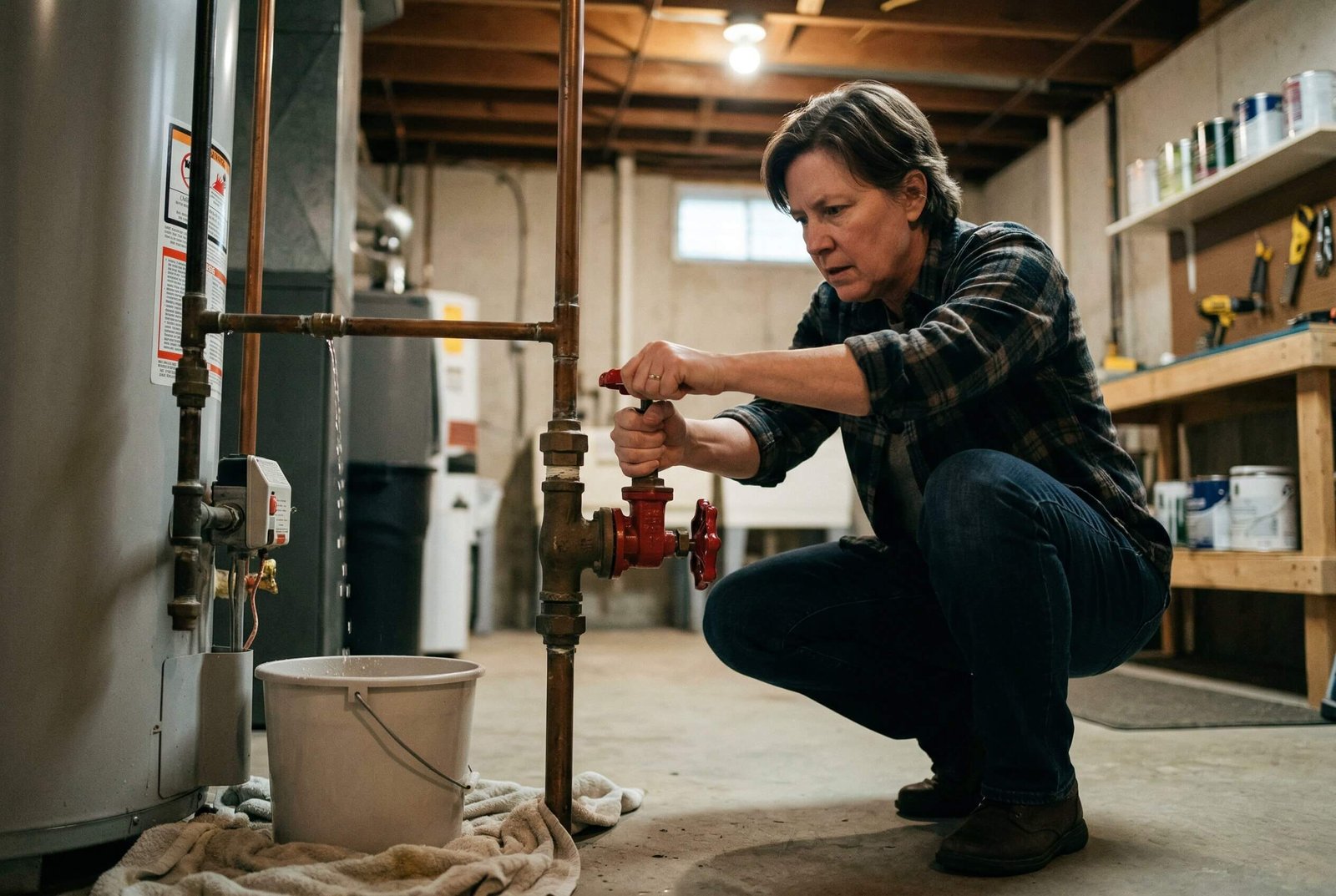
First Step: Stop the Source of Water
Before you think about calling a plumber, diagnosing the issue, or attempting any fix, the most important step is stopping the flow of water. In real emergencies, water is what causes damage—not the pipe, not the clog, but the continuous movement of water through a failing system.
If you control the source, you slow or completely stop the damage.
Shutting off fixtures vs main water supply
Start by identifying whether the issue is coming from a specific fixture or affecting the system more broadly.
If the problem is isolated—like a leaking sink, overflowing toilet, or malfunctioning appliance—you can usually shut off water directly at that fixture. Most sinks and toilets have a small shut-off valve located nearby. Turning it off immediately stops water flow to that specific point.
However, if you cannot locate the fixture valve, if it doesn’t work, or if the issue is spreading, you should move to the main water supply. This shuts off water to the entire home and prevents further escalation.
The goal is not to be precise—it’s to be effective. If you’re unsure, shutting off the main supply is always the safer choice.
How to quickly locate shut-off valves
In most homes, fixture shut-off valves are located:
- Under sinks
- Behind toilets
- Near washing machines or water-using appliances
The main water shut-off valve is typically found:
- Near where the water line enters your home
- In a utility area, basement, or outside near the property line
If you’re not familiar with these locations, it’s worth identifying them before an emergency happens. During a real situation, every minute matters.
When shutting off water is critical
You should immediately shut off water when:
- A fixture is overflowing and not stopping
- A pipe is leaking or has burst
- Water is spreading across floors or walls
- You are unsure where the water is coming from
In these cases, delaying even a few minutes can significantly increase damage.
Stopping the water gives you control. Once the flow is reduced or eliminated, the situation becomes more stable, and you can move to the next steps—containment, assessment, and deciding whether to call an emergency plumber.
Second Step: Contain and Control the Damage
Once the water source is stopped or reduced, the situation becomes more manageable—but it’s not over. Water that has already escaped will continue to spread unless you actively control it. This step is about limiting how far the damage reaches and protecting the most important areas of your home.
Protecting floors, walls, and belongings
Start by focusing on what’s at immediate risk. Water spreads quickly across flat surfaces and can soak into materials like wood, drywall, and carpets within minutes.
Move nearby items out of the affected area—especially anything that can absorb water or be permanently damaged. If water is near furniture, electronics, or stored items, elevate them or relocate them to a dry area.
Pay close attention to flooring and wall edges. These areas absorb water quickly and can lead to long-term damage if not managed early.
Redirecting or collecting water
If water is still moving or pooling, your goal is to control its path and reduce accumulation.
Use towels, buckets, or containers to collect water where possible. For spreading water, create simple barriers to slow it down and guide it away from vulnerable areas.
Even small actions—like placing a towel at the edge of a spreading puddle—can prevent water from reaching areas where it can cause more serious damage.
Keeping water away from electrical areas
One of the most important safety concerns during any plumbing emergency is electricity. Water and electrical systems should never come into contact.
If water is approaching outlets, appliances, or electrical panels, keep a safe distance and avoid touching anything in that area. Do not attempt to move electrical devices while standing in water.
If there is any doubt about safety, it’s better to isolate the area and wait for professional help rather than taking risks.
Staying focused on containment, not repair
At this stage, your role is not to fix the plumbing system—it’s to limit damage and stabilize the environment. Trying to repair the issue too early can distract you from controlling water spread, which is where most damage occurs.
Containment buys you time. It reduces the impact of the problem and creates a safer, more controlled situation while you decide the next steps.
Third Step: Identify the Type of Problem
Once the water is under control, the next step is understanding what kind of plumbing problem you’re actually dealing with. This doesn’t require technical expertise—it’s about recognizing patterns so you can decide whether simple actions will help or if you need to call immediately.
Drain issue vs supply line issue
Start by identifying whether the problem is related to water coming in or water not going out.
If water is leaking, spraying, or continuously flowing from a pipe or fixture, it’s a supply issue. These problems are usually active and can cause rapid damage if not controlled.
If water is not draining, backing up, or overflowing from a fixture, it’s a drain issue. These problems are often related to blockages or pressure buildup in the system.
Understanding this difference helps you decide your next move. Supply issues focus on stopping water. Drain issues focus on managing flow and preventing overflow.
Localized vs system-wide problem
Next, observe how many fixtures are affected. This is one of the fastest ways to assess severity.
If only one sink, toilet, or drain is affected, the problem is likely localized. In these cases, limited actions like plunging or removing visible debris may help.
If multiple fixtures are reacting—such as a toilet and sink backing up together—it usually indicates a deeper issue in the main line. These situations escalate faster and are less likely to be resolved with basic steps.
Indoor vs outdoor source
Also consider where the problem is coming from. Indoor plumbing issues behave differently from outdoor drainage problems.
If the issue is inside, it’s often tied to a specific fixture or internal pipe. If it involves yard drains, basement drains, or water appearing during rain, it may be connected to external drainage or the main system.
Recognizing the source helps you avoid treating the wrong problem. For example, trying to fix an indoor drain won’t help if the issue is coming from outside pressure or a main line blockage.
This step gives you clarity. Instead of reacting blindly, you now understand the type and scope of the problem—making it easier to decide whether a quick fix is possible or if it’s time to call an emergency plumber.
Fourth Step: Try Safe, Limited Actions
Once you understand the type of problem, you may be able to take small, controlled actions that either improve the situation or confirm that professional help is needed. The key here is restraint—you are not trying to fix everything, only to test safe options without increasing risk.
When plunging is appropriate
Plunging is one of the few effective actions homeowners can take for certain drain issues. It works best when the problem is clearly localized—such as a single clogged toilet, sink, or shower drain.
If water is not draining but also not spreading uncontrollably, plunging can help dislodge a blockage near the fixture. Apply steady, controlled pressure rather than aggressive force.
If the water level responds and begins to drain, you’re likely dealing with a simple clog. If nothing changes after a few attempts, stop. Continued effort will not help if the blockage is deeper.
When to remove visible debris
If the issue involves a drain opening—such as a shower, floor drain, or yard drain—you can safely remove any debris that is clearly visible and accessible.
This includes hair, leaves, or surface buildup that is preventing water from entering the drain. Removing this material can restore partial flow and reduce pressure in the system.
Avoid reaching deep into the drain or using tools to push debris further inside. What you can see and safely remove is enough—anything beyond that requires proper equipment.
When to stop immediately
Knowing when to stop is just as important as knowing what to try. You should stop DIY attempts if:
- The situation does not improve after basic actions
- Water begins to rise or spread again
- Multiple fixtures are affected
- The problem involves sewage or contaminated water
Continuing beyond this point can make the situation worse or delay necessary professional help.
These limited actions serve one purpose: to safely test whether the problem is simple or not. If they work, you’ve reduced the issue. If they don’t, you’ve confirmed that it’s time to call—without making things worse in the process.
What NOT to Do Before Calling a Plumber
When dealing with a plumbing problem, the wrong actions can turn a manageable situation into a much bigger and more expensive one. In real emergencies, damage often increases not just because of the issue itself—but because of well-intentioned mistakes made before calling a plumber.
Knowing what to avoid helps you stay in control and prevents unnecessary complications.
Actions that worsen damage
A common mistake is continuing to use water in a system that is already failing. Flushing toilets, running taps, or testing drains can increase pressure and cause water to overflow or back up into other areas.
Avoid trying to “see if it’s fixed” by adding more water. If the system is blocked or unstable, additional water only spreads the problem further.
Another issue is delaying action while hoping the problem will resolve on its own. Plumbing systems rarely fix themselves—waiting often allows the situation to escalate.
Unsafe DIY attempts
Trying to take apart plumbing components during an active issue can make things worse. Pipes, traps, and connections may release more water once opened, especially if pressure is still present in the system.
Avoid using tools aggressively or without understanding how the system works. For example, forcing a drain snake too far or too hard can damage pipes or push the blockage deeper.
Plumbing systems are interconnected, and incorrect handling can create new problems in addition to the original one.
Misuse of chemicals and quick fixes
Chemical drain cleaners are often used as a quick solution, but they are rarely effective in emergency situations—especially when water is already standing or backing up.
These chemicals do not clear major blockages and can create additional risks, including pipe damage and increased contamination. In flooded conditions, they simply mix with water and do not reach the actual blockage.
Ignoring signs of a larger problem
Another critical mistake is assuming the issue is small when there are signs it’s not. If multiple fixtures are affected, water is backing up, or the situation keeps returning, it is likely a deeper system problem.
Continuing to treat it as a minor issue wastes time and allows damage to increase. Recognizing when something is beyond simple fixes is key to handling the situation correctly.
Avoiding these actions keeps the problem from getting worse while you prepare to call a plumber. Sometimes, what you don’t do is just as important as what you do during those first few minutes.
Information to Gather Before Calling
Before you call an emergency plumber, taking a moment to gather the right information can make a big difference in how quickly and effectively the problem is handled. This is not about delaying the call—it’s about making sure the plumber arrives prepared and can diagnose the issue faster.
What plumbers need to know
A plumber’s first goal is to understand what’s happening without being physically present. The clearer your description, the faster they can decide what tools, equipment, and approach are needed.
Try to note the following:
- What exactly is happening (overflow, leak, backup, no drainage)
- Which fixtures are affected
- When the problem started and how quickly it escalated
- Whether the situation is getting better, worse, or staying the same
- What actions you’ve already taken (shut-off, plunging, clearing debris)
This information helps the plumber determine whether it’s likely a localized issue or something deeper in the system.
Why this speeds up diagnosis and reduces cost
When a plumber arrives without clear information, they often need extra time to assess the situation from scratch. This can increase service time and delay the actual repair.
On the other hand, when you provide clear details, they can arrive with the right expectations and tools. In many cases, this leads to faster resolution and fewer unnecessary steps.
It also reduces the chances of misdiagnosis. For example, knowing that multiple fixtures are affected immediately points toward a main line issue, while a single fixture problem suggests a localized blockage.
Taking a minute to gather this information helps you stay organized and makes the entire process smoother. You’re not just calling for help—you’re helping ensure that the right solution is applied as quickly as possible.
When to Call Immediately Without Delay
There are moments in a plumbing situation where you should stop evaluating and act immediately. These are not situations to monitor or test further. Even if you’ve taken steps to control the problem, calling an emergency plumber right away is the correct decision.
High-risk situations that require immediate action
You should call without delay if you notice:
- Sewage backing up into your home
- Water flooding and continuing to spread despite shut-off attempts
- Multiple fixtures failing or backing up at the same time
- Water entering structural areas like walls, floors, or basement spaces
- A burst pipe or continuous leak that cannot be controlled
These situations are unstable. The longer they continue, the more damage they cause. Even if you manage to slow the problem, it still requires immediate professional attention.
Why waiting can make things worse
In high-risk scenarios, time is the most important factor. Water damage increases rapidly, and contamination risks from sewage can affect health as well as property.
Delaying the call—even while trying additional DIY steps—often leads to:
- Larger affected areas
- Increased cleanup and repair work
- Higher overall costs
- Greater disruption to your home
What might have been a controlled situation can quickly turn into a major repair if action is delayed.
Calling while continuing to manage the situation
Calling a plumber does not mean you stop acting. While help is on the way, continue to:
- Keep the water source off
- Maintain containment and protection measures
- Monitor any changes in the situation
This combined approach—calling early while controlling damage—is the most effective way to handle serious plumbing emergencies.
Knowing when to stop assessing and start acting is critical. In these situations, clarity matters more than caution—if it’s high risk, make the call immediately.
What Happens After You Call
Once you’ve made the decision to call an emergency plumber, the situation shifts from handling it alone to preparing for fast and effective professional intervention. What you do in this stage helps ensure the plumber can act quickly when they arrive.
What to expect from emergency service
After you call, the plumber will usually ask a few key questions to understand the urgency and nature of the problem. Based on your answers, they may give you immediate instructions—such as confirming that the water supply is shut off or advising you to avoid using certain fixtures.
Emergency services are prioritized based on severity. Active flooding, sewage backup, and system-wide failures are treated as high priority. Response time depends on availability, but the goal is to reach you as quickly as possible.
Preparing your home for their arrival
While waiting, your focus should be on making access easy and the environment safe.
Clear the area around the affected plumbing so the plumber can work without delay. Move objects, furniture, or anything that blocks access to drains, pipes, or utility areas.
If the issue involves a specific fixture or location, ensure that path is open and well-lit. If possible, keep pets and unnecessary foot traffic away from the area to avoid confusion or accidents.
Providing clear information on arrival
When the plumber arrives, explain the situation clearly and directly. Share what happened, when it started, and what you’ve already done. Mention any changes you observed—such as water levels rising or spreading.
This helps the plumber move directly into diagnosis instead of starting from scratch.
Maintaining safety during the process
While the plumber is working, avoid interfering with the repair process. Stay available if they need information, but allow them to handle the system safely.
If the issue involved contaminated water or electrical risk, continue to keep distance from affected areas unless instructed otherwise.
This stage is about coordination. You’ve controlled the situation as much as possible—now you’re helping ensure the professional can resolve it efficiently.
Cost Considerations Before Calling
When dealing with a plumbing problem, cost is always a concern—but during an emergency, the bigger question is how your timing and actions affect that cost. Understanding this helps you avoid unnecessary charges while still acting quickly when it matters.
Emergency vs scheduled service
Emergency plumbing services are typically more expensive than scheduled visits. This is because they involve immediate response, often outside regular hours, and require priority handling.
If the situation is truly urgent—like active flooding or sewage backup—the higher cost is justified because it prevents larger damage. But if the issue is stable and contained, waiting for a scheduled appointment can significantly reduce the service cost.
The key is not avoiding cost—it’s matching the response to the actual severity of the problem.
Why preparation reduces cost
What you do before calling directly affects how long the plumber needs to work once they arrive.
If you’ve:
- Stopped the water source
- Contained the spread
- Identified the affected area
- Gathered clear information
…the plumber can move faster from arrival to solution. Less time spent diagnosing and managing chaos means lower overall service time and cost.
Preparation also reduces the chance of additional damage, which is often the most expensive part of any plumbing issue.
Avoiding unnecessary emergency charges
Many homeowners call emergency services for issues that feel urgent but are actually stable. For example, a slow drain or a contained leak may not require immediate intervention if properly managed.
Calling in these cases can lead to higher charges without added benefit. On the other hand, delaying a true emergency often results in much higher repair costs later.
The balance comes from understanding the situation clearly before making the call.
Cost vs damage perspective
It’s important to think beyond the service fee. In many cases, the cost of delaying action is far greater than the cost of an emergency visit.
Water damage, mold growth, and structural issues can quickly exceed the cost of immediate repair. That’s why the decision should always be based on risk, not just price.
Cost awareness helps you stay practical. You’re not just reacting—you’re making a decision that balances urgency, safety, and long-term impact.
How Preparation Helps You Stay in Control
Plumbing emergencies feel overwhelming because they happen suddenly and demand quick decisions. But the difference between panic and control is not experience—it’s preparation and clarity in the moment.
When you understand what to do before calling an emergency plumber, you remove hesitation. Instead of reacting emotionally, you follow a simple sequence: stop the water, contain the damage, assess the situation, and then decide. This structure keeps you focused, even when the situation feels urgent.
Preparation also helps you avoid unnecessary actions. Without a clear approach, it’s easy to try too many things at once—testing drains, using tools incorrectly, or delaying the call while hoping the problem improves. With a plan, you act only on what actually helps and avoid what makes things worse.
Another advantage is confidence. When you know how to stabilize the situation, you don’t feel rushed into decisions. You can determine whether the issue is a true emergency or something that can be handled with a scheduled visit. This alone can reduce both stress and unnecessary cost.
Most importantly, preparation protects your home. The first few minutes of a plumbing issue are where most damage occurs. Acting correctly during that time limits how far water spreads, how much material is affected, and how complex the repair becomes.