
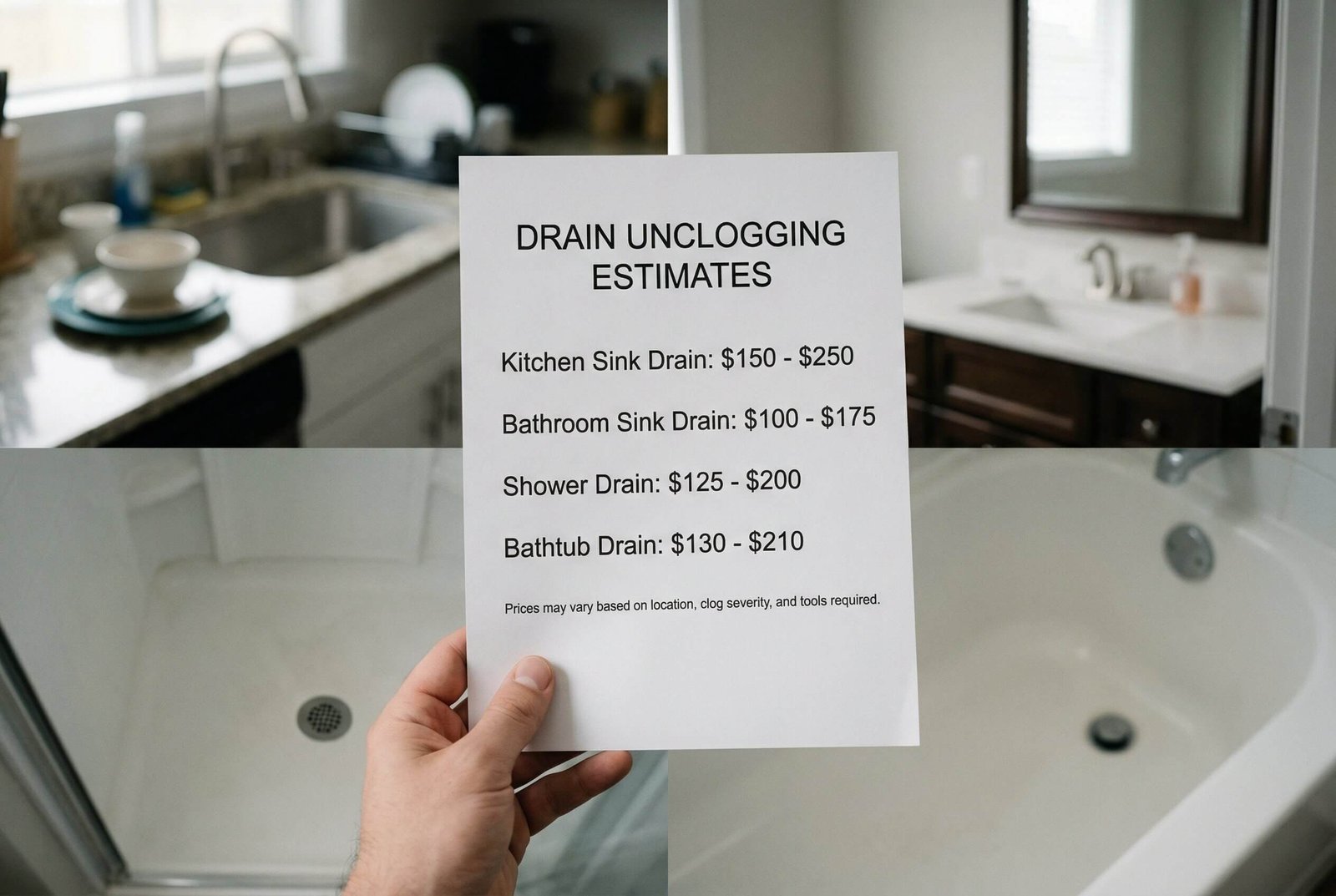
Not all drain clogs are the same—and that’s exactly why the cost to fix them can vary more than most homeowners expect. A clogged kitchen sink, a slow bathroom drain, or a backed-up shower might all seem like simple problems, but each one behaves differently inside the pipe. The material causing the clog, how far it has built up, and how the drain is designed all play a role in how difficult—and expensive—the job becomes.
One of the most common misconceptions is that unclogging any drain should cost roughly the same. In reality, kitchen drains often involve grease and food residue that stick to pipe walls over time, making them harder to fully clean. Bathroom sinks typically deal with soap and toothpaste buildup, which is usually easier to remove. Shower and bathtub drains are more likely to clog with hair and soap scum, which can form dense blockages that sit deeper in the line.
Another factor most homeowners don’t see is how the clog develops. A fresh blockage near the drain opening is usually quick to clear and stays on the lower end of pricing. But when buildup has been forming for months—or even years—the plumber isn’t just removing a clog, they’re dealing with a partially restricted pipe. That takes more time, more effort, and sometimes a different cleaning approach, which increases the cost.
Understanding the type of drain you’re dealing with—and how it typically clogs—is what helps you make sense of the price you’re quoted. It also helps you avoid paying for more than you need, or choosing a quick fix that doesn’t last. Once you see the difference between these drains from a plumber’s perspective, the cost stops feeling random and starts feeling predictable.
What This Page Covers
ToggleAverage Cost to Unclog Household Drains
In most homes, the cost to unclog a drain falls within a predictable range—but what matters more is understanding what puts your situation at the low end or pushes it higher. Two homeowners might both say “my sink is clogged,” but the actual work involved can be completely different.
For typical residential drains, you’ll usually see:
- $100 – $200 → simple, surface-level clogs
- $200 – $350 → moderate clogs requiring more time or deeper reach
- $350 – $500+ → stubborn, deep, or recurring blockages
These ranges generally apply to kitchen sinks, bathroom sinks, showers, and bathtubs—but the final cost depends on what’s happening inside the pipe.
What many homeowners think of as an “average cost” usually includes basic labor, standard tools like a drain snake, and the time required to clear a typical blockage. If the plumber can access the drain easily and remove the clog in one pass, the price stays on the lower side.
Where the cost starts to increase is when the job becomes less straightforward. For example, if the clog is deeper in the line, the plumber needs to run longer equipment and spend more time locating and breaking through the blockage. If the pipe is partially restricted along its length—not just clogged in one spot—the job may take multiple attempts to fully restore flow.
Another factor that changes pricing is whether the goal is a quick fix or a more complete cleaning. A quick fix clears the immediate blockage and gets water flowing again. A deeper cleaning addresses buildup inside the pipe that could cause future clogs. The second option takes more time and effort, which is why it costs more.
This is also why two similar drains can have very different prices. A bathroom sink that clogged yesterday might cost $120 to fix. Another bathroom sink with months of buildup might cost $300 or more—not because the plumber is charging differently, but because the work required is different.
The key takeaway is this:
“Average cost” only applies when the situation is average.
Once the clog becomes deeper, older, or more complex, the pricing naturally moves higher. Understanding that helps you set realistic expectations—and recognize when a quote matches the actual work involved.
Cost by Drain Type (Kitchen, Bathroom, Shower, Bathtub)
The type of drain you’re dealing with is one of the most important factors in determining cost. Each drain collects different materials, clogs in different ways, and requires a slightly different approach to clear properly. That’s why a kitchen sink clog might cost more than a bathroom sink—even if both are “blocked.”
Kitchen Sink Drain Cost
Kitchen drains are one of the most common—and often more expensive—clogs to deal with. The reason is simple: grease, oil, and food particles don’t just form a single blockage. Over time, they coat the inside of the pipe, creating a sticky layer that keeps catching debris.
In the early stages, when the clog is fresh and close to the drain opening, costs stay lower because the plumber can clear it quickly using basic snaking. But as grease buildup thickens and spreads deeper into the line, the job becomes more time-consuming.
- Typical cost range:
- $150 – $300 → simple or recent clogs
- $300 – $500+ → heavy grease buildup or recurring issues
Costs increase when:
- The drain has been slow for a long time
- Grease has hardened inside the pipe
- Multiple cleaning passes are needed
Kitchen drains are also more likely to become repeat problems, which is why deeper cleaning sometimes becomes necessary over time.
Bathroom Sink Drain Cost
Bathroom sink clogs are usually easier and cheaper to fix. These drains typically collect soap residue, toothpaste, and small amounts of hair, which form softer blockages compared to kitchen grease.
Most bathroom clogs sit closer to the drain opening, making them quicker to access and clear. This keeps both time and cost lower in most cases.
- Typical cost range:
- $100 – $250 → standard clogs
- $250 – $350 → deeper or slightly stubborn blockages
Costs increase when:
- The clog has moved deeper into the pipe
- Buildup has been forming over time
- The drain has been repeatedly clogging
Even though these are usually simpler jobs, recurring bathroom clogs can still push costs higher over time if the underlying buildup isn’t addressed.
Shower Drain Cost
Shower drains commonly clog due to hair and soap scum combining into dense, tangled blockages. These clogs often sit just below the drain cover but can also extend deeper into the pipe if left untreated.
A simple shower clog is usually quick to clear, keeping costs on the lower end. But when hair buildup accumulates over time, it can create a more compact obstruction that requires more effort to remove بالكامل.
- Typical cost range:
- $120 – $250 → surface-level hair clogs
- $250 – $400 → deeper or compacted blockages
Costs increase when:
- The clog is tightly packed and difficult to break apart
- Hair buildup extends further into the line
- The drain has been slow for weeks or months
Shower drains are one of the most common repeat clog areas, especially without preventive measures like drain screens.
Bathtub Drain Cost
Bathtub drains are similar to shower drains but can sometimes be more difficult to clear depending on the drain design and pipe layout. Hair, soap, and debris collect over time, often forming deeper buildup compared to a typical shower drain.
The added challenge with bathtub drains is access. In some cases, the design makes it harder to reach the clog directly, which can increase the time required to clear it.
- Typical cost range:
- $150 – $300 → standard clogs
- $300 – $450+ → deeper buildup or access challenges
Costs increase when:
- The clog sits deeper in the pipe
- The drain design limits direct access
- The buildup has been forming over a long period
The key takeaway is this:
Each drain type creates a different kind of clog—and that directly affects the cost.
Kitchen drains tend to be more expensive because of grease buildup. Bathroom sinks are usually cheaper due to softer blockages. Showers and bathtubs fall somewhere in between, depending on how much hair and soap have accumulated.
Once you understand how each drain behaves, the pricing differences become much easier to predict—and much easier to evaluate when you get a quote.
Cost by Type of Clog Severity
While drain type matters, the severity of the clog often matters even more. A simple kitchen clog can be cheaper than a severe bathroom clog, depending on how much buildup is inside the pipe and how long the problem has been developing.
From a plumber’s perspective, the job isn’t priced based on the fixture—it’s priced based on how difficult it is to restore proper flow. That difficulty increases as the clog becomes more compact, deeper, or more widespread.
Light Clogs (Slow Drain, Early Stage)
Light clogs are the easiest and cheapest to fix. These usually show up as slow drainage rather than a complete blockage. Water still flows, just not as quickly as it should.
In these cases, the clog is often:
- Close to the drain opening
- Soft and easy to break apart
- Recently formed
Because of this, the plumber can clear it quickly with minimal effort, keeping costs low.
- Typical cost range:
- $100 – $200
Costs stay in this range when the problem is addressed early. Waiting too long is what usually turns a light clog into a more expensive job.
Moderate Clogs (Partial Blockage)
Moderate clogs are where pricing starts to move into the mid-range. These clogs slow down water significantly and may cause occasional backups, especially during heavy use.
At this stage, the blockage is usually:
- Deeper in the pipe
- More compacted
- Built up over time rather than suddenly
Clearing this type of clog takes more time and may require multiple passes with equipment. The plumber may also need to spend additional time locating the exact position of the blockage.
- Typical cost range:
- $200 – $350
Costs increase here because the job is no longer a quick fix—it requires more effort to fully restore normal drainage.
Severe Clogs (Fully Blocked or Recurring Issues)
Severe clogs are the most expensive because they involve either a complete blockage or a deeper issue affecting the pipe.
In these situations, you may notice:
- Water not draining at all
- Multiple fixtures affected
- Frequent recurring clogs
- Gurgling sounds or backups
At this point, the plumber isn’t just removing a clog—they’re dealing with a system that’s partially restricted or heavily built up. This often requires more aggressive cleaning, more time, and sometimes advanced methods.
- Typical cost range:
- $350 – $500+
Costs increase when:
- The clog is dense and difficult to break
- The blockage extends over a longer section
- Multiple attempts are needed to fully clear the line
Why Severity Matters More Than Drain Type
A common mistake is assuming that certain drains are always cheaper to fix. In reality, a severe clog in a bathroom sink can cost more than a simple clog in a kitchen sink.
That’s because severity determines:
- How long the job takes
- How much effort is required
- Whether basic tools are enough
- Whether deeper cleaning is needed
This is also why two homeowners with “the same problem” can receive very different quotes. One may have a simple blockage, while the other has months of buildup behind it.
Cost by Cleaning Method
The method used to clear the drain plays a major role in the final cost. Even for the same clog, the price can change depending on whether the plumber uses basic tools or more advanced equipment. This is because each method involves a different level of effort, time, and completeness of cleaning.
Basic Snaking (Most Common Method)
For most kitchen, bathroom, shower, and bathtub clogs, snaking is the first and most commonly used method. It’s designed to break through or pull out the blockage so water can flow again.
The cost stays lower because:
- The equipment is simple and widely used
- Setup time is minimal
- The job is usually completed quickly
- It targets a specific clog rather than cleaning the entire pipe
This method works best for:
- Hair clogs in showers and tubs
- Soap and residue in bathroom sinks
- Light grease or food buildup in kitchen drains
- Typical cost range:
- $100 – $300
Snaking is effective for immediate relief, but it doesn’t remove buildup along the pipe walls. That’s why some clogs return over time if the underlying issue isn’t addressed.
Manual vs Powered Tools
Not all snaking jobs are the same. The type of tool used can also affect pricing slightly.
Manual tools are used for very simple clogs close to the drain opening. These jobs are quicker and stay at the lowest end of the cost range.
Powered drain machines are used when:
- The clog is deeper in the pipe
- The blockage is more compact
- More force is needed to break through
Using powered equipment takes more time and effort, which is why costs increase slightly compared to basic manual work. However, it’s still generally within the mid-range compared to more advanced methods.
Hydro Jetting (Less Common for Household Drains)
Hydro jetting is not typically needed for standard sink, shower, or bathtub clogs—but it becomes relevant when the problem involves buildup along the pipe, not just a single blockage.
This method uses high-pressure water to clean the inside of the pipe, removing grease, sludge, and debris completely.
- Typical cost range:
- $300 – $600+
Costs are higher because:
- The equipment is specialized
- Setup takes longer
- The cleaning process is more thorough
- It often requires inspection before use
Hydro jetting is usually considered when:
- Drains keep clogging repeatedly
- Kitchen lines have heavy grease buildup
- The blockage extends beyond a single point
For standard household drains, it’s not the first option—but in recurring or long-term issues, it can be the more effective solution.
Why Method Choice Changes the Cost
The key difference comes down to how much of the pipe is being cleaned.
- Snaking → clears the clog
- Hydro jetting → cleans the pipe
That difference directly affects time, effort, and equipment—and ultimately the cost.
A lower-cost method is ideal when the problem is simple and isolated. A higher-cost method becomes necessary when the issue is deeper or spread along the pipe.
What Affects the Final Cost
Even after considering the drain type and cleaning method, the final price can still vary. That’s because no two drain jobs are exactly the same. From a plumber’s perspective, pricing is based on how much effort, time, and difficulty is involved in actually clearing the blockage.
Depth of the Blockage
One of the biggest factors is how far the clog is inside the pipe.
If the blockage is close to the drain opening, it can be cleared quickly using short tools and minimal effort. This keeps costs low. But when the clog is deeper in the line, the plumber needs longer equipment, more time to reach it, and often more effort to break it apart.
Costs increase when:
- The clog is several feet inside the pipe
- The exact location is harder to identify
- Multiple attempts are needed to fully clear it
The deeper the blockage, the more time the job takes—and time directly affects cost.
Accessibility of the Drain
Even a simple clog can become more expensive if the plumber has difficulty accessing the pipe.
Costs stay lower when:
- The drain opening is easily reachable
- There’s a clear access point
- No disassembly is required
Costs increase when:
- Parts of the fixture need to be removed
- The pipe is hidden behind cabinets or walls
- Access is tight or restricted
Accessibility adds labor time, and labor time is a major part of what you’re paying for.
Time Required to Complete the Job
Drain cleaning isn’t always a quick process. Some clogs clear in minutes, while others take much longer due to buildup, depth, or repeated attempts.
Short jobs stay on the lower end of pricing because they require less labor. Longer jobs naturally cost more because they involve extended effort and equipment use.
This is why two similar clogs can have different prices—the time required isn’t always the same.
Condition of the Pipes
The age and condition of your plumbing system also affect cost.
Older or weakened pipes may require:
- More careful handling
- Slower cleaning methods
- Inspection before aggressive cleaning
In some cases, the plumber may need to adjust the approach to avoid damaging the pipe. This adds time and increases the overall cost.
A well-maintained pipe is easier and faster to clean. A deteriorating pipe requires caution—and that caution comes at a cost.
Multiple Drain Issues vs Single Drain Problem
If only one drain is clogged, the job is usually straightforward. But when multiple drains in the home are affected, it often points to a deeper issue in the system.
Costs increase when:
- More than one fixture is backing up
- The main line may be involved
- Additional diagnosis is required
This shifts the job from a simple unclogging to a more complex problem, which naturally raises the price.
Flat Rate vs Hourly Pricing
Some plumbers charge a flat rate for common drain cleaning jobs, while others charge based on time.
- Flat rate:
Predictable pricing for standard clogs - Hourly pricing:
Used when the job is uncertain or more complex
If the job takes longer than expected, hourly pricing can increase the total cost. That’s why understanding the difficulty of your situation upfront helps you avoid surprises.
The key takeaway is this:
Drain cleaning cost is driven by difficulty, not just the type of drain.
A simple, accessible clog will always cost less. A deep, difficult, or time-consuming job will naturally cost more. Once you understand these factors, it becomes much easier to see why prices vary—and whether a quote makes sense for your situation.
Emergency vs Standard Pricing
When it comes to unclogging kitchen, bathroom, shower, or bathtub drains, timing can change the price just as much as the clog itself. The same blockage that costs a reasonable amount during the day can become noticeably more expensive if it turns into an urgent situation.
Standard (Scheduled) Service
Most drain clogs fall into this category. If your sink or shower is draining slowly but still usable, you have the option to schedule service during normal working hours. This keeps pricing within the typical range because the plumber can plan the visit and handle the job efficiently.
Costs stay lower when:
- The drain is still partially working
- The issue isn’t causing immediate damage
- The service is booked during regular hours
In these situations, you’re paying only for the work itself—not for urgency or priority response.
Emergency Drain Cleaning Costs
Emergency pricing applies when the situation can’t wait. This usually happens when the drain is completely blocked or causing immediate problems inside the home.
Typical price increase:
- +$100 to $300+ for after-hours or urgent calls
This applies regardless of the drain type—kitchen, bathroom, shower, or tub. The increase isn’t because the job is different, but because:
- The plumber is responding outside normal hours
- The job requires immediate attention
- It disrupts scheduled work
Even a simple clog becomes more expensive when handled as an emergency.
When a Clogged Drain Becomes an Emergency
Not every clog requires urgent service. But some situations do justify the higher cost.
Emergency service is usually necessary when:
- Water is not draining at all and fixtures can’t be used
- The sink, shower, or tub is overflowing
- Multiple drains are backing up at the same time
- There’s a risk of water damage
In these cases, waiting can make the situation worse—and more expensive overall.
How Waiting Can Save Money
If the problem is minor, delaying service by even a day or two can keep the job within standard pricing. For example:
- A slow kitchen sink → can usually wait
- A partially draining shower → can often be scheduled
- A full backup with overflow → needs immediate attention
Knowing the difference helps you avoid paying emergency rates unnecessarily.
The Real Cost Difference
A job that might cost $150–$250 during normal hours can rise to $300–$500 or more in an emergency situation. The work itself hasn’t changed—but the urgency has.
The key takeaway is simple:
You’re not just paying for the fix—you’re paying for when it’s done.
If the situation allows, scheduling the service keeps costs lower. But when the clog starts affecting your ability to use the home or risks damage, paying for emergency service becomes the practical choice.
How to Avoid Overpaying
When it comes to unclogging household drains, most overpaying doesn’t happen because prices are high—it happens because the solution doesn’t match the problem. Knowing when a clog should be simple—and when it isn’t—is what keeps your cost under control.
When a Simple Clog Should Stay Cheap
Many household drain issues are straightforward and should not cost much to fix. If the clog is recent, isolated, and limited to a single fixture, it usually falls into the lower pricing range.
You should expect a lower-cost fix when:
- Only one drain is affected
- The problem started recently
- Water is draining slowly but not completely blocked
- There’s no history of repeated clogs
In these cases, a basic snaking job is typically enough. Paying for advanced cleaning methods in this situation often adds cost without improving the result.
Signs You Might Be Getting Upsold
Most plumbers recommend the right solution—but it’s still important to understand why a higher-cost option is being suggested.
Be cautious if:
- A more expensive method is recommended without explaining the cause
- You’re not told what the clog is made of or where it is
- The same solution is suggested regardless of the situation
- There’s pressure to approve work immediately without details
A reliable explanation should always connect the cost to the actual problem. If that connection is missing, the recommendation may not be necessary.
When Paying More Is Actually the Right Decision
Avoiding overpaying doesn’t mean always choosing the cheapest option. In some cases, spending more upfront prevents repeat costs and ongoing issues.
Paying more is justified when:
- The same drain keeps clogging repeatedly
- Buildup exists along the pipe, not just one blockage
- Multiple drains are affected
- The clog is deep or difficult to access
In these situations, choosing the cheaper fix can lead to repeated service calls, which increases total cost over time.
Why Cheap Fixes Can Become Expensive
A common pattern is choosing the lowest-cost option multiple times instead of solving the root problem once.
For example:
- First visit → $150
- Second visit → $200
- Third visit → $250
What seemed like a cheaper approach ends up costing more than a single, more complete cleaning that could have resolved the issue earlier.
This doesn’t mean every clog needs a higher-cost solution—but it does mean repeated temporary fixes often add up.
Simple Ways to Prevent Future Costs
While not every clog can be avoided, small habits can reduce how often you need professional cleaning.
- Avoid pouring grease or oil down kitchen drains
- Use drain covers in showers and bathtubs to catch hair
- Rinse drains regularly to prevent buildup
- Address slow drainage early before it becomes a full blockage
These steps help keep clogs smaller and easier to fix—keeping costs lower over time.
Questions to Ask Before Approving Service
Before agreeing to any work, ask simple, practical questions:
- What is causing the clog?
- Where is it located?
- Is this a temporary fix or a complete solution?
- Could the problem return?
- Is a more advanced method really necessary?
Clear answers help you understand whether the price matches the job—and prevent unnecessary spending.
Final Thoughts
Unclogging a kitchen, bathroom, shower, or bathtub drain might seem like a simple job, but the cost behind it is rarely random. It’s shaped by what’s inside the pipe, how long the problem has been developing, and how much effort it takes to fully restore proper flow.
In most homes, simple clogs stay inexpensive because they’re easy to reach and quick to clear. But as buildup increases, clogs move deeper into the system, or problems start repeating, the job becomes more involved—and the cost rises accordingly. That shift isn’t about pricing differences—it’s about the level of work required.
The most important thing to understand is that not every clog needs an aggressive or expensive solution. At the same time, not every clog can be solved with a quick fix. The right approach depends on whether you’re dealing with a one-time blockage or a pipe that’s slowly becoming restricted over time.
If you focus only on price, it’s easy to choose a cheaper option that doesn’t fully solve the issue—or pay more than necessary for a problem that could have been handled simply. But once you understand how different drains clog and what goes into clearing them, the pricing becomes much easier to evaluate.
In simple terms:
A small clog should stay a small job. A bigger problem requires a more complete solution.
Knowing the difference is what helps you avoid both unnecessary costs and repeated repairs—and gives you confidence that you’re paying for the right fix, not just the fastest one.