
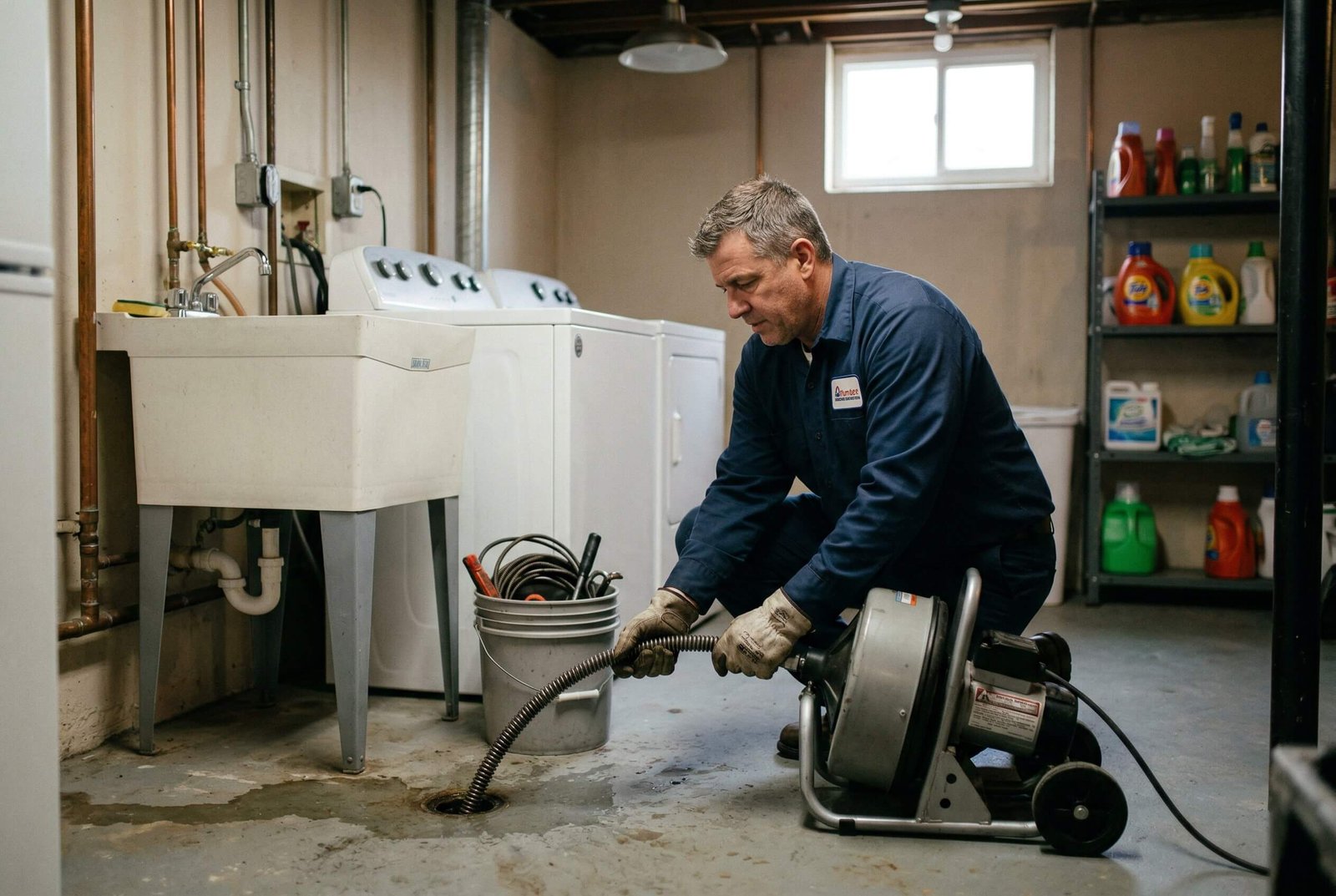
Basement, garage, and laundry drains are very different from the typical sinks, showers, or bathtubs found inside a home—and that difference is exactly why the cost to clean them can be higher and more unpredictable.
Most homeowners assume a clogged floor drain or laundry line is just another simple blockage. But in reality, these drains are often connected much closer to the main sewer line or deeper sections of the plumbing system. That means when a problem shows up here, it’s not always a small, isolated clog—it can be a sign of buildup or restriction further down the line.
Another important difference is the type of material these drains handle. Basement and garage drains often collect dirt, mud, sand, and debris brought in from outside. Laundry drains deal with lint, detergent residue, and fabric particles that slowly build up inside the pipe. These materials behave very differently from hair or soap—they tend to settle, compact, and create thicker, heavier blockages that are harder to remove.
The location also plays a role. Floor drains are lower in the system, which means they are often the first place where deeper plumbing issues become visible. If there’s a partial blockage in the main line, water may back up through a basement drain before it affects other fixtures. That shifts the problem from a simple cleaning job to something more involved.
Because of these factors, the cost isn’t just based on “clearing a clog.” It’s based on how deep the issue is, what kind of material is causing it, and whether the problem is isolated or part of a larger system restriction.
Understanding how these drains work—and why they clog differently—is what helps you make sense of the pricing. It also helps you recognize when the issue is small and manageable, and when it may require a more thorough and higher-cost solution.
What This Page Covers
ToggleAverage Cost to Clean Basement, Garage & Laundry Drains
Cleaning basement, garage, and laundry drains usually costs more than typical household drains—and the reason is simple: these drains are deeper, dirtier, and often connected closer to the main sewer line. That combination increases both the difficulty and the time required to properly clear them.
In most residential situations, you can expect:
- $150 – $300 → light blockage, early-stage buildup
- $300 – $500 → moderate clog, deeper or more compacted
- $500 – $900+ → severe blockage, main line involvement, or heavy debris
These ranges are higher than sink or shower drains because the job is rarely just about removing a small clog. In many cases, the plumber is dealing with sediment, sludge, lint buildup, or partial restrictions deeper in the system.
What “average cost” includes here is also slightly different. These jobs often require longer cables, more powerful equipment, and more time spent locating the exact issue. Basement and garage drains, especially, may need additional effort just to access and assess properly before cleaning even begins.
Costs stay on the lower end when:
- The blockage is near the drain opening
- The issue is recent and isolated
- Water is still draining slowly
Costs move higher when:
- The clog sits deeper in the line
- Debris has settled and compacted over time
- Multiple drains are showing signs of backup
- The main sewer line may be partially blocked
Another important difference is that these drains are more likely to reveal bigger underlying problems. A clogged laundry drain might just be lint buildup—but it could also be a sign of a restricted main line. A basement floor drain backing up might not be the problem itself—it might be where the problem shows up first.
That’s why pricing varies more in these situations. The plumber isn’t just clearing a visible clog—they’re often determining whether the issue is local or part of a larger system.
The key takeaway is this:
The “average cost” is only accurate when the problem is isolated.
Once the blockage involves deeper pipes or heavier buildup, the job becomes more complex—and the pricing reflects that.
Cost by Drain Type
Basement, garage, and laundry drains may look similar because they’re all utility drains, but the way they clog—and the work required to clean them—is very different. That difference is what drives the cost. It’s not just about clearing a blockage; it’s about what kind of material is inside the pipe, how it behaves over time, and how deep the issue goes.
Below is a clearer breakdown with both real-world explanation and cost ranges.
Basement Floor Drain Cost
Basement floor drains are often tied closely to the main sewer line, which makes them more complex than typical household drains. When water backs up here, it’s not always because of something sitting right below the drain. In many cases, the issue is deeper in the system, and the basement drain is simply where the problem shows up first.
If the clog is local—caused by dirt or debris near the surface—the job is relatively simple and stays within a moderate price range. But when the blockage is connected to the main line or deeper buildup, the plumber has to spend more time diagnosing and clearing it properly. That’s where costs increase.
- Typical cost range:
- $200 – $400 → minor or localized blockage
- $400 – $800+ → deeper issue or main line involvement
Costs increase when:
- The problem affects multiple drains in the home
- Water backs up instead of draining slowly
- The blockage is not directly accessible from the drain
In many cases, the higher cost comes from the uncertainty—plumbers need to determine whether it’s a simple clog or part of a larger system restriction.
Garage Drain Cost
Garage drains handle much heavier and more stubborn materials compared to indoor drains. Instead of soap or hair, they collect mud, sand, dirt, and sometimes oil residue. These materials don’t just clog—they settle and compact inside the pipe, making them harder to remove.
Over time, layers of sediment build up and reduce the pipe’s capacity. By the time the drain stops working properly, the blockage is often dense and spread over a section of the pipe rather than a single point.
- Typical cost range:
- $200 – $400 → light debris or early-stage buildup
- $400 – $700+ → compacted sediment or deeper clog
Costs increase when:
- Dirt and sand have hardened inside the pipe
- The blockage extends further into the drainage line
- Multiple cleaning attempts are needed to fully clear it
Because of the type of material involved, garage drain cleaning often requires more effort than standard indoor drains—even if the problem seems similar on the surface.
Laundry Drain Cost
Laundry drains clog in a slower but more persistent way. Instead of forming a single blockage, lint, detergent, and fabric residue gradually build up along the inside of the pipe. This creates a narrowing effect, where water can still pass through—but less efficiently over time.
At first, this may only cause slow drainage during washing cycles. But as buildup increases, the restriction becomes more serious, and water may begin to back up. The challenge here is that the clog is often spread out, not concentrated in one spot.
- Typical cost range:
- $150 – $300 → early-stage lint buildup
- $300 – $600+ → heavy buildup or recurring issue
Costs increase when:
- The drain has been slow for a long time
- Buildup coats a larger section of the pipe
- Previous cleanings only partially solved the problem
Laundry drains often become repeat issues when only a quick fix is done. That’s why sometimes a slightly higher-cost cleaning upfront can prevent multiple service calls later.
The key takeaway is this:
The type of drain determines the type of clog—and the type of clog determines the cost.
Basement drains can signal deeper system issues. Garage drains deal with heavy, compacted debris. Laundry drains slowly restrict flow over time. Once you understand what’s happening inside the pipe, the pricing becomes much easier to understand—and much easier to judge as fair or excessive.
Cost by Type of Problem
For basement, garage, and laundry drains, the type of problem inside the pipe matters more than the drain itself. Two basement drains can have completely different costs depending on whether the issue is a light blockage near the surface or a deeper restriction in the system.
From a plumber’s perspective, the pricing is based on one question:
“How difficult is it to fully restore flow—not just temporarily open it?”
Surface-Level Blockage vs Deep Pipe Blockage
Some clogs sit close to the drain opening. These are usually caused by recent debris buildup and can be cleared relatively quickly. In these cases, the plumber can access the clog directly, remove it, and restore flow without much effort.
But when the blockage is deeper in the pipe, the job becomes more involved. The plumber needs to locate the clog, reach it with longer equipment, and sometimes make multiple attempts to fully clear it. This increases both time and cost.
- Typical cost difference:
- Surface-level clog → $150 – $300
- Deep blockage → $300 – $600+
Costs increase when:
- The exact location of the clog is unclear
- The blockage is several feet into the line
- More time is needed to reach and clear it
The deeper the clog, the less predictable—and more expensive—the job becomes.
Sludge, Dirt, and Sediment Buildup
This is especially common in garage and basement drains. Instead of a single obstruction, the pipe gradually fills with layers of dirt, sand, lint, or residue. These materials don’t move easily—they settle and compact over time.
The difficulty here is not just breaking through the clog, but removing enough of the buildup to restore proper flow. That often requires more time and effort compared to a simple blockage.
- Typical cost range:
- $250 – $500 → moderate buildup
- $500 – $800+ → heavy or compacted sediment
Costs increase when:
- The material inside the pipe has hardened
- The buildup extends over a longer section
- Multiple cleaning passes are required
These jobs are more labor-intensive, which is why they fall into a higher price range.
Main Line Involvement (Critical Cost Factor)
This is one of the biggest cost drivers. If the issue is not isolated to one drain but connected to the main sewer line, the job becomes significantly more complex.
You may notice signs like:
- Multiple drains backing up at the same time
- Water rising from a basement floor drain
- Gurgling sounds in different fixtures
In these cases, the plumber is not just clearing a single drain—they’re dealing with a restriction affecting the entire system.
- Typical cost range:
- $400 – $900+ depending on severity
Costs increase because:
- The blockage is deeper and harder to reach
- More powerful equipment may be needed
- The job requires more time and careful handling
Main line issues are where costs move from moderate to high quickly.
Water Backup vs Slow Drainage
The way the problem shows up also affects pricing.
A slow drain usually indicates an early-stage or partial blockage. These are easier to handle and stay in the lower cost range. But when water starts backing up—especially in basement or garage drains—it signals a more serious restriction.
- Slow drainage → lower cost, easier fix
- Water backup → higher cost, deeper issue
Backup situations often require more thorough cleaning because simply opening a path isn’t enough. The plumber needs to ensure the system can handle full flow again.
The key takeaway is this:
You’re not paying for the drain—you’re paying for the condition inside the pipe.
A light, surface-level clog stays inexpensive. A deep, compacted, or system-wide issue naturally costs more because it takes more effort to fix properly.
Understanding the type of problem is what helps you judge whether the price you’re quoted actually makes sense.
Cost by Cleaning Method
For basement, garage, and laundry drains, the cleaning method has a bigger impact on cost than most homeowners expect. These drains often deal with heavier buildup and deeper connections, so the method used isn’t just about clearing a clog—it’s about how thoroughly the pipe needs to be cleaned to prevent the problem from coming back.
Snaking (Basic and Most Common Method)
Snaking is usually the first step for most drain issues. A cable is inserted into the pipe to break through or pull out the blockage, restoring water flow. This method is effective when the clog is localized and hasn’t spread along the pipe.
For these types of drains, snaking works well when the problem is near the surface or limited to one section. It’s quick, requires minimal setup, and keeps costs lower because the job can often be completed in a short time.
- Typical cost range:
- $150 – $350
Costs stay in this range when:
- The blockage is recent and isolated
- The pipe is not heavily coated with buildup
- Water is still draining partially
However, snaking is often a temporary solution in these drains. It clears a path through the blockage but doesn’t remove all the material lining the pipe, especially in cases involving sediment or lint buildup.
Powered Drain Cleaning (Heavier Snaking Equipment)
When the clog is deeper or more compacted, plumbers may use more powerful machines instead of basic tools. These machines apply greater force and can reach further into the system, making them more effective for tougher blockages.
This method increases cost slightly because it takes more time and effort, and the equipment itself is more advanced. It’s often used when basic snaking isn’t enough to fully clear the line.
- Typical cost range:
- $250 – $500
Costs increase when:
- The clog is dense and difficult to break
- The blockage is deeper in the pipe
- Multiple passes are needed to restore flow
This method sits in the middle—more effective than basic snaking, but still not a full pipe cleaning solution.
Hydro Jetting (Deep Cleaning Method)
Hydro jetting is a more advanced method that uses high-pressure water to clean the inside of the pipe. Instead of just breaking through a blockage, it removes buildup along the pipe walls, including grease, sludge, lint, and sediment.
This method is more common for basement and garage drains because of the type of debris involved and their connection to deeper plumbing lines. It’s also used when problems keep coming back after basic cleaning.
- Typical cost range:
- $400 – $900+
Costs are higher because:
- The equipment is specialized
- Setup and inspection take more time
- The cleaning is more thorough and time-consuming
Hydro jetting is usually recommended when the goal is not just to fix the immediate problem, but to restore the pipe and prevent future clogs.
Camera Inspection (Often Needed for These Drains)
For basement and deeper drains, plumbers often use a camera inspection to see what’s happening inside the pipe before choosing a method. This helps confirm whether the issue is a simple clog or something more serious like buildup, damage, or main line involvement.
- Typical additional cost:
- $100 – $300
While this adds to the total cost, it can prevent unnecessary work or the wrong method being used. It’s especially valuable when the cause of the problem isn’t obvious.
Why Method Choice Changes the Cost
The difference between methods comes down to how much of the pipe is being addressed.
- Snaking → clears the immediate blockage
- Powered cleaning → handles tougher, deeper clogs
- Hydro jetting → cleans the entire pipe
That’s why pricing varies so much. A quick fix costs less because it takes less time and effort. A complete cleaning costs more because it solves a bigger problem.
The key takeaway is this:
You’re not just paying to remove a clog—you’re paying for how completely the pipe is cleaned.
Choosing the right method based on the actual condition of the drain is what prevents both unnecessary spending and repeat problems.
What Affects the Final Cost
Even after understanding the drain type and cleaning method, the final price can still vary quite a bit. That’s because basement, garage, and laundry drains are often less predictable than standard indoor drains. The cost is shaped by how deep the problem is, how difficult it is to access, and how much work is required to fully restore flow.
Depth and Distance of the Blockage
One of the biggest cost factors is how far the clog is inside the pipe. If the blockage is close to the drain opening, it can usually be cleared quickly. But these types of drains are often connected to longer sections of piping, which means the clog can sit much deeper in the system.
When the plumber has to run equipment further into the line, it takes more time to locate and clear the blockage. In some cases, multiple attempts are needed to fully restore flow, especially if the clog is not concentrated in one spot.
- Costs increase when:
- The blockage is several feet into the system
- The exact location is difficult to identify
- Longer equipment is required
The deeper the clog, the more time and effort the job requires—and that directly increases cost.
Accessibility of the Drain
Accessibility plays a major role, especially with floor drains and utility drains. While basement and garage drains are often visible, the actual pipe connections may not always be easy to work with.
If the plumber can access the line directly through a cleanout or open drain, the job stays simpler. But if access is limited or requires extra steps, the cost increases.
- Costs increase when:
- Access points are not available or difficult to reach
- Equipment needs to be routed through alternate entry points
- The work area is tight or restricted
Even a simple clog can become more expensive if it takes longer just to reach it.
Type and Weight of Debris
Unlike typical indoor drains, these drains often deal with heavier and more stubborn materials. Dirt, sand, lint, sludge, and residue behave very differently from hair or soap. They settle, compact, and sometimes harden inside the pipe.
This makes the cleaning process more labor-intensive. Breaking through compacted material takes more time, and removing enough of it to restore proper flow can require repeated effort.
- Costs increase when:
- Debris is dense or hardened
- Buildup has accumulated over time
- The material is spread along the pipe rather than in one spot
Heavier debris means more work—and more work means higher cost.
Time Required to Complete the Job
Time is one of the most direct cost factors. A quick job that takes 20–30 minutes will always cost less than a job that takes over an hour or requires multiple passes.
With basement, garage, and laundry drains, jobs often take longer because:
- The clog may not be immediately accessible
- The material is harder to remove
- Additional steps like inspection may be needed
Two similar problems can have very different costs simply because one takes longer to fully resolve.
Risk of Main Sewer Line Issues
These drains are often connected close to the main line, which means there’s always a possibility that the issue goes beyond a single drain. When there’s any indication of main line involvement, the plumber has to proceed more carefully.
This may involve:
- Additional inspection
- More thorough cleaning
- Use of advanced equipment
- Costs increase when:
- Multiple drains are affected
- Water backs up instead of draining slowly
- Signs point to deeper system restrictions
This is one of the biggest reasons why pricing can vary so much—it’s not always clear at first whether the problem is local or system-wide.
The key takeaway is this:
The final cost depends on how difficult the job is—not just what drain is clogged.
A shallow, easy-to-access clog with light debris will stay affordable. A deep, hard-to-reach blockage with heavy buildup or system involvement will naturally cost more.
Once you understand these factors, it becomes much easier to evaluate a quote—and recognize whether the price reflects the actual work required.
Emergency vs Standard Pricing
With basement, garage, and laundry drains, timing can have an even bigger impact on cost compared to regular household drains. That’s because these drains are often linked to deeper plumbing lines—and when something goes wrong, it can escalate quickly into a situation that affects the entire home.
Standard (Scheduled) Service
If the drain is slow but still functioning, scheduling service during normal hours keeps the cost within the typical range. The plumber has time to assess the issue properly, bring the right equipment, and complete the job without urgency.
In these cases, you’re paying only for the work itself—not for emergency response.
- Typical pricing stays within:
- $150 – $400 for simpler issues
- $300 – $600 for moderate problems
Costs stay lower when:
- The drain is draining slowly, not fully blocked
- Only one drain is affected
- There is no active overflow or water damage
If the situation allows, waiting for a scheduled appointment is almost always more cost-effective.
Emergency Drain Cleaning Costs
Emergency situations are common with these types of drains because of their location and role in the system. When a basement or garage drain backs up, it can quickly lead to standing water, flooding, or contamination.
In these cases, plumbers are called outside regular hours, and pricing increases accordingly.
- Typical emergency increase:
- +$150 to $400+ on top of standard pricing
This applies regardless of the method used—snaking or hydro jetting—because the higher cost is driven by urgency, not just the work itself.
Costs increase because:
- The plumber is responding immediately
- Work is done after hours or on weekends
- The situation may involve higher risk (water damage, contamination)
When These Drains Become an Emergency
Unlike a slow kitchen sink, these drains can become urgent much faster. That’s because they are often the lowest point in the system—meaning water backs up here first.
Emergency situations typically include:
- Water backing up onto basement or garage floors
- Laundry drain overflowing during use
- Multiple drains in the home backing up at once
- Signs of main sewer line blockage
In these cases, delaying service can lead to property damage, sanitation issues, and higher repair costs later.
Why Emergency Jobs Often Cost More Than Expected
Another important factor is that emergency situations are often tied to more severe problems. It’s not just that the timing is urgent—it’s that the underlying issue is usually deeper or more complex.
For example:
- A slow laundry drain during the day → basic cleaning
- A basement drain backing up at night → possible main line issue
This means you’re often paying for both:
- Emergency service rates
- A more advanced or time-consuming cleaning method
The Real Cost Difference
A job that might cost $250–$400 during normal hours can rise to $500–$900 or more in an emergency—especially if the issue involves deeper system cleaning.
The key takeaway is simple:
With these drains, timing and severity often go together—and both increase cost.
If the problem is minor, scheduling service can save money. But when water starts backing up or the system is at risk, paying for emergency service is usually the right decision to prevent bigger damage.
How to Avoid Overpaying
With basement, garage, and laundry drains, overpaying usually doesn’t come from high prices—it comes from misunderstanding the problem. These drains often sit closer to the main line, which means a small issue can look serious, and a serious issue can be mistaken for something simple. Knowing the difference is what keeps your costs under control.
When a Simple Cleaning Should Stay Affordable
Not every basement, garage, or laundry drain issue requires expensive work. If the blockage is recent and limited to one drain, the job should stay within a lower or moderate range.
You’re likely dealing with a simple issue when:
- Only one drain is affected
- Water drains slowly but does not back up
- The problem started recently
- There are no signs of other plumbing issues in the home
In these situations, basic cleaning is usually enough. Paying for advanced methods without a clear reason often adds unnecessary cost.
Signs the Problem May Be Bigger Than It Looks
These drains are often connected close to the main sewer line, which means they can reveal deeper issues. If the problem involves more than just the drain itself, the cost will naturally increase—but that increase is often justified.
Be cautious when you notice:
- Multiple drains in the home acting up
- Water backing up instead of draining
- Gurgling sounds from other fixtures
- Repeated issues in the same drain
In these cases, trying to fix the problem cheaply can lead to repeated service calls or incomplete solutions.
When Paying More Is Actually the Right Choice
Avoiding overpaying doesn’t mean always choosing the cheapest option. In many cases, a higher-cost service solves the problem properly and prevents future expenses.
Paying more is justified when:
- The blockage is deep in the system
- The drain keeps clogging repeatedly
- There is buildup along the pipe, not just one clog
- The main line may be partially restricted
In these situations, a more thorough cleaning can prevent multiple visits and higher total costs over time.
Why Temporary Fixes Add Up
One of the most common patterns is choosing a quick, low-cost fix multiple times instead of addressing the root problem.
For example:
- First cleaning → $250
- Second cleaning → $300
- Third cleaning → $350
What started as a “cheap fix” becomes more expensive than a single, more complete solution that could have resolved the issue earlier.
This is especially common with laundry and basement drains, where buildup tends to return if not fully cleared.
Simple Ways to Prevent Future Costs
These drains are more exposed to debris and buildup, so small preventive habits can make a noticeable difference over time.
- Keep dirt, mud, and debris out of garage drains
- Use lint traps and maintain washing machine filters
- Avoid letting sediment settle in basement drains
- Flush drains periodically to reduce buildup
Prevention doesn’t eliminate all problems, but it helps keep them smaller and easier to fix.
Questions to Ask Before Approving Service
Before agreeing to any work, ask clear and practical questions:
- What is causing the blockage?
- Is the issue local or deeper in the system?
- Will this fix fully solve the problem or just relieve it temporarily?
- Is a more advanced method necessary?
- Could the problem return if treated this way?
A good plumber should be able to explain the situation clearly. If the explanation doesn’t match the cost, it’s worth asking for more detail.
The key takeaway is this:
Overpaying happens when the solution doesn’t match the problem.
A simple clog should stay affordable. A deeper system issue may cost more—but should solve the problem completely. Understanding that difference is what helps you make confident decisions and avoid unnecessary expenses.
Final Thoughts
Basement, garage, and laundry drain cleaning costs can vary more than most homeowners expect—but once you understand how these drains work, the pricing becomes much easier to make sense of.
These aren’t simple fixture drains. They sit lower in the system, handle heavier debris, and are often closer to the main sewer line. That means when a problem shows up, it’s not always just a surface-level clog. In some cases, it’s a sign of buildup deeper in the pipe or even a restriction affecting multiple drains in the home.
That’s why the cost can range from a relatively simple cleaning to a more involved job. A light blockage near the drain opening should stay affordable and quick to fix. But when the issue involves compacted sediment, lint buildup, or deeper line restrictions, the work becomes more time-consuming—and the cost increases accordingly.
The most important thing to focus on is not just the price, but what the price is solving. A lower-cost fix that only clears part of the problem can lead to repeat issues. A higher-cost service that fully restores flow can actually save money over time by preventing multiple service calls.
In simple terms:
If the problem is shallow, the cost should be low. If the problem is deeper, the solution needs to match it.
Once you understand that balance, you can confidently evaluate any quote, avoid unnecessary spending, and make sure you’re paying for the right solution—not just the quickest one.