
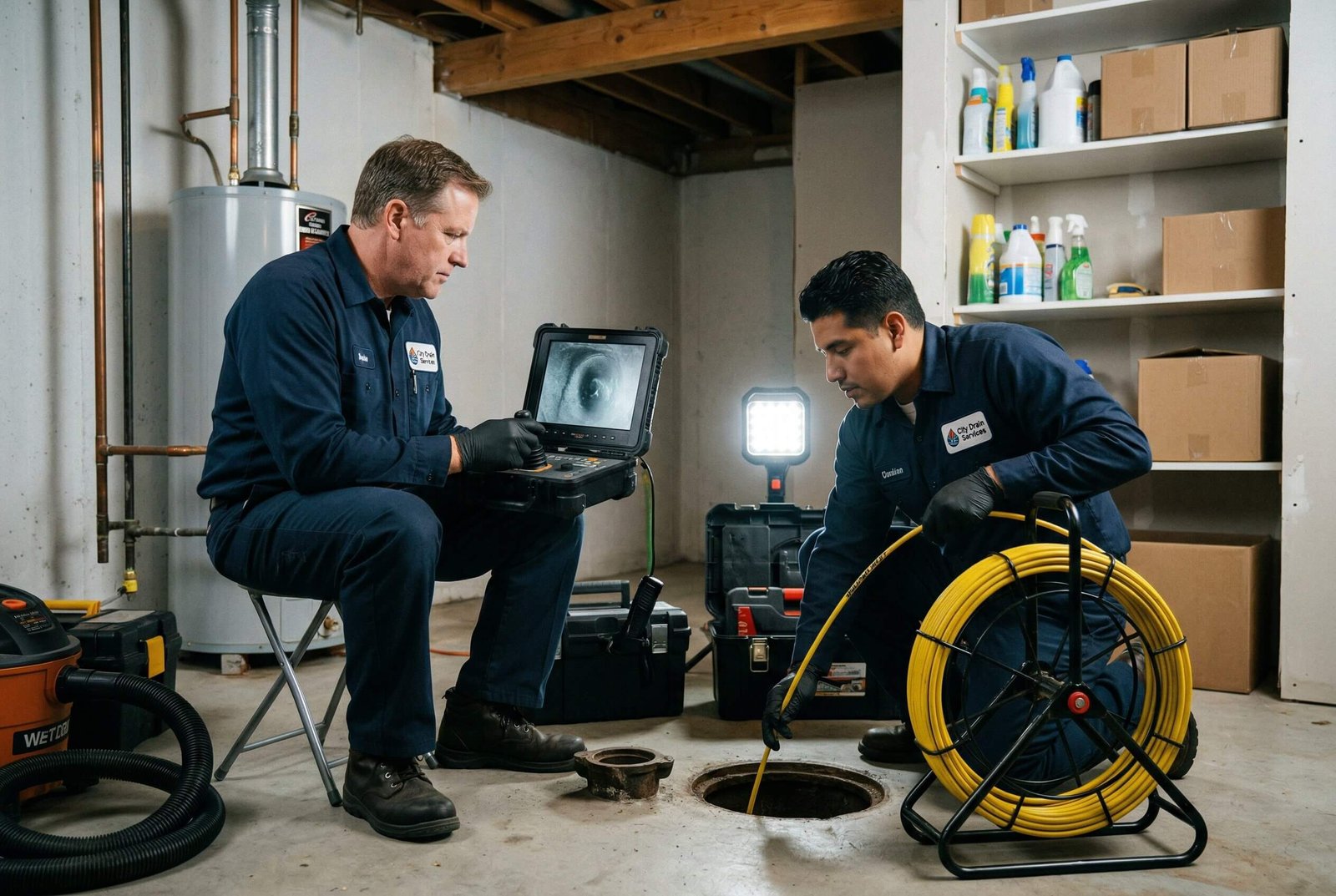
Drain problems don’t always show their true cause right away. You might notice slow drainage, recurring clogs, or occasional backups, but what’s actually happening inside the pipe is often unclear. In many homes, these issues are treated based on symptoms rather than the root cause, which can lead to repeated cleaning attempts without fully solving the problem. What looks like a simple clog on the surface can sometimes be buildup, root intrusion, or even structural damage deeper in the line.
This is where a drain camera inspection becomes useful. Instead of relying on guesswork, it allows the inside of the pipe to be seen directly in real time. A small waterproof camera is guided through the drain or sewer line, showing exactly what’s causing the issue and where it’s located. This changes the approach from trial-and-error to a more informed process, where decisions are based on actual conditions inside the system.
Drain camera inspection is not a repair method—it’s a diagnostic step that helps determine what needs to be done next. In situations where problems keep coming back or don’t respond to basic cleaning, having a clear view inside the pipe helps avoid unnecessary work and ensures the right solution is chosen from the start.
What This Page Covers
ToggleWhat Drain Camera Inspection Actually Means
A drain camera inspection is a way to look inside your plumbing system without opening walls or digging up pipes. It uses a small, waterproof camera attached to a flexible cable that is guided through the drain or sewer line. As it moves through the pipe, it sends real-time video to a monitor, allowing the condition of the pipe to be seen clearly. In real situations, this removes the need to guess what’s causing the problem and replaces it with direct visual confirmation.
This type of inspection is not about fixing anything on its own—it’s about understanding what’s happening inside the pipe so the right decision can be made. Whether the issue is buildup, roots, or pipe damage, seeing it directly changes how the problem is approached and avoids unnecessary or repeated work.
What a Drain Camera Inspection Actually Shows
Inside a pipe, problems are often hidden from the surface. A camera inspection reveals what cannot be seen from outside, including both obvious blockages and early-stage issues that haven’t fully developed yet.
In real conditions, the camera can show:
- Buildup along pipe walls such as grease or sludge
- Hair or debris causing partial blockages
- Tree roots entering the pipe
- Cracks, corrosion, or signs of wear
- Foreign objects lodged inside the line
This visual clarity helps connect the symptoms you’re seeing in the home to the actual condition inside the pipe.
How It Differs From Basic Drain Cleaning
Basic drain cleaning focuses on restoring flow, often without knowing the exact cause of the blockage. While this can solve the immediate problem, it may not address what’s actually creating it.
A camera inspection is different because:
- It identifies the exact cause before any cleaning is done
- It shows the location and severity of the issue
- It helps determine the most appropriate solution
This reduces trial-and-error and helps avoid repeating the same process without long-term results.
Diagnosis vs Fixing the Problem
One important distinction is that a camera inspection does not fix the issue—it diagnoses it. It provides the information needed to decide what kind of work, if any, should be done next.
In practice, this means:
- You understand whether the issue is minor or more serious
- You can choose between cleaning, repair, or no action
- You avoid unnecessary work based on assumptions
This step is especially useful when problems are recurring or unclear.
From Guesswork to Visual Confirmation
Without inspection, plumbing issues are often approached based on symptoms alone. A slow drain might be treated as a simple clog, even if the real cause is deeper in the system.
Camera inspection changes this by:
- Showing the actual condition inside the pipe
- Confirming whether previous fixes addressed the real issue
- Allowing decisions to be based on evidence rather than assumption
This shift from guesswork to visual confirmation is what makes the process more accurate and effective.
When You Actually Need a Drain Camera Inspection
Not every drain issue requires a camera inspection, but there are situations where relying on symptoms alone isn’t enough to understand what’s really happening. In many homes, problems like slow drains or clogs are treated as isolated issues, even when the root cause is deeper in the system. When those problems keep returning or don’t respond to basic cleaning, it usually means something is being missed.
A drain camera inspection becomes useful when there’s uncertainty—when the cause isn’t obvious, or when previous attempts haven’t solved the issue. It allows the situation to be understood clearly before more work is done, helping avoid repeated fixes and unnecessary costs.
Recurring Clogs With No Clear Cause
If a drain keeps clogging even after being cleared, it’s often a sign that something more than a simple blockage is present. The issue may be buildup along the pipe walls, a partial obstruction, or something deeper in the line.
In real situations:
- The drain works temporarily, then slows again
- Cleaning methods provide only short-term relief
- The same fixture is affected repeatedly
A camera inspection helps identify what’s causing the pattern rather than treating it repeatedly.
Slow Drains That Don’t Improve
Sometimes drains don’t fully clog but remain consistently slow, even after cleaning. This often points to buildup that hasn’t been completely removed or a restriction further down the pipe.
Common signs include:
- Water draining slower than usual over time
- No noticeable improvement after basic cleaning
- Gradual worsening rather than sudden blockage
Inspection helps determine whether the issue is surface-level or deeper in the system.
Suspected Sewer Line Problems
When multiple fixtures in the home start showing issues at the same time, the problem may be in the main sewer line. This is more complex than a single drain issue and usually requires a broader view of the system.
This may be suspected when:
- Multiple drains are slow or backing up
- Toilets and sinks are affected together
- Problems appear across different areas of the home
A camera inspection can trace the issue through the main line and locate the exact problem area.
Before Major Repairs or Replacement
Before committing to repairs like sewer line replacement or extensive work, it’s important to confirm that the issue actually requires it. Without inspection, decisions can be based on assumptions rather than actual conditions.
Inspection is often used to:
- Confirm the severity of the problem
- Identify whether repair or cleaning is needed
- Avoid unnecessary or excessive work
This helps ensure that any major decision is based on accurate information.
Buying or Inspecting a Home
In some cases, a drain camera inspection is done as part of a home evaluation, especially in older properties. Plumbing issues are not always visible during standard inspections, but they can become costly if discovered later.
This is useful when:
- The home has older plumbing
- There are signs of past drain issues
- You want to understand the condition of the sewer line
It provides a clearer picture of the system before taking ownership.
Early vs Advanced Situations
A camera inspection can be used at different stages of a problem. In early situations, it helps identify developing issues before they become severe. In more advanced cases, it’s used to diagnose complex or recurring problems.
In early use, it can prevent escalation. In advanced situations, it helps determine the next step with clarity. The decision usually depends on how persistent or unclear the issue has become.
How Drain Camera Inspection Is Performed (Step-by-Step)
A drain camera inspection follows a structured process designed to locate and understand problems inside the pipe without guesswork. In real situations, the effectiveness of the inspection depends on how carefully each step is carried out—from identifying the right access point to interpreting what’s seen on the screen. It’s not just about inserting a camera; it’s about tracking the condition of the pipe in a way that leads to clear, usable answers.
The process is usually quick compared to repair work, but it requires attention to detail. Each step builds toward identifying the exact issue, its location, and what it means for the overall system.
Initial Assessment and Identifying Symptoms
The process begins with understanding what’s happening in the home. This includes listening to the symptoms you’re experiencing and determining whether the issue appears isolated or part of a larger problem.
At this stage, the focus is on:
- How long the issue has been occurring
- Which fixtures are affected
- Whether the problem is recurring or new
This helps guide where the inspection should begin and what areas need closer attention.
Accessing the Drain or Sewer Line
Before inserting the camera, an entry point into the plumbing system needs to be identified. This could be through a cleanout, a drain opening, or another accessible point in the system.
In practical situations:
- Cleanouts provide the easiest access to main lines
- Interior drains may be used for smaller sections
- The access point determines how far the camera can travel
Choosing the right entry point ensures the inspection covers the necessary area.
Inserting the Camera Into the Pipe
Once access is established, the camera is inserted into the pipe. It is attached to a flexible cable that can move through bends and turns within the plumbing system.
During insertion:
- The camera moves gradually through the pipe
- The interior condition is displayed in real time
- The operator controls direction and speed carefully
This allows for a steady and detailed view of the pipe’s interior.
Real-Time Inspection and Tracking
As the camera moves through the pipe, the condition of the interior is observed continuously. This includes looking for buildup, obstructions, or any signs of damage.
In real inspections:
- The operator watches for changes in pipe condition
- Problem areas are noted as they appear
- The length of the cable helps estimate location
This real-time view is what makes the inspection accurate and reliable.
Identifying Problem Areas
When an issue is found, the inspection focuses on understanding its nature and severity. This could range from minor buildup to more significant structural problems.
Common findings include:
- Partial or full blockages
- Grease or debris buildup
- Tree root intrusion
- Cracks or misalignment in the pipe
Identifying the exact issue helps determine what kind of solution is needed.
Marking the Location of Issues
In many cases, the location of the problem is marked from the surface. This is especially useful when repairs or excavation might be needed.
This step helps:
- Pinpoint the exact position of the issue
- Avoid unnecessary digging or disruption
- Guide targeted repair or cleaning work
Accurate location saves both time and effort in the next steps.
Reviewing Findings and Next Steps
After the inspection is complete, the findings are reviewed and explained. This includes what was found, where it is, and what it means for the plumbing system.
At this stage:
- The cause of the problem is clearly understood
- Possible solutions are identified
- Decisions can be made based on actual conditions
This final step turns the inspection into a practical decision-making tool rather than just a visual check.
What Problems a Camera Inspection Can Detect
A drain camera inspection is valuable because it reveals not just that a problem exists, but what kind of problem it is. In many homes, different issues can produce similar symptoms—slow drainage, backups, or recurring clogs—but the underlying causes can be very different. Without seeing inside the pipe, it’s difficult to distinguish between buildup, structural damage, or external intrusion.
By providing a clear visual of the pipe interior, a camera inspection helps separate these possibilities and identify the exact condition. This allows the next step—whether it’s cleaning, repair, or monitoring—to be based on what’s actually present rather than assumptions.
Grease and Sludge Buildup
One of the most common findings during a camera inspection is buildup along the pipe walls. Over time, grease, soap residue, and other materials stick to the interior surface, gradually narrowing the pipe.
In real situations:
- The buildup reduces water flow capacity
- It traps additional debris passing through
- It leads to slow drainage and recurring clogs
This type of issue is often not visible from outside but becomes clear during inspection.
Tree Root Intrusion
Tree roots are a frequent cause of problems in sewer lines, especially in older systems. Roots naturally seek moisture and can enter pipes through small openings or joints.
During inspection, this may appear as:
- Fine roots entering the pipe initially
- Dense root masses blocking flow over time
- Repeated intrusion even after clearing
Identifying root intrusion early helps prevent more severe blockage or pipe damage.
Pipe Cracks and Corrosion
Pipes can deteriorate over time due to age, material wear, or environmental conditions. These issues may not cause immediate blockage but can lead to long-term problems.
Inspection can reveal:
- Cracks along the pipe walls
- Corrosion weakening the structure
- Areas where leaks may develop
These conditions often require repair rather than cleaning.
Misaligned or Collapsed Pipes
In some cases, sections of the pipe may shift, sink, or collapse due to ground movement or structural failure. This creates areas where flow is restricted or completely blocked.
Common signs include:
- Sections where the pipe is no longer aligned
- Areas where debris accumulates due to uneven flow
- Partial or full collapse of the pipe
These issues cannot be resolved through cleaning alone and require structural correction.
Foreign Objects and Blockages
Objects that don’t belong in the plumbing system can become lodged in the pipe and cause obstruction. These may enter accidentally or through improper disposal.
Examples include:
- Solid objects blocking flow
- Debris caught at bends or joints
- Materials that do not break down easily
A camera inspection helps locate these precisely so they can be removed effectively.
Hidden Leaks and Damage
Some problems develop gradually and are not immediately noticeable. Small leaks or early-stage damage may not cause visible symptoms until they worsen.
Inspection can detect:
- Areas where water may be escaping
- Early signs of structural weakness
- Conditions that could lead to future issues
Catching these early allows for more controlled and less extensive repairs.
Drain Camera Inspection vs Traditional Diagnosis (Decision Section)
When a drain problem shows up, the first response is often based on symptoms—slow water, gurgling sounds, or a clog that keeps coming back. Traditional diagnosis relies on experience and patterns to guess what might be happening inside the pipe. In many cases, this works for simple issues. But when the problem is unclear or keeps repeating, guessing can lead to multiple attempts without actually resolving the root cause.
A drain camera inspection changes this approach by replacing assumptions with direct visual evidence. Instead of trying different solutions to see what works, the inspection shows exactly what’s inside the pipe, allowing the solution to match the actual condition rather than the symptoms alone.
Guess-Based Diagnosis vs Visual Inspection
Traditional diagnosis depends on interpreting signs from outside the pipe. While experienced plumbers can often make accurate assessments, there’s still a level of uncertainty without seeing inside.
In real situations:
- Symptoms may point to more than one possible cause
- Similar issues can have completely different origins
- Initial fixes may not address the actual problem
A camera inspection removes this uncertainty by showing the exact condition inside the pipe, making the diagnosis more precise.
Trial-and-Error vs Targeted Solution
Without inspection, the process can involve trying one method after another until something works. This might include snaking, chemical cleaning, or repeated attempts at clearing the drain.
This approach can lead to:
- Multiple service visits
- Temporary relief instead of a full solution
- Increased time and cost over repeated attempts
With a camera inspection, the solution becomes targeted. The problem is identified first, and the method used is chosen based on what is actually needed.
When Basic Diagnosis Is Enough
There are situations where a full inspection isn’t necessary. For simple, isolated clogs that respond well to basic cleaning, traditional methods are often sufficient.
This is usually the case when:
- The clog is recent and clearly defined
- Only one fixture is affected
- The issue resolves fully after cleaning
In these situations, adding inspection may not provide additional value.
When Camera Inspection Becomes Necessary
A camera inspection becomes more relevant when the problem is unclear, recurring, or more complex than it appears on the surface.
It is typically needed when:
- Clogs keep returning after cleaning
- Multiple fixtures are affected
- There are signs of deeper system issues
- Major repair decisions are being considered
In these cases, having a clear view inside the pipe helps avoid unnecessary work and ensures the right solution is chosen.
Cost vs Accuracy and Long-Term Value
Traditional diagnosis may seem less expensive upfront because it doesn’t involve additional equipment or inspection. However, if the problem isn’t fully understood, repeated fixes can increase overall cost.
A camera inspection adds an initial cost, but it can:
- Reduce repeated service calls
- Prevent unnecessary repairs
- Provide clarity before major decisions
In real situations, the value comes from accuracy—knowing exactly what’s happening inside the pipe before deciding how to fix it.
Cost of Drain Camera Inspection in the U.S.
The cost of a drain camera inspection depends on how extensive the inspection needs to be and what part of the plumbing system is being evaluated. Unlike basic diagnosis, this service involves specialized equipment and time spent inspecting the pipe in detail. In real situations, the cost reflects the level of accuracy it provides—helping avoid unnecessary work and repeated service calls.
It’s also important to understand that camera inspection is often used as a decision step. Whether it leads to cleaning, repair, or no action at all, the value comes from knowing exactly what’s inside the pipe before moving forward.
Typical Residential Inspection Cost Range
For standard residential inspections, the cost is generally moderate and depends on how far the camera needs to travel and how complex the system is.
Typical pricing includes:
- $100 to $300 for basic drain camera inspection
- Short inspections for localized issues tend to fall on the lower end
These inspections usually focus on a specific section of the plumbing rather than the entire system.
Sewer Line Inspection Cost
Inspecting the main sewer line typically costs more due to the length of the pipe and the complexity of accessing and navigating it.
Typical sewer inspection pricing:
- $250 to $600+ depending on pipe length and accessibility
This type of inspection often provides a more complete view of the system, especially when multiple issues are suspected.
Combined Inspection + Cleaning Pricing
In many cases, camera inspection is performed alongside a cleaning service. Some providers include inspection as part of a larger job, while others charge separately.
Combined service pricing may include:
- Inspection included with drain cleaning
- Discounted inspection when bundled with hydro jetting or snaking
- Separate charge if inspection is done independently
This depends on how the service is structured and what work is required.
Factors That Affect Inspection Cost
Several real-world factors influence the final cost of a camera inspection. These are based on how complex the inspection is and what is required to complete it properly.
Key factors include:
- Pipe length → Longer lines require more time to inspect
- Accessibility → Easy cleanout access vs difficult entry points
- Equipment quality → Higher-resolution cameras may increase cost
- Time required → Complex inspections take longer
- Additional services → Marking, reporting, or follow-up work
These factors explain why pricing can vary even for similar-looking issues.
Limitations of Drain Camera Inspection
A drain camera inspection provides a clear view inside the pipe, but it doesn’t show everything. Like any diagnostic method, it has limitations based on what the camera can physically capture and the condition of the pipe during inspection. In real situations, understanding these limits helps set the right expectations and avoids assuming that the inspection alone will reveal every possible issue.
While it’s highly useful for identifying visible problems, some conditions require additional testing or methods to fully understand what’s happening within the plumbing system.
What It Cannot Detect Clearly
A camera inspection is designed to show the inside surface of the pipe, but it cannot always detect issues that are not visually obvious. Some problems exist beyond what the camera lens can capture directly.
For example:
- Very small leaks that do not visibly affect the pipe surface
- Moisture escaping outside the pipe without internal signs
- Early-stage structural weaknesses not yet visible
In these cases, the pipe may appear normal even though a problem is developing externally.
Visibility Limitations in Certain Conditions
The clarity of the inspection depends on the condition inside the pipe at the time of viewing. If the pipe is filled with water, debris, or heavy buildup, visibility can be reduced.
Common limitations include:
- Cloudy water obscuring the camera view
- Heavy sludge blocking visibility
- Debris preventing the camera from moving freely
These conditions can make it harder to see the full extent of the issue without additional cleaning.
When Additional Testing Is Needed
In some situations, a camera inspection alone isn’t enough to fully diagnose the problem. It may need to be combined with other methods to confirm what’s happening.
This may include:
- Leak detection methods for hidden water loss
- Pressure testing for system integrity
- Smoke testing for sewer gas issues
These approaches provide information that the camera cannot capture visually.
It Diagnoses, But Does Not Fix
One of the most important limitations is that a camera inspection does not solve the problem—it only identifies it. While it provides clarity, the actual issue still needs to be addressed through cleaning, repair, or replacement.
In real situations:
- The inspection guides the next step
- It helps avoid unnecessary work
- It ensures the right method is used
But the solution itself comes after the inspection, not from it.
Where Drain Camera Inspection Is Commonly Used
Drain camera inspection is used in situations where understanding the inside condition of the pipe is important before taking action. It’s not limited to one type of plumbing system—instead, it’s applied wherever problems are unclear, recurring, or potentially more serious than they appear. In real homes, this usually means areas where issues tend to develop over time or where repairs can become costly if the cause isn’t properly identified.
Because it provides a direct view inside the system, it’s often used as a decision-making tool rather than just a troubleshooting step. This helps ensure that any cleaning or repair work is based on actual conditions rather than assumptions.
Residential Drain Systems
In residential settings, camera inspection is commonly used to evaluate everyday drain issues that don’t have an obvious cause. This includes kitchen sinks, bathroom drains, and other frequently used fixtures.
In real situations:
- Homeowners experience recurring clogs or slow drains
- Basic cleaning doesn’t fully resolve the issue
- The cause isn’t clear from outside symptoms
Inspection helps identify whether the issue is buildup, blockage, or something deeper in the system.
Main Sewer Lines
One of the most common uses of camera inspection is in main sewer lines, where problems can affect the entire home. Because all drains connect to this line, any issue here can lead to widespread symptoms.
It is often used when:
- Multiple fixtures are affected at once
- There are signs of backups or slow drainage throughout the home
- The problem cannot be isolated to a single drain
Inspection allows the entire line to be evaluated and the exact problem area to be located.
Older Homes With Aging Pipes
Older homes are more likely to have pipe wear, corrosion, or outdated materials that can develop issues over time. These problems are not always visible until they begin to affect performance.
In these homes:
- Pipes may have hidden damage or deterioration
- Small issues can develop into larger problems
- Preventive inspection can reveal early-stage concerns
Camera inspection provides a clearer understanding of pipe condition without invasive work.
Before Buying or Renovating Property
Camera inspection is also used as part of property evaluation, especially when buying a home or planning renovations. Plumbing issues can be costly if discovered later, so understanding the condition in advance is valuable.
It is commonly used to:
- Check the condition of sewer lines before purchase
- Identify potential repair needs early
- Avoid unexpected plumbing costs after ownership
This helps provide confidence in the condition of the system before making decisions.
Finding Drain Camera Inspection Service Locally
When a drain issue becomes unclear or keeps returning, homeowners usually start looking for a way to get clear answers rather than trying another round of cleaning. At that point, a drain camera inspection becomes part of the decision process. It’s not just about finding someone who can run a camera—it’s about finding a service that understands how to interpret what they see and guide the next step properly.
In real situations, the value of the inspection comes from how it’s used. A quick scan without proper explanation may not help much, but a careful inspection with clear findings can prevent repeated work and unnecessary costs. That’s why choosing the right service locally matters just as much as deciding to do the inspection itself.
When Homeowners Start Looking for Inspection Services
Most people don’t begin with a camera inspection—it usually comes after something isn’t adding up. The problem may not be severe enough for immediate repair, but it’s persistent enough to need a clearer answer.
Common situations include:
- Repeated clogs that return after cleaning
- Slow drains that never fully improve
- Uncertainty about whether the issue is minor or serious
- Considering repair or replacement without clear confirmation
At this stage, the goal shifts from fixing symptoms to understanding the cause.
Importance of Proper Equipment and Clarity
Not all camera inspections provide the same level of detail. The quality of the camera and how the inspection is performed can affect what is actually seen and how useful the results are.
It helps when the service includes:
- Clear video feed showing pipe condition
- Ability to navigate through bends and longer sections
- Proper lighting and resolution for accurate viewing
Equally important is how the findings are explained. The inspection should lead to a clear understanding, not more confusion.
Choosing Providers With Diagnostic Experience
Running a camera through a pipe is only part of the process. Interpreting what’s visible and connecting it to the symptoms in the home requires experience.
In real situations, this means:
- Recognizing the difference between buildup and structural issues
- Understanding which findings need action and which do not
- Avoiding overreaction to minor conditions
This level of interpretation is what turns the inspection into a useful decision tool.
Response Time for Ongoing Issues
If the problem is affecting daily use or worsening over time, response time can become important. While a camera inspection itself is not an emergency repair, it may be needed quickly to understand what’s happening before the situation escalates.
Faster response is useful when:
- The issue is recurring more frequently
- There are signs of deeper system problems
- Decisions about repair or cleaning need to be made soon
Timely inspection helps move from uncertainty to a clear plan without delay.
How to Choose the Right Drain Camera Inspection Provider
Choosing the right provider for a drain camera inspection is less about finding someone who can simply run a camera through the pipe and more about finding someone who can accurately interpret what’s seen. The inspection itself is only part of the value—the real benefit comes from understanding what the findings mean and how they relate to the problem you’re experiencing. In real situations, this is what helps avoid unnecessary repairs or repeated service calls.
A careful, experience-driven approach ensures that the inspection leads to clear answers rather than more uncertainty. It also ensures that any next step—whether cleaning, repair, or no action—is based on actual conditions inside the pipe.
Experience With Diagnostic Inspections
Drain camera inspection is a diagnostic process, which means it requires more than just operating equipment. It involves understanding how different issues appear inside pipes and what they mean for the system.
Experience helps in:
- Identifying subtle signs of buildup or damage
- Distinguishing between minor issues and serious problems
- Connecting visual findings with real-world symptoms
This level of understanding ensures the inspection leads to useful conclusions.
Quality of Equipment and Camera Resolution
The clarity of what’s seen inside the pipe depends heavily on the quality of the camera being used. Higher-resolution cameras provide more detailed visuals, making it easier to identify issues accurately.
Better equipment allows for:
- Clearer visibility of pipe walls and obstructions
- Improved ability to detect smaller issues
- More reliable inspection over longer pipe distances
This can make a significant difference in how accurately the problem is diagnosed.
Ability to Explain Findings Clearly
An inspection is only as useful as the explanation that follows it. After the camera work is done, you should have a clear understanding of what was found and what it means.
A clear explanation should include:
- What was seen inside the pipe
- Where the issue is located
- Whether the problem requires action or monitoring
This clarity helps you make informed decisions without confusion.
Transparency in Pricing and Scope
Before the inspection begins, it should be clear what is included in the service. This avoids misunderstandings and ensures that the scope of work matches your expectations.
Transparency typically involves:
- Clear pricing for the inspection
- Explanation of what areas will be inspected
- Understanding whether additional services are included
This helps ensure there are no surprises during or after the process.
Common Mistakes Homeowners Make
When dealing with unclear drain problems, it’s easy to focus on quick answers rather than accurate ones. This can lead to decisions that don’t fully address the issue.
Common mistakes include:
- Skipping inspection when problems are recurring
- Assuming the issue is the same as before
- Relying only on surface symptoms
- Moving forward with repairs without confirmation
These can result in unnecessary work or incomplete solutions.
Red Flags to Watch For
There are also signs that a camera inspection may not be handled properly. Recognizing these early can help avoid ineffective or misleading results.
Watch for situations where:
- The inspection is done without explaining the findings
- No effort is made to connect visuals with the problem
- The process is rushed without thorough review
- Recommendations are made without clear reasoning
These can indicate that the inspection is not being used as a proper diagnostic tool.
Final Thoughts
A drain camera inspection doesn’t solve a problem on its own, but it changes how the problem is understood. Instead of relying on symptoms like slow drains or recurring clogs, it provides a direct view inside the pipe, showing exactly what’s happening and where. In many homes, this shift from guesswork to visual confirmation is what prevents repeated cleaning attempts and helps avoid unnecessary repairs.
When used at the right time, it becomes a practical decision tool. It helps determine whether the issue is minor buildup, a deeper blockage, or something that requires repair. At the same time, it’s important to recognize its role—it’s a diagnostic step, not a fix. Knowing when to use it and how to interpret the results allows you to approach drain problems with more clarity, making decisions based on actual conditions rather than assumptions.