
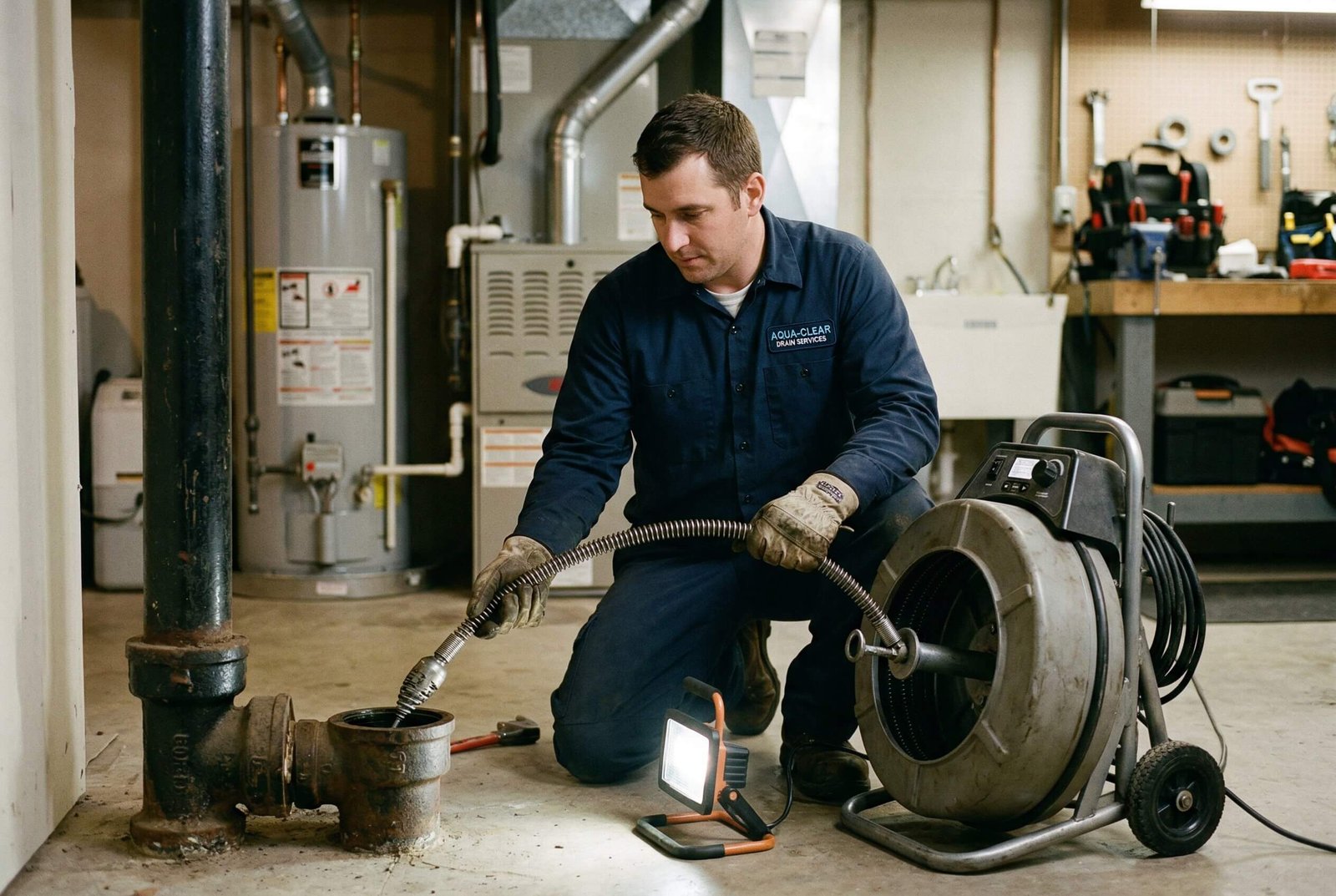
Most drain problems don’t start as full blockages—they build up slowly over time. You might first notice water draining a little slower than usual, or a sink that never quite clears completely even after cleaning. In many homes, especially older ones, this isn’t just a clog sitting in the pipe. It’s often a layer of hardened buildup—made from minerals, grease, soap residue, and rust—gradually narrowing the inside of the pipe. As that layer thickens, it restricts flow and makes it easier for debris to catch and form recurring clogs.
A drain descaling service focuses on removing that hardened buildup and restoring the pipe’s internal surface. This is different from basic drain cleaning, which clears soft blockages but leaves the underlying scale behind. If ignored, scale buildup doesn’t stay the same—it continues to reduce the pipe’s diameter, making drainage slower and increasing the chances of repeated backups. Understanding when this type of service is needed helps you address the root cause instead of dealing with the same problem over and over again.
What This Page Covers
ToggleWhat Drain Descaling Service Actually Means
Drain descaling service is focused on removing hardened buildup from the inside walls of your pipes—something regular drain cleaning doesn’t fully address. Over time, materials like minerals from hard water, grease, soap residue, and even rust start sticking to the pipe surface. This buildup doesn’t stay soft. It hardens, thickens, and slowly reduces the space inside the pipe where water is supposed to flow.
In real situations, this is why some drains never feel “fully clean” even after clearing a clog. The blockage may be gone, but the pipe walls are still rough and narrowed. That rough surface keeps catching debris, leading to repeated slow drainage or clogs. A proper drain descaling service works deeper—it restores the pipe interior closer to its original condition rather than just clearing what’s stuck inside.
What “Scale” Buildup Really Is
Scale isn’t just one material—it’s usually a combination that builds up layer by layer over time.
Common components include:
- Mineral deposits from hard water (calcium, magnesium)
- Grease and food residue (especially in kitchen lines)
- Soap scum from bathroom drains
- Rust and corrosion in older metal pipes
These materials harden along the pipe walls, creating a rough, uneven surface that restricts flow and traps debris more easily.
Drain Cleaning vs Drain Descaling
A standard drain cleaning service focuses on removing blockages inside the pipe—things like grease clogs, hair, or debris. It improves flow, but it doesn’t fully clean the pipe walls.
Drain descaling service goes further by:
- Scraping off hardened buildup from the pipe interior
- Smoothing the inner surface of the pipe
- Restoring more of the original pipe diameter
This is why cleaning alone may only provide short-term relief if scale buildup is the underlying issue.
Why Scale Is Different From Soft Clogs
Soft clogs—like hair or grease—can usually be broken apart and flushed out. Scale buildup is different because it’s bonded to the pipe walls.
That means:
- It doesn’t wash away easily
- It builds up gradually over years
- It continues restricting flow even after clogs are cleared
In older homes, especially with metal pipes, scale can become so thick that it significantly reduces the pipe’s capacity.
Temporary Cleaning vs Restoring Pipe Condition
One of the biggest differences between cleaning and descaling is the long-term effect. Cleaning removes what’s currently blocking the pipe, while descaling improves the condition of the pipe itself.
Without descaling:
- The pipe remains rough and narrowed
- Debris continues to stick easily
- Clogs return more frequently
With proper descaling, the goal is to restore smoother flow and reduce the chances of recurring issues, not just clear the immediate blockage.
When You Actually Need Drain Descaling Service
Drain descaling isn’t something every home needs right away—it usually becomes necessary after buildup has been developing for years. The challenge is that most of the early signs look like normal clogs, so it’s easy to keep treating the symptom instead of the cause. Over time, though, a pattern starts to form. Drains don’t stay clear for long, and cleaning stops giving lasting results.
In real situations, descaling is typically needed when the problem isn’t just something sitting inside the pipe, but something stuck to the pipe walls. When the internal surface becomes rough and narrowed, water flow changes—and that’s when recurring issues begin to show up.
Recurring Clogs Even After Cleaning
One of the most common signs is when clogs keep coming back even after a proper drain cleaning service. You clear the drain, it works fine for a while, and then the same issue returns.
This usually happens because:
- The pipe walls are still coated with hardened buildup
- Debris keeps catching on the rough surface
- Flow isn’t fully restored even after cleaning
In these cases, cleaning removes the blockage, but not the underlying restriction.
Slow Drainage Across Multiple Fixtures
If more than one drain in your home starts slowing down over time, it often points to a buildup issue rather than a single clog. This is especially noticeable in systems where pipes connect before reaching the main line.
You might notice:
- Kitchen sink draining slowly along with nearby fixtures
- Bathroom drains consistently taking longer to clear
- Overall reduced flow even without a visible blockage
This pattern suggests the pipe diameter is being reduced internally.
Older Pipes (Cast Iron or Metal Lines)
Homes with older plumbing systems are more prone to scale buildup. Cast iron and other metal pipes naturally corrode over time, creating a rough interior surface where buildup forms more easily.
Common in older systems:
- Rust forming along pipe walls
- Thick scale layers developing over years
- Reduced internal pipe space due to corrosion
In these cases, descaling is often part of maintaining the pipe rather than just fixing a problem.
Rough Pipe Interior Seen During Inspection
A camera inspection can clearly show when descaling is needed. Instead of smooth pipe walls, the interior appears uneven, narrowed, or coated with buildup.
Signs seen on inspection:
- Thick deposits along pipe walls
- Irregular or jagged internal surfaces
- Reduced visible pipe diameter
This is often the most direct confirmation that cleaning alone won’t solve the issue.
Reduced Pipe Diameter Over Time
As scale builds up layer by layer, the effective diameter of the pipe becomes smaller. Even if water still flows, the system is no longer working efficiently.
Over time, this leads to:
- Slower drainage even without clogs
- Increased likelihood of blockages
- More pressure on the system during heavy use
At this stage, descaling becomes less about fixing a current issue and more about restoring proper flow before bigger problems develop.
Drain descaling service is usually needed when problems become repetitive or widespread, not just occasional. Recognizing these patterns early helps avoid constant cleaning and keeps the system functioning more efficiently.
How Drain Descaling Service Is Performed (Step-by-Step)
Drain descaling isn’t just a quick cleaning—it’s a more involved process aimed at removing hardened buildup from the pipe walls without damaging the pipe itself. The goal is to restore the internal surface so water can flow more freely again. Unlike basic cleaning, this process requires proper inspection, the right tools, and a controlled approach to avoid weakening older pipes.
In real situations, the effectiveness of descaling depends heavily on how carefully each step is handled. Rushing the process or using the wrong method can leave buildup behind or, in some cases, damage already weakened pipes.
Camera Inspection to Confirm Scale Buildup
The process usually starts with a camera inspection. This allows a clear view inside the pipe to confirm whether scale buildup is actually the issue.
During inspection, technicians look for:
- Thickness and type of buildup
- Condition of the pipe material
- Areas where the pipe is narrowed
- Any existing cracks or weak spots
This step is important because not all slow drains need descaling. It helps determine whether the pipe can handle the process safely.
Initial Cleaning (Jetting or Snaking)
Before descaling begins, any loose debris or soft blockages are removed. This creates a clearer path for the descaling tools to work effectively.
This may involve:
- Hydro jetting to flush out grease and loose buildup
- Drain snaking to break apart soft clogs
The goal here isn’t to fix the problem completely, but to prepare the pipe for deeper cleaning.
Mechanical Descaling (Chain Flails or Cutters)
This is the core step of the process. Specialized tools—often called chain flails or rotating cutters—are used to physically scrape off hardened scale from the pipe walls.
These tools:
- Rotate at controlled speeds inside the pipe
- Break down thick, hardened deposits
- Gradually remove buildup layer by layer
This step requires precision, especially in older pipes, to remove scale without damaging the pipe structure.
Flushing and Debris Removal
Once the scale is loosened, the pipe is flushed to remove all the debris that was scraped off. This ensures the buildup doesn’t settle elsewhere in the system.
Typically, this involves:
- High-pressure water flushing
- Clearing out loosened material completely
- Restoring smoother water flow
Proper flushing is essential to avoid creating new blockages further down the line.
Final Inspection and Flow Testing
After descaling is complete, the pipe is inspected again to check the results. This confirms how much buildup was removed and whether the pipe is in good condition.
Final checks include:
- Verifying improved pipe diameter
- Checking for any remaining buildup
- Ensuring water flows freely through the system
This step ensures the process achieved its goal—not just partial cleaning, but meaningful restoration of the pipe’s interior.
Drain descaling service is a controlled process that focuses on restoring the pipe itself, not just clearing what’s inside it. Each step plays a role in making sure the result is effective and long-lasting.
Methods Used in Drain Descaling Service
Drain descaling isn’t done with just one tool or method. The approach depends on how severe the buildup is, what the pipe is made of, and how accessible the line is. In some cases, light buildup can be handled with flushing, while heavy scale in older pipes requires more aggressive mechanical removal. The key is using the right combination of methods to remove buildup without damaging the pipe.
In real situations, descaling often involves a mix of techniques rather than a single step. Understanding these methods helps you know what’s actually being done inside your pipes.
Mechanical Descaling (Chain Flail Systems)
Mechanical descaling is the primary method used when scale buildup is thick and hardened. A rotating tool—often called a chain flail—is inserted into the pipe and used to scrape off deposits from the pipe walls.
This method is effective for:
- Heavy mineral scale in older pipes
- Rust buildup in cast iron lines
- Thick layers that can’t be removed by water pressure alone
The tool spins at controlled speeds, gradually breaking down buildup without cutting into the pipe itself. It’s one of the most effective ways to restore pipe diameter when buildup is severe.
Hydro Jetting for Scale and Debris Removal
Hydro jetting uses high-pressure water to flush out debris and, in some cases, remove lighter scale buildup. It’s often used alongside mechanical descaling rather than as a replacement.
Hydro jetting helps:
- Wash away loosened scale after scraping
- Remove grease and softer buildup
- Clean the pipe more thoroughly after descaling
On its own, hydro jetting may not fully remove hardened scale, but it plays an important role in completing the process.
Chemical Descaling (Limited Use)
Chemical descaling involves using solutions that break down mineral deposits inside the pipe. However, this method is used cautiously and is less common in residential settings.
It may be considered when:
- Buildup is light to moderate
- Mechanical access is limited
- Pipe material can safely handle the chemicals
In many cases, chemicals are avoided because they can weaken older pipes or fail to remove heavy scale effectively.
Combination Cleaning and Descaling Approach
Most real-world descaling jobs use a combination of methods rather than relying on one technique alone. This allows for a more complete and controlled process.
A typical combination approach may include:
- Initial hydro jetting to clear loose debris
- Mechanical descaling to remove hardened buildup
- Final flushing to clean out remaining material
This layered approach ensures the pipe is not only cleared but also restored as much as possible.
Each method has its place, and the right choice depends on the condition of the pipe. Proper descaling isn’t about using the strongest tool—it’s about using the right method for the level of buildup inside the system.
DIY vs Professional Drain Descaling (Decision Section)
Drain issues are one of the first things homeowners try to fix themselves, and in many cases, that makes sense. Simple clogs near the surface can often be handled with basic tools. But when it comes to scale buildup inside pipes, the situation is different. The problem isn’t just what’s blocking the drain—it’s what’s stuck to the pipe walls over time, and that’s not easily removed without proper equipment.
In real situations, many homeowners end up repeating DIY solutions because they see temporary improvement. Water starts flowing again, so it feels like the issue is fixed. But if scale buildup is present, the underlying condition of the pipe hasn’t changed, and the same problems usually return.
When DIY Maintenance Might Help
There are situations where basic maintenance can improve flow, especially in early stages of buildup.
You might see some benefit when:
- The slowdown is recent and minor
- Buildup is still soft and not fully hardened
- The issue is limited to a single drain
Simple steps like flushing with hot water, using a plunger, or a basic drain snake can help in these cases. For light buildup, this may delay the need for deeper cleaning.
Why Descaling Usually Needs Professional Tools
Once scale hardens and bonds to the pipe walls, DIY methods stop being effective. Household tools are designed to clear blockages, not restore the inside of the pipe.
Limitations of DIY approaches include:
- No ability to scrape hardened buildup from pipe walls
- Limited reach inside deeper sections of the system
- No visibility into pipe condition
- Inability to handle thick mineral or rust deposits
Professional descaling uses specialized tools that can physically remove buildup without damaging the pipe, something standard home tools can’t achieve.
Risks of Using Chemical Cleaners
Many homeowners turn to chemical drain cleaners when clogs keep returning. While these products can break down certain materials, they don’t address scale buildup effectively.
Common risks include:
- Chemicals not reaching the full length of the buildup
- Repeated use weakening pipe material over time
- Ineffective results on hardened mineral or rust deposits
In older pipes, especially metal ones, frequent chemical use can contribute to further deterioration.
When Buildup Becomes a Structural Problem
There’s a point where scale buildup stops being just a flow issue and starts affecting the condition of the pipe itself. As the interior narrows and roughens, pressure on the system increases, and corrosion may accelerate.
Warning signs include:
- Persistent slow drainage across multiple fixtures
- Repeated clogs despite cleaning
- Visible buildup during camera inspection
At this stage, DIY solutions are unlikely to help, and professional drain descaling service becomes necessary to restore proper function.
DIY methods can handle minor, surface-level issues, but drain descaling service is designed for deeper buildup that affects the pipe itself. Knowing the difference helps avoid repeated fixes and unnecessary frustration.
Cost of Drain Descaling Service in the U.S.
Drain descaling service is generally more involved than standard drain cleaning, which is why the cost is usually higher. Instead of just clearing a blockage, the process focuses on removing hardened buildup from the pipe walls and restoring flow. The final cost depends on how severe the scale is, how long the pipe section is, and how accessible the system is.
In real situations, many homeowners expect descaling to be similar in price to basic cleaning, but once the condition of the pipe is known, the scope of work becomes clearer. Understanding typical price ranges helps set realistic expectations before moving forward.
Typical Cost Ranges
For most residential situations in the U.S., drain descaling falls into these general ranges:
- Light descaling (minor buildup): $300 – $800
- Moderate descaling (noticeable scale in sections): $800 – $1,500
- Heavy descaling (thick buildup, older pipes): $1,500 – $3,000+
Costs increase as the buildup becomes thicker and more time is needed to remove it safely.
How It Differs From Standard Drain Cleaning Cost
A basic drain cleaning service is usually less expensive because it focuses only on clearing blockages.
Typical drain cleaning cost:
- Standard cleaning: $100 – $300
Descaling costs more because:
- It takes longer to perform
- It requires specialized mechanical tools
- It involves deeper restoration of the pipe interior
This is why repeated cleanings can sometimes end up costing more over time than a single descaling service.
What Affects the Cost of Drain Descaling Service
Several real-world factors influence how much the service will cost. These are often more important than the initial symptom you’re seeing.
- Pipe material
Metal pipes (like cast iron) often require more careful descaling due to corrosion - Severity of scale buildup
Light deposits are quicker to remove than thick, hardened layers - Pipe length
Longer sections of buildup increase labor time and equipment use - Accessibility
Pipes that are difficult to reach or located under floors or outside areas can add complexity - Equipment required
Mechanical descaling tools, hydro jetting, and inspection equipment all affect cost
The cost of drain descaling service reflects the level of restoration needed inside the pipe. It’s less about clearing a single blockage and more about improving the condition of the system so problems don’t keep returning.
Risks of Delaying Drain Descaling Service
Scale buildup doesn’t stay the same—it continues to grow layer by layer inside the pipe. What starts as a slight narrowing can gradually turn into a significant restriction that affects how the entire drainage system performs. Because this process is slow, it’s easy to ignore early signs like slightly slower drainage or occasional clogs. But over time, those small issues usually become more frequent and harder to manage.
In real situations, delaying descaling often leads to a cycle where drains are cleaned repeatedly without lasting improvement. The underlying buildup keeps increasing, and the pipe continues to lose its effective capacity.
Pipe Diameter Keeps Narrowing
As scale builds up along the pipe walls, it reduces the space available for water to flow. This doesn’t happen all at once—it gradually restricts the pipe over months or years.
Over time, this leads to:
- Slower drainage even without visible clogs
- Reduced ability to handle normal water usage
- Increased pressure within the system
Eventually, even small amounts of debris can cause blockages because there’s less room for water to pass through.
Clogs Become More Frequent
A rough, scaled pipe interior makes it easier for debris to catch and accumulate. Even after a drain cleaning service, the uneven surface continues to trap new material.
This results in:
- Repeated clogs in the same drain
- Short-term improvement after cleaning
- Increasing frequency of blockages over time
What feels like recurring clogs is often the result of the pipe condition, not just what’s inside it.
Pipe Corrosion and Weakening
In metal pipes, scale buildup is often tied to corrosion. As rust forms and spreads, it weakens the pipe structure while also contributing to internal buildup.
Possible outcomes include:
- Thinning of pipe walls
- Increased risk of cracks or leaks
- Sections of pipe becoming structurally unstable
At this stage, the issue may shift from needing descaling to requiring repair or replacement.
From Maintenance Issue to Repair Problem
One of the biggest risks of delaying descaling is that a manageable maintenance issue can turn into a more serious repair situation. As buildup continues, it puts additional stress on the system.
This progression often looks like:
- Slow drains → recurring clogs → restricted flow
- Restricted flow → increased pressure → pipe damage
- Pipe damage → need for repair or replacement
Addressing scale early helps prevent this escalation.
Drain descaling service is often about restoring the system before it reaches a point where more extensive work is needed. Waiting too long can turn a relatively controlled process into a more complex and costly problem.
Where Scale Buildup Commonly Happens
Scale buildup doesn’t occur evenly throughout a plumbing system. It tends to develop in areas where certain conditions—like grease, soap, minerals, or slower water flow—are consistently present. Over time, these areas become more prone to narrowing and recurring issues. Understanding where buildup typically forms helps you recognize patterns and address the right part of the system.
In real situations, the location of scale buildup often explains why certain drains have repeated problems while others seem unaffected.
Kitchen Drains (Grease + Mineral Buildup)
Kitchen lines are one of the most common places for scale buildup because they deal with a mix of grease, food residue, and water minerals.
Over time:
- Grease sticks to the pipe walls
- Minerals from water bond with that grease
- Layers harden and become difficult to remove
This combination creates a thick, sticky buildup that gradually narrows the pipe. Even after cleaning, the surface remains rough, making it easier for new debris to accumulate.
Bathroom Lines (Soap + Hard Water Deposits)
Bathroom drains are more affected by soap scum and mineral deposits. While these may seem lighter than kitchen buildup, they still create a gradual restriction inside the pipe.
Common contributors include:
- Soap residue from daily use
- Hair combining with soap and minerals
- Hard water leaving deposits along pipe walls
This buildup is often less visible but can still reduce flow over time, especially in frequently used sinks and showers.
Main Sewer Lines (Especially in Older Homes)
In older homes, scale buildup can extend beyond individual drains into the main sewer line. This is more common in systems with cast iron or aging pipes.
Typical conditions include:
- Rust forming inside the pipe
- Thick scale layers reducing pipe diameter
- Combined buildup from multiple fixtures
When this happens, the issue affects the entire system rather than just one drain, leading to widespread slow drainage or recurring clogs.
Heavy-Use or High-Flow Systems
Areas that handle large volumes of water regularly are also more prone to buildup over time. This includes both residential and light commercial environments.
In these systems:
- Constant flow carries more debris through the pipes
- Repeated exposure to grease, soap, or minerals accelerates buildup
- Small deposits accumulate faster due to frequent use
Even if the system appears to be working, internal buildup can still be developing gradually.
Scale buildup tends to form where conditions allow materials to stick, harden, and accumulate over time. Recognizing these common locations helps identify whether recurring issues are isolated or part of a larger system-wide condition.
Finding Help Locally
Drain descaling isn’t a standard service offered by every plumber. While most can handle basic drain cleaning, descaling requires specific tools and experience working with hardened buildup inside pipes. That difference matters, because using the wrong approach—like repeated snaking—can leave the buildup untouched and the problem unresolved.
In real situations, many homeowners end up calling for cleaning multiple times before realizing the issue needs a different type of service. Knowing what to look for locally helps you avoid that cycle and get the right work done from the start.
Why Not All Plumbers Offer Descaling
Descaling requires more than just clearing a blockage. It involves restoring the internal condition of the pipe, which takes specialized equipment and a more controlled process.
Not all providers have:
- Mechanical descaling tools (chain flails or cutters)
- Equipment to handle heavy scale safely
- Experience working with older or corroded pipes
Because of this, some services may default to basic cleaning methods even when descaling is needed.
Importance of Proper Equipment
The effectiveness of drain descaling depends heavily on the tools being used. Without the right equipment, it’s difficult to remove hardened buildup from pipe walls.
Look for services that use:
- Camera inspection systems
- Mechanical descaling tools
- Hydro jetting equipment for flushing
These tools allow for a more complete process—inspection, removal, and verification—rather than just partial clearing.
Connection to Drain Cleaning and Sewer Services
Drain descaling service often sits between basic drain cleaning and more serious sewer line repair. It’s typically used when cleaning alone isn’t enough, but the pipe hasn’t reached the point of needing repair.
Locally, you’ll often find:
- Drain cleaning services for surface-level issues
- Descaling services for hardened buildup
- Sewer line repair services for structural damage
Understanding this helps you choose the right type of service based on your situation. If the problem is recurring or affecting multiple areas, it often points toward descaling rather than just another cleaning.
How to Choose the Right Drain Descaling Service Provider
Choosing the right provider for drain descaling isn’t just about getting the pipes cleaned—it’s about making sure the buildup is actually removed and not just partially cleared. Since scale forms over years, an incomplete job often leads to the same problems coming back. The quality of the equipment, inspection, and explanation matters more than just the price.
In real situations, the difference between a short-term fix and a lasting result often comes down to how thoroughly the pipe is evaluated and treated.
Experience With Older Pipe Systems
Scale buildup is most common in older plumbing systems, especially those with cast iron or metal pipes. A provider experienced with these systems understands how to remove buildup without damaging already weakened pipes.
An experienced provider will:
- Recognize how corrosion and scale interact
- Adjust descaling intensity based on pipe condition
- Avoid over-aggressive methods that could weaken the pipe
This helps ensure the process restores flow without creating new issues.
Camera Inspection Before Work
A proper drain descaling service should start with a camera inspection. This confirms whether scale buildup is actually present and how severe it is.
Inspection helps to:
- Identify the thickness and location of buildup
- Check the condition of the pipe before descaling
- Determine whether the pipe can safely handle the process
Without inspection, the service is based on assumption rather than actual pipe condition.
Use of Proper Descaling Equipment
The tools used make a significant difference in how effective the descaling process is. Basic tools won’t remove hardened buildup from pipe walls.
Look for providers who use:
- Mechanical descaling tools (chain flails or cutters)
- Hydro jetting for flushing and finishing
- Equipment suited to your pipe type and condition
This ensures the buildup is removed properly rather than partially disturbed.
Clear Explanation of Pipe Condition
A good provider will explain what’s happening inside your pipes in a way that makes sense. You should understand not just that there’s a problem, but what kind of buildup is present and how it affects flow.
Clear communication should include:
- What type of buildup is in the pipe
- How severe it is
- What the descaling process will achieve
This helps you make an informed decision rather than relying on vague descriptions.
Common Mistakes Homeowners Make
Many issues with recurring drain problems come from decisions made early on.
- Repeating basic drain cleaning instead of addressing buildup
- Ignoring slow drainage until it becomes frequent
- Relying on chemical cleaners for long-term issues
- Assuming all drain services provide the same level of work
These often lead to temporary fixes instead of lasting solutions.
Red Flags to Watch Out For
There are certain signs that the service may not fully address the problem.
- No inspection offered before starting work
- Only basic snaking recommended for recurring issues
- No mention of pipe condition or buildup type
- Lack of clarity about what the service will actually do
These situations often result in partial cleaning rather than proper descaling.
Choosing the right drain descaling service provider is about ensuring the pipe is properly restored, not just cleared. The right approach reduces recurring issues and helps maintain better flow over time.
Final Thoughts
Drain problems that keep coming back are often a sign that something deeper is happening inside the pipe. When buildup hardens along the walls, it changes how the entire system functions—water flow slows, debris catches more easily, and cleaning stops giving lasting results. In these situations, focusing only on clearing blockages doesn’t address the real cause.
A drain descaling service is about restoring the condition of the pipe, not just improving flow for a short time. By removing the hardened buildup and smoothing the interior, it helps the system function more consistently and reduces the chances of recurring issues. Understanding when this level of service is needed allows you to move beyond temporary fixes and deal with the problem at its source.