
A bathroom sink usually gives small warning signs before it fully clogs. Water starts draining a little slower, you notice hair collecting near the stopper, or there’s a faint smell coming from the drain. At this stage, most people assume it’s a minor issue — something that can be fixed with a quick rinse or basic cleaning. But inside the pipe, the problem is often building up layer by layer.
Unlike kitchen drains, bathroom sink clogs are commonly caused by a combination of hair, soap residue, toothpaste, and everyday grooming products. These materials don’t just pass through the pipe — they stick to the walls, especially around the stopper and trap area. Over time, this buildup narrows the pipe and restricts water flow.
What starts as slow drainage can eventually turn into standing water in the sink, frequent clogs, or even backup into nearby fixtures. In some cases, the issue extends beyond the sink and affects the bathroom drain line more broadly.
Bathroom sink drain cleaning service is designed to deal with this type of buildup properly — not just removing visible blockage, but clearing what’s happening deeper inside the pipe before it becomes a larger problem.
What This Page Covers
ToggleWhat Bathroom Sink Drain Cleaning Service Actually Means
Most bathroom sink clogs don’t happen because of one large object blocking the pipe. They develop gradually as hair, soap residue, toothpaste, and grooming products collect inside the drain. These materials combine into a sticky buildup that clings to the pipe walls, especially around the stopper and just below the sink.
At first, water still passes through, which is why the problem feels minor. But as the buildup thickens, it starts catching more debris. Over time, the pipe narrows enough that water flow becomes restricted, leading to slow drainage, recurring clogs, and eventually a full blockage.
A proper bathroom sink drain cleaning service is not just about pulling out visible hair or opening a small path for water. It’s about clearing the internal buildup and restoring the pipe so water can flow consistently without resistance.
In practical terms, this means the plumber focuses on more than just the surface issue:
- Removing hair and residue that’s stuck along the pipe walls
- Cleaning areas around the stopper and trap where buildup is common
- Checking whether the blockage is limited to the sink or extends deeper
- Ensuring the drain flows freely after cleaning, not just temporarily
This is where the difference between a quick fix and proper cleaning becomes clear. A DIY method might remove some hair or create a small opening, but it often leaves behind the residue that caused the clog in the first place.
A proper drain cleaning service addresses the condition of the pipe itself, helping prevent the same issue from returning shortly after.
When You Actually Need Bathroom Sink Drain Cleaning Service
Bathroom sink clogs usually develop gradually, which makes them easy to overlook in the early stages. A little slow drainage or occasional hair buildup may not seem serious. But the pattern of how the problem behaves is what indicates whether it’s still minor or turning into something that needs proper drain cleaning.
One of the most common signs is slow drainage that keeps coming back. You might clean the stopper, remove visible hair, and see improvement for a few days. But if the sink slows down again, it usually means there’s buildup deeper in the pipe that hasn’t been removed.
Another sign is water pooling in the sink. When water takes longer than usual to drain or sits for a while before going down, the pipe is already partially restricted. This is often caused by a combination of hair and residue forming a thicker blockage inside the drain.
There are also situations where the issue starts affecting how the sink behaves overall:
- Water drains slowly even with light use
- You hear gurgling sounds after the water goes down
- Cleaning the stopper doesn’t improve drainage
- The clog returns quickly after clearing
Smell is another indicator that often gets ignored. A persistent odor from the drain usually comes from trapped organic material — hair, soap residue, and buildup inside the pipe. Surface cleaning won’t resolve this because the source is below the sink.
More advanced signs suggest the problem is extending beyond the sink itself:
- Multiple bathroom fixtures draining slowly
- Water backing up during use
- The issue worsening over time despite repeated cleaning
Early signs usually involve minor slowdown and visible hair buildup. More serious conditions involve recurring clogs, deeper restrictions, and multiple connections being affected. At that point, the issue is no longer just a surface blockage — it’s a drain condition that requires proper cleaning to restore normal flow.
Ignoring these signals often leads to a complete clog, where water stops draining entirely or starts backing up, making the situation more disruptive and harder to manage.
How Bathroom Sink Drain Cleaning Service Is Performed (Step-by-Step)
When a bathroom sink stops draining properly, the goal isn’t just to pull out visible hair and restore flow for a short time. The focus is to understand where the blockage is forming, what it’s made of, and how much buildup exists inside the pipe. This helps determine the right way to clean the drain without leaving behind residue that will cause the same issue again.
The process usually starts with a simple inspection. The plumber observes how the water drains, checks for pooling, and may run water to see how quickly it clears. Since bathroom clogs are often close to the sink, the area around the stopper and the trap is examined first.
Initial Inspection and Drain Behavior Check
The first step is understanding how the sink is behaving. Slow drainage, gurgling sounds, or water sitting in the basin all give clues about the severity of the clog.
In many cases, the stopper mechanism is checked because hair and debris often collect around it. If the problem is not resolved at this level, it indicates the blockage is deeper in the pipe.
Checking the Trap and Accessible Pipe Sections
The trap under the sink is one of the most common places where buildup occurs. It’s designed to hold water, which also makes it a point where hair, soap residue, and debris can settle.
If needed, the trap is removed and cleaned manually. This allows direct access to the blockage and helps determine whether the clog is localized or part of a deeper issue.
Identifying the Type of Blockage
Bathroom sink clogs are usually made up of hair combined with soap and grooming products. This mixture forms a sticky mass that clings to the pipe walls.
Identifying the type of blockage is important because:
- Loose hair can often be removed easily
- Sticky buildup requires more thorough cleaning
- Deeper restrictions may need specialized tools
This step ensures the cleaning method matches the actual condition inside the pipe.
Choosing the Right Cleaning Method
Once the blockage is understood, the appropriate method is selected. For shallow clogs, manual removal or basic tools may be enough. For deeper or recurring issues, more advanced methods like snaking are used.
The goal is not just to open a path, but to clear enough of the buildup so that water flows consistently without restriction.
Performing the Drain Cleaning
The actual cleaning process depends on the blockage. It may involve:
- Removing hair and debris manually
- Using a drain snake to break and pull out buildup
- Flushing the pipe to clear remaining residue
In cases where buildup extends further into the drain system, more thorough cleaning may be required to prevent recurrence.
Testing and Final Verification
After cleaning, water is run through the sink to check flow and ensure the problem is resolved. This step confirms that the pipe is clear and that water drains smoothly without delay.
If the issue persists or behaves unusually, it may indicate a deeper drain problem that requires further inspection.
The difference in a proper service is that it follows a full process — inspection, targeted cleaning, and verification — rather than just removing what’s visible and leaving the underlying buildup behind.
Methods Used in Bathroom Sink Drain Cleaning
Bathroom sink clogs are usually caused by a mix of hair and sticky residue from soap, toothpaste, and grooming products. This combination doesn’t just sit in one place — it wraps around pipe surfaces, especially near the stopper and trap, and gradually builds up over time.
Because of this, different cleaning methods are used depending on how deep and how severe the blockage is. A loose hair clog near the surface requires a different approach than a deeper buildup that has been forming for months.
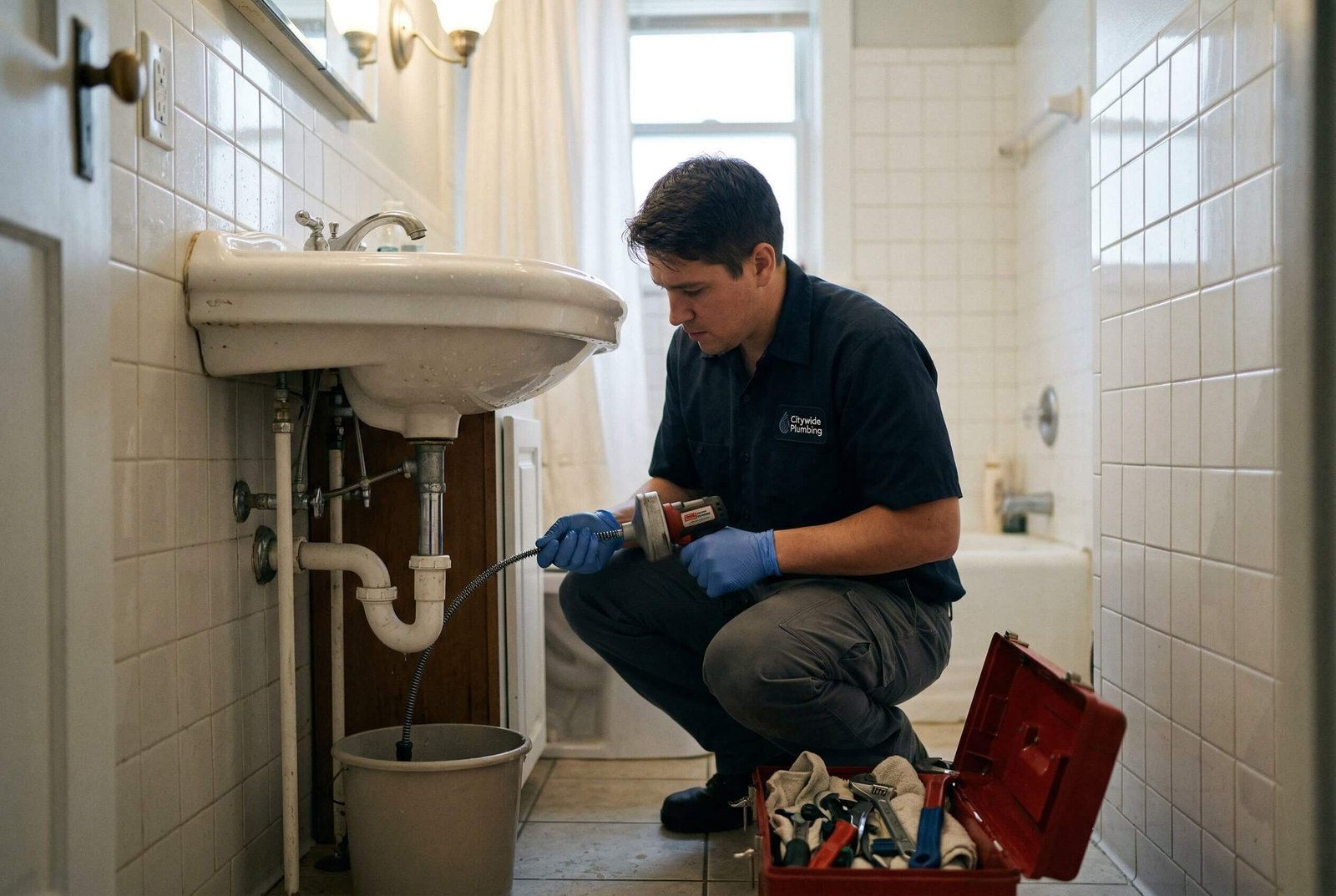
Drain Snaking for Hair Clogs
Drain snaking is one of the most common methods used for bathroom sinks. A flexible cable is inserted into the drain to grab, break, and pull out hair clogs.
This method works well when:
- The clog is made mostly of hair
- The blockage is close to the sink
- Water is still partially draining
It’s effective at restoring flow quickly, but it may not fully clean sticky residue along the pipe walls. That’s why clogs can return if buildup remains.
Manual Cleaning (Stopper and Trap Removal)
In many bathroom sinks, a large portion of the clog forms around the stopper mechanism or inside the trap. These areas are accessible and can be cleaned directly.
Manual cleaning involves removing the stopper and sometimes the trap to clear out:
- Hair wrapped around components
- Thick residue buildup
- Debris that hasn’t moved further down the pipe
This method is often part of the process, especially when the clog is localized and visible.
Hydro Jetting for Deeper Buildup (If Needed)
Although less common for simple bathroom clogs, hydro jetting may be used when buildup extends deeper into the drain line or keeps coming back.
High-pressure water is used to clean the inside of the pipe, removing residue that basic tools can’t fully clear. This method is more thorough and is typically considered when recurring clogs indicate a larger drain cleaning need.
Camera Inspection for Recurring Problems
When a bathroom sink clog keeps returning despite cleaning, a camera inspection may be used to see inside the pipe.
This helps identify:
- Hidden buildup further down the line
- Structural issues in the pipe
- Whether the problem is part of a larger drain system issue
It provides clarity when the cause isn’t obvious from the surface.
When the Issue Connects to a Larger Drain Problem
Sometimes a bathroom sink clog is not isolated. If other fixtures in the bathroom — like the shower or tub — also start draining slowly, the issue may be in a shared drain line.
In these cases, what begins as a simple sink cleaning may require deeper drain cleaning or even evaluation for a sewer line repair if the blockage extends further into the system.
DIY vs Professional Bathroom Sink Drain Cleaning (Decision Guide)
Most bathroom sink clogs look simple at first. You see hair near the stopper, remove it, and expect the problem to be solved. Sometimes that works — especially when the blockage is fresh and close to the surface. But bathroom drains often develop buildup just below what you can see, which is why the problem keeps returning even after cleaning.
Understanding when DIY is enough and when it starts failing helps avoid repeated frustration and unnecessary damage to the pipe.
When DIY Methods Can Work
DIY methods are usually effective when the clog is recent and hasn’t had time to build up inside the pipe. These are situations where the blockage is visible or located close to the sink.
DIY may work when:
- You can see hair or debris around the stopper
- The sink drains slowly but still clears with use
- The issue appeared suddenly after grooming activity
- There’s no smell or recurring pattern
Simple actions like removing the stopper, clearing hair manually, or flushing with hot water can resolve these early-stage clogs. The key is that the buildup hasn’t spread deeper into the pipe.
Why DIY Fixes Often Fail
Bathroom sink clogs are rarely just surface-level. Hair mixes with soap and forms a sticky mass that attaches to the pipe walls. Even if you remove what’s visible, a portion of that buildup usually remains inside.
This leads to a repeating cycle:
- The sink drains better after cleaning
- Flow improves temporarily
- The clog returns within days or weeks
DIY tools often create a partial opening but don’t fully clean the pipe. Over time, the remaining residue continues to trap more hair and debris.
Risks of Using Chemical Cleaners
Chemical cleaners are often used as a quick solution, but they don’t always solve the underlying problem. While they may break down some organic material, they don’t remove buildup completely.
Repeated use can:
- Leave residue inside the pipe
- Weaken older plumbing materials
- Fail to address deeper blockages
They may seem effective initially, but they rarely prevent recurring clogs.
When Professional Drain Cleaning Becomes Necessary
Professional cleaning becomes necessary when the problem shows signs of being deeper or persistent. This is when the issue is no longer just a visible clog, but a buildup inside the drain system.
This includes situations where:
- The sink keeps clogging repeatedly
- Water drains slowly even after cleaning
- There’s a persistent smell from the drain
- Nearby fixtures begin to show similar issues
At this stage, proper drain cleaning methods are needed to clear the pipe thoroughly and restore consistent flow, rather than relying on temporary fixes.
Cost of Bathroom Sink Drain Cleaning Service in the U.S.
The cost of cleaning a bathroom sink drain can vary depending on how simple or complex the clog is. While many people expect it to be a quick, low-cost fix, the actual price depends on what’s happening inside the pipe — especially how much buildup is present and how easy it is to access.
Bathroom sink clogs are often easier to handle than kitchen drain issues, but recurring clogs or deeper buildup can still increase the time and effort required to properly clean the line.
Typical Price Range for Bathroom Sink Drain Cleaning
In most U.S. homes, the cost usually falls within these ranges:
- Simple clog near the sink: $80 – $200
- Moderate blockage (trap or slightly deeper): $150 – $300
- Recurring or deeper buildup: $250 – $500+
These ranges reflect standard situations. The final cost depends on how much work is needed to fully clear the drain, not just restore flow temporarily.
Emergency Drain Cleaning Cost
If the sink becomes completely blocked or starts backing up, emergency service may be required. This typically involves faster response and possibly after-hours work.
- Emergency bathroom drain cleaning: $200 – $600+
Costs can increase further if the issue connects to a larger drain system or requires additional inspection.
What Affects the Cost
Several factors influence pricing, and understanding them helps explain why two similar clogs can have different costs.
- Severity of buildup: Light hair clog vs compacted residue
- Depth of blockage: Close to the sink or deeper in the line
- Accessibility: Easy access vs tight or concealed plumbing
- Equipment used: Basic tools vs more advanced cleaning methods
- Time required: Quick fix vs extended cleaning process
For example, removing a simple hair clog from the trap will cost much less than cleaning a deeper buildup that has been forming over time.
Simple vs Complex Situations
A simple clog is usually a one-time issue that can be cleared quickly. A complex situation involves recurring buildup, deeper blockage, or connection to other parts of the drain system.
In these cases, the cost reflects the need for more thorough cleaning. Addressing the problem properly helps prevent repeated service calls and avoids the issue turning into something more serious.
Risks of Delaying Bathroom Sink Drain Cleaning
A slow bathroom sink doesn’t always feel urgent, which is why it’s often ignored for a while. Water still drains, and daily routines continue with only minor inconvenience. But inside the pipe, the buildup doesn’t stay the same — it keeps growing as more hair and residue collect over time.
What starts as a small restriction can gradually turn into a complete blockage. And in some cases, it begins affecting other parts of the bathroom drain system, making the issue more widespread than it initially appeared.
Complete Blockage Over Time
Hair and soap residue tend to stick together and form dense clogs. As more material gets trapped, the opening inside the pipe becomes smaller until water can no longer pass through.
This leads to:
- Standing water in the sink
- Slower drainage turning into no drainage
- More frequent clogging even after cleaning
At this stage, basic methods are usually no longer effective.
Overflow and Water Damage
When a blockage becomes severe, water has nowhere to go. Instead of draining, it starts collecting in the sink and can overflow if the faucet is left running.
This can cause:
- Water spilling onto countertops
- Damage to cabinets below the sink
- Moisture buildup in surrounding areas
Even small overflows can lead to long-term damage if they happen repeatedly.
Bacteria and Odor Buildup
Bathroom sink clogs often contain organic material like hair, soap residue, and grooming product buildup. When trapped inside the pipe, this creates an environment where bacteria can grow.
Over time, this results in:
- Persistent unpleasant odors
- Hygiene concerns in the bathroom
- Residue buildup that continues to worsen the clog
Surface cleaning won’t resolve this because the source is inside the drain.
Pipe Stress and Long-Term Damage
As the blockage grows, water pressure inside the pipe increases. This can put stress on joints and connections, especially in older plumbing systems.
While not immediate, long-term pressure and repeated clogging can:
- Weaken pipe connections
- Increase the risk of leaks
- Contribute to pipe deterioration over time
Spread to Other Bathroom Fixtures
Bathroom drains are often connected. A clog in the sink can start affecting nearby fixtures if the blockage extends deeper into the system.
This may show up as:
- Slow drainage in the shower or tub
- Gurgling sounds from nearby drains
- Multiple fixtures behaving inconsistently
At that point, the issue is no longer isolated and may require more extensive drain cleaning to resolve.
Where This Problem Happens in Homes
Bathroom sink clogs don’t always stay limited to the visible drain opening. In many homes, the sink is part of a connected system that includes the stopper mechanism, trap, and a shared drain line that may connect to other fixtures like the shower or bathtub. That’s why a blockage in one spot can sometimes affect more than just the sink.
Understanding where the buildup forms helps explain why some clogs are easy to clear while others keep returning or spread deeper into the system.
Bathroom Sink Drain and Pipe Opening
This is where most people first notice the problem. Hair, soap residue, and toothpaste collect around the drain opening and just below it. While some of this can be removed easily, a portion usually moves deeper into the pipe.
Early-stage clogs often begin here, especially when debris starts catching around small obstructions or uneven surfaces inside the drain.
Pop-Up Stopper Mechanism
The stopper assembly inside the sink is one of the most common points where hair accumulates. It creates a structure that traps debris before it moves further down the pipe.
Over time, hair wraps around the stopper components and combines with soap residue, forming a dense buildup. Even if the surface looks clean, material can remain attached below, contributing to recurring clogs.
Trap (P-Trap) Under the Sink
The trap is designed to hold water and prevent sewer gases from entering the home. Because of this design, it’s also a natural place for debris to settle.
Hair, residue, and small particles collect here, making it a frequent location for blockages. Many localized clogs are found in this section, especially in bathroom sinks with regular use.
Bathroom Branch Drain Line
Beyond the trap, the drain connects to a larger branch line that carries wastewater away from the bathroom. If buildup extends into this section, the clog becomes more difficult to reach and may start affecting other fixtures.
Recurring clogs often indicate that the problem has moved beyond the trap and into this deeper part of the system.
Connection to Shower or Tub Drain
In many homes, the bathroom sink shares a drain line with the shower or bathtub. When a blockage develops in the shared line, it can affect multiple fixtures at once.
This may appear as:
- Slow drainage in both sink and shower
- Gurgling sounds when water is used
- Inconsistent drainage behavior across fixtures
Main Drain Line Involvement
In more advanced cases, the issue may extend into the main drain line. This is less common for a simple bathroom sink clog but can happen if buildup accumulates over time or if there are multiple contributing factors.
When this happens, the problem is no longer isolated and may require deeper drain cleaning or further evaluation to prevent larger system issues.
Finding Bathroom Sink Drain Cleaning Help Locally
A bathroom sink clog doesn’t always require outside help right away. But when the problem keeps returning, gets worse over time, or starts affecting daily use, it usually makes sense to look for local drain cleaning support.
The important part is not just calling someone quickly, but understanding when the situation has moved beyond a simple fix and needs proper evaluation and cleaning.
When It Makes Sense to Call a Local Plumber
If a clog clears once and doesn’t come back, it was likely minor. But when the issue becomes repetitive or starts showing stronger symptoms, it usually indicates buildup deeper in the drain.
Local help becomes necessary when:
- The sink clogs repeatedly despite cleaning
- Water drains slowly even after removing visible hair
- There’s a persistent smell from the drain
- Multiple bathroom fixtures are affected
- DIY attempts no longer improve the situation
At this stage, the focus shifts from temporary fixes to properly resolving the drain condition.
Connecting with Nearby Drain Cleaning Services
Bathroom sink clogs are common, so most local plumbers handle them regularly. However, the approach can vary. Some may focus on quick unclogging, while others take a more thorough approach to clean the pipe and reduce recurrence.
When looking locally, homeowners often explore:
- General plumbing services
- Drain cleaning specialists
- Emergency plumbing options (if the situation escalates)
City-based plumber comparison pages are also commonly used to understand available options, typical pricing, and service availability in a specific area.
Using Local Information to Make a Better Decision
Having a basic understanding of local services helps avoid rushed decisions. Instead of choosing the first available option, it becomes easier to compare and select a provider who can handle the issue properly.
Helpful things to understand include:
- Typical response times in your area
- Whether emergency drain cleaning is available
- General pricing expectations locally
- Level of service (quick fix vs thorough cleaning)
Bathroom sink issues are common, but how they’re handled can vary. Taking a moment to understand your local options often leads to a more reliable and longer-lasting solution.
How to Choose the Right Drain Cleaning Provider
When it comes to bathroom sink clogs, the difference between a one-time fix and a lasting solution often depends on who handles the cleaning. Many providers can clear a clog, but not all take the time to understand why it formed or how to prevent it from coming back.
Choosing the right provider is about more than availability or price — it’s about how they approach the problem inside the pipe.
Experience with Bathroom Drain Issues
Bathroom drains behave differently from kitchen drains. Hair, soap residue, and grooming products create a specific type of buildup that requires the right approach.
A provider with real experience will be able to explain:
- Where the clog is likely forming
- Why it keeps returning
- Whether it’s a surface issue or deeper buildup
This kind of explanation usually reflects hands-on experience rather than a quick, routine fix.
Use of Proper Tools and Methods
Some providers rely only on basic tools that open the clog but don’t fully clean the pipe. While this may restore flow temporarily, it often leads to recurring problems.
Proper tools may include:
- Drain snakes designed for hair removal
- Tools for accessing and cleaning the trap
- Equipment for deeper cleaning when needed
Using the right method for the specific clog type is what helps prevent repeat issues.
Clear Explanation of the Problem
A reliable provider will take the time to explain what’s happening inside the drain in simple terms. This helps you understand whether the issue is minor or part of a larger drain problem.
If the explanation is unclear or rushed, it may indicate that the focus is only on completing the job quickly rather than resolving the underlying cause.
Emergency Availability When Needed
While many bathroom sink clogs are not urgent, situations can escalate — especially if water stops draining completely or begins to back up.
Having access to a provider who can respond when needed is useful if:
- The sink becomes unusable
- Water starts collecting and not draining at all
- Multiple fixtures are affected at the same time
Common Mistakes Homeowners Make
Choosing a provider without understanding the problem can lead to repeated service calls. Some common mistakes include:
- Picking the lowest price without considering the method used
- Assuming all drain cleaning approaches are the same
- Ignoring recurring clog patterns
- Not asking what caused the issue
These often result in temporary fixes rather than proper cleaning.
Red Flags to Watch For
There are also signs that a provider may not fully address the issue:
- No inspection before starting work
- Same solution recommended for every clog
- No explanation of why the clog formed
- Avoiding discussion about recurring problems
A good provider focuses on understanding the condition of the drain, not just clearing it quickly.
Final Thoughts
Bathroom sink clogs are often treated as small, routine problems, but they usually follow a pattern. What starts as visible hair or slight slow drainage is often a sign of buildup forming inside the pipe. If it’s only addressed at the surface level, the problem tends to return — sometimes more frequently and more severely.
The key is recognizing when the issue is still minor and when it has developed into something that needs proper drain cleaning. Temporary fixes can restore flow for a short time, but they don’t remove the residue that continues to collect inside the pipe.
By understanding how these clogs form and when to act, it becomes easier to avoid repeated issues and unnecessary disruption. Addressing the buildup early helps keep the drain functioning normally and prevents the problem from spreading into other parts of the bathroom system.
A bathroom sink works best when the pipe is clear and unrestricted. When signs of buildup appear, handling it properly at the right time makes a noticeable difference in how often the problem returns.