
Most homeowners don’t think about their basement floor drain until something goes wrong. It usually starts small—maybe a slow puddle that doesn’t disappear, a faint musty smell, or water sitting longer than it should after doing laundry. Then one day, you walk downstairs and notice water spreading across the floor, and that’s when it becomes a real concern.
A basement floor drain is designed to handle excess water from different parts of the home—laundry discharge, water heater overflow, or even minor leaks. But unlike kitchen or bathroom drains, these drains often collect a mix of dirt, lint, soap residue, and even debris that settles over time. Because they’re used less frequently, buildup can go unnoticed until it turns into a blockage.
When this drain stops working properly, the issue isn’t just inconvenience—it can lead to basement flooding, moisture problems, and in more serious cases, sewage backing up into your home. What starts as a slow drain can quietly develop into a much larger problem if it’s ignored for too long.
What This Page Covers
ToggleWhat This Service Actually Means
A basement floor drain cleaning service goes deeper than what most homeowners expect. This drain isn’t isolated—it’s usually tied into the main drainage system of the house, often connecting to the sewer line or a major branch line. That means when there’s a clog here, it’s not just about what you see at the surface. The real issue is often sitting deeper in the pipe, where buildup has been forming over time.
In real-world situations, the blockage is rarely a single object. It’s usually a layered buildup—lint from laundry, soap residue, dirt, small debris, and sometimes sediment from aging pipes. Over time, this mixture sticks to the pipe walls and slowly narrows the passage. Water may still pass through at first, but the flow becomes restricted, and eventually, it leads to a full blockage.
This is where many temporary fixes fall short. Pouring hot water or using a basic tool might open a small path through the clog, but it doesn’t remove the buildup along the pipe walls. That’s why the problem often returns. A proper cleaning service focuses on clearing the entire affected section, not just creating a temporary opening.
Another important part of this service is understanding whether the issue is limited to the basement drain or connected to a larger drain problem in the home. In many cases, what shows up as a basement issue is actually the early stage of a deeper blockage in the system. That’s why this type of cleaning often overlaps with broader drain cleaning work and, in some situations, leads into sewer line repair if deeper damage or blockage is found.
When You Actually Need This Service
Most homeowners don’t call for basement floor drain cleaning until the problem becomes obvious. But by the time water is sitting on the floor, the blockage has usually been building for weeks—or even months. Basement drains tend to give early warning signs, but they’re subtle and easy to overlook because the drain isn’t used as frequently as others in the home.
Understanding these signals helps you act at the right time. In many cases, catching the issue early means a straightforward cleaning. Waiting too long, on the other hand, can turn a simple clog into a deeper drain problem or even something that affects the main sewer line. The key is recognizing the pattern—not just reacting to the final result.
Early Warning Signs Most Homeowners Ignore
In many homes, basement floor drain problems don’t start with a sudden backup—they build gradually. You might notice water draining slower than usual after running the washing machine, or a light odor that appears and disappears. Sometimes there’s a faint gurgling sound when water is used elsewhere in the house, but it doesn’t seem serious enough to act on.
These are early signs that buildup is forming inside the pipe. The drain is still working, but the flow is starting to get restricted. At this stage, the issue is easier to resolve, but most homeowners ignore it because nothing has “failed” yet. That delay is what allows the blockage to grow into something more serious.
Clear Signs the Drain Is Already Clogged
As the buildup becomes thicker, the symptoms become more noticeable. Water may start pooling around the basement floor drain and take a long time to go down—or not drain at all. You might also see dark residue or sludge near the drain opening, especially after water has been used in the home.
Another common situation is water backing up into the basement when you run fixtures upstairs. This happens because the blocked line can’t handle the flow, so water looks for the lowest exit point. By this stage, the problem has moved beyond a minor restriction, and simple cleaning methods are no longer effective.
Serious Warning Signs of Main Line Issues
When multiple fixtures in the home start showing problems at the same time, it usually means the issue goes deeper than just the basement drain. Toilets may bubble, sinks may drain slowly, and the basement floor drain may overflow first whenever water is used.
If the water coming up looks dirty or carries a sewage smell, it’s a strong indication that the blockage is in the main sewer line. The basement drain is simply where the problem shows up first. In these situations, the cleaning process often involves more than just clearing the drain—it may require full drain cleaning or inspection of the sewer line to properly resolve the issue.
How the Service Is Performed (Step-by-Step)
Before any tools are used, the focus is on understanding the system. Basement floor drains are often connected to deeper sections of the drainage network, and in many homes, the actual blockage isn’t sitting right under the drain—it’s further down the line. That’s why a proper service isn’t rushed. It starts with figuring out where the problem is and how the system is laid out.
This step-by-step approach matters because using the wrong method can either leave buildup behind or make the situation worse. A good cleaning process is not just about opening the drain—it’s about restoring full flow and making sure the issue doesn’t come back shortly after.
Initial Inspection and Access Check
The first step is locating the best access point to the drain line. While the floor drain itself is visible, it’s not always the most effective place to work from. In many homes, there’s a cleanout nearby that allows direct access to the pipe, making the cleaning more thorough.
The plumber will check the drain opening, look for standing water, and assess how the system is behaving. This helps determine whether the issue is local to the drain or connected to a larger section of the drainage system.
Diagnosis of Blockage Type
Once access is established, the next step is identifying what’s causing the blockage. Basement drains typically clog from layered buildup—lint, soap residue, dirt, and sediment. In older homes, pipe scaling or corrosion can also contribute.
The plumber may test the flow or insert a tool into the line to locate resistance. In more complex cases, a camera inspection is used to see exactly what’s happening inside the pipe and how far the blockage extends.
Choosing the Right Cleaning Method
After diagnosing the issue, the right cleaning method is selected. Not all clogs require the same approach. A softer blockage may be handled with a drain snake, while heavier buildup along the pipe walls often requires hydro jetting.
Choosing the correct method is critical. If the cleaning is too light, residue remains and the clog returns. If it’s too aggressive for the pipe condition, it can cause damage. The goal is to match the method to the actual condition of the drain.
Executing the Cleaning Process
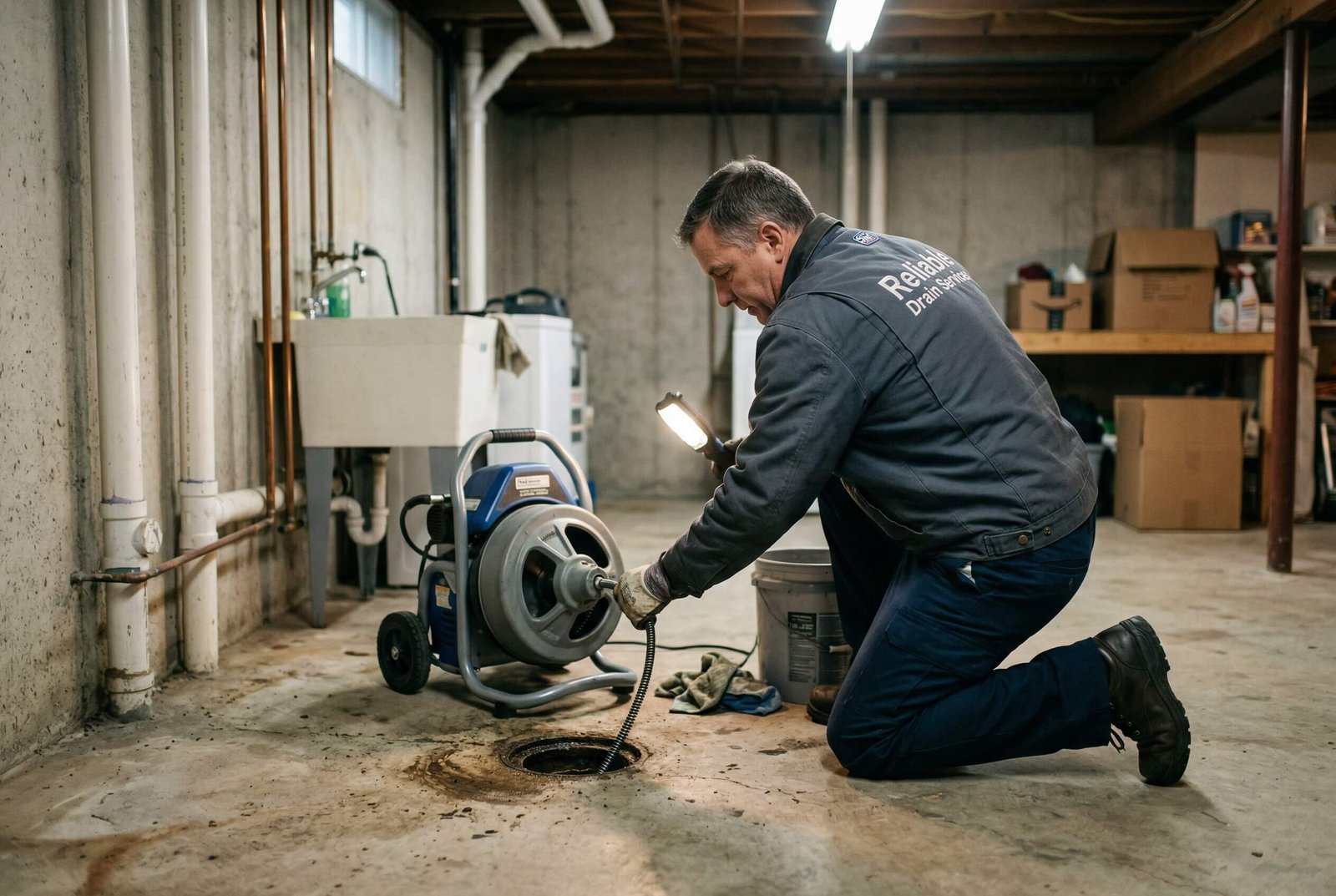
Once everything is set, the cleaning begins. The equipment is fed into the pipe and worked through the blockage. Snaking breaks apart or pulls out the obstruction, while hydro jetting uses high-pressure water to flush buildup and clean the pipe walls.
In basement drain situations, the cleaning often extends deeper than expected. It’s not just about clearing a small section—it’s about making sure the entire affected area is properly cleaned so the flow is fully restored.
Final Testing and Flow Check
After the cleaning is complete, the system is tested. Water is run through the drain and other fixtures to confirm that everything is flowing normally again. This step ensures that there are no remaining restrictions and that the system can handle normal usage.
If there were signs of a larger issue earlier, this final check also helps confirm whether additional work—like deeper drain cleaning or sewer line attention—is needed. The goal is to leave the system stable, not just temporarily unclogged.
Methods Used for Basement Floor Drain Cleaning
Not every basement floor drain clog is handled the same way. The method depends on what’s inside the pipe, how severe the buildup is, and how far the blockage extends. In many cases, the drain isn’t completely blocked—it’s partially restricted with layers of residue along the pipe walls. That’s why choosing the right method matters more than most homeowners expect.
A proper drain cleaning approach focuses on removing the cause of the problem, not just forcing water through it. Some methods break through the clog, while others clean the pipe more thoroughly. The decision usually comes down to whether the issue is a simple obstruction or part of a deeper drain cleaning or sewer line repair situation.
Drain Snaking (Augering)
Drain snaking is one of the most commonly used methods for basement floor drains. It involves feeding a flexible metal cable into the pipe to break apart or pull out the blockage. This method works well for softer clogs like lint buildup, small debris, or minor obstructions that are not tightly packed along the pipe walls.
It’s often the first approach used because it’s effective for restoring flow quickly. However, it doesn’t fully clean the pipe—it mainly creates a path through the blockage. If buildup is layered along the walls, some residue will remain, which can lead to recurring clogs over time.
Hydro Jetting for Heavy Build-Up
Hydro jetting uses high-pressure water to clean the inside of the pipe. Instead of just breaking through the clog, it washes away grease, sludge, and residue stuck to the pipe walls. This method is typically used when there’s heavy buildup or when the drain has a history of repeated clogs.
It’s especially effective for basement drains connected to the main line, where buildup tends to accumulate over a longer stretch. In many cases, hydro jetting not only clears the blockage but also restores the pipe closer to its original condition, reducing the chances of future problems.
Manual Cleaning and Debris Removal
In some situations, especially when the clog is near the surface, manual cleaning may be part of the process. This involves removing visible debris, cleaning the drain opening, and sometimes clearing out the trap area if accessible.
While this step alone isn’t enough for deeper clogs, it helps eliminate surface-level buildup that contributes to the problem. It’s usually combined with other methods to ensure the entire system is properly cleaned.
Camera Inspection for Deeper Problems
When the cause of the blockage isn’t clear—or when the issue keeps coming back—a camera inspection is often used. A small camera is inserted into the pipe to provide a clear view of what’s happening inside.
This helps identify whether the problem is just buildup or something more serious, like pipe damage, root intrusion, or a deeper sewer line issue. It also ensures that the cleaning method being used is appropriate for the actual condition of the pipe, rather than relying on guesswork.
DIY vs Professional (Decision Section)
Many homeowners try to handle a basement floor drain issue themselves first—and in some cases, that makes sense. But the challenge with basement drains is that the visible problem is often only a small part of what’s actually happening deeper in the system. What looks like a simple clog at the surface can be connected to buildup further down the line.
Knowing where DIY works—and where it starts to fail—can save both time and money. The goal isn’t to avoid professional help completely, but to understand when a basic approach is enough and when the situation needs a proper drain cleaning service to prevent the problem from returning or getting worse.
When DIY Cleaning Might Work
If the drain is only slightly slow and there’s no standing water, a basic cleaning approach can sometimes improve the situation. Removing visible debris from the drain opening and flushing it with hot water may help clear minor buildup near the surface.
This usually works when the restriction is shallow and hasn’t had time to build up along the pipe walls. In these cases, you’re not dealing with a full blockage—just early-stage residue that hasn’t hardened yet.
Where DIY Fails in Basement Drains
DIY methods start to fall short when the clog is deeper or more compact. Basement drains often connect to longer sections of pipe, and the buildup can sit well beyond the reach of household tools. Even if you manage to improve flow temporarily, the underlying buildup remains in place.
This is why many homeowners experience the same issue again after a short time. The drain seems fixed, but the restriction was never fully removed. Without proper equipment, it’s difficult to clean the entire affected section of the pipe.
When DIY Becomes Risky
There’s also a point where trying to fix the problem yourself can make things worse. Using force to push through a clog can move the blockage deeper into the system, making it harder to remove later. Chemical cleaners can also damage older pipes or react with buildup in ways that create additional problems.
In basement situations, there’s an added concern of contaminated water. If the clog is connected to the main line, exposure to backed-up water can pose health risks. At this stage, it’s no longer just a cleaning issue—it becomes a situation where professional handling is the safer and more effective approach.
Cost of Basement Floor Drain Cleaning in the U.S.
Cost is one of the biggest questions homeowners have, especially when the problem shows up suddenly. The difficulty with basement floor drains is that pricing can vary quite a bit depending on how deep the blockage is and whether it’s limited to the drain or connected to a larger drain cleaning issue.
In general, a simple cleaning is relatively straightforward. But if the blockage extends into the main line or requires specialized equipment, the cost increases. Understanding these ranges helps you know what’s normal—and what might indicate a more serious underlying problem.
Typical Price Range
For a basic basement floor drain cleaning where the clog is close to the drain and easily accessible, the cost usually falls between $100 to $250. This typically involves standard snaking and minimal time on-site.
If the blockage is deeper or requires more effort to clear, the cost can range from $250 to $500. This often includes more extensive cleaning and possibly accessing the line through a cleanout.
For more severe situations—where the drain is heavily clogged, slow across multiple fixtures, or requires advanced methods—the cost can go from $500 to $800 or more. These cases often involve more time, effort, and equipment to properly restore flow.
Emergency Drain Cleaning Costs
When the issue turns into an urgent situation—like water backing up or basement flooding—emergency drain cleaning comes into play. After-hours or same-day urgent calls typically increase the cost.
Emergency services can range from $300 to $900+, depending on how quickly the issue needs to be addressed and how severe the blockage is. The urgency, not just the work itself, is what drives the price higher in these cases.
Factors That Affect Pricing
Several factors influence the final cost, and understanding them helps explain why one job is simple while another becomes more expensive:
- Depth of the clog – Deeper blockages require more time and effort
- Accessibility – Easy access through a cleanout reduces complexity
- Type of equipment used – Hydro jetting costs more than basic snaking
- Condition of the pipes – Older or damaged pipes may require extra care
- Extent of the problem – Whether it’s isolated or part of a larger sewer line issue
In many cases, what starts as a simple basement drain cleaning can reveal a bigger issue deeper in the system. That’s why pricing isn’t always fixed upfront—it depends on what’s actually found during the service.
Risks of Delaying Basement Drain Cleaning
A slow basement drain doesn’t feel urgent at first. Water still goes down—just not as quickly—and it’s easy to assume it can wait. But basement drain issues rarely stay the same. Because these drains sit at the lowest point of the home, they’re often the first place where deeper drainage problems show up. What starts as a minor restriction can gradually turn into something that affects the entire system.
Delaying cleaning allows buildup to harden and spread further into the pipe. As that happens, water flow becomes more restricted, pressure increases, and the chances of a sudden backup go up. By the time visible problems appear, the issue has usually been developing for a while beneath the surface.
Water Damage and Basement Flooding
One of the most immediate risks is water pooling or flooding in the basement. When the drain can’t handle incoming water, it has nowhere to go. Even a small blockage can cause water to back up during heavy usage or discharge from appliances like washing machines.
Over time, repeated moisture exposure can damage flooring, walls, and stored items. In finished basements, this can lead to costly repairs that go far beyond the original drain issue.
Mold and Moisture Problems
Basements are already more prone to dampness, and a slow or clogged drain adds to that environment. Standing water or consistent moisture creates the right conditions for mold and mildew to develop.
The problem is that mold doesn’t always stay visible. It can form behind walls, under flooring, or in corners where moisture lingers. Once it spreads, it becomes harder to remove and can affect indoor air quality over time.
Sewer Backup Risks
If the blockage is connected to the main line, delaying cleaning increases the risk of sewage backing up through the basement drain. Because it’s the lowest point in the system, the basement is often where this type of issue shows up first.
This isn’t just a water problem—it involves contaminated water that requires careful cleanup. The longer the blockage remains, the higher the chance that normal water usage in the home will trigger a backup.
Pipe Damage Over Time
As buildup accumulates, it can put stress on the pipe system. In older homes, especially those with aging materials, this can accelerate wear and lead to cracks, corrosion, or partial collapse.
What could have been resolved with a standard drain cleaning can eventually turn into a more complex repair if the pipe itself becomes damaged. Acting earlier helps avoid that progression and keeps the system functioning properly.
Where This Happens in Homes
Basement floor drain issues don’t occur in isolation. The location of the drain and what flows into it play a big role in how and why it gets clogged. In most homes, these drains are placed in areas where excess water needs a path out—but those same areas also introduce the types of buildup that lead to problems over time.
Understanding where these drains are used helps explain the pattern behind clogs. It also makes it easier to recognize why certain homes experience recurring issues while others don’t.
Basement Floor Drains Near Laundry Areas
One of the most common locations is near the washing machine. Every wash cycle sends out lint, detergent residue, and small particles that don’t fully dissolve. Over time, this material settles inside the pipe and begins to form a soft but sticky buildup.
At first, it doesn’t block the drain completely—it just slows things down. But as more cycles run, that buildup thickens and starts restricting flow, eventually leading to a clog.
Utility Room Drains (Water Heater, HVAC)
Drains located near water heaters or HVAC systems handle discharge water, which may contain sediment or minerals. While this water doesn’t carry debris like laundry does, it can still contribute to buildup over time, especially in areas with harder water.
This type of clog tends to form gradually and is often overlooked until the drain starts responding slowly or holding water longer than expected.
Older Homes with Cast Iron Pipes
In older homes, the material of the pipe itself becomes part of the problem. Cast iron pipes can develop internal rust and scaling, which narrows the diameter of the pipe over time. This creates a rough surface where debris can easily stick and accumulate.
Even a small amount of buildup can become a problem in these conditions because the pipe is already partially restricted. In these homes, drain cleaning often needs to be more thorough to restore proper flow.
Outdoor-Connected Basement Drains
Some basement drains are connected to systems that also handle outdoor runoff or are exposed to debris entering from outside. In these cases, dirt, small leaves, and other organic material can make their way into the drain.
This type of buildup is different—it’s often heavier and more compact. Over time, it can settle deeper into the line and create blockages that require more than basic cleaning to fully remove.
Finding Help Locally
Basement floor drain problems are one of those situations where timing matters. When water starts pooling or backing up, waiting too long can turn a manageable issue into something that spreads across the basement. That’s why most homeowners end up looking for help locally—someone who can respond quickly and understands the type of drainage systems common in the area.
Local plumbers are usually more familiar with how basement drains are set up in nearby homes, including common issues tied to older pipes, sewer connections, or seasonal factors. That familiarity helps them diagnose the problem faster instead of relying on trial and error. It also means they’re more likely to recognize whether the issue is isolated to the drain or part of a larger drain cleaning or sewer line situation.
Another practical reason to look locally is response time. Basement drain issues can escalate quickly, especially if water starts backing up. A nearby provider can typically reach the property sooner, which reduces the risk of further water damage or contamination. This becomes even more important in situations that fall under emergency plumbing, where delays can make cleanup and repair more complicated.
In many cases, homeowners start by checking city-based listings or local service pages to understand who handles these types of issues regularly. Basement floor drain cleaning isn’t exactly the same as clearing a kitchen sink—it requires experience with deeper drainage systems. Looking at providers who specifically deal with drain problems and sewer-related work helps narrow down the right kind of help for the situation.
How to Choose the Right Provider
Choosing the right person to handle a basement floor drain issue isn’t just about availability—it’s about whether they understand what’s actually happening in your system. These types of problems often go deeper than the visible drain, so the approach matters more than a quick fix. A proper evaluation and the right equipment can make the difference between solving the issue once and dealing with it again in a few weeks.
Many homeowners run into trouble by focusing only on price or speed. While those factors matter, they don’t tell you how thorough the work will be. Basement drain problems, especially those connected to the main line, require someone who can diagnose the situation correctly before jumping into cleaning.
What Experience Actually Matters
Not all plumbing experience is the same. Basement floor drains are often tied into the main drainage system, so it’s important to choose someone who has handled sewer-connected drain problems before. This includes understanding how blockages behave at the lowest point in the house and how they relate to other fixtures.
Experience also shows in how the problem is approached. Instead of immediately using tools, a skilled plumber will first assess the situation and identify whether the issue is local or part of a larger system.
Equipment That Makes a Difference
The tools being used tell you a lot about how the job will be handled. Basic tools may work for minor clogs, but deeper or recurring issues often require more advanced equipment like hydro jetting or camera inspection.
Having access to the right equipment allows the plumber to clean the pipe more thoroughly and confirm that the blockage has been fully removed. It also reduces guesswork, which is often what leads to incomplete fixes.
Transparency in Diagnosis and Pricing
A reliable provider will explain what they’re seeing and why a certain method is being used. Basement drain issues can vary widely, so clear communication helps you understand whether the problem is simple or part of a bigger drain cleaning situation.
Pricing should also reflect the actual work involved. If the explanation is vague or the approach seems rushed, it often means the problem hasn’t been properly assessed.
Red Flags to Watch Out For
There are a few warning signs that indicate the service may not be thorough. Jumping straight into cleaning without inspecting the drain, offering a quick fix without explaining the cause, or avoiding questions about what’s happening deeper in the pipe are all signs to be cautious.
Another red flag is treating the issue as a simple surface clog when symptoms suggest something more serious. Basement floor drain problems often connect to larger system issues, and ignoring that can lead to repeated problems shortly after the service is done.
Final Thoughts
A basement floor drain is easy to overlook until it stops working the way it should. By the time water starts pooling or backing up, the issue has usually been building quietly in the background. What seems like a simple clog is often a sign that something deeper in the drainage system needs attention.
Understanding how these problems develop makes a big difference. Acting early can keep it limited to a straightforward drain cleaning, while waiting too long can allow it to spread into a larger issue involving multiple fixtures or even the main sewer line. The goal isn’t just to clear the drain once—it’s to make sure the system is actually flowing the way it should.
In most cases, basement drain problems aren’t random. They follow a pattern—slow buildup, early warning signs, and then a visible issue. Recognizing that pattern helps you make better decisions, avoid unnecessary work, and deal with the problem before it becomes more complicated than it needs to be.