
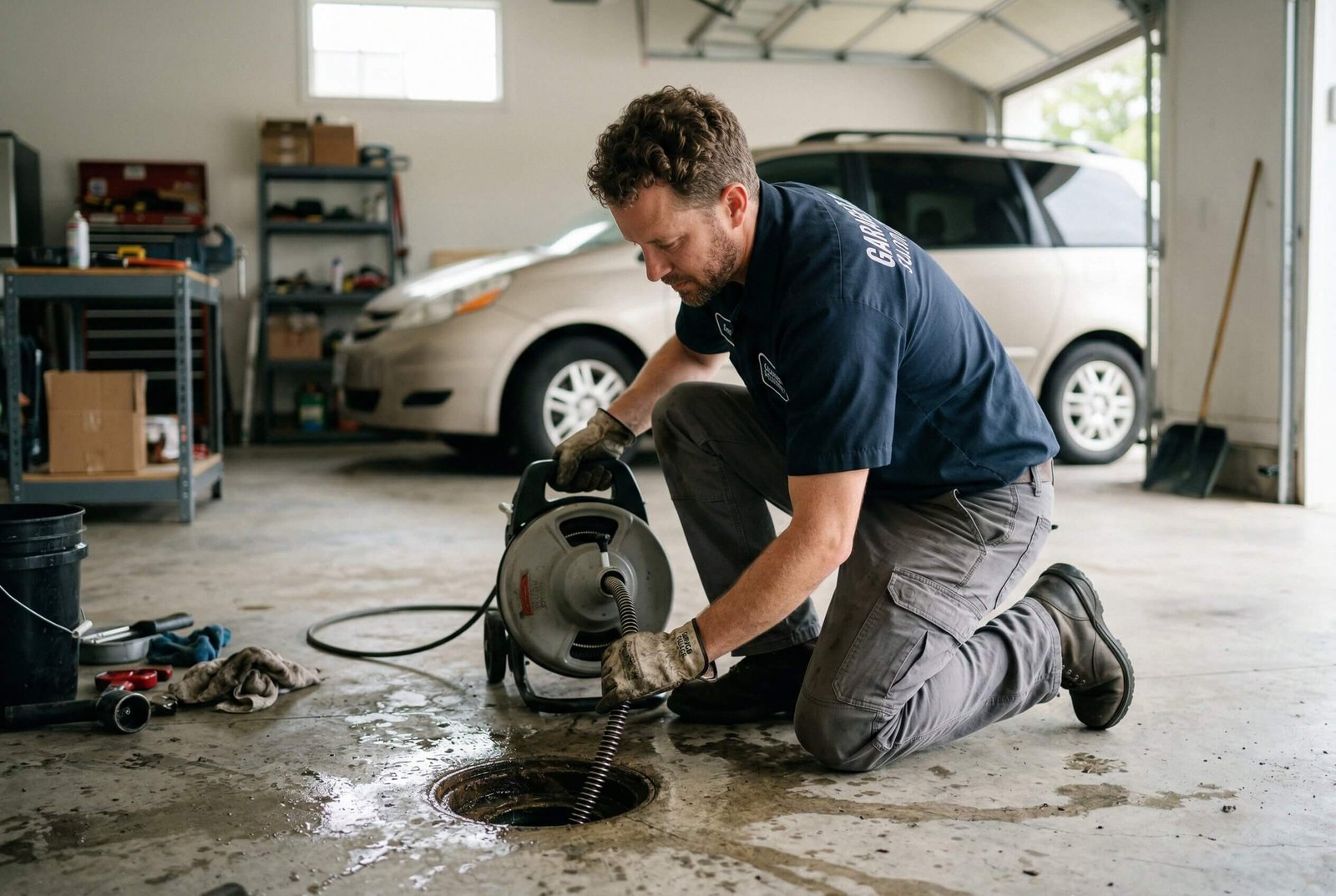
Garage floor drains usually don’t get much attention until they stop doing their job. It often starts with something simple—water from washing your car sitting longer than usual, or rainwater not draining out of the garage as quickly as before. Then one day, you notice water spreading across the floor, mixing with dirt and oil, and not going anywhere.
Unlike indoor drains, garage drains handle a completely different kind of load. They collect dirt, sand, tire residue, oil drips, and whatever gets carried in from outside. Over time, this mix settles inside the pipe and forms a dense, heavy buildup that’s very different from typical household clogs. Because of this, garage drains tend to clog in a way that isn’t always obvious at first.
When the drain stops working properly, it’s not just about standing water. It can lead to slippery surfaces, lingering odors, and in some cases, contaminated runoff sitting inside the garage. What starts as a slow drain can gradually turn into a fully blocked line if it’s left unattended.
What This Page Covers
ToggleWhat This Service Actually Means
A garage floor drain cleaning service is not just about removing debris from the surface—it’s about clearing what has built up inside the pipe over time. In many homes, garage drains either connect to a stormwater system or tie into the main drainage line. That connection determines how the clog behaves, but in both cases, the real problem usually sits deeper in the line, not right under the drain cover.
Garage drains deal with a very different type of buildup compared to indoor drains. Instead of just organic waste, they collect a mix of dirt, sand, oil residue, grease, and fine debris brought in by vehicles and outdoor runoff. Over time, this material settles and compacts inside the pipe, forming a thick layer that restricts water flow. It’s not loose—it tends to stick and harden, especially when mixed with oil.
This is why simply rinsing the drain or flushing it with water doesn’t solve the problem. Water may temporarily move through, but the compacted sludge remains in place. As more debris enters the system, it builds on top of that layer, gradually narrowing the pipe until drainage slows significantly or stops altogether.
A proper cleaning service focuses on removing that internal buildup and restoring full flow through the pipe. It also involves understanding whether the issue is limited to the garage drain or part of a larger drain cleaning situation. In some cases, especially when connected to the main system, what appears to be a garage clog can be an early sign of a deeper issue that needs attention to prevent repeat problems.
When You Actually Need This Service
Garage floor drain problems rarely appear all at once. In most cases, the issue builds gradually as dirt, sand, and oil-based residue settle inside the pipe. Because garages are exposed to outdoor elements and vehicle runoff, the drain is constantly collecting material—even if you’re not actively using it. That’s why the early signs often go unnoticed until the drain starts struggling to keep up.
Knowing when to step in makes a big difference. If you catch the problem early, cleaning is usually straightforward. But if you wait until water stops draining completely, the buildup is often deeper and more compact, which makes the situation harder to resolve.
Early Warning Signs Most Homeowners Ignore
The first signs are usually subtle. After washing your car or hosing down the garage floor, you may notice water taking longer to drain than usual. It doesn’t stay forever, but it lingers just enough to feel off. Sometimes there’s a faint smell, especially in warmer conditions, but it comes and goes.
These signs point to early-stage buildup forming inside the pipe. The drain is still working, but the flow is restricted. At this point, the issue is easier to deal with, but it’s often ignored because nothing has fully failed yet.
Clear Signs the Drain Is Already Clogged
As the buildup becomes thicker, the symptoms become more obvious. Water starts pooling around the drain and may not go down at all. You might see a layer of dirt, sludge, or oily residue around the drain opening, especially after water flows through.
Another common sign is that even a small amount of water—like from rinsing the floor—causes noticeable pooling. This indicates that the pipe is no longer able to handle normal flow, and the blockage is already significant.
Serious Warning Signs of Deeper Drain Issues
In more severe cases, the problem may extend beyond just the garage drain. Water may back up quickly during heavy use, or the drain may push water back instead of taking it in. If the garage drain is connected to a larger drainage system, this can signal a deeper restriction in the line.
Strong odors or dirty water surfacing can also indicate that the issue is not just surface-level. At this stage, the cleaning process often involves more than just clearing the drain—it may require a deeper drain cleaning approach to fully restore proper flow and prevent recurring problems.
How the Service Is Performed (Step-by-Step)
Before any cleaning begins, the focus is on understanding how the garage drain is connected and where the blockage is likely sitting. Garage drains often carry heavier material like sand, dirt, and oil residue, which tends to settle deeper in the pipe rather than right at the surface. That’s why the process isn’t rushed—it starts with identifying the actual problem area so the cleaning is done effectively the first time.
This step-by-step approach helps avoid temporary fixes. Simply pushing water through or clearing the surface might restore flow briefly, but if the buildup inside the pipe isn’t removed properly, the problem will return. The goal of the service is to clear the entire affected section and restore consistent drainage.
Initial Inspection and Drain Access Check
The first step is checking the drain opening and surrounding area. The grate is usually removed to look for visible buildup like dirt, sludge, or compacted debris. At the same time, the plumber looks for the best access point to the pipe, which may be through the drain itself or a nearby cleanout if available.
This inspection helps determine how severe the clog is and whether it’s limited to the immediate area or extends deeper into the system. It also guides how the rest of the cleaning process will be carried out.
Diagnosis of Blockage Type
Once access is confirmed, the next step is identifying what’s causing the restriction. In garage drains, the blockage is often a combination of compacted dirt, sand, and oil residue. This mixture behaves differently from typical indoor clogs—it tends to settle and harden, making it more difficult to break apart.
The plumber may test the line or insert equipment to feel where resistance occurs. In more complex cases, a camera inspection is used to confirm the exact location and nature of the buildup, especially if the clog is deeper in the pipe.
Choosing the Right Cleaning Method
After understanding the type of blockage, the appropriate cleaning method is selected. A basic clog may be handled with snaking, while heavier or more compact buildup often requires hydro jetting to properly clean the pipe walls.
Choosing the right method is important because garage drain clogs are often layered. If only the center of the blockage is cleared, residue remains along the sides, and the problem returns. The goal is to remove as much buildup as possible, not just create a temporary path for water.
Executing the Cleaning Process
The actual cleaning involves feeding equipment into the pipe and working through the blockage. Snaking breaks apart compact sections, while hydro jetting uses high-pressure water to flush out dirt, oil, and sludge from the pipe walls.
Because garage drains often deal with heavier material, this step can take longer than standard indoor drain cleaning. The process continues until the resistance is cleared and the pipe is properly opened.
Final Testing and Drainage Check
After cleaning, water is run through the drain to confirm that it’s flowing normally again. This step ensures that the pipe is fully cleared and can handle regular use without pooling or backing up.
If there were signs of a deeper issue earlier, this final check also helps confirm whether the problem has been fully resolved or if further attention is needed. The goal is to leave the system functioning smoothly—not just temporarily improved.
Methods Used for Garage Floor Drain Cleaning
Garage floor drains don’t clog the same way indoor drains do, so the cleaning methods need to match the type of buildup inside the pipe. In most cases, the blockage isn’t soft—it’s a mix of compacted dirt, sand, oil residue, and debris that settles and hardens over time. That’s why simply opening the drain isn’t enough. The method used has to address both the blockage and the buildup along the pipe walls.
Choosing the right method depends on how severe the clog is and how far it extends. Some situations only require breaking through the obstruction, while others need a more thorough cleaning to prevent the issue from returning. In many cases, a combination of methods is used to fully restore flow.
Drain Snaking (Augering)
Drain snaking is often the first method used to break through a clogged garage drain. It involves inserting a rotating cable into the pipe to cut through or loosen the compacted material. This works well for solid obstructions that are blocking the flow, especially when the clog is concentrated in one section.
However, snaking mainly creates a path through the blockage—it doesn’t fully clean the pipe walls. If there’s a layer of oil and sediment buildup, some residue will remain behind. This is why snaking alone may solve the immediate issue but not prevent it from coming back.
Hydro Jetting for Oil and Sludge Build-Up
Hydro jetting is used when there’s heavy buildup inside the pipe. It uses high-pressure water to wash away dirt, grease, oil residue, and compacted sludge from the pipe walls. Instead of just opening a path, it cleans the entire inner surface of the pipe.
This method is especially effective for garage drains because of the type of material involved. Oil and fine debris tend to stick and harden, and hydro jetting is one of the few methods that can fully remove that buildup. It’s often recommended for recurring clogs or when a more complete cleaning is needed.
Manual Cleaning and Surface Debris Removal
Before or alongside deeper cleaning, manual removal of surface debris is often done. This includes clearing dirt, leaves, and visible sludge from the drain opening and surrounding area. In some cases, the trap area beneath the drain is also cleaned if accessible.
While this step alone won’t fix deeper clogs, it helps remove immediate obstructions and improves the effectiveness of other cleaning methods. It also prevents loose debris from being pushed further into the pipe during the process.
Camera Inspection for Persistent Issues
When the problem keeps returning or the cause isn’t clear, a camera inspection is used to look inside the pipe. This allows the plumber to see exactly what’s happening—whether it’s heavy buildup, pipe damage, or a deeper issue in the drainage system.
This step helps avoid guesswork and ensures the right method is used. It also confirms whether the cleaning has been fully effective or if additional work is needed to address underlying problems.
DIY vs Professional (Decision Section)
Garage floor drain problems often look simple on the surface, which is why many homeowners try to handle them on their own first. In some cases, that works—but only when the issue is very minor and close to the drain opening. The challenge is that most garage drain clogs sit deeper in the pipe, where dirt, sand, and oil have already started to compact.
Understanding where DIY makes sense—and where it starts to fail—helps avoid wasting time on temporary fixes. It also prevents the situation from getting worse by pushing debris further into the system or missing a deeper drain cleaning issue that needs proper attention.
When DIY Cleaning Might Work
If the drain is only slightly slow and there’s no standing water, basic cleaning can sometimes improve the situation. Removing visible dirt and debris from the drain opening, followed by flushing with water, may help clear light buildup near the surface.
This usually works when the clog hasn’t had time to compact. In these early stages, the restriction is loose, and improving flow is relatively simple. However, even in these cases, the results may be temporary if deeper residue is already forming.
Where DIY Fails in Garage Drains
DIY methods become ineffective when the clog is deeper or made up of heavier material. Garage drains often collect compacted sand, dirt, and oil-based sludge that sits well beyond the reach of basic tools. Even if water starts flowing again, the underlying buildup remains.
This is why many garage drains clog again after a short time. The problem wasn’t fully removed—it was just partially cleared. Without proper equipment, it’s difficult to clean the pipe walls and restore full capacity.
When DIY Becomes Risky
There’s also a point where trying to fix the issue yourself can cause more harm than good. Pushing through a clog without proper tools can force debris further down the pipe, making it harder to remove later. Using chemical cleaners in garage drains is also risky, especially when oil and sediment are involved—they often don’t work effectively and can affect the pipe over time.
In some cases, the drain may be connected to a larger system, and disturbing the blockage without fully clearing it can lead to backup elsewhere. At that stage, the situation shifts from a simple clog to a broader drainage issue that requires professional handling.
Cost of Garage Floor Drain Cleaning in the U.S.
Garage floor drain cleaning costs can vary depending on how much buildup is inside the pipe and how far the blockage extends. Because garage drains deal with heavier materials like dirt, sand, and oil residue, the cleaning process can sometimes require more effort than standard indoor drain cleaning. That’s why the cost isn’t always fixed—it depends on the condition of the drain and the method needed to properly clear it.
In simpler cases, the job is quick and straightforward. But if the clog is compacted or deeper in the line, the work becomes more involved. Understanding the typical ranges helps you know what’s reasonable and when the issue might be more complex than it first appears.
Typical Price Range
For a basic garage floor drain cleaning where the clog is near the surface and easily accessible, the cost usually falls between $100 to $250. This typically involves removing surface debris and using basic tools to restore flow.
If the blockage is deeper or made up of compacted dirt and sludge, the cost can range from $250 to $500. These situations often require more time, stronger equipment, and a more thorough cleaning process.
For severe clogs—especially those involving heavy buildup or recurring issues—the cost can go from $500 to $800 or more. These cases may involve advanced methods like hydro jetting to fully clean the pipe and prevent the problem from returning.
Emergency Drain Cleaning Costs
When water starts pooling across the garage or the drain stops working completely, it often becomes an urgent situation. Emergency drain cleaning services typically come with higher costs due to immediate response and after-hours availability.
Emergency jobs can range from $300 to $900+, depending on how severe the blockage is and how quickly the issue needs to be addressed. The urgency and potential risk of water damage are what drive the higher pricing in these cases.
Factors That Affect Pricing
Several factors influence how much the service will cost, especially with garage drains:
- Type of buildup – Oil, dirt, and sand are harder to remove than typical organic clogs
- Depth of the clog – Deeper blockages require more time and effort
- Accessibility – Easy access through the drain or cleanout reduces complexity
- Equipment used – Hydro jetting costs more than basic snaking
- Drain connection type – Whether it connects to a storm drain or sewer line
In many situations, what appears to be a simple garage drain issue can reveal a deeper restriction in the system. That’s why the final cost often depends on what’s found during the cleaning process rather than a fixed upfront number.
Risks of Delaying Garage Drain Cleaning
A slow garage drain doesn’t seem urgent at first. Water still drains eventually, and it’s easy to assume it’s not a serious problem. But garage drains deal with heavier materials like dirt, sand, and oil, which don’t just wash away—they settle and harden over time. When cleaning is delayed, that buildup becomes more compact and harder to remove.
Because the garage is often exposed to outdoor elements and vehicle runoff, the drain continues collecting debris even when it’s already partially blocked. This accelerates the problem. What starts as a slow drain can quickly turn into a fully clogged line that affects how water moves across the entire garage floor.
Water Pooling and Garage Flooding
One of the first risks is water accumulating on the garage floor. When the drain can’t keep up, even small amounts of water from washing your car or rain entering the garage can start pooling.
Over time, repeated water exposure can affect flooring, create slippery conditions, and make the space harder to use. In some cases, water can spread beyond the garage area, especially if there’s no proper slope directing it toward the drain.
Odor and Contamination Build-Up
Garage drains often collect oil residue, dirt, and organic debris. When this material sits inside the pipe, it can begin to break down and produce unpleasant odors. These smells may not be constant at first, but they tend to get stronger as buildup increases.
In addition to odor, standing water mixed with debris can become contaminated. This creates an environment that’s not just unpleasant, but also unhygienic over time.
Drain Line Damage Over Time
As debris continues to build up, it puts additional strain on the pipe. Compacted dirt and hardened sludge can create pressure points inside the line, especially if water is trying to force its way through a restricted area.
In older systems, this can contribute to wear and lead to issues like cracking or internal damage. What could have been resolved with a simple cleaning may eventually require more involved repair if the pipe itself is affected.
Pest and Insect Attraction
Standing water and accumulated debris can attract insects and pests, especially in a garage environment. The combination of moisture and organic material creates a suitable place for pests to gather.
While this may seem like a secondary issue, it often becomes noticeable once the drain has been neglected for a while. Addressing the drainage problem early helps prevent these conditions from developing.
Where This Happens in Homes
Garage floor drain issues don’t happen randomly—they’re closely tied to how the space is used and what flows into the drain over time. Unlike indoor drains, garage drains are exposed to outside elements, vehicle residue, and heavier debris. That combination creates a different pattern of buildup, which is why clogs tend to form in specific areas within the garage.
Understanding these locations helps explain why some drains clog more frequently than others. It also makes it easier to recognize the source of the problem instead of treating every clog the same way.
Garage Floor Center Drains
Many garages have a floor drain positioned at the center or lowest point of the floor. This is where water naturally collects when you wash your car or rinse down the space. Along with water, dirt, sand, and fine debris get carried into the drain.
Over time, this material settles inside the pipe and begins to compact. Because this drain handles the most direct flow, it’s often the first place where buildup becomes noticeable.
Driveway-Connected Garage Drains
In some homes, the garage drain also handles runoff from the driveway, especially during rain. This brings in additional debris like mud, small stones, and organic material.
This type of input is heavier and more irregular, which can lead to faster buildup inside the pipe. The combination of outdoor debris and garage runoff creates a dense clog that is harder to clear with basic methods.
Workshops or Tool Areas
Garages that are used as workspaces tend to introduce different materials into the drain. Oil drips, grease, and small particles from tools or equipment can wash into the system during cleaning.
This type of buildup behaves differently because oil and grease help bind dirt and debris together, forming a thicker, stickier layer inside the pipe. Over time, this can lead to more persistent clogs.
Older Garage Drain Systems
In older homes, the condition of the pipe itself becomes a factor. Pipes may have rough interiors due to wear, corrosion, or sediment buildup over the years. This creates a surface where debris can easily stick and accumulate.
Even a small amount of dirt or sand can start building up more quickly in these conditions, making older garage drains more prone to recurring problems if they aren’t cleaned properly.
Finding Help Locally
Garage floor drain problems are usually tied to water flow, which means they tend to become noticeable at the worst time—during rain, washing, or when water has nowhere else to go. When that happens, waiting too long can lead to water spreading across the garage or seeping into nearby areas. That’s why most homeowners end up looking for help nearby, where response time is quicker and the issue can be addressed before it gets worse.
Local plumbers are often more familiar with the types of garage drainage setups common in the area. Some garages connect to storm drains, while others tie into the main drainage system. That difference affects how the clog behaves and how it needs to be cleaned. Someone who regularly works in the area is more likely to recognize these patterns and diagnose the issue accurately.
Another factor is accessibility and urgency. Garage drains are exposed to outdoor elements, so debris buildup can happen faster, especially during certain seasons. When the drain stops working, even a small amount of water can create pooling or slippery conditions. A nearby provider can typically respond faster, reducing the risk of the situation spreading or becoming harder to manage.
Many homeowners start by checking local listings or city-specific service pages to find providers who handle drain problems regularly. Garage floor drain cleaning requires a slightly different approach compared to indoor drains, so it helps to choose someone experienced with outdoor or mixed-debris systems. This becomes even more important in situations that fall under emergency plumbing, where timing and proper handling both matter.
How to Choose the Right Provider
Choosing someone to clean a garage floor drain isn’t just about who can come quickly—it’s about whether they understand how these drains actually clog. Garage drains deal with oil, sand, and compacted debris, which is very different from a typical indoor clog. If the approach is too basic, the drain may work for a few days and then block again.
A good provider focuses on diagnosis first, not just action. The difference between a quick fix and a proper solution usually comes down to how well they understand the problem before starting the work.
What Experience Actually Matters
Experience isn’t just about years—it’s about the type of work handled. Garage drains often involve mixed debris and sometimes connect to larger systems, so it’s important to choose someone who has dealt with these situations before.
Professionals with real experience can identify whether the issue is a surface clog or something deeper in the system. This matters because different causes require different solutions, and using the wrong approach can leave the problem unresolved. Experts emphasize that experienced technicians are better at identifying root causes and applying long-term fixes instead of temporary patches .
Equipment That Makes a Difference
The tools being used tell you how serious the cleaning will be. Basic tools can clear light blockages, but garage drains often need stronger methods like hydro jetting or mechanical cleaning to remove compacted dirt and oil buildup.
A properly equipped provider should already have the necessary tools available and not rely on trial-and-error during the job. Having the right equipment ensures the clog is fully removed instead of partially cleared .
Transparency in Diagnosis and Pricing
A reliable provider will explain what they’re seeing and how they plan to fix it before starting the work. Garage drain issues can vary, so clear communication helps you understand whether the problem is simple or part of a deeper drainage issue.
Upfront pricing is also important. If there’s no clear estimate or explanation, it can lead to unexpected costs later. Trustworthy services typically provide transparent pricing and explain the scope of work before beginning .
Red Flags to Watch Out For
There are a few signs that the job may not be handled properly. If someone immediately starts cleaning without inspecting the drain, or treats it like a simple surface clog, it often means the deeper issue is being ignored.
Other warning signs include vague pricing, no explanation of the method being used, or avoiding questions about the cause of the blockage. Reviews and past customer feedback can also reveal patterns—both good and bad—about how the provider works .
In garage drain situations, the goal isn’t just to get water flowing again—it’s to make sure the buildup is actually removed so the problem doesn’t come back.
Final Thoughts
Garage floor drain problems usually don’t happen overnight—they build up gradually as dirt, sand, and oil collect inside the pipe. Because the drain still works for a while, it’s easy to ignore the early signs. But once water starts pooling or draining slowly, it’s usually an indication that the buildup has already reached a point where normal flow is affected.
The key is understanding that garage drains deal with heavier and more stubborn material than indoor drains. That means quick fixes rarely last. A proper cleaning isn’t just about opening the drain—it’s about clearing the buildup that’s been forming over time so the system can handle regular use again.
In most cases, acting early keeps the problem simple. Waiting too long allows the clog to become more compact and harder to remove, sometimes extending deeper into the drainage system. Recognizing the pattern and responding at the right time helps avoid repeat issues and keeps the drain working the way it’s meant to.