
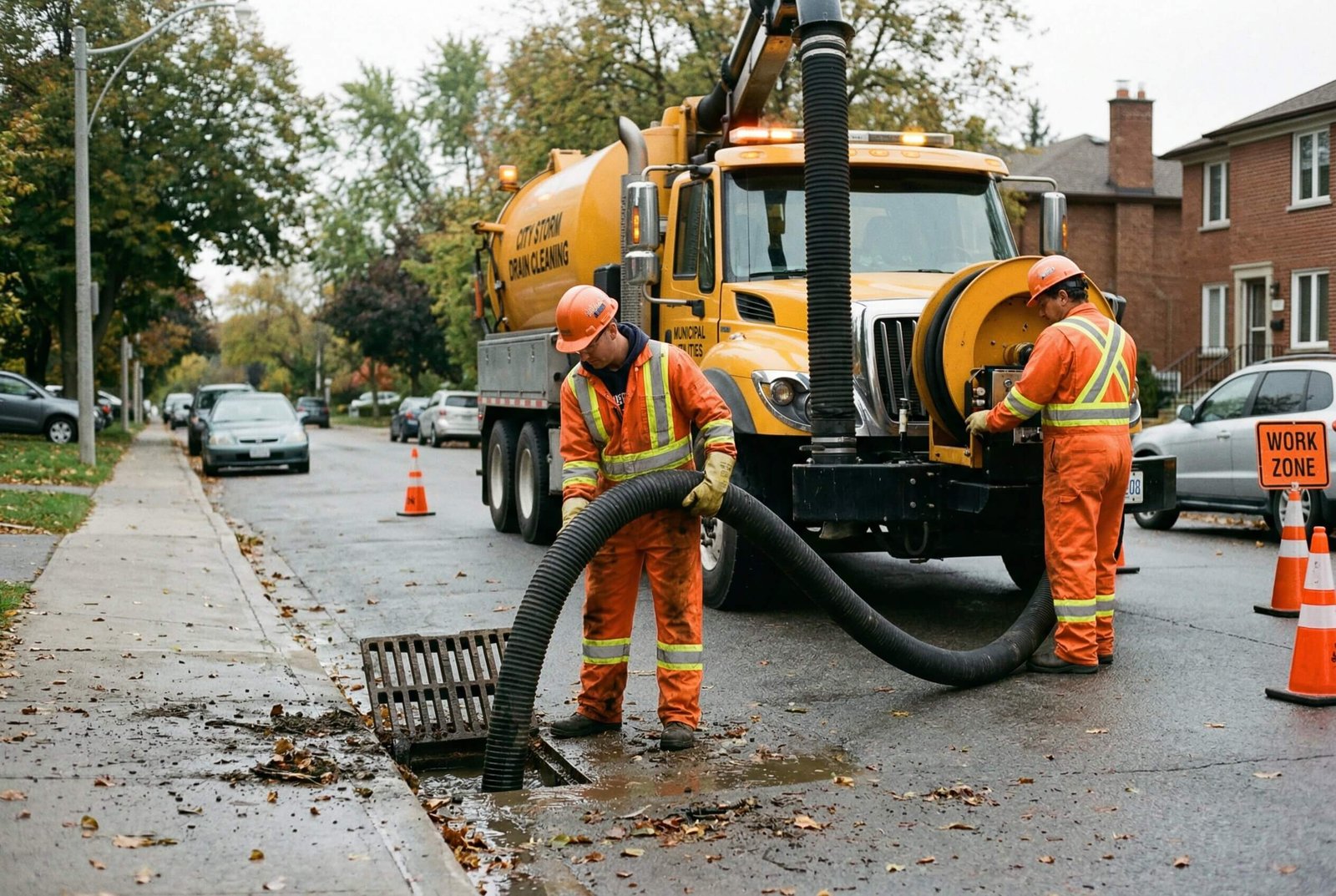
Storm drain problems usually become noticeable during or after heavy rain. Water starts collecting where it shouldn’t—near driveways, along the street edge, or in low areas of the yard. Instead of draining away quickly, it sits, spreads, or even begins to overflow from nearby grates. At first, it may seem like the system is just overwhelmed by rain, but when it happens repeatedly, it’s often a sign of a deeper blockage inside the storm drainage system.
Storm drains are designed to handle large volumes of water and move it away from your property and surrounding areas. They play a critical role in preventing flooding, soil erosion, and water damage. Over time, however, these systems collect debris like leaves, dirt, sediment, trash, and organic material. This buildup doesn’t always block the drain immediately—it gradually restricts flow until the system can no longer keep up, even during normal rainfall.
Why Storm Drain Cleaning Service Becomes Necessary
Unlike indoor or smaller yard drains, storm drains deal with continuous exposure to outdoor elements. Everything from street debris to runoff water contributes to gradual buildup inside the pipes. This process happens slowly, often without visible signs until the system starts failing under pressure.
- Water begins to drain slower after rain
- Storm drain grates overflow during moderate rainfall
- Debris collects quickly and repeatedly at entry points
- Flooding starts to appear in areas that previously drained well
Storm drain cleaning service focuses on removing this internal buildup and restoring the system’s full capacity. It ensures that water can move freely through the pipes instead of backing up or spreading across the surface.
When ignored, these early signs often lead to more serious problems like localized flooding, damage to surrounding areas, and increased strain on the entire drainage system.
What This Page Covers
ToggleWhat Storm Drain Cleaning Service Actually Means
Storm drain cleaning service is often assumed to be as simple as clearing debris from a grate or opening. While that’s the most visible part, the real issue usually lies deeper inside the system. Storm drains are part of a larger network of underground pipes designed to carry rainwater away from streets, driveways, and properties. Over time, these pipes collect layers of sediment and debris that gradually restrict flow.
Unlike smaller drains, storm systems handle large volumes of water along with everything that flows with it—dirt, sand, leaves, trash, and organic material. These materials don’t pass through cleanly every time. Instead, they settle inside the pipes, especially in low points or bends, forming a buildup that reduces how much water the system can handle.
Surface Clearing vs Deep Storm Drain Cleaning Service
There’s a clear difference between cleaning what you see and restoring how the system actually functions. Many temporary fixes only address the surface.
- Removing leaves or trash from the grate improves short-term flow
- Water may drain faster initially after clearing the opening
- Internal buildup inside pipes remains untouched
Deep storm drain cleaning service focuses on clearing the entire pipe system, not just the entry point. This is what restores proper drainage capacity.
What Happens Inside Storm Drain Pipes Over Time
Inside the pipe, the condition gradually changes as debris accumulates. Even without a full blockage, partial buildup can significantly reduce efficiency.
- Sediment settles at the bottom of the pipe
- Organic material sticks along pipe walls
- Trash and debris get trapped and compact over time
- Water flow becomes restricted and uneven
This process often goes unnoticed until the system is unable to handle normal rainfall.
Temporary Relief vs Full Storm Drain Cleaning Service
Storm drains may appear to be working again after basic cleaning, especially if the blockage is near the surface. However, the problem often returns because the deeper buildup hasn’t been removed.
- Temporary clearing restores flow briefly
- Residual material continues to collect inside the pipe
- Drain performance declines again during the next rainfall
A proper storm drain cleaning service removes the buildup throughout the system, helping restore full and consistent water flow.
When Cleaning Reveals Larger Drainage Issues
In some cases, cleaning uncovers problems that go beyond a simple blockage. These issues often develop slowly and are not visible from the surface.
- Pipe sections that have shifted or partially collapsed
- Sediment accumulation due to poor slope or drainage design
- Tree root intrusion in certain underground sections
- Connection issues with larger stormwater or sewer systems
This is why storm drain cleaning service is not just about clearing debris—it’s about understanding how the entire drainage system is functioning and addressing the issue at its source.
When You Actually Need Storm Drain Cleaning Service
Storm drain problems usually become obvious during rainfall, but the real issue often starts much earlier. Small signs—like slower drainage or minor debris buildup—tend to get ignored until the system can no longer handle water properly. The key is recognizing patterns, not just reacting to a single heavy rain event.
In most cases, the need for storm drain cleaning service becomes clear when the system fails to perform consistently, even under normal conditions.
Water Not Draining During or After Rain
One of the earliest and most common signs is water taking longer than usual to drain. Even moderate rainfall can reveal that the system is not functioning at full capacity.
- Water sitting near storm drains after rain stops
- Slow movement of water toward drain openings
- Puddles forming in areas that used to drain quickly
This usually indicates partial blockage inside the storm drain line.
Storm Drain Overflow During Rainfall
When a storm drain begins to overflow, it’s a strong indication that the system is restricted. Instead of handling incoming water, it starts pushing it back out.
- Water rising above the drain grate
- Overflow happening even during moderate rain
- Water spreading outward instead of draining
This typically means the pipe cannot carry water at the required volume due to internal buildup.
Flooding Near Property or Street Areas
Localized flooding is often linked to blocked storm drains, especially in low-lying areas. This is more than just a surface issue—it points to reduced capacity in the drainage system.
- Water collecting near driveways or sidewalks
- Flooding along street edges or curb areas
- Water reaching closer to the property than usual
These situations often require immediate attention to prevent further damage.
Multiple Storm Drains Backing Up
Storm drains are usually part of a connected network. When more than one drain shows issues at the same time, the blockage is often deeper within the system.
- Several drains draining slowly or not at all
- Water backing up across connected areas
- Reduced performance across the entire drainage line
This kind of pattern indicates a larger restriction, not just a localized clog.
Recurring Issues After Every Rainfall
If the same problem happens after every rain, it’s rarely a temporary issue. Recurrence is one of the clearest signs that cleaning is needed.
- Drain works briefly, then fails again
- Debris keeps building up quickly
- Water behavior remains consistent across multiple rain events
This suggests that the underlying buildup inside the pipe has not been removed.
Early Signs vs Late-Stage Storm Drain Problems
Understanding how the issue progresses helps determine how urgent the situation is and what level of service may be needed.
- Early stage: slow drainage, minor debris buildup
- Mid stage: repeated overflow, multiple drains affected
- Late stage: flooding, system backup, water spreading widely
Addressing the problem early usually keeps the solution simple. Waiting until later stages often requires more intensive cleaning and increases the risk of property damage.
How Storm Drain Cleaning Service Is Performed (Step-by-Step)
Storm drain cleaning service follows a systematic process because the goal is not just to remove visible debris, but to restore the full capacity of the drainage system. Since storm drains handle large volumes of water, even partial blockages can significantly affect performance. Each step focuses on identifying the restriction, clearing it properly, and ensuring the system works under real conditions.
Initial Inspection of Storm Drain System
The process begins with inspecting both the visible entry points and the surrounding drainage behavior. This helps determine whether the issue is localized or deeper in the system.
- Checking storm drain grates for debris buildup
- Observing water pooling or overflow patterns
- Identifying areas where water is not flowing correctly
This step provides an initial understanding of how severe the blockage might be.
Identifying the Type of Blockage in Storm Drains
Once the inspection is complete, the next step is diagnosing what is causing the restriction inside the pipes. Storm drains collect a wide range of materials, and each type behaves differently.
- Sediment and sand settling inside pipes
- Leaves and organic debris compacting over time
- Trash or foreign objects blocking sections of the line
- Tree roots entering underground storm drain pipes
Correct identification is essential because the cleaning method depends on the type of blockage.
Choosing the Right Storm Drain Cleaning Method
After diagnosis, the appropriate cleaning method is selected. This depends on how deep the blockage is and how much buildup has accumulated.
- Light blockages may require basic mechanical clearing
- Moderate buildup may need snaking or suction methods
- Heavy sediment or sludge often requires hydro jetting
The goal is to restore full flow, not just create a temporary path.
Executing the Storm Drain Cleaning Process
This is the main stage where the blockage is removed and the system is cleaned internally. The method used depends on earlier findings and system condition.
- Hydro jetting to flush out sediment and debris
- Vacuum or suction equipment to remove heavy material
- Snaking to break through localized clogs
This step ensures that both the blockage and the buildup causing it are addressed.
Flushing and Testing the Storm Drain System
After cleaning, the system is tested to confirm that it can handle water flow properly. This step is important because storm drains must perform under high volume conditions.
- Running water through the system to check flow rate
- Observing whether water drains quickly and evenly
- Ensuring no backup occurs at connected drain points
Testing helps confirm that the system has been fully restored.
Final Inspection and System Evaluation
The final step focuses on evaluating the condition of the storm drain system after cleaning. This helps identify any deeper issues that may need attention.
- Checking for pipe damage or misalignment
- Identifying areas prone to repeated blockage
- Noting any structural issues within the drainage line
In some cases, cleaning reveals underlying problems that may require further work, but it also provides a clear understanding of how the system is performing overall.
Methods Used in Storm Drain Cleaning Service
Storm drain cleaning service uses different methods depending on how the blockage has formed and how extensive it is. Unlike smaller drains, storm systems handle large volumes of water along with debris, which means the cleaning approach needs to match both the type of material and the size of the system.
A proper method doesn’t just reopen the drain—it restores the system’s ability to handle water consistently during rainfall.
Hydro Jetting for Deep Storm Drain Cleaning Service
Hydro jetting is one of the most effective methods for storm drain cleaning, especially when there is heavy sediment or sludge buildup inside the pipes. It uses high-pressure water to clean the entire line.
- Breaks apart compacted sediment, sludge, and organic material
- Cleans pipe walls, not just the center pathway
- Flushes debris completely out of the system
- Restores full water-carrying capacity
This method is commonly used when buildup has developed over time or when the system fails during moderate rainfall.
Vacuum and Suction Cleaning for Heavy Debris
Storm drains often collect larger debris that cannot be pushed through the pipe. In these cases, vacuum or suction equipment is used to remove the material directly.
- Removes leaves, trash, and heavy debris from drain basins
- Clears sediment that has settled at the bottom of the system
- Prevents debris from being pushed further into the pipe
This method is especially useful for storm drain entry points and catch basins.
Drain Snaking for Localized Storm Drain Blockages
Snaking is used when the blockage is limited to a specific section of the storm drain pipe. It helps create a path through the obstruction.
- Effective for isolated clogs within the line
- Breaks through compacted debris or small obstructions
- Faster solution for moderate drainage issues
However, it typically clears the immediate blockage rather than fully cleaning the pipe walls.
Camera Inspection for Storm Drain Systems
When the cause of the blockage isn’t clear or when issues keep recurring, camera inspection helps locate and identify the problem inside the pipe.
- Pinpoints exact blockage location
- Detects pipe damage or structural issues
- Identifies root intrusion or misalignment
- Helps determine whether cleaning or sewer line repair is needed
This method is critical for understanding deeper issues that are not visible from the surface.
When Storm Drain Cleaning Service Leads to Repair
In some cases, cleaning reveals that the issue is not just debris buildup but a structural problem within the system. This is more likely in older systems or areas with heavy environmental impact.
- Collapsed or damaged pipe sections restricting flow
- Poor slope causing sediment accumulation
- Recurring root intrusion into underground lines
- Connection issues within the stormwater network
In these situations, storm drain cleaning service becomes the first step in identifying and addressing a larger problem that may require repair for a long-term solution.
Storm Drain Cleaning Service: DIY vs Professional Decision
Storm drain issues often look simple from the outside—just a clogged grate or debris buildup. Because of this, many homeowners try to handle the problem themselves first. In some cases, that works, especially when the issue is clearly visible and limited to the surface.
But storm drain systems are designed to handle large volumes of water and are usually connected to underground networks. Most real problems develop inside these pipes, where basic cleaning tools cannot reach. Understanding the difference between a surface issue and a deeper blockage helps you decide when DIY is enough and when professional storm drain cleaning service becomes necessary.
When DIY Storm Drain Cleaning Can Work
There are situations where simple cleaning can restore normal flow, especially when the blockage hasn’t moved into the underground system.
- Leaves, trash, or debris blocking the drain grate
- Surface buildup after a storm or windy conditions
- Water still draining, but slightly slower than usual
- No recurring issue once debris is cleared
In these cases, removing the visible obstruction and allowing water to flow freely may be enough.
Where DIY Storm Drain Cleaning Starts to Fail
Problems become more complex when the blockage is deeper inside the pipe. Surface cleaning may temporarily improve the situation, but it doesn’t address internal buildup.
- Water continues to drain slowly after cleaning the grate
- Overflow happens again during the next rainfall
- Multiple drains show reduced performance
- The exact location of the blockage is unclear
At this stage, the limitation is not effort—it’s access. The issue exists beyond the reach of basic tools.
Risks of Improper Storm Drain Cleaning Methods
Using the wrong tools or methods can sometimes make the problem worse, especially with larger drainage systems.
- Pushing debris further into the pipe, creating deeper blockages
- Damaging pipe walls or joints with improper tools
- Ineffective use of chemicals that do not break down outdoor debris
- Attempting high-pressure cleaning without proper control
These risks often lead to more complicated issues than the original blockage.
When Professional Storm Drain Cleaning Service Is Necessary
There’s a clear point where proper equipment and deeper inspection are required to restore the system fully. This is usually when the problem becomes consistent or widespread.
- Recurring overflow during rain
- Standing water that doesn’t clear over time
- Multiple storm drains affected at once
- Signs of sediment buildup or structural issues
Professional storm drain cleaning service focuses on clearing the entire system, not just the entry point. It also helps identify whether the issue is limited to debris or if there are deeper problems within the drainage network.
Cost of Storm Drain Cleaning Service in the U.S.
The cost of storm drain cleaning service can vary depending on how severe the blockage is and how much of the system is affected. Some jobs involve clearing debris from a single drain opening, while others require cleaning long sections of underground pipe using specialized equipment.
Storm drains handle large volumes of water and debris, so the level of buildup can significantly impact both the complexity and cost of the service. In most cases, the deeper and more widespread the blockage, the higher the cost.
Typical Storm Drain Cleaning Service Cost Range
Most residential and small-scale storm drain cleaning jobs in the U.S. fall within a general price range based on the level of work involved.
- Light cleaning (surface debris or minor blockage): $150 – $300
- Moderate blockage (snaking or suction cleaning): $300 – $700
- Deep cleaning (hydro jetting or full system flush): $500 – $1,200
- Complex cases (heavy sediment, roots, extended lines): $1,000 – $2,500+
These ranges can vary based on location, accessibility, and system design, but they reflect realistic expectations for most situations.
Emergency Storm Drain Cleaning Service Cost
Storm drain problems often become urgent during heavy rainfall or sudden flooding. Emergency service usually comes at a higher cost due to immediate response and additional resources.
- After-hours or weekend service: additional $150 – $400+
- Same-day urgent service may carry premium charges
- Flooding situations may require multiple steps, increasing cost
Emergency work is typically more expensive because of the urgency and complexity involved.
What Affects Storm Drain Cleaning Service Cost
Several factors influence the final price, depending on how extensive the problem is and what is required to fix it properly.
- Severity of blockage: Light debris vs heavy sediment or sludge
- Depth and length of system: Short section vs extended underground line
- Type of debris: Organic material, trash, or compacted sediment
- Equipment required: Basic tools vs hydro jetting or vacuum systems
- Accessibility: Easy access vs restricted or buried drain points
Each of these factors can increase the amount of work needed to fully restore the system.
Simple vs Complex Storm Drain Cleaning Jobs
Understanding the difference between a simple and complex job helps set expectations before the work begins.
- Simple jobs involve clearing visible debris or minor restrictions
- Moderate jobs require deeper cleaning but are still manageable
- Complex jobs involve extensive buildup, multiple blockages, or hidden issues
- Some cases may begin as cleaning but lead to further inspection or repair
Storm drain cleaning service is generally more manageable when handled early. As buildup increases or the system becomes more restricted, both the complexity and cost tend to rise.
Risks of Delaying Storm Drain Cleaning Service
Storm drain issues often seem manageable at first, especially if the problem only appears during heavy rain. But when these early signs are ignored, the system gradually loses its ability to handle water effectively. What starts as a partial blockage can quickly turn into overflow, flooding, and wider drainage failure.
Because storm drains are designed to manage large volumes of water, even a small restriction can create significant pressure in the system. Over time, this leads to problems that extend beyond just the drain itself.
Flooding Around Property and Surrounding Areas
One of the most immediate risks is localized flooding. When storm drains cannot carry water away fast enough, it begins to collect and spread.
- Water pooling near driveways, sidewalks, or yard edges
- Flooding along street-side areas near the property
- Water reaching closer to entry points or structures
This can escalate quickly during continuous rainfall.
Water Damage to Foundation and Landscape
When water is not redirected properly, it often begins to affect nearby structures and landscaping. Prolonged exposure to moisture creates long-term damage.
- Water collecting near foundation walls
- Soil saturation weakening the ground around the home
- Damage to landscaping features and lawn areas
These issues develop gradually but can become costly if ignored.
Soil Erosion and Drainage Disruption
Improper water flow changes how soil behaves over time. Instead of staying stable, it begins to shift and erode.
- Soil washing away from certain areas
- Formation of uneven ground or depressions
- Loss of support under paved surfaces or edges
Erosion often goes unnoticed until visible changes appear in the landscape.
Increased Pressure on Drainage Infrastructure
Blocked storm drains don’t just affect one location—they put pressure on the entire drainage system connected to them.
- Reduced efficiency across multiple drains
- Higher risk of backup during moderate rainfall
- Overflow spreading into connected areas
This can create a chain reaction affecting nearby drainage points.
Complete Storm Drain System Failure
In more advanced cases, delaying the issue can lead to full system failure, where the drain is no longer able to handle water at all.
- Continuous overflow instead of drainage
- Flooding during even light rain
- Multiple drains failing simultaneously
At this stage, what could have been a routine storm drain cleaning service often becomes a more complex and expensive problem to resolve.
Where Storm Drain Problems Commonly Occur
Storm drain issues don’t usually affect just one point. Because these systems are connected and designed to move large volumes of water, a blockage in one section can impact multiple areas. The signs often show up where water naturally collects or where runoff is the heaviest.
Understanding where these problems typically occur helps identify whether the issue is local to one drain or part of a larger system restriction.
Street-Side Storm Drains Near Property
These are some of the most visible storm drains and often the first to show signs of trouble. They collect runoff from roads, driveways, and surrounding surfaces.
- Drains located along curbs or street edges
- Areas where water flows from multiple directions
- Points where debris from roads accumulates quickly
Because they handle a mix of water and debris, these drains are prone to frequent buildup.
Yard Stormwater Inlets and Grates
Many homes have stormwater inlets within the yard that connect to underground drainage systems. These are designed to manage runoff from landscaping and open areas.
- Drains placed in low areas of the yard
- Locations where water collects after rain
- Areas affected by soil, mulch, and organic debris
Over time, these drains accumulate material that gradually reduces flow.
Driveway and Parking Runoff Drains
Driveways and parking areas generate a combination of water and surface residue, which can enter the storm drain system.
- Linear trench drains across driveways
- Drains near garage entrances
- Areas exposed to dirt, oil residue, and debris
This combination often leads to buildup inside the pipe rather than just at the surface.
Low-Lying Outdoor Areas Prone to Flooding
Certain parts of a property naturally collect more water due to slope or layout. These areas depend heavily on proper storm drainage.
- Sections of yard that remain wet longer than others
- Areas where water flows and collects during rainfall
- Flat zones where water has limited natural drainage
These locations tend to highlight problems earlier when the system becomes restricted.
Underground Stormwater Pipe Connections
The most critical part of the system is often hidden underground. This is where multiple drains connect and carry water away from the property.
- Main lines connecting multiple storm drains
- Sections where sediment tends to settle
- Points where pipe alignment or slope affects flow
Blockages in these areas are less visible but have a wider impact, often causing multiple drains to fail at the same time.
Finding Help for Storm Drain Cleaning Service Locally
Storm drain issues are often influenced by local conditions more than homeowners expect. Rainfall intensity, soil type, street layout, and how drainage infrastructure is designed in your area all affect how stormwater systems behave. Because of this, storm drain cleaning service is not just about clearing debris—it’s about understanding how water moves through your local environment.
In many cases, the same type of blockage can behave very differently depending on location. That’s why local familiarity plays an important role in identifying and resolving the issue correctly.
Why Local Experience Matters in Storm Drain Cleaning Service
Stormwater systems are connected to broader infrastructure, and their performance depends on regional factors. Someone with local experience is more likely to recognize patterns and recurring issues.
- Areas prone to heavy rainfall or sudden storms
- Streets where debris buildup happens frequently
- Soil conditions that affect how water drains or settles
- Older neighborhoods with aging stormwater systems
This kind of experience helps identify the cause faster rather than just clearing the visible blockage.
Understanding Local Stormwater Drainage Patterns
Each area has its own drainage flow based on layout and infrastructure. These patterns determine how water moves and where problems tend to develop.
- Sloped streets directing water toward specific drains
- Flat areas where water tends to accumulate
- Neighborhood layouts affecting runoff direction
- Drainage systems connected to municipal stormwater networks
Recognizing these patterns helps determine whether the issue is isolated or part of a wider system problem.
Connection to Local Drainage Infrastructure
Storm drains are often part of a shared system that connects to city-managed infrastructure. Understanding how these connections work is important for effective cleaning.
- Links between residential drains and street storm systems
- Shared underground lines carrying water from multiple properties
- Points where blockages commonly occur in the network
- Flow direction toward main drainage outlets
Local familiarity helps identify where restrictions are likely to exist, especially in deeper or shared lines.
Why Generic Solutions Don’t Work for Storm Drain Issues
Applying a standard approach without considering local factors often leads to temporary results. Storm drain systems are affected by more than just debris—they respond to environmental and structural conditions.
- Same cleaning method may not suit every system design
- Recurring issues often tied to local drainage behavior
- Surface cleaning may ignore deeper infrastructure problems
A proper storm drain cleaning service focuses on solving the issue based on how the system functions in your specific area, not just applying a general fix.
How to Choose the Right Storm Drain Cleaning Service Provider
Choosing the right storm drain cleaning service provider is not just about availability—it’s about how thoroughly the problem is understood and addressed. Storm drain systems are larger and more complex than typical household drains, and the approach used can determine whether the issue is resolved properly or returns with the next rainfall.
A reliable provider focuses on diagnosing the system, selecting the right method, and restoring full drainage capacity—not just clearing what’s visible at the surface.
Look for Experience in Storm Drain Cleaning Service
Stormwater systems behave differently from indoor plumbing. They deal with large volumes of water, environmental debris, and underground networks that require practical experience.
- Experience with residential and street-connected storm drain systems
- Understanding of how runoff behaves during rainfall
- Ability to identify deeper system issues beyond surface blockage
A provider with relevant experience is more likely to recognize patterns and avoid temporary fixes.
Check Equipment Used for Storm Drain Cleaning Service
The tools used play a major role in how effective the cleaning will be. Storm drains often require more than basic equipment to fully clear buildup.
- Hydro jetting for deep pipe cleaning
- Vacuum or suction systems for heavy debris removal
- Camera inspection tools for internal pipe analysis
Proper equipment ensures that the blockage is removed throughout the system, not just partially cleared.
Transparency in Storm Drain Cleaning Service Assessment
Understanding what’s happening inside the system is important before any work begins. A clear explanation helps set realistic expectations.
- Explanation of blockage type and location
- Clear reasoning behind the chosen cleaning method
- Realistic cost estimate based on system condition
Transparency usually indicates a more thorough and practical approach.
Emergency Readiness for Storm Drain Cleaning Service
Storm drain issues often become urgent during heavy rain or sudden flooding. Quick response can help prevent further damage.
- Availability during storm conditions
- Ability to handle overflow or flooding situations
- Preparedness for high-volume water conditions
This becomes critical when delays could lead to water spreading across the property.
Common Mistakes When Choosing Storm Drain Cleaning Service
Many homeowners choose based on convenience or price without fully understanding the scope of the problem. This often leads to repeat issues.
- Selecting the lowest-cost option without proper inspection
- Assuming all services follow the same process
- Ignoring recurring drainage issues
- Choosing surface cleaning instead of full system cleaning
These mistakes usually result in temporary relief rather than a long-term solution.
Red Flags to Avoid in Storm Drain Cleaning Service
Certain warning signs can indicate that the service may not fully address the issue or may lead to repeated problems.
- No inspection before starting the work
- Immediate diagnosis without checking the system
- Offering only one cleaning method regardless of condition
- Avoiding discussion about deeper system issues
A proper storm drain cleaning service provider focuses on understanding the entire system first, then applying the right solution based on what’s actually happening underground.
Final Thoughts on Storm Drain Cleaning Service
Storm drain problems often appear only during rain, which makes them easy to overlook in dry conditions. If the system seems fine most of the time, it’s natural to assume there isn’t a serious issue. But when water starts pooling, overflowing, or draining slowly during rainfall, it usually means the system is already restricted and not performing at full capacity.
What makes storm drain issues different is that most of the problem exists inside the underground network. The visible grate may look clear, but sediment, debris, and buildup inside the pipes gradually reduce how much water the system can handle. This is why surface cleaning often provides only temporary relief—the deeper restriction remains.
Storm drain cleaning service focuses on restoring the full flow of the system, allowing it to handle water properly during both normal and heavy rainfall. It also helps identify whether the issue is simply buildup or something more serious like pipe damage, poor slope, or structural problems within the drainage network.
Addressing the problem early usually keeps the solution straightforward. Waiting until the system starts overflowing or causing flooding often leads to more complex and expensive work. Understanding how storm drains behave—and responding to early warning signs—helps prevent larger drainage issues and keeps water moving away from your property as intended.