
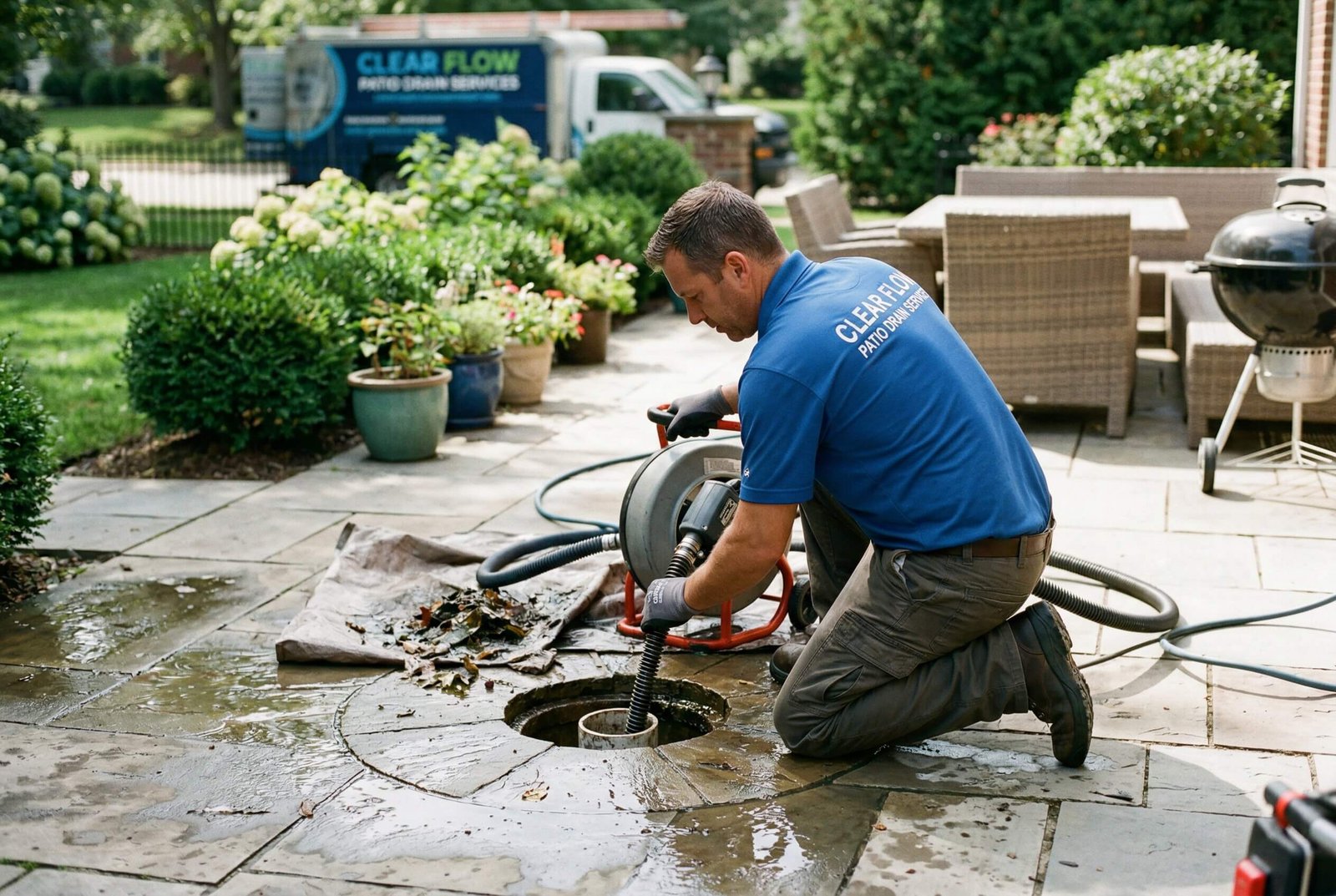
Patio drainage issues often start quietly. You may notice water sitting longer than usual after rain, damp patches forming near seating areas, or a drain that doesn’t clear as quickly as it used to. At first, it feels like a minor inconvenience—something caused by heavy rain or a bit of surface debris. But when the same problem keeps showing up, it usually means the drainage system underneath is starting to struggle.
Patios are designed as flat or slightly sloped surfaces, which means water depends entirely on drains to move away. Unlike soil areas, there’s nowhere for water to absorb naturally. As rainwater flows across the patio, it carries dirt, leaves, algae, and fine debris into the drain. Over time, this material builds up inside the system, slowly restricting how efficiently water can pass through.
Why Patio Drain Cleaning Service Becomes Necessary
The buildup inside patio drains doesn’t block the system instantly—it reduces flow gradually. That’s why the problem often goes unnoticed until drainage becomes visibly slow or inconsistent.
- Water begins to pool in the same areas after rain
- Drains take longer to clear even light runoff
- Moisture lingers near doors or edges of the patio
- Surface cleaning doesn’t fix the issue permanently
Patio drain cleaning service focuses on clearing this internal buildup and restoring proper flow through the system. Addressing the issue early helps prevent water from collecting near the house and avoids more complex drainage problems later.
What This Page Covers
ToggleWhat Patio Drain Cleaning Service Actually Means
Patio drain cleaning service is often misunderstood as simply clearing leaves or debris from the drain opening. While that’s part of it, the actual issue usually develops deeper inside the drainage system. Patio drains—whether point drains or channel drains—connect to underground pipes that carry water away from the surface. Over time, these pipes collect dirt, organic material, algae, and fine sediment that gradually restrict flow.
Because patios are flat or gently sloped, water doesn’t move as quickly as it does on driveways or streets. This slower movement allows more debris to settle inside the drain system. Even small amounts of buildup can start affecting how efficiently water drains, especially during repeated rainfall.
Surface Cleaning vs Deep Patio Drain Cleaning Service
There is a clear difference between what you can see and what’s actually affecting the system. Surface cleaning may improve drainage temporarily, but it rarely solves the underlying problem.
- Removing leaves and debris from the drain opening
- Clearing visible buildup around the grate
- Restoring short-term water flow
Deep patio drain cleaning service focuses on clearing the internal pipe system, which is where most restrictions develop over time.
How Patio Drain Systems Work in Real Homes
Patio drainage systems are designed to collect water from flat surfaces and direct it into underground lines. Depending on the setup, they may connect to yard drains, storm drains, or a larger drainage network.
- Point drains collect water from a single location
- Channel drains collect water along a linear path
- Underground pipes carry water away from the patio
If any part of this system becomes restricted, the entire drainage performance is affected.
What Happens Inside Patio Drain Pipes Over Time
Inside the pipe, buildup forms gradually and often goes unnoticed until it starts affecting flow.
- Fine dirt and sediment settle at the bottom
- Leaves and organic matter begin to decompose
- Algae and moisture create a sticky layer on pipe walls
- Debris collects in bends or low points
This combination slowly reduces how much water the system can handle.
Temporary Fix vs Long-Term Patio Drain Cleaning Solution
It’s common for patio drains to appear fixed after basic cleaning, especially if the blockage is near the surface. However, without addressing deeper buildup, the issue usually returns.
- Temporary cleaning improves drainage briefly
- Internal buildup remains inside the pipe
- Drain performance declines again over time
A proper patio drain cleaning service removes buildup throughout the system, restoring consistent and reliable drainage.
When Cleaning Reveals Deeper Patio Drain Problems
In some cases, cleaning uncovers issues beyond debris buildup. These problems are not always visible from the surface but can affect how the system functions.
- Pipes with poor slope causing water to sit
- Cracks or damage in underground sections
- Root intrusion in connected outdoor lines
- Blockages further along in shared drainage systems
This is why patio drain cleaning service is not just about clearing debris—it’s about understanding how the entire drainage system is working and addressing the issue at its source.
When You Actually Need Patio Drain Cleaning Service
Patio drainage issues rarely appear suddenly. They usually build up over time, starting with small signs like slightly slower drainage or minor water collection. Because these early symptoms don’t seem serious, they are often ignored. But when the same patterns repeat or begin affecting how water moves around the patio, it’s a clear indication that the system is no longer functioning properly.
Patio drain cleaning service becomes necessary when the problem is consistent, not occasional. Recognizing these patterns early helps prevent water from spreading toward the house or causing surface damage.
Water Pooling on Patio After Rain
One of the most common signs is water collecting on the patio instead of draining away quickly. This usually indicates that the system is partially restricted.
- Puddles forming in the same locations after every rainfall
- Water taking longer than usual to clear
- Surface staying wet even after the rain has stopped
This points to reduced flow capacity inside the drain.
Slow Drainage Near Doors or Seating Areas
Patios often connect directly to living spaces, so slow drainage near doors or seating areas becomes noticeable quickly.
- Water lingering near sliding doors or entry points
- Damp areas forming where people walk or sit
- Reduced drainage even during light rain
This suggests the system is not moving water efficiently away from critical areas.
Overflow from Patio Drains
When patio drains start overflowing, it means the system cannot handle incoming water, even under normal conditions.
- Water rising above the drain opening
- Overflow during moderate rainfall
- Water spreading across the patio surface
This is usually a sign of deeper blockage inside the pipe.
Recurring Clogging After Surface Cleaning
If cleaning the drain opening provides only temporary relief, the issue is likely deeper within the system.
- Drain works briefly after cleaning, then slows again
- Same problem repeats after each rain
- Surface cleaning no longer makes a difference
Recurring issues indicate internal buildup that needs proper cleaning.
Water Moving Toward the House Instead of Away
Patio drains are designed to direct water away from the house. When the system is restricted, water may begin to flow in the opposite direction.
- Water collecting near walls or entry points
- Runoff spreading toward indoor areas
- Increased moisture near the foundation
This is a strong sign that the drainage system is failing.
Dirt, Leaves, and Organic Debris Buildup Patterns
Patios collect a mix of organic and environmental debris that gradually enters the drainage system.
- Leaves accumulating around drain openings
- Dirt and fine sediment washing into the drain
- Algae or organic buildup forming over time
These materials contribute to internal blockage and reduced flow.
Early Signs vs Late-Stage Patio Drain Problems
Understanding how the issue progresses helps you decide when to act before it becomes more serious.
- Early stage: slight pooling, slower drainage
- Mid stage: recurring clogs, overflow during rain
- Late stage: standing water, water reaching walls or doors
Addressing the issue early usually keeps the solution simple. Waiting until water starts affecting nearby structures often leads to more complex and costly repairs.
How Patio Drain Cleaning Service Is Performed (Step-by-Step)
Patio drain cleaning service follows a structured process because the goal is not just to remove visible debris, but to restore proper water flow through the entire system. Since patios deal with slow-moving runoff and organic material, buildup tends to form gradually inside the pipes. Each step focuses on identifying the cause and ensuring the drainage system works consistently after cleaning.
Initial Inspection of Patio Drain System
The process begins with a detailed inspection of the patio and how water flows across it. This helps identify problem areas and understand whether the issue is at the surface or deeper in the system.
- Checking drain openings for visible blockage
- Observing pooling areas and water movement patterns
- Identifying low spots where water collects
This step helps determine where the restriction is likely located.
Identifying the Type of Blockage in Patio Drains
After inspection, the next step is to understand what is causing the blockage. Patio drains usually collect a mix of organic and environmental debris.
- Leaves, dirt, and fine sediment buildup
- Algae or organic material forming inside pipes
- Debris compacting in bends or low sections
- Possible root intrusion in connected outdoor lines
Identifying the blockage type helps in selecting the right cleaning approach.
Choosing the Right Patio Drain Cleaning Method
Different types of buildup require different cleaning methods. The approach depends on how deep and severe the blockage is.
- Light buildup may be cleared with basic tools
- Moderate blockage may require snaking
- Heavy or widespread buildup often needs hydro jetting
The goal is to remove the cause of the problem, not just open a temporary path.
Executing the Patio Drain Cleaning Process
This is the main stage where the system is cleaned internally. The method used depends on the earlier assessment.
- Snaking to break through localized clogs
- Hydro jetting to remove buildup along pipe walls
- Manual cleaning for surface drains and openings
This step ensures that both visible and hidden blockages are addressed.
Testing Water Flow After Cleaning
Once cleaning is complete, the system is tested to confirm that water is flowing properly again. This is especially important for patios, where drainage relies on consistent performance.
- Running water through the drain to check flow speed
- Observing whether pooling areas have cleared
- Ensuring water moves away from the house
Testing confirms that the system is functioning as intended.
Final Inspection and Recommendations
The final step involves reviewing the condition of the drainage system after cleaning. This helps identify any deeper issues or areas that may need attention in the future.
- Checking for pipe damage or poor slope
- Identifying areas prone to recurring buildup
- Suggesting maintenance if needed
In some cases, cleaning may reveal underlying problems, but it also provides a clear understanding of whether the issue was simple buildup or part of a larger drainage concern.
Methods Used in Patio Drain Cleaning Service
Patio drain cleaning service uses different methods depending on how the blockage has formed and how far it extends into the system. Because patios collect organic debris, dirt, and moisture, the buildup inside the pipes is often softer but more widespread. Over time, this combination forms layers that reduce flow and make drainage inconsistent.
Choosing the right method is important because surface cleaning alone rarely solves the issue. The goal is to remove both loose debris and the material attached to pipe walls so the system can handle water properly again.
Hydro Jetting for Deep Patio Drain Cleaning Service
Hydro jetting is one of the most effective methods for cleaning patio drains when buildup is spread throughout the pipe. It uses high-pressure water to clean the entire internal surface.
- Breaks down organic buildup like algae and decomposed leaves
- Removes sediment stuck along pipe walls
- Flushes debris completely out of the system
- Restores full drainage capacity
This method is especially useful when the drain repeatedly clogs or struggles during normal rainfall.
Drain Snaking for Localized Patio Drain Clogs
Snaking is used when the blockage is limited to a specific section of the pipe. It helps open a path so water can flow again.
- Effective for compact clogs in one area
- Breaks through debris blocking a section
- Quick solution for moderate drainage issues
However, it typically clears the immediate blockage rather than cleaning the entire pipe.
Manual Cleaning for Patio Surface Drains
Patio drains often collect visible debris at the surface, especially in point or channel drains. Manual cleaning is usually the first step.
- Removing leaves, dirt, and debris from drain openings
- Clearing buildup near the entry point
- Restoring immediate surface-level drainage
While necessary, this alone does not address deeper buildup.
Camera Inspection for Patio Drain Systems
When the issue is recurring or unclear, camera inspection helps identify what’s happening inside the pipe.
- Locates exact blockage position
- Detects pipe damage or misalignment
- Identifies root intrusion or deeper buildup
- Helps determine if cleaning or sewer line repair is needed
This provides clarity before using more intensive cleaning methods.
When Patio Drain Cleaning Service Leads to Repair
In some situations, cleaning reveals that the problem is not just debris but a structural issue within the drainage system. This is more common in older systems or poorly designed patios.
- Pipes with improper slope causing water to sit
- Cracks or damage restricting flow
- Repeated root intrusion in connected lines
- Issues with connection to larger drainage systems
In these cases, patio drain cleaning service becomes the first step in identifying a deeper issue that may require repair for a long-term solution.
Patio Drain Cleaning Service: DIY vs Professional Decision
Patio drain issues often appear simple at first—leaves around the drain, a bit of dirt buildup, or water taking longer to clear. In some cases, these problems can be handled with basic cleaning. But most patio drainage systems extend below the surface, and the real issue is usually inside the pipe where buildup forms gradually over time.
The decision between DIY and professional patio drain cleaning service depends on how deep the blockage is and whether the issue keeps returning. What looks like a surface problem is often part of a larger system restriction.
When DIY Patio Drain Cleaning Can Work
There are situations where basic cleaning is enough, especially when the issue is clearly visible and limited to the surface.
- Leaves or debris blocking the drain opening
- Light dirt buildup near the grate
- Water still draining, just slightly slower
- No recurring issue after cleaning
In these cases, removing debris and flushing water through the drain can temporarily restore normal flow.
Where DIY Patio Drain Cleaning Starts to Fail
The limitation of DIY methods becomes clear when the blockage is deeper inside the system. Surface cleaning may improve things briefly, but the issue returns because the underlying buildup is still there.
- Water drains slowly even after cleaning the surface
- Same pooling areas appear after every rainfall
- Overflow occurs despite repeated cleaning
- You cannot locate where the blockage is
At this point, the issue is no longer accessible with basic tools.
Risks of Improper Patio Drain Cleaning Methods
Using incorrect methods or tools can sometimes worsen the problem, especially when dealing with underground pipes.
- Forcing tools into pipes may damage connections
- Pushing debris deeper can create a more severe blockage
- Chemical cleaners are ineffective for organic outdoor buildup
- Excess pressure may weaken pipe joints
These risks often turn a manageable issue into a more complicated one.
When Professional Patio Drain Cleaning Service Is Necessary
There comes a point where proper equipment and inspection are needed to fully resolve the issue. This is usually when the problem becomes consistent or starts affecting nearby areas.
- Recurring clogs after basic cleaning
- Standing water that does not clear
- Overflow during normal rainfall
- Signs of buildup deeper inside the system
Professional patio drain cleaning service focuses on clearing the entire pipe system and restoring proper drainage. It also helps identify whether the issue is limited to debris or involves deeper structural concerns within the drainage network.
Cost of Patio Drain Cleaning Service in the U.S.
The cost of patio drain cleaning service depends on how much buildup has formed and how far it extends into the drainage system. Some situations involve simple surface clearing, while others require deep cleaning of underground pipes using specialized equipment. The difference in cost usually comes down to how severe the blockage is and how accessible the system is.
Patio drains often deal with organic debris, dirt, and moisture, which creates gradual buildup inside the pipe. Because this buildup develops slowly, the issue may seem minor at first but require more involved cleaning once the system starts struggling to drain properly.
Typical Patio Drain Cleaning Service Cost Range
Most residential patio drain cleaning jobs in the U.S. fall within a general range based on the level of work required.
- Light cleaning (surface debris or minor clog): $100 – $250
- Moderate blockage (snaking or partial cleaning): $250 – $500
- Deep cleaning (hydro jetting): $400 – $900
- Complex cases (heavy buildup, extended lines, root issues): $800 – $1,500+
These ranges vary depending on the specific conditions and location.
Emergency Patio Drain Cleaning Service Cost
Patio drainage issues can become urgent when water starts collecting near doors or flowing toward the house. Emergency service typically comes at a higher cost due to immediate response.
- After-hours or weekend service: additional $100 – $300+
- Same-day urgent service may include premium charges
- Severe overflow situations may require multiple steps, increasing cost
Emergency work is priced higher because of urgency and availability.
What Affects Patio Drain Cleaning Service Cost
Several factors influence the final cost depending on the complexity of the job and the condition of the drainage system.
- Severity of blockage: Light debris vs compacted organic buildup
- Drain type: Point drain vs channel drain system
- Depth and accessibility: Easy access vs buried or extended lines
- Equipment required: Basic tools vs hydro jetting or camera inspection
- Pipe condition: Older pipes or structural issues requiring caution
Each of these factors can increase the amount of work required to fully restore the system.
Simple vs Complex Patio Drain Cleaning Jobs
Understanding the difference between simple and complex cases helps set realistic expectations before the work begins.
- Simple jobs are quick and resolved with basic cleaning
- Moderate jobs require deeper cleaning but remain manageable
- Complex jobs involve widespread buildup or hidden issues
- Some cases begin as cleaning but lead to further inspection or repair
Patio drain cleaning service is usually more straightforward when addressed early. As buildup increases or deeper issues develop, both the complexity and cost tend to rise.
Risks of Delaying Patio Drain Cleaning Service
Patio drainage issues often seem minor at first—just a bit of water sitting after rain or a damp area that takes longer to dry. Because patios are outdoor spaces, it’s easy to assume the problem isn’t urgent. But when drainage is restricted, water begins to behave differently, and over time, it can affect both the surface and nearby structures.
Since patios are usually flat and close to the house, even small drainage problems can gradually lead to bigger concerns if ignored.
Water Moving Toward the House
One of the most common risks is water flowing in the wrong direction when the drain cannot handle runoff properly.
- Water collecting near doors or entry points
- Moisture building up along walls
- Increased risk of water reaching interior areas
This becomes more noticeable during repeated rainfall.
Patio Surface Damage and Staining
Standing water on a patio surface can slowly affect its condition, especially if it remains for extended periods.
- Discoloration or staining on tiles or concrete
- Surface wear due to constant moisture exposure
- Residue buildup from dirt and organic material
Over time, this can change the appearance and durability of the patio.
Mold, Algae, and Slippery Surfaces
Moist environments on patios create ideal conditions for organic growth, which can affect both safety and cleanliness.
- Algae forming on damp surfaces
- Mold developing near edges or joints
- Slippery areas increasing the risk of falls
These issues tend to worsen if moisture is consistently present.
Moisture Affecting Nearby Structures
Patios are often connected directly to the home, which means drainage problems can extend beyond the outdoor area.
- Dampness near sliding doors or thresholds
- Moisture seeping into adjacent walls
- Increased humidity near indoor spaces
This can lead to longer-term structural concerns if not addressed.
Increased Load on Connected Drainage Systems
Patio drains are usually part of a larger drainage network. When one section is restricted, it affects overall performance.
- Slower drainage in connected yard or outdoor drains
- Higher chance of overflow during rain
- Reduced efficiency across the system
This can cause issues in multiple areas, not just the patio.
Complete Patio Drain Failure
If the problem is ignored for too long, the drainage system may stop functioning effectively altogether.
- Standing water remaining for long periods
- Overflow occurring even during light rain
- Water spreading across large sections of the patio
At this stage, what could have been handled with a simple patio drain cleaning service often becomes a more complex issue involving deeper inspection or repair.
Where Patio Drain Problems Commonly Occur
Patio drainage issues don’t usually affect the entire surface evenly. They tend to develop in specific areas where water naturally collects, slows down, or enters the drainage system. These locations depend on the patio’s slope, design, and how water flows during rainfall.
Understanding where problems commonly occur helps identify the issue early and prevents it from spreading to other parts of the drainage system.
Low Spots on Patio Surface
Patios are often designed with a slight slope, but over time, small uneven areas can develop where water starts to collect.
- Depressions where water consistently pools
- Areas where water takes longer to dry
- Spots where debris gathers naturally
These low points often become the first visible sign of drainage problems.
Near Sliding Doors or Entry Points
Drainage near doors is critical because these areas are closest to indoor spaces. Even minor issues here can quickly become noticeable.
- Water collecting near thresholds
- Dampness forming near door frames
- Slow drainage affecting entry areas
These locations require proper drainage to prevent water from moving inside.
Between Patio Tiles or Pavers
In patios made with tiles or pavers, water often moves through small gaps before reaching the drain. These areas can trap debris over time.
- Dirt and sediment accumulating between joints
- Organic material collecting in gaps
- Reduced water flow toward the drain
This can contribute to slower drainage even if the main drain appears clear.
Under Outdoor Furniture or Covered Areas
Areas covered by furniture or partial structures often behave differently because debris and moisture accumulate in a confined space.
- Debris collecting in less visible areas
- Moisture staying trapped for longer periods
- Reduced natural drying due to shade
These conditions can contribute to gradual buildup in nearby drains.
Connection Points to Yard or Storm Drain Systems
Patio drains are often connected to larger outdoor drainage systems. Problems in these connections can affect the patio as well.
- Multiple drains feeding into one underground line
- Blockages forming further down the system
- Backup affecting patio drainage performance
These situations usually indicate a deeper issue beyond the patio surface.
Edges Where Patio Meets Soil or Landscaping
The transition between the patio and surrounding soil is another common problem area. Dirt and debris from landscaping can easily enter the drainage system.
- Soil washing onto the patio during rain
- Debris collecting along edges
- Increased sediment entering the drain
These areas often contribute to ongoing buildup inside the system over time.
Finding Help for Patio Drain Cleaning Service Locally
Patio drainage problems are often shaped by local conditions more than homeowners realize. Rainfall patterns, surrounding landscaping, soil behavior, and even how patios are constructed in your area all influence how water flows and where issues develop. Because of this, patio drain cleaning service is not just about clearing debris—it’s about understanding how the entire drainage setup behaves in your specific environment.
The same type of blockage can act very differently depending on location. What works as a quick fix in one area may only provide temporary relief in another. That’s why local familiarity plays an important role in diagnosing and resolving patio drainage problems effectively.
Why Local Experience Matters in Patio Drain Cleaning Service
Patio drains are directly affected by what surrounds them. Someone familiar with local conditions is more likely to identify the root cause instead of just addressing surface symptoms.
- Areas with frequent rainfall or seasonal weather changes
- Soil types that affect water absorption and runoff
- Common debris patterns based on nearby trees or landscaping
- Older properties with modified or aging drainage systems
This kind of experience helps avoid repeated issues caused by incomplete cleaning.
Understanding Patio Drainage Flow Patterns
Every patio has its own drainage behavior based on its design and slope. Water movement is influenced by how the surface is built and where the drain is positioned.
- Slight slopes directing water toward specific drains
- Flat patios where water spreads before draining
- Areas where water slows down or collects
- Drain connections leading to outdoor or storm systems
Recognizing these patterns helps determine whether the issue is local to the patio or part of a larger drainage problem.
Connection to Outdoor and Storm Drain Systems
Patio drains are often connected to yard drains, storm drains, or shared underground lines. A blockage in one part of the system can affect others.
- Multiple drains feeding into a single underground pipe
- Reduced flow affecting nearby outdoor drainage areas
- Blockages forming further along connected lines
- Water backing up into the patio from deeper sections
Understanding these connections is important for resolving the issue completely.
Why Generic Fixes Don’t Work for Patio Drain Issues
Applying a general solution without considering local factors often leads to short-term results. Patio drainage systems are influenced by multiple variables beyond just debris.
- Same cleaning method may not suit every patio design
- Recurring issues often tied to environmental conditions
- Surface cleaning may ignore deeper system behavior
A proper patio drain cleaning service focuses on solving the issue based on how the drainage system functions in your specific setting, rather than applying a one-size-fits-all approach.
How to Choose the Right Patio Drain Cleaning Service Provider
Choosing the right patio drain cleaning service provider is not just about getting the drain cleared quickly—it’s about making sure the issue is properly understood and resolved. Patio drainage problems are often connected to how water flows across the surface and through the underground system, so the approach taken matters more than speed alone.
A reliable provider focuses on identifying the cause, selecting the right method, and restoring proper drainage—not just removing what’s visible at the surface.
Look for Experience in Patio Drain Cleaning Service
Patio drainage involves surface flow, organic debris, and underground pipes. Experience with these systems helps in identifying problems accurately.
- Familiarity with point drains and channel drains
- Understanding how water behaves on flat or sloped patios
- Ability to recognize early signs of deeper issues
This helps avoid repeated cleaning without solving the root cause.
Check Equipment Used for Patio Drain Cleaning Service
The tools used determine how thoroughly the system can be cleaned. Proper equipment allows both cleaning and inspection.
- Hydro jetting for removing buildup inside pipes
- Drain snakes for localized blockages
- Camera inspection tools for internal visibility
Using the right equipment ensures that the cleaning addresses the full system, not just part of it.
Transparency in Patio Drain Cleaning Service Assessment
A clear explanation before starting the work indicates that the issue has been properly evaluated.
- Explanation of what is causing the blockage
- Reasoning behind the chosen cleaning method
- Clear estimate based on actual conditions
Transparency helps set realistic expectations and avoids confusion later.
Emergency Readiness for Patio Drain Cleaning Service
Patio drainage issues can become urgent when water starts collecting near doors or moving toward the house.
- Availability during heavy rain situations
- Ability to handle overflow or standing water quickly
- Preparedness for urgent drainage issues
Quick response can prevent further damage in critical situations.
Common Mistakes When Choosing Patio Drain Cleaning Service
Many homeowners select a service based on convenience or price without understanding the scope of the problem.
- Choosing the lowest-cost option without proper inspection
- Assuming all services provide the same level of cleaning
- Ignoring recurring drainage patterns
- Relying only on surface cleaning
These mistakes often lead to temporary fixes instead of long-term solutions.
Red Flags to Avoid in Patio Drain Cleaning Service
Certain signs can indicate that the issue may not be fully addressed or that deeper problems are being overlooked.
- No inspection before starting work
- Immediate diagnosis without checking the system
- Offering a single method for all situations
- Avoiding discussion about pipe condition or deeper causes
A proper patio drain cleaning service provider focuses on understanding the system first, then applying the right solution based on what is actually happening inside the drain.
Final Thoughts on Patio Drain Cleaning Service
Patio drainage issues often begin with small, easy-to-ignore signs—water sitting a little longer than usual, slight dampness near doors, or minor pooling in certain areas. Because patios are outdoor spaces, these problems don’t always feel urgent. But over time, these early signs usually indicate that the drainage system is slowly losing its ability to handle water effectively.
What makes patio drains different is the type of buildup they collect. Along with rainwater, they carry dirt, leaves, and organic material that gradually settle inside the pipe. This buildup doesn’t block the system immediately, but it reduces flow over time. As a result, even normal rainfall can start causing overflow or water movement toward the house.
A proper patio drain cleaning service focuses on restoring full flow through the entire system, not just clearing what’s visible at the surface. It also helps determine whether the issue is simply buildup or related to deeper problems like pipe condition or drainage design.
Addressing the issue early usually keeps the solution simple and manageable. Waiting until water begins affecting nearby structures or creating safety concerns often leads to more complex and costly work.