
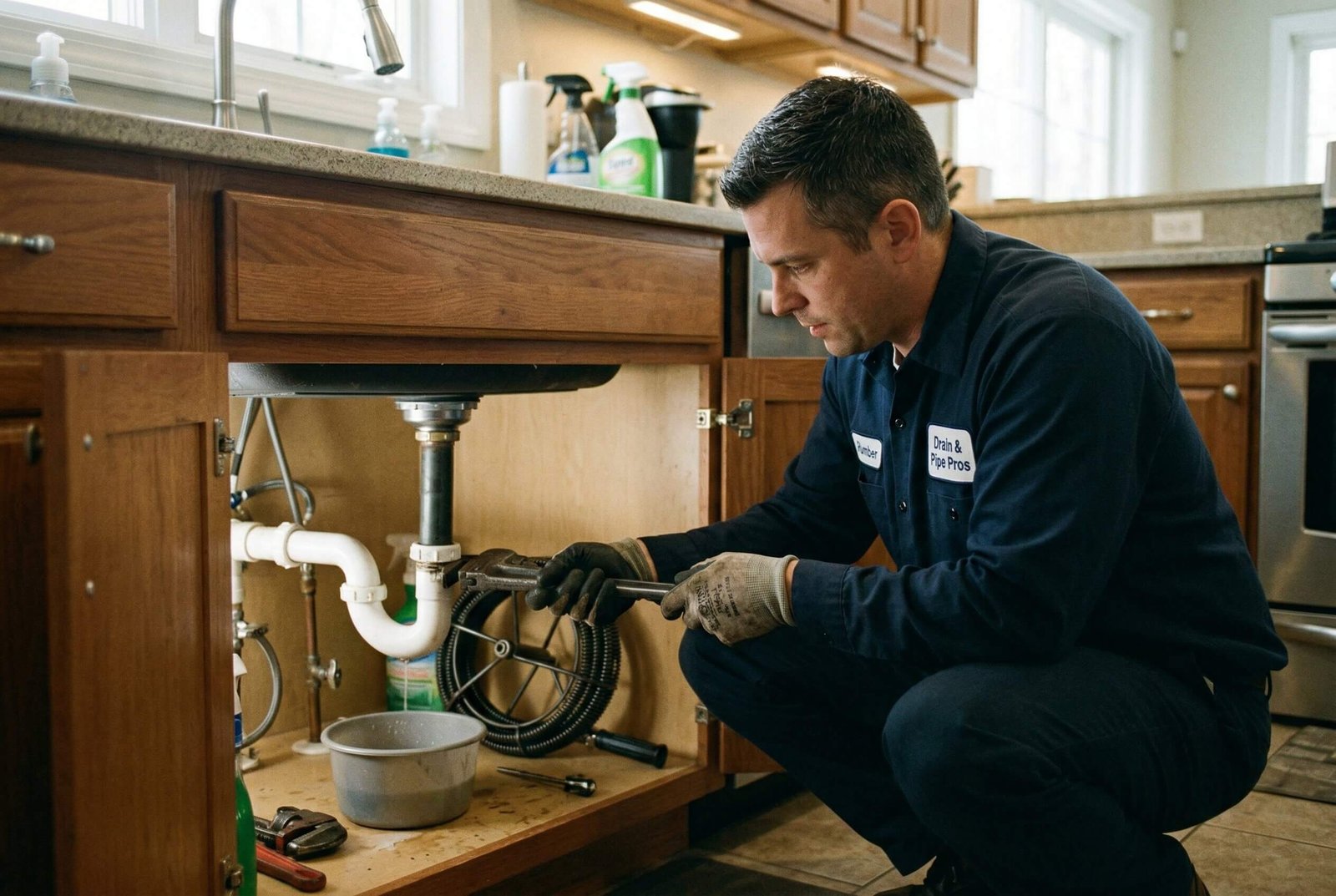
A slow drain is one of those problems most homeowners live with longer than they should. It starts small—water taking a few extra seconds to go down the sink, or a shower floor slowly filling before it drains away. At first, it doesn’t feel urgent. But over time, that delay becomes more noticeable, and eventually, it starts affecting how you use your kitchen, bathroom, or laundry area.
In most homes, a slow drain is an early warning sign that something is building up inside the pipe. It could be grease in a kitchen line, hair and soap in a bathroom drain, or even a partial blockage deeper in the system. The pipe is still working, but not at full capacity. Water can pass through, just not efficiently.
The problem is that slow drains rarely stay slow. As buildup continues, the opening inside the pipe gets narrower, and what once drained in seconds can take minutes—or stop completely. In some cases, it can even lead to a full drain backup affecting multiple fixtures.
A proper slow drain repair service focuses on identifying what’s restricting the flow and restoring the pipe so water moves freely again. Addressing it early is often the difference between a simple fix and a much larger plumbing issue later on.
What This Page Covers
ToggleWhat Slow Drain Repair Service Actually Means
A slow drain repair service is not just about making water go down faster—it’s about understanding why the flow is restricted and fixing the underlying issue inside the pipe. Many homeowners assume a slow drain is a minor inconvenience, but in most cases, it’s an early-stage problem that’s already developing below the surface.
In a normal system, water should move freely through the pipe without resistance. When a drain becomes slow, it usually means the internal space of the pipe has started to narrow. This can happen gradually as grease, soap, hair, or mineral deposits build up along the walls. Water still drains, but it has to push through a smaller opening, which is why everything starts to slow down.
Slow Drain vs Clog vs Backup
It helps to understand where a slow drain fits in the bigger picture of plumbing issues. A slow drain is often the first stage, where the pipe is partially restricted but still functional.
As the buildup increases, it can turn into a full clog, where water stops draining completely. If the blockage continues to worsen or affects the main line, it can eventually lead to a backup—where water starts coming back up into the home.
This progression is why a slow drain repair service focuses on early intervention rather than waiting for the problem to escalate.
Repair vs Cleaning vs Temporary Fix
Not all fixes are equal. Some methods simply open a small path through the blockage, allowing water to drain again temporarily. While this may feel like the problem is solved, the buildup inside the pipe often remains.
A proper repair approach involves either fully cleaning the pipe or addressing structural issues if they exist. In many cases, this connects to deeper drain cleaning methods that remove material from the pipe walls rather than just breaking through the center.
If the issue is related to pipe condition—like improper slope or internal damage—the repair may go beyond cleaning and involve correcting how the pipe functions. In more advanced situations, it can even relate to early-stage sewer line repair if the restriction is deeper in the system.
Understanding what the service actually involves helps avoid repeated slow drain issues and ensures the pipe is restored, not just temporarily cleared.
What Causes Slow Drains in Homes
A slow drain usually builds up gradually. It’s rarely caused by a single event—instead, it’s the result of materials collecting inside the pipe over time. Understanding what’s causing the restriction helps determine whether a simple cleaning will fix it or if there’s a deeper issue that needs attention.
Grease and Soap Build-Up
In kitchen drains, grease is one of the biggest contributors to slow flow. Even when it’s poured down as a liquid, it cools and sticks to the inner walls of the pipe. Over time, it forms a thick layer that traps food particles and reduces the space water can pass through.
In bathrooms, soap residue creates a similar effect. Soap combines with minerals in water and forms a sticky film inside pipes. This buildup gradually narrows the flow path, making drains slower with each use.
Hair and Organic Debris
Hair is a common cause of slow drains, especially in showers and bathroom sinks. It doesn’t dissolve or wash away easily, and it tends to collect in clumps along with soap and other debris.
As more hair gathers, it forms a dense mass that partially blocks the pipe. Water can still pass through, but not freely, which leads to noticeable slow drainage. Over time, this buildup becomes more compact and harder to remove without proper cleaning.
Pipe Scaling and Mineral Build-Up
In areas with hard water, minerals like calcium and magnesium can accumulate inside pipes. This is known as scaling.
Unlike soft buildup like grease or hair, mineral deposits form a harder layer that reduces the internal diameter of the pipe. This type of restriction develops slowly but can significantly affect flow over time. In some cases, scaling requires stronger cleaning methods to fully restore the pipe.
Partial Blockage in the Main Line
Not all slow drains are caused by issues close to the fixture. Sometimes the restriction is deeper in the system, especially in the main drain or sewer line.
When the main line starts to narrow due to buildup or debris, it affects multiple drains in the home. You may notice that several fixtures are draining slowly at the same time. This is often an early warning sign before a larger backup develops.
Pipe Slope or Installation Issues
In some homes, the problem isn’t buildup—it’s how the pipe is installed. Pipes need a proper slope to allow water to flow naturally using gravity.
If the slope is too flat or uneven, water may move slowly even without a blockage. This can also cause debris to settle more easily, leading to repeated slow drain issues. In these cases, cleaning alone may not fully solve the problem, and a structural adjustment may be needed.
When You Actually Need Slow Drain Repair Service
A slow drain often starts as something easy to ignore, but there’s a clear point where it shifts from minor inconvenience to a problem that needs proper repair. The key is recognizing how the behavior changes over time and what those changes mean inside the pipe.
Early Signs Most People Ignore
In the beginning, the changes are subtle. Water still drains, just not as quickly as before. You may notice that the sink takes a little longer to empty after washing dishes, or the shower floor holds water briefly before clearing.
Sometimes there are small signs like bubbling sounds or occasional gurgling, especially when nearby fixtures are used. These are often caused by air being pushed through restricted sections of the pipe. At this stage, the system is still functioning, but buildup has already started forming inside.
Moderate Stage Indicators
As the restriction grows, the slow drain becomes more noticeable and consistent. Water may begin to pool for longer periods, and the drain may struggle to keep up during normal use.
You might find that the same drain needs repeated attention—temporary fixes work for a short time, but the problem keeps coming back. This is usually a sign that the buildup inside the pipe is no longer light and needs a more thorough cleaning approach.
System-Wide Slowdowns
When multiple drains in the home start behaving the same way, it often points to a deeper issue beyond a single fixture. For example, the kitchen sink, bathroom sink, and shower may all drain slower than usual.
This kind of pattern suggests that the restriction may be in a shared line or the main drain system. It’s often an early warning before a full blockage or backup develops.
At this stage, a slow drain repair service becomes important—not just to improve flow, but to prevent the problem from progressing into something more disruptive and expensive to fix.
How Slow Drain Repair Service Is Performed (Step-by-Step)
A proper slow drain repair service follows a structured approach because the goal isn’t just to improve flow temporarily—it’s to understand what’s restricting the pipe and restore it so the problem doesn’t return. The steps may vary slightly depending on the situation, but the overall process remains consistent.
Initial Inspection
The first step is understanding how the slow drain is behaving. A plumber will usually check which fixtures are affected and how long the issue has been happening.
They may run water through different drains to observe how quickly it flows and whether other fixtures are impacted. This helps determine if the problem is isolated to one drain or connected to a larger section of the system.
Diagnosing the Cause
Once the behavior is observed, the next step is identifying what’s causing the restriction. This could be surface-level buildup like grease or hair, or something deeper like a partial blockage in the main line.
In some cases, tools like inspection cameras are used to look inside the pipe and confirm what’s happening. This removes guesswork and ensures the right method is chosen for repair.
Choosing the Repair Method
After identifying the cause, the appropriate method is selected. Not all slow drains require the same solution.
For light buildup, a simple cleaning approach may be enough. For thicker or recurring buildup, more thorough methods like hydro jetting may be used to clean the pipe walls. If the issue is related to pipe structure, a different type of repair may be needed.
The focus is on selecting a method that resolves the issue without causing damage to the pipe.
Performing the Work
This is where the actual repair or cleaning takes place. Depending on the method, the plumber may remove buildup, break apart partial blockages, or clean the inner surface of the pipe.
The goal is to restore the internal space of the pipe so water can flow freely again. In more thorough repairs, this includes removing material along the pipe walls—not just opening a path through the center.
Final Testing
After the work is completed, the system is tested to make sure the drain is functioning properly. Water is run through the affected fixtures to check that it drains smoothly and consistently.
In some cases, additional checks are done to confirm that no significant buildup remains or that the issue won’t return quickly. This final step ensures that the slow drain has been properly resolved, not just temporarily improved.
Methods Used in Slow Drain Repair
Slow drains can come from different types of buildup or pipe issues, so the method used depends on what’s actually restricting the flow. The goal is not just to improve drainage temporarily, but to restore the pipe so water moves freely and consistently.
Drain Snaking
Drain snaking is one of the most common methods used for slow drains, especially when the blockage is forming near the surface or within reach of standard tools.
A flexible cable is inserted into the pipe to break apart or pull out the material causing the restriction. It works well for hair clogs, light debris, and early-stage buildup.
- Effective for localized slow drains
- Helps open partial blockages
- Quick solution for minor restrictions
However, it usually clears a path through the blockage rather than fully cleaning the pipe walls, which means buildup can remain.
Hydro Jetting
Hydro jetting is used when the slow drain is caused by heavier or more widespread buildup inside the pipe. It uses high-pressure water to clean the entire inner surface of the pipe.
Instead of just opening a narrow path, this method removes grease, soap residue, sludge, and other material stuck along the walls. This makes it especially useful for recurring slow drain problems.
- Cleans full pipe diameter
- Removes stubborn buildup
- Helps prevent future slowdowns
It’s often part of deeper drain cleaning when a more complete solution is needed.
Enzyme and Safe Cleaning Methods
For mild buildup, especially in early stages, enzyme-based cleaners or safe cleaning methods may be used. These help break down organic material gradually without damaging the pipe.
While these methods are less aggressive, they are usually slower and not suitable for heavier buildup or recurring issues. They are more effective as a maintenance approach rather than a full repair solution.
Pipe Adjustment or Repair
In some cases, the slow drain is not caused by buildup but by how the pipe is positioned or structured. If the slope of the pipe is incorrect, water may not flow properly even when the pipe is clean.
This type of issue may require adjusting or repairing the pipe to correct the flow. It’s less common than buildup-related problems but important to consider when slow drains keep returning despite cleaning.
Camera Inspection
Camera inspection helps identify what’s happening inside the pipe, especially when the cause isn’t obvious. A small camera is used to visually inspect the pipe and locate the exact source of the restriction.
This is useful for detecting deeper issues like scaling, hidden blockages, or structural problems. It also helps confirm whether the cleaning has been effective and if further repair is needed.
DIY vs Professional (Decision Section)
A slow drain is one of the few plumbing issues where DIY can sometimes work—but only up to a point. The difficulty is knowing where that point is. Many homeowners keep trying small fixes long after the problem has moved beyond what those methods can handle.
When DIY Works
In the early stage, when the drain is just starting to slow down and only one fixture is affected, simple methods can help.
Using a plunger or a small hand auger can sometimes clear light buildup near the surface. Hot water or mild cleaning solutions may also loosen grease in kitchen drains if the restriction is still thin and recent.
At this stage, the pipe is not fully restricted, and water still flows with some resistance. That’s why DIY can work temporarily—it’s dealing with a minor buildup before it becomes compacted.
When DIY Stops Working
As the buildup thickens or moves deeper into the pipe, DIY methods begin to lose effectiveness. You might notice that the drain improves for a short time after trying a fix, but then slows down again within days or weeks.
This usually means only a small opening was created in the blockage while most of the material remained along the pipe walls. Over time, that remaining buildup collects more debris and continues to restrict flow.
When the same slow drain keeps coming back, it’s a sign that the problem needs a more thorough approach than basic tools can provide.
When It Becomes Risky
There’s also a point where DIY can do more harm than good. Using strong chemical cleaners repeatedly can damage pipes, especially older ones, and may not fully clear the blockage.
Applying too much force with improper tools can push the clog deeper into the system or create pressure that weakens pipe joints. If the slow drain is connected to a deeper issue—like a main line restriction—DIY attempts won’t reach the actual problem.
At this stage, a professional approach is less about convenience and more about resolving the issue properly before it turns into a full blockage or backup.
Cost of Slow Drain Repair Service in the U.S.
The cost of fixing a slow drain depends on what’s actually causing the restriction. A light buildup near the surface is very different from a deeper issue in the main line or a pipe-related problem. That’s why pricing can vary—from simple cleaning jobs to more involved repairs.
Typical Cost Ranges
For basic slow drain issues, where the blockage is close to the fixture and relatively light, costs are usually on the lower end. These situations often involve simple tools and less time.
As the problem becomes more complex—like deeper buildup, recurring issues, or multiple drains affected—the cost increases because stronger equipment and more time are required to properly restore flow.
- Basic slow drain cleaning: $75 – $200
- Moderate issue (deeper or recurring): $200 – $400
- Complex slow drain repair: $400 – $800+
These ranges reflect typical U.S. pricing and can vary based on location and property setup.
What Affects the Cost
The final price isn’t just about clearing the drain—it depends on what it takes to fix the problem properly and prevent it from returning.
- Cause of the slow drain → Grease, hair, scaling, or structural issue
- Location of blockage → Near the fixture vs deep in the system
- Number of affected drains → Single vs multiple fixtures
- Equipment used → Basic tools vs hydro jetting or inspection
- Pipe condition → Older pipes may require careful handling
If the slow drain is caused by a deeper issue—like a partial blockage in the main line or improper pipe slope—cleaning alone may not fully resolve it. In those cases, the service may extend into more involved repairs, which increases the overall cost.
Understanding these factors helps explain why some slow drain fixes are quick and inexpensive, while others require a more detailed approach to properly restore the system.
Risks of Ignoring a Slow Drain
A slow drain might seem like a small issue, but it’s usually the first visible sign that something is already building inside the pipe. The problem is not the slow water itself—it’s what’s causing that restriction. Over time, that restriction grows, and the consequences become more noticeable and more expensive.
Full Blockage
When buildup continues to collect inside the pipe, the opening for water gets smaller and smaller. What starts as a slow drain can eventually turn into a complete blockage where water stops draining altogether.
At that point, normal use becomes difficult—sinks fill up, showers pool water, and daily routines are disrupted. Fixing a full blockage is usually more involved than addressing a slow drain early.
Drain Backup
If the restriction becomes severe or affects a shared line, the system may stop handling incoming water entirely. This is when backups can occur.
Instead of draining out, water starts coming back through other fixtures, especially the lowest points in the home. What was once a slow drain can turn into a situation where multiple drains are affected at the same time.
Pipe Damage Over Time
As buildup sits inside the pipe, it can trap moisture, debris, and sometimes corrosive materials. Over time, this can affect the inner surface of the pipe, especially in older systems.
Pressure can also build behind the restriction, putting stress on joints and weak points. While this damage may not be immediately visible, it can lead to leaks or more serious structural issues if ignored for too long.
Odor and Hygiene Issues
Slow drains often come with unpleasant odors. This happens because organic material—like food, grease, or hair—gets trapped inside the pipe and begins to break down.
These odors can spread into living spaces, especially in kitchens and bathrooms. Over time, this becomes not just a comfort issue but a hygiene concern, particularly if the buildup continues to grow inside the system.
Where Slow Drains Commonly Occur
Slow drains can develop anywhere in the home, but certain areas are more prone because of what goes down the pipes and how frequently they’re used. Each location tends to have its own pattern of buildup, which affects how the problem develops over time.
Kitchen Sinks
Kitchen sinks are one of the most common places for slow drains, mainly due to grease and food waste. Even small amounts of oil or fat can stick to the inside of pipes and gradually form a thick layer.
Over time, food particles get trapped in this buildup, making the restriction worse. You may notice water draining slowly after washing dishes, especially after cooking. This type of slow drain often develops gradually but can become severe if not addressed.
Bathroom Sinks and Showers
Bathroom drains deal with a combination of hair, soap, and hygiene products. Hair tends to collect and form clumps, while soap residue creates a sticky layer that holds everything together.
In showers and bathtubs, this buildup often forms just below the drain opening, which is why water may start pooling during use. Bathroom sink drains can also slow down due to toothpaste and soap accumulation over time.
Laundry Drains
Laundry drains handle lint, detergent residue, and sometimes dirt from clothing. Lint can build up inside the pipe, especially if there’s no proper filtering system in place.
Detergent can also contribute to buildup, particularly in combination with minerals in hard water. Slow drainage in laundry areas may not be noticed immediately but can become more apparent during heavy use.
Basement Drains
Basement drains are connected more directly to the main line, which means slow drainage here can indicate a deeper issue in the system.
If water drains slowly in a basement floor drain, especially when other fixtures are being used, it may point to a partial blockage in the main drain or sewer line. This type of slow drain often requires closer attention because it can develop into a larger system-wide problem.
Finding Help Locally
When a slow drain reaches the point where it keeps returning or starts affecting daily use, that’s usually when homeowners begin looking for local help. The difference between a quick temporary fix and a proper repair often comes down to how the problem is diagnosed and handled.
Local plumbers who deal with drain issues regularly tend to recognize patterns quickly—whether it’s grease buildup in kitchen lines, recurring hair clogs in bathroom drains, or early signs of a deeper restriction in the main line. That familiarity helps them decide whether the issue needs simple cleaning or a more thorough approach.
Timing also matters. A slow drain might not feel urgent, but if it’s getting worse or spreading to multiple fixtures, it’s often better to address it before it turns into a full blockage or backup. Many homeowners wait until the problem becomes disruptive, but earlier intervention usually keeps the repair simpler.
Some people also look at city-based plumber listings or comparison pages to understand who handles drain-related issues more thoroughly. This can help identify providers who focus on proper drain cleaning rather than quick fixes, especially in cases where the problem has been recurring.
How to Choose the Right Slow Drain Repair Service
Choosing the right service for a slow drain is less about speed and more about whether the issue is properly understood and resolved. Since slow drains are often early-stage problems, the way they are handled determines whether they stay fixed or keep coming back.
What to Look For
A good approach focuses on identifying the cause of the slow drain rather than just improving flow temporarily. The person handling the issue should be able to explain why the drain is slow and what needs to be done to restore it fully.
Experience with different types of drain problems also matters. Kitchen, bathroom, and main line issues behave differently, and the method used should match the situation.
- Clear explanation of what’s causing the restriction
- Use of appropriate tools based on the problem
- Focus on full cleaning, not just opening the drain
- Willingness to check for deeper or recurring issues
Questions That Help You Understand the Service
Asking a few practical questions can help you understand whether the solution is temporary or long-term.
- Is the drain being fully cleaned or just opened?
- What method will be used to remove the buildup?
- Could this issue come back, and why?
- Is there a deeper issue that needs to be checked?
The answers usually reveal whether the approach is thorough or focused on a quick fix.
Common Mistakes and Red Flags
Some slow drain problems keep returning because the initial repair didn’t address the full cause. Recognizing warning signs early can help avoid repeated issues.
- Only clearing the center of the blockage without cleaning pipe walls
- No attempt to identify the root cause
- Recommending repeated quick fixes without explanation
- Vague pricing or unclear scope of work
A proper slow drain repair service focuses on restoring the pipe so it works normally again—not just improving it for a short time. This approach helps prevent the same issue from coming back repeatedly.
Final Thoughts
A slow drain is easy to ignore because it doesn’t stop everything at once—but it’s usually the first clear sign that something inside the system isn’t working the way it should. What makes it important is not how slow the water is today, but what that slow flow represents building up inside the pipe.
In many homes, the difference between a simple cleaning and a major repair comes down to timing. When addressed early, most slow drain issues can be resolved by removing buildup and restoring normal flow. But when left alone, that same restriction continues to grow, eventually turning into a full blockage or even a backup that affects multiple areas of the home.
The focus should always be on understanding the cause and fixing it properly rather than relying on repeated temporary solutions. Whether the issue is grease, hair, mineral buildup, or something deeper in the system, restoring the pipe fully helps prevent the cycle of recurring slow drains.