
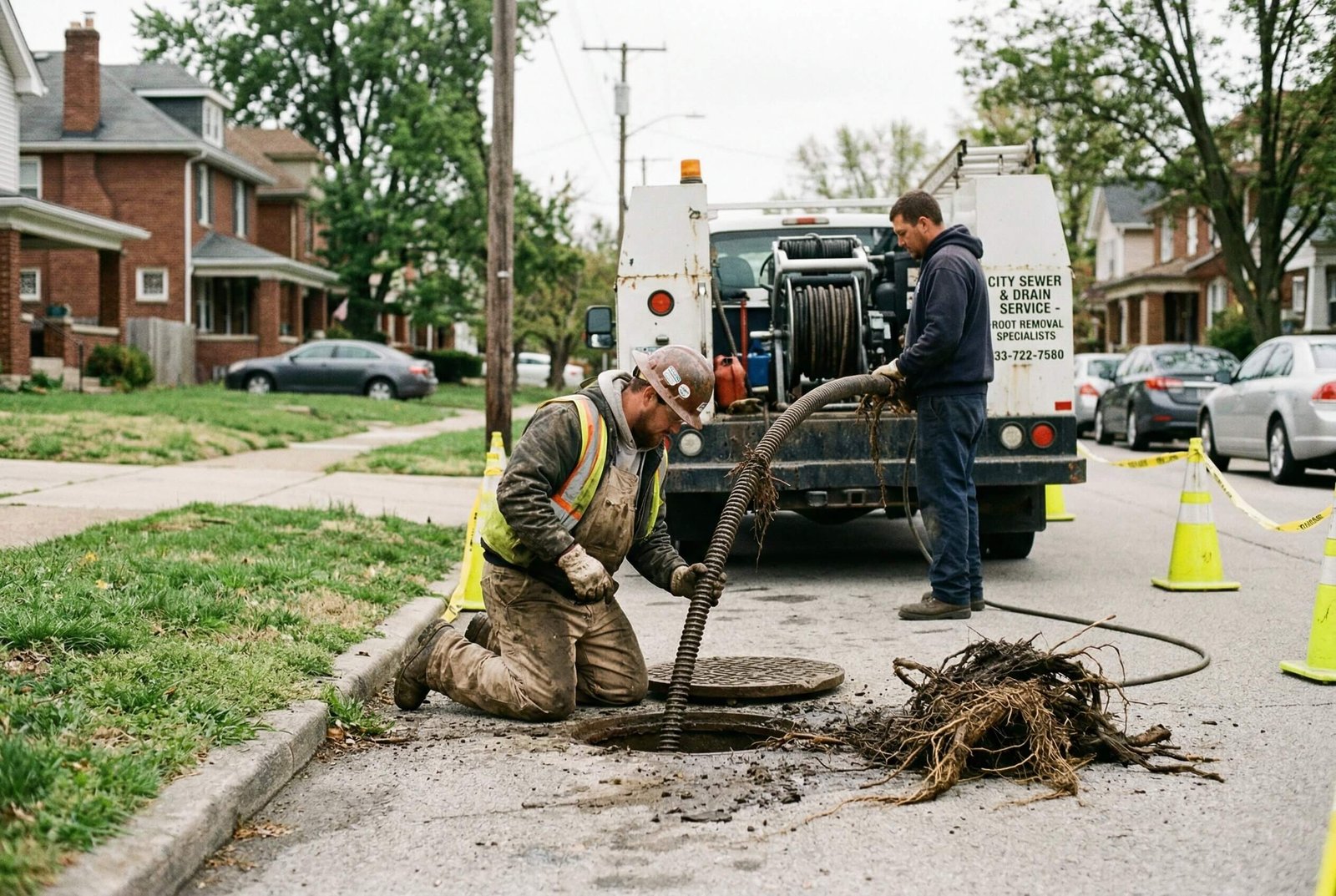
Tree roots in a sewer line are one of the most common—and persistent—causes of serious drainage problems. What makes this issue tricky is that it doesn’t start as a major blockage. In many homes, it begins quietly with small cracks or joints in the pipe that allow tiny roots to enter. Over time, those roots grow inside the line, feeding on the constant moisture and nutrients flowing through it.
At first, the signs may feel minor. You might notice a slow drain, an occasional clog, or a gurgling sound in the plumbing. But unlike typical buildup, root intrusion doesn’t stay the same. As the roots expand, they create a web inside the pipe that traps debris like grease, paper, and waste. This gradually restricts flow and leads to recurring clogs that keep coming back no matter how many times the drain is cleared.
In many cases, homeowners try temporary fixes, thinking it’s just another blockage. But the underlying issue continues to grow inside the pipe. Eventually, it can lead to severe backups or even damage the sewer line itself.
A tree root removal from sewer line service is designed to address this problem at its source—removing the roots and restoring proper flow before it turns into a larger structural issue.
What This Page Covers
ToggleWhat Tree Root Removal from Sewer Line Service Actually Means
Tree root removal from a sewer line is not just about clearing a blockage—it’s about dealing with a living intrusion inside the pipe. Unlike grease or debris, roots continue to grow, spread, and come back if the underlying condition is not addressed properly. That’s what makes this service different from standard drain cleaning.
How Roots Enter Sewer Lines
Sewer pipes, especially older ones, often have small joints, cracks, or weak connection points. These openings may be too small to notice from the outside, but they are enough for tiny roots to enter.
Once inside, roots are naturally drawn to the moisture and nutrients flowing through the pipe. This creates an ideal environment for growth. Over time, what starts as thin root strands can expand into dense masses that fill large portions of the pipe.
Why Roots Keep Growing Inside
Inside a sewer line, roots have everything they need—constant water supply, organic material, and a protected environment. This allows them to grow faster than they would in normal soil conditions.
As they expand, they don’t just block the pipe directly. They also trap other materials like grease, paper, and waste. This combination creates a layered obstruction that becomes more severe over time.
Even if part of the roots are cleared, any remaining growth can continue expanding. That’s why root-related clogs tend to return if the removal is not complete.
Removing Roots vs Fixing the Pipe
Removing roots and fixing the pipe are two related but different things. Root removal focuses on clearing the obstruction and restoring flow inside the line.
However, the reason roots entered in the first place—such as cracks or weak joints—may still exist. If those entry points are not addressed, roots can return over time.
This is why root removal is often the first step, followed by evaluation of whether the pipe condition needs further attention.
Temporary Clearing vs Full Root Removal
Temporary clearing usually involves cutting a path through the roots so water can flow again. While this improves drainage for a short time, most of the root mass remains inside the pipe.
Full root removal, on the other hand, involves cutting and clearing as much of the root system as possible, often followed by cleaning the pipe walls. This reduces the chances of immediate regrowth and restores better flow.
The goal is not just to reopen the pipe, but to remove the conditions that allow the blockage to return quickly.
What Causes Tree Root Intrusion in Sewer Lines
Tree roots don’t randomly grow into sewer lines. There’s always a reason they find and enter the pipe. In most homes, the issue develops slowly due to natural aging of the system, environmental conditions, and how underground pipes respond over time.
Cracks and Joints in Older Pipes
Older sewer lines are one of the most common reasons for root intrusion. Many older systems use materials that develop small cracks or have joints that loosen over time.
These openings may be very small, but they are enough for thin root fibers to enter. Once inside, the roots expand and widen the gap, allowing more growth to follow. Over time, this turns a minor entry point into a major intrusion inside the pipe.
Moisture Attraction and Root Behavior
Roots naturally grow toward sources of moisture. A sewer line provides a constant flow of water and nutrients, making it highly attractive to nearby trees.
Even if the pipe is buried deep underground, roots can detect moisture changes in the soil and move toward the source. Once they reach the pipe, they continue growing along it and eventually find a way inside.
Soil Movement and Pipe Shifting
Over time, soil conditions around a sewer line can change due to weather, moisture, or ground movement. This can cause pipes to shift slightly, creating stress at joints or weak points.
These shifts may lead to small separations or misalignments, which become entry points for roots. Once the pipe structure is no longer tightly sealed, it becomes easier for roots to penetrate.
Aging Sewer Systems and Weak Materials
As sewer lines age, the materials weaken and become more vulnerable to external pressure. Pipes may become brittle, corroded, or less stable over time.
This natural wear makes it easier for roots to push through or expand existing openings. In many cases, root intrusion is not just about the tree—it’s about the condition of the pipe allowing that intrusion to happen.
When You Actually Need Tree Root Removal Service
Tree root intrusion usually doesn’t show up as a sudden failure. It builds gradually, and the signs often look like normal drain issues at first. The key difference is repetition and spread—root problems tend to come back and affect more than one part of the system over time.
Recurring Clogs That Keep Returning
One of the most common signs is a clog that keeps coming back even after being cleared. You might fix the drain, everything works for a short time, and then the same issue appears again.
This happens because roots remain inside the pipe and continue to trap debris. Each time the drain is used, new material gets caught in the root structure, rebuilding the blockage quickly.
Slow Drainage Across Multiple Fixtures
When more than one drain in the home starts slowing down, it often indicates the issue is not isolated. Since roots typically grow in the main sewer line, they affect the entire system rather than a single fixture.
You may notice that sinks, tubs, and toilets all begin to drain slower than usual. This pattern suggests a restriction deeper in the system rather than surface-level buildup.
Gurgling Sounds and Pressure Changes
Gurgling sounds in drains or toilets are another early sign. These noises occur when air is trapped and forced through water due to restricted flow.
As roots grow and reduce the pipe’s capacity, water and air struggle to move smoothly. This creates pressure changes that you can hear, especially when using multiple fixtures.
Sewage Smell or Early Backup Signs
In some cases, you may notice unpleasant odors coming from drains or areas near the sewer line. This can happen when waste is not flowing properly and begins to stagnate inside the pipe.
Early backup signs, such as water rising slightly in a drain after use, also indicate that the system is under strain. These signs should not be ignored, as they often appear before more serious backup issues develop.
How Tree Root Removal from Sewer Line Service Is Performed (Step-by-Step)
Removing tree roots from a sewer line is not just about cutting what’s visible—it’s about identifying the full extent of the intrusion and clearing the pipe in a way that restores proper flow. Because roots grow and spread inside the system, the process is structured and methodical to ensure the problem is handled completely.
Initial System Evaluation
The process usually begins by understanding how the issue is showing up in the home. A plumber will look at patterns such as recurring clogs, slow drainage across multiple fixtures, or backup behavior.
They may run water through different drains to observe how the system responds. This helps confirm whether the issue is likely in the main sewer line and how severe the restriction might be.
Sewer Camera Inspection
A camera inspection is one of the most important steps in root removal. A flexible camera is inserted into the sewer line to provide a clear view of what’s happening inside the pipe.
This allows identification of where the roots are located, how dense they are, and whether there are multiple intrusion points. It also reveals the condition of the pipe, including any cracks, separations, or damage that allowed the roots to enter.
Identifying Root Location and Severity
Once the inspection is complete, the exact areas affected by roots are mapped out. This includes determining how far the roots have spread and whether they are causing a partial or full blockage.
Understanding the severity is important because it guides the removal approach. Light intrusion may require less aggressive methods, while dense root masses need more powerful equipment.
Selecting the Proper Removal Method
Based on the inspection, the appropriate removal method is chosen. This may involve mechanical cutting tools, hydro jetting, or a combination of techniques.
The method depends on factors such as root thickness, pipe condition, and accessibility. The goal is to remove as much of the root system as possible without damaging the pipe.
Cutting and Clearing the Roots
This is the stage where the roots are physically removed. Specialized tools are used to cut through the root mass inside the pipe, breaking it apart and restoring flow.
Because roots tend to trap debris, clearing them also removes accumulated waste that has built up around them. This step is critical in opening the pipe fully rather than just creating a narrow path.
Cleaning the Pipe and Restoring Flow
After the roots are cut, additional cleaning is often performed to remove leftover fragments and buildup along the pipe walls.
This helps ensure that the pipe is not only open but also less likely to trap new debris immediately. Restoring the full internal diameter of the pipe improves long-term flow.
Final Inspection and Verification
Once the removal and cleaning are complete, the pipe is inspected again to confirm that the roots have been cleared and that flow has been restored.
This step also helps identify whether there are remaining entry points or structural concerns that may need attention to prevent future root intrusion.
Methods Used for Tree Root Removal from Sewer Line
Tree root removal requires more than basic drain cleaning tools because roots are not just debris—they are living structures that grow, expand, and anchor themselves inside the pipe. The methods used are designed to both cut through the roots and restore proper flow while minimizing damage to the sewer line.
Mechanical Root Cutting Tools
Mechanical root cutting is one of the primary methods used to remove roots from sewer lines. These tools are attached to specialized machines and are designed with sharp rotating blades that cut through root masses inside the pipe.
As the cutting head moves through the line, it slices through the roots and breaks them apart, allowing water to flow again. This method is effective for clearing dense root intrusions that have created significant blockages.
However, cutting alone does not always remove all root fragments. Small pieces may remain attached to the pipe walls, which is why additional cleaning is often required to prevent quick regrowth.
Hydro Jetting (Post-Cutting Cleaning)
After roots are cut, hydro jetting is commonly used to clean the remaining debris and residue inside the pipe. High-pressure water flushes out root fragments, sludge, and buildup that may have formed around the roots.
This step is important because roots often trap grease, paper, and waste, creating a layered blockage. Hydro jetting helps clear these layers and restores the pipe’s internal space more completely.
It also helps smooth the pipe walls, making it harder for leftover root fibers to catch debris and grow again quickly.
Auger Cutting Heads
In some cases, heavy-duty augers with specialized cutting heads are used to penetrate and break through root blockages. These tools are designed to reach deep into the sewer line and handle tough obstructions.
Auger cutting is particularly useful when immediate flow restoration is needed. It creates an opening through the root mass, allowing water to pass again.
However, like standard cutting, it may not fully clean the pipe walls. That’s why it is often combined with other methods for a more complete solution.
Chemical Root Treatments (Limited Use)
Chemical treatments may sometimes be used as a follow-up to slow down root regrowth. These treatments are designed to target remaining root fibers inside the pipe.
However, they are not a primary removal method. They do not clear blockages on their own and are typically used as a preventive measure after physical removal has been completed.
Their effectiveness depends on proper application and the condition of the pipe, so they are used selectively rather than as a standard solution.
Camera Inspection (Before and After)
Camera inspection plays a key role throughout the process. Before removal, it helps identify where the roots are located and how severe the intrusion is.
After removal, it confirms that the roots have been cleared and that the pipe is functioning properly. It also helps detect any remaining entry points or structural issues that could lead to future problems.
In root intrusion cases, this step ensures the solution is complete rather than temporary.
DIY vs Professional (Decision Section)
Tree roots in a sewer line are one of those problems where DIY solutions almost always fall short. Unlike simple clogs, this is not just debris sitting inside the pipe—it’s an active intrusion that continues to grow and return if not properly handled.
Why DIY Methods Don’t Work for Root Intrusion
Most household tools are not designed to reach or handle root growth inside a sewer line. Even if you manage to push water through temporarily, the actual root mass remains inside the pipe.
Plungers and basic drain snakes may create slight movement in the blockage, but they cannot cut through thick roots or remove them from deeper sections of the line. This leads to temporary improvement followed by the same issue returning.
Chemical cleaners are also ineffective against roots. They are designed for organic buildup like grease or hair, not for cutting or dissolving root structures. In some cases, repeated use can even damage pipes without solving the underlying problem.
Temporary Relief vs Actual Root Removal
DIY attempts often provide temporary relief by opening a small path through the root mass. Water begins to flow again, and it appears the problem is fixed.
However, the majority of the roots remain attached to the pipe. These roots continue to trap debris and grow, quickly rebuilding the blockage. This is why root-related clogs tend to return more aggressively after temporary fixes.
In contrast, proper root removal involves cutting, clearing, and cleaning the pipe so that the internal space is restored and less prone to immediate regrowth.
When Professional Service Becomes Necessary
Professional service becomes necessary as soon as the problem shows signs of repetition, affects multiple drains, or leads to slowdowns across the system.
At that point, the issue is no longer a simple clog—it’s a structural intrusion that requires specialized tools and inspection. Addressing it properly helps prevent more serious problems, such as full sewer backups or damage to the pipe itself.
Cost of Tree Root Removal from Sewer Line in the U.S.
The cost of removing tree roots from a sewer line can vary significantly depending on how deep the roots have grown, how much of the pipe is affected, and what method is required to remove them properly. Unlike simple drain cleaning, root removal often involves multiple steps, including cutting, cleaning, and sometimes inspection.
Typical Cost Ranges
For light root intrusion—where roots have just started entering the pipe and haven’t formed a dense blockage—the cost tends to stay on the lower end. These cases usually require basic cutting and cleaning to restore flow.
As the intrusion becomes more severe, with thicker root masses or repeated blockages, the cost increases. More time and stronger equipment are needed to fully clear the line and remove buildup around the roots.
In cases where roots have spread extensively or caused deeper system issues, the cost reflects the complexity of the work involved.
- Light root intrusion removal: $300 – $600
- Moderate root blockage (recurring issues): $600 – $1,200
- Severe root intrusion or main line impact: $1,200 – $3,000+
These ranges are typical across many U.S. regions but can vary based on accessibility and pipe condition.
Hydro Jetting vs Root Cutting Cost
Root cutting and hydro jetting are often used together, but they have different roles and cost implications.
Root cutting is focused on breaking through the root mass and restoring flow. Hydro jetting is used afterward to clean remaining debris and buildup from the pipe walls.
Because hydro jetting requires specialized equipment and higher pressure, it may increase the overall cost. However, it also improves the long-term effectiveness of the service by reducing leftover material inside the pipe.
Emergency Service Cost
If root intrusion leads to a sewer backup or urgent blockage, emergency service may be required. This typically adds an extra cost due to immediate response and after-hours work.
Emergency root removal can add $150 – $500+ depending on timing and severity.
What Affects the Cost
Several real-world factors influence the final cost of tree root removal:
- Extent of root growth → Small intrusion vs dense root mass
- Depth of the blockage → Near entry point vs deep in sewer line
- Pipe condition → Healthy vs cracked or damaged pipe
- Method required → Cutting, hydro jetting, or combined approach
- Accessibility → Easy cleanout vs limited or underground access
If the pipe has been damaged by roots, removal alone may not fully solve the issue. In such cases, additional work related to sewer line repair may be needed, which involves a different level of cost and scope.
Understanding these factors helps explain why pricing varies—it’s not just about removing roots, but restoring the pipe so it functions properly again.
Risks of Ignoring Tree Root Intrusion in Sewer Line
Tree root intrusion doesn’t stay at the same level once it starts. Because roots are living and continuously growing, ignoring the problem allows it to expand inside the pipe, making the situation progressively worse over time.
Recurring Sewer Line Clogs
One of the first consequences is repeated clogging. Even if the drain is cleared temporarily, the roots remain inside and continue to trap debris like grease, paper, and waste.
This leads to a cycle where the clog returns again and again, often becoming more frequent. What initially seemed like a minor issue turns into a persistent problem that affects daily use.
Full Sewer Backup
As the roots grow thicker and more widespread, they can block the pipe almost completely. When this happens, wastewater has no path to exit the home.
This can result in sewage backing up through the lowest drains, such as basement floor drains, showers, or toilets. At this stage, the issue becomes not just inconvenient but also a sanitation concern.
Pipe Damage and Structural Issues
Roots don’t just sit inside the pipe—they push against it as they grow. Over time, this pressure can widen cracks, shift joints, or even cause sections of the pipe to weaken.
In some cases, the damage becomes severe enough that cleaning alone is no longer enough. The pipe may require repair or replacement if its structure is compromised.
Increasing Cost Over Time
The longer root intrusion is ignored, the more expensive it becomes to fix. What might have been resolved with early removal can turn into a more complex issue involving deeper cleaning or structural repair.
Addressing the problem early helps limit both the extent of root growth and the cost of resolving it.
Where Tree Root Intrusion Commonly Happens
Tree roots don’t enter sewer lines randomly—they target specific areas where the pipe is more vulnerable or where moisture is easier to detect. Understanding these locations helps explain why some homes are more prone to this problem than others.
Outdoor Sewer Line (Yard Area)
The most common place for root intrusion is the outdoor section of the sewer line, which runs underground through the yard. This area is naturally surrounded by soil and plant roots, making it the most exposed part of the system.
Roots from nearby trees grow outward in search of water. When they detect moisture around the sewer line, they begin moving toward it. If there is even a small weakness in the pipe, this becomes the primary entry point.
Near Large Trees and Landscaping
Homes with large trees, shrubs, or dense landscaping near the sewer line are more likely to experience root intrusion. Tree roots can extend far beyond the visible canopy, sometimes reaching pipes several feet away.
Once roots locate a consistent water source, they continue growing in that direction. Over time, this increases the pressure around the pipe and raises the chances of intrusion at weak points.
Pipe Joints and Connection Points
Joints are naturally weaker than solid pipe sections, especially in older systems. These connection points can loosen over time due to ground movement or aging materials.
Even a slight gap between joints can allow fine roots to enter. Once inside, they expand and create larger openings, making the problem worse with time.
Older Sewer Systems
Older pipes are more susceptible to root intrusion because of wear and material degradation. Clay, cast iron, or aging PVC pipes may develop cracks, corrosion, or weakened areas.
These conditions make it easier for roots to penetrate the pipe. In many cases, root intrusion is not just about the presence of trees—it’s about the condition of the pipe allowing roots to enter.
Finding Help Locally
When dealing with tree roots in a sewer line, the type of help you choose directly affects whether the problem is actually solved or just temporarily relieved. Root intrusion is not a basic clog—it requires someone who understands how roots behave inside pipes and how to remove them without causing further damage.
Local plumbers who regularly handle sewer line and drain cleaning work tend to approach root problems differently. Instead of just trying to restore flow quickly, they focus on identifying where the roots entered, how far they’ve spread, and whether the pipe itself has been affected. This helps determine whether the solution should be limited to removal or if further attention is needed to prevent recurrence.
Experience with proper equipment also matters. Root intrusion often requires specialized cutting tools and sometimes follow-up cleaning to remove leftover debris. Without the right tools, the result is usually partial removal, which leads to the same problem returning within a short time.
Many homeowners look through city-based plumber listings or comparison pages to find professionals who deal specifically with sewer line issues. This helps narrow down options to those who are equipped for deeper system problems rather than surface-level fixes.
At this stage, the goal is not just to clear the line—it’s to find someone who can handle the root cause and reduce the chances of the problem coming back again.
How to Choose the Right Tree Root Removal Service
Choosing the right service for tree root removal is critical because incomplete work is the main reason this problem keeps coming back. Since roots continue to grow, the focus should be on removing them properly and understanding why they entered the pipe in the first place.
What to Look For in a Proper Service
A reliable service begins with identifying the extent of root intrusion rather than immediately cutting through the blockage. Understanding how far the roots have spread and what condition the pipe is in helps determine the right approach.
Experience with sewer line root problems is important because this is not a one-step process. It often requires a combination of cutting, cleaning, and evaluation to reduce the chances of regrowth.
- Clear explanation of where roots are located
- Use of proper cutting and cleaning methods
- Focus on removing as much of the root mass as possible
- Consideration of pipe condition after removal
Questions That Help You Evaluate the Service
Asking a few practical questions can help you understand whether the solution will be complete or temporary.
- Are the roots being fully removed or just cut to restore flow?
- What method will be used to clean leftover debris?
- Is the pipe being inspected to check for entry points?
- What is the likelihood of roots growing back, and why?
These questions help you understand whether the approach is focused on long-term results.
Common Mistakes and Red Flags
Root intrusion problems often repeat because of incomplete removal or lack of inspection. Being aware of common mistakes can help avoid repeated service calls.
- Only cutting through roots without clearing residue
- No inspection to identify entry points
- Recommending repeated cleanings without addressing cause
- Vague explanation of what was done inside the pipe
A proper tree root removal service focuses on clearing the intrusion and understanding the condition of the sewer line so the issue does not return quickly.
Final Thoughts
Tree roots in a sewer line are one of those problems that don’t stay small for long. What starts as a minor intrusion can gradually grow into a major blockage that affects the entire plumbing system. The challenge is that the issue often looks like a normal clog in the beginning, which leads to repeated temporary fixes instead of addressing the real cause.
The key difference with root intrusion is that it’s not just debris—it’s a growing condition inside the pipe. Even if flow is restored temporarily, the roots remain and continue to trap waste, rebuild the blockage, and expand further into the system. Over time, this can lead to more serious problems, including backups or damage to the sewer line itself.
The real solution is not just cutting the roots once, but removing them thoroughly and understanding why they entered the pipe. Whether it’s due to aging materials, weak joints, or small cracks, addressing the cause helps reduce the chances of the problem returning quickly.
When handled properly, the system returns to stable flow, and the cycle of recurring clogs is broken. That’s what turns a repeating issue into a resolved one.