
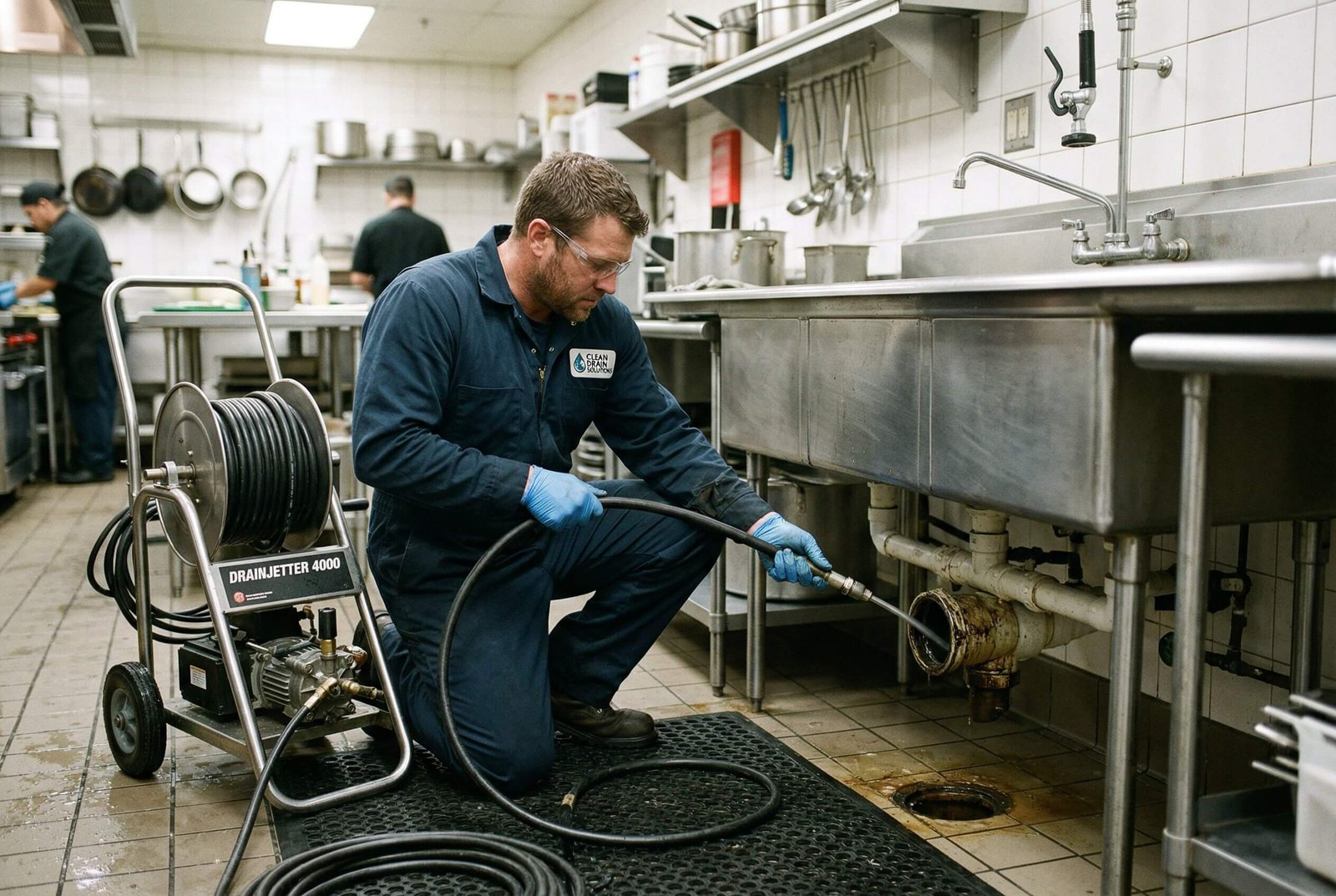
Grease clogs are one of the most common kitchen drain problems homeowners deal with, but they rarely happen all at once. It usually starts quietly — water draining a little slower than usual, a slight smell coming from the sink, or needing to run extra hot water just to keep things moving. Over time, that small inconvenience turns into a stubborn blockage that keeps coming back no matter what you try.
What’s actually happening inside the pipes is very different from what most people expect. Cooking grease, oil, butter, and food residue don’t just wash away. They stick to the inner walls of the pipe, slowly building up layer by layer. As that buildup thickens, it begins to trap other debris, narrowing the pipe until water can barely pass through. This is why the problem often feels like it disappears temporarily, then returns worse than before.
Grease clogs typically form in kitchen sink drain lines, especially in homes where cooking oils or food scraps regularly go down the drain. If left untreated, the blockage can spread deeper into the system, eventually affecting the main drain line or even causing backups into the sink. At that point, it’s no longer just a slow drain — it becomes a messy, disruptive issue that requires proper cleaning, not just a quick fix.
What This Page Covers
ToggleWhat Grease Clog Removal Service Actually Means
Grease clog removal service is not just about opening a blocked kitchen sink so water flows again. In real situations, the goal is to deal with what’s built up inside the pipe walls, not just what’s sitting at the surface. Most homeowners only see the symptom — slow drainage or standing water — but the actual problem is a thick layer of grease that has been forming over time.
Inside the pipe, grease doesn’t stay liquid. It cools, hardens, and sticks to the sides, creating a narrow passage for water. Over weeks or months, this layer traps food particles, soap residue, and debris, turning into a dense, sticky blockage. A proper grease clog removal service focuses on breaking down and removing this buildup completely, not just pushing a hole through it.
What plumbers actually do during grease clog removal
A professional approach starts by understanding how deep and severe the buildup is. In some homes, the clog is close to the sink trap. In others, it extends several feet into the drain line or even toward the main sewer connection.
Depending on the condition, the process may include:
- Loosening hardened grease stuck along pipe walls
- Breaking apart compacted food and oil buildup
- Clearing the full diameter of the pipe, not just a small opening
- Flushing out residue so it doesn’t reattach and cause another clog
This is why professional drain cleaning feels different from temporary fixes. Instead of restoring partial flow, it restores the pipe closer to its original capacity.
Temporary fix vs real grease clog removal
Many homeowners try solutions like hot water, dish soap, baking soda, or store-bought cleaners. These can sometimes create a short-term improvement, especially if the grease is still soft. But once the buildup has hardened or thickened, these methods usually only clear a narrow path through the clog.
That leads to a cycle:
- Water starts draining again briefly
- Grease remains stuck inside
- New debris attaches to old buildup
- The clog returns, often worse than before
A real grease clog removal service breaks that cycle by removing the accumulated layer itself. That’s the difference between a drain that “works for now” and one that stays clear for a longer period.
When You Actually Need Grease Clog Removal Service
Grease clogs don’t usually appear overnight. They build slowly, and the signs show up in stages. The problem is, most homeowners ignore the early warnings because the sink is still “working,” just not as smoothly as before. By the time it becomes obvious, the buildup inside the pipe is already thick enough that basic cleaning won’t fix it.
Recognizing the right moment to act can save you from a full blockage or even a deeper sewer line issue. The key is understanding the difference between a minor slowdown and a grease-related restriction that’s actively getting worse.
Early warning signs of grease buildup in drains
In the beginning, the symptoms are subtle and easy to overlook. The water may still drain, but not with the same speed or consistency.
You might notice:
- Water draining slower than usual after washing dishes
- Sink taking longer to empty when running tap water
- Slight gurgling sounds as water moves through the pipe
- Occasional need to run hot water to “push things through”
At this stage, grease has already started coating the pipe walls. It hasn’t fully blocked the line yet, but it’s reducing the internal space and catching debris.
Recurring problems that indicate deeper grease clog
As the buildup thickens, the issue becomes repetitive. This is where many homeowners try multiple DIY methods, thinking the clog is “coming back,” when in reality it was never fully removed.
Common patterns include:
- Sink clogs that return every few days or weeks
- Temporary improvement after cleaning, followed by slow drainage again
- Dishwasher draining slowly or backing into the sink
- Greasy residue or smell coming from the drain
This stage usually means the clog extends beyond the immediate sink area and is holding onto new waste continuously.
Clear signs you need professional grease clog removal service
There’s a point where the drain is no longer partially restricted — it’s on the verge of complete blockage or already affecting multiple fixtures. This is when professional drain cleaning becomes necessary, not optional.
Look for:
- Water backing up into the sink instead of draining
- Multiple kitchen fixtures draining slowly at the same time
- Standing water that doesn’t clear without intervention
- Strong, persistent odor from the drain
- Repeated failures of plunging or store-bought cleaners
These signs usually indicate that the grease buildup has hardened or spread deeper into the drain line. At this stage, only proper cleaning methods like drain cleaning or sewer line cleaning can restore normal flow.
Early vs late action — what actually changes
Acting early means the grease layer is thinner, easier to remove, and less likely to have damaged the pipe. The process is quicker, simpler, and often less expensive.
Waiting too long changes the situation:
- Grease becomes dense and harder to break down
- Blockage spreads further into the system
- Risk of full backup increases
- Cleaning requires more advanced methods
Understanding where your situation falls helps you decide whether you’re dealing with a minor inconvenience or a developing drain problem that needs proper attention.
How Grease Clog Removal Service Is Performed (Step-by-Step)
When a plumber handles a grease clog, the process isn’t random or rushed. It follows a structured approach based on what’s actually happening inside the pipe. The goal is not just to get water moving again, but to understand how far the grease buildup has spread and remove it properly so the problem doesn’t return quickly.
Initial inspection of the kitchen drain system
The first step is always understanding the situation. A plumber will usually start at the kitchen sink and trace how the water is draining.
They look for:
- How fast or slow water is moving
- Whether there’s partial or complete blockage
- Signs of backup when running multiple fixtures
In some cases, they may open the trap under the sink to check if the clog is local or deeper in the line.
Identifying the level of grease buildup
Once the basic flow is observed, the next step is figuring out how severe the buildup is. Not all grease clogs are the same — some are soft and recent, while others are thick, hardened, and spread across several feet of pipe.
This stage helps determine:
- Whether the clog is near the sink or further down the line
- If the grease is layered along the pipe walls
- Whether other debris is trapped inside the buildup
In more stubborn cases, a drain camera inspection may be used to see exactly what’s happening inside.
Checking pipe condition and layout
Before choosing a cleaning method, the plumber considers the condition of the plumbing system itself. Older pipes, narrow lines, or damaged sections need a different approach compared to newer systems.
They evaluate:
- Pipe material (PVC, cast iron, etc.)
- Diameter and length of the drain line
- Any bends or horizontal sections where grease typically settles
- Signs of corrosion or previous damage
This step is important because using the wrong method can either be ineffective or, in rare cases, cause further issues.
Selecting the right cleaning method
Based on the inspection and buildup level, the plumber chooses how to remove the grease. This isn’t a one-size-fits-all decision.
For example:
- Light buildup may be cleared with basic drain cleaning tools
- Moderate clogs may require snaking to break through blockages
- Heavy grease buildup often needs hydro jetting to clean pipe walls thoroughly
The method is selected to match the severity, not just to get quick results.
Breaking down and removing grease buildup
This is the actual cleaning phase, where the blockage is physically dealt with. Depending on the method used, the grease is either broken apart, scraped off, or flushed out.
The focus here is:
- Removing accumulated grease from pipe walls
- Clearing trapped debris inside the buildup
- Opening the full internal diameter of the pipe
A proper cleaning ensures that the pipe isn’t left with a narrow channel, which would quickly clog again.
Flushing and clearing the line completely
After the main blockage is removed, the system is flushed thoroughly. This step clears out any remaining residue that could stick back onto the pipe walls.
It helps:
- Prevent immediate re-clogging
- Remove loose grease particles
- Restore smoother water flow
Without this step, even a partially cleaned pipe can start building up again quickly.
Final testing to confirm proper flow
The last step is making sure everything is working the way it should. Water is run through the system to confirm that the drain is flowing freely and consistently.
The plumber checks:
- Drain speed and consistency
- Any signs of backup or resistance
- Whether multiple fixtures drain properly
If everything looks normal, it confirms that the grease clog has been properly removed and the system is functioning as expected.
Methods Used for Grease Clog Removal
Grease clogs are not all the same, and that’s why there isn’t a single method that works in every situation. The right approach depends on how thick the buildup is, how far it has spread, and the condition of the pipes. In some homes, the grease is soft and localized. In others, it forms a hardened layer along several feet of pipe, requiring more advanced cleaning.
A proper drain cleaning approach focuses on removing the buildup from the pipe walls, not just pushing through the center.
Hydro jetting for heavy grease buildup
When grease has hardened or spread across a large section of pipe, hydro jetting is often the most effective method. This process uses high-pressure water to break apart and wash away the grease layer completely.
It works by:
- Cutting through thick, hardened grease deposits
- Cleaning the full inner surface of the pipe
- Flushing debris out of the system
Hydro jetting is especially useful when the pipe has narrowed significantly due to buildup. Instead of creating a small passage, it restores the pipe closer to its original diameter. In more advanced cases, this method is also used as part of sewer line cleaning when grease has moved deeper into the system.
Drain snaking for localized clogs
For smaller or more concentrated grease clogs, a drain snake (or auger) may be used. This tool is inserted into the pipe to break through the blockage and create an opening for water to pass.
It helps:
- Penetrate compacted grease and debris
- Restore basic flow quickly
- Reach clogs located a few feet into the drain line
However, snaking typically creates a path through the clog rather than removing all the buildup. That means it can solve the immediate issue but may not prevent the clog from returning if grease remains along the pipe walls.
Manual pipe cleaning in severe cases
In some situations, especially when the clog is very close to the sink or in accessible sections, manual cleaning may be used. This involves opening part of the pipe system and physically removing the grease buildup.
This approach is usually considered when:
- The clog is located in the trap or nearby pipe
- The buildup is thick but accessible
- Other methods are less effective in that specific section
While it’s more hands-on, it allows direct removal of heavy grease deposits in targeted areas.
Use of drain camera inspection tools
Before or during cleaning, a drain camera may be used to get a clear view inside the pipe. This helps confirm the exact cause and extent of the blockage.
It’s useful for:
- Identifying how far grease buildup has spread
- Detecting additional issues like pipe damage or debris
- Verifying that cleaning has been completed properly
This step adds clarity, especially in recurring drain problems where the cause isn’t obvious from the surface.
Choosing the right method based on severity
The method used is always based on the condition of the drain, not just convenience. A light clog may only need basic cleaning, while a heavy, long-term grease buildup requires more thorough treatment.
In many real-world cases, a combination of methods is used:
- Snaking to open the blockage
- Followed by hydro jetting to clean remaining grease
This layered approach ensures that the drain doesn’t just start working again, but stays clear for a longer period.
DIY vs Professional Grease Clog Removal (Decision Section)
Most homeowners try to deal with grease clogs on their own first, and that makes sense. The sink is right there, the problem seems simple, and there are plenty of home remedies that promise quick results. The challenge is that grease behaves differently from other types of clogs, which is why DIY fixes often feel like they work — but don’t last.
Understanding where DIY methods stop working helps you avoid repeating the same cycle and lets you decide when a proper drain cleaning service is actually needed.
When DIY methods may temporarily work
In the early stages, when grease is still soft and hasn’t formed a thick layer, simple methods can improve flow for a short time.
You might see results if:
- The clog is recent and close to the sink
- Grease hasn’t hardened inside the pipe yet
- The slowdown is mild, not a full blockage
Common approaches include hot water, dish soap, or plunging. These can loosen surface-level grease and push some buildup further down the line, which is why the sink may start draining again.
But this improvement is usually temporary because the underlying layer inside the pipe remains.
Why common home remedies fail long-term
Grease doesn’t dissolve easily once it cools and hardens. Running hot water may melt a small portion, but as it moves further into the pipe, it cools again and sticks to the walls. Over time, this actually spreads the problem instead of solving it.
The typical pattern looks like this:
- Partial clearing of the clog
- Grease layer remains inside the pipe
- New debris sticks to the existing buildup
- Drain slows down again within days or weeks
Chemical drain cleaners can sometimes break through a small section, but they rarely remove the full buildup. In some cases, repeated use can also affect older pipes.
When DIY becomes ineffective or risky
There’s a point where home methods stop helping and can even make the situation worse. This usually happens when the grease layer has thickened or spread deeper into the drain line.
Signs DIY is no longer enough:
- The clog keeps returning despite repeated attempts
- Water backs up instead of slowly draining
- Multiple fixtures in the kitchen are affected
- You need to use stronger or repeated chemical treatments
At this stage, the issue is no longer at the surface. It’s inside the pipe walls, and pushing or melting parts of it won’t remove the buildup properly.
When professional grease clog removal is the better choice
Professional cleaning becomes necessary when the goal shifts from “getting water to pass” to actually clearing the pipe. This is especially true when the clog is recurring or affecting more than one part of the system.
A proper service helps:
- Remove grease buildup along the full pipe length
- Prevent quick re-clogging
- Restore normal flow instead of partial drainage
- Identify deeper issues if present
In situations where grease has reached further into the system, methods like sewer line cleaning or advanced tools may be needed to fully resolve the problem.
The real decision point
The decision isn’t just DIY vs professional — it’s temporary relief vs long-term fix.
If the problem is new and mild, trying basic methods is reasonable. But if you’re seeing the same clog return again and again, that’s usually a sign that the buildup hasn’t been removed, only disturbed.
At that point, continuing DIY efforts often delays the actual solution and allows the grease layer to grow thicker, making the eventual cleaning more involved than it needed to be.
Cost of Grease Clog Removal Service in the U.S.
The cost of grease clog removal can vary quite a bit depending on how severe the buildup is and how far it has spread inside the drain system. A simple kitchen sink clog near the trap is very different from a thick grease layer extending deeper into the drain line. That’s why pricing isn’t fixed — it reflects the time, tools, and effort needed to actually clear the pipe properly.
In most cases, homeowners are not just paying to “open a clog,” but to remove accumulated grease from inside the pipe so the issue doesn’t return quickly.
Typical price range for grease clog removal
For standard kitchen drain issues, the cost usually falls within a predictable range.
You can expect:
- $100 – $250 for minor clogs near the sink
- $250 – $500 for moderate grease buildup in the drain line
- $500 – $1,000+ for heavy buildup requiring advanced cleaning like hydro jetting
The price increases as the clog becomes more stubborn, deeper, or harder to access.
Cost difference: minor vs severe grease buildup
The biggest factor in pricing is how much grease has built up inside the pipe. A light blockage that formed recently is quicker to clear and requires basic tools. On the other hand, a long-term buildup that has hardened along the pipe walls takes more effort and often specialized equipment.
For example:
- A small clog near the sink may be cleared in under an hour
- A thick grease layer several feet into the pipe may require extended cleaning time
- A fully restricted line may need multiple steps, including inspection and deep cleaning
This is why two homes with “slow drains” can have very different service costs.
Emergency drain cleaning cost considerations
If the grease clog turns into a backup situation — where water is not draining at all or is coming back into the sink — emergency service may be needed.
In those cases:
- Emergency visits can add $100 – $300+ to the total cost
- After-hours or weekend calls are typically higher
- Immediate response is prioritized over scheduling convenience
Emergency drain cleaning is usually more expensive because it involves urgent service and often more severe blockage conditions.
Factors that affect grease clog removal cost
Several real-world factors influence how much the service will cost. These are not always visible from the surface, which is why pricing is often determined after inspection.
Key factors include:
- Severity of grease blockage – light coating vs thick hardened buildup
- Location of clog – near sink vs deeper in drain line
- Pipe access – easy access under sink vs difficult or hidden lines
- Equipment required – basic snaking vs hydro jetting or camera inspection
- Time and labor involved – simple clearing vs extended cleaning process
Why pricing varies between homes
No two grease clog situations are exactly the same. Even in similar kitchens, factors like pipe layout, usage habits, and how long the grease has been building up can change the level of work required.
That’s why a quick fix in one home might take significantly more effort in another. The cost reflects not just the presence of a clog, but how much buildup needs to be removed to restore proper flow and prevent the problem from returning soon after.
Risks of Delaying Grease Clog Removal
Grease clogs rarely stay at the same level. What starts as a slow kitchen drain gradually turns into a more serious plumbing issue if the buildup inside the pipe is left untreated. The problem is not just the blockage itself, but what that blockage leads to over time as water, waste, and pressure continue to move through a restricted pipe.
Many homeowners delay action because the sink is still “working.” But inside the pipe, the situation is getting worse — the grease layer thickens, debris keeps attaching to it, and the flow becomes more restricted with each use.
Progression from slow drain to full blockage
In the early stage, grease buildup reduces the pipe’s internal diameter. Water still passes through, but more slowly. As more grease and debris accumulate, the opening narrows further until water has nowhere to go.
This leads to:
- Gradual slowdown turning into standing water
- Frequent clogging that becomes harder to clear
- Complete blockage where water no longer drains
Once the pipe is fully blocked, even normal kitchen use becomes difficult, and basic fixes stop working entirely.
Risk of sewer line backup
If the grease clog extends deeper into the drain line, it can start affecting how wastewater exits the home. When flow is restricted far enough down the system, pressure builds up behind the blockage.
This can result in:
- Water backing up into the kitchen sink
- Dirty water returning when using the dishwasher
- Wastewater affecting multiple fixtures
In more severe cases, the issue may move beyond the kitchen and require sewer line cleaning, which is more involved than a localized drain fix.
Pipe damage and long-term deterioration
Grease itself doesn’t just block pipes — it can contribute to long-term wear. As buildup sits inside the pipe, it traps moisture, food waste, and bacteria. Over time, this can create an environment that accelerates pipe deterioration, especially in older plumbing systems.
Potential outcomes include:
- Increased stress on pipe joints due to restricted flow
- Corrosion in metal pipes over extended periods
- Weak points forming where buildup is thickest
While this damage doesn’t happen instantly, delaying cleaning increases the chances of more expensive repairs later.
Water damage inside the home
When a grease clog leads to backup or overflow, the problem moves beyond plumbing and into the home itself. Water that doesn’t drain properly can spill into cabinets, flooring, or surrounding areas.
This can cause:
- Swelling or damage to wooden cabinets
- Water seeping into flooring beneath the sink
- Hidden moisture buildup in enclosed spaces
These issues often go unnoticed at first, especially under sinks, but can lead to larger repair work if not addressed.
Odor, bacteria, and hygiene issues
Grease buildup traps organic waste inside the pipe, which begins to break down over time. This creates unpleasant odors and allows bacteria to grow within the drain system.
You may notice:
- Persistent foul smell coming from the sink
- Odor returning quickly even after cleaning
- Unpleasant kitchen environment during use
In some cases, this buildup can also contribute to mold growth in areas where moisture is present, especially if there are minor leaks or condensation.
What delaying really leads to
Waiting doesn’t keep the problem stable — it allows it to expand. What could have been handled as a simple drain cleaning job can gradually turn into a deeper, more complex issue involving multiple sections of the plumbing system.
The longer grease is left inside the pipes:
- The thicker and harder it becomes
- The further it spreads into the system
- The more effort is required to remove it
Addressing it earlier keeps the situation manageable, while delaying it often shifts the problem into a category that requires more time, equipment, and cost to resolve.
Where Grease Clogs Commonly Occur in Homes
Grease clogs don’t form randomly. They tend to build up in specific parts of the plumbing system where flow slows down, pipes run horizontally, or waste naturally settles. Understanding where these clogs typically occur helps you connect the symptoms you see at the sink with what’s actually happening inside the drain system.
In most homes, the problem starts near the kitchen but can gradually spread further if not addressed.
Kitchen sink drain lines
This is the most common location for grease clogs. Every time cooking oil, butter, or food residue goes down the sink, a small amount sticks to the pipe walls. Over time, this creates a layered buildup that restricts water flow.
Grease tends to accumulate more in:
- Pipes directly below the sink
- Horizontal sections where water slows down
- Areas where hot grease cools and solidifies
Because this section handles daily use, even small amounts of grease can turn into a recurring drain problem if not cleaned properly.
Garbage disposal connections
Garbage disposals often give a false sense of security. While they break down food particles, they don’t eliminate grease. In fact, grinding food with grease can make the situation worse by spreading smaller particles that stick more easily inside the pipe.
Common issues here include:
- Grease coating mixed with fine food particles
- Faster buildup due to frequent usage
- Clogs forming just beyond the disposal unit
This area often becomes the starting point for recurring clogs that seem to come back even after cleaning.
Dishwasher drain lines
Dishwashers discharge water that contains grease, detergent, and food residue. This water typically connects to the same kitchen drain system, adding to the buildup already forming inside the pipes.
Problems can develop when:
- Grease from dishes enters the drain line repeatedly
- Hot water cools as it travels through the pipe
- Residue settles in slower-moving sections
This is why you might notice the sink backing up when the dishwasher runs — both are connected to the same restricted line.
Horizontal drain pipes under cabinets
Grease doesn’t travel well through flat or slightly sloped pipes. Horizontal sections are one of the most common places for buildup because water slows down and grease has time to settle and stick.
In these sections:
- Flow velocity is lower than vertical pipes
- Grease cools and hardens more quickly
- Debris collects and sticks to existing buildup
These hidden sections under cabinets are often where recurring clogs originate, even if the sink itself appears clear at first.
Main drain line and deeper sections
If grease buildup is left untreated, it can move beyond the kitchen and into deeper parts of the plumbing system. At this stage, the issue is no longer limited to a single fixture.
You may start seeing:
- Multiple drains slowing down
- Backup affecting different areas of the home
- Need for more advanced sewer line cleaning
This usually indicates that the grease has traveled further down the line and is affecting the overall drainage system.
Older plumbing systems and narrow pipes
Homes with older plumbing are more prone to grease clogs, especially if the pipes are narrower or have rough interior surfaces. These conditions make it easier for grease to stick and harder for it to wash away.
Factors that increase risk:
- Aging pipe materials like cast iron
- Reduced pipe diameter due to buildup over time
- Irregular pipe surfaces that trap grease more easily
In these systems, grease buildup can develop faster and become more difficult to remove without proper cleaning methods.
Grease clogs may start in one small section, but they rarely stay contained. Knowing where they typically form helps you understand why the same issue keeps returning and why proper cleaning needs to address the full length of the affected pipe — not just the visible part near the sink.
Finding Grease Clog Removal Help Locally
When a grease clog reaches the point where basic cleaning no longer works, most homeowners start looking for help nearby. At that stage, the goal isn’t just to find “a plumber,” but to find someone who understands how to properly handle grease buildup — not just clear a temporary blockage.
Local availability matters because drain issues can escalate quickly, especially if water starts backing up or multiple fixtures are affected. Being able to reach someone who can inspect and clean the line without long delays becomes important.
How homeowners usually search for drain cleaning help
In real situations, people don’t search with technical terms. They search based on what they’re experiencing. That’s why most service calls come from simple, problem-based searches rather than exact service names.
Common search patterns include:
- “Kitchen sink not draining”
- “Grease clog in sink”
- “Drain cleaning near me”
- “Emergency drain cleaning service”
These searches usually lead to local plumbing providers who handle drain cleaning and kitchen drain issues.
Why local plumbers matter for grease clogs
Grease clogs often need quick attention, especially if they’re close to becoming a full blockage. Local plumbers are familiar with common residential setups in the area and can usually respond faster than larger, non-local services.
Working with someone local helps because:
- They can inspect the issue in person rather than guessing
- They understand typical home plumbing layouts in the area
- They can provide faster scheduling, especially for urgent situations
In cases where the problem extends beyond the kitchen, local professionals are also better positioned to handle deeper issues like sewer line repair or cleaning if needed.
Connecting to city-specific service pages
For homeowners researching options, city-based service pages often provide more relevant information than general plumbing pages. These pages usually reflect:
- Typical pricing ranges in that specific area
- Common drain problems seen in local homes
- Availability of emergency services
This makes it easier to understand what to expect before scheduling a visit.
When to prioritize urgent local help
Not every grease clog requires immediate attention, but some situations shouldn’t be delayed. If the drain is completely blocked or water is backing up, waiting too long can lead to additional damage inside the home.
You should prioritize faster local help when:
- Water is not draining at all
- Backup is occurring during sink or dishwasher use
- Multiple fixtures are affected
- There’s a strong odor indicating trapped waste
In these cases, searching for emergency plumbing or emergency drain cleaning locally is usually the next practical step.
Finding the right help locally isn’t just about availability — it’s about choosing someone who can properly assess and clean the grease buildup rather than applying a quick fix. The right approach at this stage can prevent the problem from repeating and avoid more extensive issues deeper in the system.
How to Choose the Right Provider for Grease Clog Removal
Not all plumbing services approach grease clogs the same way. Some focus on clearing the immediate blockage, while others take the time to remove the buildup causing the problem in the first place. For homeowners, the difference isn’t always obvious at the start — but it becomes clear when the clog either stays gone or comes back again within a short time.
Choosing the right provider is less about finding someone quickly and more about finding someone who understands how grease behaves inside pipes and treats the problem accordingly.
What to look for in a grease clog removal service
A reliable provider will focus on diagnosing the issue before jumping into a solution. Grease clogs vary in depth and severity, so understanding the condition of the pipe is an important first step.
You should expect:
- Clear explanation of what’s causing the blockage
- Willingness to inspect rather than assume
- Use of appropriate tools based on the situation
- Focus on removing buildup, not just restoring flow
A good approach usually feels methodical rather than rushed, with attention given to long-term results.
Experience with grease-related drain problems
Grease clogs are different from typical hair or debris clogs. They form along pipe walls and require specific handling to remove properly. Experience in dealing with kitchen drain systems plays a role in how effectively the problem is addressed.
An experienced provider will:
- Recognize signs of layered grease buildup
- Understand where grease typically accumulates
- Choose the right method based on pipe condition
This reduces the chances of incomplete cleaning and repeated issues.
Equipment and cleaning methods used
The tools used often determine how thorough the cleaning will be. Basic tools may clear a passage through the clog, but more advanced equipment is needed to remove grease from the pipe walls.
Look for providers who use:
- High-pressure cleaning methods when needed
- Proper drain inspection tools
- Equipment suited for deeper or stubborn clogs
The presence of the right tools usually indicates a more complete approach to drain cleaning, rather than a temporary fix.
Transparency in pricing and process
Clear communication about what will be done and how pricing is structured is an important part of choosing the right provider. Grease clog removal can vary in cost, so understanding the reason behind pricing helps avoid confusion later.
A trustworthy provider will:
- Explain what affects the cost
- Outline the steps involved before starting
- Avoid vague or overly general estimates
This makes it easier to understand what you’re paying for and why.
Emergency readiness and response
In situations where the clog has caused a backup or complete blockage, response time matters. Not every provider offers quick turnaround for urgent cases.
It helps to check:
- Availability for emergency drain issues
- Response time for urgent calls
- Ability to handle more severe blockages if needed
This becomes especially important when the issue moves beyond a simple kitchen clog and starts affecting overall drainage.
Common mistakes homeowners make
Many homeowners focus only on getting the cheapest or fastest solution, which can lead to repeated problems.
Common mistakes include:
- Choosing a quick fix instead of proper cleaning
- Ignoring the need for inspection
- Repeating the same temporary solutions
These decisions often result in the clog returning sooner than expected.
Red flags to watch for
There are certain signs that indicate the approach may not be thorough enough. Recognizing these early can help avoid incomplete or ineffective service.
Be cautious if:
- No inspection is offered before starting work
- The same method is suggested for every situation
- The focus is only on opening the clog, not cleaning the pipe
- There’s no explanation of what caused the issue
Choosing the right provider is ultimately about ensuring the problem is handled properly the first time. A thoughtful, experience-driven approach to grease clog removal reduces the chances of repeat issues and helps restore the drain system in a way that lasts longer than a temporary fix.
Final Thoughts
Grease clogs are one of those problems that seem minor on the surface but behave very differently once they build up inside the pipes. What starts as a slightly slow drain is often a sign of something already forming along the pipe walls — something that won’t go away on its own and usually doesn’t respond to quick fixes for long.
The key difference is understanding whether you’re dealing with a temporary slowdown or an ongoing buildup. If the issue keeps returning, it’s rarely a new clog each time. It’s the same grease layer continuing to grow, catching more debris, and gradually restricting the pipe further.
Addressing the problem early keeps it manageable. The cleaning is simpler, the cost is usually lower, and the risk of it spreading deeper into the system is reduced. Waiting, on the other hand, allows the buildup to harden and extend further into the drain line, which often turns a localized kitchen issue into something that affects a larger part of the plumbing system.
A proper drain cleaning approach focuses on removing what’s inside the pipe — not just getting water to pass through. Once that buildup is cleared, the system can return to normal flow, and the chances of repeated clogs drop significantly.