
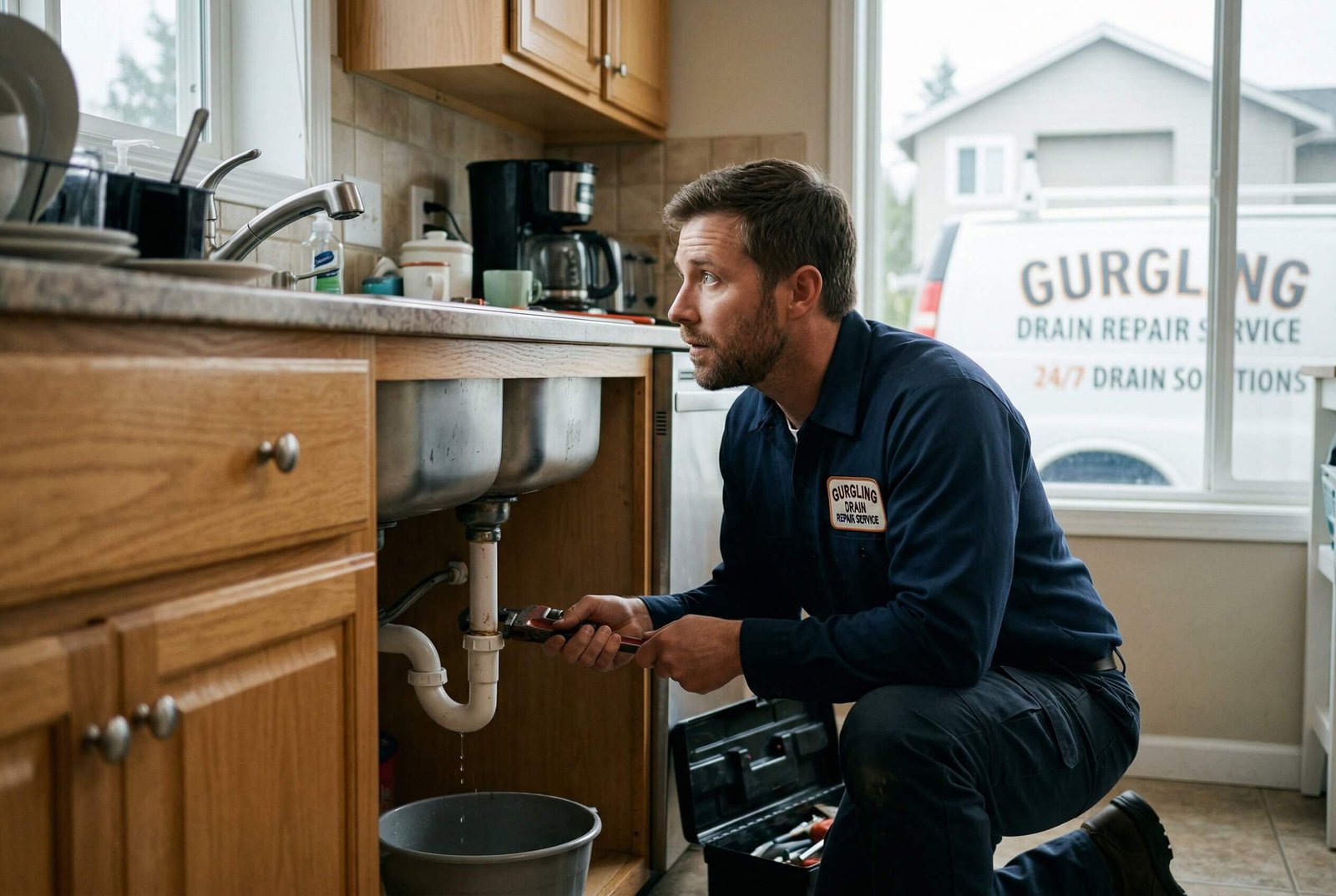
A gurgling sound coming from your drain is one of those things that’s easy to ignore at first. It might happen when you flush the toilet, run the sink, or drain the shower — a bubbling or sucking noise that seems harmless. But in most cases, that sound is not random. It’s your plumbing system telling you that something isn’t moving the way it should.
Inside your pipes, water and air are supposed to flow in a balanced way. When that balance is disturbed — either by a partial blockage or a problem with airflow — air gets trapped and forced through water. That’s what creates the gurgling noise you hear. It’s not just sound; it’s a sign of pressure imbalance inside the system.
Gurgling drains can happen in toilets, sinks, showers, or even multiple fixtures at once. In the early stage, everything may still drain, but not efficiently. If left untreated, the issue can develop into slow drainage, recurring clogs, or even backups. What starts as a small noise often points to a deeper condition inside the drain or vent system that needs proper attention.
What This Page Covers
ToggleWhat Gurgling Drain Repair Service Actually Means
Gurgling drain repair service isn’t about stopping a noise — it’s about correcting the imbalance inside the plumbing system that’s causing that noise. The sound itself is just a symptom. What matters is why air and water are not moving smoothly through the pipes.
In a properly functioning system, wastewater flows down while air moves through vent pipes to keep pressure stable. When something interferes with that balance — either a partial blockage or restricted airflow — air gets trapped and forced through water. That’s when you hear the gurgling.
What the gurgling sound actually indicates
That bubbling or sucking noise is a sign that the pipe isn’t able to handle both water and air at the same time. Instead of flowing smoothly, air pockets are forming and being pushed through the system.
This usually means:
- There’s resistance somewhere in the drain line
- Air cannot move freely through the vent system
- Water is displacing trapped air inside the pipe
Even if the drain still works, the system is already under stress.
Air trapped inside the plumbing system
Air plays an important role in drainage. It allows water to flow freely without creating suction or pressure buildup. When airflow is restricted, the system tries to compensate.
As a result:
- Air gets pulled through water instead of vents
- Pressure fluctuates inside the pipe
- Noise is created as air escapes through the drain
This is why gurgling often happens right after using a fixture — that’s when water movement disturbs trapped air.
Partial blockage vs venting issue
Most gurgling problems come from one of two causes, and sometimes both.
Partial blockage:
- Caused by buildup inside the pipe
- Restricts water flow and creates pressure changes
- Often paired with slow drainage
Venting issue:
- Caused by blocked or poorly functioning vent pipes
- Prevents proper airflow in the system
- Can cause noise even if drainage seems normal
Identifying which one is present is key to fixing the problem correctly.
How pressure imbalance creates noise
When water moves through a restricted pipe or without proper airflow, it creates pressure differences. The system tries to equalize that pressure, and air is forced through tight spaces.
This leads to:
- Bubbling sounds in drains
- Gurgling noises after flushing or draining
- Movement of water in nearby fixtures
The noise is essentially the system trying to correct itself, but not being able to do so properly.
Temporary noise vs actual drain problem
Sometimes gurgling may appear briefly and go away, especially if the issue is minor. But recurring or consistent noise usually means there’s an underlying condition that won’t resolve on its own.
Temporary cases:
- Slight noise with no other symptoms
- No recurring pattern
- Normal drainage
Ongoing issues:
- Repeated gurgling across fixtures
- Slow or inconsistent drainage
- Changes in water levels (like toilet bowl movement)
In these cases, the problem is not just noise — it’s a developing drain or vent system issue that may require proper drain cleaning or repair.
Understanding what the sound represents is the first step. The goal of the service is to restore balance in the system so both air and water can move the way they’re supposed to.
When You Actually Need Gurgling Drain Repair Service
Gurgling sounds don’t usually start as a major problem. In many homes, it begins as an occasional noise that seems harmless — something you notice but don’t think much about. The issue is that gurgling is rarely random. It’s an early sign that the plumbing system is struggling to maintain proper airflow or drainage.
Knowing when that sound crosses from “normal” to something that needs attention can help you avoid bigger problems later.
Early signs of gurgling drain issues
At the beginning, the sound may only appear in specific situations. The drain still works, and there are no visible backups, so it’s easy to overlook.
You might notice:
- A brief gurgling sound when draining water
- Noise after flushing the toilet
- Occasional bubbling in the sink or shower
- Sound that appears but doesn’t happen every time
At this stage, the issue is often minor — either a small restriction or slight airflow imbalance.
Recurring gurgling that indicates a developing problem
When the sound starts happening more often, it’s usually a sign that the underlying condition is getting worse. This is where the system is no longer balancing air and water effectively.
Common patterns include:
- Gurgling happening every time you use a fixture
- Noise becoming louder or more noticeable
- Multiple drains producing similar sounds
- Slow drainage starting to appear along with noise
This typically means a partial blockage is forming or airflow is becoming more restricted.
Clear signs you need gurgling drain repair service
There’s a point where the issue goes beyond occasional noise and starts affecting how the plumbing system behaves. At this stage, professional repair becomes necessary.
You should consider service when:
- Gurgling is frequent and consistent
- Water drains slowly or unevenly
- Toilet water level rises or bubbles when other fixtures are used
- Multiple fixtures are affected at the same time
- You notice a sewer-like smell along with the noise
These signs usually indicate a deeper issue, such as a blockage or vent problem, that requires proper drain cleaning or system repair.
Connection between gurgling and other plumbing symptoms
Gurgling rarely stays isolated. As the issue develops, it often connects with other symptoms that point to a larger problem inside the system.
You may experience:
- Slow or incomplete drainage
- Intermittent clogs that return
- Water backing up slightly before draining
- Changes in how different fixtures interact with each other
These symptoms show that the system is under pressure and not functioning smoothly.
Early vs late action — what changes
Addressing the issue early usually means dealing with a smaller problem — a light blockage or minor airflow restriction. The repair is simpler and more straightforward.
Waiting leads to:
- Increased buildup inside the pipes
- Greater airflow imbalance
- Higher risk of full blockage or backup
- More complex repair process
The difference is not just in convenience — it affects how much work is needed to restore normal function.
Gurgling is one of the clearest early signals your plumbing system gives. Recognizing when it becomes consistent or paired with other symptoms helps you decide when it’s time to move beyond observation and address the root cause.
How Gurgling Drain Repair Service Is Performed (Step-by-Step)
Gurgling drain repair is not about applying a quick fix — it’s about identifying where the imbalance is happening and correcting it. Since the issue can come from either a partial blockage or a venting problem, the process focuses on narrowing down the exact cause before doing any work.
A proper repair follows a structured approach so the noise doesn’t just stop temporarily, but the system returns to normal function.
Initial inspection of affected fixtures
The process usually starts by observing where the gurgling is happening. This helps determine whether the issue is isolated or affecting multiple parts of the system.
During this step:
- Fixtures like sinks, toilets, and showers are checked
- The timing of the noise is noted (during draining, flushing, etc.)
- Patterns between different fixtures are identified
This gives the first indication of whether the problem is local or system-wide.
Identifying where the noise originates
Gurgling may be heard in one place but caused somewhere else in the system. Locating the actual source is key to fixing the issue correctly.
This involves:
- Tracing how different drains are connected
- Observing which fixture triggers the noise
- Checking if multiple fixtures respond to one action
This helps narrow down the affected section of the plumbing.
Checking for partial blockages
One of the most common causes of gurgling is a partial blockage inside the drain line. Unlike a full clog, water still passes through — but not smoothly.
At this stage:
- Flow restrictions are identified
- Signs of buildup inside pipes are assessed
- Drain performance is tested under use
If a blockage is present, it becomes a primary focus of the repair.
Inspecting vent system and airflow
If no clear blockage is found, attention shifts to the vent system. Plumbing vents allow air to enter and exit the system to maintain pressure balance.
Inspection may include:
- Checking for blocked or restricted vent pipes
- Assessing airflow behavior during drainage
- Identifying signs of improper venting
Airflow issues can cause gurgling even when drains appear to work normally.
Testing pressure balance in pipes
The system is then evaluated to see how air and water interact during use. This helps confirm whether pressure imbalance is causing the noise.
This step may involve:
- Running water through different fixtures
- Flushing toilets while observing nearby drains
- Monitoring how quickly water flows and stabilizes
Any irregular behavior points to where the imbalance exists.
Selecting the appropriate repair method
Once the cause is confirmed, the repair method is chosen based on whether the issue is blockage-related, airflow-related, or both.
The approach is not one-size-fits-all — it depends on:
- Location of the problem
- Severity of restriction or airflow issue
- Number of affected fixtures
This ensures the repair targets the actual cause.
Clearing blockage or fixing vent issue
The actual repair work focuses on restoring normal flow and pressure balance.
Depending on the issue:
- Blockages are removed through proper drain cleaning
- Vent obstructions are cleared to restore airflow
- Combined issues are addressed step-by-step
The goal is to eliminate the condition that’s forcing air through the drain.
Final testing for smooth drainage and no noise
After the repair, the system is tested again to confirm that both water and air are moving correctly.
This includes:
- Running water through all affected fixtures
- Checking for any remaining noise
- Ensuring consistent and smooth drainage
Only when the system operates without gurgling is the repair considered complete.
This step-by-step process ensures the issue is fully resolved rather than temporarily reduced. The focus is always on restoring balance inside the plumbing system so the noise doesn’t return.
Methods Used for Gurgling Drain Repair
Gurgling drain issues don’t have a single universal fix because the cause can vary. In some homes, it’s a partial blockage slowing down water flow. In others, it’s an airflow problem caused by a blocked or poorly functioning vent. The method used depends on what’s disrupting the balance inside the system.
The goal of each method is the same — restore smooth water flow and proper air movement so pressure stays stable and the noise disappears.
Drain cleaning to remove partial blockage
One of the most common solutions is clearing buildup inside the drain line. Even a partial restriction can disturb how water and air move through the pipe.
This method focuses on:
- Removing grease, soap scum, hair, or debris buildup
- Restoring full pipe diameter for proper flow
- Eliminating resistance that causes pressure imbalance
Proper drain cleaning often resolves gurgling when the issue is caused by restricted flow rather than airflow problems.
Snaking or hydro jetting for restricted pipes
When buildup is more significant, basic cleaning may not be enough. In these cases, more effective methods are used to clear the pipe thoroughly.
Depending on the situation:
- Snaking breaks through localized blockages
- Hydro jetting clears the entire pipe wall using high-pressure water
- Deeper sections of the drain line can be cleaned
These methods are used when the restriction is beyond the immediate drain opening.
Vent pipe inspection and clearing
If airflow is the issue, attention shifts to the vent system. Vent pipes allow air to move freely through the plumbing, and any obstruction can disrupt that balance.
This process may involve:
- Checking for blockages like debris or buildup in vent pipes
- Clearing obstructions to restore airflow
- Ensuring the vent system is open and functioning properly
Once airflow is restored, pressure stabilizes and gurgling usually stops.
Airflow correction within the plumbing system
In some cases, the issue isn’t a visible blockage but how air is moving through the system. Improper airflow can create pressure differences that lead to noise.
This may include:
- Adjusting how air enters or exits the system
- Identifying imbalances between connected fixtures
- Ensuring consistent airflow during drainage
Correcting airflow helps maintain stability inside the pipes.
Drain camera inspection for deeper issues
When the cause isn’t clear from the surface, inspection tools are used to look inside the pipes. This helps identify problems that aren’t visible from outside.
A camera inspection can reveal:
- Hidden buildup or partial blockages
- Structural issues inside the pipe
- Deeper problems affecting multiple fixtures
This step is often used when the issue persists or affects more than one area.
Sewer line cleaning for system-wide problems
If multiple drains are gurgling or the issue is affecting the whole system, the problem may be deeper in the main drain line.
In these cases:
- The main line is inspected and cleaned
- Larger blockages or buildup are removed
- System-wide flow and pressure are restored
This type of sewer line cleaning is necessary when the issue is not limited to a single fixture.
Each method is chosen based on what’s actually causing the gurgling. The focus is not just on stopping the sound, but on restoring proper balance inside the plumbing system so the issue doesn’t return.
DIY vs Professional Gurgling Drain Fix (Decision Section)
Gurgling drains can be misleading because the system still seems to work. Water drains, fixtures are usable, and there’s no immediate backup — just noise. That’s why many homeowners try simple fixes first. In some cases, that’s fine. But in others, it delays identifying a deeper issue that’s already developing inside the system.
The key is understanding what you can realistically fix yourself and where DIY stops being effective.
When minor gurgling can be monitored or lightly addressed
If the gurgling is occasional and not paired with other symptoms, it may not require immediate repair. Early-stage issues can sometimes be linked to small disruptions in flow or temporary conditions.
DIY steps may help when:
- The sound happens rarely and inconsistently
- Drainage is still smooth and fast
- Only one fixture is affected
- There are no odors or water level changes
Basic cleaning or flushing the drain can sometimes reduce minor buildup and improve flow.
Basic checks homeowners can safely do
There are a few simple checks that can help rule out obvious issues without interfering with the plumbing system.
You can try:
- Running water in unused drains to refill traps
- Observing if noise happens with specific fixtures
- Checking for visible slow drainage
- Cleaning accessible drain openings
These steps help identify whether the issue is surface-level or something deeper.
Why DIY cannot fix venting problems
One of the biggest limitations of DIY is that vent-related issues are not accessible from inside the home. Vent pipes are typically located behind walls or extend through the roof.
Because of this:
- Airflow problems cannot be corrected from the drain opening
- Blocked vents cannot be safely accessed without proper tools
- The system imbalance remains even after surface cleaning
This is why gurgling caused by airflow issues usually doesn’t improve with basic fixes.
Risk of misdiagnosing the problem
Gurgling sounds can come from different causes that feel similar. Treating every case as a simple blockage often leads to repeated attempts that don’t solve the issue.
Common mistakes include:
- Assuming all gurgling is caused by buildup
- Repeating the same cleaning method without results
- Ignoring how multiple fixtures interact
Misdiagnosis doesn’t just delay the fix — it can allow the underlying issue to develop further.
Signs you need professional drain repair
There are clear situations where DIY is no longer effective and proper repair is needed to restore system balance.
You should consider professional help when:
- Gurgling happens frequently or consistently
- Multiple drains are making noise
- Drainage is slow or uneven
- Toilet water level fluctuates when other fixtures are used
- Odor appears along with the noise
These signs often point to a deeper issue requiring proper drain cleaning, vent inspection, or system repair.
The real decision point
The decision isn’t based on the noise alone — it’s based on patterns and behavior of the system. Occasional, isolated gurgling may not require immediate action, but recurring or system-wide noise usually means something isn’t functioning correctly.
Continuing with temporary fixes in those situations rarely resolves the issue. Instead, identifying and correcting the root cause ensures the system returns to normal operation and prevents the problem from progressing further.
Cost of Gurgling Drain Repair in the U.S.
The cost of fixing a gurgling drain depends on what’s causing the noise. Since the issue can come from either a partial blockage or a venting problem, pricing varies based on how complex the diagnosis and repair process is.
In simple cases, the solution may take less than an hour. In more complex situations — especially when multiple fixtures are involved — it can require deeper inspection and more involved work.
Typical cost range for diagnosis and repair
Most gurgling drain issues fall within a general pricing range depending on severity.
You can expect:
- $100 – $250 for minor issues (light blockage or basic inspection)
- $250 – $600 for moderate problems (partial blockage requiring cleaning)
- $600 – $1,200+ for complex issues (vent problems or deeper system work)
The price reflects both the time needed to identify the issue and the method required to fix it.
Cost difference: blockage vs vent issue
The cause of the gurgling plays a major role in cost.
Blockage-related issues:
- Usually easier to access and fix
- Often resolved with standard drain cleaning
- Typically fall in the lower to mid price range
Vent-related issues:
- Harder to access (often on the roof or inside walls)
- Require more time to diagnose and correct
- Usually fall in the higher price range
This is why two homes with similar gurgling sounds can have very different repair costs.
Emergency repair cost considerations
If gurgling is part of a larger problem — like a developing backup — emergency service may be required.
In those cases:
- Emergency visits can add $150 – $400+
- After-hours or weekend service costs more
- Urgent repairs often involve more complex conditions
Emergency pricing reflects both urgency and potential risk involved.
Factors that affect the total cost
Several real-world factors influence how much the repair will cost. These are usually confirmed during inspection.
Key factors include:
- Source of the problem – blockage vs airflow issue
- Location of the issue – accessible drain vs vent system
- Number of affected fixtures – single vs multiple drains
- Tools required – basic cleaning vs inspection equipment
- Severity of restriction or imbalance – minor vs advanced
Each of these determines how much work is needed to restore normal function.
Why pricing varies between homes
Gurgling drains don’t always come from the same place. In one home, it may be a small buildup near a sink. In another, it could be a deeper issue affecting the main line or vent system.
The difference in cost reflects:
- How easy it is to locate the problem
- How far into the system the issue extends
- How much work is required to fully resolve it
Understanding this helps set realistic expectations. The goal is not just to stop the noise temporarily, but to correct the imbalance so the system works properly again.
Risks of Ignoring Gurgling Drains
Gurgling drains are often treated as a minor annoyance, especially when water is still draining. But that sound is usually the first warning that the plumbing system is under pressure. It means air and water are not moving the way they should — and that imbalance rarely fixes itself.
Ignoring the noise allows the underlying issue to develop further, often turning a manageable problem into something more disruptive.
Partial blockage turning into full clog
In many cases, gurgling is caused by a partial blockage inside the drain. Water still passes through, but not efficiently. Over time, that restriction continues to build.
As buildup increases:
- Flow becomes slower and less consistent
- Debris sticks more easily inside the pipe
- A partial restriction turns into a complete blockage
What starts as noise can eventually require more extensive drain cleaning to restore proper flow.
Increased risk of drain backup
When the system cannot move water and air smoothly, pressure builds up inside the pipes. This can lead to water backing up instead of draining normally.
You may begin to notice:
- Water rising briefly before draining
- Fixtures affecting each other (e.g., toilet reacts when sink drains)
- Occasional minor backups that worsen over time
If left unresolved, this can develop into a full backup situation.
Sewer gas entering the home
Gurgling is often linked to airflow issues. When the system cannot vent properly, it may start pulling air from the wrong places — including through drains.
This can result in:
- Sewer-like odor near fixtures
- Smell spreading into living areas
- Loss of proper water seal in traps
This indicates that the system is not maintaining its normal barrier against gases.
Pressure imbalance affecting multiple fixtures
Plumbing systems are connected, so a problem in one area can impact others. As the imbalance grows, more fixtures may begin to show symptoms.
You might experience:
- Gurgling spreading from one drain to others
- Toilet bubbling when other fixtures are used
- Inconsistent drainage across different areas
This shows the issue is no longer isolated and is affecting the system as a whole.
Hidden system issues getting worse
Gurgling can sometimes point to deeper problems that aren’t immediately visible. These issues may not cause obvious damage right away, but they continue to develop behind the scenes.
If ignored:
- Blockages can extend deeper into the system
- Venting issues can worsen over time
- Diagnosis becomes more complex later
Addressing the issue early often prevents these hidden problems from escalating.
What ignoring the noise usually leads to
Gurgling is one of the earliest signals your plumbing system gives. When it’s ignored, the system doesn’t stabilize — it continues to lose balance.
Over time, this often results in:
- More frequent and louder noise
- Slower drainage across fixtures
- Higher risk of clog or backup
- More involved repair process
What begins as a small sound typically becomes a larger issue simply because the cause wasn’t addressed when it first appeared.
Where Gurgling Drains Commonly Occur
Gurgling sounds don’t happen randomly — they show up in specific fixtures depending on where the imbalance exists in the plumbing system. Sometimes the noise is heard in one place but caused somewhere else entirely. That’s because all drains in a home are connected, and pressure changes can travel through the system.
Understanding where gurgling commonly appears helps you connect the sound to what’s actually happening inside the pipes.
Toilets
Toilets are one of the most noticeable places where gurgling shows up. Because they connect directly to the main drain line, they react quickly to pressure changes in the system.
You might notice:
- Bubbling in the toilet bowl
- Water level rising or dropping slightly
- Gurgling when another fixture is used
This usually indicates a deeper issue, often related to a blockage or airflow problem affecting the main line.
Bathroom sinks
Bathroom sinks are smaller drains, so they tend to show early signs of imbalance. Even a minor restriction can cause noticeable sound.
Common signs include:
- Gurgling while water drains
- Noise after running the faucet
- Slight delay in smooth drainage
This often points to buildup inside the pipe or early-stage restriction.
Kitchen sinks
Kitchen drains handle grease, food particles, and soap, which makes them more prone to buildup. This can lead to partial blockages that affect both flow and airflow.
You may experience:
- Gurgling during or after draining water
- Slower drainage compared to normal
- Noise that becomes more frequent over time
In these cases, proper drain cleaning is often needed to restore normal flow.
Shower and bathtub drains
Shower and tub drains typically deal with hair and soap residue. These materials can create a sticky buildup inside the pipe.
Signs include:
- Gurgling as water drains
- Bubbling sounds during use
- Water draining slower than expected
These drains often show symptoms gradually as buildup increases.
Multiple fixtures at the same time
When gurgling is heard across different fixtures, it usually points to a larger issue within the system rather than a single drain problem.
You might notice:
- Toilet reacting when sink or shower is used
- Gurgling in more than one location
- Noise spreading across different areas of the home
This often indicates a deeper blockage or airflow issue that may require sewer line cleaning or system-level repair.
Vent system (indirect cause)
While you don’t hear gurgling directly from vent pipes, problems in the vent system often cause the noise in other fixtures. If vents are blocked, air cannot move freely, and pressure builds up.
This leads to:
- Air being pulled through drains instead of vents
- Noise appearing in sinks, toilets, or tubs
- System-wide imbalance
Vent-related issues are a common but often overlooked cause of gurgling.
Gurgling can appear in any of these areas, but the location of the sound doesn’t always match the source of the problem. Identifying patterns across fixtures helps determine whether the issue is isolated or part of a larger system imbalance.
Finding Gurgling Drain Repair Help Locally
When gurgling starts happening regularly, most homeowners look for local help — not just to stop the noise, but to understand what’s causing it. Unlike a simple clog, gurgling often involves airflow or system imbalance, which isn’t always obvious without proper inspection.
That’s why finding the right local help matters. The goal isn’t just to quiet the drain temporarily, but to fix the condition causing the pressure imbalance.
How homeowners typically search for this problem
Most people don’t search using technical plumbing terms. They describe what they’re hearing or noticing.
Common searches include:
- “Drain making gurgling noise”
- “Toilet bubbling when sink drains”
- “Gurgling sound in pipes”
- “Drain noise repair near me”
These types of searches usually lead to local plumbers who handle drain cleaning, airflow issues, and sewer-related problems.
Why local plumbers are important for diagnosis
Gurgling problems often require observing the system in real time. The way different fixtures interact, how quickly water drains, and when the noise occurs all help identify the cause.
Local professionals are useful because:
- They can inspect multiple fixtures directly
- They understand common plumbing layouts in local homes
- They can test the system under real conditions
This hands-on evaluation is important for identifying whether the issue is a blockage, venting problem, or both.
Connecting to city-based service pages
City-specific service pages provide more relevant information than general plumbing content. They often reflect real conditions and expectations for that area.
These pages can help you understand:
- Typical pricing for gurgling drain repair locally
- Common causes of the issue in similar homes
- Availability of same-day or emergency service
This makes it easier to know what kind of help you’re looking for before scheduling a visit.
When to look for urgent local help
Not all gurgling requires immediate action, but certain situations shouldn’t be delayed. The sound can be an early sign of a problem that’s about to get worse.
You should prioritize local help when:
- Gurgling is frequent and getting louder
- Multiple fixtures are affected
- Drainage is slowing down
- Toilet shows bubbling or water level changes
In these cases, searching for emergency drain cleaning or emergency plumbing locally is usually the next step.
Finding the right local help is about getting an accurate diagnosis, not just a quick fix. A proper evaluation ensures the system is repaired correctly so the gurgling doesn’t return or turn into a larger problem.
How to Choose the Right Provider for Gurgling Drain Repair
Gurgling drains can be tricky because the problem isn’t always where the sound is coming from. A sink might make noise, but the issue could be deeper in the line or even in the vent system. That’s why choosing the right provider matters — not for speed, but for correct diagnosis and long-term resolution.
A proper fix stops the noise because the system is working correctly again, not because the symptom was temporarily reduced.
Look for real diagnosis, not guesswork
The first thing that separates a reliable provider is how they approach the problem. Gurgling requires understanding how air and water interact inside the system, not just clearing a pipe blindly.
You should expect:
- Questions about when and where the noise occurs
- Checking multiple fixtures, not just one
- Testing how the system behaves under use
- Clear explanation of what’s causing the issue
A diagnosis-first approach usually leads to a more accurate fix.
Experience with airflow and vent-related issues
Not all plumbing problems involve visible blockages. Gurgling is often tied to airflow imbalance, which requires a different level of understanding.
An experienced provider will:
- Recognize signs of vent blockage vs pipe blockage
- Understand how pressure affects different fixtures
- Identify patterns between connected drains
This ensures the repair addresses the actual cause instead of just treating symptoms.
Use of proper inspection tools
Because the issue isn’t always visible, tools play an important role in identifying what’s happening inside the system.
Look for providers who use:
- Inspection methods to check deeper pipe conditions
- Tools suited for proper drain cleaning when needed
- Techniques to evaluate airflow behavior
Using the right tools reduces uncertainty and helps confirm the source of the problem.
Clear explanation of process and cost
Since gurgling issues can vary widely, transparency is important. You should understand what’s being done and why.
A reliable provider will:
- Explain what they are checking during inspection
- Clarify what affects the cost
- Outline the steps needed to fix the issue
This helps you make an informed decision rather than relying on assumptions.
Capability to handle deeper system problems
Some gurgling issues go beyond a simple fix and involve deeper parts of the plumbing system. It’s important that the provider can handle those situations if they arise.
They should be able to:
- Perform deeper drain cleaning or sewer line cleaning
- Address vent system problems
- Handle issues affecting multiple fixtures
This ensures the repair is complete and not limited to surface-level fixes.
Common mistakes homeowners make
It’s easy to underestimate gurgling because the system still drains. This often leads to choices that delay proper repair.
Common mistakes include:
- Ignoring the noise until it becomes frequent
- Assuming it’s a minor issue without checking
- Trying repeated fixes without identifying the cause
These approaches usually allow the problem to develop further.
Red flags to watch for
Some signs indicate that the issue may not be handled thoroughly.
Be cautious if:
- No proper inspection is done before suggesting a fix
- The same solution is offered for every situation
- There’s no explanation of what’s causing the noise
- The focus is only on stopping the sound temporarily
Choosing the right provider ensures the system is properly evaluated and repaired. When the cause is correctly identified and addressed, the gurgling stops because the plumbing system has returned to balanced operation — not because the symptom was masked.
Final Thoughts
A gurgling drain is easy to ignore because everything still seems to work. Water goes down, fixtures are usable, and there’s no immediate mess — just a sound that comes and goes. But that noise is usually the first sign that the plumbing system is no longer balanced.
Inside the pipes, water and air are supposed to move together smoothly. When you hear gurgling, it means that balance is already disturbed — either from a developing blockage or a problem with airflow. The system is trying to compensate, and the noise is the result.
Addressing it early keeps the problem simple. In many cases, a partial restriction or minor airflow issue can be corrected before it spreads through the system. But if the sound is ignored, it often leads to slower drainage, interaction between fixtures, or even a full backup.
A proper drain cleaning or system-based repair focuses on restoring normal flow and pressure balance. Once that happens, the noise stops naturally because the system is functioning the way it should.