
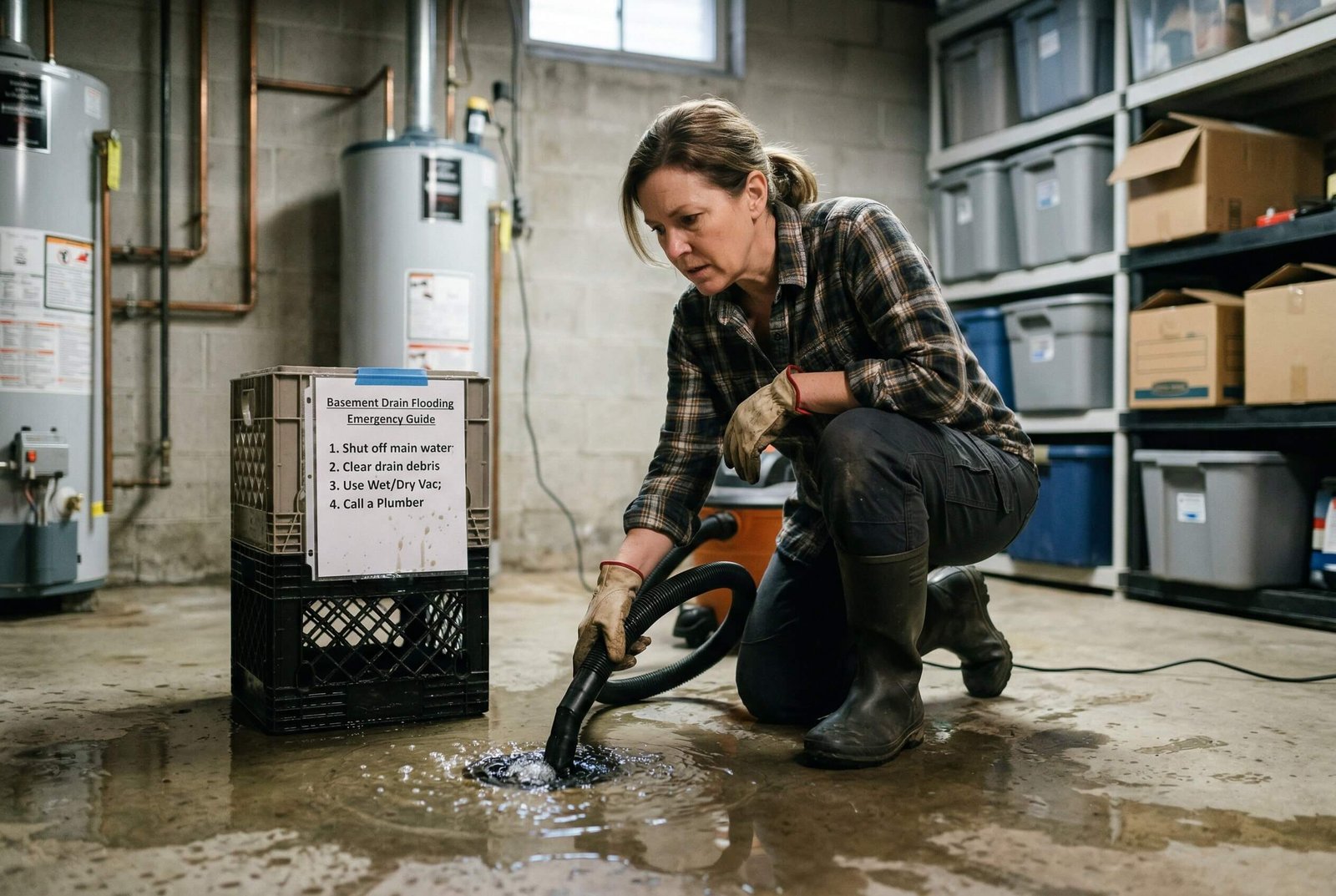
A basement drain flooding emergency is one of the most disruptive situations a homeowner can face because it starts at the lowest point in the house and spreads quickly from there. Unlike water leaks that begin from above, this type of flooding pushes water upward through the floor drain, often catching homeowners off guard. By the time it’s noticed, water may already be spreading across the basement floor, reaching stored items, walls, and structural areas.
What makes basement drain flooding especially serious is that it often signals a deeper problem in the drainage system. In many cases, it is not just about excess water—it’s about the system failing to carry water away from the home. When the main drainage path is blocked or overwhelmed, pressure builds and forces water back through the lowest exit point, which is typically the basement drain. This is why flooding may begin suddenly, even if everything seemed normal just minutes earlier.
Another critical factor is how quickly damage can occur in a basement. Basements often contain porous materials, stored belongings, and areas with limited airflow. Once water spreads, it can seep into flooring, walls, and stored items, making cleanup more difficult and increasing the risk of long-term damage. If the water is contaminated—such as in a sewer-related backup—the situation becomes more complex, involving both sanitation and structural concerns.
The first few minutes during a basement flooding emergency are the most important. Many homeowners react by trying to manage the water immediately without understanding the source, which can sometimes make the situation worse. Actions like running water to test drains or entering flooded areas without caution can increase risk. What matters most is stopping the conditions that are feeding the problem and controlling how far the water spreads.
The goal in this type of emergency is not to fix everything at once. It is to stabilize the situation, protect the space, and avoid actions that increase damage or risk. Once the flooding is contained, the next steps—whether simple cleanup or professional intervention—become clearer. Staying calm and following a structured response is what turns a stressful situation into a manageable one.
What This Page Covers
ToggleWhat Counts as a Basement Drain Flooding Emergency
Not all water in a basement is an emergency. Sometimes it’s minor seepage, condensation, or a small spill. A true basement drain flooding emergency begins when water is actively coming up through the drain or spreading across the floor, especially when it continues or worsens over time. The difference is not just the presence of water—it’s the behavior of the drainage system and whether it has lost control of where water is going.
Understanding this distinction helps you respond correctly. Acting too late allows damage to spread, while misjudging the situation can lead to unnecessary panic or the wrong actions.
Difference Between Minor Water Seepage and Active Flooding
Minor seepage usually appears gradually. You might notice damp spots, slight moisture around the edges, or small amounts of water that don’t seem to increase. This type of moisture often comes from condensation, minor leaks, or groundwater pressure and typically does not involve the drain itself pushing water upward.
Active flooding is different. Water rises from the drain, pools quickly, or spreads across the floor. It may increase when water is used elsewhere in the house, which is a strong indication that the drainage system is under pressure. This type of behavior means the system is not removing water properly and is forcing it back into the basement.
Signs That Confirm a Drain Flooding Emergency
There are clear signs that indicate the situation is an actual basement drain flooding emergency and not something that can be monitored or delayed.
- Water is coming up directly through the basement floor drain
- The water level increases over time instead of receding
- The water appears dirty or has a sewage odor
- Flooding worsens when sinks, toilets, or appliances are used upstairs
- Water spreads beyond the immediate drain area
These signs show that the drainage system is overwhelmed or blocked, and the situation can escalate quickly if not handled properly.
Situations That Require Immediate Action
Some situations allow a brief window to observe, but others require immediate response without delay. The urgency depends on how fast the water is rising and whether contamination is involved.
Situations that demand immediate action include:
- Continuous water rising from the drain
- Floodwater spreading across the basement floor
- Any presence of dirty or sewage-like water
- Water reaching electrical outlets, appliances, or stored items
- Recurring flooding that returns quickly after stopping
In these cases, the system has already lost control, and the focus must shift to containment and safety rather than observation.
The key factor in a basement drain flooding emergency is loss of control over water flow. Once water starts coming up through the drain and spreading, the situation has moved beyond a minor issue. Recognizing this early allows you to act quickly, limit damage, and avoid decisions that could make the flooding worse.
Most Common Basement Drain Flooding Situations
Basement drain flooding doesn’t happen randomly. In most homes, it follows predictable patterns based on how water moves through the drainage system. The basement sits at the lowest point, so when something goes wrong—whether inside the home or outside—this is where the problem shows up first. Understanding these common situations helps you quickly identify the cause and how serious the situation is.
Main Sewer Line Backup Causing Basement Flooding
This is the most common and serious cause of basement drain flooding. When the main sewer line is blocked, wastewater cannot leave the house. As water continues to be used in sinks, toilets, or appliances, pressure builds in the system.
That pressure forces water back through the lowest point in the home, which is usually the basement floor drain. Homeowners often notice flooding shortly after using water upstairs—such as running a washing machine or taking a shower. This type of flooding is rarely isolated and often involves contamination, making it a true emergency.
Heavy Water Usage Inside the House
In some cases, the system becomes overwhelmed not by a complete blockage, but by high water volume. This can happen when multiple fixtures are used at the same time—such as running laundry, taking showers, and using sinks simultaneously.
If the drainage system is partially restricted, this surge of water can exceed its capacity. The result is temporary backup through the basement drain. While it may subside after water use stops, it is still a warning sign that the system is under stress and may lead to a more serious overflow if not addressed.
Stormwater or External Drain Overload
Heavy rain can overwhelm drainage systems, especially in areas with combined sewer systems where rainwater and household wastewater share the same pipes. When the system reaches capacity, excess water can push back into homes.
In these situations, basement drains may begin to overflow even if there is no internal plumbing issue. The flooding may appear suddenly during or after rainfall. This type of problem is often external, but it still affects the home directly and can lead to significant water intrusion if not managed quickly.
Sump Pump Failure or Absence
In homes that rely on a sump pump to manage groundwater, failure of that system can lead to basement flooding. If the pump stops working or cannot keep up with incoming water, water levels can rise and eventually reach the floor drain or surrounding areas.
This type of flooding is usually not caused by a blockage but by an inability to remove water fast enough. It often occurs during heavy rain or when groundwater levels rise. Without proper drainage support, the basement becomes vulnerable to accumulation and overflow.
Each of these situations reflects a different cause, but they all lead to the same result—water entering the basement through the lowest point. The more clearly you can identify which scenario is happening, the easier it becomes to respond correctly and prevent the situation from getting worse.
Warning Signs Before Basement Drain Flooding
Basement drain flooding rarely happens without warning. In most homes, the drainage system shows subtle signs that pressure is building or flow is being restricted. These early signals are easy to overlook because they don’t feel urgent at the time, but they are often the only opportunity to act before water starts coming up through the basement drain.
Recognizing these signs early allows you to intervene before the situation becomes a full emergency. The key is not just noticing one symptom, but understanding patterns that indicate the system is under stress.
Early Indicators
In the early stage, the system is still functioning, but not at full capacity. Water may still drain, but not as smoothly as it should. These signs often appear in isolation and may seem minor.
You may notice:
- Slight dampness or moisture around the basement drain
- Slower drainage in basement sinks or floor drains
- Occasional need to run water longer to clear a drain
At this stage, the system is beginning to struggle, but it hasn’t failed. These are warning signals, not emergencies—but ignoring them allows buildup or restriction to continue.
Escalation Signals
As the condition worsens, the system starts to behave more noticeably. These signs indicate that pressure is building inside the pipes and airflow is being disrupted.
Common escalation signs include:
- Gurgling sounds coming from drains or toilets
- Sewer or musty odors near the basement drain
- Water level fluctuations in nearby fixtures
These symptoms often appear together and may become more frequent. When this happens, the issue is no longer minor—it is progressing toward a condition where water may reverse direction.
System Behavior Patterns
One of the most important clues is how the system reacts when water is used elsewhere in the home. Basement drain flooding is often preceded by patterns that connect activity upstairs with changes in the basement.
Watch for:
- Water appearing near the basement drain after using upstairs fixtures
- Drain sounds or bubbling when toilets are flushed
- Recurring minor backups that resolve temporarily but return
These patterns indicate that the main drainage system is under pressure and cannot handle normal flow consistently. When these behaviors become predictable, the risk of a full backup increases significantly.
Basement drain flooding is usually the final stage of a problem that has been developing over time. The earlier you recognize these warning signs, the more control you have over the outcome. Acting during this stage is often the difference between a manageable issue and a disruptive emergency.
What to Do Immediately During Basement Drain Flooding
When water starts coming up through a basement drain, the situation can escalate quickly. The most important thing in these first moments is not speed alone, but doing the right things in the right order. Acting without understanding can make the flooding worse, while a structured response helps you regain control and limit damage.
The goal at this stage is simple: stop adding pressure to the system, contain the spread of water, and protect people and property.
Step 1: Stop All Water Use in the House
The first and most critical step is to stop using water immediately. This includes sinks, toilets, showers, washing machines—anything that sends water into the drainage system. When the main line is restricted or blocked, every drop of water you use adds pressure and forces more water back into the basement.
Make sure everyone in the house understands this. Even small actions like flushing a toilet or running a tap can worsen the flooding. Stopping water use stabilizes the situation and prevents it from escalating further.
Step 2: Shut Off the Main Water Supply if Needed
If the flooding continues even after stopping normal water use, shutting off the main water supply can help reduce additional flow into the system. This is especially important if fixtures are leaking, running, or cannot be controlled individually.
This step does not stop water already in the pipes, but it prevents new water from entering the system. It’s a control measure that buys you time and helps limit how much water reaches the basement.
Step 3: Protect Electrical Safety
Basements often contain electrical outlets, appliances, and wiring close to the floor. When water spreads, these become potential hazards. Before stepping into wet areas, be aware of where water has reached.
Avoid contact with electrical devices or outlets in affected areas. If water is near electrical components, keep a safe distance and limit movement. Safety at this stage is not just about water—it’s about what the water is touching.
Step 4: Contain the Spread of Water
Once the situation is stabilized, focus on keeping the water from spreading further. Use towels, cloths, or barriers to limit how far it travels. Redirect water away from storage areas, walls, or items that can be damaged.
This step is about control, not removal. You are not trying to eliminate all the water immediately—you are preventing it from reaching areas that will make cleanup and damage worse.
Step 5: Keep People and Pets Away
Floodwater, especially from a drain backup, should be treated as contaminated. Limiting access to the affected area reduces the risk of contact and prevents contamination from being tracked into clean areas of the home.
Keep movement in and out of the basement to a minimum. The fewer people interacting with the area, the easier it is to manage safely.
Step 6: Assess Flood Severity
After immediate actions are taken, take a moment to observe the situation. Look at how much water is present, whether it is rising or stabilizing, and how far it has spread. Notice whether the water appears clean or contaminated.
This assessment helps determine the next step—whether the situation can be managed temporarily or requires immediate professional intervention. Understanding the severity gives you clarity instead of reacting blindly.
In a basement drain flooding emergency, the first response sets the direction for everything that follows. Stopping water use, maintaining safety, and controlling the spread are what keep the situation manageable. Once these steps are in place, you can move forward with a clearer plan instead of reacting under pressure.
Safe Emergency Actions Homeowners Can Take
Once the immediate steps are in place and the situation is no longer actively worsening, there is a short window where homeowners can take controlled, safe actions to limit damage. This is not the stage to fix the root problem. It is about managing the environment, reducing spread, and protecting what can still be protected without increasing risk.
The key is to stay within safe limits. Anything beyond surface-level control or that involves entering unsafe conditions should be avoided.
Surface Water Control
If the water level is shallow and stable, you can begin managing it at the surface. The goal here is not full cleanup, but reducing how far the water spreads and preventing it from reaching sensitive areas.
Use absorbent materials like towels or cloths to slow movement and guide water away from walls, storage areas, or doorways. If possible, direct the water toward a single area to keep it contained. This makes later cleanup easier and prevents unnecessary damage to multiple sections of the basement.
It’s important to work gradually and avoid splashing or spreading the water further. Controlled movement is more effective than trying to remove everything quickly.
Moving Items to Dry Areas
One of the most effective ways to reduce loss is to move items out of the affected area early. Basement flooding often damages stored belongings because they are left in place while water spreads.
Focus on lifting items off the floor rather than carrying them far distances. Move them to shelves, higher surfaces, or areas that are clearly dry. Priority should be given to materials that absorb water easily, such as cardboard boxes, fabrics, and wood-based items.
This step is about prevention. Even a small delay can allow water to reach items that could have been protected with minimal effort.
Ventilation and Airflow (When Safe)
If the flooding is not contaminated and conditions are safe, improving airflow can help reduce moisture buildup. Opening access points for air movement can slow down how much water is absorbed into materials.
However, ventilation should be controlled. Avoid creating strong airflow that spreads moisture or odor to other parts of the home. The focus should remain on the affected area without extending the impact.
If contamination is suspected, limit airflow to prevent spreading particles through the house. In those cases, containment is more important than ventilation.
Using Protective Measures
Even when taking basic actions, protection matters. Direct contact with floodwater should be avoided as much as possible, especially if the source is unclear.
Wear gloves and footwear that prevent direct skin contact with water and surfaces. Move carefully to avoid slipping, and limit how long you remain in the affected area. These small precautions reduce risk without slowing down your response.
Safe homeowner actions during basement flooding are about control, not correction. Managing water movement, protecting belongings, and reducing exposure can significantly limit damage. At the same time, staying within safe boundaries ensures that your actions do not make the situation more dangerous or more difficult to resolve.
Actions to Avoid During Basement Flooding
In a basement drain flooding emergency, what you avoid doing is just as important as what you do. Many situations get worse not because of the original problem, but because of well-intentioned actions that increase pressure, spread contamination, or create safety risks.
When water is already coming up through the drain, the system has lost normal flow control. At that point, certain actions can make the situation escalate faster and become harder to manage.
Do Not Use Plumbing Fixtures
One of the most common mistakes is continuing to use water elsewhere in the house to “test” whether the system is working. Running sinks, flushing toilets, or using appliances adds more water into an already stressed system.
That additional water has nowhere to go and often forces more water back into the basement. Even a small amount of usage can increase the rate of flooding. Once a basement drain flooding emergency begins, all water use should remain stopped until the issue is clearly resolved.
Avoid Entering Deep or Spreading Water
It may be tempting to step into the flooded area to move items or inspect the situation more closely, but this can introduce unnecessary risk. As water spreads, you may not be able to see what is beneath the surface, including uneven flooring, debris, or hazards.
More importantly, if the water is contaminated, direct contact increases exposure. Moving through water also spreads it further, making containment more difficult. Limiting movement helps keep the situation controlled and reduces risk to both people and property.
Do Not Use Electrical Devices in Wet Areas
Basements often contain outlets, extension cords, appliances, or equipment close to the floor. When water reaches these areas, the risk increases significantly. Using or even approaching electrical devices in wet conditions can be dangerous.
Avoid turning on lights, plugging in equipment, or interacting with electrical systems near the affected area. Keeping a safe distance is the simplest and most effective way to prevent accidents during flooding.
Avoid DIY Drain Clearing During Active Flooding
Trying to fix the blockage during active flooding is not only ineffective, but often unsafe. Tools like augers or drain snakes require stable conditions and clear access to the drain. When water is actively coming up, the system is under pressure, and the blockage is typically deeper in the line.
Attempting to clear it without proper understanding can push the blockage further, damage pipes, or create a sudden release of water. This can make the situation worse instead of better. During active flooding, focus should remain on containment and safety, not repair.
Avoiding these actions keeps the situation from escalating beyond control. In basement flooding emergencies, restraint is often the safest and most effective response. By not adding pressure, not spreading water, and not taking unnecessary risks, you give yourself the best chance to stabilize the situation before moving to the next steps.
How to Identify the Cause of Basement Drain Flooding
When a basement drain floods, the immediate focus is usually on stopping the water. But once the situation is under control, the next critical step is understanding why it happened. Identifying the cause helps you decide whether the issue is temporary, recurring, or part of a larger system problem.
You don’t need specialized tools to start recognizing patterns. In many cases, the way the system behaves during and after the flooding provides clear clues about the source.
Main Line vs Local Drain Issue
One of the first things to determine is whether the flooding is caused by a problem in the main sewer line or a localized issue near the basement drain.
If the problem is isolated, it typically affects only the basement drain itself. Water may rise slowly or remain limited to one area without reacting to other fixtures in the home. This suggests a nearby blockage or restriction close to the drain.
If the main line is involved, the behavior is different. You will often see multiple fixtures reacting together. For example, using a sink or flushing a toilet upstairs may cause water to rise in the basement drain. This indicates that the entire system is under pressure and cannot move water out properly.
External vs Internal Water Source
Another important distinction is whether the flooding is being driven by water usage inside the home or by external conditions such as rain or groundwater.
If the flooding increases when water is used indoors, the source is likely internal. The system is unable to handle normal flow, and the problem is within the drainage line.
If flooding occurs during or after heavy rain—even when no water is being used inside—the issue may be external. This could be due to overwhelmed municipal systems, groundwater pressure, or drainage limitations outside the home. These situations often appear suddenly and may not follow normal usage patterns.
Recurring vs Sudden Flooding
The history of the problem also provides valuable insight. A sudden one-time flood may be caused by a temporary blockage or unusual condition. While still serious, it may not indicate a long-term issue.
Recurring flooding, however, is a strong sign that something deeper is wrong. Repeated backups often point to buildup inside the pipe, partial blockages, root intrusion, or structural issues. When the same problem returns under similar conditions, it should be treated as an ongoing system issue rather than an isolated event.
Identifying the cause of basement drain flooding is about observing patterns, not guessing. By paying attention to how the system reacts—what triggers the flooding, how it behaves, and whether it repeats—you can narrow down the source and make better decisions about the next steps.
When DIY Is Not Safe or Effective
There is a point in every basement drain flooding situation where homeowner action should stop. Knowing where that line is matters more than trying to push through and fix the problem yourself. Basement flooding can involve pressure in the drainage system, contaminated water, and hidden structural issues. Once those factors are present, continuing with DIY efforts often increases risk instead of solving the problem.
The goal is not to avoid effort—it’s to recognize when the situation has moved beyond safe, surface-level control.
Sewage Contamination Is Present
If the water coming up through the basement drain is dirty, has a strong sewer odor, or contains visible waste, it should be treated as contaminated. At this point, direct contact becomes a health concern, and cleanup requires more than basic handling.
Trying to manage contaminated water without proper equipment or protection increases exposure and can spread contamination to other areas of the home. Once sewage is involved, the focus should shift away from DIY handling and toward controlled, limited interaction with the affected area.
Repeated Flooding Events
If basement drain flooding has happened more than once—especially within a short period—it is rarely a coincidence. Repeated events usually indicate a deeper issue in the drainage system, such as buildup, partial blockage, or structural problems.
Temporary relief methods may appear to work, but they do not address the root cause. Continuing to rely on those methods often leads to recurring flooding that becomes more severe over time. At this stage, identifying and resolving the underlying issue is more important than managing the symptoms.
Electrical Risk in the Basement
Basements often contain electrical systems close to the floor, including outlets, wiring, appliances, and equipment. When water spreads into these areas, the situation becomes more complex and potentially dangerous.
If there is any uncertainty about how far water has reached, it is safer to avoid entering or interacting with affected areas. Attempting to continue DIY actions in a space where water and electricity may intersect introduces unnecessary risk.
Knowing when to stop is part of handling a basement flooding emergency correctly. DIY actions are useful for early control and containment, but they are not designed to resolve complex or hazardous conditions. Recognizing the limits of safe action protects both your home and your safety, and allows the next step to be taken with clarity.
Ready for the next section: What a Plumber Does During Basement Flooding?
What a Plumber Does During Basement Flooding
When a plumber arrives during a basement drain flooding emergency, the focus is not just on removing water—it’s on understanding the system, locating the failure point, and restoring proper flow safely. A professional approach follows a clear process that avoids guesswork and reduces the chance of the problem returning.
Emergency Assessment
The first step is evaluating how the flooding started and how the system is behaving. A plumber will ask about what triggered the event, which fixtures were used, and whether the issue has happened before. These details help narrow down whether the cause is internal usage, a main-line blockage, or an external factor.
They will also inspect the basement and nearby fixtures to observe water levels, contamination signs, and how the system responds. This initial assessment is critical because it determines the direction of the solution. Instead of immediately using tools, the plumber builds a clear understanding of the situation first.
Drain Clearing Methods
Once the likely cause is identified, the plumber selects the appropriate method to restore flow. The choice depends on the type and location of the blockage.
Common approaches include:
- Using a drain snake or auger to break through or remove blockages in the line
- Performing a camera inspection to locate the exact point and nature of the obstruction
- Applying high-pressure cleaning methods to clear buildup along pipe walls
Each method is used with a specific purpose. A simple blockage may require basic clearing, while deeper or more complex issues require more precise tools and inspection before action is taken.
System Evaluation After Clearing
Clearing the blockage is only part of the job. After flow is restored, the plumber checks how the system performs under normal conditions. This includes running water through multiple fixtures and observing whether the system drains properly without signs of pressure or backup.
They also evaluate whether the problem is likely to return. If there are signs of buildup, structural wear, or recurring patterns, additional recommendations may be made to prevent future flooding. This step ensures that the solution is not temporary but addresses the underlying issue as well.
A professional response to basement flooding is based on diagnosis, targeted action, and verification. The goal is not just to remove the immediate problem, but to restore confidence that the system can handle normal use without failing again.
Health and Safety Risks of Basement Drain Flooding
Basement drain flooding is not just a water issue—it introduces health, safety, and structural risks that are often underestimated in the moment. Even when the water level seems manageable, the environment it creates can lead to problems that develop quickly and persist long after the visible water is gone.
Understanding these risks helps you respond more carefully and avoid actions that may seem harmless but actually increase exposure or damage.
Contamination and Bacteria Exposure
Water coming up through a basement drain should always be treated with caution. In many cases, it may contain waste or residue from the drainage system, even if it appears relatively clean. This means surfaces it touches—floors, walls, and stored items—can become contaminated.
Direct contact with this water increases the risk of exposure, and moving through the area can spread contaminants to other parts of the home. That’s why limiting contact and keeping the affected area contained is important. Cleaning should be done carefully and thoroughly once the situation is stable, rather than rushed during active flooding.
Mold and Moisture Risks
Basements are particularly vulnerable to moisture-related problems because they often have limited airflow and contain materials that absorb water easily. Even after the visible water is removed, moisture can remain trapped in flooring, baseboards, and stored items.
If not properly dried, this moisture can create conditions where mold develops over time. The issue is not always immediate—it may appear days or weeks later if the area was not fully dried. This is why drying is just as important as cleaning in the recovery process.
Structural Damage to Basement Areas
Water that sits or spreads across the basement floor can begin to affect materials beneath the surface. Over time, it can weaken flooring, damage wall bases, and affect stored items that come into contact with it.
The longer water remains, the more likely it is to seep into areas that are harder to reach and repair. Even shallow flooding can cause damage if it is not addressed quickly. Preventing water from spreading and removing moisture early reduces the chance of long-term structural issues.
Electrical Hazards in Basement Environments
Basements often contain electrical outlets, wiring, and appliances located close to the floor. When water reaches these areas, it creates a risk that goes beyond the flooding itself.
Contact with electrical systems in wet conditions can be dangerous, especially if the extent of water spread is not fully visible. Avoiding interaction with electrical components and limiting movement in affected areas helps reduce this risk until the environment is safe again.
Basement drain flooding creates a combination of risks that require careful handling. It’s not just about removing water—it’s about protecting your health, your home, and the environment inside it. Taking a cautious and controlled approach ensures that the situation is resolved safely without creating additional problems.
Tools and Supplies for Basement Flood Preparedness
Basement drain flooding often happens without much warning, which is why preparation makes a noticeable difference. When the right tools and supplies are already in place, your response becomes faster, more controlled, and less stressful. Instead of reacting under pressure, you can focus on containing the situation and protecting your home.
Preparation is not about having specialized equipment—it’s about keeping simple, reliable items that help you manage water, protect yourself, and reduce damage in the early stages.
Basic Emergency Kit
A small, dedicated set of supplies for basement flooding can significantly improve your response time. These items are designed to help you contain water and move safely in affected areas.
- Thick waterproof gloves for safe handling
- Old towels or absorbent cloths to control water spread
- A sturdy bucket for collecting or redirecting water
- Waterproof or washable boots for safe movement
Having these items in one place ensures you don’t waste time searching for them while water is spreading. Immediate access allows you to act quickly and keep the situation from escalating.
Cleanup and Disinfection Supplies
Once the flooding is under control, proper cleanup becomes essential. Even if the water appears clean, it should be treated carefully to avoid lingering issues.
- Disinfecting solutions for surfaces
- Cleaning cloths or disposable wipes
- Trash bags for removing damaged or contaminated materials
These supplies help restore the area to a safe condition and reduce the risk of odor, residue, or contamination remaining after the water is gone.
Water Control Tools (When Safe to Use)
In situations where the water is not contaminated and conditions are stable, certain tools can help remove water more efficiently.
- A wet/dry vacuum for shallow water removal
- A flashlight for visibility in low-light basement areas
- Simple tools to guide or redirect water flow
These tools should only be used when it is safe to do so, especially in relation to electrical conditions. Their purpose is to assist with control and cleanup, not to handle active flooding under pressure.
Preparedness gives you control during the most critical moments of a basement flooding emergency. With the right supplies ready, you can respond calmly, limit damage, and manage the situation more effectively until it is fully resolved.
Cost of Basement Drain Flood Emergency Services
Basement drain flooding can range from a relatively small plumbing issue to a full-scale water damage event. The cost depends heavily on how quickly you act, the type of water involved, and how far the flooding spreads. Understanding these cost layers helps you make faster decisions during the emergency instead of delaying and increasing total damage.
Typical Cost Ranges
There are usually two parts to the cost: fixing the drain issue and dealing with the flooding damage. These are often separate but connected.
- Basic drain clearing (minor blockage): $100–$600
- Main sewer line clearing: $100–$1,600 (avg. ~$378)
- Basement flood cleanup and drying: $1,500–$15,000 (avg. ~$4,000)
- Sewer backup cleanup (contaminated water): $2,000–$10,000
In more severe cases, where structural damage or mold develops, total costs can climb much higher—sometimes reaching $20,000+ depending on repairs required.
Factors That Affect Cost
The final cost is not just about the plumbing issue—it’s about the impact of the water.
Key factors include:
- Type of water (clean vs contaminated sewage)
- How long the water sits before cleanup
- Size of the basement area affected
- Materials damaged (flooring, drywall, storage items)
- Whether mold develops after flooding
For example, clean water from a small overflow is much cheaper to handle than sewage backup, which requires disinfection and specialized cleanup.
Emergency and After-Hours Pricing
Basement flooding rarely happens at convenient times. Emergency service during nights, weekends, or storms often comes with additional costs.
You may see:
- Emergency call-out fees
- Higher hourly labor rates
- Priority service charges
Plumbers typically charge hourly rates, and emergency visits can increase those costs significantly.
Why Fast Action Saves Money
The biggest cost factor is time. Water damage spreads quickly, and every hour increases the chance of deeper structural impact.
If water is contained early:
- You may only pay for drain clearing and light cleanup
If delayed:
- Costs shift toward full restoration, drying, mold treatment, and repairs
Even a few hours can make the difference between a $500–$1,000 issue and a $5,000+ restoration job. Acting quickly is almost always the most cost-effective decision.
Basement drain flooding costs are unpredictable, but the pattern is consistent:
the faster you stabilize the situation, the lower the total cost and damage.
What to Do After Basement Flooding Is Controlled
Once the visible flooding has stopped and the drain is no longer pushing water into the basement, the situation can feel resolved. In reality, this is the stage where long-term damage is either prevented or allowed to develop. What you do after the water is gone determines whether the basement returns to normal or continues to have hidden issues like odor, moisture damage, or recurring flooding.
The focus now shifts from emergency response to restoration, monitoring, and prevention.
Cleaning and Disinfection
Any area that came into contact with floodwater should be cleaned thoroughly. Even if the water appeared relatively clean, it may still carry residue from the drainage system. Surfaces such as floors, baseboards, and nearby items need careful attention.
Start by removing any remaining debris, then clean all affected areas with appropriate disinfecting solutions. Pay close attention to edges and corners where water may have settled or splashed. The goal is not just to remove visible dirt, but to eliminate anything that could cause odor or contamination later.
Taking the time to clean properly at this stage prevents problems that are much harder to deal with after everything dries.
Drying and Moisture Control
After cleaning, drying becomes the most important step. Water can remain trapped in materials even when surfaces look dry. Basements are especially prone to holding moisture because of limited airflow and cooler temperatures.
Increase airflow in the area and allow time for materials to dry completely. Items that absorbed water—such as rugs, cardboard boxes, or wood-based materials—should be removed or isolated if they cannot dry properly. Moisture left behind can lead to long-term issues that are not immediately visible.
This stage often determines whether the basement returns to a stable condition or develops ongoing problems.
Monitoring for Recurrence
Even after the system appears to be functioning normally, it’s important to watch how it behaves over the next several days. Many basement flooding situations are caused by underlying issues that are not fully resolved in one event.
Look for:
- Slow drainage returning
- Gurgling sounds in drains or toilets
- Odors reappearing after water use
- Minor water presence near the drain
If any of these signs return, it may indicate that the blockage was only partially cleared or that the system is still under stress. Early detection at this stage makes it easier to address the issue before another flood occurs.
Follow-Up Inspection and Prevention
In cases where flooding was caused by a main-line issue or occurred more than once, a follow-up inspection is a practical next step. Even if everything seems normal, underlying problems like buildup, root intrusion, or pipe wear may still exist.
A professional inspection can confirm whether the system is fully clear and identify any risks that could lead to another emergency. Addressing these early helps prevent repeat incidents and reduces long-term repair costs.
The work after a basement flooding emergency is what ensures the problem is truly resolved. Cleaning, drying, and monitoring are not optional steps—they are what protect your home from hidden damage and recurring issues.
How to Prevent Future Basement Drain Flooding
Basement drain flooding is usually the result of gradual stress on the drainage system, not a sudden failure. Most emergencies can be traced back to patterns—what goes into the drains, how the system is used, and how early warning signs are handled. Prevention is about controlling these factors before they build into a situation where water is forced back into the basement.
The goal is not constant maintenance, but consistent awareness and smart habits.
Proper Drain Use and Maintenance
Daily usage plays a major role in how your drainage system performs over time. Materials that seem harmless in small amounts can accumulate and reduce the pipe’s ability to carry water efficiently.
To reduce long-term risk:
- Avoid pouring grease, oil, or food residue into kitchen drains
- Do not flush wipes, paper towels, or non-dissolvable items
- Limit heavy product buildup from soaps and cleaning agents
- Be mindful of what enters basement drains directly
These habits prevent gradual buildup that restricts flow and creates pressure inside the system. Over time, this is one of the most effective ways to avoid basement flooding.
Monitoring Warning Signs Early
The drainage system often provides early signals before a full backup occurs. These signs are easy to ignore because they don’t cause immediate disruption, but they are important indicators of system stress.
Pay attention to:
- Slow drainage in multiple areas of the home
- Occasional odors coming from basement drains
- Gurgling sounds during water use
- Small amounts of water appearing near the drain
Responding to these signs early—rather than waiting for them to worsen—helps prevent pressure buildup that leads to flooding.
Managing External Water Impact
Not all basement flooding is caused by internal usage. External conditions, such as heavy rain or groundwater pressure, can also affect how the system behaves.
To reduce external risk:
- Ensure water drains away from the foundation
- Monitor basement conditions during heavy rainfall
- Be aware of how your home reacts to storms or high water conditions
Understanding how external factors influence your basement helps you anticipate problems and take precautions before flooding begins.
Preventing basement drain flooding is about reducing strain on the system and reacting early when signs appear. Small, consistent actions—combined with awareness of both internal and external factors—keep water moving in the right direction and reduce the chance of it returning into your home.
Long-Term Basement Flood Prevention Strategy
Preventing basement drain flooding over the long term is not about reacting to emergencies—it’s about understanding your system, recognizing patterns, and acting before pressure builds. Homes that experience repeated flooding usually follow the same cycle: small warning signs appear, they are ignored or delayed, and eventually the system fails under normal use.
A long-term strategy focuses on consistency rather than effort. When you understand how your basement drainage behaves, you can prevent most emergencies before they begin.
Understanding Your Basement Drain System
Every basement has a specific drainage setup, and knowing how yours works gives you a clear advantage. This includes identifying where the main drain is located, how water exits the home, and which areas are most vulnerable during heavy use or rain.
Basements are naturally the lowest point, so they are the first place where problems appear when the system is under stress. If your home has experienced slow drainage, minor backups, or past flooding, those are not isolated events—they are indicators of how your system behaves. Recognizing these patterns helps you anticipate risk before it becomes visible flooding.
Routine Inspection Planning
Basement drainage systems are often overlooked until something goes wrong. However, periodic inspection can reveal early-stage problems that are not visible from the surface. Issues like buildup inside pipes, partial blockages, or early structural wear can develop slowly over time.
Inspections do not need to be frequent, but they should be considered after warning signs appear or following a previous flooding event. In homes with recurring issues, periodic evaluation becomes more important. Identifying problems early allows for simpler, less disruptive solutions compared to emergency repairs.
Acting Early on Small Changes
The most effective prevention step is responding to small changes before they grow into larger issues. Slightly slower drains, occasional odors, or minor water presence near the basement drain are often the first signs of system stress.
Addressing these early—whether through basic cleaning, monitoring, or professional evaluation—prevents pressure from building in the drainage line. Waiting until the system fails removes that opportunity and turns a manageable situation into an emergency.
A long-term basement flood prevention strategy is built on awareness and timing. Understanding your system, checking it when needed, and acting early on small warning signs are what keep water flowing out of your home instead of back into it.
Final Thoughts
Basement drain flooding is one of those situations where the outcome depends less on the problem itself and more on how it is handled in the moment. The water coming up through the drain is a signal that the system has lost its ability to move water away from your home. From that point on, every decision—whether to continue using water, how to contain the spread, or when to step back—directly affects how far the damage goes.
The most important takeaway is that control comes from order, not urgency alone. Stopping water use, protecting the area, and avoiding unsafe actions are what stabilize the situation. Trying to fix the root cause during active flooding often leads to more damage, while a calm, structured response keeps the problem contained until it can be properly resolved.
It’s also important to recognize that these emergencies rarely happen without warning. Slow drains, odors, and small signs of backup are often the early indicators. Acting on those signals is what prevents water from ever reaching your basement floor. Ignoring them allows pressure to build until the system fails in a way that is far more disruptive and costly.
Over time, prevention becomes less about effort and more about awareness. Understanding how your drainage system behaves, paying attention to changes, and maintaining good usage habits are what reduce the likelihood of future flooding. These are simple steps, but they are what keep the system functioning reliably.
Basement drain flooding can feel overwhelming when it happens, but it is manageable when approached correctly. The goal is not to handle everything yourself—it is to act safely, limit damage, and make informed decisions at the right time.