
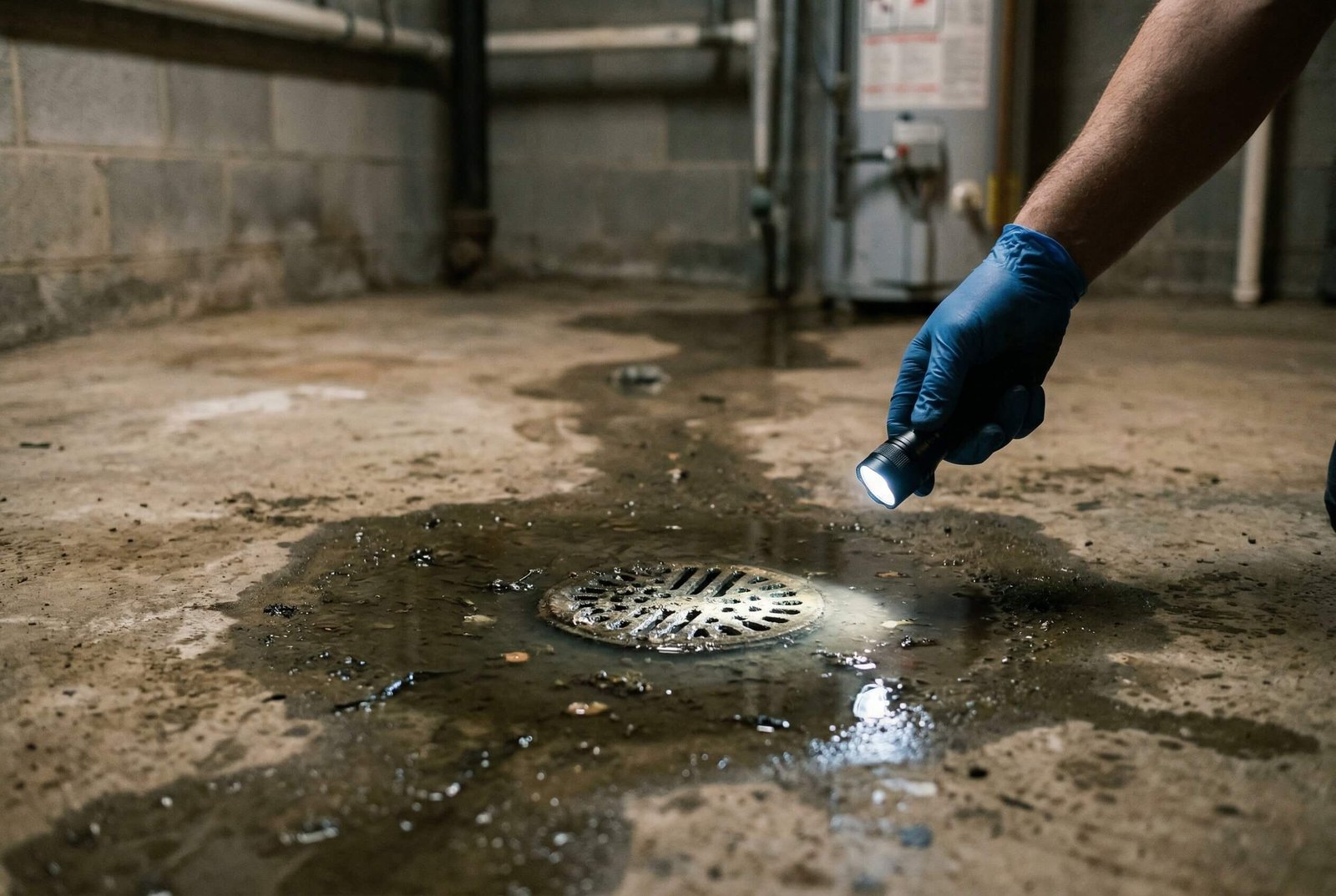
A clogged basement floor drain is one of the most concerning plumbing issues homeowners can face. Because basement drains sit at the lowest point of a home’s plumbing system, they are often the first place where water or sewage appears when something goes wrong in the drainage system. What may initially look like a small puddle around the drain can actually be a warning sign of a much larger plumbing problem developing somewhere in the drain line or even in the main sewer connection.
In many U.S. homes, basement floor drains handle water from multiple sources, including washing machines, utility sinks, water heaters, condensation lines, and occasional floor water from cleaning or minor leaks. Over time, dirt, lint, soap residue, grease, and other debris can accumulate in the drain system. In other cases, the blockage may not be inside the basement drain itself but deeper in the sewer line, which causes wastewater to push back up through the lowest drain in the house.
Understanding why basement floor drains clog is important because the underlying cause can range from simple debris buildup to serious sewer line issues such as tree root intrusion or broken underground pipes. Homeowners who recognize the symptoms early can prevent costly basement flooding and avoid major plumbing emergencies.
This article explains everything homeowners need to know about basement floor drain clogs in U.S. homes, including how these drains work, the most common causes of blockages, warning signs to watch for, and how professional plumbers diagnose the problem. By understanding the behavior of basement drain systems, homeowners can better identify what might be happening beneath their basement floor before the issue becomes a major repair situation.
What This Page Covers
ToggleUnderstanding Basement Floor Drains in U.S. Homes
Basement floor drains play an important role in protecting homes from water accumulation and potential flooding. In many U.S. houses, the basement contains essential plumbing equipment such as water heaters, furnaces, washing machines, and utility sinks. Because water leaks, appliance discharge, or condensation can occur in these areas, floor drains are installed to safely remove excess water before it spreads across the basement floor.
Unlike sink or shower drains that are connected to a specific fixture, basement floor drains are designed to collect water from the surrounding floor area. These drains are usually positioned at the lowest point of the basement so gravity naturally directs water toward the drain opening. When functioning correctly, they provide a safety outlet that helps prevent minor water issues from turning into larger flooding problems.
What a Basement Floor Drain Is Designed to Do
A basement floor drain is essentially an emergency drainage point built into the basement floor. It connects directly to the home’s drainage system and allows water to flow away from the basement safely.
These drains are designed to handle water from several common household situations:
-
Water discharged from washing machines
-
Overflow from utility sinks
-
Leaks from water heaters or plumbing pipes
-
Condensation from HVAC systems
-
Water used during basement cleaning
-
Minor groundwater seepage in some homes
When water enters the drain opening, it flows through a pipe system located beneath the basement floor and eventually connects to the home’s main sewer line or drainage system.
Where Basement Floor Drains Are Commonly Located
In most American homes, basement floor drains are placed strategically near plumbing fixtures or areas where water is most likely to accumulate. Their placement helps ensure water reaches the drain quickly before spreading across the floor.
Common locations include:
-
Near the washing machine area
-
Close to a utility sink
-
Next to the water heater
-
Near HVAC equipment
-
In the center or lowest point of the basement floor
-
Adjacent to a sump pump pit
The exact location depends on the basement layout and how the plumbing system was designed during construction.
How Basement Floor Drains Connect to the Main Sewer Line
Most basement floor drains connect directly to the home’s main sewer line. This means the water entering the drain follows the same path as wastewater from toilets, sinks, and showers.
The typical drainage path looks like this:
-
Water enters the floor drain opening.
-
It flows through a trap located below the drain.
-
The water travels through a horizontal drain pipe under the basement floor.
-
The pipe connects to the main sewer line leaving the home.
-
Wastewater flows to the municipal sewer system or septic system.
Because basement drains connect to the main sewer system, a blockage anywhere along that path can cause water to back up through the floor drain.
Why Basement Floor Drains Are Critical for Basement Flood Protection
Basement floor drains serve as a protective feature in many homes. Without them, even a small plumbing leak could allow water to spread across the basement floor, damaging flooring, walls, appliances, and stored belongings.
A properly functioning basement drain helps protect against:
-
Minor plumbing leaks
-
Appliance water discharge
-
Small basement floods
-
Washing machine overflow
-
HVAC condensation buildup
However, when the drain itself becomes clogged, the situation can reverse. Instead of draining water away, the floor drain can become the point where water or sewage backs up into the basement.
Because of this, a clogged basement floor drain should never be ignored. Even a slow drain can signal deeper plumbing issues that may eventually lead to significant water damage if left unresolved.
How Basement Floor Drain Plumbing Systems Work
To understand why a basement floor drain becomes clogged, it helps to understand how the drain system is designed to function. Basement floor drains are connected to the home’s overall plumbing network and rely primarily on gravity to move water away from the basement and toward the main sewer line.
Unlike pressurized plumbing systems such as water supply pipes, drain systems operate through a series of carefully sloped pipes that allow wastewater to flow downward naturally. Every part of the system—from the drain opening in the floor to the underground sewer line—plays a role in ensuring water moves smoothly out of the home.
When any part of this pathway becomes restricted or blocked, water can no longer move freely. Because the basement drain is often the lowest opening in the plumbing system, it becomes the first place where drainage problems appear.
Drain Grate and Entry Opening
The visible part of a basement floor drain is the drain grate or cover located on the basement floor. This metal or plastic grate prevents large debris from falling directly into the drain pipe while still allowing water to pass through.
Water entering the drain typically comes from:
-
Appliance discharge such as washing machines
-
Water heater pressure relief valves
-
Condensation lines from HVAC equipment
-
Utility sink overflow
-
Water from basement cleaning or spills
Although the grate helps block large objects, smaller materials like dirt, lint, hair, soap residue, and sediment can still enter the drain over time. These materials often contribute to gradual drain blockages deeper in the pipe system.
The Drain Trap (P-Trap)
Directly beneath the floor drain is a drain trap, commonly referred to as a P-trap. This curved section of pipe is designed to hold a small amount of water at all times.
The water inside the trap serves an important purpose: it creates a seal that prevents sewer gases from traveling back up through the drain and entering the basement. Without this water barrier, unpleasant and potentially harmful sewer odors could enter the home.
However, the trap area can also become a common location for debris buildup. Materials such as:
-
Dirt and sediment
-
Laundry lint
-
Soap scum
-
Hair
-
Small debris
can accumulate inside the trap, restricting water flow and eventually contributing to a clogged basement drain.
The Horizontal Drain Pipe Under the Basement Floor
After water passes through the drain trap, it enters a horizontal pipe located beneath the basement floor slab. This pipe carries water toward the main sewer line of the home.
These underground pipes are installed with a slight downward slope so gravity can move wastewater through the system efficiently. If the pipe slope is incorrect or if debris builds up inside the pipe, water flow may slow down significantly.
Some common issues that occur in this section of the plumbing system include:
-
Sediment buildup inside the pipe
-
Grease or soap residue coating the pipe walls
-
Pipe sagging or shifting over time
-
Small blockages forming in the line
Because these pipes are hidden beneath the concrete basement floor, homeowners usually cannot see problems developing until drainage issues begin to appear.
Connection to the Main Sewer Line
The basement drain pipe eventually connects to the main sewer line of the home, which carries wastewater from all plumbing fixtures.
The main sewer line collects water from:
-
Toilets
-
Showers and bathtubs
-
Kitchen sinks
-
Bathroom sinks
-
Washing machines
-
Basement floor drains
From there, wastewater flows out of the house through the main sewer pipe and into either the municipal sewer system or a private septic system.
If the main sewer line becomes clogged or restricted, wastewater may have nowhere to go. Because the basement drain is usually the lowest point in the home’s plumbing system, backed-up wastewater often emerges there first.
Connection to Municipal Sewer Systems
For homes connected to city sewer systems, the home’s main sewer pipe eventually connects to the municipal sewer network located beneath the street.
This connection allows wastewater to leave the property and travel to a municipal wastewater treatment facility. However, problems can also occur outside the home.
For example, sewer backups may occur due to:
-
Tree roots invading underground pipes
-
Collapsed sewer lines
-
Municipal sewer overload during heavy rain
-
Grease buildup in sewer systems
When these external issues occur, pressure in the sewer line can push water back toward the house. Again, the basement floor drain often becomes the point where this backup first appears.
Common Symptoms of a Clogged Basement Floor Drain
A clogged basement floor drain usually does not appear suddenly without warning. In most homes, there are early signs that the drainage system is struggling before a full blockage occurs. These symptoms may start subtly, such as slow drainage or occasional odors, but they often progress if the underlying cause is not addressed.
Because basement drains sit at the lowest point of the home’s plumbing system, they frequently reveal drainage problems earlier than other fixtures. When water cannot move freely through the drain pipes or sewer line, the basement drain becomes a pressure release point where water or sewage may start to appear.
Recognizing these warning signs early can help homeowners identify a developing plumbing issue before it leads to basement flooding or sewage backup.
Standing Water Around the Basement Drain
One of the most obvious signs of a clogged basement drain is standing water around the drain opening. Instead of flowing smoothly into the drain, water begins to collect on the basement floor.
This often occurs when:
-
Water from a washing machine discharge cannot drain fast enough
-
A nearby utility sink releases water into the system
-
Water from basement cleaning accumulates near the drain
If the drain is partially blocked, water may eventually drain slowly. However, if the clog becomes more severe, the water may remain on the floor for long periods.
Slow Drainage in Basement Floor Drains
Slow drainage is another early sign that something inside the drain system is restricting water flow. When water enters the drain but takes an unusually long time to disappear, it often indicates that debris is accumulating somewhere in the pipe.
Homeowners may notice slow drainage during situations such as:
-
Washing machine cycles draining water
-
Emptying buckets of water into the drain
-
Cleaning the basement floor with water
Slow drainage usually means the pipe is partially blocked, allowing water to pass through but not at normal speed.
Water Backing Up from the Drain
In more serious situations, homeowners may notice water rising up from the basement floor drain instead of flowing downward. This type of backup often occurs when there is a blockage deeper in the plumbing system.
Water may rise from the drain when:
-
The washing machine drains water
-
A toilet is flushed on an upper floor
-
Multiple plumbing fixtures are used simultaneously
Because basement drains are located at the lowest point in the plumbing system, backed-up water naturally pushes toward that opening.
Sewage Smell Coming from the Basement Drain
A strong sewer odor coming from the basement drain can signal several plumbing issues. Sometimes the smell occurs when the drain trap dries out, allowing sewer gases to escape into the basement.
However, persistent sewer smells may also indicate:
-
Debris buildup inside the drain
-
Organic material decomposing in the pipe
-
Sewer line blockages restricting airflow
-
Wastewater sitting in partially clogged pipes
If the odor becomes stronger over time, it may suggest a developing blockage somewhere in the drainage system.
Gurgling Sounds from the Basement Drain
Strange gurgling or bubbling noises coming from the basement drain can also indicate a developing clog. These sounds usually occur when air becomes trapped inside partially blocked drain pipes.
When water attempts to move through the restricted pipe, the trapped air escapes through the drain opening, producing gurgling sounds.
Homeowners may hear these noises when:
-
Water drains from sinks or tubs upstairs
-
The washing machine discharges water
-
Toilets are flushed in the home
These sounds often signal that the plumbing system is struggling to maintain proper airflow and drainage.
Basement Floor Drain Overflow
In the most serious cases, a clogged basement drain may begin to overflow with dirty water or sewage. This is usually a sign of a significant blockage in the main sewer line or a severe obstruction in the drain system.
Overflow situations may occur during:
-
Heavy water usage in the home
-
Washing machine discharge cycles
-
Periods of heavy rain affecting the sewer system
When this happens, the basement floor drain is no longer functioning as a drainage outlet. Instead, it becomes the point where wastewater returns to the home.
Most Common Causes of Basement Floor Drain Clogs
A clogged basement floor drain can develop for several reasons, and in many cases the blockage builds gradually over time. Because basement drains often collect water from multiple sources in a home, a wide range of materials can enter the drain system and begin to accumulate inside the pipes.
Unlike kitchen or bathroom drains that mainly deal with soap, grease, or hair, basement drains often receive dirt, sediment, lint, and other debris that slowly settles in the pipes beneath the basement floor. As this material collects, it restricts the normal flow of water and eventually forms a blockage.
Understanding the most common causes of basement drain clogs helps homeowners identify where the problem may be developing and why the drain is no longer functioning properly.
Dirt and Sediment Buildup
One of the most frequent causes of basement floor drain clogs is the gradual buildup of dirt and sediment. Basements often collect dust, soil, and small debris particles that are washed into the drain during routine cleaning or water spills.
When water carrying sediment enters the drain, the heavier particles settle inside the pipe system rather than flowing completely through the line. Over time, these particles begin forming layers of buildup along the pipe walls.
Common sources of sediment entering basement drains include:
-
Dirt tracked into the basement from outside
-
Dust and debris washed into the drain during cleaning
-
Soil particles carried in by groundwater seepage
-
Construction debris in unfinished basements
As sediment accumulates, it reduces the internal diameter of the pipe and restricts water flow, eventually contributing to a clogged drain.
Laundry Lint from Washing Machines
Another very common cause of basement drain clogs is laundry lint from washing machine discharge. Many washing machines in U.S. homes are located in the basement and drain directly into nearby plumbing lines.
During every wash cycle, large amounts of lint and fabric fibers are released from clothing. While some of this lint is captured by the washing machine’s filter, much of it flows into the drain system.
Over time, lint can collect inside drain pipes and combine with other materials to form dense clogs. Laundry lint is particularly problematic because it easily sticks to pipe walls and traps additional debris.
Lint buildup commonly occurs when:
-
Washing machines drain into basement plumbing lines
-
Lint traps are missing or not maintained
-
High-efficiency washers discharge large volumes of water quickly
Because washing machines release water rapidly during drain cycles, lint can be pushed deeper into the plumbing system where it becomes harder to remove.
Soap and Detergent Residue
Soap and detergent residue can also contribute to basement drain clogs. Many homeowners use the basement drain for disposing of mop water, cleaning solutions, or detergent-heavy water from laundry.
Although soap and detergent dissolve in water, they can still leave behind sticky residue that coats the interior surfaces of pipes. Over time, this residue builds up and begins trapping other debris passing through the drain.
This buildup may include:
-
Soap scum from cleaning solutions
-
Laundry detergent residue
-
Fabric softener buildup
-
Household cleaning chemicals
When combined with dirt, lint, or sediment, these residues can create thick deposits inside pipes that slow drainage and increase the risk of clog formation.
Grease or Oil Entering Basement Plumbing
Grease is typically associated with kitchen sink clogs, but it can also enter basement plumbing systems in some homes. If basement utility sinks are used for washing greasy tools, equipment, or containers, oils and grease may flow into the drain.
Once grease enters the drain pipe, it begins to cool and solidify along the pipe walls. As the grease layer thickens, it narrows the pipe opening and traps passing debris.
Grease-related drain clogs may occur when homeowners wash:
-
Greasy automotive parts
-
Oil-covered tools
-
Paint equipment with oil residue
-
Food containers or cooking equipment
Even small amounts of grease can create problems when they combine with lint, dirt, or soap buildup inside the drain line.
Hair and Household Debris
Hair and small debris can also enter basement floor drains, particularly in homes where the basement drain is exposed without a protective cover.
Hair may come from:
-
Basement laundry areas
-
Pet grooming activities
-
Utility sink cleaning
Small debris that may enter the drain includes:
-
Paper towels
-
Dust and dirt particles
-
Small plastic fragments
-
Pieces of cleaning materials
These materials rarely cause an immediate clog, but over time they can combine with other substances to form larger blockages.
Basement Utility Sink Waste
Many basements contain utility sinks used for tasks such as washing paint brushes, cleaning tools, rinsing muddy items, or disposing of dirty water. These sinks are usually connected to the same plumbing system as the basement floor drain.
When waste materials from the utility sink enter the drain system, they may contribute to blockages further down the line. Some materials that frequently cause problems include:
-
Paint residue
-
Mud and sediment from outdoor items
-
Plaster or drywall dust
-
Cleaning chemicals mixed with debris
These materials can accumulate in the drain pipes beneath the basement floor, gradually forming obstructions that affect the basement floor drain.
Hidden Plumbing Causes of Basement Drain Blockages
While many basement floor drain clogs are caused by debris entering the drain opening, some of the most serious problems originate deep within the home’s plumbing system or the underground sewer line. These hidden issues are often difficult for homeowners to detect because they occur beneath the basement floor or outside the home where the drain pipes are buried.
In these situations, the basement floor drain itself may not actually be clogged. Instead, the blockage occurs somewhere further along the drainage system, preventing wastewater from flowing out of the home. When this happens, the basement drain often becomes the first place where water begins to back up.
Professional plumbers frequently discover that persistent basement drain problems are linked to underlying sewer line damage or long-term pipe deterioration.
Tree Root Intrusion in Sewer Pipes
One of the most common hidden causes of basement drain blockages in U.S. homes is tree root intrusion. Trees and large shrubs naturally seek out sources of moisture underground, and sewer pipes provide a consistent supply of water and nutrients.
If a small crack or loose joint exists in a sewer pipe, nearby tree roots can begin growing into the pipe opening. Over time, these roots expand inside the pipe and create a dense network that traps debris flowing through the line.
Tree root intrusions often cause:
-
Slow drainage throughout the home
-
Recurring basement drain backups
-
Gurgling sounds in plumbing fixtures
-
Sewage backing up through the lowest drains
As the roots continue growing, they can eventually block the pipe almost completely, preventing wastewater from leaving the home.
Broken or Collapsed Sewer Pipes
Another hidden cause of basement floor drain clogs is a broken or collapsed sewer pipe. Underground pipes can become damaged due to soil movement, heavy surface loads, or natural pipe deterioration over time.
When a pipe collapses or cracks significantly, the damaged section may partially block the path where wastewater normally flows. Debris traveling through the pipe can accumulate at this damaged point, gradually forming a larger obstruction.
Common causes of sewer pipe damage include:
-
Shifting soil beneath the home
-
Heavy vehicles or equipment compressing the ground above the pipe
-
Corrosion in older metal pipes
-
Freeze–thaw cycles in colder regions
When the pipe becomes restricted, wastewater may begin backing up toward the house, eventually appearing in the basement floor drain.
Sewer Line Sagging (Pipe Belly)
A pipe belly, sometimes called a pipe sag, occurs when a section of the sewer pipe sinks downward due to soil settling beneath it. Instead of maintaining a smooth downward slope, the pipe develops a low point where water collects.
Because wastewater pools in this sagging section, solid debris carried through the pipe tends to settle in the same area. Over time, this accumulation can create a blockage that restricts water flow through the pipe.
Signs that a pipe belly may exist include:
-
Recurring drain backups without obvious clogs
-
Slow drainage throughout the home
-
Frequent basement floor drain overflow during heavy water use
Pipe bellies are often discovered during sewer camera inspections, which allow plumbers to view the interior of underground pipes.
Mineral Buildup Inside Drain Pipes
In homes with hard water, minerals such as calcium and magnesium can gradually accumulate along the inside of drain pipes. Although this process occurs slowly, it can significantly narrow the internal diameter of the pipe over time.
Mineral buildup is more common in:
-
Older cast iron drain pipes
-
Homes with high mineral content in the water supply
-
Plumbing systems that have not been cleaned for many years
As mineral deposits grow thicker, they create rough surfaces that trap debris such as lint, sediment, and grease. Eventually, these materials combine to form a substantial blockage inside the drain line.
Because mineral buildup develops gradually and often occurs inside buried pipes, homeowners may not notice the problem until the basement floor drain begins draining slowly or backing up.
Main Sewer Line Problems That Cause Basement Drain Clogs
In many homes, a clogged basement floor drain is actually a symptom of a larger problem in the main sewer line. The main sewer line is the primary pipe that carries wastewater from every plumbing fixture in the house—including toilets, sinks, showers, washing machines, and basement drains—to the municipal sewer system or septic tank.
When this main sewer line becomes blocked or restricted, wastewater has nowhere to go. As pressure builds inside the plumbing system, water begins to flow backward through the pipes. Because the basement floor drain is typically the lowest plumbing opening in the home, it often becomes the first place where this backup appears.
Understanding how sewer line problems affect basement drains can help homeowners recognize when a simple drain clog may actually be a more serious plumbing issue.
Main Sewer Line Blockage
One of the most common causes of basement drain backups is a complete or partial blockage in the home’s main sewer line. This type of blockage prevents wastewater from leaving the house efficiently, causing water to accumulate inside the drainage system.
As additional water enters the plumbing system from sinks, toilets, and appliances, pressure increases inside the pipes. Eventually, the wastewater is forced back toward the lowest drain opening in the house.
Common materials that block main sewer lines include:
-
Grease buildup from kitchen drains
-
Large amounts of paper products
-
Flushable wipes that do not break down properly
-
Food debris from garbage disposals
-
Sediment and debris buildup over time
Once the main sewer line becomes obstructed, the basement floor drain may begin to show symptoms such as slow drainage, bubbling water, or sewage backup.
Sewer Line Grease Buildup
Grease buildup is another major contributor to sewer line blockages. Even though grease is often associated with kitchen sink problems, it can travel through the entire drain system and eventually accumulate in the main sewer pipe.
When grease enters the plumbing system, it may initially flow as a liquid. However, as it cools inside the sewer pipe, it begins to solidify and stick to the interior walls of the pipe. Over time, this grease layer thickens and gradually reduces the pipe’s capacity.
Grease buildup inside sewer lines can lead to:
-
Slow drainage throughout the home
-
Frequent drain clogs in multiple fixtures
-
Basement drain water backup during heavy usage
-
Increased risk of complete sewer blockage
When grease combines with other materials such as lint, hair, and debris, it can form extremely dense blockages that severely restrict wastewater flow.
Municipal Sewer System Backup
Sometimes the problem is not inside the home at all. Municipal sewer systems can become overwhelmed or blocked, especially during heavy rainfall or flooding events. When this happens, wastewater may be pushed back toward residential plumbing systems.
If the city sewer system becomes overloaded, pressure in the sewer pipes can force wastewater back through the home’s sewer connection. Because basement floor drains are located below street level in many homes, they become vulnerable entry points for this returning water.
Municipal sewer backups can occur during:
-
Severe rainstorms
-
Flooding conditions
-
Blockages in city sewer infrastructure
-
Pump station failures in the municipal system
In these situations, homeowners may notice sewage rising from basement drains even though their home plumbing system is functioning normally.
Shared Sewer Lines in Multi-Unit Homes
In some duplexes, townhouses, or older residential neighborhoods, multiple homes may share sections of the same sewer line before connecting to the municipal sewer system.
If a blockage occurs in this shared line, wastewater from multiple homes may be affected. This can lead to sudden backups in basement drains even when a homeowner has not used much water inside their own house.
Signs of a shared sewer line issue may include:
-
Multiple homes experiencing drainage problems simultaneously
-
Sewage backups appearing suddenly without warning
-
Plumbing problems affecting entire building units
Because shared sewer systems are often outside the homeowner’s property boundary, resolving these issues may require coordination with neighbors or local utility providers.
Heavy Rain and Storm Drain Overload
In some older sewer systems, stormwater and wastewater share the same sewer pipes. During periods of heavy rainfall, these combined sewer systems may become overloaded with large volumes of water.
When the sewer system cannot handle the increased flow, wastewater pressure may build inside the pipes. This pressure can push water back through residential plumbing systems, especially through low-level drains such as basement floor drains.
Heavy rain-related sewer backups may cause:
-
Sudden water emergence from basement drains
-
Dirty or gray water flooding basement floors
-
Gurgling sounds in basement plumbing
-
Slow drainage across multiple fixtures in the home
Homes in low-lying areas or older neighborhoods with aging sewer infrastructure are particularly vulnerable to these types of drainage problems.
Why Basement Floor Drains Are Usually the First Drain to Back Up
Many homeowners are surprised when water or sewage first appears in the basement floor drain, even though they may not use that drain very often. The reason this happens is related to how residential plumbing systems are designed and how wastewater flows through drain pipes.
In most homes, basement floor drains sit at the lowest point in the entire plumbing system. Because wastewater always follows the path of least resistance and moves downward due to gravity, the basement drain becomes the first location where water escapes when something blocks the sewer line.
Understanding why basement drains are the first to show problems helps homeowners recognize that a clog in this drain often signals a deeper issue somewhere else in the drainage system.
Basement Drains Are the Lowest Plumbing Fixture
Every plumbing system in a home has fixtures positioned at different heights. Toilets, sinks, bathtubs, and washing machines may be located on multiple floors, but the basement floor drain typically sits at the very bottom of the system.
Because of this positioning:
-
Wastewater from upper floors flows downward through the pipes
-
Gravity directs water toward lower plumbing lines
-
The basement drain becomes the lowest outlet connected to the sewer system
If a blockage forms in the sewer line, wastewater from the rest of the home may begin accumulating inside the pipes. As pressure increases, the water will eventually push toward the lowest available opening.
In many homes, that opening is the basement floor drain.
Sewer Water Flows Toward the Lowest Opening
When a sewer line becomes clogged, water cannot exit the home normally. As more water enters the plumbing system from sinks, showers, and toilets, the pipes begin to fill.
Once the pipe capacity is reached, wastewater begins searching for the lowest escape point in the system. Because basement drains sit below most other plumbing fixtures, they provide the easiest path for the backed-up water to exit.
This is why homeowners often notice basement drain backups during activities such as:
-
Running the washing machine
-
Taking showers upstairs
-
Flushing toilets repeatedly
-
Running multiple plumbing fixtures at the same time
Each of these actions sends additional water into the drainage system, increasing pressure behind the blockage and forcing water back through the basement drain.
Pressure Build-Up in Blocked Sewer Pipes
Another factor that causes basement drains to back up is pressure buildup inside the plumbing pipes. When wastewater cannot move forward due to a blockage, pressure increases as more water enters the system.
This pressure forces water backward through connected pipes until it reaches a point where it can escape.
Signs of pressure buildup in the plumbing system may include:
-
Gurgling sounds in drains
-
Bubbling water in basement floor drains
-
Toilets making unusual noises when flushed
-
Water rising in basement drains when appliances discharge water
Because basement floor drains sit closest to the main sewer line and at the lowest level of the home, they are usually the first place where this pressure release occurs.
Where Basement Floor Drain Blockages Usually Occur
When a basement floor drain becomes clogged, the obstruction can occur in several different locations within the drainage system. Many homeowners assume the blockage is directly beneath the drain opening, but in reality the problem may exist further down the pipe or even in the main sewer line outside the home.
Because basement drain systems are connected to multiple plumbing fixtures and underground sewer pipes, the exact location of the clog determines how the drain behaves and how plumbers approach diagnosing the issue. Understanding where these blockages typically occur can help homeowners better recognize the severity of the problem.
Inside the Floor Drain Trap
One of the most common locations for a clog is inside the drain trap located just below the basement floor drain opening. The trap is designed to hold a small amount of water to prevent sewer gases from entering the home, but its curved shape can also allow debris to collect.
Materials that often accumulate in the trap include:
-
Dirt and sediment
-
Hair and small debris
-
Soap residue
-
Laundry lint
-
Dust washed into the drain during cleaning
As this material collects inside the trap, it can begin restricting water flow. In many cases, clogs located in the trap cause slow drainage rather than a complete blockage, allowing water to pass but at a reduced speed.
In the Horizontal Drain Pipe Beneath the Basement Floor
After passing through the trap, wastewater flows into a horizontal drain pipe located beneath the concrete basement floor. This pipe carries water toward the home’s main sewer line.
Blockages in this section often develop gradually as debris settles along the bottom of the pipe. Because these pipes are underground and out of sight, homeowners may not realize debris is building up until drainage problems become noticeable.
Common materials that contribute to blockages in this pipe include:
-
Sediment from basement cleaning
-
Laundry lint carried from washing machine discharge
-
Soap residue and detergent buildup
-
Small debris entering through the drain opening
Over time, these materials can combine and create thick deposits inside the pipe, slowing water flow and eventually causing a clog.
In the Main Sewer Line Outside the House
In many situations, the blockage responsible for a basement drain problem is located in the main sewer line that exits the house. This pipe collects wastewater from all plumbing fixtures and carries it toward the municipal sewer system or septic tank.
When the main sewer line becomes restricted, wastewater cannot leave the home efficiently. As pressure builds inside the plumbing system, water begins to back up through the lowest available drain opening.
Some of the most common causes of main sewer line blockages include:
-
Tree root intrusion into underground pipes
-
Grease buildup accumulating inside sewer lines
-
Flushable wipes or paper products creating obstructions
-
Pipe corrosion or deterioration in older homes
Because basement floor drains are typically the lowest plumbing fixture, they are often the first place where water appears when a sewer line blockage develops.
At the City Sewer Connection
In some cases, the clog may occur at the connection point between the home’s sewer line and the municipal sewer system. If this connection becomes obstructed or restricted, wastewater leaving the home cannot flow freely into the city sewer network.
Problems at this connection point may result from:
-
Debris buildup in the sewer connection
-
Tree roots growing into the pipe joint
-
Collapsed or cracked pipe sections
-
Municipal sewer line issues affecting the connection point
When this occurs, wastewater may slowly back up through the home’s drainage system and eventually emerge from the basement floor drain.
In Outdoor Sewer Lines
Another possible location for basement drain blockages is within the outdoor section of the sewer line running between the home and the street sewer system. This underground pipe can extend several feet or even dozens of feet beyond the house foundation.
Over time, outdoor sewer pipes can develop issues that restrict water flow, including:
-
Tree roots invading pipe joints
-
Soil shifting that misaligns pipe connections
-
Pipe sagging that allows debris to collect
-
Pipe corrosion or structural damage
Because these problems occur underground, they are typically identified through professional sewer camera inspections performed by plumbers.
How Professional Plumbers Diagnose Basement Floor Drain Clogs
When a basement floor drain becomes clogged, determining the exact cause is essential before any repair or cleaning work begins. Professional plumbers do not simply assume the clog is located near the drain opening. Instead, they follow a structured diagnostic process to identify where the blockage is located and what is causing it.
Because basement drain problems can originate anywhere from the drain trap beneath the floor to the main sewer line outside the home, plumbers rely on a combination of inspection techniques and specialized equipment. These methods help them determine whether the problem is a simple drain blockage or a larger sewer line issue affecting the entire plumbing system.
Initial Visual Inspection
The first step in diagnosing a basement drain clog usually involves a visual inspection of the drain and surrounding plumbing fixtures. Plumbers examine the drain opening, check for standing water, and look for obvious debris that may be restricting water flow.
During this inspection, a plumber may also observe how the drain behaves when water enters the system. For example, they may pour water into the drain to see how quickly it flows away or whether it begins to back up.
At this stage, plumbers often check for signs such as:
-
Water pooling around the basement drain
-
Debris trapped beneath the drain grate
-
Strong sewer odors near the drain opening
-
Evidence of previous water backups or flooding
This initial inspection helps plumbers determine whether the blockage might be located near the drain opening or deeper within the plumbing system.
Drain Flow Testing
Another important diagnostic step is drain flow testing, which involves observing how water moves through the drainage system when different plumbing fixtures are used.
Plumbers may run water from multiple fixtures throughout the home to see how the basement drain reacts. This helps identify whether the clog is isolated to the basement drain or affecting the entire plumbing system.
For example, plumbers may test the system by:
-
Running water in upstairs sinks
-
Flushing toilets in different bathrooms
-
Operating the washing machine drain cycle
-
Pouring water directly into the basement floor drain
If water begins rising in the basement drain during these tests, it often indicates that the problem is located in the main sewer line rather than in the drain itself.
Using Drain Snakes
If the blockage appears to be located within the drain pipe near the basement floor, plumbers may use a drain snake, also known as a plumbing auger, to investigate further.
A drain snake is a flexible metal cable designed to travel through pipes and break up or retrieve debris causing a clog. As the cable moves through the pipe, the plumber can feel resistance that indicates the location of the blockage.
Drain snakes are commonly used to clear materials such as:
-
Hair and lint buildup
-
Dirt and sediment deposits
-
Soap residue accumulations
-
Small debris lodged inside the pipe
Although drain snakes are effective for many clogs, they may not resolve deeper sewer line issues caused by roots, pipe collapse, or severe blockages.
Sewer Camera Inspection
For more complex drainage problems, plumbers often perform a sewer camera inspection. This technique involves inserting a small waterproof camera into the drain pipe to view the interior of the plumbing system in real time.
The camera travels through the drain line while transmitting video to a monitor, allowing plumbers to see exactly what is happening inside the pipe.
A sewer camera inspection can reveal issues such as:
-
Tree roots growing inside the sewer pipe
-
Broken or cracked pipe sections
-
Pipe sagging or misalignment
-
Grease buildup along pipe walls
-
Large debris blockages
Because many sewer problems occur underground and cannot be seen from above, camera inspections are one of the most reliable methods for diagnosing basement drain issues.
Locating Underground Sewer Problems
Once the plumber identifies a blockage or pipe issue using a sewer camera, specialized equipment may be used to determine the exact location of the problem underground. This process helps plumbers pinpoint where the pipe needs repair or cleaning.
Locating equipment works by tracking the camera head as it travels through the pipe, allowing plumbers to map the position of the blockage relative to the home and surrounding yard.
Accurate location is especially important when dealing with issues such as:
-
Tree root intrusion
-
Collapsed sewer pipes
-
Pipe bellies or sagging sections
-
Underground pipe breaks
By identifying the precise location of the problem, plumbers can determine the most effective way to address the blockage without unnecessary excavation or damage to the property.
Warning Signs of Serious Basement Drain Problems
A clogged basement floor drain is sometimes caused by simple debris buildup, but in many cases it signals a deeper plumbing issue that requires immediate attention. When the underlying problem involves the main sewer line or structural pipe damage, the situation can quickly escalate from a minor drainage issue to a major plumbing emergency.
Homeowners should pay close attention to certain warning signs that indicate the drain problem may be more serious than a typical clog. These signs often suggest that wastewater is unable to move properly through the sewer system, increasing the risk of sewage backup or basement flooding.
Recognizing these warning signs early can help homeowners avoid extensive water damage and costly plumbing repairs.
Repeated Basement Drain Backups
One of the clearest warning signs of a serious plumbing issue is repeated backups from the basement floor drain. If water or sewage continues to appear in the drain after temporary cleaning or clearing attempts, the underlying problem is likely deeper in the plumbing system.
Recurring backups may indicate problems such as:
-
Main sewer line blockages
-
Tree roots growing inside underground pipes
-
Pipe sagging that traps debris
-
Structural pipe damage
Because these issues occur beyond the immediate drain opening, they often require professional inspection and specialized equipment to diagnose.
Sewage Water Coming from the Floor Drain
If sewage or dirty wastewater begins emerging from the basement floor drain, the situation should be treated as a serious plumbing concern. Sewage backups typically indicate that wastewater is unable to exit the home through the main sewer line.
Instead of flowing outward, the wastewater is forced backward through the plumbing system until it reaches the lowest drain opening.
Sewage backup situations may involve:
-
Dark or foul-smelling water rising from the drain
-
Wastewater appearing when toilets are flushed
-
Dirty water backing up when the washing machine drains
These situations pose health risks because sewage water may contain harmful bacteria and contaminants.
Multiple Drain Fixtures Failing at Once
Another strong indicator of a main sewer line problem is multiple plumbing fixtures experiencing drainage issues at the same time. When several drains in the home begin behaving abnormally, it usually means the blockage is affecting the entire drainage system.
Homeowners may notice symptoms such as:
-
Toilets draining slowly
-
Sinks backing up unexpectedly
-
Bathtubs filling with water during use
-
Basement floor drains bubbling or overflowing
When several drains show problems simultaneously, the issue is rarely isolated to a single pipe. Instead, it often points to a restriction somewhere in the main sewer line.
Flooding During Heavy Rain
In some areas, basement floor drains may back up during periods of heavy rain or severe storms. This can happen when the municipal sewer system becomes overloaded and cannot handle the increased volume of water entering the drainage network.
When the sewer system reaches capacity, pressure may force wastewater back through residential sewer connections. Homes with basement drains located below street level are especially vulnerable to this type of backup.
Signs of rain-related sewer issues include:
-
Basement drain overflow during storms
-
Water rising from the drain during heavy rainfall
-
Drainage problems that disappear once the rain stops
Although these problems may appear temporary, repeated storm-related backups can indicate that the sewer system is under strain and may require additional drainage protection.
Real-World Plumbing Scenarios That Cause Basement Drain Clogs
In many U.S. homes, basement floor drain clogs develop from everyday household activities rather than a single major event. Over time, normal use of plumbing fixtures and appliances can introduce debris, lint, grease, or sediment into the drain system. When these materials accumulate inside the pipes, they gradually reduce water flow and eventually create blockages.
Professional plumbers often see the same types of real-world scenarios repeated across different homes. These situations help explain why basement drains clog even when homeowners are not directly using the drain itself.
Washing Machine Discharge Overloading Basement Drains
One of the most common causes plumbers encounter is washing machines draining large volumes of water too quickly. Modern washing machines discharge water rapidly during the spin cycle, sending a large surge of water into the drain system.
If the drain pipe cannot handle this sudden volume, water may struggle to pass through the system efficiently. Over time, lint and fabric fibers from clothing can also build up inside the pipes.
Problems may occur when:
-
Washing machines drain into nearby basement plumbing lines
-
The drain pipe diameter is too small for the water flow
-
Lint accumulates inside the pipe over time
-
Older plumbing systems struggle to handle modern appliance discharge
When the system becomes partially blocked, the basement floor drain may begin to show signs such as slow drainage or occasional water backup during laundry cycles.
Older Cast Iron Sewer Lines Failing
Many older homes in the United States still have cast iron sewer pipes, especially in houses built before the 1970s. While cast iron pipes were once the standard for residential plumbing, they can deteriorate internally after decades of use.
Over time, the inside of the pipe may develop rough surfaces, rust buildup, or small fragments of corrosion. These rough areas trap debris traveling through the pipe and gradually form blockages.
Common symptoms associated with aging cast iron pipes include:
-
Repeated drain clogs throughout the home
-
Slow drainage that worsens over time
-
Basement floor drain backups during heavy water use
-
Metallic or rusty debris found during plumbing inspections
As the pipe continues deteriorating, the internal diameter of the pipe may shrink significantly, making clogs more likely.
Tree Root Damage in Older Neighborhoods
In neighborhoods with mature trees, tree root intrusion into sewer lines is a frequent cause of basement drain problems. Tree roots naturally grow toward moisture sources underground, and sewer pipes provide both water and nutrients.
Even small cracks or loose joints in sewer pipes can allow roots to enter the system. Once inside the pipe, the roots expand and create a tangled network that traps debris flowing through the drain line.
Tree root problems are especially common in:
-
Older residential neighborhoods with large trees
-
Homes with clay sewer pipes
-
Sewer lines that have not been inspected for many years
As roots continue growing, they can eventually restrict wastewater flow enough to cause backups in the basement floor drain.
Basement Remodel Plumbing Mistakes
Another real-world scenario plumbers encounter involves basement remodeling projects that alter the original plumbing system. When new fixtures are added or pipes are rerouted incorrectly, the drainage system may no longer function as intended.
Improper plumbing modifications may lead to:
-
Incorrect pipe slopes that prevent proper drainage
-
Poorly connected pipes that trap debris
-
Drain lines that cannot handle increased water volume
-
Venting problems that affect airflow in the plumbing system
For example, adding a basement bathroom or utility sink without proper drainage design can overload the existing plumbing lines. Over time, this increased demand may contribute to basement floor drain clogs.
Improper Drain Pipe Slopes
Drain pipes rely on a carefully calculated slope to move wastewater through the plumbing system efficiently. If the pipe slope is incorrect, water may not flow at the proper speed.
Pipes that slope too little may allow debris to settle inside the pipe, while pipes that slope too steeply may allow water to move too quickly while leaving solid materials behind.
Improper pipe slope can occur due to:
-
Poor installation during construction
-
Ground settling beneath underground pipes
-
Structural changes to the home over time
When debris begins collecting in these poorly sloped sections of pipe, blockages can gradually form and eventually affect the basement floor drain.
Basement Floor Drain Issues in Older U.S. Homes
Homes built several decades ago often experience basement floor drain problems more frequently than newer homes. This is largely due to the plumbing materials and installation methods used in the past. Over time, aging drain pipes, outdated sewer connections, and older construction standards can contribute to blockages that affect basement floor drains.
In many U.S. homes built before the 1980s, the underground drainage system may still rely on older pipe materials that deteriorate gradually. As these materials break down or shift, they create rough surfaces, cracks, or misalignments inside the pipes. These conditions make it easier for debris to collect and eventually restrict water flow.
Because basement drains connect directly to the home’s main sewer line, any weakness or deterioration in the plumbing system can eventually lead to slow drainage, recurring clogs, or wastewater backing up through the basement floor drain.
Aging Cast Iron Pipes
Cast iron pipes were widely used in residential plumbing systems throughout much of the 20th century. While cast iron is strong and durable, it is still vulnerable to corrosion over long periods of time.
Inside older cast iron pipes, rust can gradually form along the pipe walls. As corrosion develops, the interior surface becomes rough and uneven. This rough surface makes it easier for debris moving through the pipe to catch and accumulate.
Over time, corrosion inside cast iron pipes can lead to several drainage problems:
-
Reduced pipe diameter due to rust buildup
-
Debris getting trapped inside rough pipe surfaces
-
Pieces of corrosion breaking loose and creating blockages
-
Slow drainage that worsens over time
In many older homes, cast iron sewer pipes that have been in service for 40–70 years may begin showing signs of significant deterioration.
Clay Sewer Pipe Problems
Before modern PVC piping became common, many homes used clay sewer pipes for underground drainage lines. Clay pipes were widely installed because they were resistant to chemical corrosion and could last for many years.
However, clay pipes have several weaknesses that can lead to basement drain problems over time. The pipe sections are typically connected with joints that may loosen or crack as the surrounding soil shifts.
When these joints open slightly, they create entry points where tree roots can grow into the pipe. Once roots enter the pipe, they can expand and trap debris flowing through the sewer line.
Common issues associated with clay sewer pipes include:
-
Tree root intrusion at pipe joints
-
Pipe cracking due to soil movement
-
Sections of pipe becoming misaligned underground
-
Debris catching on rough interior surfaces
When clay sewer pipes begin to fail, the resulting blockages often cause wastewater to back up through the lowest drain in the home, which is typically the basement floor drain.
Outdated Drain Designs
Older homes may also have drain systems designed under outdated plumbing standards. In the past, some plumbing systems were installed with fewer cleanouts, smaller pipe diameters, or drainage layouts that are less efficient than modern designs.
These older systems may struggle to handle the demands of modern households that use multiple appliances and plumbing fixtures simultaneously.
Some outdated drainage designs may include:
-
Smaller sewer pipes than modern plumbing standards require
-
Limited access points for pipe cleaning
-
Poor pipe slopes that allow debris to settle
-
Combined drain systems handling multiple fixtures without adequate capacity
When modern appliances such as high-capacity washing machines discharge large volumes of water, older drainage systems may struggle to handle the increased flow. This can contribute to recurring clogs and drainage problems that eventually affect the basement floor drain.
Early Warning Signs Homeowners Should Watch For
A basement floor drain rarely clogs without warning. In many cases, subtle symptoms appear weeks or even months before a major blockage or sewer backup occurs. Unfortunately, these early signs are often overlooked because they seem minor or temporary.
Paying attention to these warning signals can help homeowners identify developing drain problems before they escalate into serious plumbing emergencies. When caught early, many basement drain issues can be addressed before they lead to flooding or sewage entering the basement.
Understanding these early indicators allows homeowners to take action before the plumbing system becomes severely restricted.
Water Pooling Near the Basement Drain
One of the earliest signs of a developing drain problem is water pooling around the basement floor drain. Homeowners may notice small puddles forming after water enters the drain area.
This can happen when:
-
The washing machine discharges water
-
Water from cleaning the basement floor flows toward the drain
-
Minor appliance leaks reach the drain area
If the drain is functioning properly, the water should disappear quickly. However, if water lingers around the drain for several minutes or drains slowly, it may indicate that debris is beginning to accumulate inside the pipe.
Slow Draining Utility Sink
Many basements include a utility sink that shares the same drainage system as the basement floor drain. When the main drain line begins developing restrictions, the utility sink may be one of the first fixtures to show symptoms.
Homeowners might notice that water in the utility sink:
-
Drains more slowly than usual
-
Bubbles or gurgles when draining
-
Leaves standing water in the basin
Because the utility sink is often connected close to the basement floor drain, slow drainage in the sink may indicate that the main basement drain line is beginning to clog.
Basement Odor Problems
A persistent sewer-like odor in the basement can also signal developing drain problems. While basement smells can have many causes, unpleasant odors near the floor drain often indicate that something inside the drain system is not functioning correctly.
These odors may be caused by:
-
Organic debris decomposing inside the drain pipe
-
Wastewater sitting in partially clogged pipes
-
Reduced airflow in the plumbing vent system
-
Sewer gases escaping from the drain trap
If the smell becomes stronger over time or returns frequently, it may indicate that the drainage system is not allowing wastewater to flow properly.
Moisture Around the Drain Area
Another early warning sign is persistent moisture around the basement drain area. Even when no water is actively entering the drain, the surrounding floor may remain damp.
This moisture may occur because:
-
Water is slowly backing up into the drain opening
-
Condensation forms due to poor drainage airflow
-
Minor backups happen during appliance use
Homeowners may notice damp spots on the concrete floor, slight discoloration around the drain, or occasional small puddles appearing without an obvious cause.
Gurgling Pipes in the Basement
Unusual gurgling sounds coming from basement drains or nearby pipes can indicate that air is trapped inside the plumbing system. This often happens when a drain line becomes partially blocked and airflow is disrupted.
When water moves through the restricted pipe, air bubbles may travel back toward the drain opening, producing bubbling or gurgling noises.
These sounds may occur when:
-
A toilet is flushed upstairs
-
The washing machine drains water
-
A bathtub or shower empties
-
Water flows through the plumbing system elsewhere in the home
While occasional plumbing noises can be normal, repeated gurgling near the basement drain may suggest that a blockage is beginning to form somewhere in the drainage system.
Preventing Basement Floor Drain Clogs
Although some basement drain problems originate from deep sewer line issues, many clogs develop because debris slowly accumulates in the drain system over time. Taking a few preventative measures can significantly reduce the chances of a basement floor drain becoming clogged and help maintain proper drainage throughout the home.
Basement drains are often overlooked because they are not used as frequently as sinks or showers. However, they still collect water and debris from various sources such as washing machines, cleaning activities, and minor appliance leaks. Regular attention to these drains can help prevent buildup inside the pipes and reduce the risk of backups.
Keeping Debris Out of Basement Drains
One of the most effective ways to prevent drain clogs is to limit the amount of debris entering the drain opening. Even small particles such as dirt, dust, and hair can accumulate over time and contribute to blockages deeper in the pipe system.
Homeowners can reduce debris entering the drain by:
-
Sweeping or vacuuming the basement floor before washing it with water
-
Avoiding the disposal of dirt or construction debris into the drain
-
Preventing paper products or cleaning materials from entering the drain
-
Installing a protective drain cover to catch larger debris
These simple steps help prevent sediment buildup that can gradually restrict water flow inside the pipes.
Managing Washing Machine Drainage
Washing machines are one of the largest contributors of water entering basement drain systems. During the spin cycle, a washing machine can discharge a large volume of water quickly, carrying lint and fabric fibers with it.
To reduce lint entering the drain system, homeowners can:
-
Install a washing machine lint trap on the discharge hose
-
Clean lint filters regularly
-
Avoid overloading the washing machine with heavy fabrics
-
Periodically inspect the washing machine drain connection
Reducing lint entering the plumbing system helps prevent one of the most common causes of basement drain clogs.
Annual Drain Inspection Practices
Routine plumbing inspections can help detect small drainage problems before they become major blockages. Professional plumbers often recommend periodic drain inspections, especially for homes with older plumbing systems.
During an inspection, plumbers may:
-
Check the condition of the basement floor drain
-
Evaluate how quickly water drains from the system
-
Inspect accessible sections of the drain pipes
-
Identify early signs of buildup inside the plumbing system
Regular inspections allow homeowners to address minor restrictions before they lead to significant drainage problems.
Installing Drain Covers
Installing a drain cover or strainer over the basement floor drain is another simple preventative measure. These covers allow water to enter the drain while blocking larger debris from falling into the pipe.
Drain covers help prevent materials such as:
-
Hair
-
Dust and dirt
-
Small debris
-
Cleaning cloth fibers
from entering the drain system. By stopping these materials at the surface, homeowners can reduce the risk of debris accumulation inside the pipe.
Importance of Sewer Line Maintenance
Because basement drains connect to the home’s main sewer line, maintaining the sewer system is also an important part of preventing basement drain problems. Sewer line maintenance helps ensure wastewater can flow freely away from the home.
Professional sewer maintenance may include:
-
Periodic sewer camera inspections
-
Professional drain cleaning services
-
Monitoring tree root growth near sewer lines
-
Identifying early pipe deterioration in older plumbing systems
Maintaining the sewer line helps prevent major blockages that could cause wastewater to back up into the basement floor drain.
When Homeowners Should Call a Professional Plumber
While some minor drain issues can appear harmless at first, a clogged basement floor drain often signals a deeper plumbing problem that should not be ignored. Because basement drains connect directly to the home’s main sewer system, persistent drainage issues may involve underground pipes or sewer lines that require professional evaluation.
Homeowners should consider contacting a professional plumber whenever a basement drain problem continues despite basic precautions or when symptoms suggest that wastewater is not leaving the home properly. Early intervention can help prevent serious damage such as basement flooding, sewage contamination, or structural plumbing failures.
Persistent Drain Blockages
If the basement floor drain continues to drain slowly or frequently backs up, it may indicate that debris has accumulated somewhere deeper in the drain system. Temporary improvements may occur if water eventually clears the blockage, but recurring symptoms usually suggest that the obstruction has not been fully resolved.
Persistent blockages may involve:
-
Debris buildup in underground drain pipes
-
Accumulated lint or sediment restricting water flow
-
Partial blockages inside the main sewer line
-
Drain pipe damage that traps debris repeatedly
When these issues are present, professional inspection is often needed to determine the exact cause of the blockage.
Signs of Sewer Line Damage
Certain symptoms strongly suggest that the problem may involve the main sewer line rather than the basement drain itself. Sewer line problems require specialized tools and professional expertise to diagnose safely.
Homeowners should seek professional help if they notice:
-
Sewage backing up into the basement floor drain
-
Multiple drains in the home clogging at the same time
-
Toilets bubbling or gurgling when flushed
-
Strong sewer odors coming from the drain
These warning signs often indicate that wastewater cannot exit the home through the sewer line, which can lead to serious sanitation and plumbing issues if left unresolved.
Basement Flooding Risk
Any situation where water begins rising out of the basement floor drain should be treated as a potential emergency. Water emerging from the drain may contain contaminated wastewater and can quickly spread across the basement floor.
Basement flooding from drain backups can damage:
-
Flooring materials
-
Stored belongings
-
Appliances and HVAC equipment
-
Electrical systems located near the floor
Professional plumbers can evaluate the drainage system and determine whether the backup is caused by a local clog, a sewer line blockage, or an external sewer issue.
Recurring Drain Backups
When basement drain backups occur repeatedly, the plumbing system is likely experiencing an ongoing underlying problem. Temporary clearing methods may provide short-term relief, but they often fail to address the true source of the issue.
Recurring backups may be caused by:
-
Tree roots growing inside sewer pipes
-
Sagging or misaligned drain lines
-
Severe grease buildup inside the sewer system
-
Structural pipe deterioration in older homes
Because these problems typically occur underground, professional plumbing equipment such as sewer cameras may be needed to accurately locate and diagnose the issue.
Final Thoughts on Basement Floor Drain Clogs
A clogged basement floor drain in U.S. homes is rarely just a simple surface problem. Because basement drains connect directly to the home’s main drainage and sewer system, issues appearing at this drain often reflect deeper conditions inside the plumbing network. What may initially look like a slow drain or small puddle around the floor drain can sometimes indicate developing restrictions in underground pipes or the main sewer line.
Throughout this guide, we explored how basement floor drains work, the most common symptoms homeowners notice, and the many causes that can lead to drainage problems. Debris such as dirt, lint, soap residue, and sediment can gradually accumulate inside drain pipes. In other cases, more serious issues like tree root intrusion, aging sewer pipes, or municipal sewer overload may prevent wastewater from leaving the home properly.
Because the basement drain sits at the lowest point of the plumbing system, it is usually the first place where warning signs appear. Slow drainage, gurgling sounds, sewer odors, and water rising from the drain should never be ignored. These symptoms often indicate that the plumbing system is struggling to move wastewater away from the house.
Regular observation and preventative maintenance can help homeowners identify early warning signs before a full blockage or basement flood occurs. Keeping debris out of the drain, managing washing machine discharge properly, and maintaining the sewer line can significantly reduce the risk of serious drainage problems.
However, when symptoms persist or wastewater begins backing up into the basement, it is important to contact a professional plumber. Proper diagnosis using professional inspection tools can reveal hidden plumbing issues and prevent long-term damage to the home.
Understanding how basement floor drains behave and why they clog allows homeowners to respond quickly and make informed decisions when drainage problems arise.