
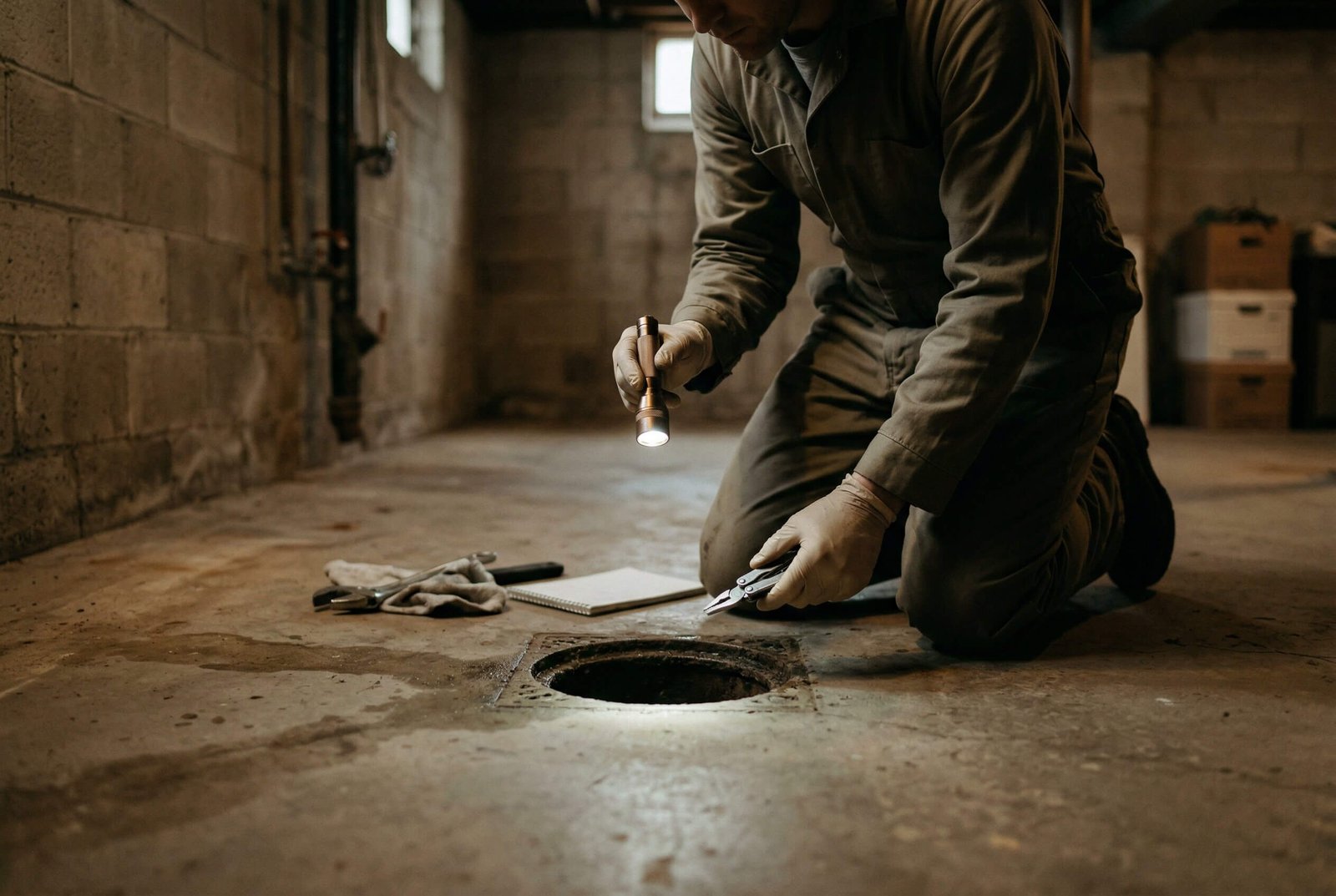
A basement floor drain smells like sewer is a common issue many homeowners notice, especially in basements that contain laundry rooms, utility areas, or rarely used drains. Instead of the drain remaining odorless, a strong sewage-like smell begins spreading through the basement, often described as a rotten egg, sewage, or musty sewer odor. Because basement drains connect directly to the home’s plumbing system, unpleasant odors can sometimes escape when something in the drainage system is not functioning properly.
In most homes, the floor drain itself is not the actual source of the problem. Instead, the smell usually indicates that sewer gas is entering the basement through the drain opening. This can happen when the drain trap dries out, debris builds up inside the drain, bacteria begin growing in standing water, or there are hidden issues deeper in the plumbing system. In some situations, the smell may appear occasionally, while in others it may become persistent and spread throughout the basement.
Understanding why a basement floor drain smells like sewer requires looking at how drain traps, sewer gases, and the home’s drainage system work together. In this guide, we will explain the most common causes of basement drain odors, how plumbers diagnose the issue, and the warning signs that may indicate a larger sewer problem in the home’s plumbing system.
What This Page Covers
ToggleUnderstanding Basement Floor Drains in U.S. Homes
Basement floor drains are an important part of many residential plumbing systems in the United States. They are designed to remove excess water from basement floors and protect the home from flooding, appliance leaks, or plumbing overflows. Because basements are often the lowest level of a home, floor drains provide a safe path for water to enter the drainage system and flow toward the sewer line.
However, because these drains connect directly to the home’s sewer system, they can sometimes become a source of unpleasant odors if something in the plumbing system is not functioning properly. Understanding how basement floor drains work helps homeowners recognize why sewer smells may occasionally come from these drains.
What a Basement Floor Drain Is
A basement floor drain is typically a round metal or plastic drain opening installed flush with the basement floor. It is often located near laundry appliances, water heaters, or utility sinks where water leaks are more likely to occur.
Beneath the visible drain cover is a pipe that connects to the home’s drainage system. This pipe allows water on the basement floor to enter the plumbing network and flow toward the main building drain and sewer line.
The floor drain also includes a trap, which is a curved section of pipe designed to hold a small amount of water. This trapped water plays a critical role in preventing sewer gases from entering the home.
Why Basements Often Have Floor Drains
Basements are vulnerable to water problems because many plumbing systems, appliances, and pipes are located in this part of the home. Floor drains help manage water when unexpected situations occur.
Common reasons basements include floor drains include:
-
Washing machine leaks or overflows
-
Water heater leaks
-
Utility sink overflow
-
Condensation or appliance drainage
-
Basement flooding from plumbing failures
By providing a direct path into the drainage system, the floor drain helps prevent water from spreading across the basement floor and causing damage.
How Basement Floor Drains Connect to the Sewer System
Basement floor drains connect to the same plumbing network that serves sinks, toilets, showers, and other fixtures throughout the home. Water entering the floor drain typically travels through several sections of piping before leaving the house.
These connections often include:
-
The floor drain trap
-
A branch drain line in the basement
-
The main building drain beneath the home
-
The main sewer line that carries wastewater away from the property
Because the floor drain is connected to this system, any changes in pressure, airflow, or wastewater movement inside the pipes can sometimes affect the drain.
The Role of the Drain Trap in Preventing Sewer Odors
The most important component of a basement floor drain is the P-trap, which sits directly beneath the drain opening. This curved pipe section always holds a small amount of water that acts as a barrier between the home and the sewer system.
The water inside the trap prevents sewer gases from rising through the drain pipe and entering the basement. These gases naturally exist inside sewer lines and contain odors that can smell like rotten eggs, sewage, or sulfur.
When the trap contains water, it blocks these gases effectively. However, if the trap dries out or becomes disturbed, sewer gases can travel up the pipe and escape through the floor drain opening, causing the basement to smell like sewer.
Why Basement Floor Drains Can Start Smelling Like Sewer
When a basement floor drain smells like sewer, it usually means sewer gases are escaping from the drainage system and entering the basement through the drain opening. In a properly functioning plumbing system, these gases remain sealed inside the pipes by the water trapped in the floor drain’s P-trap. When something interferes with this seal or disrupts airflow in the drainage system, sewer odors can begin to appear.
The smell itself is typically caused by gases produced inside the sewer system as organic waste breaks down. These gases often contain hydrogen sulfide, which produces the familiar rotten egg odor commonly associated with sewer smells.
What Sewer Smell Actually Means
A sewer smell in the basement does not necessarily mean sewage is leaking into the home. In many cases, it simply means sewer gas is escaping through the floor drain instead of remaining contained inside the plumbing system.
Sewer gases naturally exist inside drain pipes and sewer lines. These gases move through the system as wastewater flows through the pipes. When the plumbing system is properly sealed and vented, the gases travel through the vent system and exit above the roof of the house.
If something disrupts the seal in the floor drain trap or interferes with proper venting, the gases may instead escape through the drain opening.
Why Sewer Odors Appear Near Floor Drains
Floor drains are one of the most common locations where sewer odors become noticeable. Because these drains connect directly to the building drain system and sit at the lowest level of the house, they are sensitive to changes in pressure and airflow inside the pipes.
Several situations can cause sewer odors to appear at the floor drain, including:
-
The water in the drain trap evaporating over time
-
Organic debris accumulating inside the drain
-
Bacteria growing in standing water inside the pipe
-
Air pressure changes inside the drainage system
When any of these conditions occur, sewer gases can move upward through the pipe and escape into the basement.
Why Basement Drains Are More Likely to Smell
Basement floor drains are particularly prone to sewer odors because they are often used infrequently. In some homes, the floor drain may only receive water occasionally from laundry appliances or minor floor spills.
When a drain sits unused for long periods, the water inside the trap may slowly evaporate. Once the trap loses enough water, the seal that blocks sewer gases weakens, allowing odors to enter the room.
Basement environments can also contribute to this problem because they may experience:
-
Lower air circulation
-
Temperature fluctuations
-
Moisture buildup in drain pipes
These conditions can make sewer odors more noticeable when they occur.
How Sewer Gas Moves Through Drain Pipes
Inside a home’s plumbing system, sewer gases move through pipes along with airflow created by the drainage and venting system. The plumbing vent system is designed to regulate air pressure inside the pipes so wastewater can flow smoothly.
If the vent system becomes restricted or the trap seal is weakened, sewer gases may follow the path of least resistance and escape through a nearby drain opening. Because basement drains sit lower than most other fixtures, they can become a common exit point for these gases.
In many cases, the smell itself is the first sign that something inside the drainage system needs attention. Even when no water backup is visible, sewer odors coming from a basement floor drain can indicate issues with the trap, debris buildup, or ventilation within the plumbing system.
Common Signs the Basement Floor Drain Is the Source of the Smell
When homeowners notice a sewer smell in the basement, it is not always immediately obvious where the odor is coming from. Basements often contain multiple plumbing fixtures, drains, and appliances, which can make it difficult to pinpoint the exact source. However, certain signs can indicate that the basement floor drain is responsible for the odor.
These clues usually appear when sewer gases escape through the drain opening due to issues with the trap seal, debris buildup, or airflow changes inside the plumbing system.
Strong Sewage Odor Near the Drain
One of the most common signs is a strong sewage odor concentrated near the floor drain itself. When standing close to the drain, the smell may become noticeably stronger compared to other areas of the basement.
Homeowners may observe:
-
A rotten egg or sulfur-like smell near the drain
-
The odor becoming stronger when bending near the drain opening
-
The smell spreading gradually throughout the basement
-
The odor lingering even when no water is visible in the drain
Because sewer gas escapes directly from the drain opening, the smell is usually strongest in the immediate area around the drain.
Smell Becoming Stronger After Running Water Fixtures
In some homes, the sewer smell may become stronger after using other plumbing fixtures in the house. Activities such as running the washing machine, flushing toilets, or draining sinks can change airflow and pressure inside the drainage system.
Situations where this may occur include:
-
Running the washing machine in the basement
-
Draining a bathtub or shower
-
Flushing multiple toilets
-
Heavy water usage throughout the home
These changes in water movement can temporarily push sewer gases toward the floor drain opening, making the odor more noticeable.
Odor Appearing After Laundry or Shower Use
Many homeowners report that the smell appears shortly after using plumbing fixtures connected to the same drain system. For example, when the washing machine drains, the sudden movement of water through the pipes may disturb the air pressure in the drain system.
This disturbance can sometimes push sewer gases upward through the floor drain. In these situations, the smell may appear briefly and then fade once the water movement in the pipes stops.
Sewer Smell That Gets Worse at Night or Early Morning
Another pattern homeowners sometimes notice is that the sewer smell becomes stronger during certain times of day, particularly at night or early in the morning.
This can occur because:
-
The basement drain has not been used for several hours
-
Water inside the trap may slowly evaporate overnight
-
Temperature changes affect airflow inside drain pipes
When the trap seal weakens due to evaporation, sewer gases may begin escaping through the drain opening, making the smell more noticeable when the basement is quiet and airflow is minimal.
Recognizing these patterns can help homeowners determine whether the basement floor drain is the likely source of the sewer odor, which is an important step in understanding what may be happening inside the drainage system.
Most Common Causes of Sewer Smell From Basement Floor Drains
When a basement floor drain smells like sewer, the odor usually comes from sewer gases escaping through the drain opening. In a properly functioning plumbing system, the drain trap holds water that blocks these gases from entering the home. When that barrier is disrupted or something inside the drain begins producing odor, sewer smells can spread into the basement.
Several plumbing conditions can cause this problem. Some involve the floor drain trap itself, while others occur deeper inside the drainage system.
Dry Drain Trap Allowing Sewer Gas to Enter
One of the most common causes of sewer smell in a basement floor drain is a dry drain trap. The trap beneath the drain normally holds a small amount of water that acts as a seal between the home and the sewer system.
If the floor drain is rarely used, the water inside the trap may slowly evaporate over time. Once enough water evaporates, the protective seal disappears and sewer gases can move upward through the drain pipe.
Situations that commonly cause dry traps include:
-
Basement floor drains that are rarely used
-
Long periods without running water in the drain
-
Warm basement environments that increase evaporation
-
Seasonal homes where plumbing sits unused for months
When the trap dries out, sewer gas can escape directly into the basement through the drain opening.
Organic Debris Buildup Inside the Drain
Another common cause of sewer smell is organic debris accumulating inside the floor drain. Over time, small amounts of dirt, soap residue, lint, hair, and other organic materials can collect inside the drain pipe.
As this material breaks down, bacteria begin feeding on it and producing gases that smell similar to sewage.
Sources of debris inside basement floor drains may include:
-
Laundry lint entering nearby drains
-
Dirt and dust washed into the drain during cleaning
-
Soap residue from utility sinks
-
Organic material carried through the drain system
Because the basement drain may not receive regular water flow, debris inside the pipe can remain trapped for long periods and begin producing odors.
Bacteria Growth Inside the Drain Trap
Standing water inside the floor drain trap can sometimes become a breeding ground for bacteria and biofilm. These microorganisms feed on organic materials inside the drain and can produce strong odors as part of their growth process.
This bacterial buildup often appears as a slimy layer along the inside of the drain pipe. Over time, the bacteria release gases that may smell similar to sewage or rotten eggs.
Factors that encourage bacterial growth include:
-
Warm basement temperatures
-
Organic residue inside the drain
-
Stagnant water inside rarely used traps
-
Poor airflow inside the drain pipe
In these situations, the smell may persist even when the drain trap still contains water.
Blocked or Poorly Ventilated Drain Pipes
The plumbing system in a home includes vent pipes that regulate air pressure inside the drainage network. These vents allow sewer gases to exit the home safely through the roof while also helping water move smoothly through the pipes.
If the vent system becomes restricted or blocked, pressure inside the drain pipes can change. When this happens, sewer gases may be forced out through nearby drain openings instead of traveling through the vent system.
Vent system problems can occur due to:
-
Debris or leaves blocking the roof vent
-
Bird nests or animal activity inside vent pipes
-
Ice buildup in colder climates
-
Poor vent installation or design
When airflow inside the plumbing system becomes unbalanced, basement floor drains may become one of the easiest escape points for sewer gases.
These causes demonstrate why a sewer smell from a basement floor drain often originates from conditions inside the drain system rather than the drain opening itself. Understanding these factors helps explain why the odor may appear suddenly or become stronger over time.
Hidden Plumbing Issues That Can Cause Sewer Smells
Sometimes a basement floor drain smells like sewer even when the drain trap contains water and the drain itself appears clean. In these cases, the odor may be coming from hidden plumbing issues deeper inside the drainage system. Because much of the plumbing network runs inside walls, beneath basement floors, or underground, problems in these areas can allow sewer gases to travel into the home without being immediately visible.
Professional plumbers often investigate several hidden conditions when diagnosing persistent sewer odors from basement drains.
Partial Sewer Line Blockage
A partial blockage in the main sewer line can sometimes cause sewer odors to appear near basement floor drains. When the sewer line becomes restricted by debris, roots, or sediment buildup, wastewater and gases may not move through the pipe normally.
Instead of flowing smoothly toward the municipal sewer or septic system, gases may begin collecting in sections of the drain system. Changes in air pressure inside the pipes can push these gases back toward the house, allowing them to escape through nearby drain openings.
Signs that a partial sewer blockage may be developing include:
-
Slow drainage in multiple fixtures
-
Gurgling sounds in drains
-
Sewer odors appearing intermittently in the basement
-
Odor becoming stronger during heavy water use
Even when no visible backup occurs, sewer gas movement can still create noticeable odors.
Cracked or Damaged Drain Pipes
Another hidden cause of sewer smell is damage to drain pipes located beneath the basement floor or inside walls. Over time, pipes may crack due to age, corrosion, or shifting soil around the home’s foundation.
When a pipe becomes damaged, sewer gases can escape from the pipe and enter the surrounding structure. These gases may eventually travel through small openings in the basement floor or around the drain system, creating the impression that the smell is coming directly from the floor drain.
Pipe damage can occur due to:
-
Aging cast iron pipes corroding from the inside
-
Clay pipes cracking underground
-
Soil movement around the foundation
-
Structural stress on underground plumbing lines
Because these pipes are hidden beneath the floor or inside walls, plumbers often rely on specialized inspection tools to identify these problems.
Loose Drain Pipe Connections
In some homes, loose or poorly sealed pipe connections can allow sewer gases to escape from the drainage system. Over time, plumbing joints may shift slightly due to building movement, temperature changes, or pipe expansion and contraction.
When this happens, small gaps can form around pipe connections. Sewer gases traveling through the pipes may escape through these openings and spread through the basement.
Common areas where loose connections may occur include:
-
Drain pipe joints beneath the basement floor
-
Pipe connections near utility fixtures
-
Older plumbing connections that have loosened with age
-
Drain fittings installed improperly during construction
Although these gaps may be small, sewer gases can travel easily through them.
Deteriorating Cast Iron Pipes in Older Homes
Many older homes still contain cast iron drain pipes, which were widely used in plumbing systems decades ago. Over time, these pipes can begin deteriorating internally due to corrosion and mineral buildup.
As cast iron pipes age, the interior surface becomes rough and may begin to flake or rust. This deterioration can create small openings or weak points where sewer gases escape.
Signs of aging cast iron plumbing may include:
-
Persistent sewer odors in basement areas
-
Rust-colored residue near pipes
-
Visible corrosion on exposed sections of pipe
-
Gradual worsening of drain system performance
Because these issues develop slowly over time, homeowners may not realize the problem exists until sewer odors begin appearing regularly in the basement.
Hidden plumbing issues like these demonstrate why sewer smells from basement floor drains sometimes require professional inspection of the entire drainage system. The odor may originate from parts of the plumbing network that are not visible from inside the home.
How Basement Floor Drain Traps Prevent Sewer Gas
One of the most important components of a basement floor drain is the drain trap, often called a P-trap. This small but critical part of the plumbing system is responsible for preventing sewer gases from traveling up through the drain pipe and entering the home. When a basement floor drain begins to smell like sewer, the trap is usually one of the first areas plumbers examine.
The trap works by creating a simple but effective barrier between the indoor environment and the sewer system. Understanding how this barrier functions helps explain why sewer odors sometimes appear when something disrupts the trap seal.
What a P-Trap Does in a Floor Drain
A P-trap is a curved section of pipe located directly beneath the floor drain opening. Its shape allows a small amount of water to remain inside the bend of the pipe after water flows through the drain.
This trapped water forms a physical seal that blocks gases from moving upward through the drain pipe. Sewer systems naturally contain gases produced by decomposing organic waste, and these gases constantly move through the drainage network.
The water inside the trap acts as a gas barrier, preventing those gases from entering the basement through the drain opening.
How Water Seals Block Sewer Gas
The effectiveness of the drain trap depends entirely on the presence of water inside the trap. When the trap is filled with water, it creates a continuous seal that separates the air inside the home from the gases inside the sewer system.
In normal conditions:
-
Water flows into the drain and passes through the trap
-
A portion of the water remains inside the curved pipe
-
This water blocks sewer gases from rising through the drain
As long as the water remains in place, the sewer system stays sealed off from the basement environment.
Why Basement Drain Traps Dry Out
One of the most common reasons basement floor drains begin to smell like sewer is that the water inside the trap has dried out. Unlike sinks or showers that are used regularly, basement floor drains may go weeks or months without receiving water.
When this happens, the water inside the trap can slowly evaporate.
Trap evaporation is more likely when:
-
The basement drain is rarely used
-
The basement environment is warm and dry
-
Air movement passes through the drain system
-
Long periods pass without water entering the drain
Once enough water evaporates, the trap seal weakens or disappears entirely. Without that barrier, sewer gases can travel directly through the pipe and escape into the basement.
Situations That Cause Trap Water to Evaporate
Several common household situations can cause the trap water level to drop over time. In many homes, the floor drain simply does not receive enough water to maintain a full trap seal.
Examples include:
-
Basement floor drains that are rarely used
-
Seasonal homes where plumbing sits unused for long periods
-
Laundry rooms where the drain does not receive direct water flow
-
Utility drains installed only for emergency water overflow
When the trap water disappears, sewer gases can move freely through the pipe and cause the strong sewer smell homeowners notice in the basement.
Understanding how the trap works explains why many basement drain odors originate from something as simple as a missing water seal, even though the smell itself may suggest a larger sewer problem.
Where Sewer Odors May Actually Be Coming From
When a basement floor drain smells like sewer, many homeowners assume the odor is coming directly from the drain opening. While this is sometimes true, the smell may actually originate from other parts of the home’s drainage system. Because sewer gases can travel through pipes and escape from the lowest or easiest opening, the floor drain often becomes the point where the odor is most noticeable—even if the source of the problem is located elsewhere.
Professional plumbers typically inspect several areas of the plumbing system to determine where sewer gases may be entering the home.
The Basement Floor Drain Trap
The first place plumbers usually check is the floor drain trap itself. As explained earlier, this trap is designed to hold water that blocks sewer gases from entering the house.
If the trap has dried out, the seal between the home and the sewer system disappears. In this situation, sewer gases from the drainage system can travel directly up the pipe and escape through the drain opening.
A trap-related odor often has these characteristics:
-
The smell is strongest directly above the drain
-
The odor appears when the basement drain has not been used for a long time
-
The smell may temporarily disappear after water is poured into the drain
Because basement drains are often unused for extended periods, trap evaporation is one of the most common causes of sewer odors.
The Branch Drain Serving the Basement
In many homes, the basement floor drain connects to a branch drain line that also serves nearby plumbing fixtures. This branch line may carry wastewater from utility sinks, laundry appliances, or other basement plumbing fixtures.
If debris builds up inside this branch drain, it can create an environment where bacteria and organic material begin producing foul odors.
Sources of odor inside the branch drain may include:
-
Laundry lint buildup
-
Soap residue accumulation
-
Organic debris trapped inside pipe bends
-
Sediment collecting in low sections of the pipe
These materials can produce gases that travel upward through the floor drain, making it appear as though the drain itself is producing the smell.
The Main Building Drain Line
Another potential source of sewer odors is the main building drain, which is the large pipe that carries wastewater from all fixtures in the home toward the sewer line.
If airflow inside this pipe becomes unbalanced or restricted, sewer gases may move toward the basement and escape through nearby drain openings. Changes in pressure within the plumbing system can sometimes push these gases upward through the floor drain.
Situations that may cause sewer odors from the building drain include:
-
Partial blockages in the drain line
-
Poor ventilation in the plumbing system
-
Heavy wastewater movement through the pipes
-
Air pressure changes inside the drain network
Because the building drain connects the entire plumbing system, odors from this pipe can occasionally appear in the basement.
The Sewer Line Leaving the House
The final location plumbers investigate is the main sewer line that carries wastewater away from the home. If this underground pipe develops problems such as blockages or damage, sewer gases may begin accumulating inside the drainage system.
Common sewer line problems that contribute to odors include:
-
Tree root intrusion inside the pipe
-
Cracked or damaged underground sewer pipes
-
Debris accumulation restricting water flow
-
Sewer line settling or sagging underground
When these issues occur, sewer gases may travel through the drainage system and escape through the nearest openings inside the house. Because basement floor drains sit at the lowest elevation in the plumbing network, they often become the place where these odors are most noticeable.
Understanding that sewer odors may originate from different parts of the plumbing system helps explain why diagnosing a smelly basement drain sometimes requires inspecting the entire drainage network rather than just the drain itself.
How Plumbers Diagnose Sewer Smells in Basement Drains
When a basement floor drain smells like sewer, plumbers focus on identifying where sewer gases are escaping from the plumbing system. Because odors can travel through drain pipes, the smell appearing at the floor drain does not always mean the drain itself is the source. Professional plumbers typically perform a series of inspections to determine whether the odor is caused by a simple trap issue, debris buildup, venting problems, or a deeper sewer system concern.
A proper diagnosis usually involves examining several components of the drainage system to understand how air and wastewater move through the pipes.
Checking Drain Traps and Water Levels
The first step plumbers usually take is checking the floor drain trap to make sure it contains enough water to block sewer gases. If the trap is dry or nearly empty, sewer gas can pass directly through the drain opening.
During this inspection, plumbers look for:
-
A dry or partially dry trap
-
Low water levels inside the trap
-
Signs that the trap water has evaporated
-
Debris or residue inside the trap
If the trap has dried out, restoring the water seal often stops sewer gases from entering the basement. However, plumbers may continue inspecting the system to ensure the trap is not drying out due to other issues.
Inspecting for Organic Buildup Inside Drains
Another common step involves checking the drain itself for organic debris buildup. Over time, dirt, soap residue, lint, and organic materials can accumulate inside the drain pipe and begin producing unpleasant odors.
Plumbers may inspect:
-
The inside of the drain opening
-
Pipe walls near the trap
-
Slime or bacterial growth inside the pipe
-
Debris that may have settled in the drain
Organic buildup can produce gases that smell very similar to sewer odors, making it important to determine whether the smell originates from inside the drain rather than deeper in the plumbing system.
Sewer Camera Inspections
If the odor appears persistent or unexplained, plumbers may use a drain inspection camera to examine the inside of the plumbing system. This specialized tool allows plumbers to look inside pipes and identify hidden issues that may be contributing to sewer odors.
Camera inspections can reveal:
-
Cracked or damaged drain pipes
-
Tree roots growing inside sewer lines
-
Debris buildup restricting water flow
-
Sediment accumulation in basement drain lines
-
Sagging sections of underground sewer pipes
By visually inspecting the inside of the pipe, plumbers can determine whether sewer gases may be escaping due to structural damage or blockages deeper in the system.
Vent System Evaluation
The plumbing vent system plays a critical role in controlling airflow inside the drain pipes. These vents allow sewer gases to exit the home safely through the roof while also maintaining proper air pressure inside the plumbing system.
If a vent pipe becomes blocked or restricted, sewer gases may be forced back through nearby drains instead of exiting through the roof.
Plumbers may check for:
-
Blocked roof vents caused by debris or leaves
-
Animal nests inside vent pipes
-
Ice buildup in colder climates
-
Improper vent pipe installation
When venting problems occur, sewer gases can move through the drainage system and escape through basement drains, creating the odor homeowners notice.
By examining the drain trap, pipe conditions, sewer lines, and vent system, plumbers can determine why sewer gases are escaping and identify the part of the plumbing system responsible for the smell.
Warning Signs That the Sewer Smell Indicates a Larger Problem
A basement floor drain smelling like sewer is sometimes caused by minor issues such as a dry trap or debris buildup inside the drain. However, certain warning signs may indicate that the odor is connected to a more serious plumbing problem deeper in the drainage system. When sewer smells appear together with other plumbing symptoms, it often suggests that the problem may involve the main drain line, vent system, or sewer pipe leaving the house.
Recognizing these warning signs can help homeowners determine when a sewer odor is more than just a temporary issue.
Multiple Drains Smelling Like Sewer
If sewer odors begin appearing from multiple drains in the home, the problem may not be limited to the basement floor drain. When several drains produce similar odors, it often suggests that sewer gases are moving through the plumbing system rather than escaping from a single location.
Homeowners may notice smells coming from:
-
Basement floor drains
-
Bathroom sink drains
-
Shower or bathtub drains
-
Laundry drains
When sewer smells appear in multiple areas, it can indicate ventilation problems in the plumbing system or issues affecting the main drainage network.
Sewage Smell Combined With Slow Drains
Another warning sign of a larger plumbing issue is when sewer odors appear together with slow drainage in fixtures. If sinks, bathtubs, or toilets begin draining slowly while sewer smells are present, this may indicate a developing blockage somewhere in the drain system.
Symptoms that may occur together include:
-
Slow draining sinks or tubs
-
Gurgling sounds inside pipes
-
Water draining more slowly than usual
-
Sewer odors appearing during heavy water use
These signs can suggest that wastewater and gases are not moving properly through the pipes due to restrictions in the drainage system.
Sewer Odor Appearing With Drain Backups
When a sewer smell appears at the same time as water backing up through drains, it may indicate that the plumbing system is experiencing a more serious problem. In this situation, wastewater may be struggling to leave the home through the sewer line.
Homeowners may observe:
-
Water rising through basement floor drains
-
Drain bubbling during washing machine discharge
-
Sewage odors becoming stronger during backups
-
Dirty or cloudy water appearing near the drain
When backups occur along with sewer odors, plumbers often investigate the possibility of a main sewer line blockage.
Persistent Sewer Gas Smell in the Basement
Occasional odors from a basement drain may come and go depending on environmental conditions or water usage. However, a persistent sewer gas smell that remains present for long periods may indicate a more significant issue in the plumbing system.
Signs of a persistent sewer gas problem include:
-
Odor that remains even after running water in the drain
-
Smell spreading throughout the basement
-
Sewer odor becoming stronger over time
-
Odor present regardless of plumbing usage
When sewer gas continues to appear despite normal drain usage, professional inspection is often necessary to determine whether the problem involves the drain trap, vent system, or sewer line.
Recognizing these warning signs helps homeowners understand when a sewer odor may be linked to a larger drainage system issue rather than a simple drain maintenance concern.
Real Plumbing Scenarios That Cause Basement Drain Odors
In real homes, a basement floor drain smelling like sewer often develops from everyday plumbing conditions that gradually affect the drainage system. Professional plumbers frequently encounter similar patterns when diagnosing basement drain odors. These real-world scenarios help explain why sewer smells appear even when the drain itself seems clean and functional.
Because basement floor drains are often used less frequently than other plumbing fixtures, small changes in the drainage system can eventually allow odors to escape into the basement.
Rarely Used Basement Floor Drains Drying Out
One of the most common scenarios plumbers see is a rarely used basement floor drain with a dry trap. In many homes, the basement drain is installed only as a safety feature in case of flooding or appliance leaks. As a result, the drain may go weeks or even months without receiving water.
Over time, the water inside the drain trap slowly evaporates. Once the trap loses enough water, the barrier that blocks sewer gases disappears.
This situation typically produces:
-
A sudden sewer smell in the basement
-
Odor strongest directly above the floor drain
-
Smell appearing after long periods without water use
-
Odor temporarily disappearing after water enters the drain
This is one of the simplest but most common reasons homeowners notice sewer odors in basement drains.
Laundry Lint and Debris Accumulating in Drains
Another common situation occurs when lint and debris from laundry activities accumulate inside nearby drain pipes. Basement laundry areas often share drain lines with the floor drain, which means lint and detergent residue from washing machines can enter the same branch drain system.
Over time, these materials may collect inside the pipe and begin breaking down. As bacteria feed on the organic material, they can produce unpleasant odors that travel up through the floor drain.
Symptoms of this scenario often include:
-
Sewer-like odors near the laundry area
-
Smell becoming stronger during laundry cycles
-
Occasional gurgling sounds in nearby drains
-
Persistent odor even when the trap contains water
In these cases, the smell may originate from debris deeper inside the drain line rather than from the drain opening itself.
Sewer Gas Escaping Through Damaged Pipes
In older homes, plumbers sometimes discover cracked or deteriorating drain pipes beneath the basement floor. Over time, underground pipes may weaken due to corrosion, soil movement, or long-term structural stress.
When small cracks form in these pipes, sewer gases can escape into the surrounding structure and eventually enter the basement through gaps around drains or floor openings.
This type of problem may produce:
-
A constant sewer odor in the basement
-
Smell that does not disappear after running water in the drain
-
Odor spreading across a wider basement area
-
Sewer smell appearing even when the drain itself looks normal
Because these pipes are hidden beneath the floor, diagnosing the issue often requires specialized inspection tools.
Bacterial Slime Growth in Floor Drains
Another situation plumbers frequently encounter is bacterial slime buildup inside basement floor drains. Over time, organic materials such as soap residue, dust, lint, and small debris can accumulate inside the drain pipe.
When moisture remains inside the drain, bacteria begin growing on these materials and form a slippery layer known as biofilm. This bacterial growth can produce strong odors that resemble sewer gas.
Signs of bacterial slime buildup may include:
-
Slimy residue around the inside of the drain opening
-
Persistent unpleasant odor near the drain
-
Smell remaining even when the trap contains water
-
Odor becoming stronger in warm or humid conditions
Although the smell may resemble sewer gas, the source is often bacterial activity inside the drain rather than gases from the sewer line.
These real-world plumbing scenarios demonstrate that basement drain odors can develop from a variety of conditions. Identifying the exact cause often requires examining both the floor drain itself and the surrounding drainage system.
Warning Signs That Require Professional Plumbing Inspection
A basement floor drain smelling like sewer is sometimes caused by minor issues such as a dry trap or organic debris inside the drain. However, certain situations suggest that the odor may be connected to a deeper plumbing problem. When sewer smells appear along with other unusual plumbing behavior, it may indicate that the drainage system requires professional inspection.
Because the plumbing system inside a home is interconnected, a problem in one section of the drain network can sometimes reveal itself through the basement floor drain.
Sewer Smell That Will Not Go Away
If the sewer odor continues even after running water through the drain, it may indicate that the problem is not simply a dry trap. Persistent odors can suggest that sewer gases are escaping from somewhere deeper inside the drainage system.
Homeowners may notice:
-
Sewer smell returning shortly after water is poured into the drain
-
Odor remaining present throughout the day
-
Smell spreading beyond the immediate area of the floor drain
-
Odor becoming gradually stronger over time
These signs often indicate that further inspection is needed to determine whether the plumbing system has ventilation or sewer line issues.
Smell Combined With Water Backup
When sewer odors appear together with water backing up through the floor drain, the situation may involve a blockage in the drainage system. Wastewater that cannot move freely through the pipes may begin pushing both water and sewer gases back toward the home.
This type of situation may produce symptoms such as:
-
Water rising through the basement floor drain
-
Bubbling sounds in the drain during heavy water use
-
Dirty or cloudy water appearing near the drain opening
-
Sewer smell becoming stronger during backups
Because these symptoms can indicate a restriction in the main drain or sewer line, professional inspection is usually recommended.
Strong Gas Odor Spreading Through the Basement
A strong sewer gas smell spreading throughout the basement may indicate that gases are escaping somewhere within the plumbing system rather than only through the drain opening.
Homeowners may notice:
-
Sewer odor lingering across the basement area
-
Smell becoming stronger near walls or utility spaces
-
Odor remaining even when drains are filled with water
-
Smell present regardless of plumbing activity
In these cases, plumbers may investigate hidden pipe connections, damaged drain lines, or ventilation issues that allow sewer gases to enter the basement.
Drain Odor Appearing Throughout the House
If the sewer smell is no longer limited to the basement and begins appearing in other drains throughout the home, the problem may involve the plumbing system’s ventilation or main drain network.
Signs that the issue may affect the entire plumbing system include:
-
Sewer odors from multiple drains in the home
-
Gurgling sounds from sinks or bathtubs
-
Slow drainage occurring in several fixtures
-
Smell becoming noticeable after running water in different parts of the house
When sewer odors spread beyond the basement, plumbers often inspect the vent pipes and main sewer line to determine whether airflow or drainage inside the system is being disrupted.
Recognizing these warning signs can help homeowners understand when a basement drain odor is more than a minor inconvenience and may require a professional evaluation of the plumbing system.
Preventive Habits That Reduce Basement Drain Odors
Although a basement floor drain smelling like sewer can sometimes be caused by deeper plumbing issues, many odor problems develop gradually due to simple conditions inside the drain system. Because basement floor drains are often used less frequently than other household fixtures, small changes in the drain environment can allow odors to appear over time. Practicing a few preventive habits can help maintain the drain system and reduce the chances of sewer smells developing in the basement.
While these steps cannot prevent every plumbing problem, they can help homeowners maintain a healthier drainage environment and detect potential issues earlier.
Maintaining Water in the Drain Trap
One of the easiest ways to prevent sewer odors is to ensure that the floor drain trap always contains water. The water inside the trap forms a seal that blocks sewer gases from traveling up through the drain pipe.
If the basement floor drain is rarely used, homeowners can occasionally add water to the drain to maintain this protective seal.
Situations where trap maintenance is especially important include:
-
Basement drains that receive little regular water flow
-
Seasonal homes that remain unused for extended periods
-
Laundry rooms where the drain is used only for emergencies
-
Long periods when no plumbing fixtures are used in the basement
Maintaining water inside the trap helps ensure that sewer gases remain sealed within the plumbing system.
Keeping Basement Drains Clean
Over time, debris can accumulate inside basement floor drains. Dust, dirt, lint, soap residue, and other organic materials may enter the drain during cleaning or laundry activities. When these materials remain inside the pipe, they can create an environment where bacteria grow and produce unpleasant odors.
Keeping the drain area clean helps reduce the buildup of odor-producing material.
Homeowners can help prevent debris accumulation by:
-
Avoiding sweeping dirt directly into the drain
-
Keeping lint and laundry debris away from the drain opening
-
Rinsing the drain occasionally to flush out small particles
-
Monitoring the drain area during basement cleaning
Clean drains are less likely to develop bacterial buildup that contributes to unpleasant smells.
Monitoring Drain Odor Changes
Basement drain odors sometimes develop gradually. Paying attention to small changes in drain smell can help homeowners recognize early signs of plumbing issues before they become more serious.
Homeowners may benefit from noticing:
-
Changes in the strength of the sewer smell
-
Odors appearing during certain plumbing activities
-
Smell becoming stronger at certain times of day
-
Odor spreading beyond the drain area
These patterns can provide helpful clues about what may be affecting the plumbing system.
Periodic Sewer System Inspection
In some homes, particularly older properties, periodic inspection of the drainage system can help identify conditions that contribute to sewer odors. Professional plumbers may use specialized tools to inspect pipes and evaluate how wastewater flows through the system.
These inspections may reveal issues such as:
-
Tree roots entering sewer pipes
-
Sediment buildup in drain lines
-
Aging or deteriorating pipes
-
Ventilation problems within the plumbing system
Detecting these conditions early can help prevent future drainage problems and reduce the chances of sewer gases escaping into the basement.
Preventive maintenance helps ensure that the basement floor drain continues functioning as intended — allowing water to enter the drainage system while keeping sewer gases safely contained inside the pipes.
Final Thoughts on Basement Floor Drain Sewer Smells
A basement floor drain smelling like sewer is a problem many homeowners encounter at some point, especially in basements where drains are used infrequently. In most cases, the smell is caused by sewer gases escaping through the drain when the protective water seal in the trap becomes weak or when debris inside the drain begins producing odors. While the smell itself can be unpleasant, it often serves as an early signal that something inside the plumbing system needs attention.
Because basement floor drains connect directly to the home’s drainage network, odors appearing at this location can sometimes indicate conditions deeper within the plumbing system. Issues such as lint buildup, organic debris accumulation, restricted airflow in the vent system, or developing sewer line problems may all contribute to sewer smells in the basement. Understanding how the drain trap, drainage pipes, and vent system work together helps explain why these odors occur and why they sometimes appear suddenly.
When sewer smells appear occasionally and disappear after water flows into the drain, the problem may simply involve a dry trap or minor buildup inside the pipe. However, persistent odors or smells accompanied by other plumbing symptoms—such as slow drainage or water backups—may indicate a larger issue that requires professional evaluation. In these situations, plumbers can inspect the drainage system to determine where sewer gases are escaping and identify the underlying cause of the odor.
Recognizing the signs of sewer odors early allows homeowners to better understand how their plumbing system is behaving. By paying attention to changes in drain smells and maintaining basic drain care habits, many basement drain odor issues can be identified before they develop into more serious plumbing concerns.