
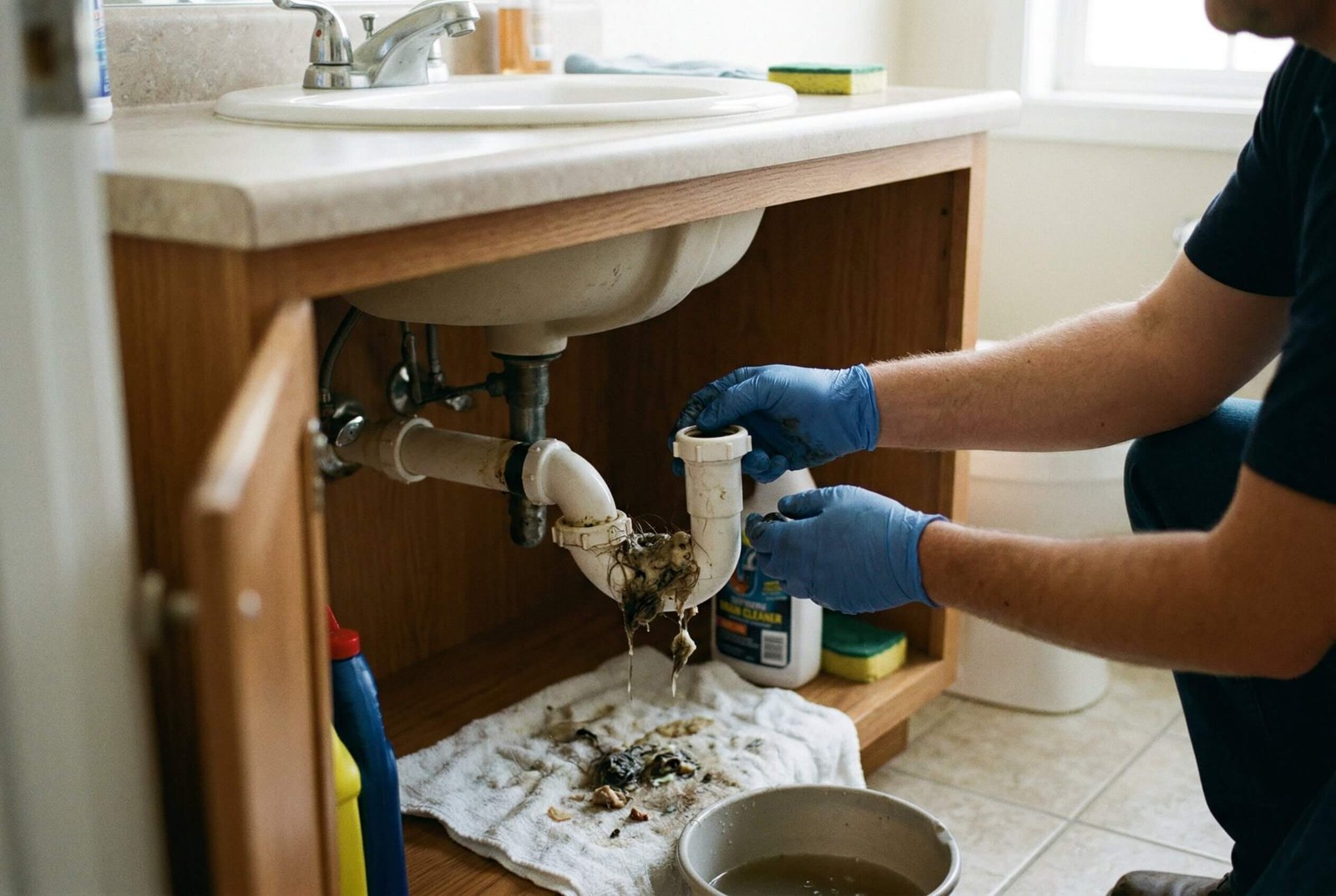
A clogged bathroom sink is one of the most common plumbing problems homeowners experience in the United States. In many cases, the issue starts gradually. The sink may begin draining a little slower than usual, or water may briefly pool in the basin before eventually disappearing. Over time, this slow drainage can develop into a more noticeable clog that affects how the sink functions during everyday use.
Bathroom sinks are used multiple times throughout the day for activities like brushing teeth, washing hands, shaving, and personal grooming. During these routines, small amounts of hair, soap residue, toothpaste, shaving cream, skincare products, and other debris enter the drain system. While these materials may seem harmless individually, they can gradually accumulate inside the pipes and restrict the normal flow of water.
Unlike kitchen sink clogs that are often caused by grease and food waste, bathroom sink clogs typically form from grooming-related debris. Hair can wrap around internal drain components, soap residue can stick to pipe walls, and toothpaste or cosmetic products can create sticky buildup that traps additional particles. As this buildup grows inside the pipes, it narrows the pathway that water must travel through, eventually leading to slow drainage or a full blockage.
In many American homes, bathroom sink clogs form in specific parts of the drain system such as the sink stopper assembly, the curved P-trap pipe under the sink, or the horizontal drain pipe inside the wall. Understanding how these plumbing components work and recognizing the early symptoms of a clog can help homeowners identify the issue before it becomes a larger drainage problem.
This article explains the most common causes of bathroom sink clogs found in U.S. homes, how these blockages develop inside the drain system, and how professional plumbers diagnose the underlying problem.
What This Page Covers
ToggleUnderstanding How a Bathroom Sink Drain System Works
A bathroom sink drain system may appear simple, but it is actually part of a carefully designed plumbing network that carries wastewater safely away from the home. Every time water flows down the sink, it moves through several connected pipes and components before eventually reaching the home’s main drain line. Each part of this system plays an important role in maintaining proper drainage and preventing sewer gases from entering the living space.
When a bathroom sink is working properly, water should flow smoothly through the drain without slowing down or backing up. However, because bathroom sinks are exposed to hair, soap residue, toothpaste, shaving products, and skincare items, debris can gradually collect inside the drain system. Over time, these materials accumulate in certain parts of the plumbing where bends or mechanical components naturally trap debris.
Understanding how the bathroom sink drain system functions helps explain why clogs develop and where they are most likely to occur. Most bathroom sink blockages begin in areas where debris can easily catch and build up inside the pipes.
Key Components of a Typical Bathroom Sink Drain
A standard bathroom sink drain system in U.S. homes includes several plumbing components that work together to carry water away from the sink. Each part has a specific function within the drainage system.
The primary components include:
-
Drain Opening
The visible opening at the bottom of the sink basin where water enters the drain system. -
Drain Flange
The metal fitting installed at the sink opening that connects the sink basin to the drain pipe below. -
Pop-Up Stopper Assembly
The movable stopper used to hold or release water in the sink. This mechanism includes small metal parts that can easily trap hair and debris. -
Tailpiece Pipe
The straight vertical pipe that connects the sink drain to the P-trap under the sink. -
P-Trap
The curved pipe section located beneath the sink. It holds a small amount of water that blocks sewer gases from entering the home. -
Trap Arm
The horizontal pipe that connects the P-trap to the drain pipe inside the wall. -
Branch Drain Line
The pipe inside the wall that carries wastewater from the sink toward the home’s main drain system.
Because these components include bends, mechanical parts, and connection points, they often become the most common areas where debris collects and clogs begin forming.
Common Symptoms of a Clogged Bathroom Sink
A bathroom sink clog rarely appears suddenly. In most homes, the problem develops gradually as debris builds up inside the drain system over time. Before the sink becomes completely blocked, homeowners usually notice several warning signs that indicate water is not flowing through the pipes as efficiently as it should.
Recognizing these early symptoms can help homeowners understand that a clog is forming somewhere in the drain system. In many cases, addressing the issue early can prevent a more serious blockage from developing deeper in the plumbing.
Below are the most common signs that a bathroom sink drain is becoming clogged.
Slow Draining Water
One of the earliest and most noticeable symptoms of a bathroom sink clog is slow drainage. After turning off the faucet, water may remain in the basin for several seconds before gradually draining away.
This usually happens when debris begins to narrow the inside of the pipe. Hair, soap residue, toothpaste, and grooming products slowly accumulate inside the drain and reduce the space available for water to flow through.
Standing Water in the Sink Basin
As the clog becomes worse, water may start collecting in the sink instead of draining normally. When the faucet runs, the basin may fill faster than the drain can remove the water.
Standing water typically indicates that the blockage has grown large enough to significantly restrict the drain pipe.
Gurgling Sounds From the Drain
Gurgling noises coming from the sink drain often occur when air becomes trapped in the plumbing system. When water tries to pass through a partially blocked pipe, it can create air bubbles that produce gurgling sounds.
These noises may be heard immediately after running the faucet or while the sink is slowly draining.
Unpleasant Odors From the Sink Drain
A clogged bathroom sink may begin producing unpleasant smells. These odors usually develop when hair, soap residue, toothpaste, and organic debris become trapped inside the pipes and start to break down.
Over time, bacteria can grow on this buildup, producing a musty or sewer-like odor that rises through the drain opening.
Water Backing Up After Running the Faucet
In more advanced clog situations, water may briefly back up into the sink before slowly draining. This happens when the blockage restricts water movement enough that the drain cannot keep up with the flow coming from the faucet.
Intermittent Drain Problems
Some bathroom sink clogs behave inconsistently. The sink may drain normally one day and slowly the next. This usually occurs when debris inside the pipe shifts slightly as water passes through it.
Intermittent drainage problems are often a sign that buildup is forming deeper in the drain system.
The Most Common Causes of Bathroom Sink Clogs in U.S. Homes
Bathroom sink clogs in American homes are usually caused by the gradual accumulation of everyday grooming debris. Unlike kitchen sink blockages that often involve grease or food particles, bathroom sink drains collect materials that come from daily hygiene routines. These substances enter the drain in small amounts each day and slowly build up inside the pipes.
Over time, the buildup becomes thick enough to restrict water flow. In many cases, multiple materials combine together to form a sticky mass that traps additional debris. Hair may act as the base of the clog, while soap residue, toothpaste, and grooming products attach to it and grow the blockage.
Understanding the most common causes of bathroom sink clogs helps homeowners recognize how these problems develop and why they tend to appear in specific parts of the drain system.
Hair Accumulation in the Drain
Hair is the single most common cause of bathroom sink clogs. During activities such as brushing hair, shaving, or washing the face, small strands of hair frequently fall into the sink and wash down the drain.
Once inside the drain pipe, hair can easily become tangled around the sink stopper mechanism or catch on rough surfaces inside the pipe. As more hair enters the drain, it forms a tangled mass that begins trapping other materials moving through the pipe.
Soap Scum Buildup
Soap residue is another major contributor to bathroom sink clogs. Many soaps contain fats and minerals that leave behind a sticky film when mixed with water. This residue gradually coats the inside of the drain pipes.
When soap scum accumulates on pipe walls, it creates a rough surface that makes it easier for hair, dirt, and debris to stick. Over time, this buildup thickens and narrows the pipe’s interior, slowing down water flow.
Toothpaste Residue and Personal Care Products
Toothpaste, facial cleansers, and cosmetic products can also contribute to drain clogs. These substances often contain thick ingredients that do not fully dissolve in water.
When these products enter the drain repeatedly, they may leave behind a paste-like residue that sticks to pipe surfaces. This residue can trap other particles moving through the drain and gradually contribute to the formation of a clog.
Shaving Cream and Grooming Product Buildup
Shaving cream, gels, beard trimmings, and grooming products commonly wash down bathroom sink drains. These materials often combine with hair and soap residue inside the pipes.
Because many grooming products contain oils or thickening agents, they can stick to pipe walls and help bind debris together. Over time, this mixture can form a dense blockage inside the drain.
Dirt, Skin Cells, and Everyday Debris
Everyday washing routines send small amounts of dirt, dead skin cells, and environmental debris down the bathroom sink drain. While these materials may seem insignificant individually, they can accumulate over time when combined with soap residue and hair.
As this mixture builds up inside the pipes, it contributes to the gradual narrowing of the drain passage.
Small Objects Accidentally Falling Into the Drain
Occasionally, small objects may fall into the bathroom sink and become lodged inside the drain. Items such as cotton swabs, dental floss, hair ties, jewelry, or toothpaste caps can obstruct water flow if they become trapped in the pipe.
Even if these objects do not completely block the drain, they can act as a base that catches additional debris and accelerates the formation of a clog.
Hidden Causes That Homeowners Often Miss
While many bathroom sink clogs are caused by visible debris like hair or soap residue, some blockages develop deeper in the plumbing system where homeowners cannot easily see them. These hidden causes often go unnoticed because the sink may appear normal on the surface, even though buildup or structural issues exist inside the pipes.
Professional plumbers frequently encounter situations where a homeowner clears visible debris from the drain opening but the sink continues to drain slowly. In these cases, the actual blockage may be located further down in the drain system or caused by an underlying plumbing issue rather than surface debris.
Understanding these hidden causes can help homeowners recognize when a clog may be more complex than it appears.
P-Trap Blockages
The P-trap is the curved pipe located directly under the sink. Its main purpose is to hold a small amount of water that prevents sewer gases from entering the home. However, the curved shape of the P-trap also makes it one of the most common places for debris to accumulate.
Hair, soap residue, toothpaste buildup, and grooming products can easily collect in the bend of the pipe. Over time, this buildup thickens and restricts water flow through the trap.
Pipe Scale and Mineral Buildup
In some parts of the United States, hard water contains high levels of minerals such as calcium and magnesium. When hard water flows through plumbing pipes, it can gradually leave mineral deposits on the interior surfaces of the pipes.
These deposits create a rough surface that traps debris more easily. As mineral buildup grows thicker, it reduces the internal diameter of the pipe and slows down drainage.
Improper Drain Pipe Slope
Drain pipes must be installed with a slight downward slope to allow wastewater to flow smoothly toward the main drain line. If the pipe slope is incorrect or has shifted over time, water may move more slowly through the system.
When drainage slows down due to poor pipe slope, debris is more likely to settle inside the pipe rather than being carried away by the water flow.
Old or Corroded Drain Pipes
In older homes, metal drain pipes may corrode or deteriorate over time. Corrosion can create rough surfaces inside the pipe that trap debris more easily.
As corrosion progresses, the interior of the pipe becomes narrower and less smooth, which makes it easier for clogs to develop.
Venting Problems in the Plumbing System
Every plumbing drain system includes vent pipes that allow air to enter the drainage system. These vents help maintain proper air pressure so that water can flow smoothly through the pipes.
If a plumbing vent becomes blocked by debris, leaves, or bird nests, it can disrupt the airflow within the drain system. This may cause water to drain more slowly or produce gurgling sounds in the sink.
Where Bathroom Sink Drain Blockages Usually Occur
Bathroom sink clogs do not form randomly throughout the plumbing system. In most U.S. homes, blockages tend to develop in specific areas where the design of the drain system allows debris to collect. These areas usually include mechanical components, pipe bends, or sections where water flow naturally slows down.
When plumbers diagnose a clogged bathroom sink, they often start by inspecting these common blockage locations. Each section of the drain system has unique characteristics that make it more likely to trap debris such as hair, soap residue, toothpaste buildup, and grooming products.
Understanding where clogs typically form can help homeowners better understand the behavior of their drain system and why certain drainage problems occur.
Sink Stopper Assembly
The sink stopper assembly is one of the most common locations for bathroom sink clogs. Most bathroom sinks in American homes use a pop-up stopper that allows the user to block or release water in the basin.
This mechanism includes several small parts located inside the drain opening. Hair can easily wrap around these components, creating a tangled mass that traps soap residue and grooming debris. Over time, this buildup can significantly restrict water flow through the drain.
Tailpiece Pipe
The tailpiece is the straight pipe section that connects the sink drain opening to the P-trap below. While this pipe is usually smooth and vertical, debris can sometimes collect inside it when buildup forms around the stopper assembly.
If hair and soap residue accumulate near the top of the drain, the tailpiece pipe may begin to narrow as debris sticks to its inner surface.
P-Trap Curve
The P-trap is the curved pipe located beneath the sink. Its design allows it to hold a small amount of water that blocks sewer gases from entering the home.
However, the curved shape of the P-trap also slows down water flow slightly. This makes it one of the most common places for debris to settle and accumulate. Hair, soap residue, toothpaste buildup, and other materials often collect in the bottom portion of the trap.
Horizontal Branch Drain
After water leaves the P-trap, it travels through a horizontal pipe called the branch drain. This pipe runs inside the wall and connects the sink drain to the home’s larger drainage system.
If debris passes through the P-trap but does not fully wash away, it can accumulate in this horizontal section of pipe. Over time, this buildup may grow large enough to slow or block water flow.
Main Drain Line Connection
In some cases, a bathroom sink clog may actually form where the sink’s branch drain connects to the home’s main drain line. This type of blockage is less common but can occur when debris from multiple fixtures accumulates in the same section of pipe.
When a blockage forms at this point, it may affect more than one drain in the home, such as nearby sinks, tubs, or showers.
How Professional Plumbers Diagnose Bathroom Sink Clogs
When a bathroom sink becomes clogged, professional plumbers do not immediately jump to clearing the drain. Instead, they first diagnose the underlying cause of the blockage. Proper diagnosis is important because different types of clogs require different solutions, and treating the wrong area of the plumbing system can leave the real problem unresolved.
Experienced plumbers follow a systematic process to identify where the clog is located and what is causing the restriction. By observing drain behavior, inspecting plumbing components, and using specialized tools, they can determine whether the blockage is near the sink or deeper in the home’s drainage system.
Below are the common methods plumbers use to diagnose bathroom sink clogs in U.S. homes.
Visual Inspection of Sink Components
The first step in diagnosing a clogged bathroom sink usually involves inspecting the visible parts of the drain system. Plumbers often begin by examining the sink stopper assembly and the drain opening for signs of debris buildup.
Hair, soap residue, and grooming products commonly accumulate around the pop-up stopper mechanism. If debris is visible near the top of the drain, it may indicate that the clog is located close to the sink rather than deeper in the pipes.
Drain Flow Testing
Plumbers frequently run water through the sink while observing how quickly the water drains. This simple test provides valuable clues about the location and severity of the blockage.
For example:
-
Water that drains very slowly may indicate a partial blockage.
-
Water that stops draining completely may suggest a solid obstruction.
-
Water that briefly backs up before draining could signal buildup further down the pipe.
The way the sink reacts during this test helps plumbers narrow down where the clog may be located.
P-Trap Inspection
Because the P-trap is one of the most common locations for bathroom sink clogs, plumbers often inspect this pipe during the diagnosis process.
Hair, soap residue, toothpaste buildup, and grooming debris frequently accumulate inside the curved section of the P-trap. If debris is present in this area, it often confirms that the clog is located near the sink rather than deeper in the plumbing system.
Drain Camera Inspection
For more complex cases, plumbers may use a small inspection camera designed for plumbing systems. This camera is inserted into the drain pipe to visually inspect the interior of the plumbing.
A drain camera allows plumbers to locate hidden blockages, pipe damage, mineral buildup, or debris accumulation further inside the drain line. It is especially useful when the clog is suspected to be inside the wall or deeper in the branch drain.
Identifying Systemic Drain Issues
Sometimes a clogged bathroom sink is not an isolated problem. Plumbers also look for signs that the issue may involve the larger plumbing system.
For example, they may check whether:
-
Other sinks in the home are draining slowly
-
A nearby shower or bathtub is experiencing drainage problems
-
There are signs of blockage in the main drain line
If multiple fixtures show similar symptoms, the problem may be located further down the drainage system rather than in the bathroom sink itself.
Warning Signs of a More Serious Drain Problem
Not every clogged bathroom sink is a simple blockage caused by hair or soap buildup. In some cases, slow drainage or repeated clogs may indicate a deeper plumbing issue within the home’s drainage system. When these warning signs appear, the problem may extend beyond the sink itself and involve larger sections of the plumbing network.
Professional plumbers pay close attention to certain symptoms that suggest a clog may be connected to a larger issue such as a blocked drain line, a plumbing vent problem, or buildup in the main sewer connection. Recognizing these warning signs early can help homeowners prevent more serious plumbing failures.
Below are some indicators that a bathroom sink clog may be part of a larger plumbing problem.
Multiple Drains in the Home Clogging
If more than one drain in the home begins draining slowly at the same time, the issue may not be limited to the bathroom sink. When sinks, showers, or tubs show similar symptoms, the blockage may exist deeper in the branch drain or main drain line.
This type of issue often occurs when debris accumulates in a shared section of the plumbing system that serves multiple fixtures.
Recurring Sink Clogs
A bathroom sink that repeatedly becomes clogged after being cleared may indicate that debris is accumulating further down the pipe. Surface debris may be removed temporarily, but deeper buildup can continue restricting water flow.
Recurring clogs often suggest that the root cause of the blockage has not been fully addressed.
Sewer Smells in the Bathroom
Unpleasant sewer odors coming from the sink drain may indicate problems with the P-trap or the venting system in the plumbing. If the water seal inside the P-trap is disrupted or if sewer gases are escaping through the drain, homeowners may notice strong smells near the sink.
Persistent sewer odors should always be investigated, as they can signal deeper drainage system issues.
Water Backing Up Into Other Fixtures
In more serious cases, water may begin backing up into nearby fixtures when the sink is used. For example, running the bathroom sink might cause water to appear in a nearby shower or bathtub drain.
This type of behavior often suggests that the blockage is located further down the drain system where multiple pipes connect.
Basement or Floor Drain Activity
Homes with basement floor drains or utility drains may show unusual behavior if a blockage develops in the main drain line. Water may begin rising in the floor drain when other plumbing fixtures are used.
This can indicate that the plumbing system is struggling to move wastewater through the main drain pipe.
Real Plumbing Scenarios in American Homes
Bathroom sink clogs often develop differently depending on the age of the home, the plumbing materials used, and the daily habits of the people living in the house. Professional plumbers across the United States frequently see similar patterns when diagnosing clogged bathroom sinks. These real-world scenarios help explain why some homes experience frequent drain issues while others rarely have problems.
Understanding these common situations can help homeowners recognize how everyday household conditions influence the way bathroom sink clogs develop.
Clogged Bathroom Sink in Older U.S. Homes
Older homes in the United States often contain metal drain pipes made from galvanized steel or cast iron. Over time, these materials can corrode or develop mineral scale on the inside of the pipe.
As corrosion builds up, the inner surface of the pipe becomes rough and uneven. This rough texture allows hair, soap residue, and grooming debris to catch more easily inside the pipe. Even small amounts of debris can gradually accumulate and create a blockage in these older plumbing systems.
Bathroom Sink Clogs in Homes With Hard Water
Many regions in the United States have hard water, which contains high levels of dissolved minerals such as calcium and magnesium. When hard water flows through plumbing pipes, it can leave mineral deposits along the pipe walls.
These deposits create a rough surface that allows soap residue and debris to stick more easily. Over time, this buildup can narrow the pipe and slow the flow of water through the drain system.
Drain Problems in Homes With Kids
Homes with children often experience more frequent bathroom sink clogs due to everyday habits. Kids may rinse small objects down the drain or leave toothpaste, soap, and grooming products inside the sink basin.
Hair ties, cotton swabs, dental floss, and small toy parts are occasionally dropped into the drain opening. Even when these objects do not fully block the pipe, they can trap other debris and contribute to the formation of a clog.
Shared Drain Line Problems in Multi-Bathroom Homes
Many modern American homes contain multiple bathrooms that connect to the same branch drain line. When several sinks, showers, and tubs share the same pipe, debris from multiple fixtures may accumulate in the same section of plumbing.
If buildup forms in this shared pipe, drainage problems may begin appearing in more than one bathroom. In these situations, a clogged bathroom sink may be a symptom of a larger buildup forming deeper in the plumbing system.
How Bathroom Sink Drain Behavior Helps Identify the Cause
The way a bathroom sink drains can provide important clues about the type of blockage inside the plumbing system. Professional plumbers often observe how water behaves when it flows through the drain because different clog patterns produce different symptoms. By understanding these behaviors, it becomes easier to determine where the blockage may be located and how severe the problem might be.
In many homes, the drain does not stop working immediately. Instead, the sink begins showing subtle signs that the pipe is gradually becoming restricted. Paying attention to these patterns can help homeowners recognize that a clog is forming inside the drain system.
Slow Drain vs. Complete Blockage
A slow-draining sink usually indicates a partial blockage somewhere in the drain pipe. Water can still pass through the pipe, but the flow is restricted by debris buildup such as hair, soap residue, or toothpaste deposits.
A complete blockage occurs when the pipe becomes fully obstructed. In this situation, water may collect in the sink basin and fail to drain at all. This often happens when a large mass of debris or a foreign object blocks the pipe.
Drain That Works Then Suddenly Stops
Sometimes a bathroom sink may appear to drain normally for a period of time and then suddenly stop draining. This behavior can occur when debris inside the pipe shifts position.
For example, a buildup of hair and soap residue may temporarily allow water to pass through. However, when more debris enters the drain, it may move and seal the pipe opening, creating a sudden blockage.
Drain That Clears Then Clogs Again
Another common pattern occurs when the sink drains slowly, then briefly clears up, and later becomes clogged again. This often happens when debris is partially dislodged by water pressure but remains inside the pipe.
As water continues flowing through the drain, the debris can shift back into a position that restricts the pipe again. This type of behavior often suggests that buildup is forming deeper in the plumbing system.
Sink That Drains Slowly Only After Heavy Use
Some homeowners notice that their bathroom sink drains normally during light use but becomes slow when the faucet runs for a longer period. This may indicate that the pipe has narrowed due to buildup.
When a small amount of water flows through the pipe, it can pass through the restricted area. However, when a larger volume of water enters the drain, the pipe cannot handle the increased flow and drainage slows down.
Early Warning Signs Homeowners Should Never Ignore
Bathroom sink clogs rarely develop overnight. In most homes, the problem builds gradually as debris accumulates inside the drain system over time. Long before the sink becomes completely blocked, the plumbing usually shows several warning signs that something is beginning to restrict water flow.
Many homeowners overlook these early symptoms because the sink may still function well enough for daily use. However, ignoring these warning signs can allow the buildup inside the pipes to grow larger and eventually lead to a full blockage. Recognizing these signals early can help prevent more serious drain problems.
Slow Drain That Gradually Gets Worse
One of the most common early indicators of a developing clog is a sink that drains slightly slower than normal. At first, the change may be subtle and only noticeable when the faucet runs for longer periods.
Over time, the drainage speed may continue to decline as more debris accumulates inside the pipe. What begins as a minor slowdown can eventually lead to standing water in the sink if the buildup continues to grow.
Drain Noises Inside the Wall
Unusual noises coming from the drain pipes can also signal the early stages of a blockage. Homeowners may hear gurgling, bubbling, or air movement inside the pipes when water drains from the sink.
These sounds often occur when water struggles to move through a partially restricted pipe, causing trapped air to move through the drainage system.
Persistent Drain Odors
A musty or unpleasant odor coming from the sink drain can indicate that debris has accumulated inside the pipes. Hair, soap residue, toothpaste, and organic material trapped inside the drain may begin to break down over time.
As bacteria grow on this buildup, they can produce odors that travel up through the drain opening and into the bathroom.
Water Pooling Around Sink Plumbing
In some cases, homeowners may notice small amounts of water collecting around the plumbing connections under the sink. While this may sometimes be caused by loose fittings or minor leaks, it can also occur when water flow is restricted by a developing clog.
If drainage slows significantly, water may remain in certain sections of the pipe longer than normal, which can sometimes lead to minor seepage around pipe joints.
Bathroom Sink Drain Prevention Basics
Preventing bathroom sink clogs is often much easier than dealing with a fully blocked drain. Most clogs develop gradually from everyday habits that allow debris to accumulate inside the plumbing system. By understanding how these blockages form, homeowners can take simple steps to reduce the amount of material entering the drain.
While it is impossible to completely eliminate all debris from entering the sink drain, small preventive actions can significantly reduce the chances of buildup forming inside the pipes. Professional plumbers often recommend a few basic practices that help keep bathroom sink drains functioning properly.
Everyday Habits That Cause Drain Problems
Many common bathroom routines contribute to the formation of drain clogs. During daily grooming activities, materials such as hair, soap residue, and personal care products often wash down the drain.
Some habits that frequently lead to buildup include:
-
Allowing loose hair to wash directly into the drain
-
Rinsing thick toothpaste residue into the sink
-
Washing shaving cream or beard trimmings down the drain
-
Pouring cosmetic or skincare products into the sink
-
Dropping cotton swabs, floss, or small objects into the drain opening
Over time, these materials can combine and form dense blockages inside the pipes.
How Hair Guards Help Prevent Blockages
Hair guards are simple devices that sit over the drain opening and catch loose hair before it enters the plumbing system. These guards are commonly used in showers, but they can also help reduce debris entering bathroom sink drains.
By capturing hair at the surface, homeowners can remove it easily rather than allowing it to travel deeper into the pipes where it may contribute to a clog.
Safe Drain Maintenance Habits
Routine drain maintenance can help reduce buildup inside bathroom sink plumbing. Running warm water through the sink regularly can help move small debris further down the drain system before it accumulates in one location.
Homeowners can also periodically check the sink stopper assembly for trapped hair or debris. Removing buildup from this area can prevent it from being pulled deeper into the drain.
Why Chemical Drain Cleaners Can Make Problems Worse
Many homeowners attempt to solve slow drains using chemical drain cleaners. While these products may temporarily dissolve some buildup, they often do not remove the entire clog.
In some cases, chemical cleaners can harden certain materials or push debris further into the pipe. Repeated use of harsh chemicals may also damage plumbing components, especially in older homes with metal pipes.
For persistent drainage problems, identifying the cause of the clog is usually more effective than relying on chemical solutions.
When a Bathroom Sink Clog Requires a Professional Plumber
Many bathroom sink clogs in U.S. homes begin as minor drainage issues that homeowners can manage temporarily. However, some drain problems indicate deeper plumbing issues that require professional inspection. When clogs continue returning, worsen over time, or begin affecting other fixtures in the home, the blockage may exist further inside the plumbing system.
Professional plumbers have specialized tools and experience that allow them to identify the exact cause and location of a drain blockage. Instead of simply clearing the immediate clog, they diagnose the underlying issue to prevent the problem from returning.
Recognizing when to call a plumber can help homeowners avoid more serious plumbing damage and costly repairs.
Signs the Blockage Is Deeper in the System
If a clog forms deep within the drain pipes, it may not be visible from the sink opening or the plumbing under the cabinet. These deeper blockages can restrict water flow throughout a larger section of the drainage system.
Common signs that the blockage may be deeper in the plumbing include:
-
The sink repeatedly clogs after being cleared
-
Multiple drains in the home begin draining slowly
-
Gurgling sounds occur when water flows down the sink
-
Water backs up into nearby fixtures such as a tub or shower
-
The sink produces persistent sewer odors
These symptoms often indicate buildup located further inside the branch drain or main drain line.
Situations Where DIY Attempts Make the Problem Worse
Some homeowners attempt to fix a clogged sink using plungers, wire tools, or chemical cleaners. While these methods may remove surface debris, they can sometimes push the blockage further into the plumbing system.
Improper use of drain tools may also damage the sink stopper assembly or scratch the inside of the pipes. Once the clog moves deeper into the plumbing, it becomes more difficult to remove without professional equipment.
Repeated DIY attempts can sometimes turn a small blockage into a more complicated plumbing issue.
Professional Tools Used for Drain Diagnosis
Professional plumbers use specialized equipment designed to locate and identify drain blockages without damaging the plumbing system.
Some of the tools commonly used include:
-
Drain Augers (Plumbing Snakes) – Flexible cables designed to break through blockages deep inside pipes.
-
Drain Inspection Cameras – Small waterproof cameras that allow plumbers to see inside drain lines and locate hidden clogs.
-
Hydro Jetting Equipment – High-pressure water systems used to remove heavy buildup from inside pipes.
-
Pipe Inspection Tools – Devices that help identify pipe damage, corrosion, or structural plumbing issues.
These tools allow plumbers to diagnose the exact cause of a clogged bathroom sink and recommend the most effective solution.
Final Thoughts
A clogged bathroom sink is a common issue in many U.S. homes, but it rarely happens suddenly. Most blockages develop gradually as hair, soap residue, toothpaste, grooming products, and everyday debris accumulate inside the drain system. What often begins as a slow-draining sink can eventually turn into a more serious clog if the buildup continues to grow inside the pipes.
Understanding how the bathroom sink drain system works, recognizing the early symptoms of a clog, and identifying the common causes can help homeowners diagnose the problem more effectively. In many cases, the location of the blockage and the behavior of the drain can provide important clues about what is happening inside the plumbing.
If drainage problems persist, recur frequently, or begin affecting other fixtures in the home, it may indicate a deeper issue within the plumbing system. In these situations, professional inspection can help identify the exact cause of the blockage and prevent more serious drain problems in the future.