
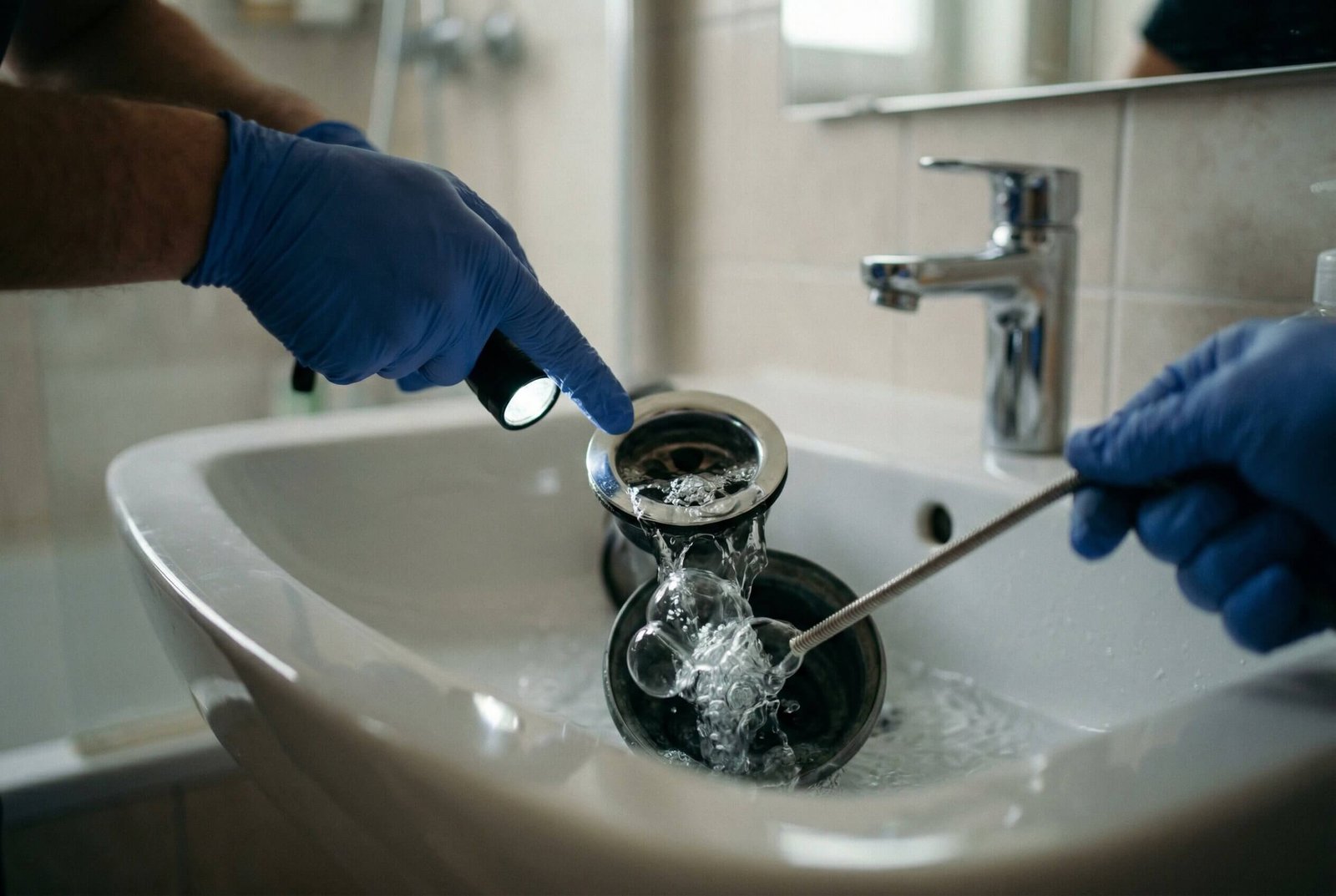
A bathroom sink that makes a gurgling noise while draining is a common plumbing symptom in many U.S. homes. Homeowners often notice a bubbling or gulping sound coming from the drain when water flows down the sink. In some cases, the sink may still drain normally, while in others the gurgling may occur together with slow drainage or occasional odors. Although the noise itself may seem harmless at first, it often indicates that something inside the drain system is affecting the normal movement of air and water.
Plumbing drainage systems rely on a balanced flow of both water and air inside the pipes. When water moves through the drain, air must also move through the system to maintain proper pressure. If air becomes trapped or cannot move freely through the plumbing system, it can form bubbles inside the pipes. As these air bubbles move through the water, they create the gurgling or bubbling sound that homeowners hear at the sink drain.
In many situations, a gurgling bathroom sink is caused by a partial blockage, venting problem, or buildup inside the drain line. Hair, soap residue, toothpaste, and grooming products can gradually accumulate inside the pipes and restrict water flow. When water passes through these restricted areas, it can pull air through the pipe and create the characteristic gurgling sound.
Understanding why a bathroom sink gurgles during drainage is important because the noise often signals that the plumbing system is beginning to experience airflow or drainage problems. Identifying the underlying cause can help prevent the issue from developing into a more serious clog or plumbing failure.
What This Page Covers
ToggleUnderstanding How a Bathroom Sink Drain System Works
To understand why a bathroom sink makes a gurgling noise while draining, it helps to understand how the drain system inside the sink and pipes normally works. A properly functioning plumbing system moves wastewater away from the sink while maintaining balanced air pressure inside the pipes. This balance allows water to flow smoothly without creating noise, suction, or air bubbles.
When the system becomes partially blocked or airflow inside the pipes becomes restricted, air can get trapped in the drain line. As water flows past these trapped pockets of air, the air escapes through the water and produces the bubbling or gurgling sound that homeowners hear at the drain opening.
Bathroom sink drainage systems in U.S. homes are designed with several components that work together to move water away from the sink while preventing sewer gases from entering the house.
Key Components of a Typical Bathroom Sink Drain
A standard bathroom sink drain system includes several plumbing parts that guide water from the sink into the home’s drainage system.
Important components include:
-
Drain Opening
The opening at the bottom of the sink basin where water enters the drain system. -
Drain Flange
The metal fitting that seals the sink basin to the drain pipe. -
Pop-Up Stopper Assembly
The mechanical stopper that allows homeowners to open or close the drain. Hair and debris often collect around this mechanism. -
Tailpiece Pipe
The vertical pipe located directly beneath the sink drain that carries water downward to the P-trap. -
P-Trap
The curved pipe beneath the sink designed to hold water and block sewer gases from traveling back into the home. -
Trap Arm
The horizontal pipe that connects the P-trap to the drain pipe located inside the wall. -
Branch Drain Line
The pipe inside the wall that carries wastewater toward the home’s main drain system.
Because these components include bends, joints, and mechanical parts, they can sometimes trap debris or create areas where airflow becomes restricted.
How Air and Water Move Through Drain Pipes
Drain pipes must allow both water and air to move through the system. When water flows down a drain pipe, air must move behind the water to equalize pressure inside the pipe.
If the airflow becomes restricted due to buildup or a vent problem, the water may pull air through the pipe in irregular bursts. These bursts of air moving through the water create the bubbling or gurgling sounds heard in the sink drain.
The Role of Plumbing Vent Pipes
Plumbing vent pipes are designed to allow air into the drain system so that wastewater can flow smoothly. These vents usually extend through the roof of the home and connect to the drainage pipes.
When vents are functioning correctly, they maintain proper air pressure inside the plumbing system. If a vent pipe becomes blocked by debris, leaves, or animal nests, airflow inside the pipes may become restricted. This can cause gurgling sounds as air struggles to move through the drainage system.
What a Gurgling Sound in the Sink Drain Means
A gurgling sound from a bathroom sink drain usually indicates that air is moving through the plumbing system in an abnormal way. In a properly functioning drain system, water flows smoothly through the pipes while air moves quietly through the vent system. When this airflow becomes disrupted, air can become trapped inside the drain pipes and create bubbling sounds as water passes through.
The gurgling noise is essentially the sound of air pockets escaping through water inside the pipe. This can happen when a blockage partially restricts the pipe or when the plumbing vent system is not allowing enough air into the drainage system. In either case, the normal balance between air and water movement inside the pipes is disturbed.
Although the sink may still drain normally in some situations, the gurgling sound is often an early warning sign that the drain system is beginning to experience airflow or blockage issues.
How Air Gets Trapped Inside Drain Pipes
Air can become trapped inside drain pipes when something interferes with the normal movement of air through the plumbing system. When water flows down the pipe, it pushes air ahead of it and pulls air behind it. If the airflow path becomes restricted, air may collect inside sections of the pipe.
Common situations that can trap air inside drain pipes include:
-
Partial blockages inside the drain line
-
Debris buildup along the pipe walls
-
Plumbing vent blockages
-
Improper pipe slope that slows water movement
-
Buildup around the sink stopper assembly
When trapped air is forced to move through water inside the pipe, it escapes in bubbles, producing the gurgling sound heard at the drain opening.
Why Air Bubbles Create Gurgling Noises
The gurgling sound occurs when air bubbles rise through water inside the drain pipe. As water flows down the pipe, it may create suction that pulls air from other parts of the plumbing system.
If the airflow is restricted, the air cannot move smoothly through the vent system. Instead, it travels through the water inside the pipe in bursts. As these bubbles pass through the water, they create the bubbling or gulping noise commonly described as a gurgling drain.
This sound often indicates that the plumbing system is struggling to maintain proper airflow and pressure balance.
Common Causes of Bathroom Sink Gurgling Noise
A bathroom sink usually begins making gurgling sounds when something inside the plumbing system interferes with the normal movement of water and air. In most U.S. homes, these noises are caused by partial blockages, airflow restrictions, or buildup inside the drain pipes. Even if the sink still drains, a small obstruction or vent issue can create pressure imbalances that allow air bubbles to form.
When water moves through a partially restricted pipe, it can pull air behind it or force trapped air through the water. As these air pockets escape, they produce the bubbling or gurgling sounds heard at the drain opening. Identifying the common causes of these sounds helps homeowners understand what may be happening inside the drain system.
Partial Drain Blockage
One of the most common causes of sink gurgling is a partial blockage inside the drain pipe. Hair, soap residue, toothpaste, and grooming products often collect inside bathroom sink drains.
This buildup gradually narrows the pipe and restricts water flow. When water moves through the narrowed section, it creates suction that pulls air through the pipe. The trapped air escapes through the water in bursts, producing the gurgling sound.
Plumbing Vent Blockage
Plumbing vents allow air to enter the drain system and maintain balanced pressure inside the pipes. If the vent pipe becomes blocked, air cannot move freely through the system.
Common causes of vent blockages include:
-
Leaves and debris on the roof
-
Bird nests or small animals inside vent openings
-
Ice formation in colder climates
-
Dirt or debris entering the vent pipe
When the vent is blocked, the drain system struggles to equalize air pressure, which can cause gurgling sounds when water flows down the sink.
P-Trap Air Imbalance
The P-trap under the sink is designed to hold water and block sewer gases. However, when airflow inside the drain system becomes unbalanced, the P-trap may experience pressure changes.
These pressure fluctuations can cause air bubbles to form inside the trap as water drains through it. The movement of these bubbles often produces a noticeable gurgling sound beneath the sink.
Drain Line Buildup
Over time, materials such as soap scum, toothpaste, shaving cream, and cosmetic products can leave residue inside drain pipes. This buildup creates rough surfaces along the interior of the pipe.
Hair and other debris can easily stick to these surfaces, forming a thicker obstruction. As water moves through the restricted pipe, air becomes trapped and escapes through the water, creating the gurgling noise.
Main Drain Line Restrictions
In some situations, the gurgling sound may not originate from the bathroom sink itself. If the main drain line serving multiple fixtures becomes partially blocked, pressure changes in the system can cause air to move through nearby drains.
When this happens, homeowners may hear gurgling sounds in the bathroom sink even though the blockage is located further down the plumbing system.
Hidden Plumbing Causes Homeowners Often Miss
While many bathroom sink gurgling noises are caused by visible debris or minor buildup near the drain, some problems originate deeper inside the plumbing system. In these situations, homeowners may clean the sink drain or stopper but continue hearing gurgling sounds because the underlying issue exists in another part of the drain or vent system.
Professional plumbers often investigate these hidden causes when a sink continues making gurgling noises even after basic cleaning. These issues may involve blocked vent pipes, pressure problems in shared drain lines, improper pipe installation, or aging plumbing materials. Because these problems are usually hidden behind walls or above the roof, they can be difficult for homeowners to detect without proper inspection.
Understanding these less obvious causes can help explain why gurgling sounds sometimes persist even when the sink appears clean and the water still drains.
Roof Vent Obstruction
Most plumbing systems in U.S. homes include vent pipes that extend through the roof. These vents allow air to enter the drainage system and help maintain balanced air pressure inside the pipes.
If the roof vent becomes blocked, airflow through the plumbing system can become restricted. Common causes of roof vent obstructions include:
-
Leaves and outdoor debris
-
Bird nests or small animals
-
Ice buildup during cold weather
-
Dirt and roofing particles entering the vent pipe
When the vent is blocked, the plumbing system cannot draw in enough air. As water flows through the pipes, it may pull air through nearby drains instead, creating gurgling sounds.
Shared Drain Line Pressure Issues
Many homes have multiple plumbing fixtures connected to the same branch drain line. Bathroom sinks, bathtubs, showers, and sometimes laundry drains may all feed into the same pipe.
When one fixture drains water, it can affect the air pressure inside the shared pipe. If there is a restriction in the line, water movement from one fixture can push air through another fixture’s drain. This pressure movement often causes gurgling sounds in nearby sinks.
Improper Pipe Slope
Drain pipes must be installed with a slight downward slope so water can flow smoothly through the system. If a pipe section is installed too flat or at an incorrect angle, water may move more slowly through that section.
When water flow slows down, air can become trapped inside the pipe. As water eventually moves past the trapped air, the air escapes through the water and produces a gurgling sound.
Aging or Rough Interior Pipes
In older homes, plumbing pipes may develop rough interior surfaces due to corrosion or mineral buildup. These rough surfaces can trap debris more easily than smooth pipes.
As debris accumulates along these surfaces, it can create small obstructions that affect airflow and water movement inside the pipe. When water passes through these restricted areas, air bubbles may form and create the gurgling noise heard at the sink drain.
Where the Problem Usually Occurs in the Drain System
When a bathroom sink makes a gurgling noise while draining, the source of the problem is often located in specific areas of the plumbing system where airflow or water movement becomes restricted. Because drain systems contain bends, joints, and mechanical components, these locations are more likely to trap debris or create pressure imbalances that lead to gurgling sounds.
Professional plumbers typically inspect several key parts of the drain system to determine where the airflow disruption is occurring. Identifying the location of the problem helps determine whether the gurgling is caused by a local blockage near the sink or by an issue deeper inside the plumbing system.
Sink Stopper Area
The sink stopper assembly is one of the most common places where debris collects. Hair, soap residue, toothpaste, and grooming products often become trapped around the stopper mechanism inside the drain opening.
As this material builds up, it can partially restrict the flow of water entering the drain. When water moves past the debris, it may pull air through the restricted area and create the bubbling sound that produces gurgling.
P-Trap Section
The P-trap located beneath the sink is another area where gurgling noises may originate. Because this section of pipe contains a curved shape, it naturally slows the flow of water as it passes through.
Hair, soap scum, and organic debris may settle in the bottom of the trap over time. When water flows through a partially obstructed P-trap, it can disturb trapped air and produce gurgling sounds.
Horizontal Drain Pipe Inside the Wall
After leaving the P-trap, water enters a horizontal pipe that runs inside the wall. This section of pipe carries wastewater toward the larger drain lines serving the home.
If debris accumulates in this horizontal section, it can create a partial blockage. As water flows past the obstruction, air pockets may form and escape through the water, creating the gurgling noise.
Branch Drain Line
The branch drain line is the pipe that connects the bathroom sink drain to the home’s main drainage system. In homes where multiple fixtures share the same branch line, debris from different drains may accumulate in the same pipe.
When this buildup restricts the flow of water and air inside the branch drain, the pressure imbalance can cause gurgling sounds to travel back through the sink drain.
Warning Signs That the Gurgling May Become a Bigger Problem
A gurgling bathroom sink drain often begins as a minor noise that appears occasionally when water flows down the sink. While the sink may still drain normally at first, the sound usually indicates that something inside the plumbing system is beginning to interfere with proper airflow or water movement. If the underlying cause continues developing, the gurgling can become more frequent and may eventually lead to more noticeable plumbing problems.
Recognizing the early warning signs can help homeowners understand when the gurgling noise may signal a growing issue inside the drain system. In many cases, these signs appear before a full drain blockage or major plumbing problem develops.
Slow Drainage Appearing With Gurgling
One of the most common warning signs is when the sink begins draining more slowly while also producing gurgling sounds. This often indicates that debris such as hair, soap scum, or toothpaste residue has started accumulating inside the pipes.
As the buildup grows, it narrows the pipe and slows the movement of water. When water passes through the restricted area, it can trap and release air bubbles, producing the gurgling noise.
Gurgling From Multiple Fixtures
If the gurgling sound begins occurring in other plumbing fixtures, such as the bathtub, shower, or nearby sink, the issue may involve a larger portion of the plumbing system. Multiple fixtures connected to the same drain line can be affected when debris accumulates deeper inside the pipes.
When several drains begin producing gurgling noises, it often suggests that the problem exists further down the shared drain line.
Sewer Odors With Gurgling Sounds
When a gurgling drain is accompanied by unpleasant sewer-like odors, the plumbing system may be experiencing airflow or venting problems. Restricted airflow can allow sewer gases to move through the pipes and escape through sink drains.
This combination of odor and gurgling may indicate that the plumbing vent system is not functioning properly.
Water Backing Up Into the Sink
In more advanced cases, homeowners may notice water rising or backing up into the sink while draining. This is usually a sign that the drain pipe has become significantly restricted.
When the pipe can no longer move water efficiently, the water may temporarily collect in the sink before slowly draining away. At this stage, the gurgling sound often becomes louder and more frequent.
How Professional Plumbers Diagnose Sink Gurgling
When a bathroom sink makes a gurgling noise during drainage, professional plumbers focus on identifying where airflow or water movement inside the plumbing system is being disrupted. Because gurgling can be caused by several different issues—such as partial blockages, vent problems, or pressure imbalances—plumbers follow a systematic inspection process to locate the exact source of the problem.
Rather than guessing the cause, plumbers examine multiple parts of the drain system and use specialized tools to determine whether the issue is near the sink or deeper inside the plumbing network.
Visual Inspection of Drain Components
The first step usually involves examining the visible parts of the sink drain system. Plumbers inspect the sink stopper assembly, drain opening, and surrounding pipes for signs of debris buildup.
Hair, soap residue, toothpaste, and grooming products commonly accumulate around the stopper mechanism. If buildup is present, it may partially restrict the drain opening and create conditions that lead to gurgling sounds.
Checking the P-Trap
Plumbers often inspect the P-trap located beneath the sink because this curved pipe can collect debris over time. Hair and soap scum may settle inside the bottom of the trap and restrict water movement.
By checking the P-trap, plumbers can determine whether buildup in this section of pipe is causing the airflow imbalance that produces the gurgling noise.
Drain Snake Inspection
If the problem appears deeper inside the pipe, plumbers may use a flexible drain snake (also called a plumbing auger). This tool can be inserted into the drain to locate and break up debris buildup inside the pipe.
Using a drain snake helps plumbers determine whether a partial blockage exists in the drain line that could be trapping air and creating the gurgling sound.
Plumbing Camera Inspection
For persistent or difficult-to-diagnose problems, plumbers may insert a small waterproof camera into the drain line. This inspection camera provides a clear view of the interior of the pipes.
A camera inspection can reveal buildup, pipe damage, improper pipe slope, or obstructions deeper inside the drain system that may be affecting airflow.
Vent System Inspection
Because gurgling sounds are often related to airflow issues, plumbers also examine the home’s plumbing vent system. Vent pipes allow air to enter the drainage system so water can flow smoothly.
If the vent becomes blocked or restricted, the drain system may pull air through nearby fixtures instead of through the vent pipe. This can cause bubbling and gurgling sounds in the sink drain.
Real Plumbing Scenarios in U.S. Homes
Bathroom sink gurgling noises often occur in real-world situations that plumbers encounter regularly in U.S. homes. The exact cause can vary depending on the age of the home, the plumbing design, and the daily habits of the household. In many cases, these noises develop gradually as buildup forms inside the pipes or as airflow within the plumbing system becomes restricted.
Professional plumbers frequently observe similar patterns when diagnosing gurgling drains. Understanding these common scenarios can help homeowners recognize why the problem occurs and where the issue may be developing inside the plumbing system.
Multi-Bathroom Homes With Shared Drain Lines
Many modern homes have multiple bathrooms connected to the same branch drain line. Bathroom sinks, showers, and bathtubs may all feed into a shared pipe before connecting to the main drain line.
When several fixtures share the same pipe, water flowing from one fixture can affect the air pressure inside the drain system. If buildup or a restriction develops in the shared pipe, water draining from one fixture may force air through another fixture’s drain, creating a gurgling sound.
Older Homes With Narrow Pipes
Older homes in the United States often contain plumbing systems with narrower pipes or materials such as galvanized steel. Over time, these pipes may develop mineral deposits or corrosion along the interior surfaces.
These rough interior surfaces make it easier for hair, soap residue, and grooming products to collect inside the pipes. As buildup grows, it can restrict water flow and cause air pockets to form, leading to gurgling noises when the sink drains.
Homes With Heavy Product Buildup
In some homes, frequent use of grooming products can contribute to drain buildup. Shaving cream, facial cleansers, hair products, toothpaste, and cosmetic residues may not fully dissolve in water.
Over time, these substances can coat the interior of the pipes and create sticky surfaces where debris accumulates. When water flows through these partially restricted pipes, trapped air can escape through the water and produce gurgling sounds.
Basic Prevention Tips for Drain Gurgling
Preventing gurgling sounds in a bathroom sink often involves reducing debris buildup and maintaining proper airflow in the plumbing system. Because gurgling usually occurs when air and water cannot move smoothly through the drain pipes, keeping the plumbing system clear of buildup can help minimize these airflow disruptions.
Many of the conditions that lead to gurgling noises develop gradually over time. Small amounts of hair, soap residue, toothpaste, and grooming products may accumulate inside the pipes and create partial restrictions. By practicing simple maintenance habits, homeowners can reduce the chances of buildup forming inside the drain system.
Avoiding Hair and Debris Entering the Drain
Hair is one of the most common materials that contributes to partial drain blockages in bathroom sinks. During grooming activities such as shaving or brushing hair, loose strands can easily wash into the drain.
Reducing the amount of hair and debris entering the drain can help prevent buildup from forming inside the pipes.
Common steps homeowners can take include:
-
Removing loose hair from the sink before rinsing
-
Avoiding rinsing beard trimmings or grooming debris into the drain
-
Using a small drain guard or stopper to catch hair
These simple habits can help keep the drain opening clear.
Keeping Sink Stoppers Clean
The pop-up stopper assembly inside the sink often traps debris before it moves deeper into the drain system. Hair, soap scum, toothpaste, and grooming products frequently collect around this mechanism.
Regularly removing and cleaning the stopper can prevent debris from building up in this area. When this buildup is removed early, it is less likely to travel deeper into the plumbing system where it could cause airflow problems.
Periodic Drain Flushing
Occasionally flushing the drain with warm or hot water can help move small amounts of debris further through the drain system before they accumulate in one location.
Running water through the sink for a short time after use may help wash away soap residue and grooming products that might otherwise stick to the interior surfaces of the pipes.
When to Call a Professional Plumber
Occasional gurgling from a bathroom sink may simply indicate minor airflow changes inside the plumbing system. However, if the noise becomes frequent, louder, or begins appearing together with other plumbing symptoms, it may signal a developing problem within the drain system. In these situations, professional inspection can help identify the exact cause before the issue becomes more serious.
Plumbers are trained to diagnose airflow problems, drain restrictions, and venting issues that homeowners may not be able to detect. Because gurgling sounds often originate from hidden sections of the plumbing system, professional tools and inspection methods are sometimes required to locate the source.
Persistent Gurgling Sounds
If a sink continues producing gurgling noises every time water drains, the plumbing system may be experiencing a consistent airflow imbalance. This can happen when debris buildup inside the pipes partially restricts water flow or when the vent system is not allowing enough air into the drain line.
Persistent gurgling usually indicates that the underlying condition is not resolving on its own and may require inspection.
Multiple Fixtures Making Gurgling Noises
When gurgling begins occurring in more than one fixture—such as the bathroom sink, bathtub, shower, or toilet—it often suggests a larger issue within the shared drain system.
In these situations, the problem may exist deeper in the branch drain line or within the home’s main drainage system. Professional plumbers can inspect the shared pipes to locate the source of the restriction.
Gurgling Combined With Slow Drainage
If the sink begins draining slowly while also producing gurgling sounds, this combination often indicates that debris buildup inside the pipes is starting to restrict water movement.
As the blockage grows, airflow inside the pipe becomes more disrupted, causing the gurgling sound to become louder and more frequent.
Professional Tools Used for Diagnosis
Professional plumbers use specialized tools to inspect drain systems and identify airflow or blockage issues. These tools allow them to diagnose problems without damaging the plumbing system.
Common diagnostic tools include:
-
Drain inspection cameras used to examine the interior of pipes
-
Drain augers (plumbing snakes) used to locate and remove buildup
-
Hydro jetting equipment used to clear heavy pipe debris
-
Vent inspection tools used to check airflow through plumbing vents
Using these tools, plumbers can determine whether the gurgling noise is caused by a local blockage, vent issue, or a deeper problem in the drainage system.
Final Thoughts
A bathroom sink that makes a gurgling noise while draining is often a sign that the plumbing system is experiencing an imbalance between air movement and water flow. In many homes, this sound develops when debris buildup begins restricting the drain pipe or when the venting system cannot provide enough airflow to maintain proper pressure inside the pipes. Although the sink may still drain normally at first, the gurgling noise usually indicates that something inside the drainage system is beginning to interfere with its normal operation.
Over time, materials such as hair, soap residue, toothpaste, and grooming products can accumulate inside bathroom sink pipes. As this buildup grows, it narrows the pipe and disrupts the smooth movement of water and air. When water flows through these restricted areas, trapped air escapes through the water, creating the bubbling sound heard at the drain opening.
Understanding the causes and warning signs of drain gurgling can help homeowners recognize when the plumbing system may need attention. While occasional gurgling may be minor, persistent noises, slow drainage, or odors may indicate a deeper issue within the drain or vent system. Identifying the underlying cause early can help prevent larger plumbing problems from developing in the future.